Tag: Power Semiconductor

  • (148250) RN2 Technologies Capital Increase: A Deep Dive Analysis for Investors

    (148250) RN2 Technologies Capital Increase: A Deep Dive Analysis for Investors

    The recent RN2 Technologies capital increase has sent ripples through the investment community. The company recently announced a substantial KRW 11 billion fundraising initiative, positioning itself at a critical juncture. For investors, this raises a pivotal question: is this a strategic masterstroke to fuel next-generation growth, or will the resulting share dilution exert downward pressure on the stock? This comprehensive RN2 Technologies analysis will dissect the implications of this financial move, exploring its impact on the company’s ventures into secondary batteries, 6G communication, and power semiconductors to provide you with the insights needed for an informed decision.

    The Anatomy of the Capital Injection

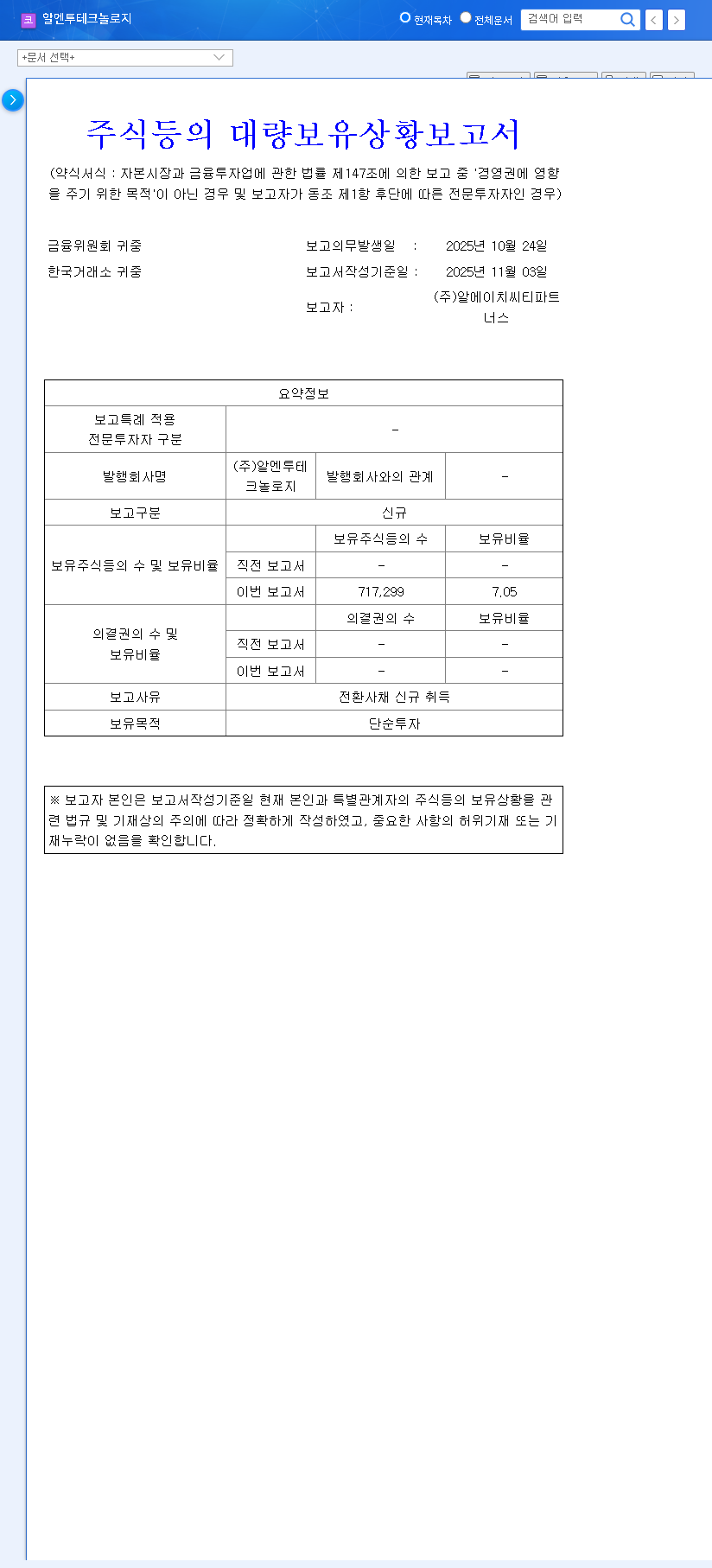
    On November 10, 2025, RN2 Technologies formalized its plan for a third-party allotment capital increase, securing significant funding for its future endeavors. The full details of this financial event were disclosed in an official filing (Official Disclosure). Here are the essential details:

    • Total Funding: Approximately KRW 11 billion.
    • Shares Issued: 1,797,385 new common shares.
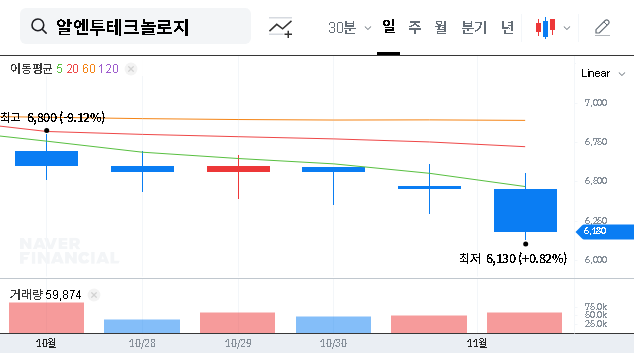
    • Issue Price: KRW 6,120 per share.
    • Primary Investor: Newjin No. 1 Fund.
    • Key Dates: Payment is scheduled for November 26, 2025, with the new shares expected to be listed on December 12, 2025.

    This move is designed to inject vital capital directly into the company, bypassing public offerings to partner with a strategic investor. The participation of ‘Newjin No. 1 Fund’ can be seen as a vote of confidence in the company’s long-term vision and growth trajectory.

    Deep Dive: The Impact of the RN2 Technologies Capital Increase

    A Company at a Crossroads: Growth vs. Profitability

    RN2 Technologies’ recent performance paints a picture of a company in transition. While sales grew an impressive 36.4% year-on-year to KRW 9.168 billion in the first half of 2025, the company recorded an operating deficit of KRW 1.046 billion. This loss is not from a lack of demand but rather a strategic decision to heavily invest in R&D and new business initiatives, coupled with a temporary slowdown in the 5G market. This capital increase is therefore a proactive measure to fortify its financial foundation and aggressively pursue its high-growth ambitions without being constrained by short-term profitability pressures.

    The core challenge for RN2 is balancing the short-term stock dilution against the long-term, transformative potential of its investments in next-generation technologies.

    Fueling the Future: Where is the Money Going?

    The KRW 11 billion is earmarked for what the company believes are its key future growth drivers. These sectors are not just promising; they are set to redefine global industry:

    • Secondary Batteries & E-Mobility: The company is targeting critical components like electrolyte materials for all-solid-state batteries—a holy grail for creating safer, more energy-dense power sources for electric vehicles. Success here could position RN2 as a key supplier in the booming EV market. For more on market trends, see our guide to investing in emerging technologies.
    • 6G Communication Technology: Building on its 5G expertise, RN2 is investing in the infrastructure for 6G. This next wave of connectivity promises to enable the Internet of Things (IoT), autonomous vehicles, and artificial intelligence on an unprecedented scale, a market valued in the trillions.
    • Power Semiconductor Substrates: These components are vital for managing power efficiently in EVs and data centers. As the world electrifies, the demand for advanced heat-dissipating substrates is soaring, as noted by industry analysts at firms like Gartner.

    Investor Strategy: Navigating the Road Ahead

    The RN2 Technologies capital increase presents both opportunities and risks. A prudent investment strategy requires a clear understanding of both sides of the coin.

    The Short-Term View: Caution Advised

    The issuance of nearly 1.8 million new shares represents a dilution of approximately 19% for existing shareholders. This increase in supply can create short-term downward pressure on the RN2 Technologies stock price, especially around the listing date of December 12, 2025. Traders should monitor price action and volume closely during this period for signs of absorption or further selling.

    The Long-Term View: A Bet on Execution

    For long-term investors, the focus should be on the company’s ability to execute its strategic vision. The capital provides the necessary runway. The key will be translating these funds into tangible results: securing patents, signing pilot projects, or landing supply agreements in their target sectors. The success of the RN2 Technologies stock over the next 2-3 years will depend almost entirely on the progress made in these new ventures.

    Frequently Asked Questions

    What is the size of the capital increase?

    RN2 Technologies is raising approximately KRW 11 billion by issuing 1,797,385 new common shares.

    What are RN2 Technologies’ new business areas?

    The company is focusing on high-growth sectors: secondary battery materials (all-solid-state electrolytes), 6G communication technology, and power semiconductor heat dissipation substrates.

    What is the short-term risk for the stock price?

    The primary short-term risk is share dilution. The new shares increase the total outstanding amount by about 19%, which could lead to downward price pressure as the market absorbs the new supply.

    In conclusion, this capital increase is a bold, forward-looking move for RN2 Technologies. It’s an investment in a potentially transformative future. While investors must navigate the immediate challenges of stock dilution, the long-term prize is significant if the company can successfully innovate and capture market share in these next-generation industries.
    (148250) RN2 Technologies Capital Increase: A Deep Dive Analysis for Investors 관련 이미지
  • A-Pro Disposes of Treasury Shares: Impact on Stock Price & Investment Analysis

    1. A-Pro’s Treasury Share Disposal: What Happened?

    On August 22nd, A-Pro announced the disposal of 40,330 treasury shares worth 300 million KRW. The purpose is to pay employee bonuses.

    2. Why Dispose of Treasury Shares?

    The disposal aims to provide employee bonuses in the form of treasury shares. This can help motivate employees and increase their sense of responsibility for company growth.

    3. So, What’s the Impact on Stock Price?

    The disposal size is only 0.28% of the total outstanding shares, so the direct impact on the stock price is expected to be minimal. However, as it can influence investor sentiment, market reactions should be monitored.

    • Positive Aspect: Increased employee motivation and responsibility.
    • Negative Aspect: Potential for short-term stock price volatility.

    4. What Should Investors Do?

    Investors should focus on A-Pro’s fundamentals rather than short-term stock price fluctuations. A thorough analysis of the growth of the secondary battery equipment business, the performance of new businesses, and improvements in profitability is crucial for making investment decisions. It’s particularly important to closely monitor whether the recent trend of declining profitability can be reversed. The growth potential of new businesses, such as GaN power semiconductors, should also be continuously monitored.

    Frequently Asked Questions

    Does the disposal of treasury shares negatively affect the stock price?

    The scale of this disposal is small, so the direct impact is expected to be limited. However, there may be short-term volatility depending on investor sentiment.

    What is the outlook for A-Pro’s secondary battery business?

    Considering the cooperative relationship with LG Energy Solution and expansion into overseas markets, the outlook remains positive.

    What should investors be aware of when investing in A-Pro?

    Investors should closely monitor the recent decline in profitability and the performance of new businesses.

  • A-Pro (262260) Q2 Earnings Shock: Analysis and Investment Strategy

    1. What Happened? A-Pro’s Q2 Earnings Breakdown

    A-Pro reported Q2 2025 revenue of ₩33.8 billion, operating loss of ₩5.4 billion, and net loss of ₩6.6 billion, falling far short of market expectations. Revenue declined sharply year-over-year, and the company swung to an operating and net loss.

    2. Why the Downturn? Analyzing the Causes

    The primary drivers of this underperformance are the slowdown in the secondary battery market and increased financial costs. Decreased demand for battery equipment due to slowed investment and increased competition impacted A-Pro’s revenue. Furthermore, financial expenses surged due to losses on convertible bonds and derivative valuations.

    3. What’s Next? Outlook and Investment Strategy

    In the short term, downward pressure on the stock price and weakened investor sentiment are anticipated. However, the long-term outlook hinges on the growth potential of new businesses, such as GaN power semiconductors, and the possibility of a secondary battery market recovery.

    • Short-term Investment Strategy: Caution is advised due to concerns about the weak earnings. Investors should closely monitor further earnings announcements and financial improvements.
    • Long-term Investment Strategy: Look for investment opportunities while observing the concrete performance of new businesses and the recovery trend in orders for secondary battery equipment.

    4. Key Investment Points

    • Performance of the GaN power semiconductor business
    • Timing of the secondary battery market recovery
    • Improvement in financial structure
    Q: Why were A-Pro’s Q2 results so disappointing?

    A: The slowdown in the secondary battery market and increased financial expenses are the primary reasons. Reduced demand for battery equipment due to slower investments and intensified competition impacted sales, while losses on convertible bonds and derivatives increased financial costs.

    Q: Is it a good time to buy A-Pro stock?

    A: Caution is advised in the short term due to expected stock price volatility. Long-term investment decisions should consider the growth potential of new businesses and the likelihood of a secondary battery market recovery.

    Q: What are A-Pro’s future growth drivers?

    A: New businesses such as GaN power semiconductors, used battery diagnostic technology, and rapid chargers for electric vehicles are expected to be future growth drivers. The GaN power semiconductor business, in particular, holds significant long-term growth potential.

  • Costechsys Bets Big: A ₩14 Billion Investment in Power Semiconductors. Boom or Bust?

    What’s Happening? Costechsys’s Bold ₩14 Billion Move

    On July 18, 2025, Costechsys officially disclosed its decision to acquire land and a building in Namdong-gu, Incheon, for ₩14 billion. This is a significant investment, representing a substantial portion of its shareholders’ equity. The company stated it plans to finance the acquisition through a combination of its own capital and bank loans.

    Why? The Core Target is ‘Power Semiconductor Spacers’

    The clear objective of this investment is to expand production facilities for ‘power semiconductor spacers.’ Power semiconductors are crucial components for future-forward industries like electric vehicles (EVs) and renewable energy. The SiC (Silicon Carbide) power semiconductor market, in particular, is poised for explosive growth. With this investment, Costechsys aims to proactively meet the surging market demand and secure a long-term growth engine.

    So What? A Double-Edged Sword: The Pros and Cons

    A ₩14 billion investment presents a massive opportunity for Costechsys, but it also comes with considerable risks. Investors must carefully evaluate both sides of the coin.

    ✅ Opportunities (The Upside)

    • Expanded Production Capacity (CAPA): More factory space is the most direct path to increased sales. This could be the catalyst to overcome the initial hurdles in the EV spacer market, as mentioned in the Q3 report.
    • Potential for Improved Profitability: Increased production volume can lead to cost reductions through ‘economies of scale.’ This could help improve profitability, which has recently been squeezed by rising raw material costs.
    • Enhanced Corporate Value: A proactive investment in a key future industry signals long-term growth potential, which could lead to a re-evaluation of the company’s corporate value.

    🚨 Risks (The Downside)

    • Increased Financial Burden: ₩14 billion is a significant sum. Debt financing will increase the company’s debt-to-equity ratio, which was already on an upward trend, potentially weakening financial stability.
    • Market Uncertainty: While the power semiconductor market is growing, unforeseen factors like intensified competition or demand fluctuations could make it difficult to recoup the investment.
    • Potential for Short-Term Performance Dip: In the initial phase of operating the new facility, costs such as depreciation and labor will be incurred first, which could temporarily worsen financial performance.

    Action Plan for Investors: 3 Key Checkpoints

    Instead of relying on vague hopes or fears, investors should develop a strategy by continuously monitoring these three points:

    1. Details of the Financing Plan: Confirm the exact ratio of own capital to loans and the terms of the borrowing (e.g., interest rates). This is a crucial indicator of the financial burden.
    2. Post-Acquisition Strategy of New Management: Pay close attention to the synergy strategies the new major shareholder’s management team will implement. The success of the investment could hinge on their new direction.
    3. Monitor Future Earnings and Financial Metrics: Consistently track changes in financial health indicators like the debt-to-equity ratio and current ratio through quarterly/semi-annual reports. Closely watch the new factory’s utilization rate and when it begins to generate actual revenue.
    Q1. What is the core reason for Costechsys’s ₩14 billion investment?

    A. The primary goal is to proactively secure production capacity for ‘SiC power semiconductor spacers,’ a key component in the rapidly growing electric vehicle (EV) market. This is a strategic move to establish a future growth driver and boost sales.

    Q2. Will this investment guarantee a rise in Costechsys’s stock price?

    A. Not necessarily. While it’s positive for long-term growth prospects, short-term risks could weigh on the stock. These include the financial burden of the ₩14 billion investment and initial operating costs of the new facility, which might negatively impact short-term earnings.

    Q3. What is the most critical risk to watch when investing in Costechsys?

    A. ‘Financial stability.’ Investors must verify how much the debt-to-equity ratio increases due to the investment and whether the company has sufficient capacity to handle interest payments and other financial costs. The new management’s strategic direction following the recent change in the major shareholder is also a key variable to watch.