Tag: Platform Business

  • (323410) KakaoBank Corp. NDR: A Deep Dive into its Global Growth Strategy & Stock Potential

    (323410) KakaoBank Corp. NDR: A Deep Dive into its Global Growth Strategy & Stock Potential

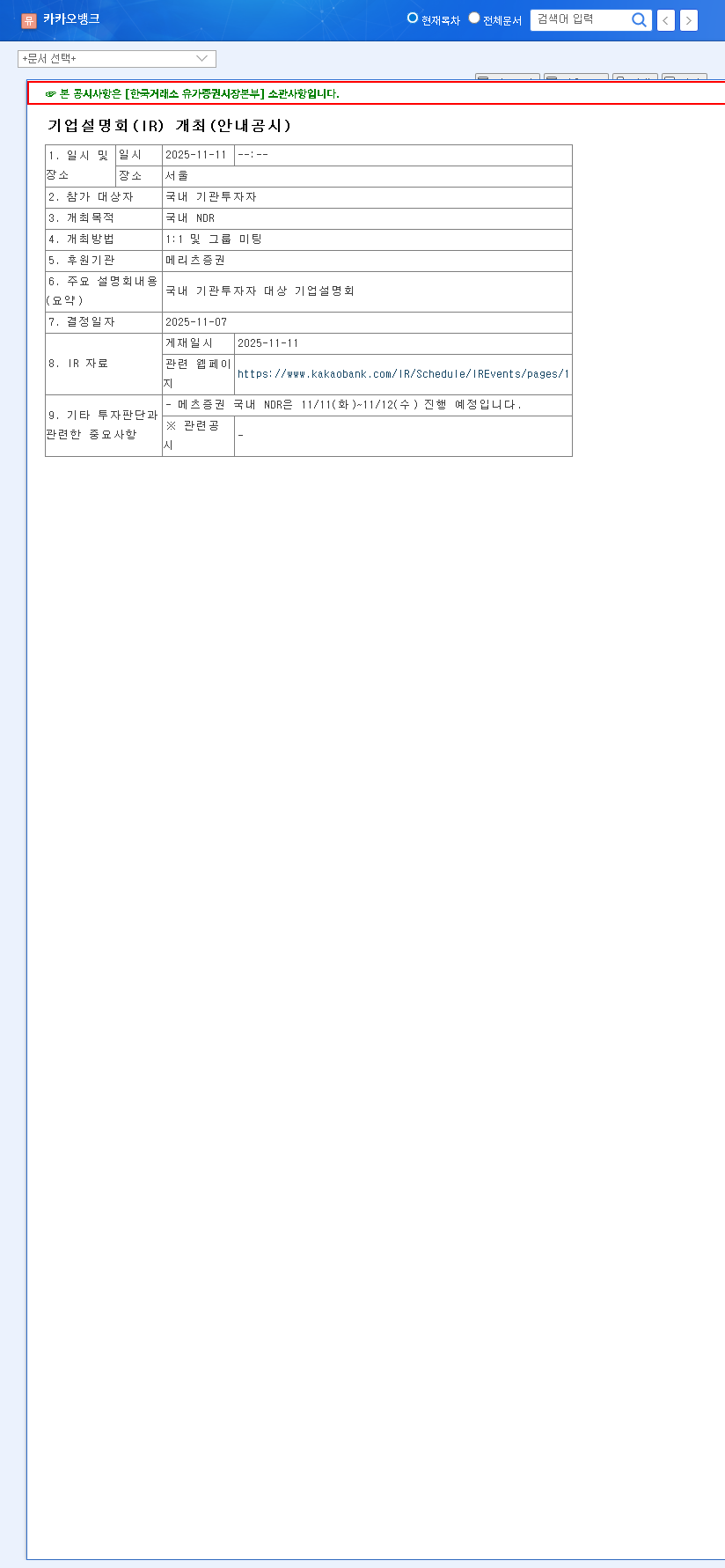
    The recent KakaoBank Corp. NDR (Non-Deal Roadshow) for international institutional investors marks a pivotal moment for South Korea’s leading digital finance powerhouse. This strategic event, held on November 17, 2025, is more than a simple presentation; it’s a calculated move to showcase the company’s robust value proposition and ambitious future growth strategy to a global audience. For investors, understanding the nuances of this roadshow is key to unlocking insights into KakaoBank’s stock potential and its long-term trajectory in the competitive fintech landscape. This event was formally announced in an Official Disclosure, underscoring its significance.

    In this comprehensive analysis, we will deconstruct the core pillars of KakaoBank’s appeal, from its formidable fundamentals and AI-driven innovations to its platform expansion strategies. We’ll also explore the potential impacts of the NDR on corporate value and provide a strategic outlook for prudent investors.

    Deconstructing KakaoBank’s Core Strengths

    To captivate global investors, KakaoBank is highlighting a trifecta of strengths: a massive user base, technological leadership, and impeccable financial health. These are not just talking points; they are the foundational columns supporting its entire growth narrative.

    1. Unparalleled Customer Base & Platform Dominance

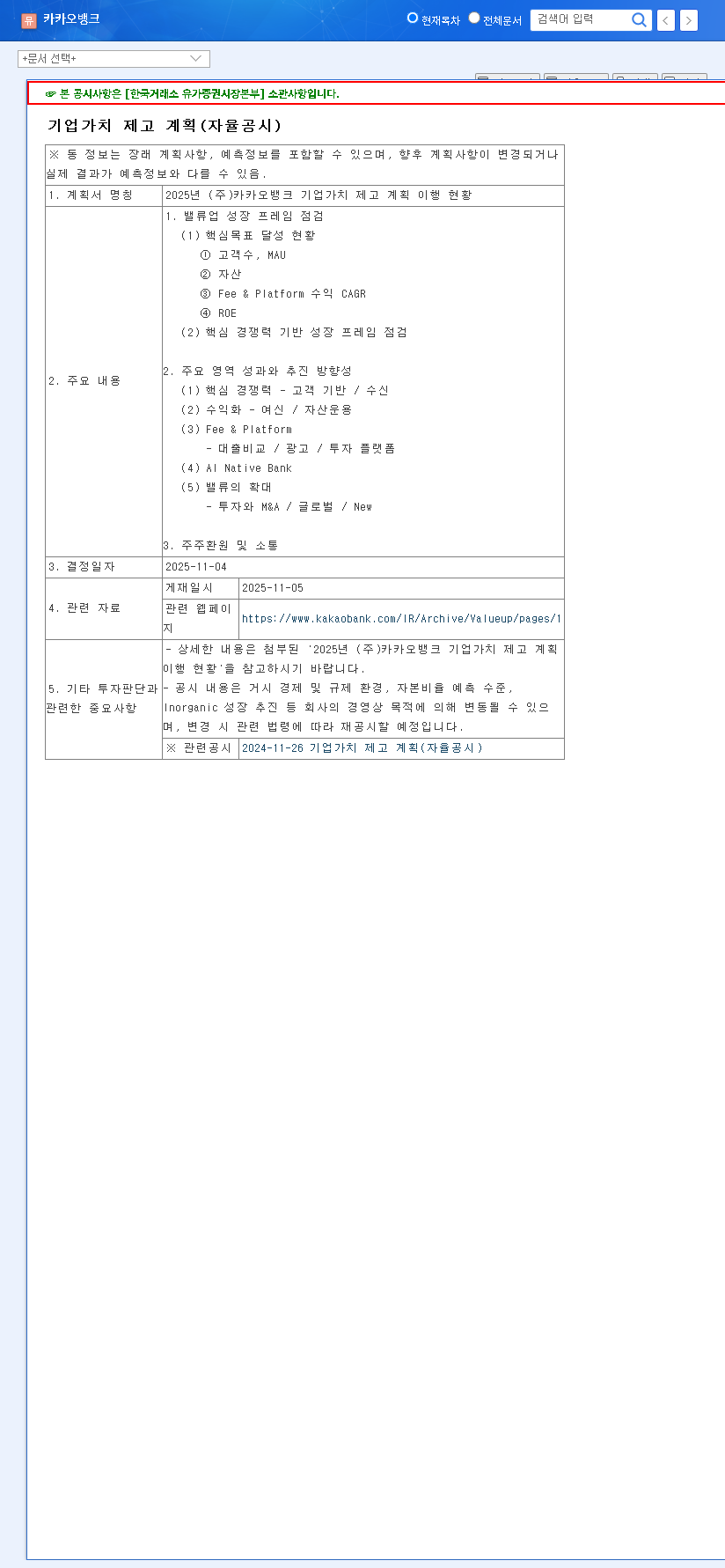
    KakaoBank’s growth is fundamentally anchored by its vast and highly engaged user base. With over 20 million Monthly Active Users (MAU) and total deposits soaring to KRW 65.7 trillion, the bank has achieved a scale that traditional institutions envy. This success is a direct result of its hyper-focus on a seamless user experience (UX/UI) and innovative product development. The platform’s expansion into brokerage services (7.07 million accounts) and loan comparison platforms further solidifies its ecosystem, creating multiple revenue streams and increasing customer lifetime value. For a deeper look at market trends, see this fintech industry analysis.

    2. Pioneering AI in Digital Finance

    A key focus of the KakaoBank Corp. NDR is its leadership in Artificial Intelligence. The bank is embedding AI across its services to enhance both security and customer convenience. Innovations like ‘AI Smishing Message Verification’ protect users from fraud, while ‘AI Search’ and ‘AI Financial Calculators’ provide personalized and intuitive experiences. This commitment to technology is not just about improving existing services; it’s about building a future-proof banking platform that can adapt and lead in the fast-evolving world of digital finance.

    “The future of banking isn’t in physical branches; it’s in the palm of your hand, powered by intelligent, data-driven platforms that anticipate your needs. This is the competitive edge that tech-first institutions like KakaoBank are building.”

    3. A Fortress of Financial Stability

    Despite its rapid growth, KakaoBank maintains exceptional financial health. Its BIS total capital ratio of 23.85% significantly exceeds regulatory requirements, signaling a stable and well-managed financial position. Furthermore, its ability to attract low-cost demand deposits (83.96% of total) provides a substantial competitive advantage, lowering its cost of funding and boosting profitability. This financial prudence is a critical message for risk-averse international investors.

    Navigating the Headwinds: Risks and Challenges

    While the outlook is promising, investors must consider potential risks. The South Korean market is facing intensifying competition, with the potential entry of new internet-only banks and the aggressive expansion of other big tech players. Additionally, macroeconomic uncertainties, including rising household debt and currency volatility, could impact loan quality and overall profitability. Careful management of its corporate loan portfolio will be crucial in navigating these challenges.

    Impact of the NDR on KakaoBank Stock

    A successful NDR can serve as a powerful catalyst for KakaoBank stock. By clearly communicating its KakaoBank growth strategy and building trust, the company can attract significant foreign investment, leading to positive stock price momentum. However, there are potential downsides. If the presentation fails to meet lofty market expectations, it could trigger a sell-off. As with any investment, a prudent approach is necessary, and further research can be found in our detailed market overview.

    Investment Outlook: Key Considerations

    For those considering an investment in KakaoBank, the post-NDR period will be critical for observation. We recommend focusing on the following areas:

    • International Investor Reaction: Monitor reports and analyst ratings from global institutions following the KakaoBank Corp. NDR to gauge sentiment.
    • AI Service Monetization: Track the actual revenue contribution and performance metrics of new AI-based financial products.
    • Platform Growth Metrics: Continue to assess the expansion and monetization of its platform businesses, such as brokerage and loan comparisons.
    • Macroeconomic Indicators: Stay informed about changes in interest rates and exchange rates that could impact KakaoBank’s fundamentals.

    In conclusion, the KakaoBank Corp. NDR is a crucial step in its journey to become a global fintech leader. By effectively showcasing its strengths and future vision, the company has the potential to unlock significant corporate value and deliver long-term returns for discerning investors.
    (323410) KakaoBank Corp. NDR: A Deep Dive into its Global Growth Strategy & Stock Potential 관련 이미지
  • (035720) Kakao Corp. Earnings Shock (035720): Q3 2025 Analysis & Investor Guide

    (035720) Kakao Corp. Earnings Shock (035720): Q3 2025 Analysis & Investor Guide

    Analyzing the Q3 2025 Kakao Earnings Shock

    The latest Kakao Corp. earnings report for Q3 2025 has sent a seismic wave through the market, delivering a significant ‘earnings shock’ that fell dramatically short of analyst consensus. For investors holding or watching Kakao Corp. (035720), this moment is pivotal. The results raise critical questions about the company’s current trajectory, the health of its core business segments, and its future growth prospects in an increasingly competitive landscape. This comprehensive analysis will dissect the numbers, explore the underlying causes, and provide a clear, actionable framework for investors navigating what’s next for this South Korean tech giant.

    Understanding the context behind this financial downturn is crucial. We will move beyond the headlines to offer a detailed look at the internal and external factors contributing to the underperformance, from struggling business units to challenging macroeconomic conditions.

    The Q3 2025 Results: A Stark Miss on All Fronts

    The term ‘earnings shock’ is not an exaggeration. Kakao Corp.’s preliminary operating results for the third quarter of 2025 revealed a staggering discrepancy from market expectations. The performance wasn’t just a slight miss; it was a fundamental deviation from projected growth, signaling potential systemic issues.

    Key Financial Figures vs. Expectations

    The announced figures painted a grim picture when compared to the consensus forecasts:

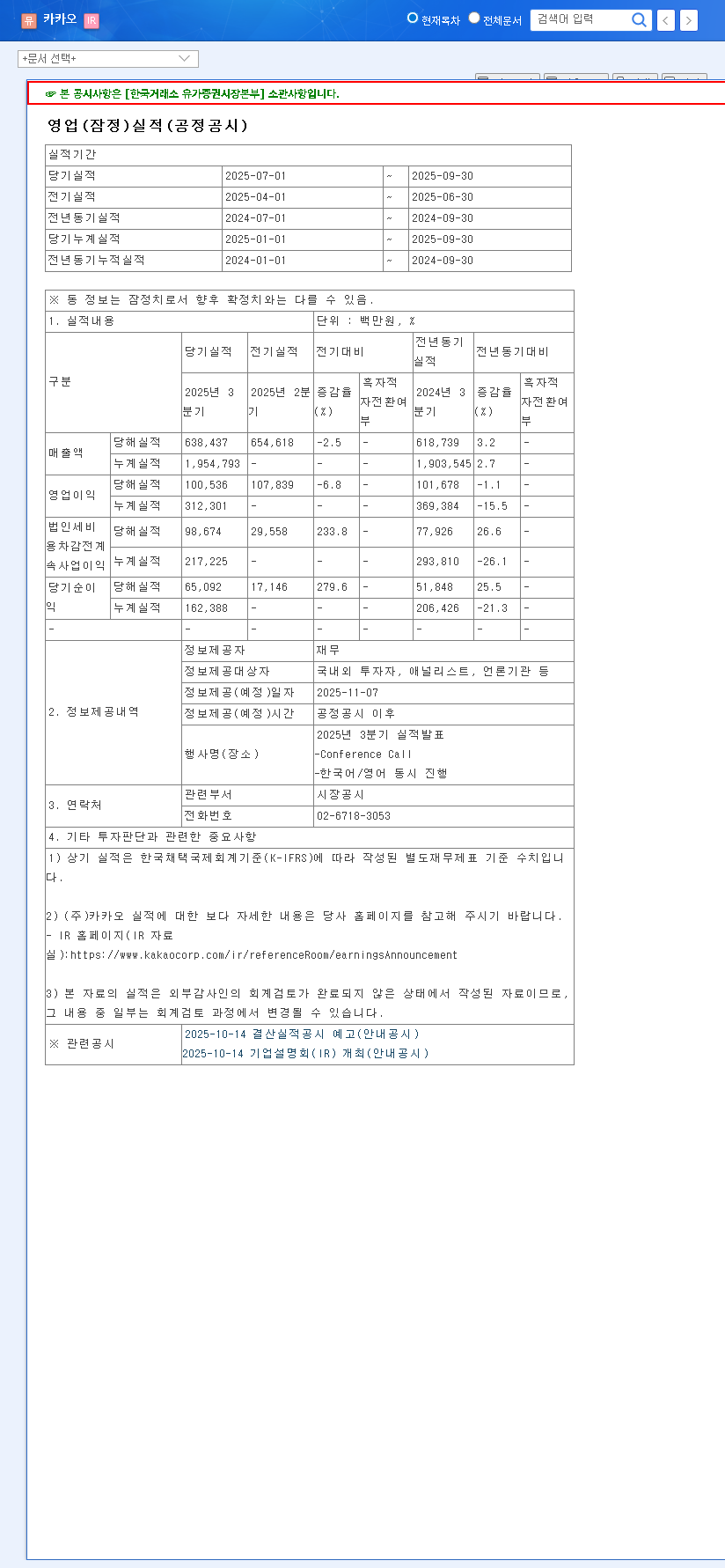
    • Revenue: Reported at KRW 638.4 billion, a shocking 69% below the expected KRW 2,031.6 billion.
    • Operating Profit: Came in at KRW 100.5 billion, a 39% miss from the anticipated KRW 164.5 billion.
    • Net Profit: Totaled KRW 65.1 billion, falling 52% short of the KRW 136.9 billion forecast.

    This sharp quarter-over-quarter decline, with revenue plummeting 68.5% from Q2 2025, underscores a rapid deterioration of the company’s financial performance. For a detailed breakdown of the official figures, investors can review the Official Disclosure filed with the Financial Supervisory Service (DART).

    Unpacking the Root Causes of the Underperformance

    A multi-faceted crisis led to this Kakao earnings shock. The issues stem from both internal business unit struggles and external macroeconomic pressures that the company failed to navigate effectively.

    1. Unexpected Headwinds in the Platform Business

    Kakao’s platform businesses, including Talk Biz and Commerce, have long been the bedrock of its growth. However, Q3 saw these reliable engines falter. A slowdown in the digital advertising market, as noted by sources like Reuters, has impacted ad-revenue-dependent services globally. Concurrently, intensified competition from rivals in the e-commerce space has eroded margins and slowed transaction growth, putting unexpected pressure on this core segment.

    2. Intensified Decline in the Content Division

    While the content business showed signs of weakness in the first half of 2025, the slump deepened dramatically in Q3. The massive 69% revenue miss points to critical failures, likely a combination of underperforming new game launches, a weakening competitive edge in its webtoon and media offerings, and challenges in expanding its global footprint against established players.

    The convergence of a global economic slowdown, high interest rates, and unfavorable currency exchange rates created a perfect storm, negatively impacting everything from consumer spending on Kakao’s platforms to the profitability of its overseas ventures.

    Impact on 035720 Stock and Investor Outlook

    The repercussions of this severe earnings miss are likely to be swift and significant. The primary concern for investors is the immediate impact on the 035720 stock price, which is expected to face heavy downward pressure as the market digests this negative surprise. Beyond short-term volatility, there are longer-term implications for the company’s financial health and strategic position.

    Sustained underperformance could trigger a credit rating downgrade by agencies, increasing borrowing costs and further damaging investor confidence. Furthermore, the results highlight a potential loss of market share to more agile competitors, a risk that threatens the company’s long-term fundamental value.

    Action Plan for Kakao Corp. Investors

    In light of this challenging Kakao investor analysis, a measured and strategic approach is required. Actions should be differentiated based on short-term risk management and long-term value assessment.

    Short-Term (Next 1-3 Months)

    • Adopt a Cautious Stance: Given the high probability of a stock price decline, investors may consider reducing exposure or holding off on new purchases until the dust settles.
    • Monitor Management’s Response: Closely watch for official communications from Kakao’s leadership. A clear, credible plan to address the root causes is essential for restoring confidence.

    Mid-to-Long-Term (6+ Months)

    • Evaluate Turnaround Potential: Assess whether the platform business can regain its footing and if the heavy investments in AI and data centers can begin to yield tangible results.
    • Reassess Valuation: After a potential price drop, the stock may present a new valuation. Investors must weigh this against the now-higher perceived risks to determine if it offers an attractive entry point for long-term growth. For more on valuation, you can read our guide on Understanding Kakao’s Core Business Model.

    In conclusion, the Kakao Corp. earnings for Q3 2025 are a clear warning sign. Investors must remain vigilant, balancing the immediate risks with a careful evaluation of the company’s ability to navigate this crisis and execute a successful turnaround strategy.

    (035720) Kakao Corp. Earnings Shock (035720): Q3 2025 Analysis & Investor Guide 관련 이미지
  • (323410) KakaoBank Q3 2025 Earnings: A Deep Dive Analysis & Stock Forecast

    (323410) KakaoBank Q3 2025 Earnings: A Deep Dive Analysis & Stock Forecast

    The initial report on the KakaoBank Q3 2025 earnings sent a wave of concern through the market. With key profitability metrics falling short of analyst consensus, investors are questioning whether this is a minor hiccup or a sign of more significant headwinds for the digital banking giant. This comprehensive KakaoBank stock analysis examines the performance drivers, underlying risks, and long-term growth prospects to provide a clear roadmap for what’s next.

    KakaoBank Q3 2025 Earnings Report: The Numbers

    According to its preliminary earnings announcement, KakaoBank Corp. posted a Q3 2025 revenue of KRW 764.7 billion. However, the figures that caught investors’ attention were the operating profit of KRW 151.1 billion and a net profit of KRW 111.4 billion. These results were both approximately 7% below market expectations, signaling a continued downward trend in profitability from previous quarters. The slight quarter-on-quarter revenue decrease further fuels concerns about the bank’s near-term growth trajectory. For a detailed breakdown, investors can consult the Official Disclosure filed with DART.

    Why the Miss? Analyzing the Headwinds

    The disappointing results weren’t caused by a single issue but rather a combination of internal fundamental pressures and a challenging macroeconomic landscape.

    Fundamental and Risk Factors

    • Declining Profitability Metrics: A key area of concern is the compression of the Net Interest Margin (NIM), which measures the difference between interest income and interest paid out. This downward trend, a crucial indicator of a bank’s core profitability, suggests increasing pressure on margins. You can learn more about how to analyze banking metrics in our guide to financial stock analysis.
    • Rising Corporate Loan Delinquency: The year-on-year increase in the delinquency rate for corporate loans is a red flag. It highlights the growing need for stringent risk management to maintain the health of KakaoBank’s expanding corporate loan portfolio.
    • Decreasing Capital Adequacy: While attributable to business expansion, the year-on-year drop in the BIS Total Capital Ratio requires close monitoring. Future capital injection plans will be critical to support growth without compromising financial stability.

    Macroeconomic and Market Pressures

    External factors have created a difficult operating environment for the entire banking sector:

    • Interest Rate Volatility: Rising global benchmark rates and unpredictable government bond yields are directly squeezing bank margins like KakaoBank’s NIM.
    • Household Debt & Consumption: Growing concerns over high levels of household debt in Korea and a corresponding slowdown in consumer spending could negatively impact loan quality and growth across the industry.

    While the Q3 2025 earnings report presents short-term challenges, it’s crucial for investors to look beyond the immediate numbers and evaluate the long-term strategic initiatives that could redefine KakaoBank’s future.

    The Bull Case: KakaoBank’s Long-Term Growth Engines

    Despite the current headwinds, KakaoBank Corp. holds several powerful strategic advantages that form a strong foundation for future growth and improved KakaoBank profitability.

    • AI-Powered Innovation: The company’s focus on leveraging AI for everything from credit scoring to personalized financial products is a key differentiator that can enhance efficiency and customer experience.
    • Platform Expansion: Diversifying its service portfolio with offerings like the MMF Box investment service strengthens the app’s ecosystem, increasing customer engagement and creating a powerful lock-in effect.
    • Robust Financial Health: Despite recent decreases, the bank’s overall BIS capital ratio and Liquidity Coverage Ratio (LCR) remain stable, providing a solid buffer against potential market shocks.
    • Global Expansion: Securing a virtual bank license in Thailand is a significant first step into overseas markets, opening up new, high-growth revenue streams beyond Korea. For more information on market trends, see the latest from authoritative financial news sources.

    Investment Outlook & Action Plan

    The KakaoBank Q3 2025 earnings miss has understandably created short-term negative sentiment. The current investment recommendation is to maintain a ‘Neutral’ stance. The key is to avoid overreacting to one quarter’s results and instead focus on monitoring key performance indicators that will shape the company’s long-term value.

    Key Factors for Investors to Monitor:

    • Profitability Initiatives: Watch for tangible results from efforts to improve NIM, manage the corporate loan portfolio, and successfully monetize new AI-driven services.
    • Macroeconomic Shifts: Keep an eye on central bank policies regarding interest rates, inflation trends, and the overall pace of economic recovery.
    • Competitive Landscape: Observe KakaoBank’s strategic responses to intensifying competition, including from potential new digital banking entrants.
    • Overseas Performance: Track the progress and success of the new venture in Thailand, as this will be a major indicator of its global scalability.

    (323410) KakaoBank Q3 2025 Earnings: A Deep Dive Analysis & Stock Forecast 관련 이미지
  • (060570) Dreamus Company Acquisition by bemyfriends: 2025 Analysis & Investor Guide

    (060570) Dreamus Company Acquisition by bemyfriends: 2025 Analysis & Investor Guide

    The investment community is buzzing with news about the potential Dreamus Company acquisition by bemyfriends Co., Ltd. Reports have surfaced that SK Square, the largest shareholder, has selected bemyfriends as the final prospective buyer for its management rights. While this news has ignited market speculation, the deal remains unconfirmed, creating a landscape of both significant opportunity and considerable risk. For investors, this moment is critical. Understanding the nuances of this potential deal, the underlying fundamentals of Dreamus Company, and the strategic implications is paramount.

    This comprehensive Dreamus Company analysis, based on its 2025 H1 Report and official disclosures, will dissect the situation. We will explore the core details of the Dreamus Company management rights sale, evaluate the company’s financial health post-restructuring, and weigh the potential synergies against the inherent risks of this major corporate shift. Our goal is to provide a clear, actionable guide for investors navigating this period of uncertainty.

    With the deal in a pre-contract stage, investors must look beyond the headlines. A deep dive into financial reports and strategic fit is essential to determine if the Dreamus Company acquisition will unlock new value or introduce disruptive volatility.

    The Core of the Acquisition Rumors

    Official Disclosure and Key Details

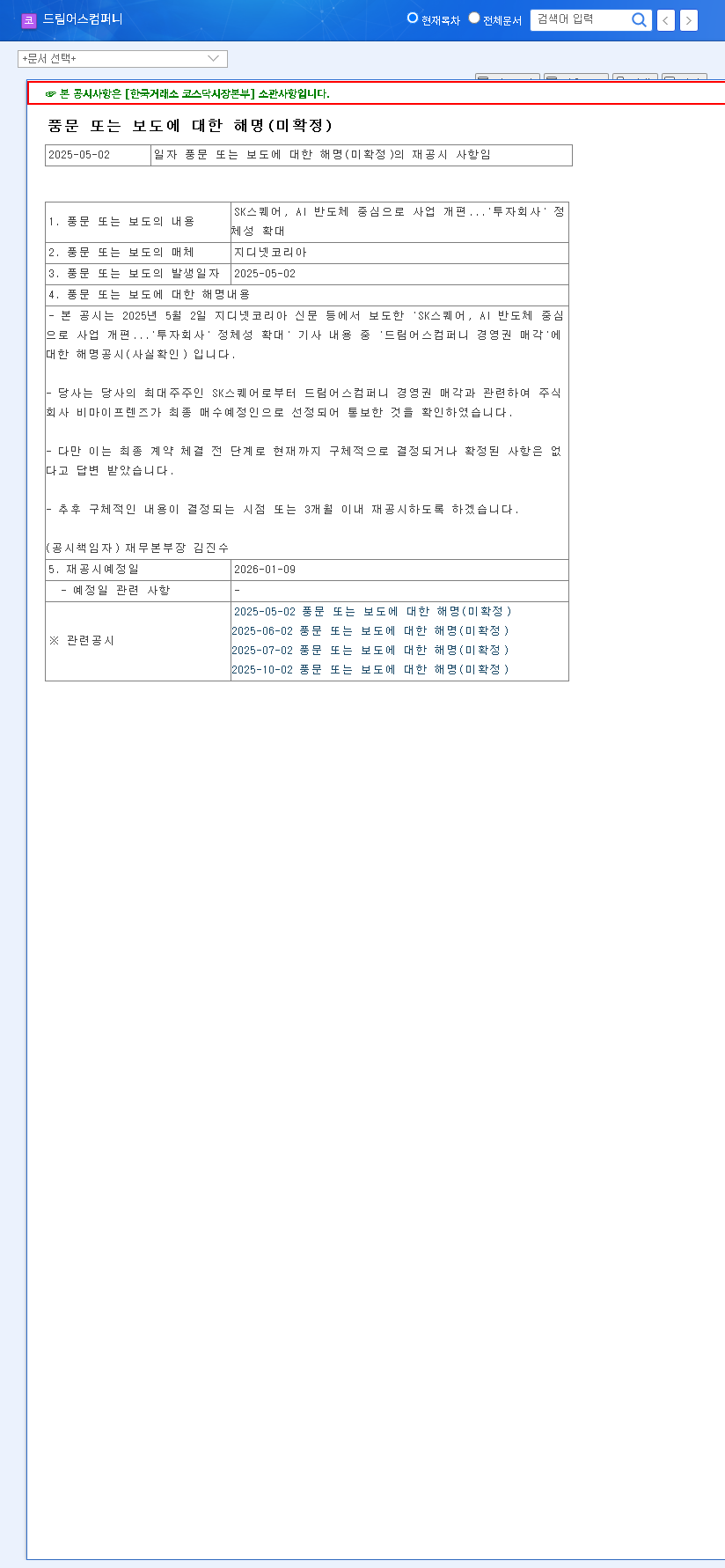
    On May 2, 2025, Dreamus Company addressed the widespread reports with a formal clarification. The key takeaway is the confirmation from SK Square that bemyfriends is indeed the prospective buyer. However, the company stressed that nothing is finalized, placing the event in a state of high alert for investors. The company’s official filing confirms these details (Source: Official DART Disclosure). A significant point of concern is the long information gap, with a re-disclosure not scheduled until January 9, 2026, which could fuel market volatility.

    Dreamus Company Financial Health & Strategy

    Post-Restructuring Fundamentals (2025 H1 Report)

    Recent strategic moves by Dreamus Company paint a picture of a business in transformation. Divesting the iriver business and overseas subsidiaries has sharpened its focus and improved profitability. This is evident in the impressive turnaround to a consolidated net profit of 3.312 billion KRW. Furthermore, the company’s financial structure has been fortified, with the debt-to-equity ratio improving dramatically to 45.00%. However, it’s not all positive; while profitability is up, consolidated revenue saw a slight decrease, and operating cash flow turned negative, signaling potential challenges in working capital management.

    • Profitability Turnaround: Achieved a net profit of 3.312 billion KRW (consolidated).
    • Improved Financials: Debt-to-equity ratio reduced to a healthy 45.00%.
    • Shareholder Value: A decision to cancel treasury shares signals a positive commitment to shareholders.
    • Areas to Watch: Negative operating cash flow and a slight dip in revenue require monitoring.

    Analyzing the Impact of the Dreamus Company Acquisition Rumors

    The Bull Case: Synergy and Growth

    The potential union of Dreamus Company and bemyfriends presents exciting synergistic possibilities. Dreamus possesses valuable music IP and established distribution platforms, while bemyfriends excels in content creation and fostering global fandoms. A successful Dreamus Company acquisition could lead to new, integrated entertainment experiences, from exclusive artist content on a unified platform to innovative merchandise and global fan engagement strategies. This could unlock new revenue streams and lead to a significant reassessment of the company’s market value. For more on valuation, Investopedia offers excellent resources on corporate valuations.

    The Bear Case: Uncertainty and Integration Risks

    Conversely, the ‘unconfirmed’ status of the deal is a major red flag. The prolonged uncertainty until the 2026 re-disclosure can lead to stock price volatility driven by speculation rather than fundamentals. Even if the deal proceeds, post-acquisition integration is fraught with challenges. Merging corporate cultures, aligning strategic visions, and integrating technology stacks can be costly and disruptive, potentially leading to a temporary decline in efficiency and a failure to realize the expected synergies. This is a common pattern, as seen in our analysis of recent tech M&A trends.

    Investment Strategy: A Neutral and Vigilant Stance

    Given the balance of positive fundamentals and significant external uncertainty, a ‘Neutral’ investment rating is prudent. Dreamus Company has made commendable progress in strengthening its financial core. However, the pending Dreamus Company management rights sale is a dominant variable that cannot be ignored. A cautious, observant approach is the most logical strategy until more definitive information becomes available.

    Key Action Plan for Investors

    • Monitor Official Communications: Pay close attention to any announcements from Dreamus Company, SK Square, or bemyfriends regarding the acquisition status.
    • Analyze Synergy Potential: Critically evaluate how the two companies would integrate. Look for detailed plans on how they will combine IP, platforms, and fan bases.
    • Track Financial Performance: Continue to track quarterly earnings to see if the positive trends from H1 2025 are sustainable, independent of the acquisition news.
    • Assess Macro-Economic Risks: Keep an eye on factors like exchange rate volatility (USD/KRW), which can significantly impact earnings given the company’s overseas business.

    (060570) Dreamus Company Acquisition by bemyfriends: 2025 Analysis & Investor Guide 관련 이미지
  • (035720) Kakao Stock Outlook 2025: NPS Boosts Stake to 7.41% – A Deep Dive Analysis

    (035720) Kakao Stock Outlook 2025: NPS Boosts Stake to 7.41% – A Deep Dive Analysis

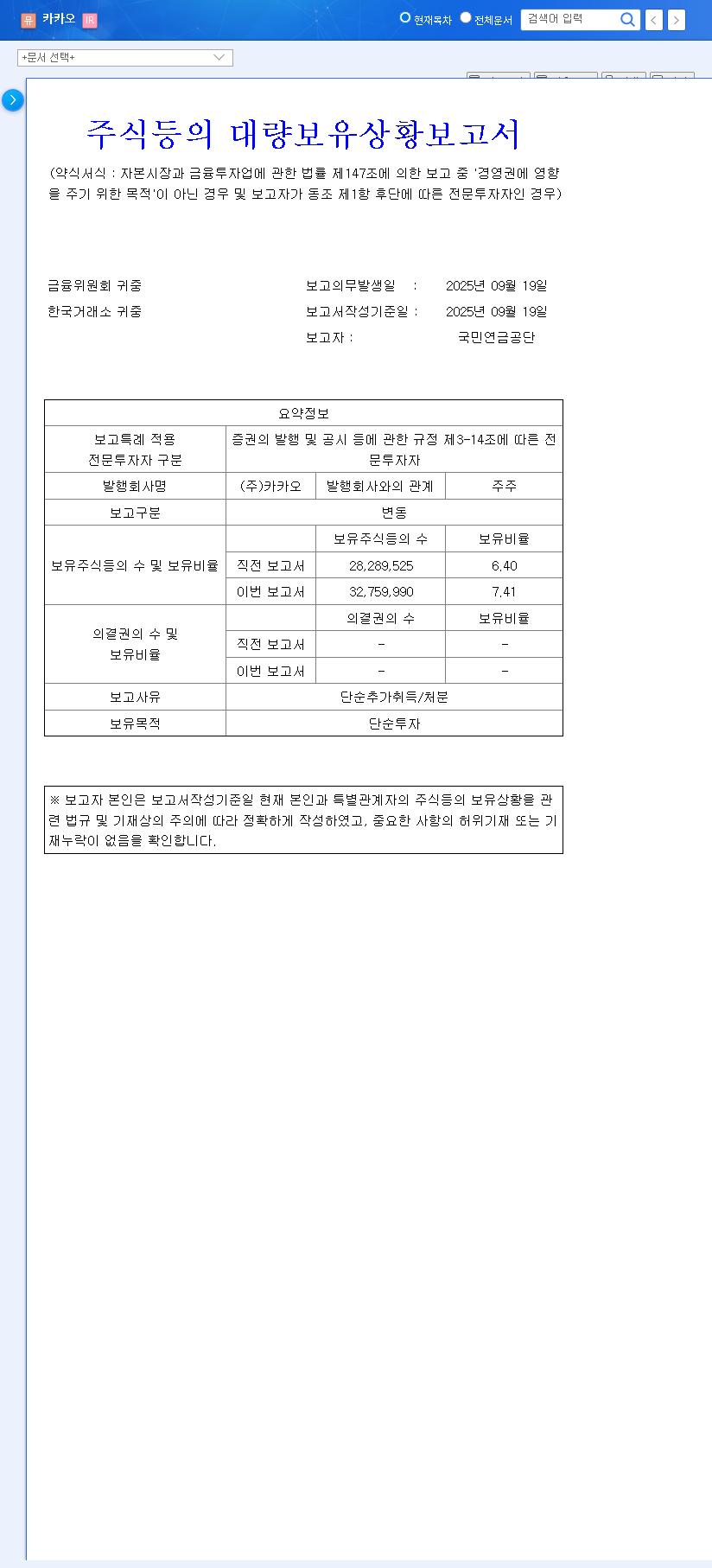
    The Kakao stock outlook has become a focal point for investors after a significant move by South Korea’s largest institutional investor. On October 1, 2025, the National Pension Service (NPS) disclosed it had increased its stake in Kakao (035720) to 7.41%, a notable jump of 1.01%. This ‘simple investment’ in a tech giant valued at over KRW 26 trillion raises a critical question: Is this a definitive buy signal, or are there underlying risks that warrant caution? This in-depth Kakao stock analysis will dissect the fundamentals, explore the implications of the NPS investment, and provide a clear, actionable investment strategy.

    A Vote of Confidence: National Pension Service Increases Kakao Stake

    The move by the National Pension Service in Kakao is more than just a headline. The acquisition, detailed in an official disclosure (Source), signals a strong vote of confidence from a highly influential market player. An investment of this magnitude, classified for ‘simple investment’ purposes, suggests that the NPS sees long-term value in Kakao’s current market position and future growth trajectory, independent of any desire to influence company management. For many market participants, this endorsement provides a bullish signal, suggesting that Kakao’s fundamentals are sound despite recent market volatility.

    In-Depth Kakao Stock Analysis: Strengths vs. Headwinds

    A comprehensive Kakao investment decision requires looking beyond a single news event. We must weigh the company’s powerful growth engines against the significant challenges it faces.

    The Bull Case: Kakao’s Enduring Growth Engines

    • Dominant Platform Business: The KakaoTalk messenger app remains the bedrock of the company. Its Talk Biz segment, encompassing advertising and e-commerce, continues to deliver stable, predictable growth, acting as a cash cow for funding new ventures.
    • Subsidiary Momentum: Key subsidiaries like Kakao Pay and Kakao Mobility are demonstrating improved financial performance. The profitability of Kakao Pay Securities, in particular, signals a strengthening position in the lucrative financial sector.
    • Future-Proofing with AI: Strategic investments in Artificial Intelligence and proprietary data center infrastructure are crucial for long-term competitiveness. These initiatives aim to unlock new revenue streams and solidify Kakao’s role as a technology leader.

    The Bear Case: Navigating Kakao’s Potential Risks

    • Content Division Stagnation: The games and music segments are facing intense competition and market saturation, leading to declining sales. This slowdown in a previously high-growth area is a significant concern for overall growth momentum.
    • High Debt Ratio: With a debt ratio exceeding 82%, Kakao’s financial stability is vulnerable to macroeconomic pressures. As noted by financial analysts at authoritative sources like Bloomberg, rising interest rates can significantly increase debt servicing costs and squeeze profitability.
    • Regulatory Scrutiny: Kakao operates in a tough regulatory environment. Past legal issues and the constant threat of new platform regulations can impact business operations and tarnish its corporate image. Understanding these challenges is key, as discussed in our guide to South Korea’s Tech Regulations.

    Investment Strategy: How to Approach Kakao Stock Now

    Given the balanced bull and bear cases, the optimal Kakao investment strategy is one of cautious optimism. While the NPS’s move is a positive catalyst, it doesn’t erase the underlying risks. We maintain a ‘Neutral’ opinion, recommending that investors closely monitor key performance indicators before committing capital.

    The NPS’s additional stake reflects a long-term positive assessment of Kakao’s intrinsic value, rather than a reaction to short-term market noise. Investors should adopt a similar long-term perspective when evaluating the stock.

    Key Indicators to Monitor for Your Kakao Investment

    • AI Business Monetization: Track the progress of AI initiatives from investment to actual revenue generation.
    • Platform Business Growth: Monitor user growth and revenue diversification within the KakaoTalk ecosystem.
    • Content Business Turnaround: Look for signs of recovery, such as new hit games or music licensing deals, that can improve profitability.
    • Financial Health Improvement: Watch for efforts to manage the high debt ratio and improve free cash flow.

    Frequently Asked Questions (FAQ)

    Q1: Why did the National Pension Service increase its stake in Kakao?

    The NPS increased its stake for ‘simple investment’ purposes, which is widely interpreted as a positive, long-term assessment of Kakao’s fundamental value and future growth potential, particularly in areas like AI and its core platform business.

    Q2: What is the current stock outlook for Kakao?

    The prevailing Kakao stock outlook is ‘Neutral’. While the NPS investment is a positive signal, the stock’s performance will ultimately depend on the company’s ability to execute its AI strategy, revive its content business, and manage its debt in a volatile economy.

    Q3: Is Kakao’s investment in AI a positive sign for investors?

    Absolutely. The investments in AI and data infrastructure are critical for securing future growth and maintaining a competitive edge. However, these are long-term plays, and investors should be patient, as the financial returns will take time to materialize and initial costs can be a burden.


    Disclaimer: This analysis is based on publicly available information and is for informational purposes only. It is not intended as investment advice. All investment decisions should be made by the investor after conducting their own due diligence.

    (035720) Kakao Stock Outlook 2025: NPS Boosts Stake to 7.41% - A Deep Dive Analysis 관련 이미지
  • Kakao’s 2025 Half-Year Report: Platform Growth Continues, Can Content Business Recover?

    1. Kakao’s 2025 Half-Year Results: Light and Shadow

    Kakao reported revenue of KRW 2.0283 trillion, operating profit of KRW 185.9 billion, and net income of KRW 171.8 billion for the first half of 2025. These figures represent a year-on-year increase of 5%, 49%, and 53%, respectively. While the platform segment (Talk Biz, Kakao Pay, Kakao Mobility) demonstrated robust growth, the content segment, particularly game content, experienced a significant decline in revenue of 52.8%.

    2. Platform Business: Solid Growth, Securing Future Engines

    Kakao’s platform business, based on the KakaoTalk ecosystem, continues its strong growth trajectory. The robust performance of Talk Biz (advertising, commerce), Kakao Pay, and Kakao Mobility supports this trend. Notably, Kakao Pay Securities turning profitable is a positive sign. Increased investment in AI, including the development of the AI service platform ‘Kanana’ and the completion of the ‘Ansan’ data center, is expected to drive long-term growth.

    3. Content Business: Game Segment Struggles, Strategic Shift Needed

    The sharp decline in game content revenue presents a major challenge for Kakao. A strategic shift is urgently needed, focusing on global market expansion, IP diversification, and addressing the intensifying competition in the mobile game market. Aggressive efforts to improve profitability are essential.

    4. Investment Strategy: Maintaining a ‘Hold’ Amidst Uncertainty

    While Kakao’s platform business competitiveness suggests stable growth, challenges remain, including the restructuring of the content business, realizing returns on AI investments, and managing financial soundness. Macroeconomic uncertainties must also be considered. Consequently, the investment recommendation remains ‘Hold’.

    5. Key Variables to Watch

    • Strengthening content business competitiveness and performance
    • Commercialization and monetization timeline for AI technology
    • Financial soundness and subsidiary profitability improvement
    • Response to competitive landscape and regulatory changes
    • Impact of macroeconomic variables

    Frequently Asked Questions

    What are the key takeaways from Kakao’s 2025 half-year earnings?

    The robust growth of the platform segment and the struggles of the content segment, particularly the gaming business, are the key takeaways.

    What is the outlook for Kakao?

    While stable growth is expected from the platform business, the restructuring of the content business and the success of AI investments are key variables. The current investment recommendation is ‘Hold’.

    What should investors pay attention to?

    Investors should focus on the strengthening of the content business’s competitiveness, the timing of AI technology commercialization and monetization, financial soundness management, and the impact of macroeconomic variables.

  • Opennol’s 2025 Half-Year Report: Growth Amidst Losses

    1. What Happened?

    Opennol’s half-year report, released on August 14, 2025, showed revenue of ₩14.5 billion, an operating loss of ₩1.5 billion, and a net loss of ₩1.7 billion. While the acquisition of Hyundai IT boosted revenue in the digital signage segment, the company’s profitability suffered due to acquisition costs and increased R&D investment. The platform business also struggled due to increased competition and slower market growth.

    2. Why Did This Happen?

    While the Hyundai IT acquisition drove top-line growth in the digital signage segment, it also burdened profitability with acquisition-related expenses and increased R&D investment. Increased competition and slowing market growth in the platform business segment further contributed to the losses.

    3. What’s Next?

    The short-term outlook appears challenging. The disappointing earnings and high debt ratio are likely to dampen investor sentiment. However, the medium to long-term outlook will depend on the stabilization of the Hyundai IT business and the recovery of the platform business.

    • Positive Factors: Growth in the digital signage market, business diversification
    • Negative Factors: Declining profitability, high debt ratio, uncertainty surrounding the platform business, macroeconomic headwinds

    4. What Should Investors Do?

    Investors should exercise caution at this time. Careful monitoring of profitability trends, debt management, new business performance, and market conditions is crucial before making any investment decisions.

    Frequently Asked Questions

    What were Opennol’s H1 2025 financial results?

    Opennol reported revenue of ₩14.5 billion, an operating loss of ₩1.5 billion, and a net loss of ₩1.7 billion for the first half of 2025.

    What is the outlook for Opennol’s stock price?

    The short-term outlook is negative, but the medium to long-term outlook will depend on the stabilization of the Hyundai IT business and the recovery of the platform business.

    What should investors pay attention to?

    Investors should monitor profitability trends, debt management, new business performance, and market conditions.

  • Kona I (052400) Q2 2025 Earnings Surprise! Investment Analysis and Outlook

    1. About Kona I

    Kona I provides smart cards and related solutions, including regional currency platforms. Recently, the company has been actively expanding into new businesses such as blockchain, IoT, and MVNO, focusing on securing future growth engines.

    2. What Happened in H1 2025?

    Kona I achieved an earnings surprise, recording consolidated revenue of KRW 125.5 billion, operating profit of KRW 29.9 billion, and net profit of KRW 24.6 billion in the first half of 2025. Q2 performance significantly surged compared to Q1, driving the overall growth.

    3. Reasons for the Earnings Surprise

    • Strong Chip Business: Driven by increased exports, the chip business segment showed remarkable growth. The weak KRW/USD exchange rate also had a positive impact.
    • Platform Business Stability: Despite the government’s reduction in regional currency budgets, stable revenue was maintained due to an increase in the number of users.
    • Improved Profitability: Operating profit margin significantly improved due to increased sales and efficient cost management.

    4. Future Outlook

    Kona I is expected to continue its positive performance trend. Steady growth in the chip business and securing future growth engines through investments in new businesses will contribute to an increase in corporate value. However, changes in government policies, uncertainties in new businesses, and litigation risks are factors that need careful consideration.

    5. Action Plan for Investors

    Kona I currently offers an attractive investment opportunity. Considering its long-term growth potential, an active investment strategy is recommended, even when taking into account short-term volatility. However, before making any investment decisions, be sure to thoroughly review the risk factors and make careful judgments based on your investment preferences and goals.

    Frequently Asked Questions

    What are Kona I’s main businesses?

    Kona I operates various businesses, including smart cards, regional currency platforms, blockchain, IoT, and MVNO.

    Why was H1 2025 performance so strong?

    The main factors are increased exports in the chip business, stable revenue from the platform business, and efficient cost management.

    What should investors be aware of when investing in Kona I?

    Investors should consider changes in government policies, uncertainties in new businesses, and litigation risks.