Tag: Pharmaceuticals

  • (114450) GREEN LIFESCIENCE Stock: Analysis of the ₩13.6B AI Semiconductor Material Deal

    (114450) GREEN LIFESCIENCE Stock: Analysis of the ₩13.6B AI Semiconductor Material Deal

    In a strategic pivot that has captured the market’s attention, GREEN LIFESCIENCE CO., LTD. has announced its formal entry into the booming AI semiconductor material sector. This move is substantiated by a massive supply contract, signaling a potential new era of growth beyond its traditional pharmaceutical business. This analysis will dissect the contract’s details, evaluate the company’s fundamentals, and explore the future trajectory for investors considering GREEN LIFESCIENCE stock.

    The Landmark ₩13.6 Billion Supply Contract

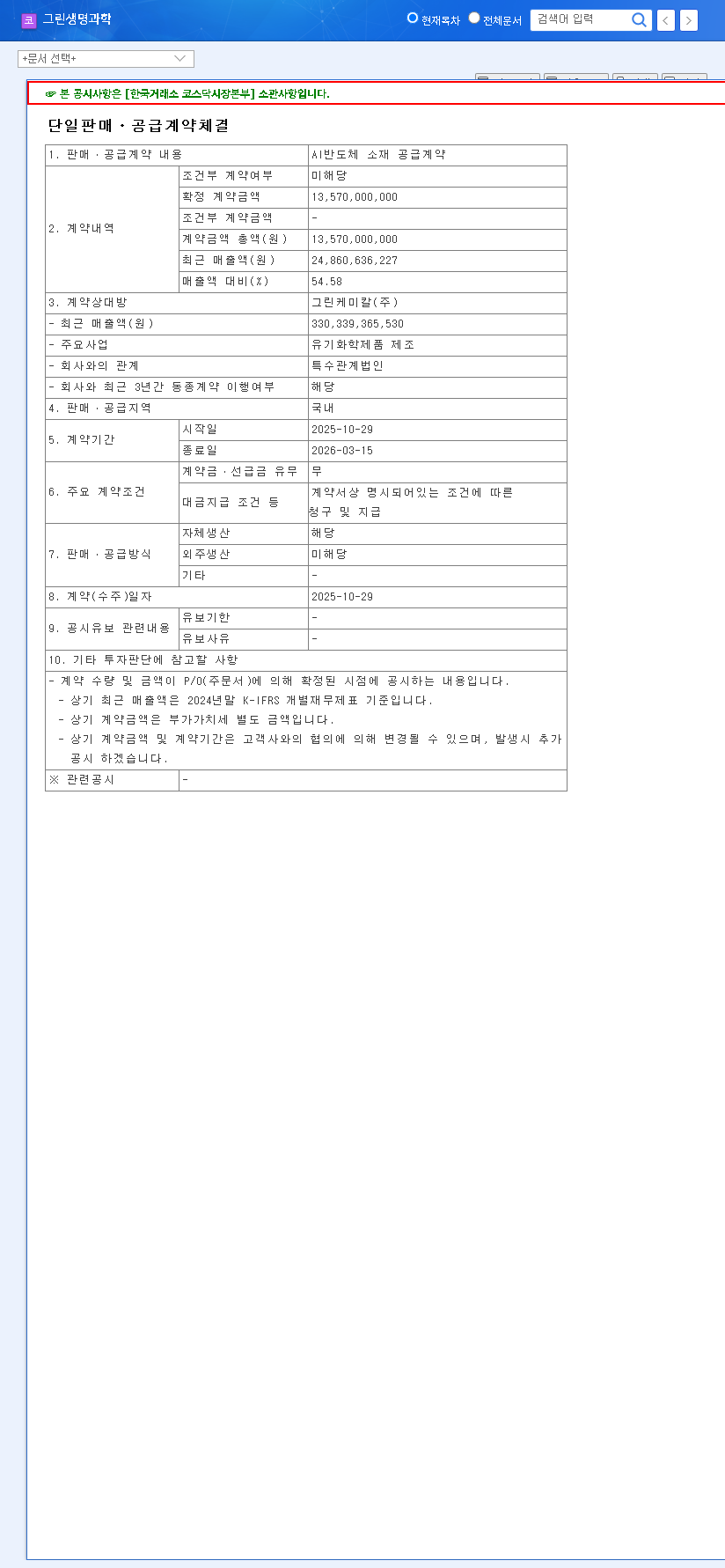
    On October 30, 2025, GREEN LIFESCIENCE disclosed a supply contract for AI semiconductor materials worth a staggering ₩13.6 billion with Green Chemical Co., Ltd. The contract, which represents a remarkable 54.58% of the company’s recent annual revenue, is scheduled for domestic supply over a four-month period, from October 29, 2025, to March 15, 2026. This isn’t just a large order; it’s a statement of intent, validating the company’s diversification strategy and technological capabilities. For official verification, you can view the Official Disclosure (DART Report).

    Fundamental Analysis: The State of GREEN LIFESCIENCE

    Before this transformative deal, GREEN LIFESCIENCE presented a mixed but promising financial picture. A thorough stock analysis reveals both solid strengths and notable risks.

    Core Strengths (Positive Factors)

    • Impressive Revenue Growth: The company’s half-year revenue for 2025 hit ₩16.351 billion, marking a 23.2% year-on-year increase.
    • Strategic Diversification: Proactive expansion into high-growth areas like electronic materials, secondary battery additives, and now AI semiconductor materials, showcases a forward-thinking growth strategy.
    • Technical Edge: Possession of unique technologies, including phosgene utilization, gives it a distinct competitive advantage within Korea.
    • CMO Competitiveness: With cGMP-compliant facilities, the company has strong potential for expanding its contract manufacturing organization (CMO) business.

    Challenges and Risks (Negative Factors)

    • Profitability Concerns: Despite revenue growth, an operating loss of ₩-1.122 billion was recorded due to rising costs.
    • Inventory Management: A 53.8% increase in inventory assets raises questions about operational efficiency and potential write-downs.
    • Macroeconomic Headwinds: The business is susceptible to external factors like exchange rate volatility, high interest rates, and fluctuating raw material costs.

    Impact of the AI Semiconductor Material Contract

    This contract is a pivotal event. The AI semiconductor market is projected to grow exponentially, driven by advancements in machine learning and data centers. According to industry experts at McKinsey, this sector represents one of the most significant growth opportunities of the decade. For GREEN LIFESCIENCE, successfully entering this market could redefine its future.

    This deal is more than just revenue; it’s a validation of GREEN LIFESCIENCE’s technological pivot. Success here could unlock access to a far larger, high-margin global supply chain.

    Potential Upsides

    • Revenue and Profit Surge: The immediate ₩13.6 billion revenue boost is clear. If margins are favorable, it could significantly reverse the recent operating loss.
    • Market Re-evaluation: The contract enhances brand value and proves its capabilities, potentially leading to a higher stock valuation and attracting new high-profile clients.
    • Future Growth Engine: Establishes a strong foothold in a rapidly expanding industry, reducing reliance on the traditional pharmaceutical market.

    Potential Downsides & Execution Risks

    • Margin Uncertainty: The profitability of this specific contract is unknown. High initial production costs for AI semiconductor material could squeeze margins.
    • Operational Risks: The semiconductor industry demands exceptionally high quality and supply chain stability. Any delays or quality issues could lead to severe penalties.
    • Short-Term Nature: The four-month contract duration provides a short-term boost, but long-term success hinges on securing follow-up orders and building lasting partnerships.

    Comprehensive Outlook and Investor Strategy

    The GREEN LIFESCIENCE AI semiconductor material deal is a powerfully positive catalyst. However, prudent investors should monitor several key performance indicators closely. Focus on the company’s ability to manage costs, maintain financial health amid rising interest rates, and demonstrate quality control. Future earnings reports will be critical for verifying the actual profit margins from this new venture.

    For sustained, long-term growth, GREEN LIFESCIENCE must prove this is not a one-off contract but the beginning of a successful business division. Continued investment in R&D and securing additional orders will be the ultimate determinants of the company’s re-evaluation. For more insights, you can review our complete guide to investing in specialty chemical companies.

    Disclaimer: This analysis is for informational purposes only and is based on publicly available data. It does not constitute investment advice. All investment decisions should be made with the consultation of a qualified financial advisor.
    (114450) GREEN LIFESCIENCE Stock: Analysis of the ₩13.6B AI Semiconductor Material Deal 관련 이미지
  • (002390) HANDOK Inc. (002390) Q3 2025 Earnings Analysis: A Deep Dive into a Sustainable Recovery

    (002390) HANDOK Inc. (002390) Q3 2025 Earnings Analysis: A Deep Dive into a Sustainable Recovery

    The latest preliminary Q3 2025 results for HANDOK Inc. (002390) have sent ripples through the investment community. After a period of challenging performance, the company is showing clear signs of life, with notable increases in sales revenue and a crucial return to profitability. This detailed HANDOK Inc. earnings analysis will dissect these figures, evaluate the underlying drivers, and weigh the potential risks to determine if this is a temporary rebound or the beginning of a sustained growth phase.

    For investors tracking the HANDOK stock analysis, the key question is whether the company can build on this momentum. We will explore financial trends, market conditions, and macroeconomic factors to provide the essential insights needed for informed decision-making.

    A Deep Dive into HANDOK’s Q3 2025 Financials

    HANDOK Inc. demonstrated significant positive momentum in its Q3 2025 performance, marking a potential turning point. Let’s break down the key indicators from the latest HANDOK financial report.

    Revenue and Profitability Rebound

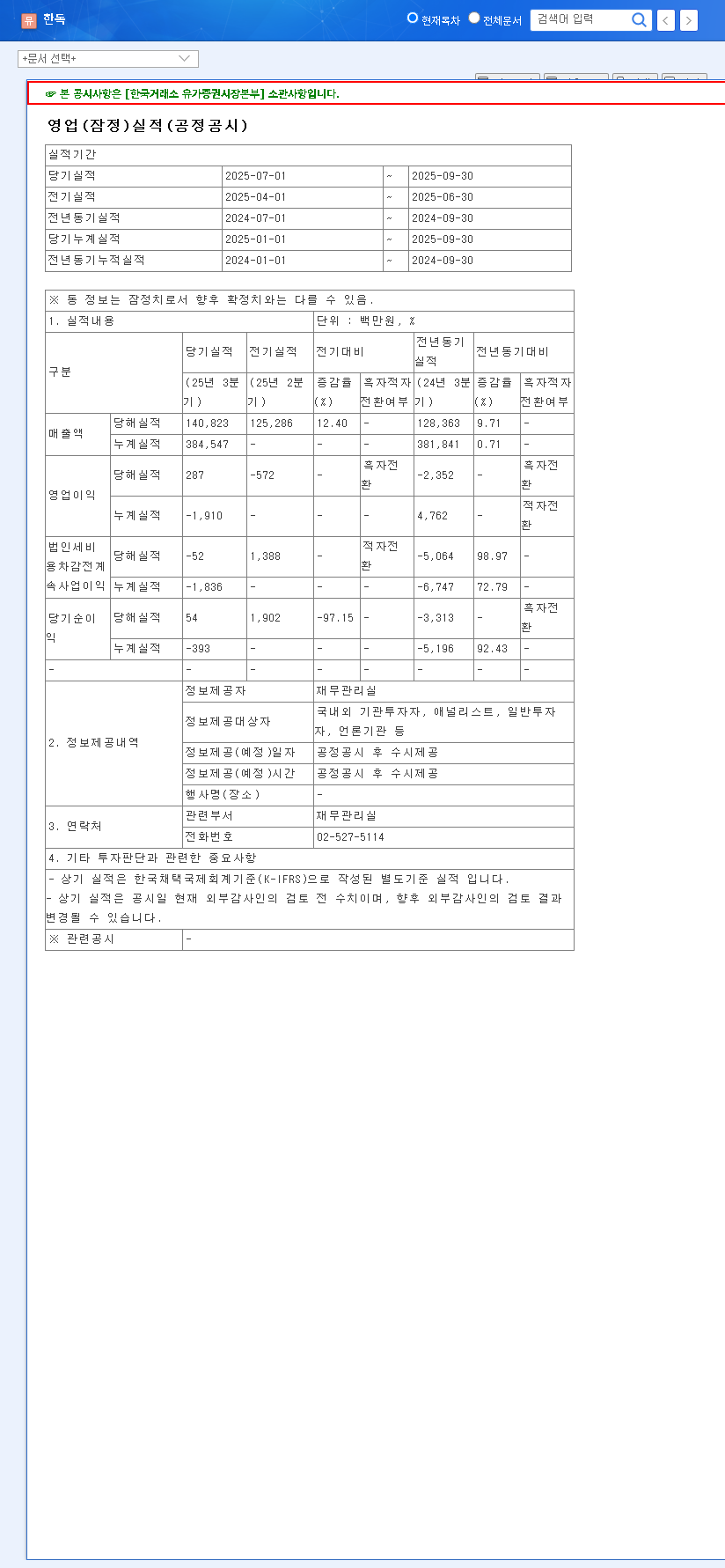
    • Sales Revenue Growth: Q3 2025 sales revenue reached KRW 140.8 billion, a robust 7.9% increase from the KRW 130.5 billion reported in the previous quarter. This surge indicates renewed commercial strength and puts the company on a positive track toward its annual forecasts.
    • Return to Profit: The company posted an operating profit of KRW 0.3 billion and a net income of KRW 0.1 billion. While modest, these figures represent a successful turnaround from previous losses and maintain a positive profit trend established in Q2.
    • Improved Trajectory: This performance is a stark contrast to the operating losses of Q3 2024 (-KRW 3.1 billion) and Q4 2024 (-KRW 2.9 billion), clearly demonstrating a significant operational improvement over the past year.

    What’s Driving the Recovery?

    The Q3 earnings improvement isn’t just a statistical anomaly; it’s backed by several contributing factors that suggest a more foundational shift in the company’s prospects.

    Core Business Strength and Favorable Economics

    The primary driver is the strong top-line growth, which provides a solid base for profitability. This sales momentum is crucial for achieving the projected 2025 annual sales of KRW 2,798.7 billion. Furthermore, a stable macroeconomic environment has provided favorable tailwinds. As noted by financial analysts at leading global publications, stable interest rates in both Korea (2.50%) and the U.S. (4.25%) have helped manage debt servicing costs and bolster investor confidence. Reduced volatility in the KRW/USD exchange rate and declining international oil prices have also likely eased cost pressures on raw materials and logistics.

    The consecutive quarterly turnarounds in operating and net income signify a pivotal shift. This lays the groundwork for a much stronger second-half performance, but fundamental risks must still be carefully managed.

    A Cautious Outlook: Unpacking the Risks for HANDOK Inc.

    Despite the positive signals, a comprehensive HANDOK Inc. earnings analysis requires a sober look at the challenges ahead. A cautious approach is warranted before declaring a full-scale recovery.

    • Insufficient Profit Scale: An operating profit of KRW 0.3 billion translates to a razor-thin operating profit margin of just 0.21%. This is significantly below the annual estimate of 11.93% and indicates that the company needs a monumental Q4 performance to meet its targets.
    • Investment and R&D Concerns: Persistent losses from equity-accounted investees, such as Genexine and Rezolute, could continue to drag on overall profitability. Additionally, a decrease in R&D spending to 4.55% of sales raises questions about the company’s long-term innovation pipeline and future growth engines. For more context, you can read our guide on analyzing pharmaceutical R&D spending.
    • Macroeconomic Volatility: While currently stable, factors like exchange rates, interest rates, and commodity prices are inherently unpredictable and could shift unfavorably, impacting future earnings.

    Strategic Outlook & Investor Action Plan

    For those conducting a HANDOK stock analysis, the current situation calls for a ‘wait-and-see’ approach. While the Q3 results are encouraging, confirmation of this trend in the upcoming Q4 report is critical. Investors should closely monitor sales growth, profit margin expansion, and any updates on the new drug pipeline. For official data, investors can refer to the Official Disclosure (Source: DART).

    Frequently Asked Questions (FAQ)

    Q1: What are the key takeaways from HANDOK’s Q3 2025 earnings?

    A1: HANDOK Inc. reported Q3 2025 sales of KRW 140.8 billion (a 7.9% QoQ increase) and successfully turned both operating profit (KRW 0.3B) and net income (KRW 0.1B) positive, signaling a strong potential recovery.

    Q2: Is this earnings improvement sustainable for HANDOK?

    A2: This marks the second consecutive quarter of positive operating profit, which suggests a sustained trend rather than a one-off event. However, the very low profit margin indicates that the recovery is still fragile and requires confirmation in Q4.

    Q3: What are the main risks facing HANDOK’s financial health?

    A3: Key risks include the extremely low profitability scale, potential losses from equity-accounted investments, and concerns over reduced R&D spending impacting long-term growth prospects.

    Q4: What should investors watch for in the upcoming 002390 earnings reports?

    A4: Investors should focus on continued sales growth, significant improvement in operating profit margins, progress in the R&D pipeline, and the ongoing impact of macroeconomic conditions.

    (002390) HANDOK Inc. (002390) Q3 2025 Earnings Analysis: A Deep Dive into a Sustainable Recovery 관련 이미지
  • (237690) ST PHARM Q3 2025 Earnings: A Deep Dive Investment Analysis

    (237690) ST PHARM Q3 2025 Earnings: A Deep Dive Investment Analysis

    ST PHARM Co., Ltd. (KRX: 237690) has captured the market’s attention with its preliminary Q3 2025 earnings, revealing a performance that didn’t just meet expectations—it shattered them. This remarkable achievement signals a pivotal moment for the company, showcasing robust growth in its core businesses and a strengthening financial foundation. For investors, this raises a critical question: Is this the start of a sustained growth trajectory for ST PHARM? This comprehensive analysis will dissect the Q3 results, explore the key drivers behind this success, and evaluate the long-term ST PHARM investment thesis.

    Decoding ST PHARM’s Blockbuster Q3 2025 Earnings

    The preliminary consolidated financial results, announced on October 29, 2025, delivered an exceptionally positive surprise. The numbers speak for themselves, painting a picture of a company firing on all cylinders. According to the Official Disclosure (Source), ST PHARM’s performance far outpaced market consensus:

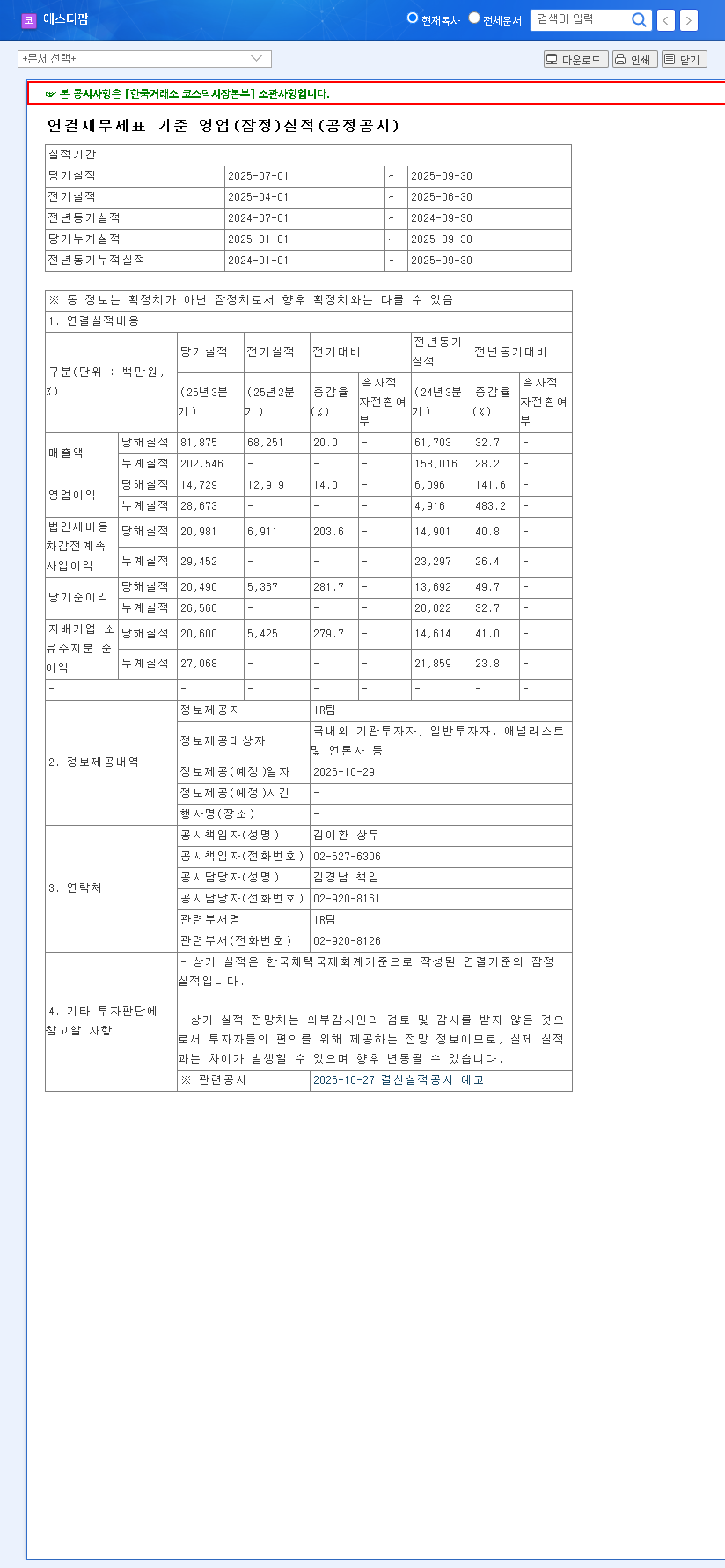
    • Revenue: KRW 81.9 billion, a remarkable 23% above the projected KRW 66.4 billion.
    • Operating Profit: KRW 14.7 billion, an explosive 130% surge compared to the expected KRW 6.4 billion.
    • Net Profit: KRW 20.6 billion, a staggering 390% above the forecast of KRW 4.2 billion.

    This explosive growth, particularly in operating and net profit, underscores a significant improvement in profitability and highly efficient cost management. The cumulative performance for the first three quarters of 2025 further solidifies this trend, setting a strong precedent for the year-end results.

    The Dual Engines Driving ST PHARM’s Growth

    This outperformance isn’t accidental. It’s the direct result of strategic focus and excellence in high-growth sectors. Two areas, in particular, are responsible for propelling ST PHARM’s financial success.

    Mastery in Oligonucleotide & mRNA CDMO

    The core of ST PHARM’s success lies in its Contract Development and Manufacturing Organization (CDMO) services, specifically for oligonucleotides and mRNA. Oligonucleotides are short DNA or RNA molecules used in precision therapies, while mRNA technology, famously used in COVID-19 vaccines, holds immense promise for treating a wide range of diseases. As the global demand for these advanced therapeutics grows, specialized manufacturing partners like ST PHARM become indispensable. The company has expertly capitalized on this trend, leveraging its advanced technology and production capabilities. To learn more about this revolutionary field, you can explore resources from authoritative bodies like the National Institutes of Health. For a closer look at market dynamics, you can read our guide on navigating the global CDMO market.

    Strategic Expansion: 2nd Oligo Facility & sgRNA Ventures

    ST PHARM is not resting on its laurels. The company is actively investing in future growth. The impending operation of its second oligonucleotide facility is set to significantly boost production capacity, allowing it to take on more and larger contracts. Furthermore, its strategic entry into the sgRNA (small guide RNA) business is a forward-thinking move. sgRNA is a critical component of CRISPR gene-editing technology, positioning ST PHARM at the forefront of the next wave of genetic medicine innovation.

    ST PHARM’s strategy is clear: dominate the current oligonucleotide and mRNA CDMO market while simultaneously building the infrastructure to lead the next generation of gene-editing therapeutics.

    A Comprehensive ST PHARM Investment Analysis

    Strengthening Financials and Profitability

    Beyond the headline numbers, ST PHARM’s financial health is showing marked improvement. The company is transitioning from a period of investment and losses into a phase of sustainable profitability. The impressive operating profit margin of nearly 18% and net profit margin of over 25% in Q3 are not just one-offs but indicators of a structurally sound business model. A steadily decreasing debt-to-equity ratio and rising current ratio also point to excellent liquidity and a stable foundation for future investments.

    Risks and Considerations for Investors

    No investment is without risk. For ST PHARM, a key factor to monitor is exchange rate volatility. With a significant portion of its business conducted in foreign currencies, fluctuations in the KRW/USD and KRW/EUR rates can impact reported profits. Additionally, the CDMO space is becoming increasingly competitive, and investors should watch for how ST PHARM maintains its technological edge and market share against global rivals. It’s also worth noting that past restatement disclosures were procedural corrections and did not affect the company’s intrinsic value, but rather enhanced its transparency.

    Final Verdict: Is ST PHARM a Strong Investment Opportunity?

    The ST PHARM Q3 2025 earnings report is a powerful testament to the company’s robust fundamentals and rapid growth in the high-demand oligonucleotide CDMO and mRNA sectors. With clear growth drivers, expanding capacity, and a strengthening financial position, ST PHARM presents a compelling case as an attractive investment target with significant, sustained growth potential.

    Disclaimer: This analysis is based on publicly available information and is for informational purposes only. It does not constitute financial advice or an investment recommendation. All investment decisions should be made based on your own research and consultation with a qualified financial advisor.
    (237690) ST PHARM Q3 2025 Earnings: A Deep Dive Investment Analysis 관련 이미지
  • (068270) In-Depth Celltrion Stock Analysis: Insider Buying & Zymfentra’s Future

    (068270) In-Depth Celltrion Stock Analysis: Insider Buying & Zymfentra’s Future

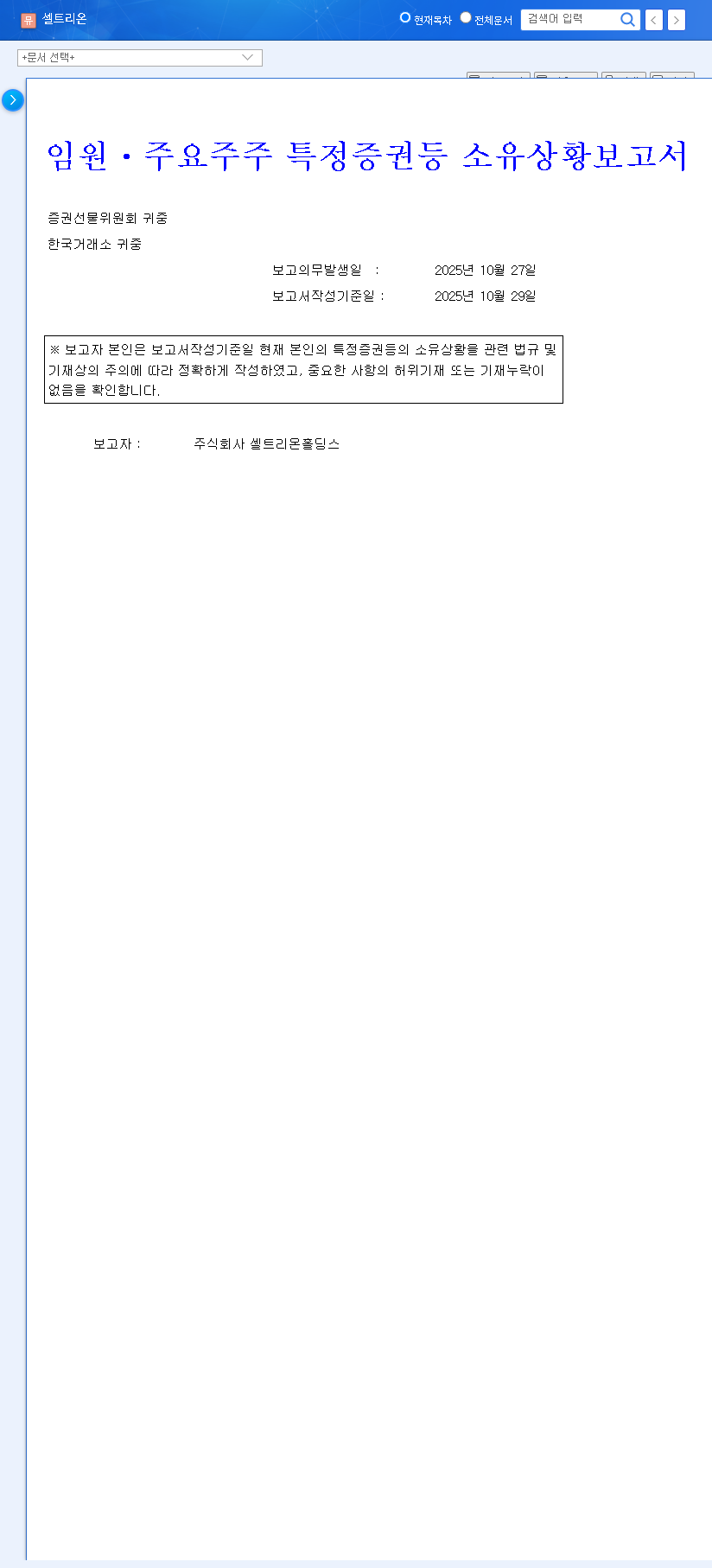
    This comprehensive Celltrion stock analysis explores a critical signal for investors: a significant share purchase by its largest shareholder, Celltrion Holdings. In financial markets, when insiders with unparalleled access to company information decide to increase their stake, it speaks volumes. This move, combined with Celltrion’s solid Q2 2025 financial results and promising pipeline developments like Zymfentra, provides a compelling narrative for the company’s future. We will dissect these events to offer a clear perspective on what this means for your Celltrion investment strategy.

    The Insider Move: Celltrion Holdings Increases Its Stake

    In late October 2025, a key event unfolded that caught the attention of market analysts. Celltrion’s parent company and major shareholder, Celltrion Holdings, executed a series of open-market purchases, acquiring a substantial number of Celltrion shares. While a small percentage change might seem minor, any purchase by a major insider is a deliberate and strategic action worth examining closely.

    Details of the Share Acquisition

    Over a three-day period, Celltrion Holdings methodically increased its position. This transaction was officially recorded in a regulatory filing (Official Disclosure).

    • Total Shares Acquired: 223,791 common shares
    • Purchase Dates: October 27-29, 2025
    • Ownership Change: Increased from 23.81% to 23.93% (+0.12%)

    This wasn’t a passive dividend reinvestment; it was an active, strategic purchase, signaling a strong belief in the company’s undervalued stock and its upward potential.

    Insider buying is often considered one of the most powerful bullish indicators. Executives and major shareholders have asymmetric information; they know the company’s challenges and opportunities better than anyone. When they buy with their own money, it signals profound confidence.

    Robust Fundamentals: The ‘Why’ Behind the Confidence

    The decision by Celltrion Holdings is underpinned by the company’s strong fundamentals, as revealed in its recent Q2 2025 semi-annual report. This isn’t just speculation; it’s a move backed by data and strategic progress.

    1. Powerful Merger Synergies

    The recent merger with Celltrion Healthcare has created a fully integrated biopharmaceutical powerhouse. This vertical integration—from R&D and manufacturing to sales and marketing—streamlines operations, cuts costs, and accelerates market response time. The transition to a direct sales model in key markets like the U.S. and Europe is expected to significantly boost profit margins.

    2. An Expanding, High-Value Product Pipeline

    Celltrion’s growth engine is firing on all cylinders. Legacy biosimilars like Remsima SC continue to perform, while new products gain market traction. The crown jewel, however, is the U.S. FDA approval of Zymfentra. As the world’s first subcutaneous formulation of infliximab, it’s not just another biosimilar; it’s a novel drug that validates Celltrion’s innovation capabilities. This development is a cornerstone of any bullish Celltrion stock analysis. For more on the approval process, you can reference the FDA’s official drug database.

    3. Strong Financial Health and Reinvestment

    The numbers speak for themselves. With a Q2 2025 revenue of KRW 961.5 billion and an impressive operating profit margin of approximately 25%, the company is financially sound. Crucially, Celltrion is reinvesting heavily in its future, dedicating nearly 13% of sales to R&D. This commitment ensures the pipeline remains stocked with future growth drivers.

    Future Outlook & Potential Risks for a Celltrion Investment

    The combination of insider confidence and strong fundamentals paints a positive picture. The primary growth drivers for a long-term Celltrion investment include the full realization of merger synergies, the successful global launch of Zymfentra, and the diversification into the CDMO business. However, a balanced analysis requires acknowledging potential headwinds.

    • Market Competition: The global biosimilar market is increasingly crowded. Celltrion must continue to innovate to maintain its edge. You can learn more by reading our guide to understanding biosimilars vs. originator drugs.
    • Macroeconomic Factors: Global currency fluctuations (especially USD/KRW), interest rate changes, and geopolitical instability can impact profitability and investor sentiment.
    • Execution Risk: The success of new drugs depends on flawless clinical trials and timely regulatory approvals. Any delays could affect future revenue streams.

    Investor Action Plan

    The recent actions by Celltrion Holdings provide a strong bullish signal, but smart investing requires diligence. Investors should closely monitor upcoming quarterly earnings for evidence of merger synergies taking hold. Keep a keen eye on the sales figures for Zymfentra in the U.S., as this will be a key indicator of its blockbuster potential. While the internal signals are positive, any investment decision must align with your personal risk tolerance and long-term financial goals.

    (068270) In-Depth Celltrion Stock Analysis: Insider Buying & Zymfentra's Future 관련 이미지
  • (298380) ABL Bio’s ADC Power Play: Analyzing the NEOK Bio Acquisition & Pipeline Impact

    (298380) ABL Bio’s ADC Power Play: Analyzing the NEOK Bio Acquisition & Pipeline Impact

    The ABL Bio ADC strategy has taken a bold leap forward, signaling a pivotal moment for the company and the broader oncology landscape. In a decisive move to fortify its position in the highly competitive biotech arena, ABL Bio Inc. (298380) has announced a major equity investment in NEOK Bio, Inc., a firm specializing in the clinical development of Antibody-Drug Conjugates (ADCs). This is more than a simple financial transaction; it’s a calculated maneuver to build a robust pipeline and secure a dominant role in the future of targeted cancer therapy. This deep-dive analysis will unpack the specifics of the investment, its strategic implications, and what it means for the future of ABL Bio’s stock and corporate value.

    Understanding Antibody-Drug Conjugates (ADCs): The ‘Magic Bullet’ of Oncology

    Before delving into the specifics of the deal, it’s crucial to understand why ADCs are generating so much excitement. Often described as ‘biological missiles,’ an antibody-drug conjugate is a highly targeted biopharmaceutical drug that combines a monoclonal antibody with a potent cytotoxic payload. The antibody is designed to seek out and bind to specific proteins (antigens) on the surface of cancer cells, delivering the chemotherapy agent directly to the tumor while largely sparing healthy cells. This precision approach, as explained by leading research bodies like the National Cancer Institute, promises greater efficacy and reduced side effects compared to traditional chemotherapy.

    This isn’t just an investment; it’s a declaration of ABL Bio’s ambition to lead the next wave of targeted cancer therapies through a world-class ABL Bio ADC program.

    The Deal: A Closer Look at the ABL Bio and NEOK Bio Partnership

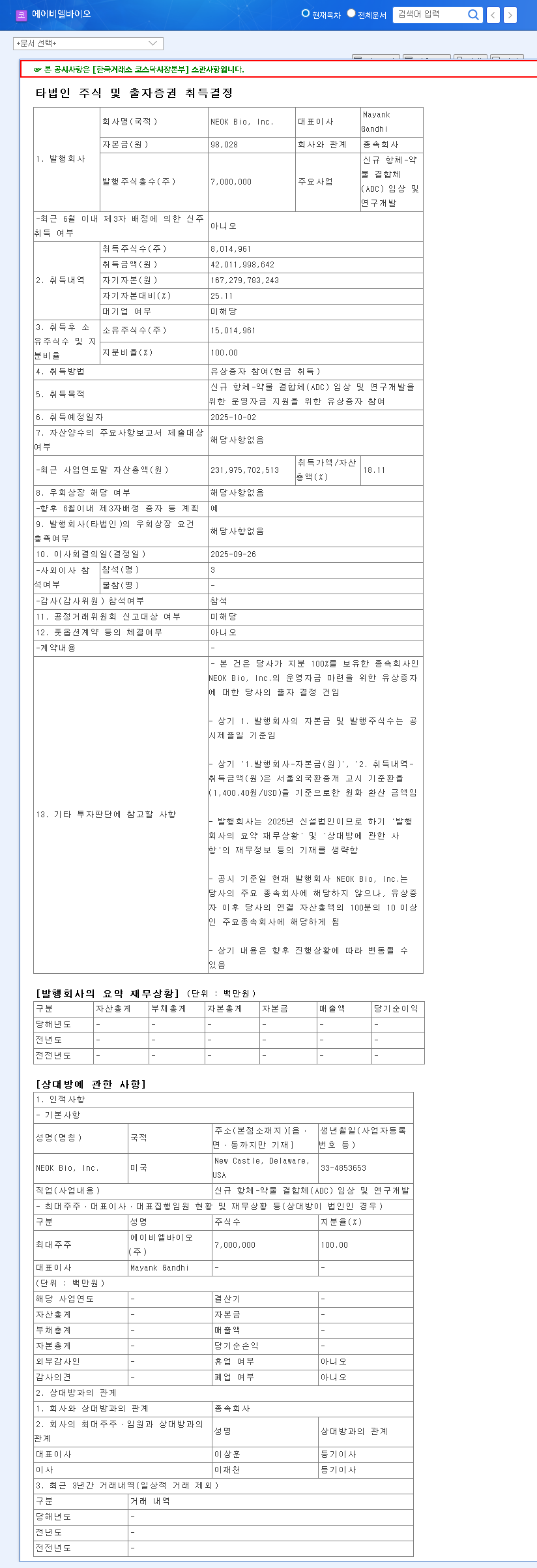
    On October 28, 2025, ABL Bio cemented its commitment by acquiring a controlling 95.26% stake in NEOK Bio, Inc. through a capital increase valued at approximately KRW 14.3 billion (Source: Official Disclosure). Uniquely, this wasn’t a straightforward cash purchase. ABL Bio is transferring its promising new drug candidates, ABL206 and ABL209, to NEOK Bio in exchange for new shares. This structure underscores a deep, symbiotic partnership founded on technology and equity, designed to fast-track global clinical trials and amplify R&D efforts in the ADC space.

    The Strategic Rationale Behind the ABL Bio ADC Expansion

    This NEOK Bio investment is a direct reflection of ABL Bio’s robust financial health and forward-looking strategy. The company’s H1 2025 report revealed a 133% year-over-year revenue surge to KRW 77.9 billion, driven by a landmark technology transfer deal with GSK. With a healthy cash position of KRW 132.7 billion and a low debt-to-equity ratio, ABL Bio is perfectly positioned to fund this expansion without financial strain. By pairing its world-class bispecific antibody platform, Grabody™, with NEOK Bio’s specialized clinical trial and ADC development expertise, ABL Bio aims to create a powerhouse of innovation and accelerate its ABL Bio pipeline development.

    Implications: Opportunities and Hurdles on the Horizon

    This strategic alliance presents both immense opportunities and notable challenges that investors must consider. The potential for synergy is the most compelling upside.

    Key Advantages of the Investment

    • Pipeline Fortification: Acquiring specialized ADC expertise immediately enhances the value of candidates ABL206 and ABL209, significantly de-risking their path through clinical development.
    • Future Growth Engine: The ADC market is one of the fastest-growing segments in oncology. This move positions ABL Bio to capture a significant share of this high-value market.
    • Technological Synergy: This partnership sets the stage for future breakthroughs by combining ABL Bio’s antibody engineering, including their Grabody™ bispecific antibody platform, with NEOK Bio’s conjugation and payload technologies.

    Potential Risks and Considerations

    • Clinical Trial Uncertainty: New drug development is inherently risky. The success of the entire ABL Bio ADC venture hinges on positive clinical outcomes from NEOK Bio’s trials.
    • Integration Challenges: Merging company cultures and aligning R&D strategies will require significant management resources and effort to ensure a seamless and productive integration.

    Investor Takeaway: Navigating ABL Bio’s Next Chapter

    ABL Bio’s investment in NEOK Bio is a forward-thinking move that could redefine its growth trajectory. While the risks associated with drug development are real, the strategic rationale is sound. Investors should closely monitor the clinical trial progress of NEOK Bio’s ADC candidates, the realization of synergies with ABL Bio’s existing platforms, and the efficiency of the post-acquisition integration. This decisive step into the ADC arena has the potential to be the catalyst that elevates ABL Bio to the next tier of global biopharmaceutical leaders, making the ABL Bio stock one to watch closely.

    (298380) ABL Bio's ADC Power Play: Analyzing the NEOK Bio Acquisition & Pipeline Impact 관련 이미지
  • (069620) Fexuclue for H. Pylori Eradication: Daewoong Pharma’s NDA & Market Impact Analysis

    (069620) Fexuclue for H. Pylori Eradication: Daewoong Pharma’s NDA & Market Impact Analysis

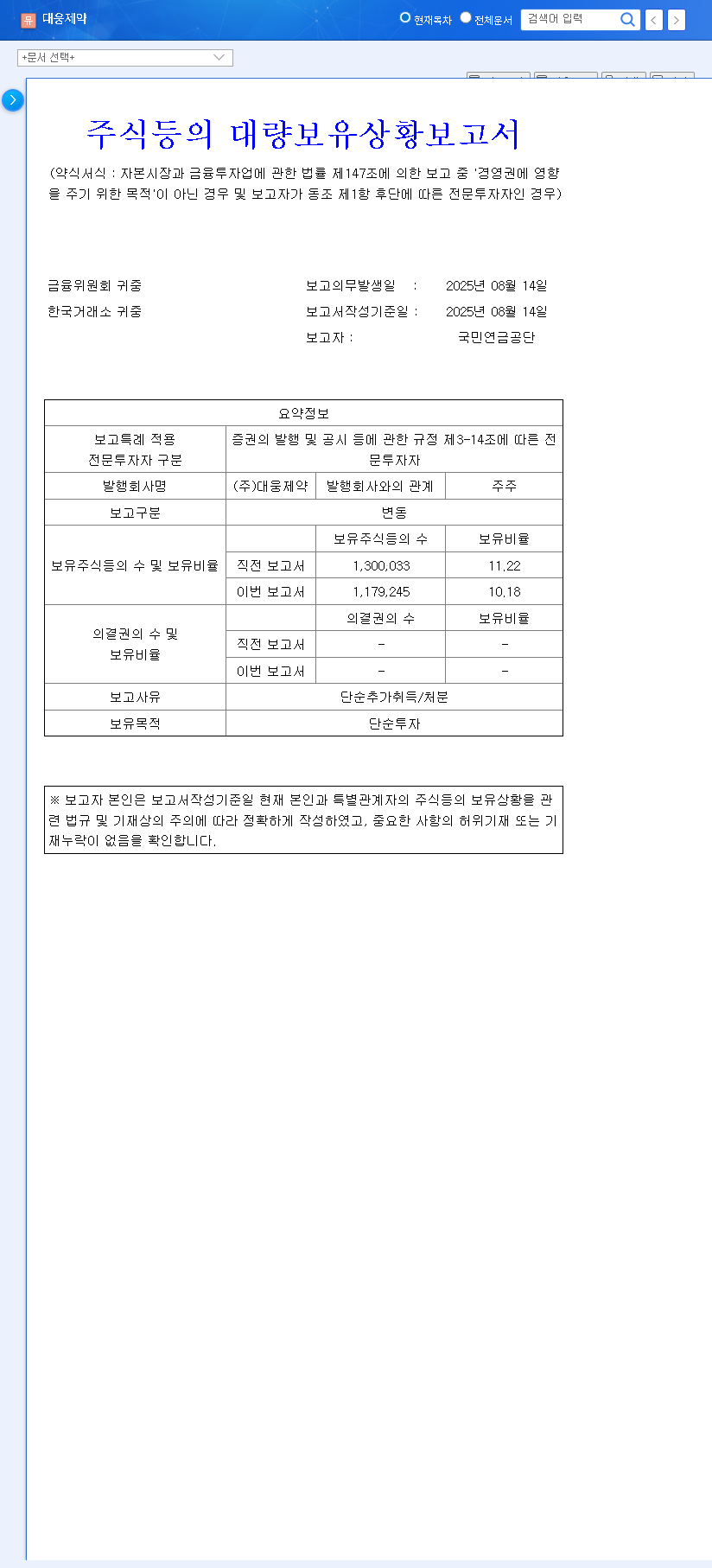
    In the dynamic biopharmaceutical landscape, a significant development has emerged from DAEWOONG PHARMA regarding its flagship P-CAB (Potassium-Competitive Acid Blocker) drug, Fexuclue. The company recently submitted a New Drug Application (NDA) in South Korea to expand its use for Fexuclue H. pylori eradication in combination with antibiotics. This strategic move signals a major step towards tapping into a vast new market and solidifies Fexuclue’s position as a versatile treatment for gastrointestinal disorders.

    This comprehensive analysis will delve into the details of the NDA submission, the clinical data supporting it, the immense market potential for H. pylori treatment, and what this means for investors and the future of DAEWOONG PHARMA. We will provide the critical insights needed to understand the full scope of this pivotal development.

    NDA Submitted for Fexuclue H. Pylori Eradication

    On October 27, 2025, DAEWOONG PHARMA officially filed a domestic New Drug Application with South Korea’s Ministry of Food and Drug Safety (MFDS). The application pertains to Fexuclue Tab. 40mg (Fexuprazan hydrochloride), seeking approval for a new indication: the eradication of Helicobacter pylori bacteria when used in a combination therapy regimen with standard antibiotics. The official filing can be reviewed in the company’s disclosure. (Official Disclosure)

    This submission is backed by robust data from a Phase 3 clinical trial. The study successfully demonstrated that the Fexuclue-based therapy was non-inferior to the existing standard of care. The Fexuclue group achieved an impressive eradication rate of 83.64%, compared to 77.93% in the control group. Crucially, the trial reported no significant safety concerns, positioning Fexuclue as a potent and safe alternative for patients.

    The successful Phase 3 trial results not only pave the way for a new treatment paradigm but also powerfully revalidate DAEWOONG PHARMA’s R&D capabilities in the competitive P-CAB drug class.

    Why This Indication is a Game-Changer

    Tapping into a Massive Market

    Helicobacter pylori is a pervasive bacterium and a primary cause of peptic ulcers and gastric cancer. According to the World Health Organization, it infects approximately half of the world’s population. In South Korea alone, an estimated 20 million people are infected. This represents a substantial and underserved market. By securing an indication for H. pylori treatment, Fexuclue can significantly expand its market share beyond its current approvals for gastric ulcers and gastritis, driving long-term revenue growth.

    Superior Mechanism of Action

    Fexuclue, as a P-CAB drug, offers advantages over older Proton Pump Inhibitors (PPIs). P-CABs provide rapid, potent, and sustained acid suppression, which is critical for creating an environment where antibiotics can effectively eradicate H. pylori. This efficacy, combined with a favorable safety profile, gives Fexuclue a competitive edge and provides a much-needed new option for clinicians and patients, potentially improving overall eradication success rates. For more on this, you can read our complete analysis of the P-CAB drug market.

    Investment Analysis: Opportunities and Risks

    For investors, the Fexuclue H. pylori eradication NDA presents both exciting opportunities and notable risks that require careful consideration.

    Positive Factors for DAEWOONG PHARMA

    • Diversified Revenue Stream: Approval will unlock a new, large-scale revenue pipeline, reducing reliance on existing indications and boosting profitability.
    • Strengthened Portfolio: This indication cements DAEWOONG PHARMA Fexuclue as a cornerstone of its gastroenterology portfolio, enhancing its competitive moat.
    • Global Expansion Blueprint: A successful domestic launch serves as a powerful proof-of-concept for securing approvals and partnerships in international markets.

    Potential Risk Factors

    • Regulatory Hurdles: An NDA submission is not a guarantee of approval. The MFDS review process can introduce delays or unexpected requests for more data.
    • Market Competition: The H. pylori treatment market is established and competitive. Gaining traction against entrenched PPI-based therapies will require a robust marketing and physician education strategy.
    • Physician Adoption Rate: It may take time for healthcare professionals to adopt the new Fexuclue-based regimen, which could temper initial sales growth.

    Conclusion: A Strategic Milestone

    DAEWOONG PHARMA’s application for Fexuclue’s expanded indication for H. pylori eradication is more than a routine filing; it’s a strategic milestone that could significantly reshape the company’s growth trajectory. While regulatory and market risks remain, the strong clinical data and vast market size present a compelling case for long-term value creation. Investors should monitor the progress of the MFDS review and the company’s pre-launch activities closely. This development solidifies Fexuclue’s potential to become a blockbuster drug and a leader in gastrointestinal care.

    (069620) Fexuclue for H. Pylori Eradication: Daewoong Pharma's NDA & Market Impact Analysis 관련 이미지
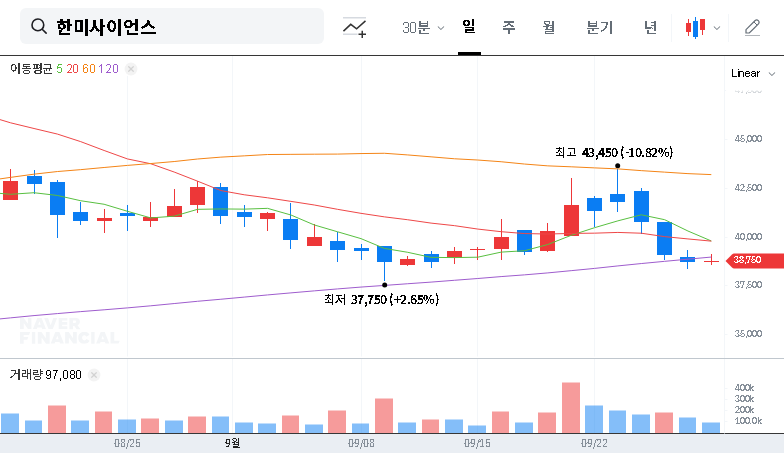
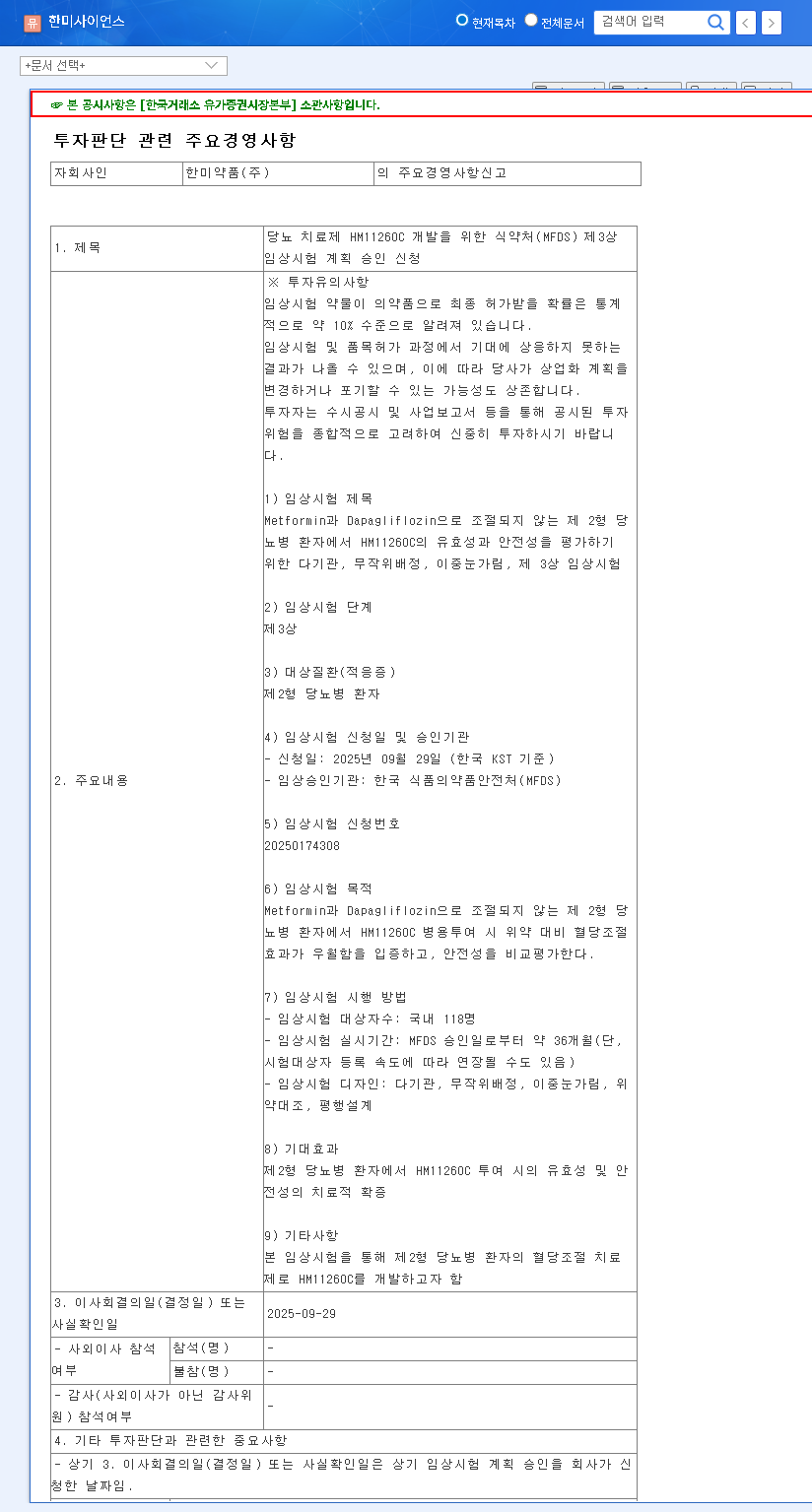
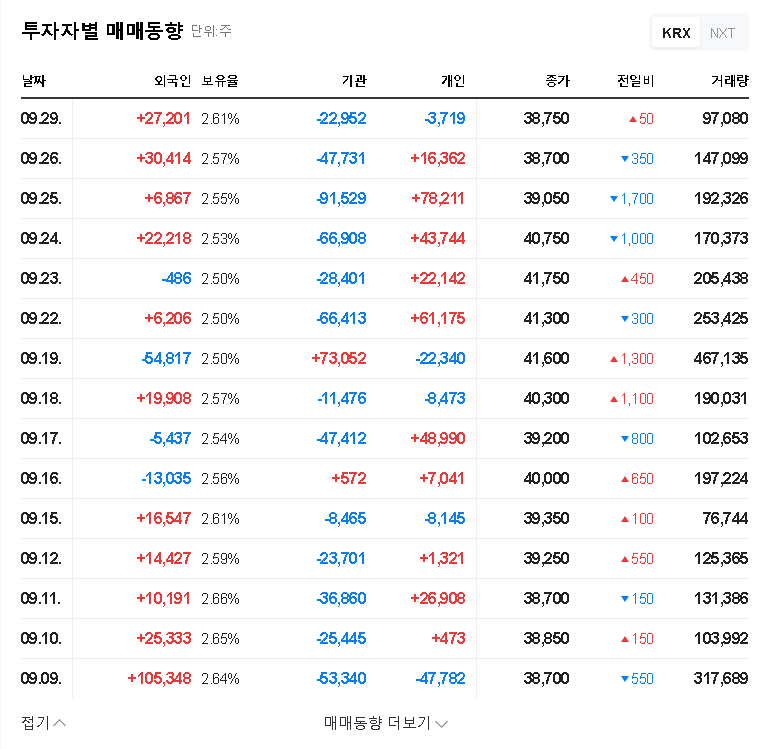
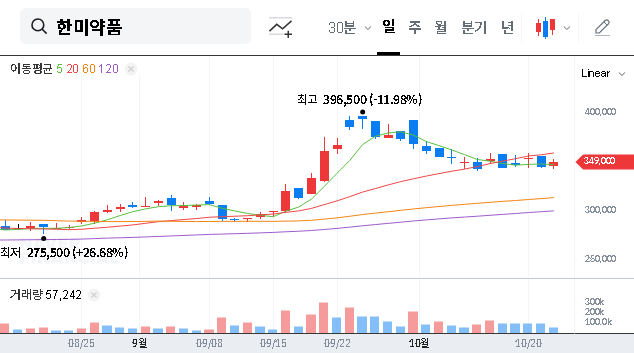
  • (008930) Hanmi Science’s HM11260C Obesity Drug: Phase 3 Success Offers a Lifeline Amid Financial Turmoil

    (008930) Hanmi Science’s HM11260C Obesity Drug: Phase 3 Success Offers a Lifeline Amid Financial Turmoil

    Hanmi Science’s innovative HM11260C obesity drug has delivered stellar Phase 3 clinical trial results, offering a powerful beacon of hope amidst the company’s recent financial struggles. While the first half of 2025 was marked by significant decreases in revenue and operating profit, the success of this next-generation obesity treatment, known as efpeglenatide, has the potential to completely reshape the company’s future. This analysis explores the groundbreaking clinical data, the challenging financial context, and the strategic path forward for Hanmi Science.

    Breakthrough: HM11260C Phase 3 Trial Exceeds Expectations

    On October 27, 2025, Hanmi Pharmaceutical, a key subsidiary of Hanmi Science Co., Ltd, unveiled highly anticipated positive top-line results from the Phase 3 clinical trial of its HM11260C obesity drug. The study focused on non-diabetic obese adults and demonstrated significant efficacy and a manageable safety profile, positioning it as a formidable new contender in the global fight against obesity, a condition affecting millions worldwide according to the World Health Organization. The full details were released in an Official Disclosure (Source: DART).

    Key Efficacy and Safety Results

    • Superior Weight Loss: An impressive 79.42% of patients in the HM11260C group achieved at least 5% weight loss, compared to just 14.49% in the placebo group (p<0.0001).
    • Significant Body Weight Reduction: At the 40-week mark, patients taking efpeglenatide saw an average body weight decrease of 9.75%, dwarfing the 0.95% reduction in the placebo group (p<0.0001).
    • Favorable Safety Profile: The observed gastrointestinal side effects (nausea, vomiting) were consistent with other GLP-1 class drugs, suggesting no new safety concerns.

    The company is now preparing for domestic product approval submission and will continue a 64-week extended trial to verify the long-term, sustained effects of the treatment.

    The success of the HM11260C Phase 3 trial isn’t just a scientific achievement; it’s a critical strategic asset that could mitigate short-term financial pressures and unlock immense future growth for Hanmi Science.

    The Financial Headwinds: H1 2025 Performance

    The excitement surrounding the HM11260C obesity drug is amplified by Hanmi Science’s recent financial performance. The first half of 2025 revealed concerning trends that worried investors and highlighted the company’s need for a powerful new growth engine.

    Summary of Financial Challenges

    • Revenue & Profit Decline: Total segment revenue plummeted by 47.7% year-over-year to 670.4 billion KRW. Operating profit saw a steep 37.6% decrease to 61.7 billion KRW.
    • Holding Segment Woes: A major factor was the reduction in technology export revenue, driven by intensified global competition and the expiration or termination of existing contracts.
    • Subsidiary Slowdown: Key subsidiaries, including Hanmi Pharmaceutical and JVM, faced profitability pressures from increased R&D investments and market competition.

    Strategic Impact and Future Outlook

    The successful clinical data for efpeglenatide could be the catalyst Hanmi Science needs. The global obesity treatment market is a high-growth sector, and having a validated asset significantly boosts the company’s valuation and strategic options.

    Opportunities and Risks Ahead

    Positive Impacts:

    • Enhanced Pipeline Value: Instantly elevates the company’s R&D pipeline and corporate value.
    • Licensing & Export Potential: Strong Phase 3 data dramatically increases the likelihood of lucrative technology export and licensing deals with major global pharmaceutical firms.
    • Improved Investor Sentiment: Provides immediate upward momentum for the stock price and boosts confidence among investors.

    Potential Risks:

    • Regulatory Hurdles: Clinical success is not a guarantee of final regulatory approval.
    • Market Competition: The obesity drug market is becoming fiercely competitive, requiring a sophisticated strategy to gain market share. You can learn more from our analysis of the GLP-1 market.
    • Financial Burden: Commercialization, marketing, and manufacturing scale-up involve substantial costs that could strain finances further before generating revenue.

    Investor Action Plan & Conclusion

    For investors, Hanmi Science presents a classic case of high risk balanced by high potential. A prudent approach involves closely monitoring key developments. Pay attention to the regulatory submission and approval timeline for the HM11260C obesity drug, any news of partnership or licensing agreements, and the company’s strategy for managing costs while investing in this major opportunity. While current financials are a concern, the successful Phase 3 trial of efpeglenatide has provided a clear and powerful driver for future growth. The company’s execution in the coming months will be critical in determining its long-term corporate value.

    (008930) Hanmi Science's HM11260C Obesity Drug: Phase 3 Success Offers a Lifeline Amid Financial Turmoil 관련 이미지
    (008930) Hanmi Science's HM11260C Obesity Drug: Phase 3 Success Offers a Lifeline Amid Financial Turmoil 관련 이미지
  • (170900) DONG-A ST Q3 2025 IR: A Deep Dive Investment Analysis for Investors

    The upcoming DONG-A ST IR conference for Q3 2025, scheduled for October 29th, is a critical event for investors. This isn’t just a routine financial update; it’s a strategic showcase of the company’s future direction in a fiercely competitive pharmaceutical landscape. As DONG-A ST navigates the dual pressures of driving robust sales growth while managing escalating R&D expenditures, this conference will be a litmus test for investor confidence. This comprehensive DONG-A ST investment analysis will dissect the key expectations, fundamental strengths and weaknesses, and strategic imperatives that will define the company’s trajectory and what every stakeholder should be watching.

    We will delve into the critical questions surrounding the company’s profitability, the true value of its innovative pipeline, and whether management can articulate a convincing path to sustainable long-term growth. Can DONG-A ST leverage this IR to build a new foundation for future success? Let’s explore.

    Decoding the DONG-A ST IR: Key Focus Areas

    DONG-A ST has officially scheduled its Investor Relations (IR) conference for October 29, 2025, at 14:15 KST. The stated goals are to foster a deeper understanding of the company’s operations and ultimately enhance corporate value. The agenda will center on two core components: a detailed review of the DONG-A ST Q3 2025 business performance and pivotal updates on its key research and development (R&D) initiatives. Investors can access the official filing for this event directly from the source: Official Disclosure.

    This IR event is a crucial moment. The market is not just looking for numbers; it’s looking for a narrative. A compelling story of how current investments in R&D will translate into future profitability and market leadership is essential.

    Fundamental Analysis: The Bull vs. Bear Case

    A thorough DONG-A ST investment analysis requires a balanced view of the company’s current state, based on its H1 2025 interim report. Here, we outline the positive drivers and the pressing concerns.

    Positive Factors: Engines of Growth

    • Impressive Sales Growth: Revenue reached KRW 376.1 billion, a significant 14.7% year-over-year increase. This growth is powered by strong performance from specialty drugs like Grotropin and the expansion of overseas businesses, including the popular CanBacchus energy drink.
    • Aggressive R&D Pipeline: DONG-A ST is making substantial investments in high-potential areas like metabolic diseases (diabetes, obesity, MASH) and next-generation Antibody-Drug Conjugates (ADC). The acquisition of Aptis is a strategic move to secure future growth drivers. Key clinical trials for DMB-3115, DA-1241, and DA-1726 are progressing, offering significant upside potential. For more context on ADC technology, you can review this comprehensive overview from a leading health authority.
    • Solid Financial Stability: With a debt-to-equity ratio of 99.57%, the company maintains a stable and manageable financial structure, allowing it to fund its ambitious growth plans without excessive leverage.

    Concerning Factors: Navigating Headwinds

    • Eroding Profitability: The most significant concern is the H1 2025 net loss of KRW 34.1 billion. This is a direct result of increased DONG-A ST R&D spending and other costs associated with business expansion. Investors will demand a clear plan to return to profitability.
    • Macroeconomic Pressures: The company is not immune to global economic forces. Volatility in KRW/USD and KRW/EUR exchange rates, coupled with rising interest rates, can negatively impact earnings and increase borrowing costs. These are external risks that require prudent financial management.

    Investor Action Plan & Strategic Outlook

    The central theme for the DONG-A ST IR is balancing long-term vision with short-term execution. While the company’s pharmaceutical growth strategy is sound, demonstrating a clear path to profitability is now an urgent priority. A successful presentation can realign investor expectations and catalyze positive momentum for the stock.

    Key Recommendations for Management

    • Communicate R&D Value: Provide granular details on clinical trial stages, expected market size for new drugs, and competitive advantages.
    • Outline Profitability Roadmap: Present a concrete strategy for improving margins, managing costs, and achieving profitability in the near to medium term.
    • Address Macro Risks: Explain how the company plans to mitigate risks from currency fluctuations and regulatory changes. Check out our guide on pharmaceutical market risks for more information.

    Final Investment Thesis

    DONG-A ST undoubtedly possesses significant long-term growth potential, driven by a promising R&D pipeline and strong sales momentum. However, the current juncture is critical. The market needs to see tangible R&D results and a credible plan for short-term profitability improvement. This IR presentation is a pivotal opportunity to deliver that message. While the stock may present a compelling opportunity for long-term investors willing to weather the volatility, caution is advised for those with a shorter time horizon. The market’s reaction to this event will be a key indicator of the company’s future stock performance.

  • (128940) Hanmi Pharm Q3 2025 Earnings Call: A Deep Dive for Investors

    (128940) Hanmi Pharm Q3 2025 Earnings Call: A Deep Dive for Investors

    The upcoming Hanmi Pharm Q3 2025 earnings call is poised to be a pivotal event for investors and market analysts. As a leading force in South Korea’s highly competitive pharmaceutical and biotech sector, Hanmi Pharm. Co., Ltd. carries significant weight. This announcement, scheduled for October 30th, 2025, is more than a simple report on financial performance; it’s a critical moment that will shape the company’s stock trajectory and provide deep insights into its long-term strategic direction. For savvy investors, preparing for this call is not just advisable—it’s essential.

    With limited pre-release information, the market is holding its breath. This uncertainty creates both risk and opportunity. By understanding the potential scenarios and key analytical points beforehand, investors can formulate a proactive and informed Hanmi Pharm investment strategy. This comprehensive guide will break down everything you need to know.

    Event Details: The Q3 2025 Conference Call

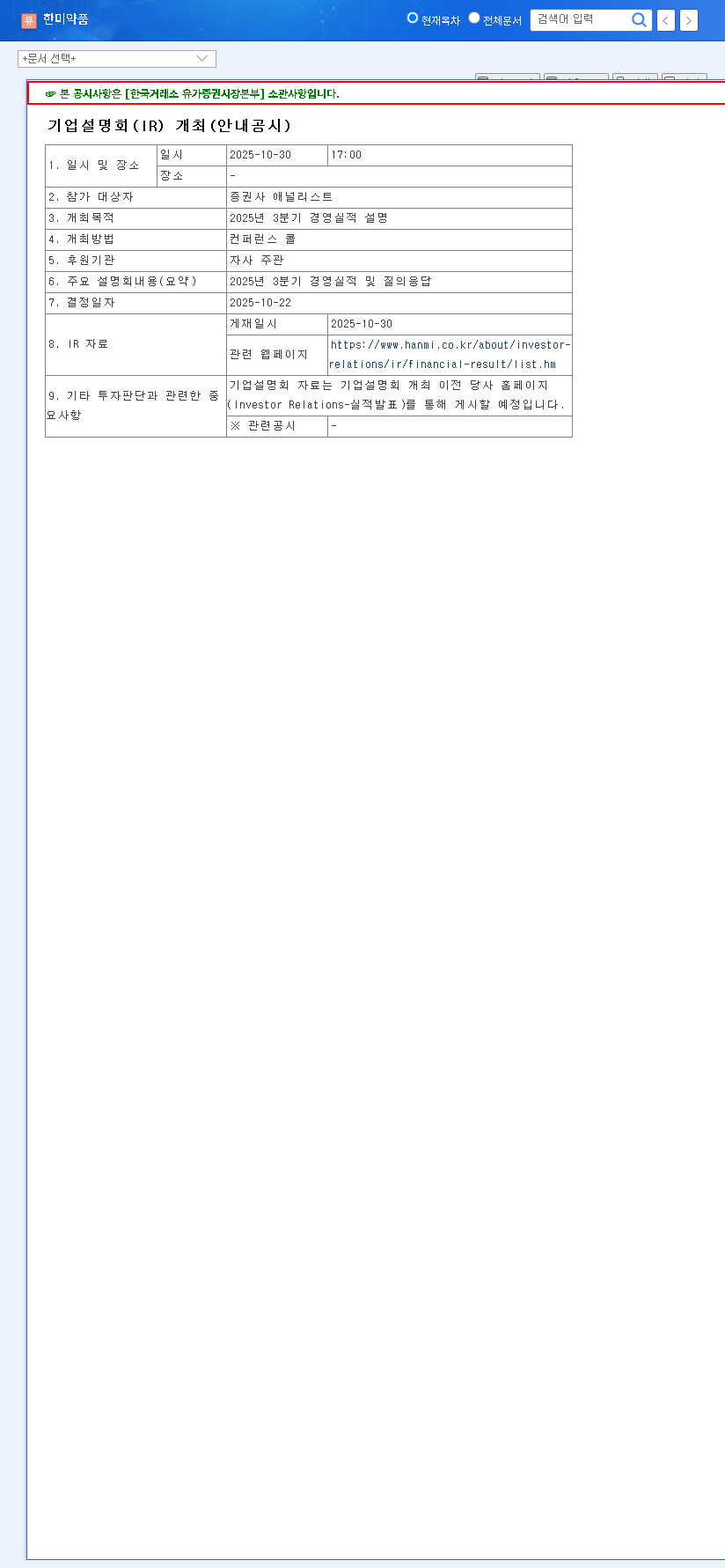
    Hanmi Pharm has officially announced its investor relations (IR) conference call to discuss its third-quarter management performance. Here are the crucial details:

    • Company: Hanmi Pharm. Co., Ltd.
    • Event: Q3 2025 Management Performance IR Conference Call
    • Date: October 30, 2025
    • Time: 17:00 KST (Korea Standard Time)
    • Agenda: Presentation of Q3 financial results followed by a live Q&A session with management.
    • Official Disclosure: The preliminary filing can be viewed on the DART system (Source).

    Why This Earnings Report is a Market Catalyst

    The significance of this call extends far beyond the numbers on a spreadsheet. In an industry driven by innovation, regulation, and long development cycles, forward-looking statements from management are paramount. This event will provide the first concrete data to either confirm or challenge the market’s underlying assumptions about Hanmi Pharm’s health and growth potential, making a detailed Hanmi Pharm stock analysis more critical than ever.

    This isn’t just a report card for the past three months; it’s a compass for the next three years. Management’s tone, transparency, and strategic vision during the Q&A will be as telling as the financial results themselves.

    Analyzing Stock Impact Scenarios

    Investor reaction to the Hanmi Pharm Q3 2025 earnings call will likely fall into one of three scenarios, each with distinct implications for the stock price in the short term.

    • Positive Scenario (Stock Upside): This occurs if Hanmi delivers a strong earnings beat, exceeding analyst consensus on revenue and profit. Positive updates on key R&D pipelines (e.g., successful trial phases, new partnerships) or an optimistic, well-articulated growth strategy could further fuel a rally.
    • Negative Scenario (Stock Downside): Conversely, an earnings miss, negative news regarding clinical trials, or management raising concerns about increased competition or regulatory hurdles could trigger a sell-off. A cautious or uncertain outlook for future quarters would amplify downward pressure.
    • Neutral Scenario (Limited Volatility): If earnings come in line with expectations and there are no major surprises from the R&D front, the stock may see limited movement. This often happens when major uncertainties remain unresolved, and investors adopt a ‘wait-and-see’ approach.

    Investor Action Plan: Critical Analysis Points

    To make an informed decision, go beyond the headline numbers. A comprehensive analysis is crucial. For broader context on industry trends, resources like Reuters Health provide excellent high-level information.

    What to Listen For During the Call:

    • Financial Performance Deep Dive: Look at year-on-year and quarter-on-quarter growth in revenue, operating profit, and net income. How do these figures stack up against the market consensus?
    • Segment Breakdown: Analyze the performance of key business segments. Are domestic sales growing? How are international partnerships performing? Which product lines are driving revenue?
    • R&D Pipeline Progress: This is the lifeblood of any biotech company. Listen for updates on clinical trial results, the potential of new drug candidates, and future R&D investment plans.
    • Management’s Outlook: Pay close attention to the guidance provided for Q4 and beyond. What is their vision for new market entry, M&A possibilities, and responding to policy changes?
    • Q&A Tone and Substance: The Q&A session is often the most revealing part. How does management handle tough questions? Are their answers clear, credible, and confident?

    By meticulously monitoring the content of the presentation and the subsequent market reaction, you can make rational investment decisions. Supplementing this with brokerage reports and further corporate analysis is a hallmark of a sound strategy. For those interested in the sector, our guide on Investing in Korean Pharmaceutical Stocks offers valuable related insights.

    (128940) Hanmi Pharm Q3 2025 Earnings Call: A Deep Dive for Investors 관련 이미지
  • (000250) SAM CHUN DANG PHARM Optus Pharm Acquisition: A Deep Dive into Ophthalmic Therapeutics

    (000250) SAM CHUN DANG PHARM Optus Pharm Acquisition: A Deep Dive into Ophthalmic Therapeutics

    The SAM CHUN DANG PHARM Optus Pharm acquisition marks a significant strategic maneuver in the global pharmaceutical landscape. SAM CHUN DANG PHARM CO. LTD (SCDP) has officially announced its intent to acquire a commanding 44.5% stake in Optus Pharm, a biopharmaceutical company renowned for its focus on ophthalmic therapeutics. This move is more than a simple financial transaction; it’s a calculated entry into a burgeoning market, signaling SCDP’s ambition to become a major player in treating eye-related diseases. This detailed analysis will dissect the acquisition’s key details, strategic rationale, financial implications, and the crucial considerations for investors.

    This acquisition positions SAM CHUN DANG PHARM to capitalize on the rapidly expanding ophthalmic market, leveraging Optus Pharm’s specialized pipeline to secure a new, powerful engine for future growth.

    Deconstructing the Acquisition: The Core Details

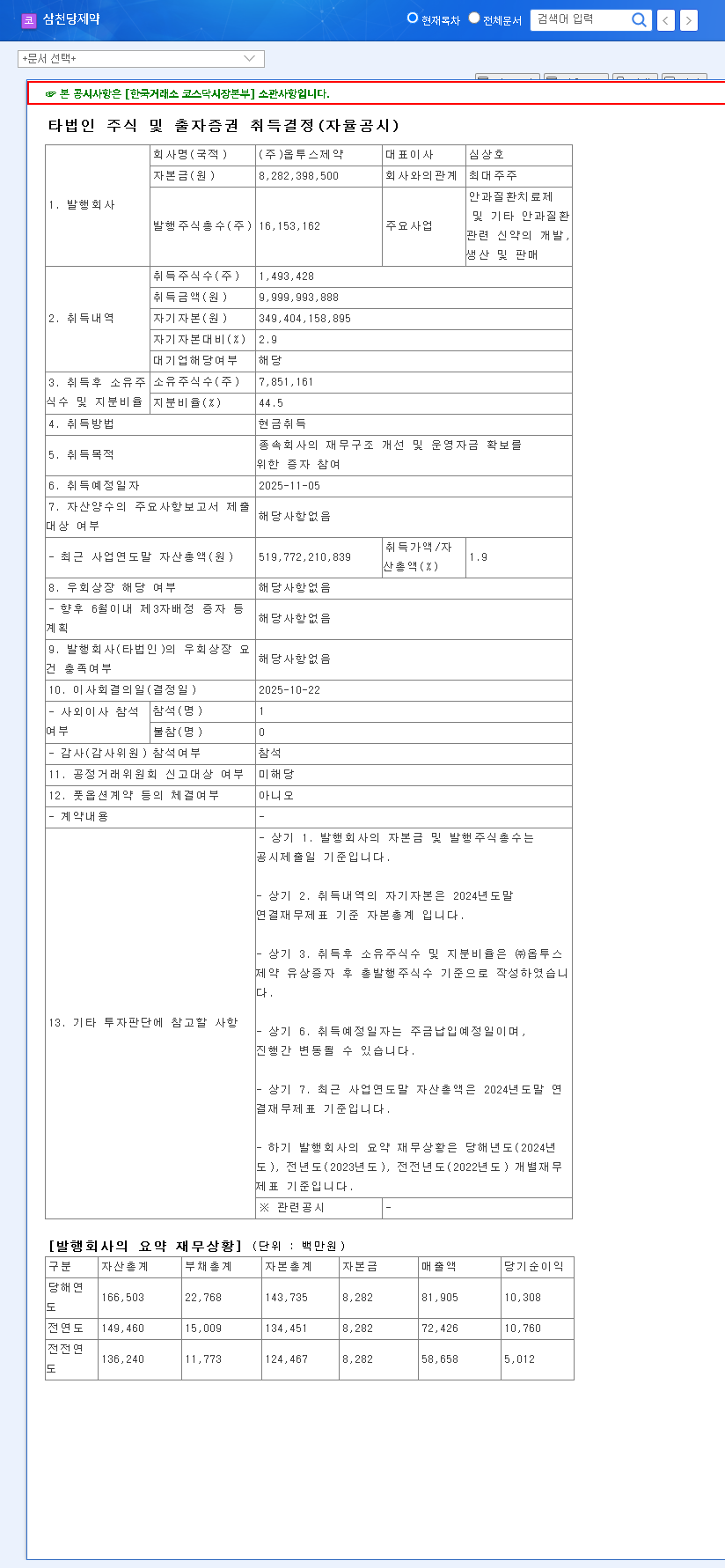
    SCDP is set to become the largest shareholder in Optus Pharm through a KRW 10 billion cash acquisition. This investment is structured as a capital increase, a method designed to directly bolster Optus Pharm’s financial health and provide essential operating funds for its research and development initiatives. The transaction is scheduled for completion on November 5, 2025.

    • Acquired Company: Optus Pharm (Specialist in ophthalmic disease therapeutics)
    • Acquisition Amount: KRW 10 billion (Approx. 2.9% of SCDP’s capital)
    • Post-Acquisition Stake: 44.5% (Largest Shareholder)
    • Purpose: To improve subsidiary’s financial structure and secure operating funds.
    • Official Source: The complete details of this pharmaceutical investment are documented in the Official Disclosure (DART Report).

    Strategic Rationale: Tapping into the Ophthalmic Therapeutics Market

    The global market for ophthalmic therapeutics is experiencing robust growth, driven by an aging global population and a rising prevalence of chronic conditions like diabetes, which often lead to vision impairment. According to a World Health Organization report, at least 2.2 billion people have a near or distance vision impairment. This growing need presents a lucrative opportunity. The SAM CHUN DANG PHARM Optus Pharm acquisition is a direct strategy to enter this high-potential sector.

    Creating Powerful Synergies

    The primary goal is to create synergy between SCDP’s established infrastructure and Optus Pharm’s specialized expertise. This can manifest in several key areas:

    • R&D Acceleration: Combining research capabilities could fast-track the development of novel treatments for conditions like macular degeneration, glaucoma, and dry eye syndrome.
    • Manufacturing & Distribution: SCDP can leverage its large-scale manufacturing facilities and established global distribution networks to bring Optus Pharm’s products to a wider market more efficiently.
    • Portfolio Diversification: This move reduces SCDP’s reliance on its existing product lines and provides a new, stable revenue stream in a specialized therapeutic area.

    Financial Implications and Risk Analysis

    While the KRW 10 billion investment is substantial, it represents only 2.9% of SCDP’s capital, making it a manageable financial commitment that doesn’t overleverage the company. The true value lies in the long-term potential of the Optus Pharm stake. Success, however, is not guaranteed. Investors must carefully weigh the potential rewards against the inherent risks.

    Key Risks and Investor Considerations

    • Clinical Trial Uncertainty: New drug development is a long and arduous process with high failure rates. The success of Optus Pharm’s pipeline hinges on positive outcomes in rigorous clinical trials, which are never certain.
    • Post-Merger Integration (PMI): Merging two distinct corporate cultures can lead to operational friction and inefficiencies. A successful integration strategy is paramount to realizing the projected synergies.
    • Market Competition: The ophthalmic therapeutics space is highly competitive. SCDP and Optus Pharm will face established players with significant market share and R&D budgets.

    For those interested in the broader market, you can explore our complete analysis of the biotech investment landscape for more context.

    Conclusion: A Strategic Bet on Visionary Growth

    The SAM CHUN DANG PHARM Optus Pharm acquisition is a forward-thinking strategic investment. It provides SCDP with a clear pathway into the high-growth ophthalmic therapeutics market while shoring up the financial and operational future of Optus Pharm. The long-term success of this venture will depend on meticulous execution of the post-merger integration and, most critically, the clinical and commercial success of Optus Pharm’s drug pipeline. Investors should monitor progress closely, paying attention to clinical trial milestones and synergy realization to make informed decisions.

    (000250) SAM CHUN DANG PHARM Optus Pharm Acquisition: A Deep Dive into Ophthalmic Therapeutics 관련 이미지