Tag: Pharmaceutical Stock

  • (195940) HK inno.N Corporation IR (195940): A Deep Dive Investment Analysis for 2025

    (195940) HK inno.N Corporation IR (195940): A Deep Dive Investment Analysis for 2025

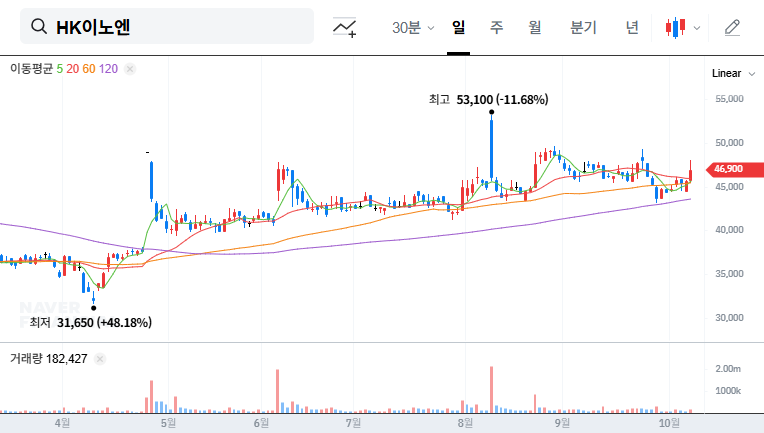
    The upcoming HK inno.N Corporation IR event represents a pivotal moment for investors evaluating the company’s stock (KRX: 195940). As a major force in the healthcare and pharmaceutical sector, HK inno.N is preparing to host a crucial Investor Relations (IR) event in November 2025. This isn’t just a standard briefing; it’s a strategic platform designed to redefine the company’s growth narrative and recalibrate its corporate value in the eyes of the market. For those considering an HK inno.N investment, understanding the nuances of this event is paramount.

    This comprehensive analysis explores the robust fundamentals underpinning HK inno.N’s market position, dissects the potential catalysts that could influence its stock price, and provides a clear roadmap for investors. We will delve into what to expect from the presentation and how the company’s vision could shape investor confidence and future valuation.

    Event Details: The HK inno.N Corporation IR Briefing

    HK inno.N Corporation has officially scheduled its Investor Relations (IR) event for November 17, 2025, at 9:00 AM. The primary objective is to foster a deeper understanding of the company’s strategic direction, operational performance, and long-term value proposition. The event will include detailed presentations on key business segments followed by an interactive Q&A session, offering a transparent look at the company’s current state and future ambitions. For verification, see the Official Disclosure (DART).

    Unpacking HK inno.N’s Strong Fundamentals

    Before analyzing the IR event’s potential impact, it’s essential to appreciate the solid foundation upon which HK inno.N is built. The company’s stability comes from its well-performing Ethical Drug (ETC) and Health & Beauty (H&B) divisions.

    • Impressive Financial Performance: As of Q3 2025, cumulative revenue reached KRW 771.3 billion with an operating profit of KRW 70.8 billion. This demonstrates consistent year-over-year growth, with the ETC division contributing a dominant 93% of total sales.
    • The K-CAB Powerhouse: K-CAB, the company’s blockbuster treatment for gastroesophageal reflux disease (GERD), not only dominates the domestic market but is also a cornerstone of the K-CAB global expansion strategy. Its growing international footprint is a significant future revenue stream.
    • Commitment to Innovation (R&D): HK inno.N allocates 7.93% of its sales to R&D, a clear signal of its dedication to future growth. The focus is on developing a robust pipeline of innovative drugs in high-demand areas like oncology, diabetes, and autoimmune diseases. You can learn more about pharmaceutical R&D trends from authoritative sources like major industry reports.
    • Stellar Financial Health: With a debt-to-equity ratio of just 55.24% (Q3 2025), the company boasts a remarkably stable financial structure. This low leverage empowers HK inno.N to aggressively fund R&D and strategic expansions without significant financial strain.

    The core of any successful HK inno.N investment thesis lies in the dual engines of K-CAB’s global market penetration and the long-term potential of its diverse R&D pipeline.

    Analyzing the IR Event’s Impact on the HK inno.N Stock Price

    This IR event is a double-edged sword, with the potential to significantly sway the HK inno.N stock price. Investors should be prepared for both bullish and bearish scenarios.

    The Bull Case: Potential Positive Catalysts

    • Clarified Growth Roadmap: A detailed and confident presentation on K-CAB’s entry into new markets (e.g., US, Europe) and positive clinical data from the R&D pipeline could dramatically increase investment appeal.
    • Enhanced Investor Trust: Transparent communication and satisfactory answers during the Q&A can resolve market uncertainties, building stronger confidence in the management team.
    • Upgraded Analyst Ratings: Positive surprises or a compelling long-term vision could lead to analyst upgrades, creating short-term buying pressure on the 195940 stock.

    The Bear Case: Potential Negative Risks

    • Underwhelming Outlook: If the growth forecasts or pipeline updates fall short of market expectations, it could trigger a sell-off. Delays in K-CAB’s overseas launches are a key risk to monitor.
    • Vague or Insufficient Answers: Evasive responses to critical questions about competition, clinical trial risks, or market challenges could erode trust and be interpreted negatively.
    • Macroeconomic Headwinds: A failure to present a convincing strategy for navigating challenges like interest rate hikes or currency fluctuations could amplify investor concerns.

    Actionable Insights for Investors

    This HK inno.N Corporation IR event is a critical data point for your investment strategy. To make an informed decision, investors should focus on the substance behind the presentation. Pay close attention to concrete data, timelines, and the strategic rationale for their plans. Compare their projections with existing pharmaceutical market analyses to gauge their realism.

    In conclusion, the event has the potential to be a significant value-unlocking catalyst. By clearly articulating its vision for K-CAB’s global dominance, the progress of its innovative drug pipeline, and its sound financial management, HK inno.N can solidify its position as a compelling long-term investment. We encourage investors to monitor the event closely and analyze the outcomes before making any portfolio adjustments.
    (195940) HK inno.N Corporation IR (195940): A Deep Dive Investment Analysis for 2025 관련 이미지
  • (002720) Kukje Pharma’s KRW 9.5B Bet: Analyzing the Eye Drop Production Expansion and Stock Potential

    (002720) Kukje Pharma’s KRW 9.5B Bet: Analyzing the Eye Drop Production Expansion and Stock Potential

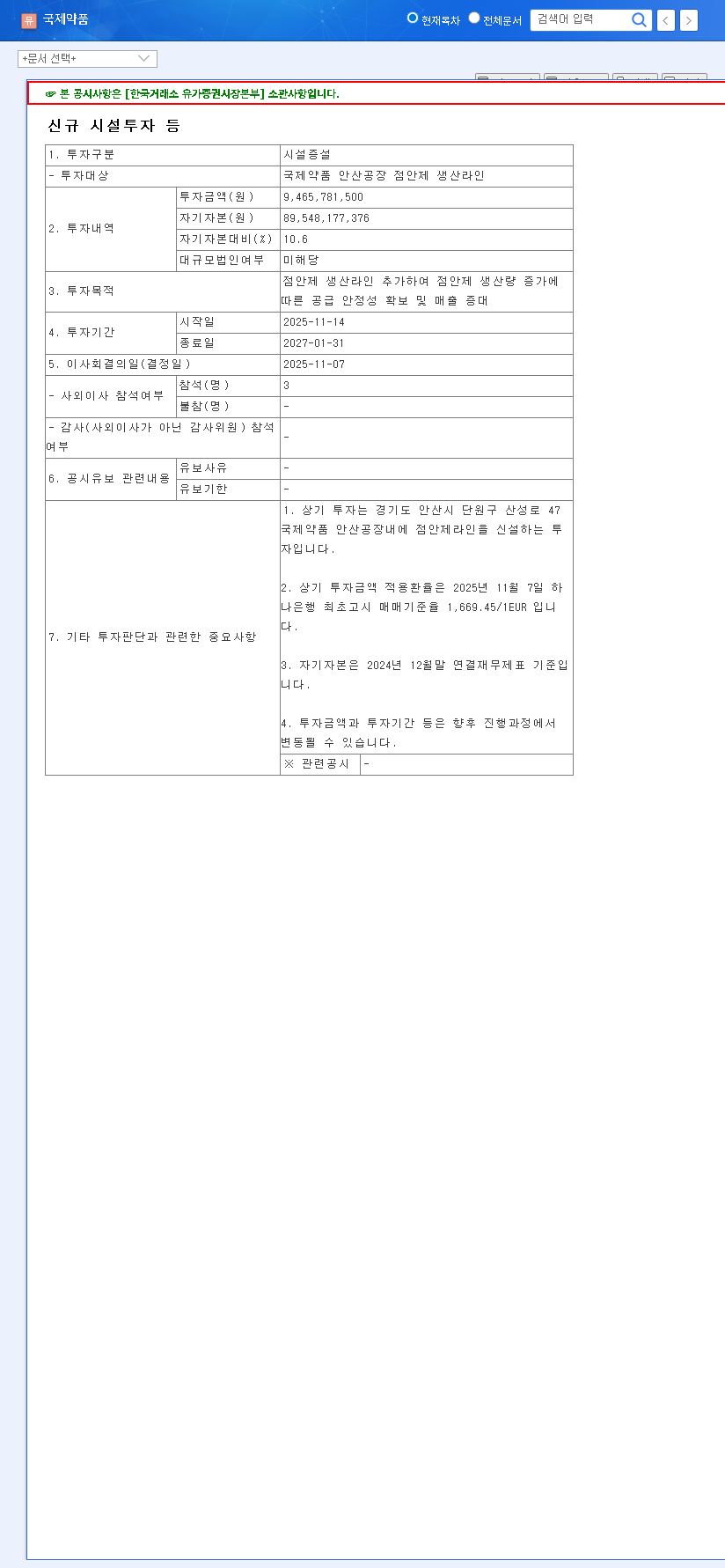
    In a significant move poised to reshape the ophthalmology sector, Kukje Pharma Co., Ltd. has announced a substantial new facility investment of KRW 9.5 billion. This strategic capital injection is earmarked for the expansion of its eye drop production line at the Ansan factory. This isn’t merely an operational upgrade; it’s a bold declaration of intent, signaling a new era of growth and market dominance. For investors and industry watchers, this development raises critical questions: How will this expansion impact Kukje Pharma’s stock valuation and long-term corporate value? This comprehensive analysis will explore every facet of this investment, from the company’s robust fundamentals to market expectations and potential risks.

    This strategic investment signals Kukje Pharma’s ambition not just to compete, but to dominate the burgeoning ophthalmology market in the coming years. It’s a calculated move to capitalize on demographic and lifestyle trends driving demand for eye care solutions.

    The Investment: A KRW 9.5 Billion Vision for the Future

    According to the Official Disclosure filed with DART, Kukje Pharma is committing KRW 9.5 billion, a figure representing 10.6% of its equity capital, to this crucial project. The expansion at the Ansan factory is scheduled over a period of roughly 14 months, from November 14, 2025, to January 31, 2027. The primary objectives are clear: dramatically increase eye drop production capacity to stabilize supply, meet escalating market demand, and ultimately, drive significant sales growth. This is a forward-looking move that prepares the company for the future of eye care.

    Why This Matters: Market Dynamics & Kukje Pharma’s Strengths

    This pharmaceutical investment is timed perfectly. The global eye drop market is experiencing unprecedented growth, fueled by several key factors including an aging global population, increased screen time leading to digital eye strain, and rising awareness of ocular health. By expanding its production capabilities, Kukje Pharma is positioning itself to capture a larger share of this lucrative and expanding market. To learn more about market trends, you can read our analysis of the broader pharmaceutical sector.

    Solid Fundamentals Underpinning the Expansion

    This ambitious project is built on a foundation of strong financial and operational health. Recent performance highlights the company’s readiness for such a large-scale investment.

    • Impressive Financial Growth: The first half of 2025 saw robust year-on-year increases in both revenue and operating profit, driven by strong pharmaceutical sales.
    • Enhanced Financial Stability: A capital procurement ratio of 14.99% points to improved financial soundness, providing a stable base for this significant capital expenditure.
    • Proven R&D Prowess: With active research projects for two new drugs and three modified new drugs, Kukje Pharma is committed to innovation. The past success of products like ‘Rebaeye Eye Drops’ demonstrates their capability to bring profitable new treatments to market.

    Projected Impacts and Potential Hurdles

    The Upside: Growth and Market Leadership

    The potential positive outcomes of the Ansan factory expansion are substantial. A significant increase in eye drop production will allow the company to expand its market share, enhance sales revenue, and build stronger customer loyalty through a stable and reliable product supply. This move solidifies its position as a key player in the ophthalmology space and provides a powerful engine for long-term, sustainable growth. Leading industry sources like PharmaExec magazine often highlight how such capacity expansions can lead to significant stock re-ratings.

    Navigating the Risks

    However, investors must also consider the potential challenges. The KRW 9.5 billion outlay represents a considerable short-term financial commitment, necessitating efficient capital management. Furthermore, the company must navigate the complexities of construction, operational ramp-up, and stringent quality control. External factors, such as intensified market competition or unfavorable exchange rate fluctuations affecting the cost of imported raw materials, also pose risks that require careful monitoring.

    Investor Takeaway and FAQ

    Ultimately, this investment in eye drop production is a clear, strategic move by Kukje Pharma to secure its future. While short-term financial pressures exist, the long-term potential for growth, market leadership, and enhanced shareholder value is compelling. Investors should view this as a pivotal moment in the company’s trajectory, closely observing the execution of the project and evolving market conditions. If successful, this expansion could significantly boost the Kukje Pharma stock price and solidify its reputation as an industry leader.

    Frequently Asked Questions (FAQ)

    Q1: What is the core purpose of Kukje Pharma’s KRW 9.5 billion investment?
    A1: The investment is dedicated to expanding the eye drop production line at their Ansan factory. The primary goals are to increase production capacity to meet growing demand, stabilize product supply, and drive sales growth.

    Q2: How will this expansion affect Kukje Pharma’s market position?
    A2: By increasing production, Kukje Pharma can more effectively serve the growing eye care market, which is expected to increase its market share and revenue. It strengthens their competitive edge and customer trust.

    Q3: What are the main risks for investors to consider?
    A3: Key risks include the short-term financial burden of the KRW 9.5 billion cost, potential delays or inefficiencies in project execution, increased market competition, and macroeconomic factors like exchange rate volatility impacting material costs.

    Disclaimer: This analysis is for informational purposes only and is based on publicly available data. Investment decisions carry risk and should be made by the individual investor after careful consideration.

    (002720) Kukje Pharma's KRW 9.5B Bet: Analyzing the Eye Drop Production Expansion and Stock Potential 관련 이미지
  • (069620) Daewoong Pharma Earnings (Q3 2025): In-Depth Analysis of Revenue Miss & Profit Surprise

    (069620) Daewoong Pharma Earnings (Q3 2025): In-Depth Analysis of Revenue Miss & Profit Surprise

    The latest Daewoong Pharma earnings report for Q3 2025 has presented a fascinating puzzle for investors and market analysts. While top-line revenue slightly missed expectations, the company delivered a significant ‘earnings surprise’ in its operating profit, signaling robust underlying profitability and operational efficiency. This in-depth analysis will dissect the provisional financial results, explore the core drivers behind this mixed performance, and provide a strategic outlook for investors evaluating Daewoong Pharma stock.

    How did Daewoong Pharma orchestrate such a strong profit performance amidst revenue headwinds? We will explore the fundamental metrics, macroeconomic influences, and future catalysts that will shape the company’s trajectory.

    Deconstructing the Q3 2025 Earnings Report

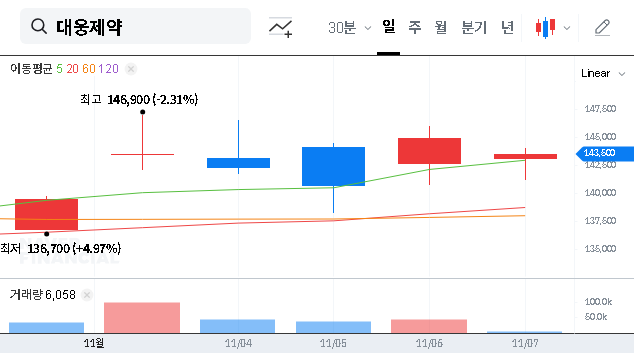
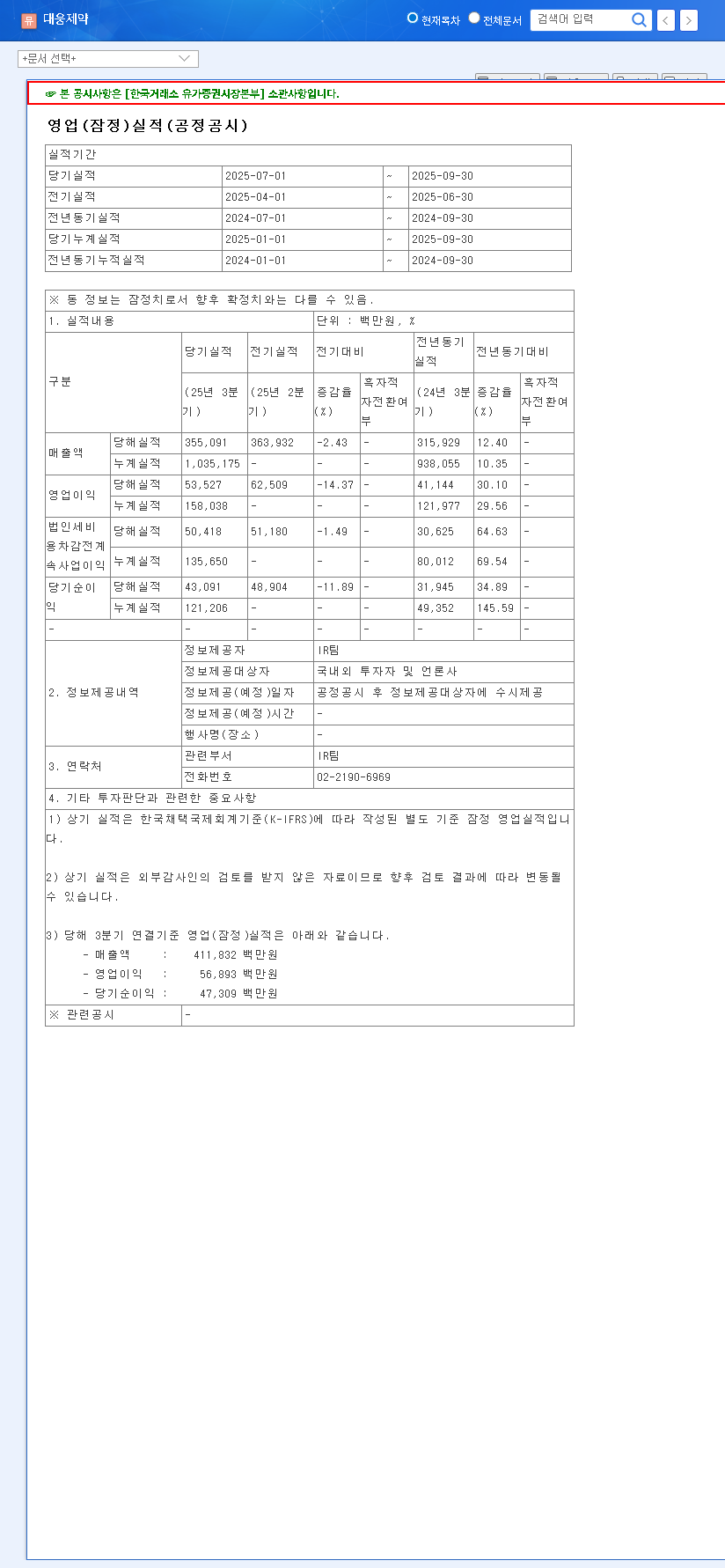
    On November 7, 2025, Daewoong Pharma released its provisional Q3 earnings, with the market immediately focusing on two key conflicting data points. The provisional figures, released in the company’s Official Disclosure, paint a complex but ultimately promising picture. Here are the headline numbers:

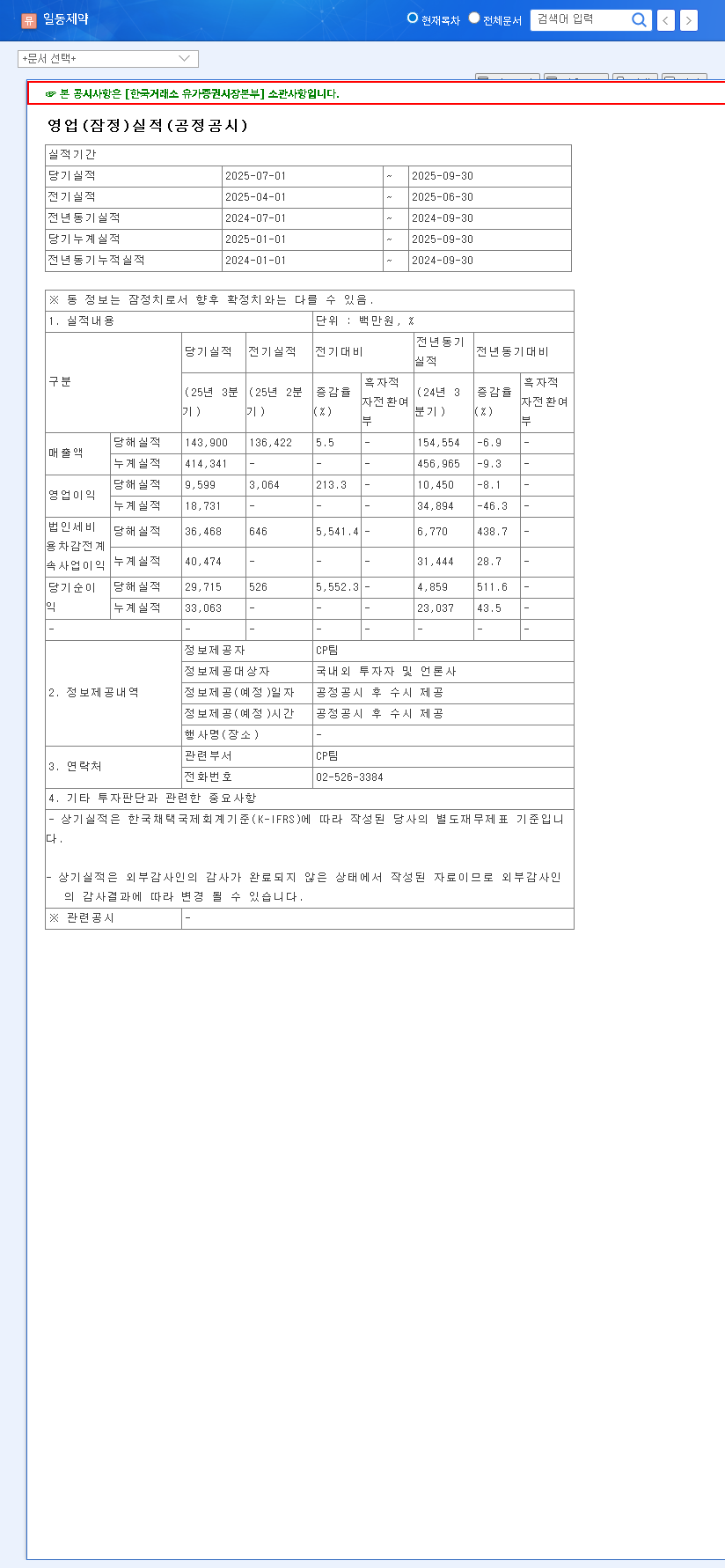
    • Revenue: KRW 355.1 billion, which was 5% below the market consensus of KRW 372.2 billion.
    • Operating Profit: KRW 53.5 billion, a remarkable 11% above the market estimate of KRW 48.1 billion, creating the ‘earnings surprise’.
    • Net Profit: KRW 43.1 billion, showcasing a significant recovery and improvement from weaker performance in the prior year.

    Despite a revenue shortfall, Daewoong Pharma’s ability to significantly boost operating profit by 43.4% year-over-year showcases remarkable operational efficiency and a strengthening core business.

    Fundamental Analysis: The ‘Why’ Behind the Numbers

    The Profit Powerhouse: Drivers of the Earnings Surprise

    The surge in operating profit, up 43.4% year-over-year, is the central story of this earnings report. This impressive margin expansion, despite a 1.0% YoY revenue dip, points to several positive internal developments. The most likely drivers include a strategic shift towards a higher-margin product mix, successful implementation of stringent cost-control measures, and tangible gains in manufacturing and operational productivity. This demonstrates a sophisticated management approach focused on profitability over sheer volume, a key metric in any pharmaceutical stock analysis.

    Revenue Growth and Financial Stability

    While the revenue miss raises questions about near-term growth momentum, the company’s full-year 2025 projections remain positive, with revenue expected to reach KRW 8.048 trillion (+2.2% YoY). The more critical forecast is the projected 39.6% YoY increase in full-year operating profit. The company’s financial health appears solid; as of 2024, its debt-to-equity ratio was a manageable 84.85%, and a current ratio of 109.81% indicates sufficient liquidity to cover short-term liabilities, providing a stable foundation for future growth.

    Navigating Macroeconomic Crosswinds

    No company operates in a vacuum, and Daewoong Pharma is subject to several external economic forces. Persistent volatility in the USD/KRW and EUR/KRW exchange rates can directly impact the profitability of its international sales and the performance of overseas subsidiaries. Furthermore, rising international oil prices could exert upward pressure on production and logistics costs. On the other hand, declining global shipping indices may offer some relief. Investors must monitor how effectively the company hedges against these risks to protect its impressive margins.

    A Strategic Action Plan for Investors

    Given the nuances of the Q3 2025 Daewoong Pharma earnings, a prudent investment strategy requires a forward-looking and multifaceted approach. Before making any decisions, investors should consider the following action points:

    • Analyze the Final Report: Go beyond the provisional numbers. When the detailed report is released, scrutinize the segment-by-segment performance to identify precisely which products drove the margin improvements.
    • Monitor Key Pipelines: Future revenue growth hinges on the global market penetration of key drugs like ‘Fexuclue’ (GERD) and ‘Enavlo’ (diabetes). It’s also crucial to monitor R&D progress, a topic we cover in our deep dive into Daewoong Pharma’s R&D pipeline.
    • Assess Macro Resilience: Evaluate the company’s strategies for managing external risks, such as its currency hedging policies and supply chain diversification, to ensure profitability is protected from market volatility.
    • Re-evaluate Valuation: Observe how the market digests this earnings surprise. Analyze whether the improved profitability is being fairly priced into the Daewoong Pharma stock valuation. For a broader view, consult high-authority sources like Bloomberg’s pharmaceutical sector analysis.

    In conclusion, Daewoong Pharma’s Q3 2025 results signal a company successfully optimizing its business structure for profitability. The key challenge ahead will be reigniting top-line revenue growth while defending these hard-won margins against a complex global backdrop. Meticulous analysis and ongoing vigilance are essential for any investor considering this promising but evolving opportunity.

    (069620) Daewoong Pharma Earnings (Q3 2025): In-Depth Analysis of Revenue Miss & Profit Surprise 관련 이미지
  • (249420) IL DONG PHARMACEUTICAL (249420) Q3 Earnings Analysis: A Definitive Turnaround?

    (249420) IL DONG PHARMACEUTICAL (249420) Q3 Earnings Analysis: A Definitive Turnaround?

    The latest IL DONG PHARMACEUTICAL earnings report for Q3 2025 has captured significant market attention, presenting a narrative of potential recovery. After a challenging first half marked by sluggish performance and heavy financial burdens, the company’s third-quarter results show a surprising and robust turnaround. For investors conducting a thorough IL DONG PHARMACEUTICAL stock analysis, the critical question is whether this is a temporary rebound fueled by short-term factors or the beginning of a sustained, long-term recovery for the pharmaceutical giant (ticker: 249420).

    This in-depth analysis will dissect the Q3 2025 figures, evaluate the underlying fundamentals, assess the impact of key pipelines like Xocova, and consider the macroeconomic environment to provide a comprehensive investment outlook.

    Q3 2025 IL DONG PHARMACEUTICAL Earnings: The Official Numbers

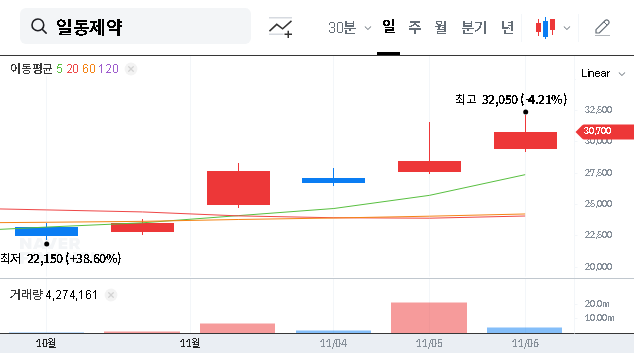
    On November 6, 2025, IL DONG PHARMACEUTICAL (249420) released its preliminary consolidated financial results for the third quarter. The numbers indicate a significant positive shift compared to the preceding quarter. The key performance indicators are as follows:

    • Revenue: KRW 145.5 billion
    • Operating Profit: KRW 6.8 billion
    • Net Profit: KRW 22.4 billion

    It is important to note that no market consensus or expectation was provided for this announcement, which makes a direct ‘beat’ or ‘miss’ assessment challenging. The full details can be reviewed in the company’s Official Disclosure (DART).

    Context is Key: The Financial Headwinds of H1 2025

    To appreciate the significance of the Q3 results, one must look at the concerning picture painted by the first half of 2025. The company’s H1 report revealed several areas of weakness, including underperforming results and a strained balance sheet. Key concerns included a consolidated net loss of KRW 3.396 billion, a declining trend in R&D investment as a percentage of sales, and a high financial burden from derivatives like convertible bonds. Furthermore, a low current ratio (77.20%) and a rising debt-to-equity ratio (72.68%) raised valid questions about the company’s short-term solvency and overall financial health.

    The most striking element of the Q3 IL DONG PHARMACEUTICAL earnings is the dramatic swing in profitability. The company moved from a KRW 3.9 billion net loss in Q2 to a significant KRW 22.4 billion net profit in Q3, signaling a potential operational and financial inflection point.

    The ‘Xocova’ Factor: A Crucial Pipeline for Growth

    A major potential catalyst for IL DONG PHARMACEUTICAL’s future value is its COVID-19 treatment, ‘Xocova’. Having already secured official approval in Japan, the company is actively pursuing applications for approval in other international markets. The actual sales performance of Xocova will be a critical metric for investors to monitor. Strong overseas adoption could provide a substantial and steady revenue stream, alleviating past financial pressures and funding further R&D. The success of this single pipeline could dramatically reshape the company’s financial trajectory and is a core component of any long-term IL DONG PHARMACEUTICAL stock analysis. You can learn more about evaluating drug pipelines in our guide to pharmaceutical investment strategies.

    Investment Strategy: A Cautiously Optimistic Approach

    While the Q3 results provide a strong dose of optimism, a prudent investment approach is still warranted. The financial burdens of H1 have not vanished overnight, and the sustainability of this recovery needs to be confirmed. For more context on market trends, investors often consult sources like Reuters Business for macroeconomic insights. Key considerations for investors include:

    • Confirm the Trend: Wait for Q4 results and 2026 guidance to confirm that the Q3 improvement is not a one-off event but the start of a consistent upward trend.
    • Monitor Xocova Momentum: Closely track sales figures from Japan and news regarding approvals in other key markets. This is the most significant near-term catalyst.
    • Evaluate Financial Health: Look for tangible improvements in the balance sheet, such as debt reduction, improved current ratio, and effective management of derivative liabilities.
    • Assess Macro Risks: Be mindful of how a rising KRW/USD exchange rate could create foreign exchange losses and how higher interest rates could increase borrowing costs, potentially eroding profitability.

    In conclusion, IL DONG PHARMACEUTICAL’s Q3 2025 earnings have presented a compelling argument for a turnaround. The company has shown it can generate significant profit. However, given the lingering financial fragilities and market uncertainties, investors should balance this newfound optimism with a cautious and data-driven approach, focusing on trend confirmation and key pipeline milestones.

    (249420) IL DONG PHARMACEUTICAL (249420) Q3 Earnings Analysis: A Definitive Turnaround? 관련 이미지
  • (001060) JW Pharmaceutical Q3 2025 Earnings: Deep Dive on Net Profit Turnaround & Stock Outlook

    (001060) JW Pharmaceutical Q3 2025 Earnings: Deep Dive on Net Profit Turnaround & Stock Outlook

    The latest JW PHARMACEUTICAL Q3 2025 Earnings report has sent a clear and powerful signal to the market. With a remarkable turnaround to net profitability and sustained revenue growth, investors are closely examining the company’s fundamentals and future trajectory. This comprehensive analysis will break down the provisional Q3 results, explore the core drivers of this success, and evaluate the opportunities and risks that lie ahead for JW Pharmaceutical’s stock.

    JW PHARMACEUTICAL Q3 2025 Earnings: The Key Figures

    On November 3, 2025, JW Pharmaceutical released its provisional Q3 operating results, which painted a picture of robust health and strategic execution. These figures, sourced from the company’s Official Disclosure, exceeded many market expectations.

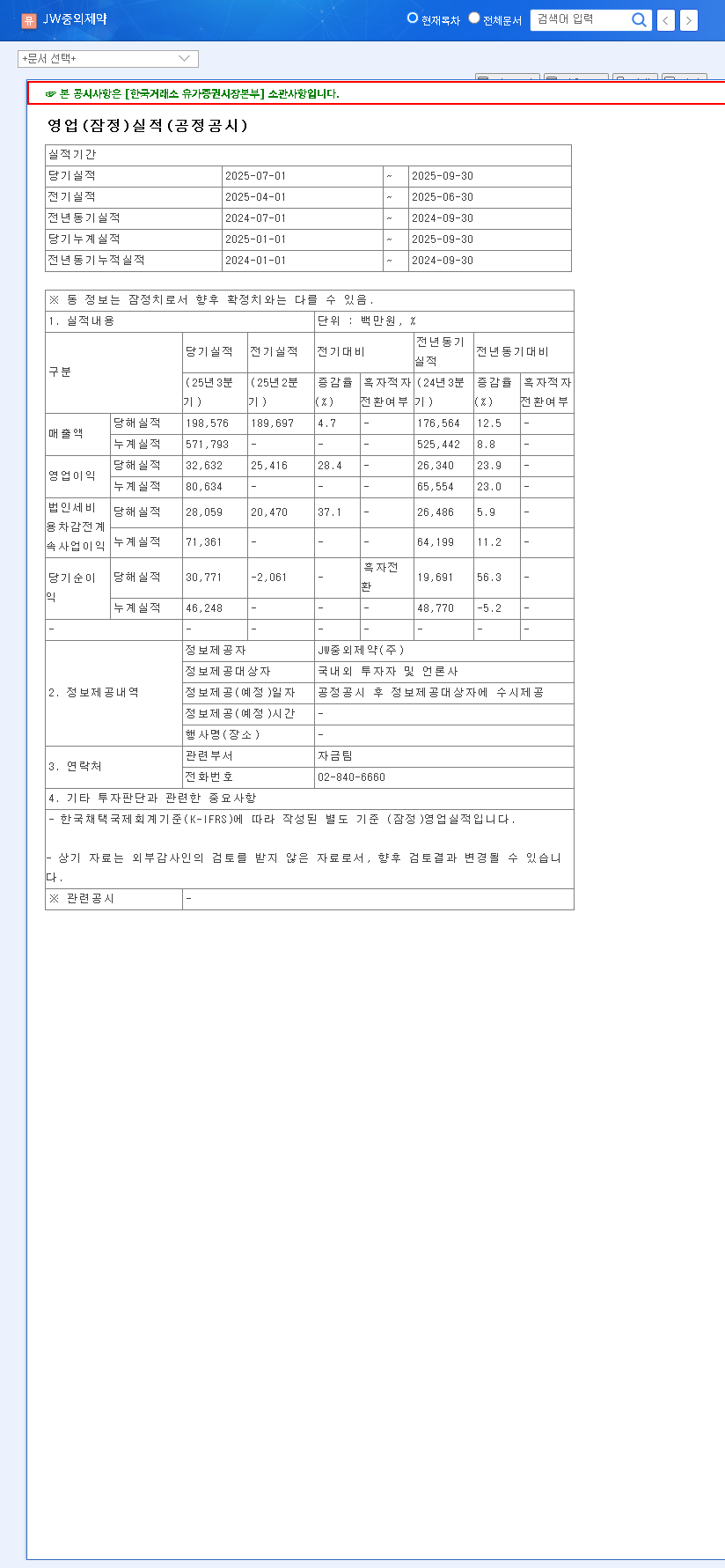
    • Revenue: ₩198.6 billion, a 3.92% increase compared to the previous quarter.
    • Operating Profit: ₩32.6 billion, marking an impressive 30.4% jump from Q2 2025.
    • Net Profit: ₩30.8 billion, a pivotal achievement representing a net profit turnaround from previous periods.

    This surge in profitability, especially the shift to a positive net income, is the standout metric. It suggests that the company’s efficiency measures and high-margin product sales are not just sustaining the business but are actively driving significant bottom-line growth.

    The Q3 net profit turnaround is more than just a number; it’s a testament to JW Pharmaceutical’s strengthening fundamentals and a potential catalyst for renewed investor confidence.

    Deep Dive: The Pillars of JW Pharmaceutical’s Success

    Understanding what’s behind these numbers is crucial for any potential investor. The company’s performance is not accidental; it’s built on a foundation of solid financial management and forward-looking R&D strategy.

    Strengthening Financial Health

    A stable financial base is essential for weathering market storms and funding future growth. JW Pharmaceutical has demonstrated remarkable fiscal discipline. The company’s debt-to-equity ratio has seen a significant improvement, falling to 82.54% from 115.10% at the end of last year. This reduction in leverage lowers financial risk and provides greater operational flexibility. Coupled with a healthy current ratio and consistently growing retained earnings, the balance sheet signals a company that is both profitable and prudently managed.

    Aggressive and Strategic R&D Investment

    The lifeblood of any pharmaceutical leader is its research and development pipeline. JW Pharmaceutical is investing heavily to secure its future, dedicating 13.1% of its revenue to R&D. This investment is not just about spending more; it’s about spending smarter. The development of ‘JWAVE’, an AI-based new drug development platform, is a prime example of this, promising to accelerate discovery and reduce costs.

    The pipeline itself is promising, with several key candidates making progress:

    • URC102: A flagship candidate for a new gout treatment, URC102 is currently advancing smoothly through Phase 3 clinical trials. Success in this final stage before regulatory review could unlock a multi-billion dollar market. To learn more about this process, you can review the FDA’s drug development guidelines.
    • JW0061 & JW2286: These innovative drug candidates represent the company’s commitment to tackling unmet medical needs and diversifying its future revenue streams.

    Investor Playbook: Outlook & Potential Risks

    The positive JW PHARMACEUTICAL Q3 2025 Earnings report provides a strong basis for optimism, but a balanced investment thesis requires acknowledging potential headwinds.

    Short-Term & Long-Term Outlook

    In the short term, the market will focus on whether the company can sustain this level of profitability into Q4 and beyond. Continued strong performance and positive news flow from the R&D pipeline could provide further upward momentum for the stock.

    From a long-term perspective, the ultimate value of JW Pharmaceutical will be determined by the successful commercialization of its innovative drug pipeline. The progress of URC102 and other key assets will be the primary driver of shareholder value over the next several years. For more details on our long-term views, you might want to read our annual pharmaceutical sector forecast.

    Key Risks to Monitor

    • Market Competition: The pharmaceutical industry is intensely competitive. The success of JW’s products depends on their ability to stand out against established and emerging rivals.
    • Clinical Trial Outcomes: Drug development is inherently risky. Any setbacks in clinical trials, particularly for a late-stage asset like URC102, could significantly impact the stock price.
    • Economic Factors: As a global player, JW Pharmaceutical is exposed to exchange rate volatility, which can affect the cost of raw materials and the value of overseas sales.

    Conclusion: A Cautiously Optimistic Verdict

    The JW PHARMACEUTICAL Q3 2025 Earnings report is undoubtedly a positive development. The company has demonstrated its ability to generate strong profits while investing strategically for the future. While risks inherent in the pharmaceutical sector remain, the current trajectory suggests that JW Pharmaceutical is well-positioned to build on its recent successes. Investors should continue to monitor pipeline progress and financial performance closely.

    Disclaimer: This article is for informational purposes only and does not constitute investment advice. All investment decisions should be made based on your own research and financial situation.

    (001060) JW Pharmaceutical Q3 2025 Earnings: Deep Dive on Net Profit Turnaround & Stock Outlook 관련 이미지
  • (019170) Shinpoong Pharmaceutical U.S. Patent (019170): Breakthrough or Brink? An Investor’s Deep Dive

    (019170) Shinpoong Pharmaceutical U.S. Patent (019170): Breakthrough or Brink? An Investor’s Deep Dive

    The recent announcement that Shinpoong Pharmaceutical (019170) secured a pivotal Shinpoong Pharmaceutical U.S. patent has sent ripples through the investment community. This patent, protecting a composition for treating epidemic RNA viral diseases like COVID-19, signals a potential green light for entry into the lucrative U.S. market. However, this promising development is starkly contrasted by the company’s deteriorating financial health. This begs the critical question: can this intellectual property victory truly catalyze a turnaround and fuel long-term growth, or is it a temporary bright spot in a larger narrative of financial distress?

    This comprehensive analysis delves into the dual realities facing Shinpoong Pharmaceutical. We will dissect the strategic value of the new U.S. patent, evaluate the company’s underlying R&D strengths, and confront the harsh realities of its current financial statements. For investors, understanding both sides of this coin is essential for making an informed decision about the future of Shinpoong Pharmaceutical (019170).

    The Breakthrough: A Closer Look at the U.S. Patent

    On October 24, 2025, Shinpoong Pharmaceutical officially acquired a U.S. patent for a ‘pharmaceutical composition for the prevention or treatment of epidemic RNA viral infectious diseases.’ This patent is a significant milestone, specifically protecting compositions that use pyronaridine (a core component of their Pyramax drug) and/or artemisinin derivatives. The primary target application mentioned is Coronavirus Disease-19 (COVID-19), but its scope covering RNA viruses could have broader implications for future pandemics. The company has explicitly stated its intention to use this patent for data protection upon securing marketing approval in the United States, a key strategic move for market exclusivity. The official filing can be viewed in the company’s disclosure. (Official Disclosure)

    Why This Patent Matters: Unpacking the Strategic Value

    Paving the Way for U.S. Market Entry

    Securing a Shinpoong Pharmaceutical U.S. patent is more than a certificate; it’s a critical key to unlocking the world’s largest and most profitable pharmaceutical market. This intellectual property provides a defensive moat, enhancing the company’s global expansion potential and signaling robust technological competitiveness. The plan to leverage the patent for data protection is particularly noteworthy. This strategy, if successful post-approval from a body like the U.S. Food and Drug Administration (FDA), could grant a period of market exclusivity, preventing generic competition and maximizing revenue potential during the drug’s early life cycle.

    A Testament to R&D Capabilities

    This achievement doesn’t exist in a vacuum. It validates the strength of Shinpoong’s broader research and development pipeline. Investors should see this as a positive indicator of the company’s underlying scientific expertise. Key highlights from their R&D portfolio include:

    • Pyramax Tab (COVID-19 Treatment): The successful product approval on July 12, 2024, serves as the foundation for this patent, proving the drug’s viability and the company’s ability to navigate regulatory hurdles.
    • SP-8203 (Stroke Treatment): Ongoing clinical trials for this promising neuroprotective agent represent a significant potential revenue stream in a high-need area.
    • SP5M002inj (Osteoarthritis Treatment): This candidate targets another massive market, showcasing a diversified R&D strategy beyond infectious diseases. You can learn more about our analysis of Shinpoong’s R&D Pipeline here.

    The Reality Check: Confronting Severe Financial Headwinds

    Despite the R&D optimism, the company’s financial health is a serious concern. A patent’s value is theoretical until it generates revenue, and Shinpoong’s current balance sheet reveals significant vulnerabilities that cannot be ignored.

    While the U.S. patent is a powerful long-term asset, the company’s immediate challenge is surviving the financial burn required to bring it to market.

    Deteriorating Profitability and Revenue

    A glance at the numbers reveals a troubling trend. After a revenue increase in 2023, projections for 2024 show a significant decrease. More alarmingly, the company has swung from a profit in 2022 to substantial losses. The operating and net margins for 2024 are projected at a staggering -78.40% and -155.81%, respectively. These figures are driven by the high costs of R&D and administrative expenses, which are outpacing revenue. Furthermore, the low current ratio of 25% indicates potential short-term liquidity issues, raising questions about the company’s ability to cover its immediate liabilities.

    The Long Road to Commercialization

    Investors must remember that a patent is the starting line, not the finish line. The path to commercialization is long, expensive, and fraught with uncertainty. Significant capital will be required for further clinical trials, navigating the U.S. regulatory process, and establishing manufacturing and distribution channels. Each of these steps carries its own set of risks and potential for delays that could further strain the company’s finances.

    Investor Action Plan: A Cautious, Long-Term Perspective

    The Shinpoong Pharmaceutical U.S. patent is undeniably a positive catalyst for the company’s long-term future. It validates their science and creates a tangible path into a key global market. However, this potential is currently overshadowed by immediate and severe financial instability.

    A prudent investment strategy requires balancing these two opposing forces. Here are the key factors to monitor:

    • Short-Term Impact: Do not expect the patent alone to reverse the company’s financial fortunes or stock price overnight. The impact on fundamentals will be minimal in the short term.
    • Mid-to-Long-Term Catalysts: Look for concrete progress updates on U.S. clinical trials, partnership announcements for U.S. market entry, and any strategic initiatives aimed at improving the company’s financial structure (e.g., capital raising, cost-cutting).
    • Critical Risk Factors: Keep a close watch on quarterly financial reports for any signs of improvement or further deterioration in profitability. The high R&D burn rate, macroeconomic volatility (exchange rates, interest rates), and the inherent uncertainty of drug development remain paramount risks.

    In conclusion, while the patent represents a significant scientific and strategic victory for Shinpoong Pharmaceutical, it is just one piece of a complex puzzle. Investment decisions must be made with a clear-eyed view of the company’s precarious financial situation and the long, capital-intensive road ahead.

    (019170) Shinpoong Pharmaceutical U.S. Patent (019170): Breakthrough or Brink? An Investor's Deep Dive 관련 이미지
  • (003000) BUKWANG PHARMACEUTICAL Dividend 2025: A Deep-Dive Analysis for Investors

    (003000) BUKWANG PHARMACEUTICAL Dividend 2025: A Deep-Dive Analysis for Investors

    The recent BUKWANG PHARMACEUTICAL dividend announcement for the fourth quarter of 2025 has captured the attention of shareholders and market analysts alike. The decision to issue a cash quarterly dividend is a significant event, offering clues about the company’s financial health, its commitment to shareholder value, and its strategic outlook. For investors, understanding the nuances of this decision is critical for making informed choices regarding BUKWANG PHARMACEUTICAL stock.

    This comprehensive analysis will dissect the dividend details, explore the fundamental implications for the company, evaluate the potential impact on its stock price, and provide a strategic action plan for current and prospective investors. We will delve into what this move signifies and how it fits into the broader picture of the company’s future.

    The Dividend Announcement: Key Details

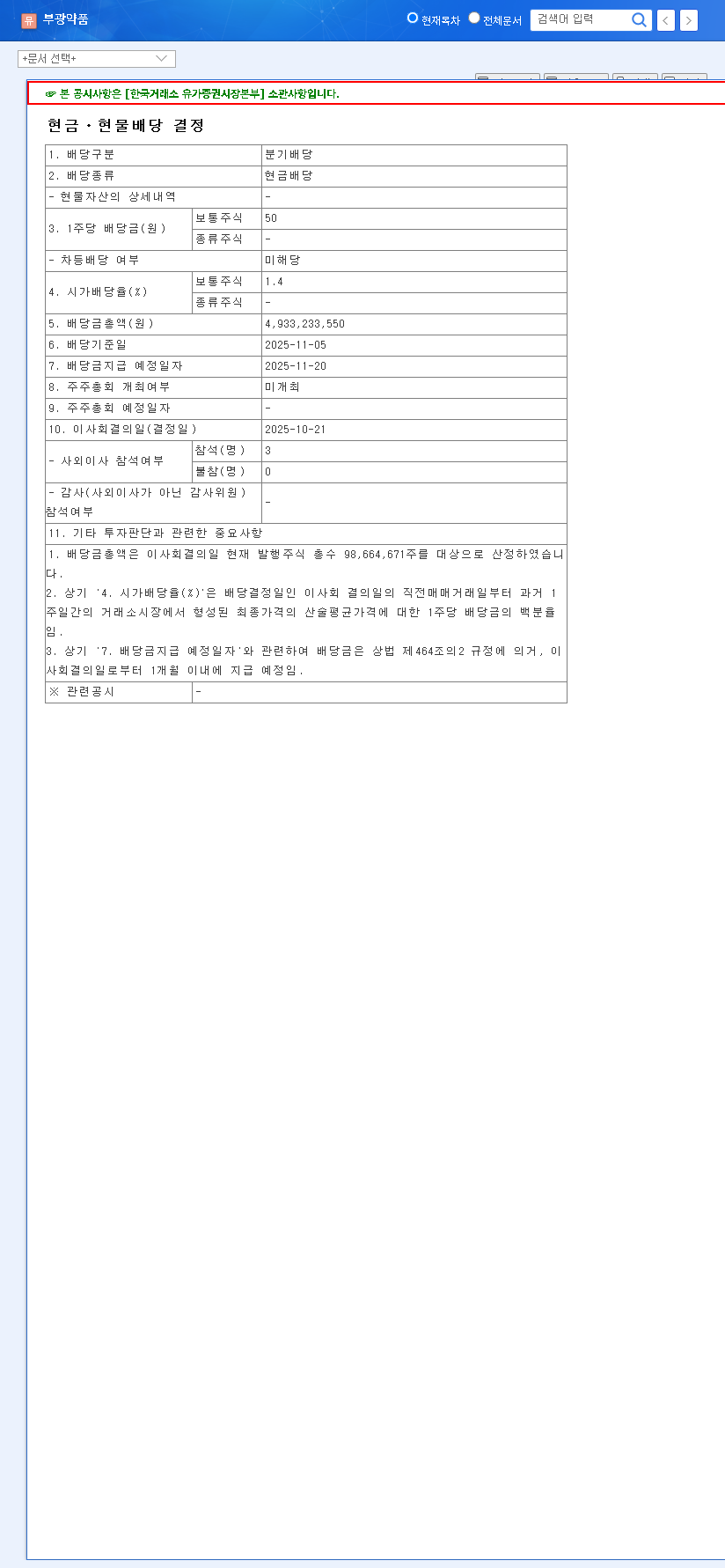
    On October 21, 2025, BUKWANG PHARMACEUTICAL IND CO.,LTD officially declared its intention to issue a cash quarterly dividend. This move is a direct component of its shareholder return policy, designed to distribute a portion of its earnings back to investors. The specifics of the announcement, confirmed via the official disclosure, are as follows:

    • Company: BUKWANG PHARMACEUTICAL IND CO.,LTD
    • Event Type: Cash Quarterly Dividend
    • Dividend per Share: KRW 50 (Common Stock)
    • Dividend Yield: Approximately 1.4% (based on the price at announcement)
    • Record Date: November 5, 2025
    • Payment Date: November 20, 2025
    • Source: Official Disclosure (DART Report)

    Fundamental Analysis: What the Dividend Signals

    A dividend decision is more than just a financial transaction; it’s a powerful message from a company’s management to the market. Analyzing this signal is key to understanding the firm’s underlying health and strategic priorities.

    Implications for Cash Flow and Financial Stability

    The ability to consistently pay a quarterly dividend suggests that BUKWANG PHARMACEUTICAL has stable and predictable operating cash flows. For a company in the pharmaceutical sector, where R&D cycles are long and costly, this financial stability is a significant asset. It indicates that the company can fund its operations, invest in its drug pipeline, and still have sufficient capital to reward its shareholders. The modest 1.4% yield suggests a prudent approach, ensuring payments do not strain financial resources.

    Consistent dividends signal more than just profit; they signal confidence. Management is effectively telling the market they believe future earnings will be stable enough to support these payouts without compromising long-term growth.

    Balancing Shareholder Value and Reinvestment

    Every dollar paid out as a dividend is a dollar not reinvested into the company for growth initiatives like R&D, facility upgrades, or strategic acquisitions. The key is balance. This quarterly dividend demonstrates a commitment to enhancing shareholder value, which can attract long-term, income-focused investors and boost overall market confidence. A prudent dividend policy can create a stable shareholder base, which is invaluable for long-term corporate strategy.

    Potential Impact on BUKWANG PHARMACEUTICAL Stock

    The dividend news is likely to influence investor sentiment and stock price dynamics in several ways, both in the short and long term.

    Investor Sentiment and Ex-Dividend Effect

    The announcement itself is a positive signal that can improve investor sentiment. However, the 1.4% yield is not exceptionally high, so it may not trigger a dramatic price surge. A more predictable effect is the ex-dividend date phenomenon. Investors should anticipate a temporary price drop on or after the record date (November 5, 2025), as the stock price typically adjusts downward to reflect the dividend payout. As explained by financial experts at authoritative sources like Investopedia, this is a normal market mechanism.

    A Strategic Action Plan for Investors

    While the BUKWANG PHARMACEUTICAL dividend is a positive data point, it should not be the sole basis for an investment decision. A holistic approach is necessary. To build a complete picture, consider the following research steps:

    • Analyze Past Dividend History: Is this part of a consistent, growing dividend policy, or is it a one-off event? A history of stable or increasing dividends is a much stronger bullish signal.
    • Conduct a Detailed Financial Review: Dig into the latest financial statements. Examine operating cash flow, net profit margins, and debt levels to verify the sustainability of the dividend and the company’s overall financial health.
    • Assess the Growth Strategy: Investigate BUKWANG’s R&D pipeline, existing product portfolio, and market position. A strong growth outlook is essential for future dividend increases and capital appreciation. For more on this, see our Deep Dive into the Pharmaceutical Sector’s Growth Prospects.
    • Compare with Industry Peers: How does this 1.4% yield compare to other pharmaceutical companies of a similar size? This provides context on whether the company is a leader or a laggard in shareholder returns.

    Conclusion and Final Thoughts

    BUKWANG PHARMACEUTICAL’s quarterly dividend decision is a reassuring sign of financial discipline and a commitment to its investors. It provides a direct return and bolsters confidence in the company’s stability. However, for a comprehensive stock analysis, this dividend must be viewed within the larger context of the company’s growth strategy, financial health, and industry position. By conducting thorough due diligence using the steps outlined above, investors can make a well-rounded and strategic decision about the role of BUKWANG PHARMACEUTICAL stock in their portfolio.

    (003000) BUKWANG PHARMACEUTICAL Dividend 2025: A Deep-Dive Analysis for Investors 관련 이미지
  • (003000) BUKWANG PHARMACEUTICAL Q3 2025 Earnings: A Deep Dive on Profit Decline & Investor Strategy

    (003000) BUKWANG PHARMACEUTICAL Q3 2025 Earnings: A Deep Dive on Profit Decline & Investor Strategy

    On October 21, 2025, BUKWANG PHARMACEUTICAL IND CO.,LTD (KRX: 003000) released its preliminary consolidated financial results for the third quarter, creating a complex picture for investors. The initial report reveals a story of two opposing trends: a reassuringly stable revenue stream set against a sharp, concerning decline in profitability. This analysis of the BUKWANG PHARMACEUTICAL Q3 2025 earnings will dissect the official numbers, explore the potential underlying causes for the profit squeeze, and provide a clear, actionable strategy for current and prospective investors navigating this uncertainty.

    With limited market consensus available, understanding these preliminary figures is crucial for making informed decisions. Let’s delve into the data to uncover what these results truly mean for the company’s financial health and future stock performance.

    Q3 2025 Preliminary Earnings: The Core Figures

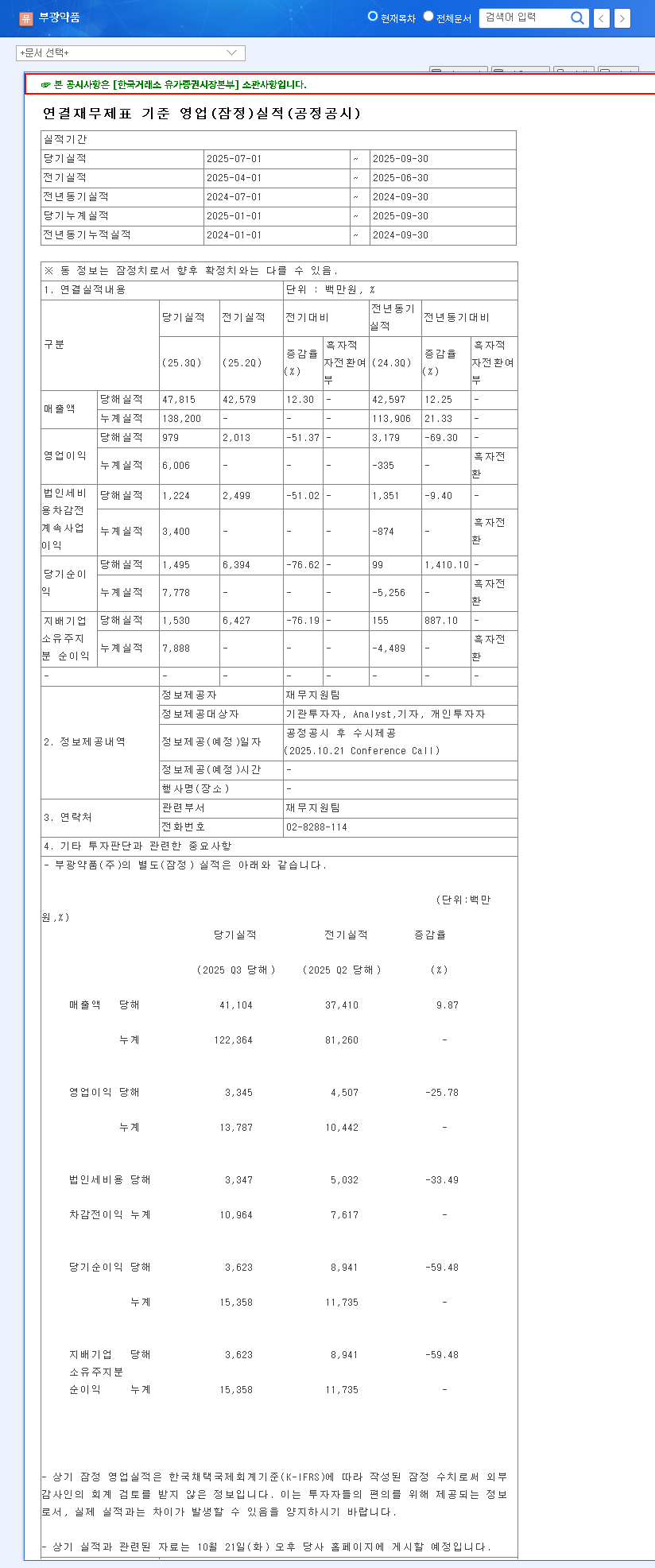
    Bukwang Pharmaceutical (Korean name: 부광약품), a key player in the biotech industry with a market capitalization of 349.3 billion KRW, disclosed its performance for the third quarter. According to the Official Disclosure on the DART system, the key metrics are as follows:

    • Revenue: 47.8 billion KRW
    • Operating Profit: 1.0 billion KRW
    • Net Income: 1.5 billion KRW

    It is critical to remember that these are preliminary figures. A full, audited report may provide more context, but this initial data already flags significant trends that demand immediate attention.

    While stable revenue suggests a solid core business, the dramatic 50% quarter-over-quarter drop in operating profit is the central challenge highlighted in the BUKWANG PHARMACEUTICAL Q3 2025 earnings report.

    Detailed Performance Breakdown and Analysis

    Revenue: A Picture of Stability

    The Q3 revenue of 47.8 billion KRW is consistent with Q1 (47.8B KRW) and shows a healthy increase over Q2 (42.6B KRW). This stability is a positive signal, indicating that demand for Bukwang’s core products remains robust. In a volatile market, maintaining a consistent top line demonstrates underlying business resilience and a loyal customer base. This consistency can provide a solid foundation from which the company can address its profitability issues.

    Profitability: The Elephant in the Room

    The most alarming aspect of the Bukwang financial results is the sharp decline in profitability. The Q3 operating profit of 1.0 billion KRW is a 50% plunge from Q2’s 2.0 billion KRW and a stark drop from Q3 2024’s 3.2 billion KRW. This severe contraction points to significant pressures on the company’s margins. Potential causes could include:

    • Increased raw material costs or supply chain disruptions.
    • Aggressive spending on Sales, General & Administrative (SG&A) expenses, possibly for new product launches.
    • A significant ramp-up in Research & Development (R&D) investments for the future pipeline.

    Similarly, the net income of 1.5 billion KRW, while still positive, is substantially lower than the 6.4 billion KRW reported in the previous quarter. Dissecting the root cause of this profitability erosion is the number one priority for any Bukwang investor analysis.

    Actionable Strategy for Investors

    Given the lack of market expectations (consensus), investors must adopt a prudent and research-driven approach rather than making rash decisions. The immediate impact on stock price is uncertain, but the negative sentiment from falling profits could exert downward pressure.

    Step 1: Contextualize the Results

    The first step is to seek out analyst reports and brokerage consensus estimates that may be published following this release. Understanding whether these results are a negative surprise or were already anticipated by the market is key. High-authority financial news sources like Bloomberg can often provide this context.

    Step 2: Perform Deep Fundamental Analysis

    Investors should meticulously review the company’s official filings once the full quarterly report is available. Look for specific line items that explain the profit drop. Is it a one-time expense or a structural shift? For further guidance, you can review our guide to analyzing pharmaceutical stocks to understand key industry metrics.

    Step 3: Monitor Long-Term Catalysts

    A company’s long-term value often lies in its future potential. Closely monitor progress on Bukwang’s drug pipeline, new business ventures, and market share of its flagship products. If the current profit dip is due to strategic R&D investment that will pay off later, the long-term outlook may remain positive.

    Conclusion: Caution is Key

    The BUKWANG PHARMACEUTICAL Q3 2025 earnings report presents a classic dilemma: a solid foundation clouded by immediate profitability concerns. The stable revenue is commendable, but the precipitous fall in operating and net income cannot be ignored. Without a clear explanation for this decline, a cautious stance is warranted. Investors should prioritize in-depth due diligence, focusing on the forthcoming full report and analyst commentary to determine if this is a temporary setback or the beginning of a more worrying trend.

    (003000) BUKWANG PHARMACEUTICAL Q3 2025 Earnings: A Deep Dive on Profit Decline & Investor Strategy 관련 이미지
  • (140410) Mezzion Pharma Lawsuit: KRW 4.7B Claim Rocks Stock – In-Depth Investor Analysis

    (140410) Mezzion Pharma Lawsuit: KRW 4.7B Claim Rocks Stock – In-Depth Investor Analysis

    A significant development has sent ripples through the biotech investment community: a major Mezzion Pharma lawsuit has been filed, creating a new layer of uncertainty for the company and its shareholders. Mezzion Pharma Co., Ltd., already navigating the turbulent waters of new drug development and financial pressures, now faces a ‘Claim for Damages’ lawsuit totaling approximately KRW 4.7 billion. This event could have substantial repercussions for the Mezzion stock price and overall investor confidence.

    This in-depth analysis will explore the specifics of the lawsuit, dissect its potential impact on Mezzion’s precarious financial situation, and offer strategic considerations for those following this critical story in biotech investing. For any investor with a stake in Mezzion Pharma Co., Ltd., understanding the full scope of this challenge is paramount.

    Deconstructing the KRW 4.7 Billion Lawsuit

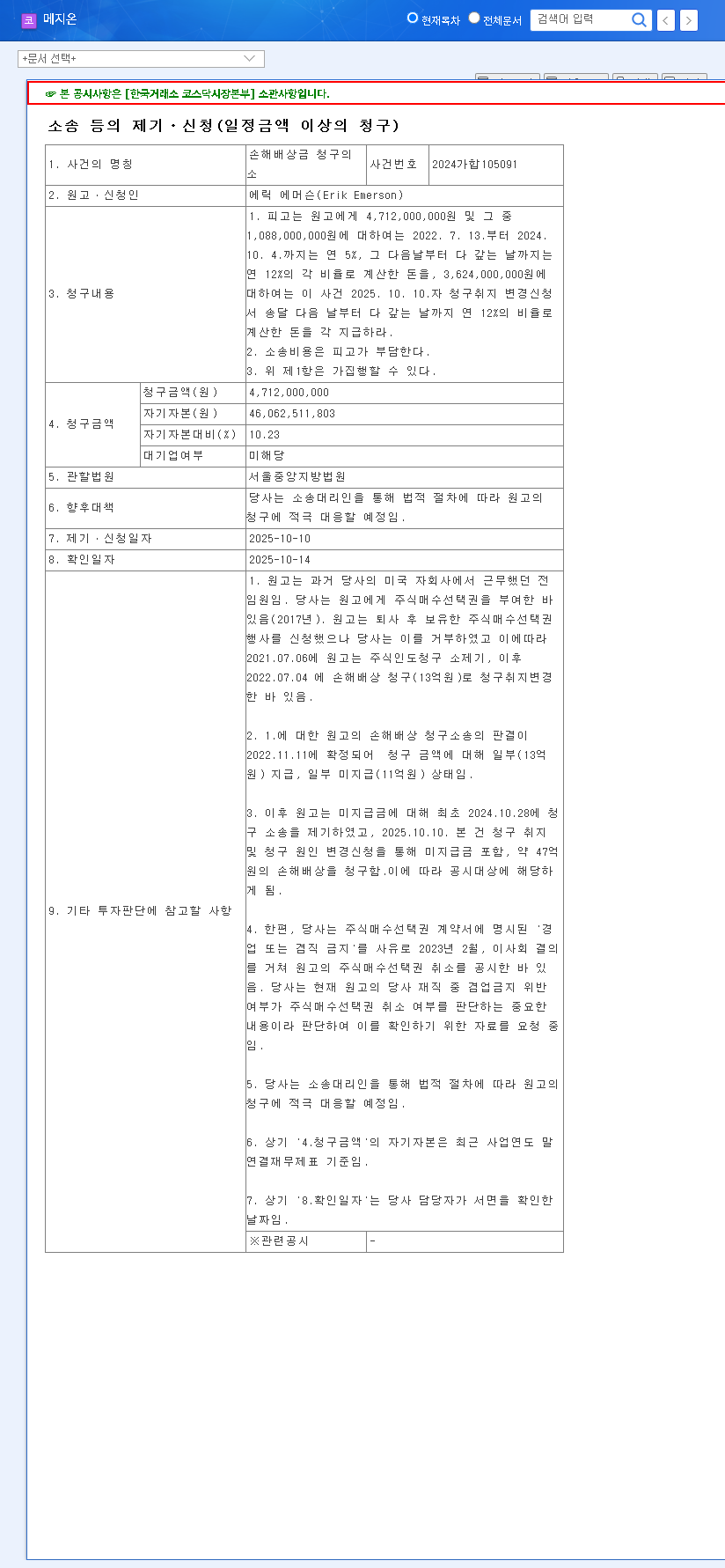
    The legal challenge facing Mezzion is not a minor dispute. It represents a significant financial threat that demands close scrutiny. Here are the core details of the claim filed against Mezzion Pharma Co., Ltd.:

    • Case Name: Claim for Damages
    • Plaintiff: Erik Emerson
    • Jurisdiction: Seoul Central District Court
    • Claim Amount: KRW 4,712,000,000
    • Impact on Assets: This amount represents a staggering 10.23% of Mezzion’s total assets, highlighting the material nature of the claim.
    • Company Response: Mezzion has publicly stated its intention to mount an active legal defense through its representatives. For more details, see the Official Disclosure.

    For a company already facing significant headwinds, a lawsuit of this magnitude is the last thing investors wanted to see. It’s not just the potential financial payout; it’s the diversion of resources and the damage to market sentiment that pose the real threats.

    A Perfect Storm: Compounding Financial and Operational Pressures

    The timing of this Mezzion Pharma lawsuit could not be worse. It arrives when the company’s fundamentals are already under immense strain. To fully grasp the potential fallout, one must consider the broader context of Mezzion’s current state.

    Persistent Drug Development Hurdles

    Mezzion’s primary focus is the development of a treatment for single ventricle heart disease (SVHD) in Fontan surgery patients. This noble pursuit has been fraught with challenges. A key setback occurred when the US FDA recommended additional clinical trials, forcing Mezzion to withdraw its new drug application. This has led to extended development timelines, ballooning R&D costs (reaching KRW 34.2 billion in H1 2025), and a cloud of uncertainty over its most critical asset.

    Deteriorating Financial Health

    The company’s financial statements paint a concerning picture. With high current liabilities (KRW 47 billion) and derivative liabilities (KRW 15.8 billion), Mezzion exhibits a high debt ratio and significant liquidity risk. The recent issuance of KRW 23 billion in convertible bonds adds to this burden. Compounding the issue, revenue from its once-stable BNF business unit has been in decline, removing a crucial financial cushion. This fragile state makes the prospect of a KRW 4.7 billion payout from the lawsuit particularly alarming.

    Analyzing the Mezzion Pharma Lawsuit’s Impact on Stock & Strategy

    Given the context, the repercussions of this lawsuit are likely to be multi-faceted, affecting investor sentiment, financial stability, and long-term business operations.

    • Stock Price Volatility: The news is a clear negative catalyst for Mezzion stock. Expect heightened short-term downward pressure as the market digests the risk. The 10.23% of assets figure will likely fuel sell-offs from risk-averse investors.
    • Deteriorating Cash Flow: An unfavorable verdict would directly impact Mezzion’s cash reserves, further straining its ability to fund ongoing R&D and meet its debt obligations. This could trigger a vicious cycle of financial distress.
    • Resource Diversion: Legal battles are costly and time-consuming. Management’s focus may be diverted from critical business operations and drug development to litigation strategy, potentially delaying key milestones.

    Strategic Considerations for Mezzion Investors

    For those considering a Mezzion investment or holding a current position, a cautious and informed approach is essential. The market for developmental-stage companies is already volatile, a fact underscored by broader trends in biotech sector analysis from sources like Reuters. Here are key areas to monitor:

    • Transparency and Communication: Watch for how Mezzion communicates the lawsuit’s progress. Prompt, transparent updates can help mitigate market uncertainty.
    • Legal Defense Milestones: Keep an eye on any public statements or filings from Mezzion’s legal team that might indicate the strength of their defense.
    • Financial Contingency Plans: It is critical to see if management outlines a plan to mitigate the financial impact of a potential loss. This could involve asset sales, strategic partnerships, or other forms of financing.
    • Core Business Progress: Ultimately, Mezzion’s long-term value is tied to its drug pipeline. Any positive news on the R&D front could help offset the negative sentiment from the lawsuit. Learn more about how to analyze biotech stocks for a deeper perspective.

    In conclusion, the Mezzion Pharma lawsuit is a material event that significantly elevates the risk profile of the company. Investors must weigh the potential of its drug development pipeline against a backdrop of severe financial strain and now, a costly legal battle. Diligent monitoring and a comprehensive risk assessment are more crucial than ever.

    (140410) Mezzion Pharma Lawsuit: KRW 4.7B Claim Rocks Stock – In-Depth Investor Analysis 관련 이미지
  • (082800) VIVOZON PHARMACEUTICAL Rights Offering: A Deep Dive into VVZ-149 & Investment Strategy

    (082800) VIVOZON PHARMACEUTICAL Rights Offering: A Deep Dive into VVZ-149 & Investment Strategy

    The recent announcement of the VIVOZON PHARMACEUTICAL rights offering, a massive ₩50 billion capital raise, has sent ripples through the investment community. Coming on the heels of the promising product approval for its flagship drug, VVZ-149 (Opilancrin), the move presents a complex puzzle for shareholders. Is this the strategic masterstroke that will propel the company towards profitability, or a desperate measure that signals deeper financial troubles and inevitable share dilution? This comprehensive analysis will dissect the offering, evaluate the company’s financial health, and provide a clear-eyed investment strategy for navigating this pivotal moment in VIVOZON’s journey.

    Breaking Down the ₩50 Billion Rights Offering

    On October 13, 2025, VIVOZON PHARMACEUTICAL formally announced its plan to secure approximately ₩50 billion through a rights offering. The structure chosen is a ‘shareholder allocation after public offering of forfeited shares.’ This means existing shareholders get the first opportunity to purchase new shares proportional to their current holdings, and any unsubscribed shares are then offered to the public. For a comprehensive overview, investors can review the Official Disclosure on DART.

    Key Details of the Capital Raise

    • Total Funding Goal: Approximately ₩50 billion.
    • Use of Proceeds: ₩25.8 billion for operating capital and ₩23 billion for debt repayment.
    • Capital Increase Ratio: 0.21 new shares per existing share.
    • Record Date for Allocation: November 13, 2025.
    • New Share Listing Date: January 13, 2026.

    The funds are earmarked to stabilize operations and strengthen the balance sheet, which is a critical step before the commercial launch of their new drug.

    The Central Conflict: VVZ-149 Potential vs. Financial Pressures

    To understand the VIVOZON PHARMACEUTICAL rights offering, one must weigh the immense promise of its pipeline against its precarious financial state. This duality is the core of the investment thesis.

    The Beacon of Hope: VVZ-149 (Opilancrin) Approval

    The primary positive catalyst is the KFDA’s product approval for VVZ-149 (Opilancrin) in late 2024. This non-opioid analgesic represents a significant breakthrough in pain management, a multi-billion dollar market. The successful commercialization of VVZ-149 could dramatically alter the company’s trajectory, generating substantial revenue and validating its R&D platform.

    With the global opioid crisis demanding safer alternatives, the market timing for Opilancrin could not be better. Its success is not just a corporate goal; it’s a potential paradigm shift in post-operative pain treatment.

    The Weight of Reality: Financial Headwinds

    Despite the optimism around VVZ-149, the company’s financials paint a challenging picture. Key concerns include:

    • Persistent Losses: Significant operating and net losses recorded in the first half of 2025 highlight a struggle with profitability.
    • High Debt Load: A consolidated debt ratio of 76.77% and over ₩25 billion in convertible bonds create repayment pressure and the looming threat of further share dilution. For more on this, you can read our guide on Understanding Convertible Bonds in Biotech.
    • Affiliate Risks: Continued losses from investments in affiliated companies are a drag on overall financial performance.

    Crafting Your VIVOZON Investment Strategy

    The VIVOZON PHARMACEUTICAL rights offering forces a decision. For investors, this requires a clear-headed strategy that acknowledges both the high risk and high reward potential. The macroeconomic environment, with rising interest rates as reported by outlets like Reuters, makes capital-intensive ventures like this even more challenging.

    Key Actionable Steps for Investors

    • Assess Your Risk Tolerance: This is a speculative investment. The potential for share dilution is real, and a positive outcome is heavily dependent on the market success of a single product.
    • Monitor VVZ-149 Sales Data: Post-launch, the single most important metric will be the adoption rate and sales figures for Opilancrin. This data will be the ultimate indicator of the company’s future.
    • Track Financial Improvements: Watch for quarterly reports showing a reduction in the debt-to-equity ratio and progress towards operational profitability following the capital injection.
    • Consider a Phased Approach: Instead of making a large investment at once, consider participating partially in the rights offering or waiting for post-offering market stabilization and initial sales data before committing further capital.

    Conclusion: While the VIVOZON PHARMACEUTICAL rights offering provides a necessary financial lifeline, it does not eliminate the fundamental risks. The company’s future hinges almost entirely on the successful commercialization of VVZ-149. Investors should proceed with extreme caution, balancing the drug’s transformative potential against the company’s significant financial vulnerabilities.

    (082800) VIVOZON PHARMACEUTICAL Rights Offering: A Deep Dive into VVZ-149 & Investment Strategy 관련 이미지