Tag: Pharmaceutical Bio

  • (082270) GemVax GV1001 Alzheimer’s Trial Fails: An In-Depth Analysis for KRX: 082270 Investors

    (082270) GemVax GV1001 Alzheimer’s Trial Fails: An In-Depth Analysis for KRX: 082270 Investors

    In a significant setback for Alzheimer’s research and investors in GemVax & KAEL Co.,Ltd. (KRX: 082270), the company has announced that its pivotal Phase 2 trial for GemVax GV1001 has failed to meet its primary endpoint. This news has sent shockwaves through the market, challenging the valuation of the company’s flagship biotech pipeline. For investors, this moment is critical. This comprehensive analysis will dissect the GemVax trial failure, explore its profound implications, and provide a clear, actionable strategy for navigating the path forward.

    The failure of the GemVax GV1001 Alzheimer’s trial represents a major hurdle, forcing a fundamental re-evaluation of the company’s growth trajectory and investment thesis.

    Deconstructing the GemVax GV1001 Trial Failure

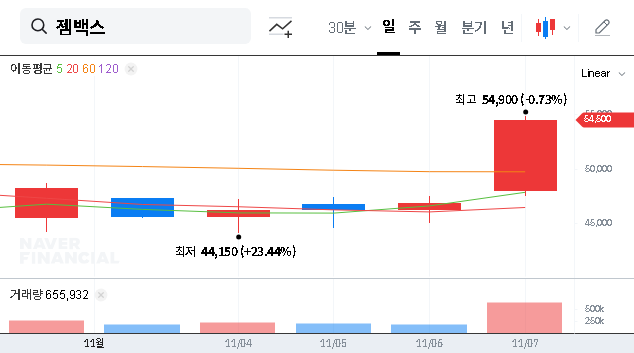
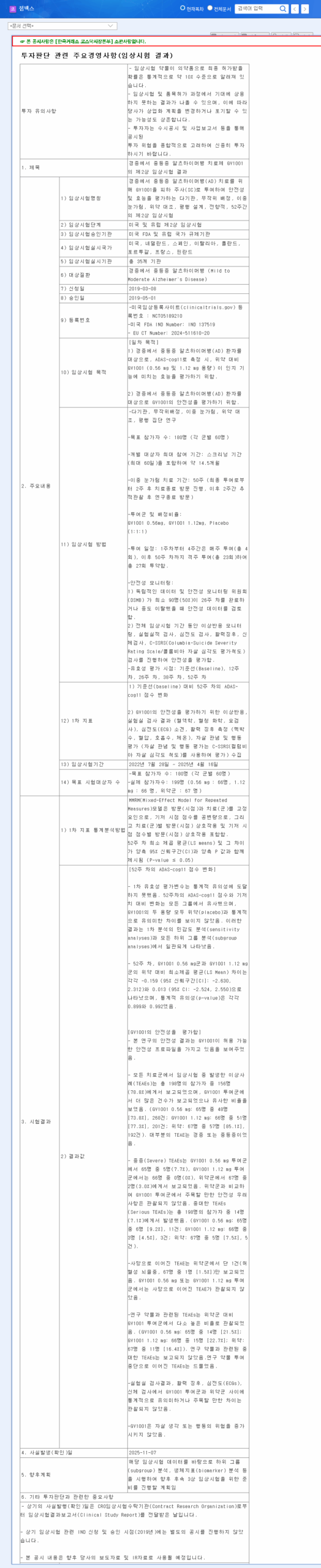
    On November 7, 2025, GemVax released the top-line results from its multi-center, randomized, double-blind Phase 2 clinical trial for GV1001, an investigational treatment for mild to moderate Alzheimer’s disease. The study, conducted over 52 weeks, was meticulously designed to assess both the safety and efficacy of the drug candidate. The full details can be found in the Official Disclosure (DART).

    The Critical Primary Endpoint Miss

    The trial’s primary efficacy endpoint was the change in the Alzheimer’s Disease Assessment Scale-Cognitive Subscale (ADAS-cog11) score at week 52. This scale is a gold-standard metric used globally to measure cognitive decline in dementia patients. The results were unequivocal: GemVax GV1001 failed to achieve statistical significance, meaning it showed no demonstrable cognitive benefit over the placebo group. This is the most critical outcome of any clinical trial, as it directly addresses the drug’s core purpose.

    While the drug did exhibit an acceptable safety profile with no new concerns, safety alone is insufficient for regulatory approval or commercial success. Efficacy is paramount, and in this regard, the trial was a clear failure.

    Fundamental Analysis: Reassessing GemVax’s Strengths and Risks

    Prior to this announcement, GemVax presented a complex investment profile. Understanding these factors is key to gauging the company’s resilience post-failure.

    Pre-Trial Positives (Now Under Pressure)

    • Stable Environmental Business: A consistent revenue stream from its Chemical Air Filter division, serving the robust semiconductor industry, has acted as a financial anchor.
    • Pipeline Momentum: Prior to the failure, GV1001 had garnered FDA Fast Track and Orphan Drug designations, alongside a major domestic licensing deal, building significant market hype.
    • Improved Financials: Recent capital increases and narrowing operating losses showed a commitment to stabilizing the company’s financial footing.

    Negative Factors and Amplified Risks

    • Realized Efficacy Failure: The primary risk has now materialized, effectively wiping out the near-term value of the GV1001 Alzheimer’s program.
    • Persistent R&D Burn: The biotech division remains a significant cash drain, and without a viable lead candidate, this spending now lacks a clear ROI.
    • High Debt Ratio: The company’s existing debt becomes more precarious without the promise of future blockbuster revenue to service it.
    • External Headwinds: Ongoing litigation risks and macroeconomic pressures on exchange rates and material costs further compound the company’s challenges.

    The Cascade Effect: Impact on Business & Stock Price

    The fallout from the GemVax trial failure will be swift and severe. The core value of its biotech pipeline has been decimated, raising questions about future Phase 3 trials and the validity of its licensing deal with Samsung Pharm. This uncertainty will make securing future funding significantly more difficult and expensive.

    For investors, the most immediate impact will be on the stock price. The loss of the company’s primary growth engine will trigger a massive re-rating by the market. Given the high market capitalization built on the promise of GemVax GV1001, a substantial and sustained drop in share price is all but certain. For more context on biotech investing, see this guide from a leading financial news source.

    Strategic Guidance for GemVax (KRX: 082270) Investors

    This event is classified as ‘High Negative Impact.’ The stability of the environmental business is a positive but is unlikely to cushion the catastrophic blow to the biotech division. A proactive approach is required.

    Recommendations for Action

    • Suspend New Investment: It is strongly advised to halt any new capital allocation to GemVax until the company provides a clear and credible strategic plan for its future.
    • Existing Investors – Monitor & Re-evaluate: For those with existing positions, monitor the market’s reaction and management’s communications closely. Watch for announcements regarding a pivot to other indications (like Progressive Supranuclear Palsy), a major business restructuring, or changes to the R&D leadership. Your decision to hold or sell should be based on this new strategic direction. You may want to read our guide to managing high-risk portfolio assets.
    • Prioritize Risk Management: This event underscores the inherent risks in biotech. Re-evaluate your overall portfolio’s exposure to such high-volatility assets and ensure your strategy aligns with your risk tolerance.

    Future Outlook

    The road ahead for GemVax is fraught with challenges. The company’s future now hinges on its ability to successfully pivot its R&D efforts, manage its cash burn, and maintain the profitability of its environmental business. Without a clear success in another clinical program, the company’s valuation will likely remain under severe pressure.
    (082270) GemVax GV1001 Alzheimer's Trial Fails: An In-Depth Analysis for KRX: 082270 Investors 관련 이미지
  • (261780) CHA Vaccine Research Institute: 2025 IR Analysis, CVI-HBV-002 Potential & Investment Outlook

    (261780) CHA Vaccine Research Institute: 2025 IR Analysis, CVI-HBV-002 Potential & Investment Outlook

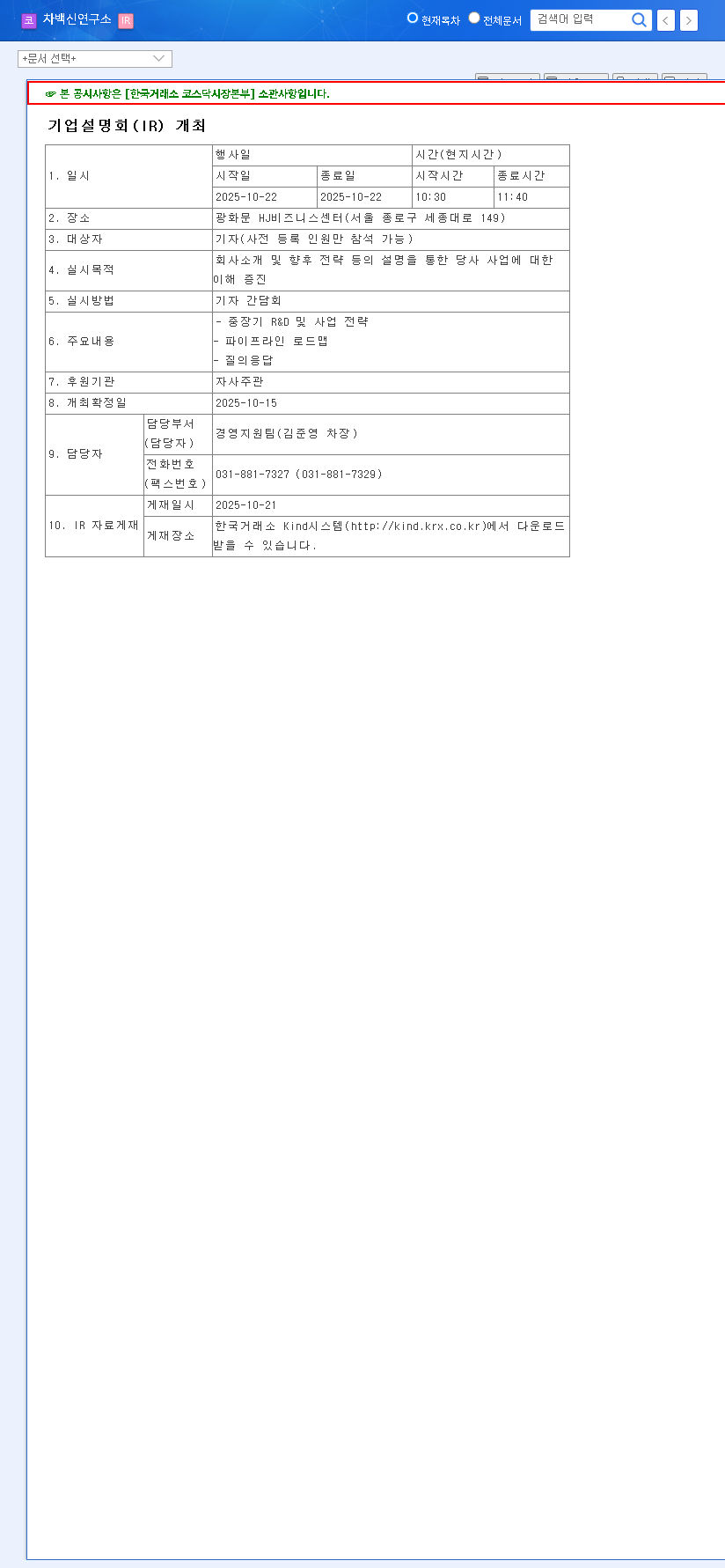
    Investors are closely watching CHA Vaccine Research Institute as it prepares for a pivotal Investor Relations (IR) event on November 4, 2025. This event is far more than a routine update; it represents a critical juncture for the company, which is navigating significant financial pressures while advancing a promising pipeline of vaccines. The spotlight will be firmly on its lead candidate, the chronic Hepatitis B treatment vaccine CVI-HBV-002, and management’s strategy to secure a sustainable future.

    This comprehensive analysis will delve into the key factors shaping the company’s trajectory, dissecting the potential of its core assets, the gravity of its financial situation, and the potential market reactions following the IR. For those considering a biotech investment, understanding these dynamics is paramount.

    The Crucial Context: Why This IR Matters

    CHA Vaccine Research Institute has officially scheduled its IR event for 2:00 PM on November 4, 2025. The purpose is to provide a transparent update on management status, R&D progress, and overall business operations, followed by a Q&A session. The official announcement can be viewed in their public filing (Official Disclosure: DART). This event is significant due to the stark contrast between the company’s promising science and its challenging financial health.

    The core challenge for management is to balance the high-cost, long-term promise of its R&D pipeline with the immediate need for financial stability. This IR will be their primary platform to articulate that balance and restore investor confidence.

    Deep Dive: The Pipeline Potential

    The future valuation of CHA Vaccine Research Institute is intrinsically linked to the success of its clinical pipeline. Here’s a closer look at the key assets.

    Chronic Hepatitis B Vaccine (CVI-HBV-002): The Game Changer

    The crown jewel is CVI-HBV-002, a therapeutic Hepatitis B vaccine. Chronic Hepatitis B is a massive global health issue, with the World Health Organization (WHO) estimating hundreds of millions of people are living with the infection. With Phase 2b clinical trials now complete, the company is planning for Phase 2 combination trials in 2026. A successful outcome could tap into a multi-billion dollar market, making this the single most important value driver for the company.

    Other Key Pipeline Assets

    • Hepatitis B Prevention Vaccines (CVI-HBV-001, CVI-HBV-002): With early-phase trials completed, these candidates aim to offer improved efficacy and convenience over existing preventative options.
    • Recombinant Zoster Vaccine (CVI-VZV-001): Currently in Phase 1 trials, this vaccine for shingles has shown promising pre-clinical results and targets a large and growing market.
    • Business Expansion: The company is strategically diversifying into cancer vaccines and immune-oncology treatments, which could create valuable synergies and new revenue streams in the long term.

    Analyzing the Financial Risks

    Despite the scientific promise, the financial statements reveal significant headwinds that investors must consider. The company’s high cash burn rate is a central concern.

    • Operating Losses: Deficits have widened year-over-year, driven by escalating R&D costs—a necessary evil in biotech but one that pressures the balance sheet.
    • Declining Cash Reserves: A significant drop in cash and equivalents raises questions about the company’s operational runway and the potential need for dilutive financing in the near future.
    • Rising Debt Ratio: The recent issuance of convertible bonds has increased the debt-to-equity ratio, adding another layer of financial risk that requires careful management.

    Potential Scenarios Post-IR Event

    The market’s reaction will hinge entirely on the substance and clarity of the information presented. Here are three potential scenarios:

    1. Positive Scenario: Renewed Confidence

    If management presents compelling new data for CVI-HBV-002 and unveils a concrete, credible plan to shore up its finances (e.g., a strategic partnership, non-dilutive funding), investor confidence could be restored, driving the stock price higher.

    2. Neutral Scenario: More Questions than Answers

    If the IR simply rehashes old information without providing clear solutions to the financial overhang, the market may remain skeptical. This would likely lead to minor price volatility as investors digest the lack of new catalysts.

    3. Negative Scenario: Heightened Concerns

    Any hint of delays in the clinical timeline, underwhelming data, or a failure to address the funding gap could trigger a sell-off. In this scenario, concerns about cash depletion would intensify, putting significant downward pressure on the stock.

    Investor Takeaway: What to Watch For

    For investors, this IR is a crucial due diligence opportunity. Focus on the specifics: demand a clear roadmap for the Hepatitis B vaccine, a transparent plan for financial stabilization, and honest answers during the Q&A. The future of CHA Vaccine Research Institute depends on its ability to align its promising vision with its current reality. Making informed decisions is key, and for more background, you can review our guide to evaluating clinical-stage biotech stocks. The final decision to invest rests solely with the individual, based on their own risk tolerance and thorough research.

    (261780) CHA Vaccine Research Institute: 2025 IR Analysis, CVI-HBV-002 Potential & Investment Outlook 관련 이미지
  • (086900) NPS Sells Medytox Stock: A 2025 Investor’s Guide to Fundamentals & Risks

    (086900) NPS Sells Medytox Stock: A 2025 Investor’s Guide to Fundamentals & Risks

    Investing in Medytox stock has become a hot topic following a significant move by South Korea’s National Pension Service (NPS). As one of the largest and most influential institutional investors, any adjustment in the NPS’s portfolio sends ripples through the market. The recent disclosure shows the NPS has reduced its stake in Medytox, prompting many investors to question the company’s future and the stability of their investment. Is this a signal of underlying problems, or simply a strategic portfolio rebalance?

    This comprehensive analysis will dissect the NPS’s decision, conduct a deep dive into Medytox’s current fundamentals, evaluate its growth potential, and expose the critical risks that every shareholder should be aware of. We’ll provide a clear, actionable guide to help you navigate this uncertainty and make informed decisions about your Medytox investment.

    The NPS Stake Reduction: A Closer Look

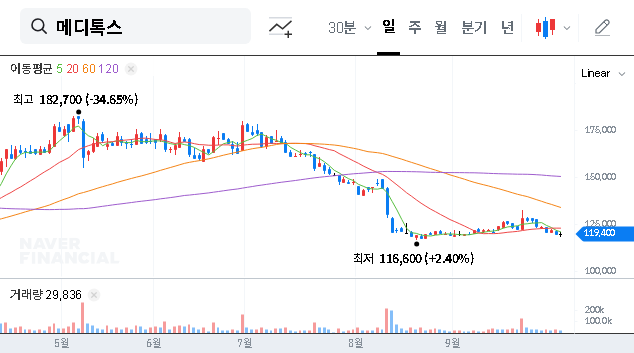
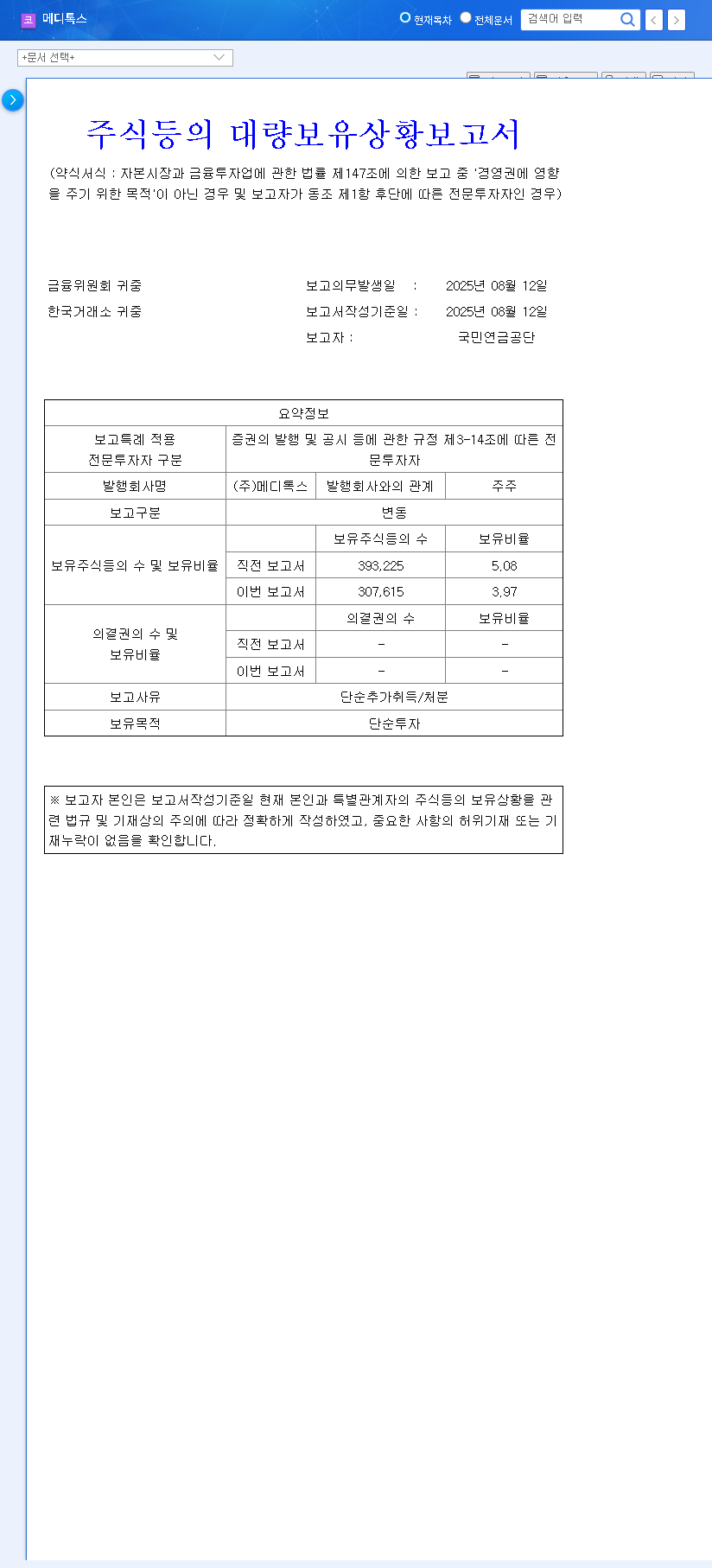
    On October 1, 2025, the investment community took notice as the National Pension Service filed a report detailing a change in its holdings of Medytox. According to the Official Disclosure, the NPS’s stake decreased from 5.08% to 3.97%—a reduction of 1.11 percentage points.

    Crucially, the NPS categorized the purpose as ‘simple investment’ and the reason as ‘simple additional acquisition/disposal.’ This language suggests the move is likely part of a broader portfolio rebalancing strategy rather than a bearish verdict on Medytox’s core business.

    While this may temper immediate fears, the sale by a major institution can still create short-term selling pressure and negative market sentiment. Therefore, a thorough Medytox analysis is essential to separate market noise from fundamental reality.

    Deep Dive: Medytox Fundamentals in 2025

    To understand the true value of Medytox stock, we must look beyond the latest headlines and into the company’s financial health, core business operations, and future growth drivers.

    Financial Stability and Performance

    Medytox has demonstrated a solid financial foundation. A look at the 2025 semi-annual report reveals key strengths:

    • Robust Revenue: H1 2025 revenue reached KRW 125.6 billion, with an operating profit of KRW 11.79 billion. The core business of botulinum toxin and fillers accounts for a commanding 86.9% of total sales.
    • Sound Financial Structure: A low debt-to-equity ratio of just 25.05% signals excellent financial stability and prudent management of liabilities.
    • Strong Cash Flow: Operating cash flow is healthy at KRW 26.589 billion. The company is actively reinvesting in its future, as shown by significant cash outflows for investing activities.

    However, investors should note the high R&D expense ratio of 17.60%. While essential for long-term growth and staying competitive in the global botulinum toxin market, it can exert pressure on short-term profitability.

    Growth Drivers and Pipeline Potential

    Medytox is not standing still. The company’s future growth hinges on both its established products and its innovative pipeline.

    • Core Business Strength: Medytox maintains a powerful market presence in its key segments. The international expansion of its new toxin, ‘NeuLux®’, is a particularly positive sign.
    • New Ventures: While the initial refusal of US FDA approval for its liquid botulinum toxin (MT10109L) was a setback, the company plans to resubmit. Furthermore, new projects like a fat-dissolving injection (MT921) and probiotics (MT961) offer diversification and new revenue streams.
    • Global Expansion: With exports to over 30 countries and a new factory in Dubai, Medytox is actively building a global footprint to reduce reliance on any single market.

    The Elephant in the Room: Critical Risk Factors

    No investment is without risk, and Medytox faces several significant challenges. The most prominent is the web of ongoing legal disputes. These litigations, ranging from administrative lawsuits to international arbitration over trade secret infringement, create a cloud of uncertainty. As noted in reports by authoritative sources like Reuters, the outcomes of these cases are unpredictable and could have a material impact on the company’s financials and market reputation.

    The outcome of the US FDA resubmission for MT10109L is another pivotal risk. A successful approval would unlock the lucrative US market, while another rejection could severely damage investor confidence and the Medytox stock price.

    Investor Action Plan & Conclusion

    So, how should you interpret the NPS Medytox stake reduction and position your portfolio?

    1. Look Beyond the Headline

    It is crucial not to overreact to the NPS’s sale. The ‘simple investment’ classification strongly suggests this was a portfolio management decision, not a vote of no confidence in Medytox’s long-term prospects. The company’s intrinsic value has not fundamentally changed because of this single transaction.

    2. Weigh the Opportunities Against the Risks

    Medytox presents a classic case of risk versus reward. The opportunity lies in its strong market position, solid financials, and promising pipeline. The risk is concentrated in its legal battles and regulatory hurdles. Investors should assess their own risk tolerance before committing capital.

    3. Monitor Key Catalysts

    The future of Medytox stock will be heavily influenced by several key events. Keep a close watch on:

    • The outcomes of major lawsuits and litigations.
    • Progress and announcements regarding the US FDA resubmission.
    • Quarterly earnings reports to track revenue growth and profitability.

    In conclusion, while the NPS’s stake reduction may cause short-term volatility, a long-term investment decision in Medytox should be based on a comprehensive evaluation of its solid fundamentals, growth pipeline, and the significant, yet manageable, legal risks. Cautious, informed investing based on diligent research will be the key to success.

    (086900) NPS Sells Medytox Stock: A 2025 Investor's Guide to Fundamentals & Risks 관련 이미지