Tag: Onconic Therapeutics

  • (476060) Nesuparib for Ovarian Cancer: Onconic Therapeutics’ Phase 2 Trial Explained for Investors

    (476060) Nesuparib for Ovarian Cancer: Onconic Therapeutics’ Phase 2 Trial Explained for Investors

    Biotech investors understand that a single regulatory filing can represent a major value inflection point. Onconic Therapeutics has just created such a moment, submitting a critical Investigational New Drug (IND) amendment for its flagship anti-cancer agent, Nesuparib (JPI-547). This move initiates a Phase 2 clinical trial for its Nesuparib ovarian cancer program, a development that could reshape the company’s trajectory and the treatment landscape for a challenging disease. This analysis provides a comprehensive breakdown of the announcement, its fundamental impact, and a strategic roadmap for investors.

    The Milestone: A Phase 2 Trial for Nesuparib in Ovarian Cancer

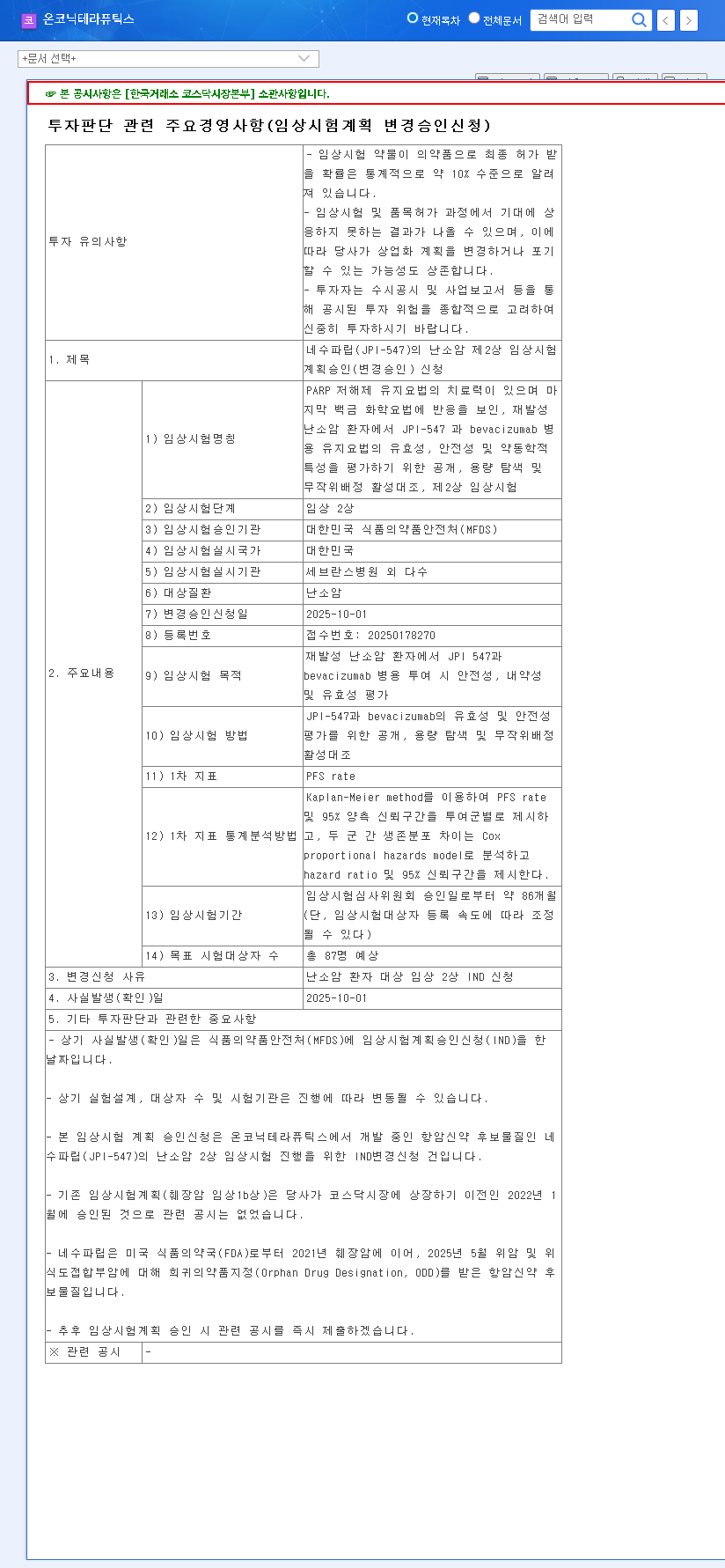
    On October 1, 2025, Onconic Therapeutics officially submitted its IND amendment to South Korea’s Ministry of Food and Drug Safety (MFDS). This filing seeks approval to begin a Phase 2 study evaluating the efficacy and safety of Nesuparib. The trial is designed as an open-label, dose-finding, and randomized active-controlled study. It will test Nesuparib in combination with bevacizumab as a maintenance therapy for patients with recurrent ovarian cancer who have previously responded to platinum-based chemotherapy. The official filing can be reviewed in the Official Disclosure. This advancement from early-stage research to mid-stage clinical validation is a crucial step towards potential commercialization.

    Phase 2 trials are a critical proving ground. They are the first time a drug candidate’s effectiveness is rigorously tested in a specific patient population, moving beyond the initial safety focus of Phase 1.

    Fundamental Impact: Why This Development Matters

    Accelerating a High-Potential Pipeline

    Nesuparib is Onconic’s leading pipeline asset. Advancing the Nesuparib ovarian cancer program into Phase 2 significantly de-risks the asset and builds development momentum. Ovarian cancer continues to have high unmet medical needs, particularly in the recurrent setting. A successful therapy in this space promises not only a profound impact on patients’ lives but also substantial market potential. This trial propels Nesuparib closer to becoming a tangible revenue-generating product.

    Building on Regulatory Validation

    This progress is amplified by Nesuparib’s existing regulatory accolades. The drug has already received U.S. FDA Orphan Drug Designation (ODD) for pancreatic cancer, gastric cancer, and gastroesophageal junction cancer. ODD provides powerful incentives, including market exclusivity for seven years post-approval, tax credits for clinical trials, and a waiver of prescription drug user fees. This pattern of regulatory recognition suggests that agencies see scientific merit in Nesuparib’s mechanism and potential.

    Creating Synergistic Data and Partnership Appeal

    Running this trial alongside the ongoing Phase 1b trial for pancreatic cancer allows Onconic to build a comprehensive data package. This diverse clinical evidence showcases Nesuparib’s potential across multiple tumor types, strengthening its profile as a ‘pipeline-in-a-product’. Such a robust dataset is highly attractive to potential global pharmaceutical partners, positioning Onconic for lucrative technology transfer or licensing deals in the future.

    The Inherent Risks of Biotech Investing

    While the news is overwhelmingly positive, prudent investors must weigh the potential against the significant risks inherent in drug development.

    • Clinical Trial Uncertainty: The path of drug development is fraught with failure. A large percentage of drugs entering Phase 2 trials do not succeed due to insufficient efficacy or unexpected safety issues. Industry data from organizations like BIO.org consistently show that oncology has one of the highest failure rates.
    • Financial Pressures: Phase 2 trials are substantially more expensive than Phase 1 studies. This increases the company’s cash burn rate and may necessitate future financing rounds, which could dilute existing shareholders’ equity.
    • Extended Timelines: Even with positive Phase 2 results, the journey is long. A subsequent Phase 3 trial and regulatory review will take several more years before any revenue is generated. Biotech investing requires a long-term horizon.
    • Competitive Landscape: The ovarian cancer market is competitive, with established PARP inhibitors and other targeted therapies. Nesuparib must demonstrate a clear clinical advantage—be it superior efficacy, an improved safety profile, or effectiveness in a new patient subset—to capture market share.

    Investor Roadmap: Key Catalysts to Monitor

    The IND submission is a starting gun, not a finish line. Astute investors should establish a clear monitoring plan focused on the following key milestones. For a deeper dive into financial due diligence, consider reviewing our guide on how to evaluate early-stage biotech stocks.

    • MFDS Trial Approval: The first catalyst will be the official green light from the MFDS. Monitor the timeline and any conditions attached to the approval.
    • Patient Enrollment Updates: Tracking the speed of patient enrollment can be an early indicator of clinical site engagement and physician interest.
    • Interim and Final Data Readouts: These are the most significant catalysts. Pay close attention to press releases and presentations at scientific conferences for any data on efficacy (e.g., response rates, progression-free survival) and safety.
    • Financial Health: Keep a close watch on the company’s quarterly financial reports to ensure they have a sufficient cash runway to complete the trial.

    In conclusion, Onconic Therapeutics’ move to a Phase 2 trial for its Nesuparib ovarian cancer treatment is a significant and positive step. It validates the asset and opens a path toward a major market. However, the potential reward is balanced by substantial clinical and financial risks. Success will hinge on compelling clinical data that can pave the way for a pivotal Phase 3 trial and, ultimately, a valuable partnership or acquisition.
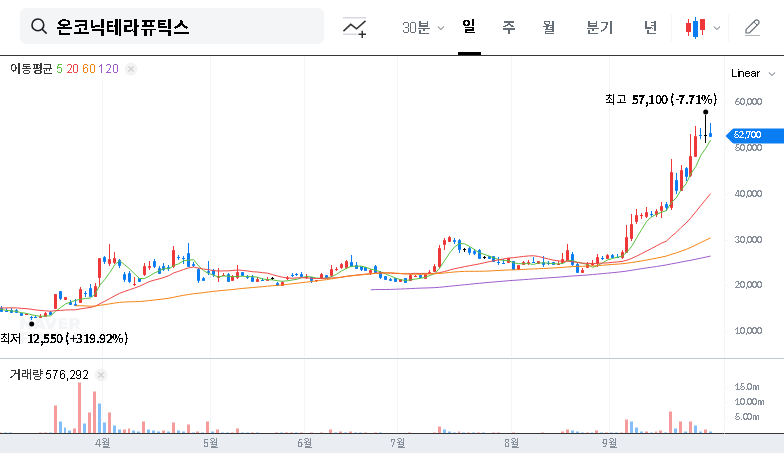
    (476060) Nesuparib for Ovarian Cancer: Onconic Therapeutics' Phase 2 Trial Explained for Investors 관련 이미지
  • Onconic Therapeutics Nesuparib Enters Phase 2 for Pancreatic Cancer: Analyzing Growth Potential and Pipeline Strength

    Onconic Therapeutics Nesuparib Enters Phase 2 for Pancreatic Cancer: Analyzing Growth Potential and Pipeline Strength 대표 차트 이미지

    Onconic Therapeutics Nesuparib Enters Phase 2 for Pancreatic Cancer: Analyzing Growth Potential and Pipeline Strength

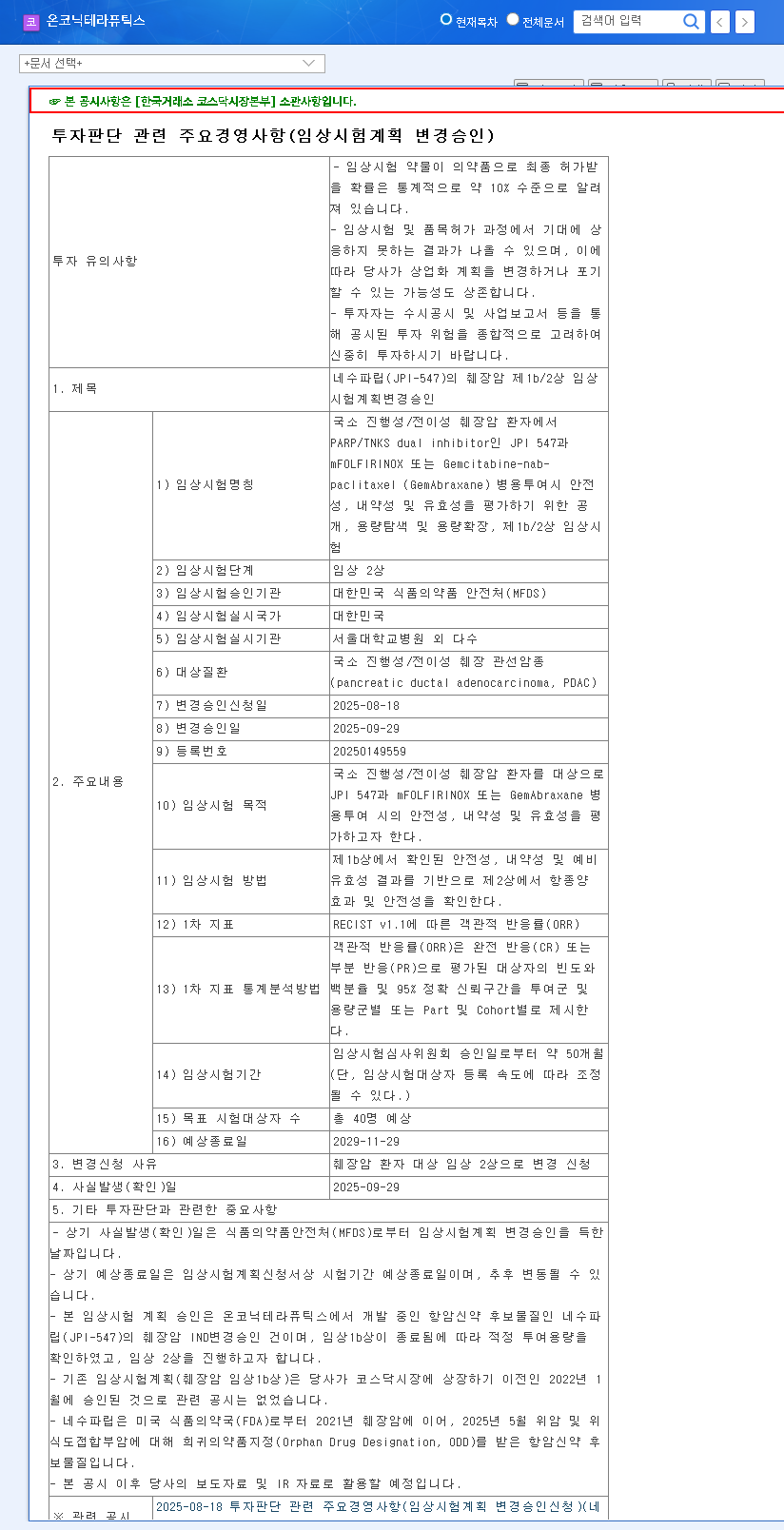
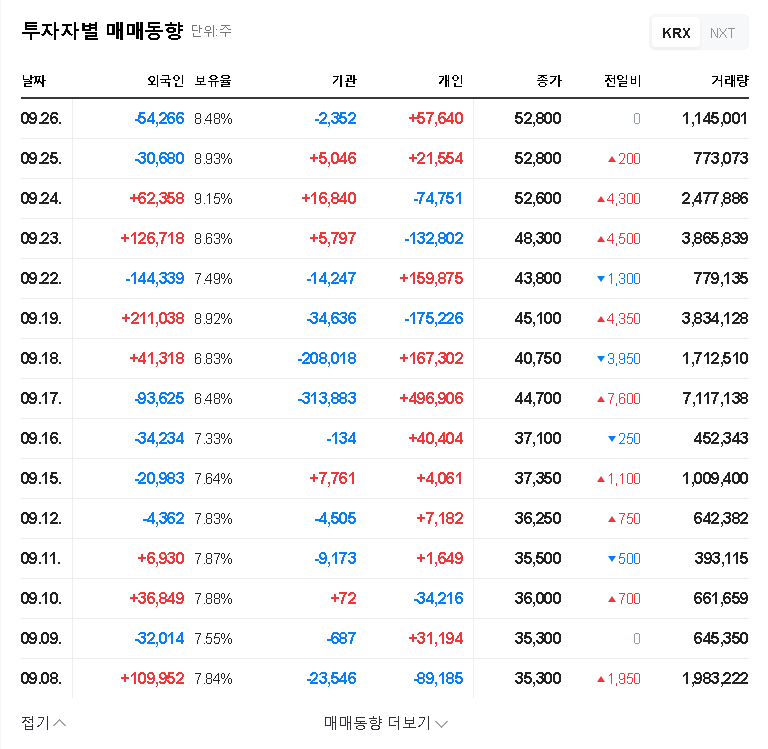
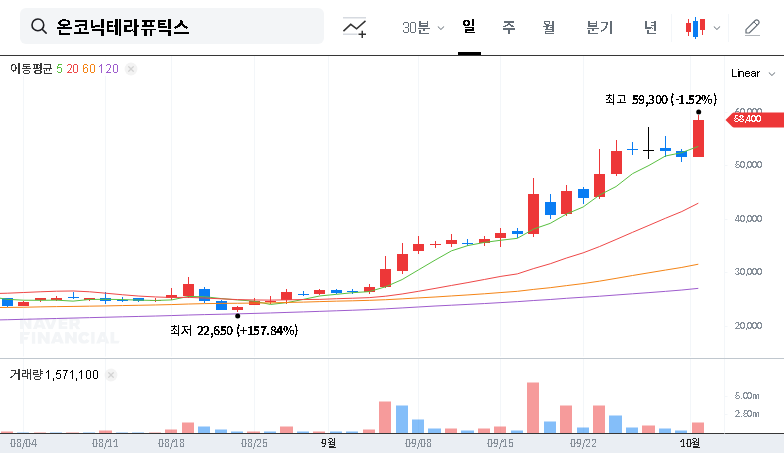
    In a major development for the oncology sector and for patients facing the challenge of pancreatic cancer, Onconic Therapeutics has officially advanced its key anticancer drug candidate, ‘Nesuparib (JPI-547),’ into Phase 2 clinical trials. This significant milestone follows the approval of its Phase 1b/2 clinical trial protocol amendment from the Ministry of Food and Drug Safety (MFDS).

    The advancement of Onconic Therapeutics Nesuparib is far more than a regulatory formality; it represents a crucial pivot point that could profoundly impact the company’s future growth drivers and corporate valuation. Given the substantial unmet medical needs in treating locally advanced/metastatic Pancreatic Ductal Adenocarcinoma (PDAC)—one of the deadliest forms of cancer—investors and the scientific community are keenly watching the trajectory of this novel therapeutic agent.

    The Strategic Milestone: Nesuparib’s Phase 2 Entry for PDAC

    Onconic Therapeutics received formal approval from the MFDS for the amendment to its Nesuparib (JPI-547) Phase 1b/2 clinical trial plan specifically targeting pancreatic cancer. This achievement confirms the successful conclusion of the Phase 1b safety and initial efficacy assessments, allowing the official commencement of the more rigorous Phase 2 efficacy testing.

    Nesuparib is being developed for patients suffering from locally advanced or metastatic PDAC. Its importance is underscored by its designation as an Orphan Drug by both the US FDA and the Korean MFDS. Orphan Drug designation often grants accelerated review processes, market exclusivity, and tax incentives, acknowledging the dire need for new treatments in this indication.

    Key Facts about the Clinical Advancement:

    • Event Date: Approval of Nesuparib Phase 1b/2 clinical trial amendment (September 29, 2025).
    • Target Disease: Locally Advanced/Metastatic Pancreatic Ductal Adenocarcinoma (PDAC).
    • Clinical Stage: Official entry into Phase 2 efficacy trials.
    • Drug Mechanism: PARP/TNKS dual-target anticancer inhibitor.

    Analyzing the Power of Onconic Therapeutics Nesuparib: A Dual-Target Approach

    What sets Nesuparib apart from conventional treatments is its dual-target mechanism, focusing on both PARP (Poly(ADP-ribose) polymerase) and TNKS (Tankyrase). Both enzymes play critical roles in DNA damage repair, genomic stability, and tumor cell proliferation. By inhibiting both pathways simultaneously, Onconic Therapeutics Nesuparib aims to overcome resistance mechanisms often observed when tumors are treated with single-target inhibitors.

    PARP inhibitors are already established treatments for certain cancers, particularly those with BRCA mutations. However, TNKS inhibition introduces a novel layer of therapeutic impact, potentially disrupting the Wnt signaling pathway—a key driver in many cancers, including PDAC. This dual inhibition strategy holds promise for significantly improving patient outcomes where treatment options are currently limited to highly toxic chemotherapy regimens.

    For more detailed information on the mechanism of action of similar drugs, readers can consult authoritative scientific sources on innovative PARP inhibitors.

    Corporate Health and Synergy: Zastaprazan Fuels the Pipeline

    The acceleration of Nesuparib’s pipeline occurs against a backdrop of remarkable corporate success. According to its 2025 semi-annual report, Onconic Therapeutics demonstrated exceptional financial stability, reporting explosive sales revenue growth of 362.4% year-over-year, reaching 18.6 billion KRW.

    This financial turnaround is primarily attributed to the robust performance of its flagship product, ‘Zastaprazan,’ a treatment for gastroesophageal reflux disease. The successful transition from a previous significant deficit to achieving a surplus in both operating profit and net income provides a solid financial foundation, minimizing the reliance on external funding solely for R&D activities.

    The synergistic relationship between the commercial success of Zastaprazan and the clinical advancement of Onconic Therapeutics Nesuparib reaffirms the company’s strong drug development capabilities across diverse therapeutic areas, from gastrointestinal diseases to cutting-edge oncology. (For more details, see our previous analysis on the global expansion of Zastaprazan).

    Impact Assessment: What Phase 2 Means for Investors and Global Partnerships

    The progression into Phase 2 significantly increases the drug candidate’s commercial viability and corporate value, especially in the context of global pharmaceutical partnering:

    • Accelerated Licensing Potential: Phase 2 data is often the critical trigger point for global pharmaceutical companies seeking to license promising oncology assets. This advancement strengthens Onconic’s negotiating position for technology transfer (licensing-out) agreements, potentially leading to more favorable terms.
    • Enhanced Credibility: Orphan Drug designation combined with MFDS approval validates the company’s scientific rigor and R&D competence, attracting higher investor attention and building trust in the market.
    • Addressing Unmet Needs: Given the aggressive nature of PDAC, any successful therapeutic agent, particularly one with an orphan drug status, commands significant market interest due to the high global demand for effective treatments.

    Navigating Future Challenges and Risks

    While the momentum is positive, drug development remains inherently uncertain. Investors must remain cognizant of the potential risk factors associated with Onconic Therapeutics Nesuparib:

    1. Clinical Development Risk: The outcome of Phase 2 trials is not guaranteed. If the results do not meet primary efficacy endpoints, corporate valuation and stock performance could be negatively impacted.
    2. Competitive Landscape: The pancreatic cancer market is dynamic and competitive. Continuous monitoring of rival drugs, especially novel targeted therapies or immunotherapies, is essential.
    3. Commercialization Uncertainty: Even after clinical success, challenges in securing optimal licensing deals, navigating complex international regulatory hurdles, and ensuring effective commercialization remain.

    In summary, Onconic Therapeutics Nesuparib represents a high-potential asset in a high-need indication. The successful entry into Phase 2, supported by strong corporate financials driven by Zastaprazan, positions Onconic Therapeutics for continued growth. Continuous monitoring of clinical data and licensing negotiations will be key for assessing its long-term investment potential.

    Onconic Therapeutics Nesuparib Enters Phase 2 for Pancreatic Cancer: Analyzing Growth Potential and Pipeline Strength 관련 이미지
    Onconic Therapeutics Nesuparib Enters Phase 2 for Pancreatic Cancer: Analyzing Growth Potential and Pipeline Strength 관련 이미지
  • Onconic Therapeutics IR Scheduled: Deep Dive into Jacubov Growth and Nesuparib Potential (August 27, 2025)

    1. Onconic Therapeutics IR: What to Expect

    Scheduled for 9:00 AM on August 27, 2025, the IR session will include a presentation on Onconic’s business performance and current status, followed by a Q&A session. Detailed information on the sales growth of Jacubov and the clinical development progress of Nesuparib are expected to be key highlights.

    2. Why Pay Attention?

    Onconic Therapeutics is experiencing consistent growth driven by the market expansion of Jacubov and the potential of Nesuparib. This IR is a critical opportunity for the company to clearly communicate its growth story to investors and potentially re-evaluate its corporate value.

    3. What Should Investors Do?

    • Verify Jacubov’s Continued Growth: Focus on sales trends since launch and the company’s future growth strategy.
    • Monitor Nesuparib’s Clinical Progress: Check for updates on clinical trial results, timelines, and potential licensing opportunities.
    • Assess Financial Health and Investment Plans: Evaluate the potential for stable growth based on the company’s strong financial position.
    • Analyze the Competitive Landscape: Understand the competitive dynamics in the P-CAB and anti-cancer drug markets, and Onconic’s strategies to address them.

    4. Investor Action Plan

    Carefully analyze the information presented during the IR and make investment decisions based on the company’s future growth potential. It’s crucial to maintain a long-term perspective and avoid being swayed by short-term stock price fluctuations.

    Frequently Asked Questions

    What are Onconic Therapeutics’ main businesses?

    Onconic Therapeutics focuses on developing treatments for digestive diseases with Jacubov and next-generation anti-cancer drugs with Nesuparib.

    What kind of anti-cancer drug is Nesuparib?

    Nesuparib is a PARP/Tankyrase dual-target inhibitor, currently undergoing clinical trials for pancreatic cancer, endometrial cancer, and other indications.

    What is Onconic Therapeutics’ financial status?

    The company achieved a turnaround in the first half of 2025, boasting over 45.1 billion won in cash and cash equivalents and a low debt-to-equity ratio, demonstrating strong financial health.

  • Onconic Therapeutics’ Zastaprazan Succeeds in China Phase 3 Trial: Investment Outlook

    1. What Happened?

    On August 19, 2025, Onconic Therapeutics invoiced its partner, Livzon Pharmaceutical Group Inc., for a milestone payment following the successful completion of Phase 3 clinical trials and the application for product approval of Zastaprazan in China. This event not only contributes directly to increased sales and profitability for Onconic Therapeutics but also accelerates its expansion into the global market.

    2. Why is it Important?

    The success of this Phase 3 clinical trial in China is a significant milestone that validates the commercial value of Zastaprazan. The milestone payment strengthens the company’s financial health and provides the driving force for further research and development of its subsequent pipelines (such as Nesuparib). Moreover, successful entry into the Chinese market increases the likelihood of technology transfer agreements with other countries.

    3. So, What’s Next?

    The announcement of this milestone payment is likely to act as a positive momentum for Onconic Therapeutics’ stock price. Key variables that will influence the future stock price include product approval and sales commencement in the Chinese market, progress in the clinical development of Nesuparib, and any additional technology transfer agreements. However, intensifying global competition and uncertainties related to clinical trials and approvals remain potential risk factors.

    4. What Should Investors Do?

    Onconic Therapeutics is expected to further expand its growth potential following this event. Investors should continuously monitor updates related to product approval and sales in China, progress in the development of subsequent pipelines, and the status of new technology transfer agreements to establish their investment strategies. However, it’s important to remember that investment decisions are personal judgments, and investments always carry inherent risks.

    What is Zastaprazan?

    Zastaprazan is the 37th domestically developed new drug created by Onconic Therapeutics, and it’s a treatment for gastroesophageal reflux disease (GERD).

    Why is this milestone payment important for Onconic Therapeutics?

    This milestone payment strengthens the company’s financial health, promotes investment in subsequent new drug development, and plays a vital role in accelerating global market entry.

    What is the future stock price outlook for Onconic Therapeutics?

    The success of the Phase 3 clinical trial in China is expected to have a positive impact on the stock price. However, factors such as product approval, sales performance, and the development of subsequent pipelines should be continuously monitored.

  • Onconic Therapeutics Q2 2025 Earnings: A Mixed Bag of Profits and Losses

    1. Onconic Therapeutics Q2 2025 Performance: What Happened?

    Onconic Therapeutics reported revenue of ₩9.4 billion and operating profit of ₩1.1 billion in Q2 2025, marking a return to profitability. However, the company recorded a net loss of ₩0.1 billion. While Zastaprazan sales fueled the positive turnaround, the net loss raises questions for investors.

    2. Drivers of Performance: Why These Results?

    • Zastaprazan Sales Growth: Following approval for the treatment of gastric ulcers, Zastaprazan has become a key growth driver, accounting for ₩16.4 billion of the ₩18.6 billion in H1 2025 revenue.
    • Nesuparib Clinical Development: Ongoing Phase 1b/2 and investigator-initiated Phase 2 trials for Nesuparib provide long-term growth potential.
    • Technology Licensing Agreements: Deals for Zastaprazan in China, India, and South America contributed ₩2.18 billion to H1 2025 revenue, diversifying income streams.

    3. Outlook and Investment Strategy: What’s Next?

    In the short term, investors should monitor market reaction to the Q2 net loss. Volatility may increase depending on Zastaprazan’s market penetration and Nesuparib clinical trial results. Longer term, market share expansion for Zastaprazan and successful clinical outcomes for Nesuparib will be key drivers of value creation.

    4. Key Investor Takeaways: What to Watch

    • Zastaprazan market penetration and sales growth
    • Nesuparib Phase 2 clinical trial results
    • Further technology licensing agreements
    • Improvement in operating margin and sustained net income profitability

    Frequently Asked Questions

    What is Onconic Therapeutics’ main business?

    Onconic Therapeutics is a biopharmaceutical company developing Zastaprazan, a gastric acid secretion inhibitor, and Nesuparib, an anticancer drug.

    What is Zastaprazan’s competitive advantage?

    Zastaprazan is a next-generation P-CAB inhibitor offering advantages over traditional PPI drugs.

    What is the outlook for Onconic Therapeutics’ future growth?

    Future growth will depend on Zastaprazan’s market share expansion and the success of Nesuparib clinical trials.