Investors are turning their attention to a pivotal upcoming event in the South Korean energy sector. This detailed KEPCO Plant Service & Engineering Co., Ltd IR analysis provides a comprehensive look at what to expect from the company’s Q3 2025 earnings call. As a leader in power plant maintenance, KEPCO KPS (also known as 한전KPS) stands at a crossroads of stable domestic operations and promising new ventures in nuclear and renewable energy. This report will dissect the company’s fundamentals, evaluate macroeconomic risks, and outline key factors that could influence its stock price post-announcement, helping you build a complete investment picture.
The KEPCO KPS Q3 2025 Investor Relations Event: What to Expect
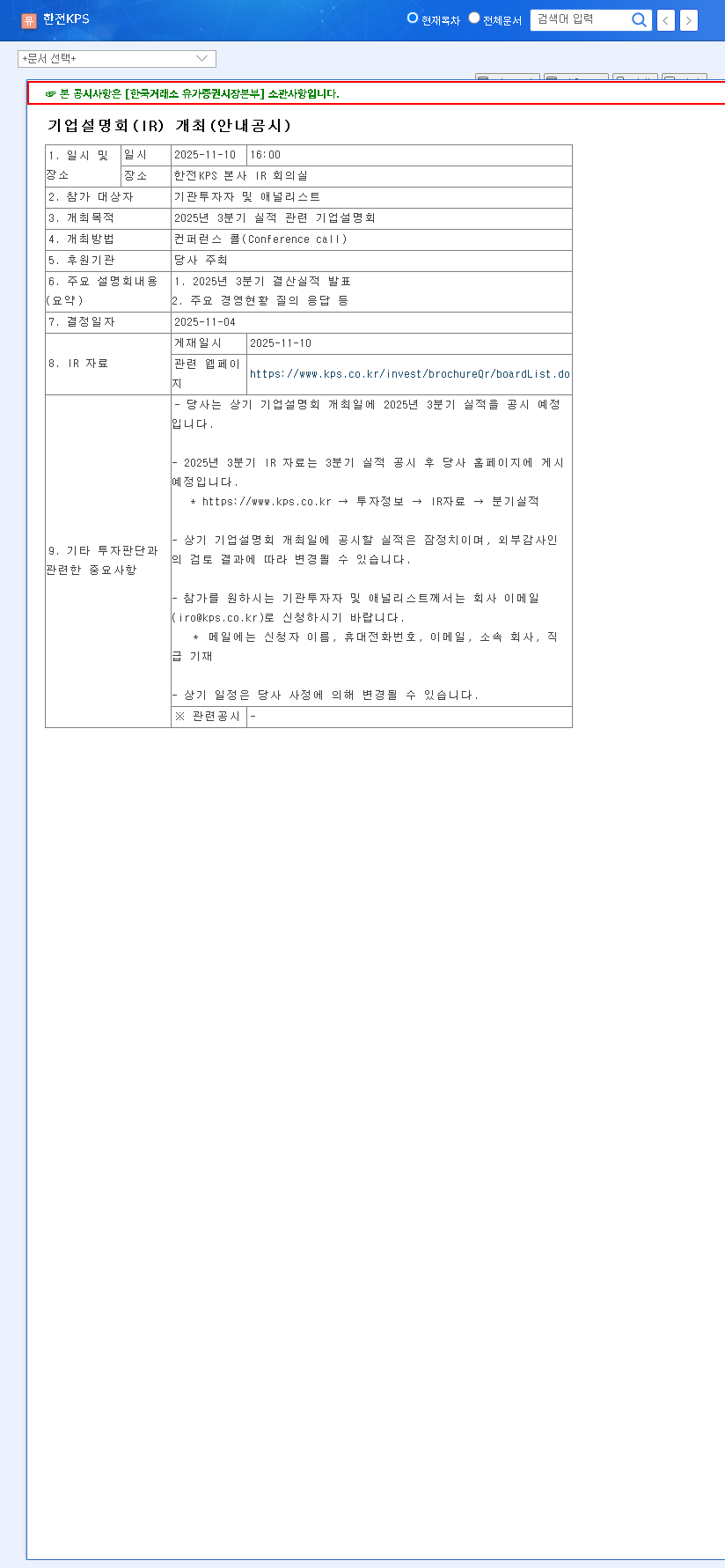
Mark your calendars for a crucial briefing from one of South Korea’s energy maintenance giants. KEPCO Plant Service & Engineering Co., Ltd will host its much-anticipated Investor Relations (IR) session to disclose its third-quarter performance and provide critical management updates.
Event Date: November 10, 2025
Event Time: 16:00 KST (Korean Standard Time)
Platform: DART (Financial Supervisory Service Electronic Disclosure System)
Official Disclosure: Click to view DART report
With a market capitalization exceeding KRW 2.2 trillion, this session is more than a simple earnings report; it’s a window into the company’s strategic direction, its response to global economic shifts, and the tangible progress of its future growth engines.
Dissecting the Business: Core Strengths and New Frontiers
KEPCO KPS’s investment appeal lies in its dual nature: a stable, cash-generating core business paired with ventures in high-growth, future-focused energy sectors. A thorough KEPCO KPS stock analysis must weigh both aspects.
The Bedrock: Domestic Power Plant Maintenance
The company’s primary strength is its dominant position in the South Korea power plant maintenance market. It services a wide array of facilities, including thermal, nuclear, and hydro plants. This segment provides a reliable and predictable revenue stream, underpinned by the nation’s constant need for electricity. The modernization of aging facilities and a national focus on improving plant utilization rates are expected to ensure steady demand for its expert services.
The Catalysts: Nuclear Decommissioning and Renewable Energy
The true excitement for future growth comes from two key areas. First, nuclear plant decommissioning is a burgeoning global market. As older reactors reach the end of their operational life, the complex and highly regulated process of decommissioning them presents a significant, long-term revenue opportunity. KEPCO KPS is positioning itself to be a leader in this specialized field. Second, the global pivot to clean energy makes its expansion into renewable energy investment and maintenance (e.g., wind and solar farms) a critical growth driver. For more on this trend, see the latest reports from the International Energy Agency.
KEPCO KPS’s strategy is clear: leverage a stable, cash-cow domestic business to fund and capture leadership in the next generation of energy services—decommissioning and renewables.
Financial Health and Macroeconomic Pressures
KEPCO KPS boasts a remarkably stable financial structure. Its debt-free management and growing cash reserves provide a strong cushion against market volatility and the capital needed for new investments. However, no company operates in a vacuum. Investors should monitor several global economic variables that could impact profitability:
- •Exchange Rate Fluctuations: An appreciating KRW against the USD and EUR could reduce the profitability of overseas projects. The IR session must address the company’s hedging strategies.
- •Commodity Prices: Volatile oil prices can affect electricity demand and generation costs, which indirectly influences the maintenance cycle and scope of work for KEPCO KPS.
- •Interest Rates: While currently stable, any future hikes in benchmark rates could alter the investment landscape. KEPCO KPS’s debt-free status is a significant advantage here.
Potential Stock Price Impact: Post-IR Scenarios
The Q3 earnings announcement will likely set a neutral-to-positive tone, but the details shared during the Q&A will determine the stock’s trajectory. Here are the key factors that could sway investor sentiment.
Positive Catalysts to Watch For
- •Strong Earnings & Outlook: If Q3 results beat expectations and management provides a confident Q4 and 2026 outlook, expect a positive market reaction.
- •Concrete New Business Wins: Vague promises won’t suffice. Investors want to see specific contracts, revenue figures, or confirmed project timelines for nuclear decommissioning and renewable energy initiatives.
- •Transparent Communication: A clear, data-backed presentation on how the company is managing risks and capitalizing on opportunities will build significant investor trust.
Potential Risks & Red Flags
- •Earnings Miss: Any sign that the temporary revenue dip from H1 is becoming a structural problem could trigger a sell-off.
- •Vague Growth Strategy: A lack of detail on overseas expansion or new ventures may suggest these growth engines are not yet firing.
- •Competitive Pressures: If management cannot articulate a clear strategy for fending off rising competition from private maintenance firms, concerns about margin erosion may arise. For more context, you can read our guide on analyzing the competitive landscape in the energy sector.
Disclaimer: This report is for informational purposes only and based on publicly available information. All investment decisions are the sole responsibility of the investor.