Tag: NHN KCP

  • NHN KCP Stock Forecast: Analyzing NHN Payco’s Stake Change and Investment Strategy


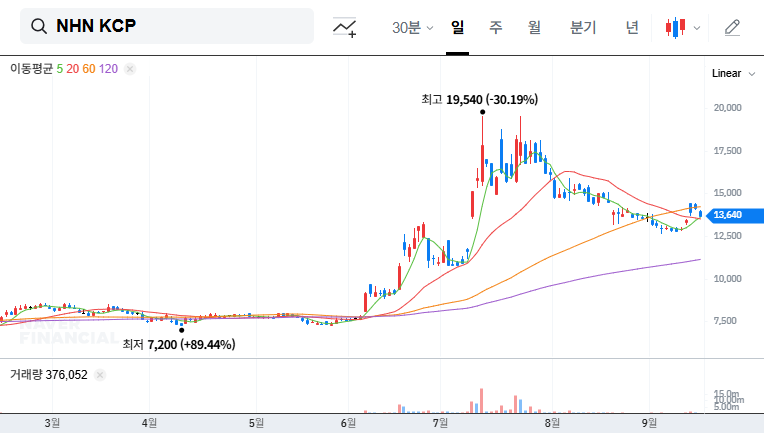
    NHN KCP Stock Forecast: Analyzing NHN Payco's Stake Change and Investment Strategy 대표 차트 이미지


    NHN KCP Stake Change: What Happened?

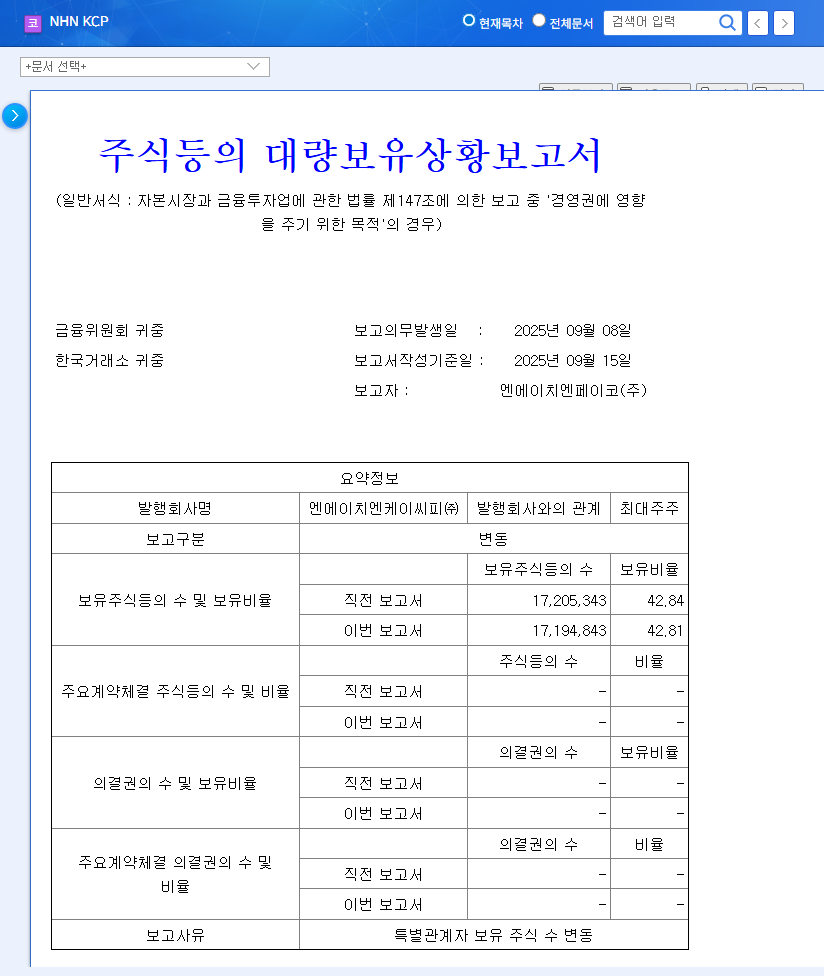
    On September 15, 2025, NHN Payco sold 10,500 shares of NHN KCP, slightly decreasing its stake from 42.84% to 42.81%. This was due to the sale by a related party, Yoon Han-sung. The disclosure stated the purpose of the holding as ‘influence on management rights.’

    Why Does the Stake Change Matter?

    While the change in stake is minimal, stating the purpose of holding as ‘influence on management rights’ has drawn market attention. This is because NHN Payco still holds significant influence over management as the largest shareholder. This raises speculation about potential changes in the governance structure, which could trigger investor caution.

    NHN KCP Fundamentals and Future Outlook

    Fortunately, this stake change is not expected to significantly impact NHN KCP’s solid fundamentals. Its strong position in the online payment market and steady earnings growth are likely to continue. In particular, the growth potential of new businesses, led by the data center business, could be a key momentum for stock price increase. However, it is necessary to carefully consider the impact of intensifying competition and macroeconomic variables.

    Action Plan for Investors

    • Monitor Stake Changes: Continuously monitor future stake changes by NHN Payco and related parties.
    • Check New Business Performance: The profitability of new businesses, including the data center, is crucial from a mid-to-long-term investment perspective.
    • Consider Macroeconomic Variables: Analyze the impact of macroeconomic variables, such as exchange rates, interest rates, and oil prices, on NHN KCP’s earnings.
    • Analyze the Competitive Landscape: Understand competitor trends and technological advancements to assess NHN KCP’s competitiveness continuously.


    FAQ

    Will NHN Payco’s stake change affect NHN KCP’s management control?

    This stake change is minimal, so it is unlikely to significantly impact management control in the short term. However, it’s necessary to continuously monitor future stake change trends.

    What is the investment outlook for NHN KCP?

    As a leader in the online payment market, NHN KCP maintains solid fundamentals and has high growth potential in new businesses. However, the competitive landscape and macroeconomic variables should be considered.

    What precautions should be taken when investing?

    Investment decisions should be made considering various factors, including future stake change trends, new business performance, changes in the macroeconomic environment, and the competitive landscape.


    NHN KCP Stock Forecast: Analyzing NHN Payco's Stake Change and Investment Strategy 관련 이미지
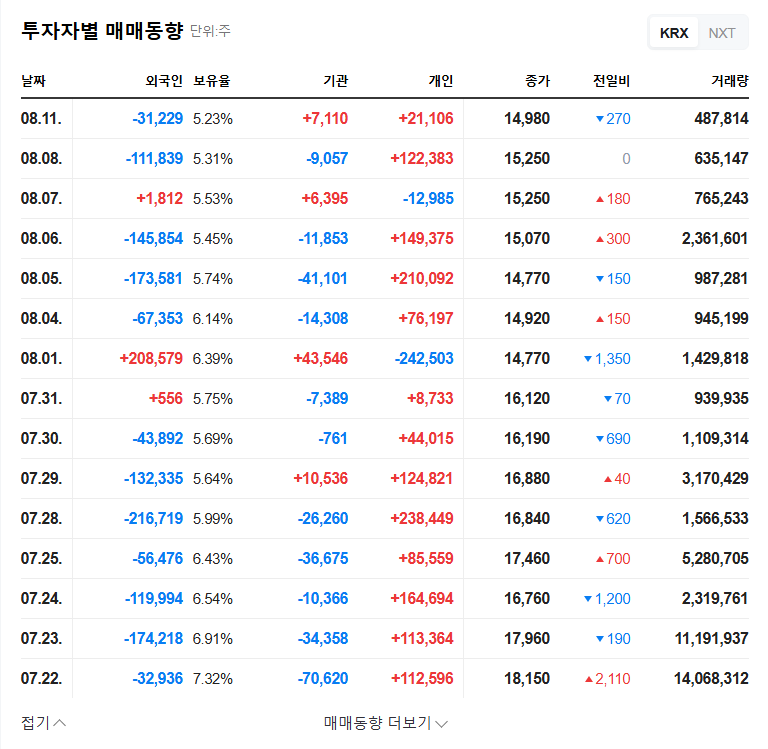
    NHN KCP Stock Forecast: Analyzing NHN Payco's Stake Change and Investment Strategy 관련 이미지


  • NHN KCP Earnings Call Analysis: Q2 2025 Results and Stock Outlook

    1. NHN KCP Q2 Earnings: Key Highlights

    In Q2 2025, NHN KCP continued its steady growth in the online payment sector. Expanding online and mobile commerce markets, along with key client acquisitions, contributed to a stable revenue base.

    2. Positive Factors and Growth Momentum

    Maintaining its dominant position in the online payment market, NHN KCP is actively pursuing new ventures like data center operations and prepaid electronic payment services. The data center business, in particular, holds promise for long-term stable revenue generation. The launch of the free business consulting app ‘B.But’ also signifies efforts to expand customer touchpoints and diversify its business portfolio.

    3. Lingering Concerns and Risks

    The picture isn’t entirely rosy. The sluggish offline payment business and ongoing losses in the project business remain key challenges. Macroeconomic uncertainties, including an economic slowdown and weakened consumer sentiment, persist. Furthermore, initial risks associated with new business investments cannot be ignored. Currency fluctuations also pose a potential impact on profitability.

    4. Investor Action Plan

    NHN KCP presented its Q2 results and future growth strategies in the earnings call. Investors should carefully analyze the information presented, considering both positive and negative factors before making investment decisions. Pay close attention to the growth potential and risks of new businesses, the offline business recovery strategy, and the company’s approach to navigating macroeconomic variables.

    What are NHN KCP’s main businesses?

    NHN KCP primarily operates in the online and offline payment services sector through its PG (Payment Gateway) and VAN (Value Added Network) businesses. It’s also expanding into new areas like data center operations and prepaid electronic payment services.

    What are the key takeaways from NHN KCP’s Q2 earnings?

    Focus on the continued growth of online payments, strategies to address offline struggles, performance of new ventures, and the impact of macroeconomic factors.

    What should investors consider when evaluating NHN KCP?

    Carefully assess the initial risks of new investments, the slow performance of the offline business, the influence of macroeconomic factors, and potential currency fluctuations before making investment decisions.

  • NHN KCP H1 2025 Earnings Analysis: Growth Continues, Profitability a Challenge

    1. What Happened? NHN KCP H1 2025 Earnings Release

    NHN KCP announced its H1 2025 earnings on August 14, 2025. Revenue reached ₩300.6 billion, meeting expectations, but operating profit fell short at ₩12.3 billion. Net income also came in lower than expected at ₩9.5 billion.

    2. Why These Results? Earnings Analysis

    Revenue met market expectations thanks to steady growth in online and offline payment businesses. However, operating profit and net income fell short of expectations due to increased investment costs in new businesses and profitability management issues in existing business segments. Operating profit margin, in particular, was 4.09%, a slight improvement from the previous quarter but still below market expectations.

    3. What’s Next? Future Outlook and Investment Strategies

    In the short term, downward pressure on stock prices is expected due to the sluggish performance. However, in the long term, considering the solid business foundation and the growth potential of new businesses, this could present a buying opportunity. Investors should closely monitor the company’s efforts to improve profitability and the performance of its new businesses.

    • Positive Factors: Stable growth in the payment business, growth drivers in new businesses, improved financial soundness.
    • Negative Factors: Weak profitability indicators, declining stock price trend, macroeconomic uncertainty.

    4. Investor Action Plan

    Short-term investors should maintain a conservative approach, while long-term investors can look for buying opportunities while monitoring the company’s performance improvements and new business achievements. In particular, a detailed analysis of the specific revenue contribution and growth prospects of new businesses, as well as changes in the macroeconomic environment, is necessary.

    What was NHN KCP’s revenue for H1 2025?

    ₩300.6 billion.

    Why did NHN KCP’s operating profit fall short of expectations?

    It is estimated that a combination of factors, including increased investment costs in new businesses and profitability management issues in existing businesses, contributed to the lower-than-expected operating profit.

    What is the outlook for NHN KCP’s stock price?

    Downward pressure is expected in the short term, but considering the long-term growth potential, it could be a buying opportunity.

  • NHN KCP Q1 2025 Earnings Disappoint: What Investors Need to Know

    1. What Happened? Analyzing the Earnings Miss

    NHN KCP’s Q1 2025 earnings missed market estimates. Sales declined by 6%, while operating and net income fell by 14% and 12%, respectively. Key factors contributing to this underperformance include slowing growth in the online market and deepening losses in project businesses.

    2. Why Does it Matter? Impact on Investors

    This earnings announcement is expected to negatively impact NHN KCP’s stock price in the short term. The widening losses in project businesses are a particular concern for investors. However, the robust growth of the online payment business remains a positive sign.

    3. What Should Investors Do? Investment Strategy

    Short-term investors should take a cautious approach. Prudence is advised until concrete plans and results for improving profitability in project businesses are visible. Long-term investors should consider the growth of the online payment market, the company’s market position, and the successful establishment of new businesses when making investment decisions.

    4. Investor Action Plan

    • Short-Term: Remain cautious, manage risk
    • Long-Term: Consider growth potential, adopt a dollar-cost averaging strategy
    • Monitor the progress of core and new businesses

    Frequently Asked Questions

    What are NHN KCP’s main businesses?

    NHN KCP primarily operates online and offline payment gateway (PG, VAN) businesses. It is also exploring new growth engines through project businesses such as cloud POS and corporate welfare solutions.

    What was the biggest reason for the recent earnings decline?

    The slowing growth of the online market and deepening losses in project businesses are considered the main reasons for the decline.

    Should I invest in NHN KCP?

    A cautious approach is recommended in the short term. Long-term investment decisions should consider the growth of the online payment market and the success of new businesses.

  • NHN KCP Q2 2025 Earnings: A Deep Dive and Investment Strategies

    1. NHN KCP Q2 Earnings: What Happened?

    NHN KCP’s Q2 revenue reached ₩300.7 billion, demonstrating year-over-year growth. However, both operating and net profits missed market projections. What factors contributed to this profitability challenge despite revenue growth?

    2. Analyzing the Underperformance: Why Did This Happen?

    Despite growth in the online business segment, underperformance in the offline segment and increased investment costs in new projects are identified as primary factors. Furthermore, increased competition impacting fees and exchange rate volatility also played a role.

    3. Future Outlook and Investment Strategies: What’s Next?

    In the short term, investors should be cautious of potential stock volatility due to the earnings miss. The long-term outlook hinges on the recovery of offline business profitability and the success of new ventures. Cloud POS and prepaid businesses are crucial for NHN KCP’s future growth.

    • Short-Term Strategy: Caution advised, observe market volatility.
    • Long-Term Strategy: Focus on new business performance and profitability improvement.

    4. Key Questions and Answers for Investors (FAQ)

    What was NHN KCP’s Q2 revenue?

    NHN KCP reported ₩300.7 billion in revenue for Q2 2025.

    Why did operating profit miss expectations?

    The miss is attributed to underperformance in the offline business segment and increased investment costs in new projects.

    What are NHN KCP’s main business segments?

    NHN KCP operates in online payments, offline payments, and new project ventures.

    What investment strategies should be considered?

    Short-term caution is advised, while long-term focus should be on new business performance and profitability improvement.

  • NHN KCP Stock Price Drop: Analysis of Foreign Investors’ 170,000 Share Sell-off

    1. What Happened?

    Foreign institutional investors, including FIL Limited, sold approximately 170,000 shares (1.02% stake) of NHN KCP between June 23rd and July 14th. This reduced their stake from 5.43% to 4.41%. The official reason given was ‘simple stock disposal.’

    2. Why the Sell-Off?

    While the stated reason is ‘simple disposal,’ the weakening fundamentals of NHN KCP likely played a significant role.

    • Project Division Struggles: NHN KCP’s Q3 2025 earnings report revealed slowing growth in online payments and widening losses in the project division, leading to a decline in operating profit. The uncertain future of the ‘Bebit’ app and ‘GTPP’ platform has increased investor concerns.
    • Macroeconomic Uncertainty: Interest rate hikes in the US and Europe, along with increasing exchange rate volatility, have contributed to negative investor sentiment due to potential consumer spending decline and foreign exchange risks.
    • Declining Stock Price: The recent downward trend in NHN KCP’s stock price likely influenced the decision of foreign investors to sell.

    3. What’s Next?

    In the short term, downward pressure on the stock price is likely to continue. However, depending on the performance of ‘Bebit’ and ‘GTPP,’ improvements in the project division’s profitability, and changes in the macroeconomic environment, the stock price could rebound.

    4. What Should Investors Do?

    Investors considering NHN KCP should closely monitor the performance of the project division and macroeconomic indicators. Pay close attention to announcements regarding ‘Bebit’ and ‘GTPP,’ as well as any changes in management strategy. Significant short-term price volatility is expected, so careful consideration is advised.

    Q: How many shares of NHN KCP did foreign investors sell?

    A: Approximately 170,000 shares, reducing their stake from 5.43% to 4.41%.

    Q: What was the reason for the sell-off?

    A: Officially, it was ‘simple stock disposal.’ However, weakening fundamentals, macroeconomic uncertainty, and the declining stock price are likely contributing factors.

    Q: What is the outlook for NHN KCP?

    A: The future of NHN KCP’s stock price and company value hinges on the success of ‘Bebit’ and ‘GTPP,’ the profitability of the project division, and the overall macroeconomic environment.