Tag: New Materials

  • (146320) BCnC Q3 2025 Earnings: A Deep Dive into Surprise Profits & 2026 Stock Outlook

    (146320) BCnC Q3 2025 Earnings: A Deep Dive into Surprise Profits & 2026 Stock Outlook

    The latest BCnC Q3 2025 earnings report, released November 7, 2025, has sent a mixed but intriguing signal to the market. As a critical material supplier in the booming semiconductor industry, BCnC Co., Ltd. presented a financial puzzle: while revenue and operating profit missed analyst forecasts, net profit skyrocketed, creating what many are calling an ‘earnings surprise.’ This analysis will dissect the official figures, explore the hidden drivers behind this anomaly, and provide a comprehensive outlook for a potential BCnC investment strategy.

    Is this a sign of underlying financial strength and clever management, or a one-off event masking deeper issues? Let’s dive into the data to understand BCnC’s true position in a dynamic global market.

    Unpacking the BCnC Q3 2025 Earnings Report

    BCnC’s preliminary Q3 2025 results presented a clear deviation from market consensus. Here’s a breakdown of the performance against expectations:

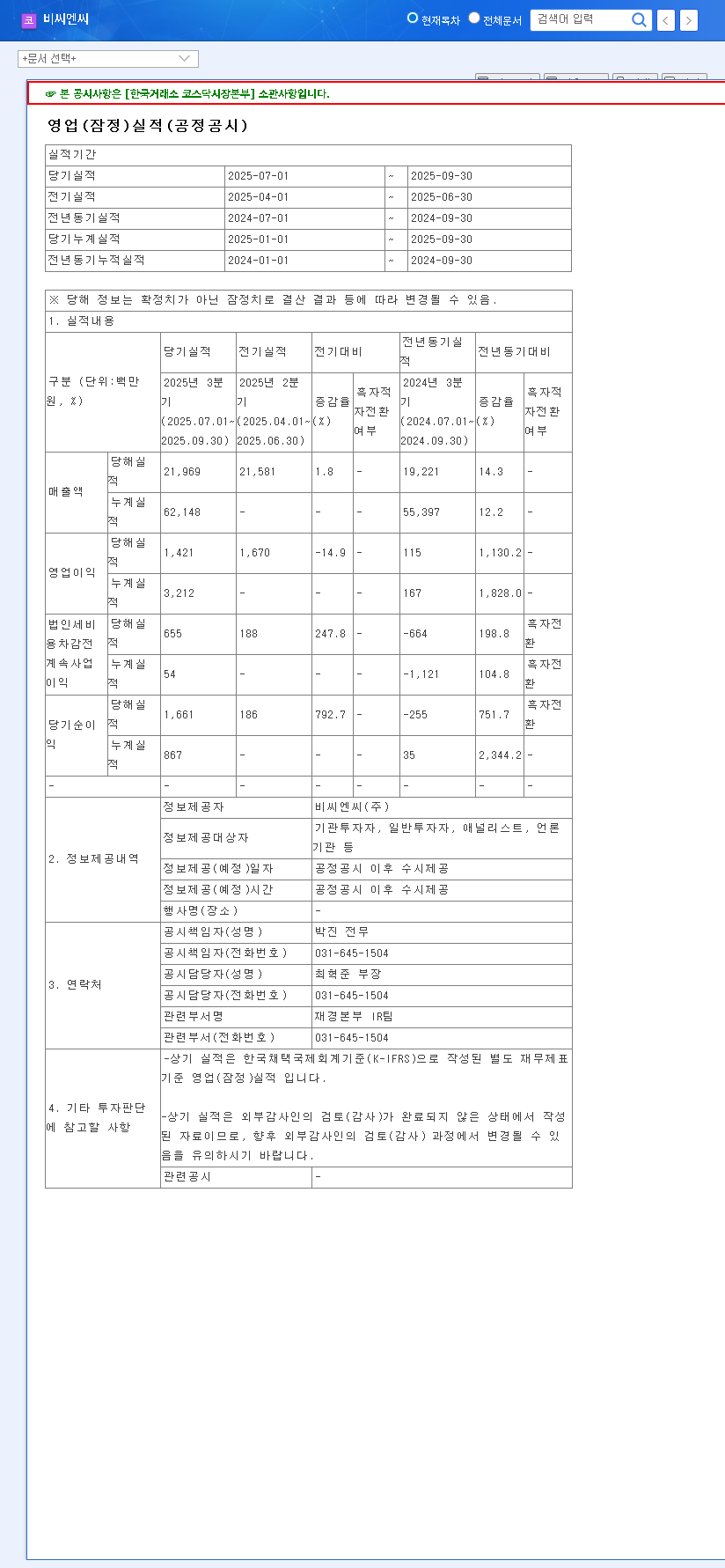
    • Revenue: KRW 22 billion, falling 7% short of the KRW 23.6 billion forecast.
    • Operating Profit: KRW 1.4 billion, a 12.5% miss compared to the KRW 1.6 billion expectation.
    • Net Profit: KRW 1.7 billion, a staggering 183.3% surge above the KRW 0.6 billion forecast.

    This discrepancy, particularly the massive outperformance in net profit, is the central theme of the current BCnC earnings analysis and requires a deeper investigation to determine its sustainability and impact on the BCnC stock.

    The Core Mystery: Dissecting the Results

    Headwinds for Revenue and Operating Profit

    The shortfall in top-line revenue and operating profit can be attributed to a mix of industry-wide and company-specific factors. The global semiconductor market, while growing, faces periodic slowdowns in certain segments. Furthermore, BCnC’s H1 2025 report mentioned that its synthetic quartz manufacturing facility utilization was only at 50%. This underutilization can lead to lower production output and reduced economies of scale, putting pressure on operating margins. A slight dip from Q2’s operating profit of KRW 1.6 billion suggests that cost pressures or a shift in product mix may have impacted profitability.

    The Source of the ‘Surprise’ Net Profit

    The dramatic jump in net profit is almost certainly due to non-operating factors. These are financial events outside the company’s core business activities. Potential sources include:

    • Foreign Exchange Gains: Given BCnC’s 26.6% export ratio and the volatile KRW/USD exchange rate, significant currency fluctuations could have resulted in substantial financial gains.
    • Asset Sales: The one-time sale of property, equipment, or investment stakes can inject a large amount of cash, directly boosting net profit.
    • Tax Adjustments: A corporate tax refund or a significant change in deferred tax liabilities could have had a positive impact.

    Investors must identify the precise cause to assess if this is a recurring benefit or a one-time windfall. The most reliable information can be found in the company’s official filing. You can review the Official Disclosure (DART Report) for a complete breakdown of non-operating income and expenses.

    Understanding the source of the net profit surprise is the single most critical task for any investor evaluating the BCnC Q3 2025 earnings. A one-off event has very different implications for future value than a sustainable improvement in financial structure.

    BCnC Investment Strategy: A Look at Fundamentals

    Beyond the quarterly numbers, a sound BCnC investment strategy requires a look at the company’s underlying strengths and weaknesses. The outlook for semiconductor materials is robust, with organizations like SEMI projecting record industry growth. BCnC is positioned to capitalize on this through several key initiatives.

    Strengths and Growth Catalysts

    • Technological Edge: Domestic production of synthetic quartz and expanded QD9+ supply give BCnC a competitive advantage.
    • Portfolio Diversification: The development of new materials like CD9 and Si ingots for next-generation chips signals a commitment to innovation.
    • Global Reach: Expansion into overseas markets with major clients diversifies revenue streams away from domestic dependence. For more context, see our guide to investing in the semiconductor sector.

    Risks and Investor Concerns

    However, investors should remain cautious of several red flags. The high debt-to-equity ratio of 128.48% indicates significant financial leverage, which can be risky in a high-interest-rate environment. Additionally, the issuance of convertible bonds introduces the potential for share dilution, which could negatively impact the BCnC stock price in the future.

    Conclusion: A Prudent Path Forward

    BCnC’s Q3 2025 earnings report is a classic case of needing to look beyond the headlines. While the net profit figure is impressive, the weakness in core operations requires careful consideration. For long-term investors, the focus should be on the company’s technological roadmap and its ability to improve operational efficiency.

    Before making any investment decisions, investors should:

    • Verify the Net Profit Source: Analyze the official disclosures to confirm the reason for the net profit surge.
    • Monitor Q4 Guidance: Pay close attention to the company’s outlook for the next quarter and full-year 2026 to gauge recovery momentum.
    • Track Key Projects: Watch for progress on new material commercialization and improvements in facility utilization rates.

    Ultimately, BCnC presents a compelling long-term growth story marred by short-term uncertainty. A cautious, research-driven approach is the most prudent strategy.
    (146320) BCnC Q3 2025 Earnings: A Deep Dive into Surprise Profits & 2026 Stock Outlook 관련 이미지
  • (298050) HS Hyosung Advanced Materials Q3 2025 Earnings: A Deep Dive for Investors

    (298050) HS Hyosung Advanced Materials Q3 2025 Earnings: A Deep Dive for Investors

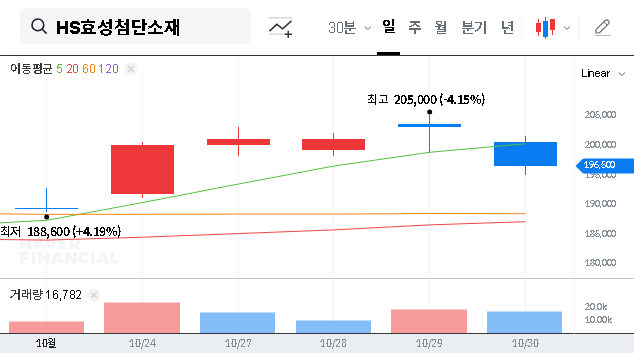
    The upcoming HS Hyosung Advanced Materials Q3 Earnings release is a pivotal moment for investors. Scheduled for October 31, 2025, this investor relations (IR) event will provide critical insights into the company’s performance amidst a complex global market. This comprehensive analysis will dissect the company’s fundamental strengths, potential headwinds, and the key factors that will influence the Hyosung Advanced Materials stock price in both the short and long term.

    We will explore the performance of its high-value new materials businesses, examine the macroeconomic landscape, and equip you with the essential information needed to make informed investment decisions following the Hyosung Q3 IR event.

    Event Details and What to Expect

    Mark your calendars: the company is set to host its 2025 Q3 earnings release and investor Q&A session on October 31, 2025, at 9:00 AM KST. This is more than a simple financial report; it’s a direct line of communication with management, offering a chance to gauge their strategy and confidence. Interested parties can find the official filing details in the company’s Official Disclosure (DART). Investors will be keenly listening for updates on production, sales forecasts, and progress on key strategic initiatives.

    Fundamental Analysis: Strengths vs. Risks

    Core Strengths Driving Value

    • Dominant Industrial Materials: The industrial materials segment, which includes vital products like tire cords, is the company’s revenue backbone, accounting for approximately 87% of sales. Its stability is closely tied to the global automotive industry’s health.
    • Future-Facing Growth Engines: Significant investment in R&D and capacity for high-value materials like carbon fiber and aramid is a major positive. These materials are essential for next-generation industries, including electric vehicles (EVs), hydrogen energy, and aerospace. For more on this trend, you can explore our in-depth guide to advanced materials investing.
    • Solid Financials: A debt-to-equity ratio of 262.38% (as of H1 2025) and growing cash reserves suggest a stable financial footing, providing the liquidity needed to navigate market cycles and fund growth projects.
    • Global Footprint: With production and sales bases across the world, Hyosung Advanced Materials effectively mitigates geopolitical and regional economic risks, ensuring a diversified revenue stream.

    Headwinds and Factors for Consideration

    • Commodity Price Volatility: The company’s profitability is sensitive to fluctuations in the price of key raw materials. Any sharp increases could compress margins if costs cannot be passed on to customers.
    • Currency Exchange Risk: A significant portion of business is conducted internationally, exposing the company to exchange rate volatility. While hedging strategies are in place, large swings in the Won/Dollar rate can still impact earnings.
    • Macroeconomic Pressures: Broader global economic conditions, such as rising interest rates and fears of a slowdown, can impact industrial and automotive demand. For context, see this analysis on global economic trends from a leading financial authority like Bloomberg.
    • Investment Burden: Heavy capital expenditure (KRW 113.9 billion in H1 2025) is necessary for long-term growth but can place a short-term strain on financials and free cash flow.

    Stock Price Impact and Investor Outlook

    The HS Hyosung Advanced Materials Q3 Earnings report will likely trigger notable stock price movement. The direction will depend on how the results and forward-looking guidance stack up against investor expectations.

    Potential Short-Term Catalysts

    Positive Movers: A significant earnings beat, strong guidance for Q4, or concrete, positive updates on the profitability and expansion of the carbon fiber business could send the stock higher. Clear communication from management on navigating macroeconomic risks will also build confidence.

    Negative Movers: Conversely, an earnings miss, weak future guidance, or ambiguity around the rumored restructuring of its business portfolio (e.g., the potential sale of the tire steel cord unit) could lead to a sell-off.

    Our overall investment opinion remains Neutral heading into the announcement. Hyosung Advanced Materials has a compelling long-term growth story, but short-term macroeconomic volatility and execution risks warrant caution. This Q3 IR is a critical data point for re-evaluating that thesis.

    Long-Term Value Drivers

    Looking beyond one quarter, the long-term enterprise value of Hyosung Advanced Materials hinges on its ability to execute in several key areas:

    • New Materials Leadership: Achieving tangible market share and profitability in aramid and carbon fiber is paramount.
    • Portfolio Optimization: Successfully divesting less profitable segments to focus on high-growth core businesses can unlock significant value and strengthen the balance sheet.
    • Technological Innovation: Continued investment in eco-friendly and high-performance materials will be crucial to maintaining a competitive edge in a rapidly evolving industrial landscape.

    Final Takeaway for Investors

    Investors should meticulously analyze the specific financial figures from the Q3 report, the growth trajectory of the new materials division, and any strategic announcements from management. The Q&A session will be particularly revealing. Based on the information presented during the Hyosung investor relations call, a clearer picture of the company’s future will emerge, allowing for a more decisive investment stance.

    (298050) HS Hyosung Advanced Materials Q3 2025 Earnings: A Deep Dive for Investors 관련 이미지
  • (079980) HUVIS CORPORATION Capital Increase: A Deep Dive into the KRW 13.3B Investment & Stock Impact

    (079980) HUVIS CORPORATION Capital Increase: A Deep Dive into the KRW 13.3B Investment & Stock Impact

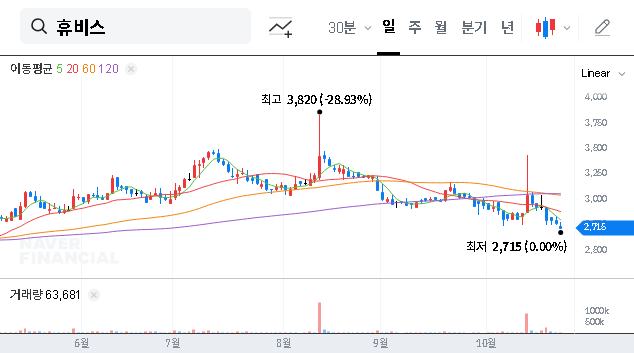
    The recent announcement of the HUVIS CORPORATION capital increase, executed through its subsidiary HUVIS Global, has sent ripples through the investment community. This strategic KRW 13.3 billion rights offering is more than a simple financial maneuver; it’s a clear signal of the company’s ambitious plans for future growth and market expansion. For investors, this move presents both significant opportunities and critical questions about the company’s direction, financial health, and the potential impact on the HUVIS stock price.

    This comprehensive analysis will delve into the specifics of the capital increase, evaluate HUVIS’s current financial standing, and project the potential short-term and long-term consequences for the company and its shareholders. By understanding the strategy behind this infusion of capital, investors can make more informed decisions about one of Korea’s leading materials science companies.

    Decoding the HUVIS Global Rights Offering

    Key Details of the Capital Raise

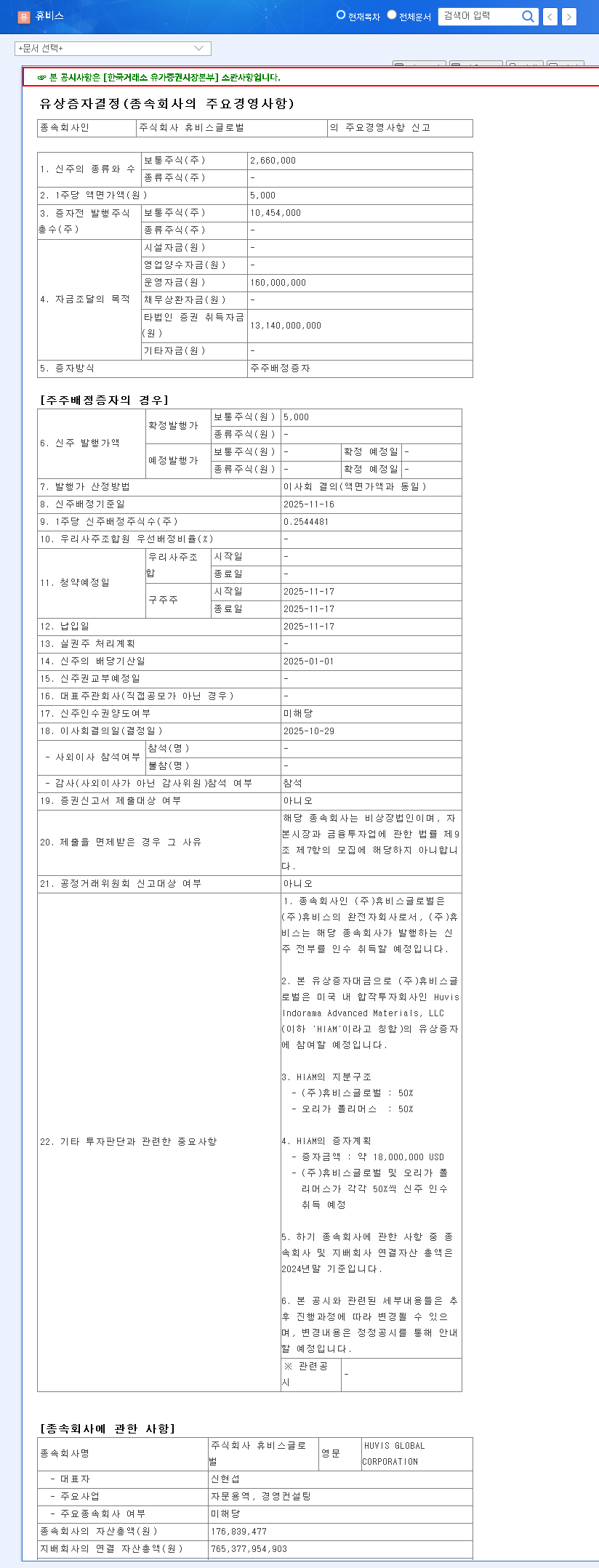
    On October 29, 2025, HUVIS Global, a key subsidiary of HUVIS CORPORATION, officially decided to proceed with a rights offering. The core objective is to raise KRW 13.3 billion. The structure of this offering is crucial for existing shareholders, who will be allocated 0.25 new shares for each share they currently hold. The allocation of these funds provides a clear window into the company’s strategic priorities.

    • Total Capital Raised: KRW 13.3 billion
    • Primary Purpose: KRW 13.1 billion (98.5%) allocated for strategic investments in other corporations.
    • Secondary Purpose: KRW 0.2 billion allocated for general operating funds.
    • Official Source: Details can be verified via the Official Disclosure on the DART system.

    The overwhelming focus on external investments signals a proactive strategy to either acquire new technologies, enter adjacent markets, or forge synergistic partnerships that complement HUVIS’s core business in polyester fibers and advanced materials.

    This capital increase isn’t just about strengthening the balance sheet; it’s a strategic deployment of capital aimed at securing new growth engines and solidifying HUVIS’s market leadership for the next decade.

    HUVIS Financial Analysis: The Foundation for Growth

    A Turnaround in Profitability

    The timing of the HUVIS CORPORATION capital increase is noteworthy, as it comes on the heels of a significant financial turnaround. In the first half of 2025, while sales remained steady at KRW 464.6 billion, the company’s profitability saw a dramatic improvement. Operating profit shifted from a loss to a positive KRW 8.82 billion. This was driven by enhanced cost efficiencies and better pricing power in their key markets, such as Staple Fiber (SF), where HUVIS holds a dominant position. Furthermore, a one-time gain from asset disposal helped boost net profit to an impressive KRW 12.30 billion.

    This improved operational performance provides a solid foundation for the company to pursue external growth opportunities. However, a recent corporate credit rating downgrade to BBB+ is a point of concern that warrants close monitoring. It suggests that while profitability is up, rating agencies may still have concerns about long-term debt or market volatility. For further reading on corporate credit ratings, you can check resources from reputable financial analysts.

    Strategic Impact of the Capital Increase

    Short-Term Volatility vs. Long-Term Vision

    News of a capital increase often triggers mixed reactions in the market. In the short term, the HUVIS stock price may face downward pressure due to concerns over shareholder dilution. With 0.25 new shares issued per existing share, the value of each individual share could theoretically decrease. However, market sentiment can quickly shift if the strategic rationale is compelling.

    The mid-to-long-term impact hinges entirely on the success of the KRW 13.1 billion investment. If HUVIS targets companies in high-growth sectors like sustainable materials, EV components, or advanced industrial textiles, the market is likely to view this as a powerful catalyst for future earnings growth. Success here could far outweigh the initial dilution, leading to significant stock price appreciation. Investors may find it useful to compare this move with our analysis of the broader advanced materials market.

    Investor Roadmap: Key Considerations

    For current and prospective investors, this is a critical juncture. The success of this capital deployment will define HUVIS’s trajectory. Here are the key areas to monitor:

    • Transparency of Investments: The most crucial factor will be the disclosure of the target companies. Investors should demand clarity on the strategic fit, expected synergies, and growth potential of these new investments.
    • Execution and Integration: After an investment or acquisition, the focus must shift to execution. How well can HUVIS integrate the new entity and realize the promised synergies?
    • Sustained Financial Performance: Can the core business continue its trend of improved profitability? The health of the base operations is essential to support and fund these new ventures.

    Frequently Asked Questions (FAQ)

    What is the primary purpose of this capital increase?

    The primary purpose is to raise KRW 13.1 billion for strategic investments in other corporations. This move is designed to expand HUVIS’s business scope, acquire new technology, and create synergies with its existing operations in advanced materials.

    How might this affect the HUVIS CORPORATION stock price?

    In the short term, there could be negative pressure from share dilution. However, in the long term, if the investments are successful and lead to significant growth, it could act as a strong positive catalyst for the stock price.

    What should investors watch for going forward?

    Investors should closely monitor announcements regarding the specific companies HUVIS invests in, the company’s ability to maintain its recent profitability improvements, and how the market reacts once the investment targets are revealed.

    (079980) HUVIS CORPORATION Capital Increase: A Deep Dive into the KRW 13.3B Investment & Stock Impact 관련 이미지
  • (005810) Poongsan Holdings Q3 2025 IR: In-Depth Stock Analysis & Investment Strategy

    (005810) Poongsan Holdings Q3 2025 IR: In-Depth Stock Analysis & Investment Strategy

    The upcoming POONGSAN HOLDINGS CORPORATION IR for Q3 2025 is more than just a routine financial update; it’s a critical inflection point for investors. Scheduled for October 31, 2025, this event will see the company address its performance amidst a challenging global economic climate. For shareholders and potential investors, this is the moment to gauge whether the company’s foundational strengths can overcome significant macroeconomic headwinds. The messages delivered could set the stock’s trajectory for months to come.

    This analysis provides a deep dive into the factors that will shape the Poongsan Holdings stock narrative, offering a clear framework for interpreting the IR event and making informed investment decisions.

    Event Overview: Q3 2025 IR Details

    Poongsan Holdings has formally announced its investor relations event, where it will present its third-quarter performance and engage with the market in a Q&A session. The market anticipates this will bring much-needed clarity on the company’s strategy and financial health.

    • Purpose: Q3 2025 Management Performance Announcement and Q&A Session.
    • Date & Time: October 31, 2025, at 14:00 (KST).
    • Official Source: Details are confirmed in the company’s Official Disclosure on DART.

    Fundamental Analysis: A Company of Contrasts

    Poongsan Holdings operates on a dual foundation: a stable, cash-generating core business and a high-growth defense segment. However, recent financial reports reveal emerging pressures that this IR event must address.

    Core Strengths and Growth Catalysts

    • Robust Order Backlog: The company’s fabricated metals and defense divisions boast a strong and stable order book, providing excellent revenue visibility for the coming quarters.
    • K-Defense Expansion: As a key player in South Korea’s burgeoning defense export market (‘K-Defense’), Poongsan is well-positioned to capitalize on global geopolitical trends. This segment represents a significant engine for future growth. Learn more about our guide to investing in the defense industry.
    • Shareholder Value Initiatives: Recent treasury stock acquisitions signal a commitment from management to support the stock price and enhance shareholder returns.

    Headwinds and Investor Concerns

    • Profitability Squeeze: The first half of 2025 saw a decline in operating profit and net income. This is largely attributed to rising raw material costs (like copper) and increased capital expenditures, which are compressing margins.
    • Increased Financial Leverage: An uptick in the net debt and debt-to-equity ratio makes the company more vulnerable to interest rate hikes. Investors will be keen to hear about the company’s debt management strategy.
    • Macroeconomic Volatility: The business is directly exposed to fluctuations in commodity prices and foreign exchange rates. A weak Korean Won helps exports but increases the cost of imported raw materials, creating a complex challenge.

    Stock Impact: Bull vs. Bear Scenarios

    The outcome of the POONGSAN HOLDINGS CORPORATION IR will likely push the stock towards one of two distinct paths.

    The Bull Case (Positive Outlook)

    A positive reaction would be fueled by Q3 earnings that exceed market expectations, particularly a rebound in operating margins. If management presents a detailed, credible strategy for expanding the defense business with specific contract targets and provides a confident outlook for managing costs, investor sentiment could turn decisively positive. Clear and transparent answers during the Q&A that address debt concerns would further bolster the stock.

    The Bear Case (Negative Outlook)

    Conversely, the stock could face downward pressure if Q3 results miss consensus estimates or if profitability continues to decline. Vague commentary on future growth, a downgraded outlook for the year, or evasive answers regarding financial leverage would be significant red flags. Any unexpected negative disclosures during the Q&A could trigger an immediate sell-off.

    Actionable Investment Strategy Post-IR

    Prudent investors should prepare a checklist to analyze the IR announcement objectively. Look beyond the headlines and focus on the underlying data and management’s tone. Global macroeconomic trends, as reported by leading financial news outlets, will continue to be a factor, but company-specific performance is key.

    Investor Checklist:

    • Analyze Q3 Profitability: Did the operating profit margin show a sequential improvement from Q2? This is the most critical indicator of a turnaround.
    • Scrutinize Future Guidance: Did management provide specific, quantitative growth targets for the defense and new materials sectors?
    • Evaluate Risk Management: How did the company address the risks of raw material costs and currency fluctuations? Was their strategy convincing?
    • Investment Action: Consider a phased buying approach if the Bull Case materializes. If the Bear Case unfolds, maintaining a cautious stance or reducing exposure may be prudent until a clearer positive catalyst emerges.

    In conclusion, the Poongsan Holdings Q3 2025 IR is a pivotal event. While the company possesses a solid business foundation with promising growth avenues, its vulnerability to financial and economic pressures is undeniable. This IR will provide the crucial data points needed to determine whether the company is successfully navigating these challenges or if further turbulence lies ahead.

    (005810) Poongsan Holdings Q3 2025 IR: In-Depth Stock Analysis & Investment Strategy 관련 이미지
    (005810) Poongsan Holdings Q3 2025 IR: In-Depth Stock Analysis & Investment Strategy 관련 이미지
  • (049550) Inktech Major Shareholder Increases Stake: A Deep Dive for Investors

    (049550) Inktech Major Shareholder Increases Stake: A Deep Dive for Investors

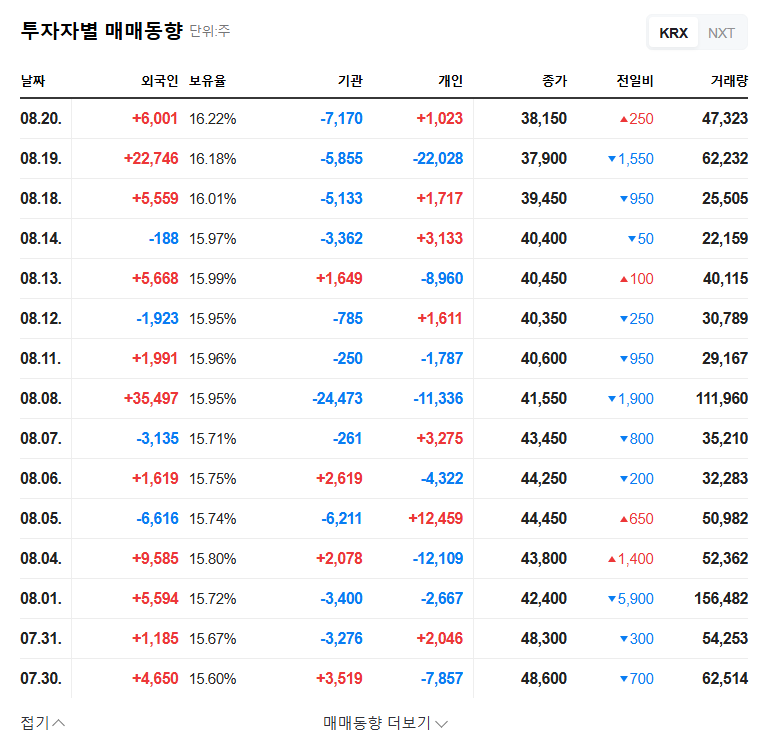
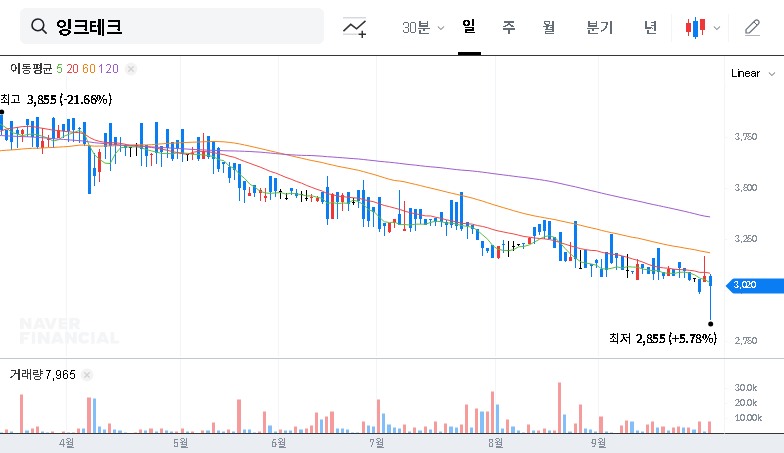
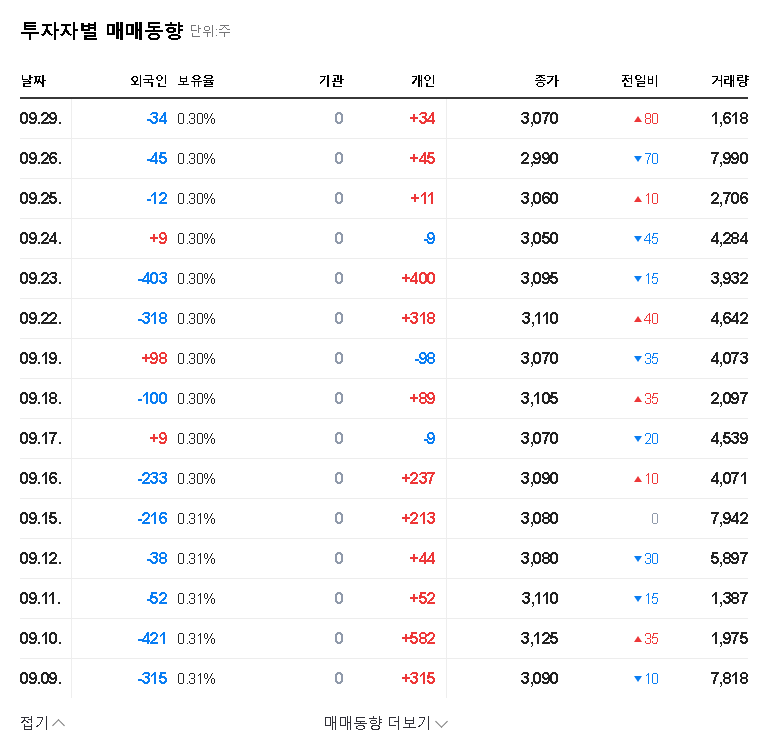
    In a move that has captured the market’s attention, the Inktech major shareholder, Kim Jeong-don, and affiliated parties have recently increased their holdings in the company. This action, officially intended to ‘influence management,’ comes at a critical time for Inktech, which is grappling with a severe decline in profitability. For investors, this raises a crucial question: Is this a signal of a confident turnaround strategy, or simply a move to consolidate control over a struggling enterprise? This comprehensive Inktech stock analysis will explore the facts, diagnose the company’s financial health, and provide a strategic outlook for investors.

    The Official Disclosure: Analyzing the Stake Increase

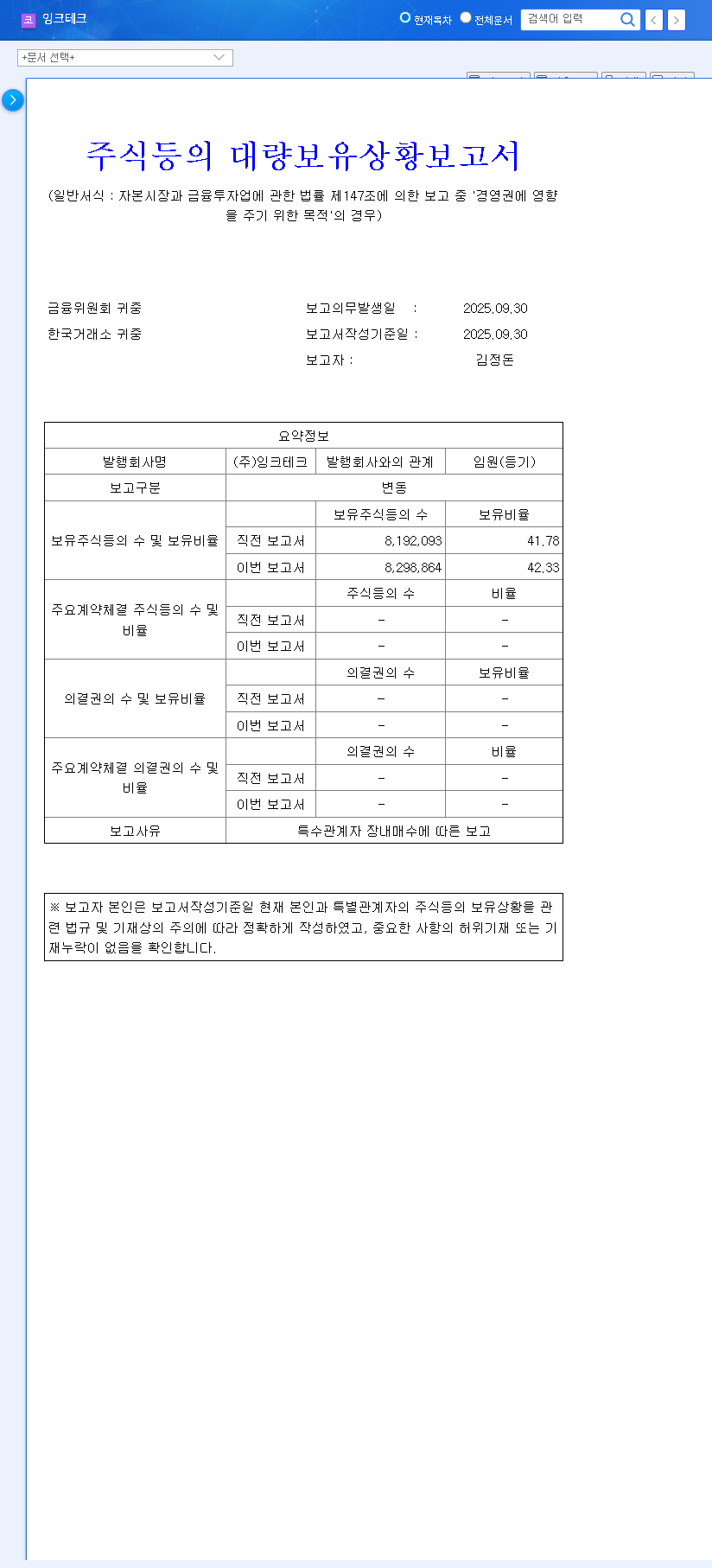
    On September 30, 2025, a significant filing provided concrete details about the Inktech stake increase. Understanding the specifics is the first step in decoding the management’s intent. The official disclosure, available for public viewing, outlines the key transaction details.

    You can view the complete filing directly from the source: Official Disclosure (DART Report). Here are the highlights:

    • Primary Shareholder: Kim Jeong-don and related parties.
    • Stated Purpose: Explicitly noted as ‘Influence on Management’.
    • Shareholding Change: Increased from 41.78% to 42.33%, a net gain of 0.55 percentage points.
    • Transaction Method: Open market purchases, indicating a direct investment at current market prices.

    This move by an Inktech major shareholder is more than a simple transaction; it’s a strategic action designed to signal a firm commitment to steering the company’s future.

    Inktech’s Financial Health: A Look Under the Hood

    Before celebrating the shareholder’s confidence, a sober assessment of Inktech’s fundamentals is essential. The 2025 half-year report paints a concerning picture of the company’s performance, highlighting the challenges management faces.

    While revenue grew by a marginal 1%, operating profit plummeted by a staggering 84.7%, and net income swung to a loss. This severe drop in Inktech profitability is the central issue facing the company.

    Key Financial Challenges

    • Margin Compression: Rising costs for raw materials and administrative expenses have squeezed profit margins thin.
    • Rising Debt: The debt-to-equity ratio has climbed to 113.35%, driven by long-term borrowing for factory investments.
    • Market Headwinds: A global economic slowdown, volatile material prices, and intense competition create a difficult operating environment.
    • Silver Lining – R&D: Despite the challenges, Inktech continues to invest 4.3% of its revenue in R&D, signaling a commitment to future innovation.

    Decoding the Signal: Bull vs. Bear Case

    The Inktech major shareholder’s purchase can be interpreted in two distinct ways, creating a classic bull vs. bear scenario for investors.

    The Bull Case: A Strong Vote of Confidence

    Optimists will view this as a powerful signal. When insiders buy shares on the open market—especially amid poor financial results—it suggests they believe the stock is undervalued and have confidence in their ability to orchestrate a turnaround. This move strengthens management’s control, warding off potential hostile takeovers and allowing them to execute a long-term strategy without short-term pressure. This could significantly boost investor sentiment and stabilize the stock price.

    The Bear Case: A Move Without Substance

    Skeptics, however, will argue that buying shares doesn’t fix the underlying problems. The fundamental issues of poor Inktech profitability and rising debt remain. Without a clear and effective plan to improve margins and generate profit, the positive sentiment from the Inktech stake increase could be short-lived. The market will be watching for tangible results, not just symbolic gestures.

    Strategic Outlook for Prudent Investors

    The path forward for Inktech—and its stock price—depends entirely on whether management can translate its newfound stability into concrete financial improvements. For investors, this calls for a cautious but observant approach.

    What to Watch For:

    • Quarterly Earnings Reports: Scrutinize the next few earnings reports for any signs of margin improvement, cost control measures, or revenue growth in high-value divisions. These are the ultimate proof points. You can learn more about analyzing corporate earnings reports on Investopedia.
    • Management Communication: Pay attention to management’s strategic plans. Are they articulating a clear path to profitability? Active and transparent communication can build investor trust.
    • R&D Monetization: Monitor for news about the commercialization of projects from their R&D pipeline. For a deeper look, read our analysis of Inktech’s technology portfolio.

    In conclusion, while the actions of the Inktech major shareholder provide a compelling narrative, prudent investment decisions must be rooted in fundamental performance. The confidence of Kim Jeong-don is a positive indicator, but the company’s future success hinges on its ability to execute a successful operational turnaround.

    Disclaimer: This analysis is for informational purposes only and is based on publicly available information. It does not constitute investment advice. All investment decisions should be made with careful consideration and at your own risk.

    (049550) Inktech Major Shareholder Increases Stake: A Deep Dive for Investors 관련 이미지
    (049550) Inktech Major Shareholder Increases Stake: A Deep Dive for Investors 관련 이미지
  • Deoksung Issues 9.8 Billion Won Convertible Bonds: What’s Next for the Stock?

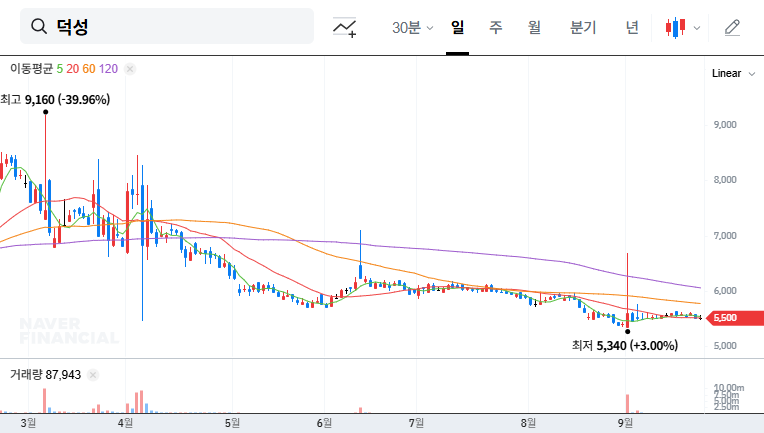
    Deoksung Issues 9.8 Billion Won Convertible Bonds: What's Next for the Stock? 대표 차트 이미지

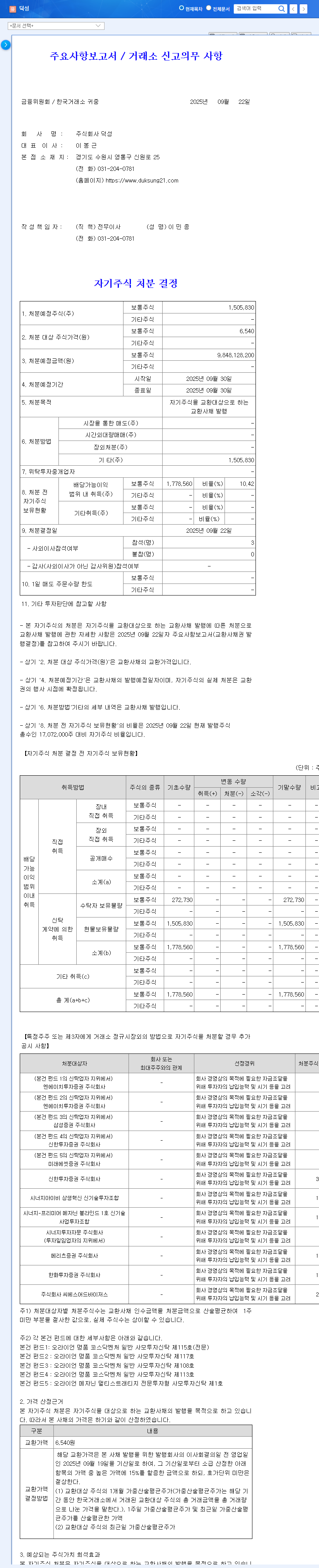
    1. Deoksung’s 9.8 Billion Won Convertible Bond Issuance: What Happened?

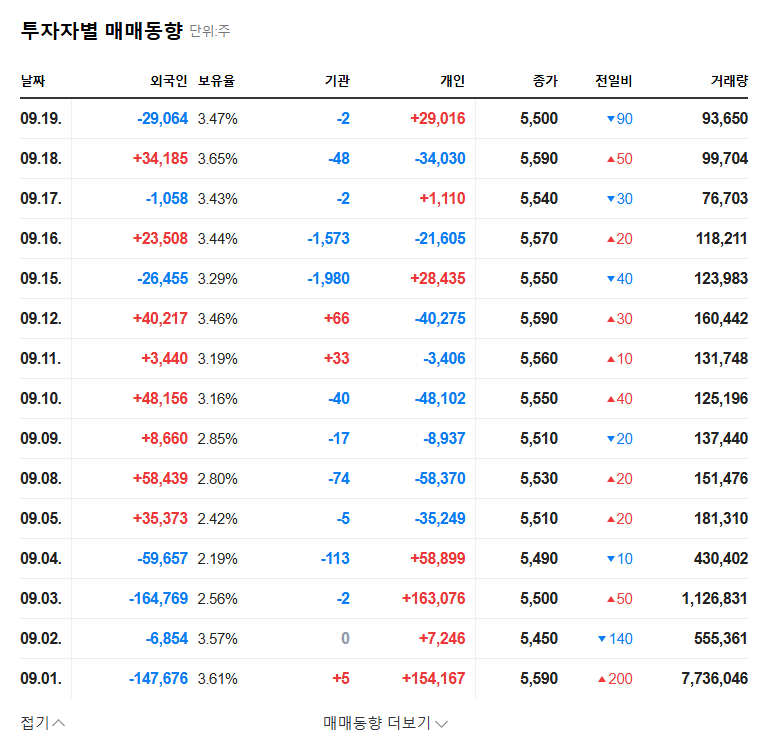
    On September 22, 2025, Deoksung announced its decision to issue 9.8 billion won in convertible bonds through private placement. The conversion price is set at 6,540 won (current market price: 5,500 won), with the conversion period starting on October 14, 2025, and ending on September 23, 2030. Key investors include Shinhan Investment Corp. and CS Advisors.

    2. Why Issue Convertible Bonds?

    Deoksung aims to secure funds for operating expenses and investments in new business ventures through this convertible bond issuance. The company is expected to focus on bolstering its synthetic leather division, which has seen declining sales, and accelerating investments in future growth engines such as new materials and secondary battery films.

    3. What’s the Impact on the Stock Price?

    • Positive Factors:
      • Expectations of new business investments fueled by increased capital.
      • Potential for short-term stock price increase due to the conversion price being higher than the current market price.
    • Negative Factors:
      • Concerns about increased financial burden due to the already high debt-to-equity ratio (266.90%).
      • Risk of non-conversion if the stock price falls.
      • Macroeconomic uncertainties (high interest rates, exchange rate fluctuations, etc.).

    In conclusion, this convertible bond issuance presents both opportunities and risks. While there’s potential for a short-term stock price boost, long-term performance hinges on Deoksung’s success in its new business ventures and maintaining financial health. Continuous monitoring is crucial.

    4. What Should Investors Do?

    Investors should make informed decisions by considering Deoksung’s financial status, business outlook, and the macroeconomic environment. Rather than reacting to short-term stock price fluctuations, a thorough analysis of Deoksung’s long-term growth potential is essential.

    What are convertible bonds?

    Convertible bonds are bonds that can be converted into shares of the issuing company’s stock. Investors can receive interest payments until maturity or convert the bonds into stock if the share price rises, potentially earning a profit.

    Will this convertible bond issuance positively impact Deoksung’s stock price?

    It could act as a short-term catalyst for stock price appreciation, but the long-term impact depends on Deoksung’s performance in new businesses and its financial health.

    What are the key considerations for investors?

    Investors should carefully consider the high debt-to-equity ratio, the risk of non-conversion if the stock price falls, and macroeconomic uncertainties before making investment decisions.

    Deoksung Issues 9.8 Billion Won Convertible Bonds: What's Next for the Stock? 관련 이미지
    Deoksung Issues 9.8 Billion Won Convertible Bonds: What's Next for the Stock? 관련 이미지
  • Hyundai Bioland IR Analysis: Overcoming Challenges and Securing Growth Momentum

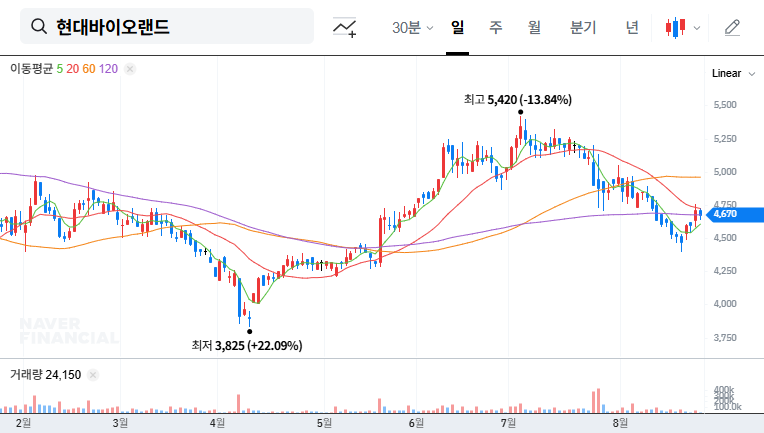
    Hyundai Bioland IR Analysis: Overcoming Challenges and Securing Growth Momentum 대표 차트 이미지

    1. What Happened? : Background and Key Takeaways from Hyundai Bioland’s IR

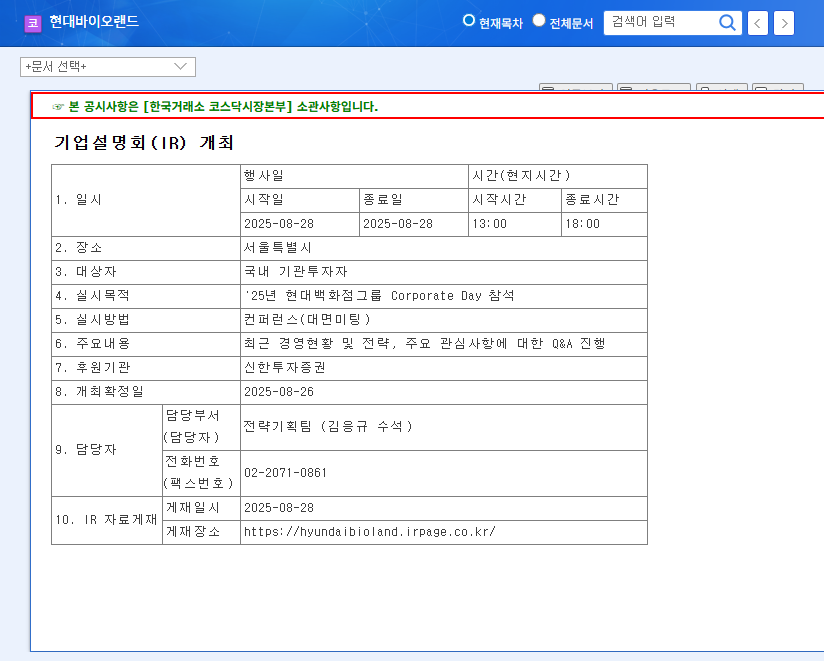
    Hyundai Bioland held an investor relations (IR) meeting on August 28, 2025, to present its recent performance and future strategies. This IR meeting provided a crucial opportunity to address investors’ questions regarding performance changes and future business direction following the sale of a subsidiary. Key topics included brand business expansion, new material development, and overseas market entry strategies to secure future growth momentum.

    2. Why Does it Matter? : The Changing Market Landscape and Hyundai Bioland’s Challenges

    Hyundai Bioland experienced a decline in revenue and a net loss due to the sale of its subsidiary. However, the growth of its brand distribution business and cost efficiency efforts are positive signs. While the rise in the KRW/USD exchange rate is favorable for exporting companies, the weakening KRW/EUR exchange rate could pose challenges for expansion into the European market. In this context, Hyundai Bioland is seeking growth breakthroughs through the development of new materials like vegan collagen and plant-based PDRN, and its collaboration with Nestlé Health Science.

    3. What’s Next? : Post-IR Market Outlook and Investment Strategy

    The market’s reaction to the IR meeting will likely be positive, neutral, or negative, depending on the presented future growth strategies and management’s responses. A clear vision for the company’s growth potential can lead to a positive response, but a lack of concrete plans for performance improvement could have a negative impact.

    4. Investor Action Plan: Key Information Checklist and Investment Decisions

    • Investors should carefully review the company’s financial status, business strategies, and market competitiveness through IR materials before making investment decisions.
    • Evaluate the company’s risk management capabilities and future growth potential based on management’s responses.
    • Adjust investment strategies by considering post-IR market reactions and expert analysis.

    Frequently Asked Questions

    What are Hyundai Bioland’s main businesses?

    Hyundai Bioland operates businesses in cosmetic ingredients, health functional food materials, and brand distribution. Recently, they are focusing on expanding their brand business.

    What is the reason for the recent decline in earnings?

    Sales decreased due to the sale of a subsidiary, but the brand distribution business showed growth.

    What is the future growth strategy?

    The company plans to strengthen its competitiveness in the cosmetics business and expand its global market presence through the development of new materials such as vegan-certified next-generation collagen and plant-based PDRN, as well as advanced formulation technology.

    Hyundai Bioland IR Analysis: Overcoming Challenges and Securing Growth Momentum 관련 이미지
    Hyundai Bioland IR Analysis: Overcoming Challenges and Securing Growth Momentum 관련 이미지
  • Osang Jaiel Q2 2025 Earnings: Solid Revenue Growth, But Why the Net Profit Decline?

    1. Q2 Results: What Happened?

    Osang Jaiel reported KRW 35.3 billion in revenue, KRW 3.1 billion in operating profit, and KRW 1.8 billion in net profit for Q2 2025. This represents a 23% increase in revenue and a 14.8% increase in operating profit compared to the previous quarter. However, net profit decreased by 43.8%.

    2. Analyzing the Drivers: Why These Results?

    Revenue Growth: The robust growth in the IT segment, combined with seasonal factors, fueled the revenue increase. The PLM Solution division performed particularly well.
    Operating Profit Increase: The IT segment’s high profitability and cost optimization efforts contributed to the growth in operating profit.
    Net Profit Decline: Non-operating factors, such as increased corporate tax expenses and impairment losses related to investments in associates, are likely the primary reasons for the decline in net profit.

    3. Outlook and Investment Strategy: What’s Next?

    While the IT segment is expected to continue its growth trajectory, the BT segment’s profitability remains a key concern. The uncertainty surrounding investments in associates also poses a risk. Investors should closely monitor the final earnings release and the company’s future business strategies.

    4. Action Plan for Investors

    • Review the final earnings release: Analyze non-operating factors and BT segment performance.
    • Assess the IT segment’s sustained growth: Monitor the PLM Solution division’s momentum.
    • Track new business progress: Evaluate the performance of new materials and cosmetics businesses.
    • Evaluate investment synergy: Assess the performance and risk management of the Osang Healthcare investment.
    • Monitor macroeconomic conditions: Analyze the impact of interest rate, exchange rate, and oil price fluctuations.

    Frequently Asked Questions

    What are Osang Jaiel’s main businesses?

    Osang Jaiel operates in the IT sector (PLM, SI) and the BT sector (packaging materials, new materials, cosmetics).

    Why did net profit decrease in Q2?

    The primary reasons are likely non-operating factors, such as increased corporate tax expenses and impairment losses related to investments in associates.

    What investment strategy should I consider?

    Closely monitor the IT segment’s sustained growth, BT segment profitability, and the performance of investments in associates.

  • Amicogen Issues ₩7B in Convertible Bonds: Balancing Financial Stability and Stock Dilution

    1. What Happened?

    Amicogen issued ₩7 billion worth of convertible bonds to Bifido. The conversion price is set at ₩4,108 with a maturity rate of 2.0%. The funds will be used for new business expansion, including commercialization of endolysin and expansion of bio-new materials into overseas markets, as well as for research and development.

    2. Why the CB Issuance?

    Amicogen recorded a high debt-to-equity ratio of 133.1% in Q1 2025. The CB issuance aims to secure short-term financial stability and raise funds for new business investments. In the long term, Amicogen also aims to improve its financial structure through the conversion of the CBs into equity.

    3. What Does This Mean for Investors?

    • Short-term Impact: While the influx of funds will improve financial stability, concerns about stock dilution may increase share price volatility.
    • Long-term Impact: The impact will depend on how the funds are utilized. Successful investments in new businesses could create growth momentum, while failures could exacerbate financial burdens.

    4. Investor Action Plan

    • Carefully review the purpose of the CB issuance and the planned use of funds.
    • Continuously monitor Amicogen’s future growth potential, including the progress of endolysin commercialization.
    • Develop an investment strategy considering the impact of macroeconomic variables such as exchange rates, interest rates, and raw material prices.

    Frequently Asked Questions

    What are convertible bonds (CBs)?

    Convertible bonds are a type of debt security that gives the holder the option to convert the bond into shares of the issuing company’s stock after a specified period.

    Does Amicogen’s CB issuance only have a negative impact on the stock price?

    Not necessarily. If the funds raised through the CB issuance are effectively used for new business investments and contribute to an increase in the company’s value, it can positively impact the stock price.

    What are the key points to consider when investing?

    Investors should consider the use of the CB issuance funds, the progress of endolysin commercialization, and macroeconomic variables before making investment decisions.