Tag: New Growth Engine

  • (003240) TAEKWANG INDUSTRIAL K-Shipbuilding Acquisition: A Deep Dive Analysis for Investors

    (003240) TAEKWANG INDUSTRIAL K-Shipbuilding Acquisition: A Deep Dive Analysis for Investors

    The recent announcement regarding the TAEKWANG INDUSTRIAL K-Shipbuilding acquisition bid has sent ripples through the financial markets. For a company historically rooted in petrochemicals and textiles, this bold venture into the capital-intensive shipbuilding industry represents a pivotal moment. Investors are now faced with a critical question: is this a strategic masterstroke for business diversification and long-term growth, or a high-stakes gamble that could introduce significant financial strain? This comprehensive analysis will dissect the deal, explore the underlying motivations, and provide a clear framework for investors to evaluate the opportunities and risks involved.

    We will delve into the company’s fundamentals, the role of their consortium partner Texas Pacific Group (TPG), and the volatile nature of the global shipbuilding market to offer a clear-eyed perspective on what this acquisition could mean for Taekwang Industrial’s future.

    The Bid: Taekwang Officially Enters the K-Shipbuilding Race

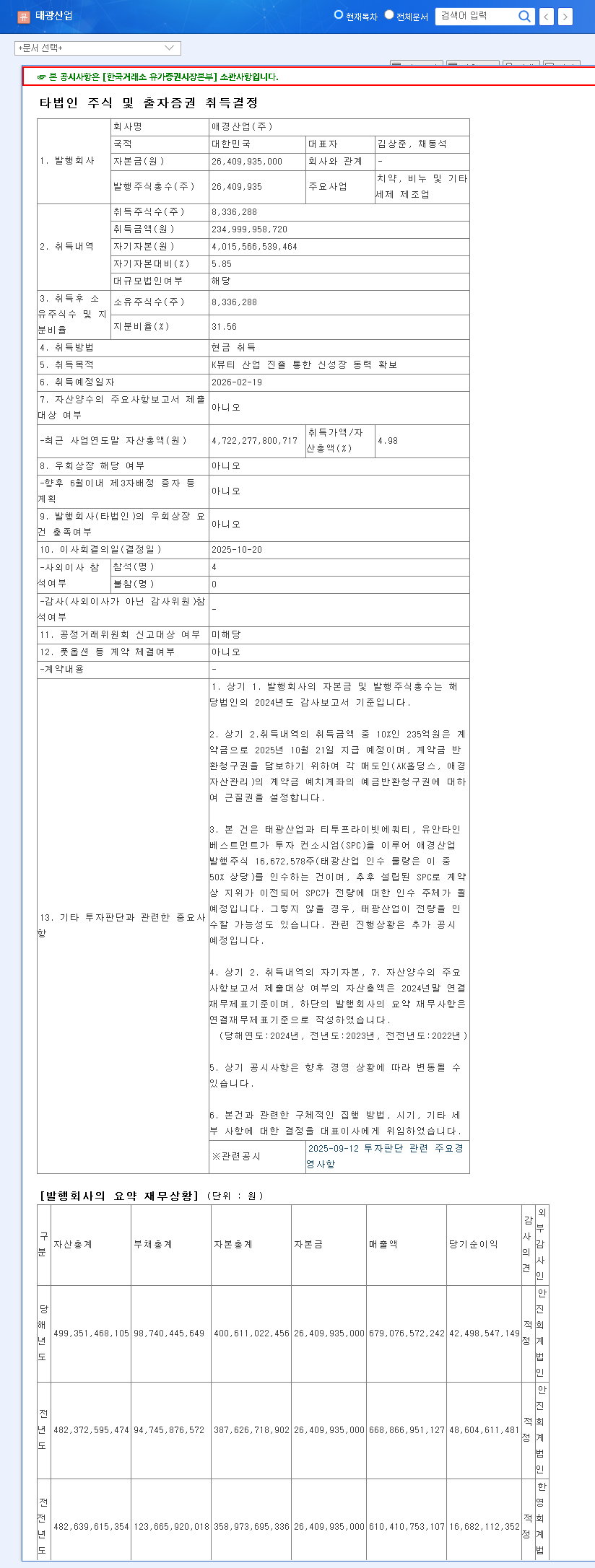
    On November 14, 2025, Taekwang Industrial formally signaled its intent by submitting a preliminary Letter of Intent (LOI) for the acquisition of K-Shipbuilding. This move was not made in isolation; the company has strategically formed a consortium with the global private equity giant, Texas Pacific Group (TPG). According to the company’s public filing, the exact investment scale is still under evaluation. You can view the Official Disclosure on the DART system for confirmation. This partnership with TPG is a crucial element, suggesting a strategy to mitigate financial risk and leverage external expertise in large-scale corporate turnarounds.

    Why Shipbuilding? Unpacking the Strategy Behind Diversification

    Taekwang Industrial’s decision to pivot towards such a different industry stems from a combination of internal financial positioning and external market pressures. Understanding this context is key to any Taekwang financial analysis.

    Challenging Core Markets and the Search for Growth

    The company’s primary petrochemical and textile divisions have been navigating turbulent waters. Deteriorating market conditions, driven by falling prices for PTA (Purified Terephthalic Acid) and AN (Acrylonitrile) and fierce competition in spandex, have squeezed profit margins. While there are bright spots, such as demand for hydrogen peroxide and aramid fibers, the overall outlook is clouded by macroeconomic uncertainty from US-China trade tensions and global monetary tightening. This environment has created a powerful incentive for Taekwang to seek out new, uncorrelated revenue streams through aggressive business diversification.

    A Fortified Balance Sheet

    Despite market headwinds, Taekwang has improved its financial stability. The company’s debt ratio saw a significant improvement, falling from 133.43% in 2022 to a healthier 102.67% in 2024. The strategic sale of SK Broadband shares further bolstered its cash position. This stronger balance sheet provides the company with the foundational capacity to consider a large-scale transaction like the TAEKWANG INDUSTRIAL K-Shipbuilding acquisition.

    While the pursuit of new growth is logical, the shipbuilding industry is notoriously cyclical and capital-intensive. Success will hinge on flawless execution and a favorable market cycle, neither of which is guaranteed.

    Weighing the Potential Outcomes: Opportunity vs. Risk

    This acquisition presents a classic high-risk, high-reward scenario. Investors must carefully evaluate both the potential upsides and the considerable downsides.

    Potential Positive Impacts (The Bull Case)

    • New Growth Engine: A successful acquisition would immediately diversify Taekwang’s portfolio away from the volatile petrochemical sector and establish a major foothold in the global maritime industry.
    • Group-Wide Synergy: Potential synergies exist with other Taekwang Group affiliates. For example, Hungkuk Life Insurance could potentially engage in ship financing, creating an internal value chain.
    • Financial & Strategic Partnership: The TPG consortium provides a critical financial backstop, distributing the immense cost of the acquisition. TPG’s experience in corporate restructuring could also be invaluable in optimizing K-Shipbuilding’s operations post-merger.

    Potential Negative Impacts (The Bear Case)

    • Massive Financial Burden: Shipbuilding is a cash-intensive business. The acquisition price, coupled with the necessary working capital and future investments in technology and facilities, could severely strain Taekwang’s finances, even with TPG’s involvement.
    • Market Volatility: The shipbuilding industry is highly susceptible to global economic health, trade volumes, and commodity prices like steel. A global recession could lead to a sharp drop in new orders. For more on market trends, see the latest global shipbuilding outlook from industry analysts.
    • Post-Merger Integration (PMI) Risks: Merging two vastly different corporate cultures—a traditional Korean manufacturer and a shipyard—is a monumental task. Failure to integrate effectively can erase any potential synergies. For more information, read about common Post-Merger Integration challenges.

    Investor Action Plan & Key Considerations

    For investors, the K-Shipbuilding bid introduces significant uncertainty. A cautious, data-driven approach is essential. In the short term, expect stock price volatility as the market digests the news. In the long term, success hinges on the execution. Before making any investment decisions, consider the following key questions:

    • What is the final acquisition price and, more importantly, the detailed funding plan? How much debt will Taekwang take on?
    • What is K-Shipbuilding’s current order book and competitive positioning in specialized vessels versus commodity carriers?
    • What is the specific, actionable synergy plan with TPG and other Taekwang affiliates? Is there a clear roadmap for post-merger integration?
    • How will the company’s ongoing legal disputes regarding treasury shares affect its ability to raise capital or execute this large-scale transaction?

    In conclusion, Taekwang Industrial’s move is a company-defining bet on the future. While the logic of diversification is sound, the chosen industry presents a formidable challenge. Cautious and diligent monitoring of the deal’s specifics will be the only prudent path forward for investors.
    (003240) TAEKWANG INDUSTRIAL K-Shipbuilding Acquisition: A Deep Dive Analysis for Investors 관련 이미지
  • (212710) ISTE’s Landmark PECVD Equipment Deal with SK Hynix: Fueling the HBM Revolution

    (212710) ISTE’s Landmark PECVD Equipment Deal with SK Hynix: Fueling the HBM Revolution

    In a significant development for the semiconductor industry, ISTE Co., Ltd. (212710) has officially entered a new phase of growth by securing a pivotal contract to supply its advanced ISTE PECVD equipment to global memory leader, SK Hynix. This deal, centered on Plasma Enhanced Chemical Vapor Deposition (PECVD) technology, is a critical validation of ISTE’s capabilities and strategically positions the company within the explosive HBM market, which is the backbone of the current AI revolution.

    This article provides an in-depth analysis of the contract’s implications, exploring how this partnership with SK Hynix will shape ISTE’s financial fundamentals, market position, and long-term prospects. For investors and industry observers, this is a crucial moment that warrants a closer look.

    This contract is more than a transaction; it’s a technological endorsement from a world leader, signaling ISTE’s readiness to compete on a global scale in the high-stakes semiconductor equipment arena.

    Breaking Down the SK Hynix Contract

    On November 12, 2025, ISTE Co., Ltd. announced the landmark deal via a voluntary disclosure. The agreement involves the sale and delivery of specialized semiconductor PECVD equipment to an SK Hynix facility in South Korea. The details, confirmed in the Official Disclosure (DART Report), are as follows:

    • Contract Value: 2.4 billion KRW
    • Percentage of Recent Sales: 5.90%
    • Contract Period: November 11, 2025 to November 14, 2025

    While the contract value represents a modest portion of total sales, its strategic importance far outweighs the monetary figure. It serves as the commercial debut for ISTE’s flagship PECVD product line, proving its viability in a highly demanding production environment.

    Why This Deal is a Game-Changer for ISTE

    1. The Power of HBM and AI Demand

    The insatiable demand for generative AI and high-performance computing (HPC) has put High-Bandwidth Memory (HBM) in the spotlight. HBM is a specialized type of RAM that stacks memory chips vertically to achieve incredibly fast data transfer speeds, which is essential for training and running large AI models. Manufacturing these complex stacked chips requires cutting-edge techniques, and that’s where ISTE’s technology comes in. The company’s PECVD equipment is understood to be crucial for processes like hybrid bonding, a key enabler for next-generation HBM. By supplying to SK Hynix, a leader in the HBM market, ISTE directly plugs into the most dynamic segment of the semiconductor industry. To learn more about High-Bandwidth Memory (HBM) technology, you can explore detailed industry reports.

    2. Technology Validation and Market Credibility

    Securing a contract with a tier-one manufacturer like SK Hynix is the ultimate vote of confidence. It validates years of R&D and proves that ISTE’s PECVD technology meets the stringent performance, reliability, and quality standards of a global leader. This successful deployment de-risks the technology for other potential customers and significantly boosts ISTE’s credibility. This validation is a powerful marketing tool that can open doors to other semiconductor giants, potentially leading to a cascade of future orders.

    3. A Beachhead for Financial Improvement

    ISTE has been navigating financial challenges, including an operating loss and a high debt ratio. While this 2.4 billion KRW contract won’t single-handedly solve these issues, it represents a crucial first step. It generates positive revenue from a new, high-growth business segment and signals to investors that the company’s strategic pivot is bearing fruit. The key will be converting this initial success into a steady stream of orders for ISTE PECVD equipment, which can create a sustainable path toward profitability and strengthen the company’s balance sheet.

    Investor Outlook: A Prudent Growth Opportunity

    The market reacted positively to the news, with ISTE’s stock price showing a significant jump. This reflects investor optimism about the company’s entry into the high-value HBM supply chain. However, a prudent approach is necessary.

    Key Factors to Monitor:

    • Follow-on Orders: The most critical indicator of success will be the frequency and size of subsequent orders from SK Hynix and other potential clients. Consistent deal flow is essential.
    • Financial Health Metrics: Investors should keep a close eye on quarterly earnings reports for signs of improving operating margins, positive cash flow, and a reduction in the debt-to-equity ratio.
    • Competitive Landscape: The semiconductor equipment market is fiercely competitive. Monitoring ISTE’s technological edge against established players is crucial for assessing long-term viability. For more context, you can read our analysis of the global semiconductor market.

    In conclusion, ISTE’s PECVD equipment contract with SK Hynix is a watershed moment. It confirms the company’s technological prowess and provides a clear pathway into the lucrative HBM manufacturing ecosystem. While significant financial and operational hurdles remain, this deal has fundamentally improved ISTE’s growth narrative. For investors with a long-term horizon and an appetite for technology-driven growth, ISTE Co., Ltd. has become a compelling company to watch.

  • (001540) AHN-GOOK PHARMACEUTICAL Investment: A ₩13B Growth Strategy or Risky Bet? (001540 Analysis)

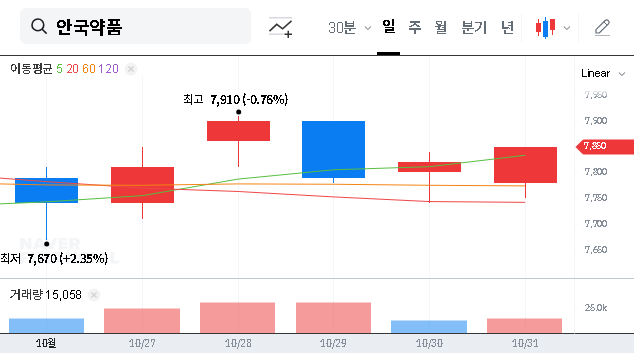
    (001540) AHN-GOOK PHARMACEUTICAL Investment: A ₩13B Growth Strategy or Risky Bet? (001540 Analysis)

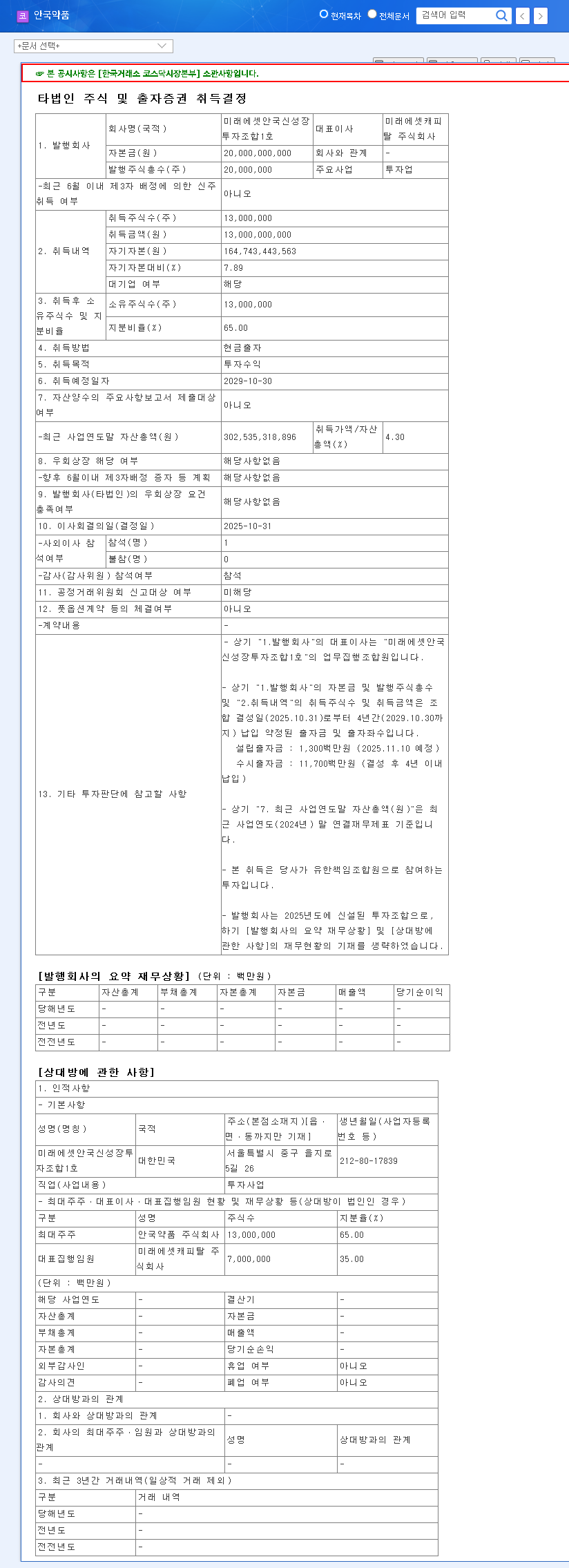
    The recent AHN-GOOK PHARMACEUTICAL investment of ₩13 billion has sent ripples through the market, signaling a bold strategic pivot. This move, a substantial 65% stake in the ‘Mirae Asset Ahn-Gook New Growth Investment Fund 1’, is far more than a simple financial allocation; it represents a calculated push towards new horizons. For investors tracking AHN-GOOK PHARMACEUTICAL stock (001540), understanding the nuances of this decision is critical. Is this the catalyst for a new era of growth, or does it introduce unforeseen risks? This comprehensive analysis unpacks the investment’s purpose, examines the company’s financial health, and provides a clear outlook for stakeholders.

    The ₩13 Billion Catalyst: A Detailed Overview

    On October 31, 2025, AHN-GOOK PHARMACEUTICAL formally announced its decision to acquire stocks and equity interests by committing ₩13 billion to the ‘Mirae Asset Ahn-Gook New Growth Investment Fund 1’. According to the Official Disclosure (DART), this transaction represents 7.89% of the company’s total capital. The investment, executed via a cash contribution, gives Ahn-Gook a commanding 65.00% ownership stake in the fund, with a completion date set for October 30, 2029. The stated purpose is explicitly to secure ‘investment returns,’ marking a significant step in the company’s evolving pharmaceutical growth strategy.

    Why Now? Dissecting the Strategic Rationale

    Beyond Pharmaceuticals: The Push for Diversification

    The pharmaceutical industry, while resilient, is characterized by long R&D cycles, intense competition, and patent cliffs. This AHN-GOOK PHARMACEUTICAL investment is a clear indicator of the management’s intent to diversify revenue streams beyond its core business. By partnering with a financial powerhouse like Mirae Asset, Ahn-Gook gains access to expert investment management and opportunities in high-growth sectors it might not otherwise reach. This includes potential forays into biotech startups, digital healthcare platforms, or other innovative fields that can create long-term value and synergistic opportunities.

    Financial Health and Capacity for Growth

    This strategic move is underpinned by a period of strengthening financial performance. As of the first half of 2025, AHN-GOOK PHARMACEUTICAL demonstrated consistent sales growth and improving profitability. A significant increase in cash and cash equivalents has fortified its balance sheet, providing the liquidity needed for such a substantial investment without jeopardizing core operations. This financial stability is the foundation upon which this new growth chapter is being built. For a deeper look into evaluating companies in this sector, you can explore our guide on how to analyze pharmaceutical stocks.

    This partnership with Mirae Asset is a strategic deployment of capital aimed at securing future profits and expanding Ahn-Gook’s business portfolio beyond its traditional pharmaceutical boundaries. The 65% stake signifies a high-conviction bet on long-term growth.

    Potential Upside vs. Inherent Risks: An Investor’s Guide

    Every major investment carries a balance of potential rewards and risks. Here’s a breakdown for anyone conducting an 001540 analysis.

    • Positive Aspect – New Growth Engines: The primary benefit is the potential for significant returns from investments in emerging industries. Success here could create a new, powerful revenue stream and boost the overall corporate valuation, providing strong momentum for the AHN-GOOK PHARMACEUTICAL stock price.
    • Positive Aspect – Portfolio Diversification: Moving into the investment sphere reduces reliance on the pharmaceutical market’s cyclical nature, enhancing stability and long-term growth prospects.
    • Risk Factor – Investment Uncertainty: The success of the Mirae Asset fund is not guaranteed. Poor performance could lead to financial losses, negatively impacting Ahn-Gook’s bottom line and shareholder value. The outcome is entirely dependent on the fund’s operational capabilities.
    • Risk Factor – Macroeconomic Headwinds: The global economic climate presents challenges. Persistent high interest rates can increase the cost of capital for portfolio companies, while volatile exchange rates can impact returns from international investments. Investors should monitor global trends, as reported by sources like Reuters Business, as they will indirectly affect the fund’s performance.

    Overall Assessment and Investor Takeaways

    Our current investment opinion on AHN-GOOK PHARMACEUTICAL is HOLD (Neutral). The strategic rationale for the investment is sound and aligns with a forward-looking vision for growth and diversification. However, the inherent uncertainties of the investment’s performance, coupled with a challenging macroeconomic environment, call for a cautious, observant approach.

    Key Monitoring Points for Investors:

    • Fund Performance: Closely track the announcements and performance reports from the ‘Mirae Asset Ahn-Gook New Growth Investment Fund 1’.
    • Financial Health Metrics: Monitor Ahn-Gook’s quarterly reports for changes in cash flow, debt-to-equity ratio, and overall profitability.
    • Core Business Strength: Ensure the existing pharmaceutical and R&D pipelines remain strong and are not neglected in favor of the new venture.

    (001540) AHN-GOOK PHARMACEUTICAL Investment: A ₩13B Growth Strategy or Risky Bet? (001540 Analysis) 관련 이미지
  • (114450) GREEN LIFESCIENCE Stock: Analysis of the ₩13.6B AI Semiconductor Material Deal

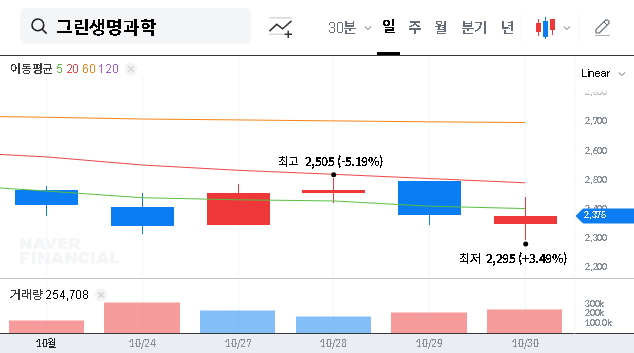
    (114450) GREEN LIFESCIENCE Stock: Analysis of the ₩13.6B AI Semiconductor Material Deal

    In a strategic pivot that has captured the market’s attention, GREEN LIFESCIENCE CO., LTD. has announced its formal entry into the booming AI semiconductor material sector. This move is substantiated by a massive supply contract, signaling a potential new era of growth beyond its traditional pharmaceutical business. This analysis will dissect the contract’s details, evaluate the company’s fundamentals, and explore the future trajectory for investors considering GREEN LIFESCIENCE stock.

    The Landmark ₩13.6 Billion Supply Contract

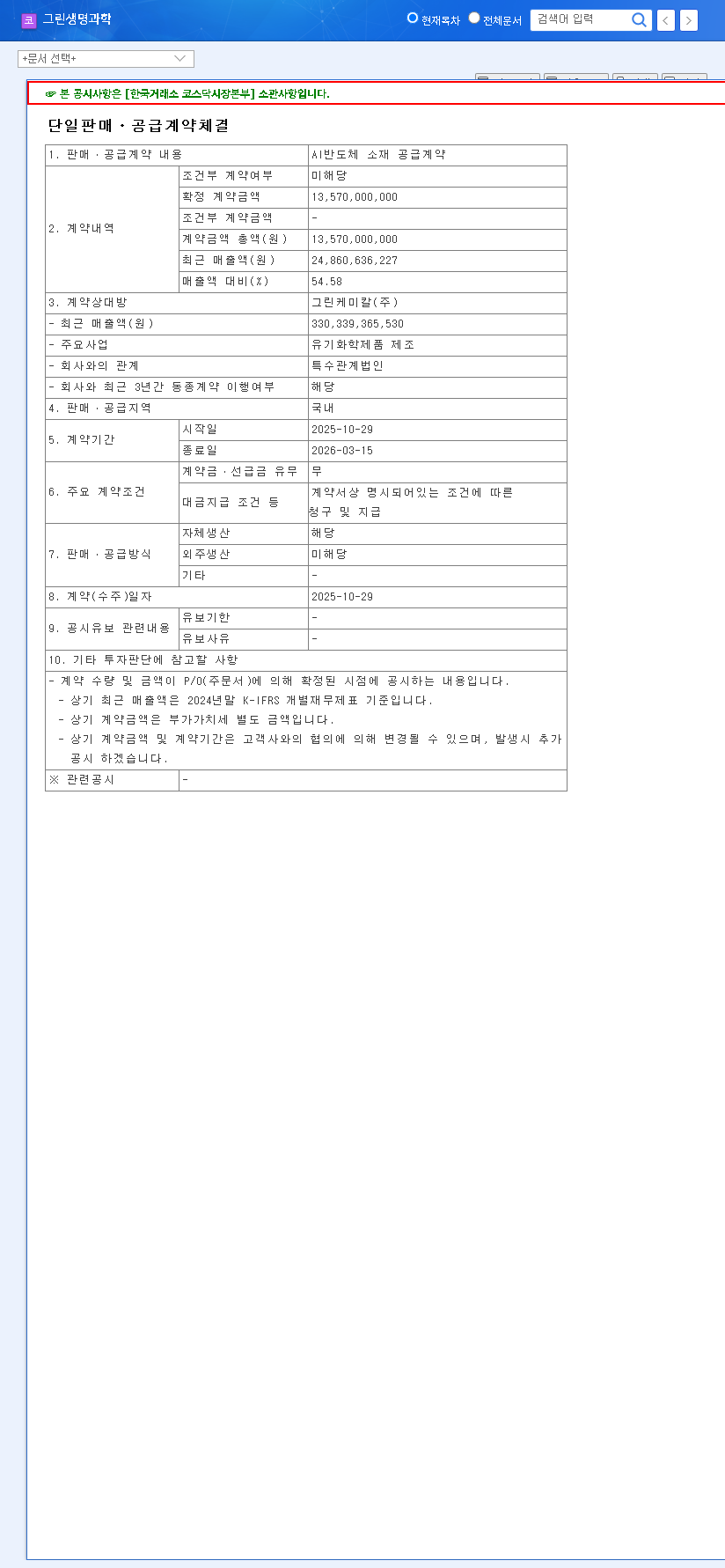
    On October 30, 2025, GREEN LIFESCIENCE disclosed a supply contract for AI semiconductor materials worth a staggering ₩13.6 billion with Green Chemical Co., Ltd. The contract, which represents a remarkable 54.58% of the company’s recent annual revenue, is scheduled for domestic supply over a four-month period, from October 29, 2025, to March 15, 2026. This isn’t just a large order; it’s a statement of intent, validating the company’s diversification strategy and technological capabilities. For official verification, you can view the Official Disclosure (DART Report).

    Fundamental Analysis: The State of GREEN LIFESCIENCE

    Before this transformative deal, GREEN LIFESCIENCE presented a mixed but promising financial picture. A thorough stock analysis reveals both solid strengths and notable risks.

    Core Strengths (Positive Factors)

    • Impressive Revenue Growth: The company’s half-year revenue for 2025 hit ₩16.351 billion, marking a 23.2% year-on-year increase.
    • Strategic Diversification: Proactive expansion into high-growth areas like electronic materials, secondary battery additives, and now AI semiconductor materials, showcases a forward-thinking growth strategy.
    • Technical Edge: Possession of unique technologies, including phosgene utilization, gives it a distinct competitive advantage within Korea.
    • CMO Competitiveness: With cGMP-compliant facilities, the company has strong potential for expanding its contract manufacturing organization (CMO) business.

    Challenges and Risks (Negative Factors)

    • Profitability Concerns: Despite revenue growth, an operating loss of ₩-1.122 billion was recorded due to rising costs.
    • Inventory Management: A 53.8% increase in inventory assets raises questions about operational efficiency and potential write-downs.
    • Macroeconomic Headwinds: The business is susceptible to external factors like exchange rate volatility, high interest rates, and fluctuating raw material costs.

    Impact of the AI Semiconductor Material Contract

    This contract is a pivotal event. The AI semiconductor market is projected to grow exponentially, driven by advancements in machine learning and data centers. According to industry experts at McKinsey, this sector represents one of the most significant growth opportunities of the decade. For GREEN LIFESCIENCE, successfully entering this market could redefine its future.

    This deal is more than just revenue; it’s a validation of GREEN LIFESCIENCE’s technological pivot. Success here could unlock access to a far larger, high-margin global supply chain.

    Potential Upsides

    • Revenue and Profit Surge: The immediate ₩13.6 billion revenue boost is clear. If margins are favorable, it could significantly reverse the recent operating loss.
    • Market Re-evaluation: The contract enhances brand value and proves its capabilities, potentially leading to a higher stock valuation and attracting new high-profile clients.
    • Future Growth Engine: Establishes a strong foothold in a rapidly expanding industry, reducing reliance on the traditional pharmaceutical market.

    Potential Downsides & Execution Risks

    • Margin Uncertainty: The profitability of this specific contract is unknown. High initial production costs for AI semiconductor material could squeeze margins.
    • Operational Risks: The semiconductor industry demands exceptionally high quality and supply chain stability. Any delays or quality issues could lead to severe penalties.
    • Short-Term Nature: The four-month contract duration provides a short-term boost, but long-term success hinges on securing follow-up orders and building lasting partnerships.

    Comprehensive Outlook and Investor Strategy

    The GREEN LIFESCIENCE AI semiconductor material deal is a powerfully positive catalyst. However, prudent investors should monitor several key performance indicators closely. Focus on the company’s ability to manage costs, maintain financial health amid rising interest rates, and demonstrate quality control. Future earnings reports will be critical for verifying the actual profit margins from this new venture.

    For sustained, long-term growth, GREEN LIFESCIENCE must prove this is not a one-off contract but the beginning of a successful business division. Continued investment in R&D and securing additional orders will be the ultimate determinants of the company’s re-evaluation. For more insights, you can review our complete guide to investing in specialty chemical companies.

    Disclaimer: This analysis is for informational purposes only and is based on publicly available data. It does not constitute investment advice. All investment decisions should be made with the consultation of a qualified financial advisor.

    (114450) GREEN LIFESCIENCE Stock: Analysis of the ₩13.6B AI Semiconductor Material Deal 관련 이미지
  • (079550) LIG Nex1 Stock Analysis: Deep Dive into the ₩274.6B Satellite Contract & Future Growth

    (079550) LIG Nex1 Stock Analysis: Deep Dive into the ₩274.6B Satellite Contract & Future Growth

    The South Korean aerospace and defense giant, LIG Nex1, has captured significant market attention by securing a landmark contract that solidifies its position as a key player in advanced satellite technology. This pivotal deal not only promises substantial revenue but also signals a strategic leap into new growth frontiers. For investors and industry watchers, understanding the full scope of this development is crucial for assessing the future trajectory of LIG Nex1 stock and its standing in the competitive global market.

    This comprehensive analysis will dissect the far-reaching effects of the ‘Geostationary Meteorological and Space Weather Satellite Payload Development’ contract, providing a clear roadmap of what this means for the company’s financial health, technological prowess, and long-term investment potential.

    The Landmark Deal: A ₩274.6 Billion Contract

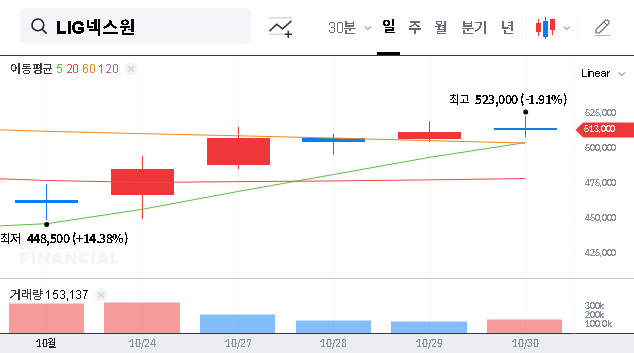
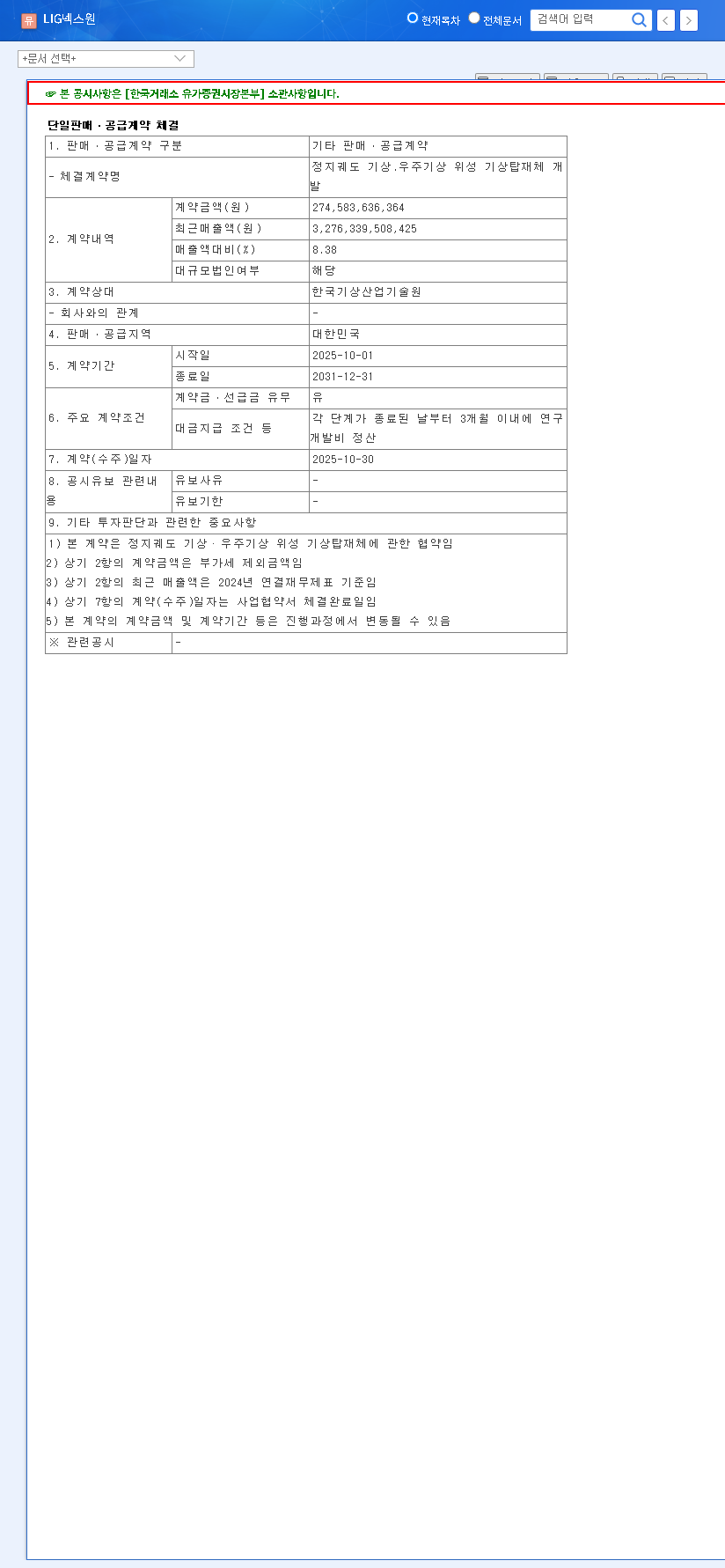
    LIG Nex1 officially announced a contract with the Korea Meteorological Institute valued at approximately KRW 274.6 billion. This agreement is for the highly specialized development of geostationary satellite payloads designed for meteorology and space weather monitoring. The contract period spans over six years, from October 2025 to December 2031, guaranteeing a stable, long-term revenue stream. This deal represents a significant 8.38% of the company’s 2024 consolidated revenue, underscoring its immediate financial importance. You can view the Official Disclosure on the DART system for verification.

    Why This Contract is a Game-Changer for LIG Nex1

    Beyond the impressive headline number, this satellite contract is poised to fundamentally enhance LIG Nex1’s corporate value and strategic positioning. The implications are multi-faceted, impacting everything from profitability to market perception.

    1. Fortifying Financial Performance

    A long-term contract of this magnitude provides exceptional financial stability. With an order backlog already exceeding KRW 23 trillion, this deal further de-risks future revenue forecasts and improves cash flow predictability. The high-tech nature of satellite payload development often carries higher profit margins than traditional defense hardware, potentially boosting LIG Nex1’s operating profit margin, which has already shown a positive trend.

    2. Spearheading the Aerospace Frontier

    This is more than just a win; it’s a powerful validation of LIG Nex1’s technological capabilities in the demanding aerospace industry. Successfully developing and delivering these sophisticated payloads will cement the company’s reputation and open doors to further opportunities in both domestic and international space programs. It demonstrates that the company’s significant investments in R&D facilities are bearing fruit, transitioning from a primarily defense-focused firm to a diversified technology leader.

    This contract is a pivotal event that not only brightens LIG Nex1’s mid-to-long-term growth prospects but also firmly establishes its credentials as a major force in the global space technology sector.

    3. Enhancing Strategic & Competitive Edge

    In an era of escalating geopolitical tensions and a renewed global space race, capabilities in satellite technology are a significant national asset. This contract enhances LIG Nex1’s competitive moat, leveraging favorable market conditions in both the Korean defense industry and civilian space markets. Key strategic benefits include:

    • Technology Diversification: Expands core competencies beyond traditional defense systems into high-value space applications.
    • Public & Civil Application: This project serves critical public functions like disaster prediction and climate monitoring, aligning with ESG (Environmental, Social, and Governance) principles.
    • Market Leadership: Secures a leadership position in South Korea’s burgeoning space ecosystem.

    Investor Outlook & Key Considerations

    The market has already reacted positively, and this large-scale satellite contract is expected to be a powerful catalyst for the LIG Nex1 stock price. However, investors should maintain a balanced perspective by considering both the immense potential and the external risks. While the company’s increased export ratio and long-term contract structure offer a buffer, global macroeconomic volatility, including interest rate hikes and currency fluctuations, remains a factor to monitor. The high-value nature of this business, however, makes it less susceptible to raw material price swings than traditional manufacturing.

    In conclusion, the convergence of a strong order backlog, proven technological prowess, and strategic expansion into the high-growth aerospace sector positions LIG Nex1 for sustained value appreciation. This contract is a clear indicator of a company on a strong upward trajectory.

    Disclaimer: This analysis is for informational purposes only and is based on publicly available data. Investment decisions should be made at the investor’s own discretion and responsibility.

    (079550) LIG Nex1 Stock Analysis: Deep Dive into the ₩274.6B Satellite Contract & Future Growth 관련 이미지
  • (138360) Hyupjin Kwangmu Acquisition: A Deep Dive into the Secondary Battery Pivot (138360)

    (138360) Hyupjin Kwangmu Acquisition: A Deep Dive into the Secondary Battery Pivot (138360)

    The recent Hyupjin Kwangmu acquisition has sent ripples through the market, signaling a pivotal moment for the food processing machinery manufacturer, Hyupjin Co., Ltd. (138360). Facing a slump in its core operations, Hyupjin is making a bold strategic move into the high-growth secondary battery sector by increasing its stake in Kwangmu. For investors, this decision is a double-edged sword, presenting both a potential lifeline and significant risk. This comprehensive analysis will unpack the deal, examine Hyupjin’s financial state, and provide a clear-eyed investment strategy for navigating this critical juncture.

    The Landmark Deal: Understanding the Hyupjin Kwangmu Acquisition

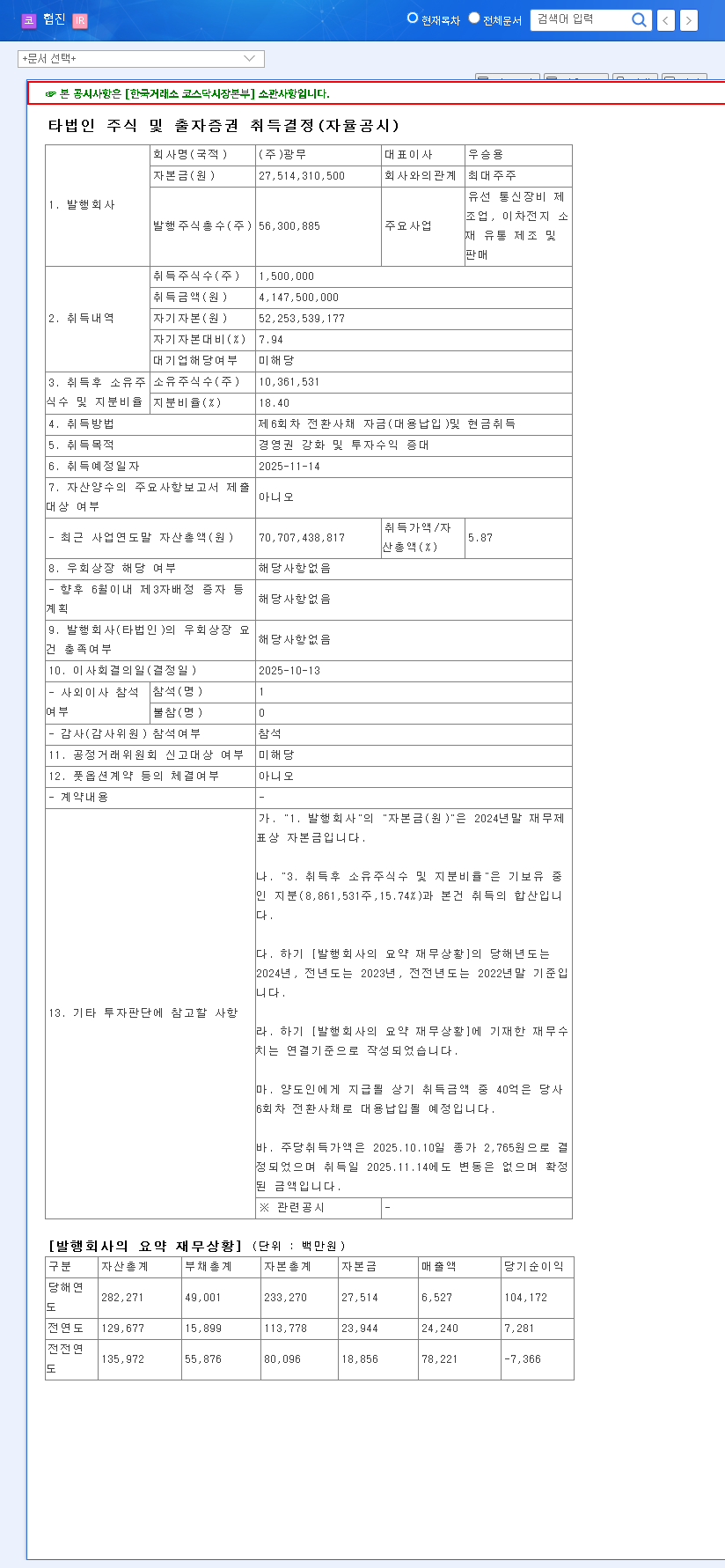
    Hyupjin Co., Ltd. has committed to acquiring approximately 4.1 billion KRW worth of shares in Kwangmu Co., Ltd., with the transaction scheduled for completion by November 14, 2025. This move will boost Hyupjin’s total stake in Kwangmu to a significant 18.40%. The primary motivations behind this acquisition are to fortify management control and enhance investment returns. The official filing for this decision can be reviewed in the company’s Official Disclosure (DART).

    This isn’t just a financial investment; it’s a strategic overhaul. By acquiring a larger piece of Kwangmu, Hyupjin is attempting to steer its future away from a struggling legacy business and towards the booming Hyupjin secondary battery market.

    A Company at a Crossroads: Hyupjin’s Financial State

    Shadow of the Core Business

    To understand the urgency of this acquisition, one must look at Hyupjin’s recent performance. The company’s core food processing machinery business has been facing severe headwinds. Revenue has been in a steep decline, falling from 44.4 billion KRW in 2022 to a projected 27.3 billion KRW in 2024. More alarmingly, both operating profit and net income have been in the red since 2022, signaling a fundamental crisis in its primary revenue stream. Given the company’s past delisting history, rebuilding investor confidence is paramount.

    Stabilizing the Financial Structure

    Despite the operational struggles, there is a silver lining. Hyupjin’s management has successfully improved its financial soundness. The debt-to-equity ratio is projected to drop dramatically from 70.22% in 2022 to a very healthy 9.45% in 2024. This deleveraging, combined with an improved current ratio, provides the company with a more stable foundation from which to launch this new venture. The 4.1 billion KRW acquisition cost, funded partially through convertible bonds, is considered manageable within this improved financial context. For more on this topic, see our guide on evaluating corporate financial health.

    Weighing the Potential: A Balanced Investment Thesis

    The Hyupjin investment strategy now hinges entirely on the success of this acquisition. Investors must carefully weigh the potential rewards against the inherent risks.

    The Bull Case: Upside Potential

    • Market Diversification: Entry into the secondary battery materials market, a sector with immense growth potential driven by EVs and energy storage, as reported by industry analysts like BloombergNEF.
    • Enhanced Control: The 18.40% stake gives Hyupjin a significant voice in Kwangmu’s operations, allowing it to drive strategy and potentially unlock value.
    • New Revenue Stream: Success in this venture could create a powerful new engine for growth, compensating for the decline in its legacy business.

    The Bear Case: Risks to Consider

    • Lack of Synergy: The food machinery and secondary battery industries are vastly different. There is a high risk of poor execution and limited operational synergy between Hyupjin and Kwangmu.
    • Inherited Business Risks: Kwangmu operates in a volatile and highly competitive market. Any downturns, technological shifts, or competitive pressures in the battery sector will directly impact Hyupjin.
    • Core Business Drag: The acquisition alone cannot save the company. If the legacy business continues to bleed cash, it will be a major drag on overall corporate value, regardless of Kwangmu’s performance.

    Conclusion: An Investment Strategy for Hyupjin (138360) Stock

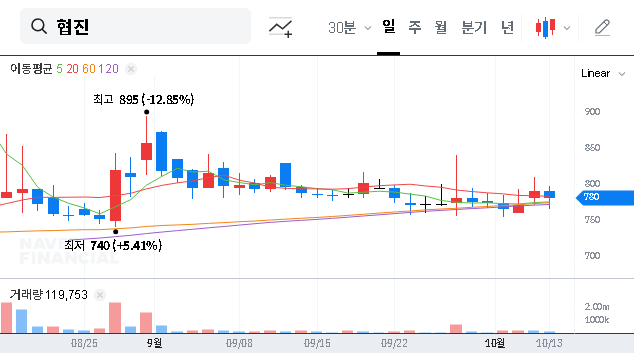
    Hyupjin’s acquisition of Kwangmu is a bold, long-term play on diversification. Short-term speculators are likely to be disappointed, as the stock price reflects deep-seated concerns about the company’s fundamentals. A prudent investment strategy requires patience and diligent monitoring. Investors should focus on tangible results, such as Kwangmu’s actual performance in the secondary battery market, any signs of a turnaround in Hyupjin’s core business, and concrete evidence of synergy that positively impacts the bottom line. This is a story of transformation, and only time will tell if this chapter ends in success.

    (138360) Hyupjin Kwangmu Acquisition: A Deep Dive into the Secondary Battery Pivot (138360) 관련 이미지
  • (206650) EuBiologics mRNA Vaccine (mCOV): A Deep Dive into its Phase 1 IND and Investment Potential

    (206650) EuBiologics mRNA Vaccine (mCOV): A Deep Dive into its Phase 1 IND and Investment Potential

    The development of the EuBiologics mRNA vaccine, known as ‘mCOV’, marks a pivotal moment for the company and a significant development in the post-pandemic biotech landscape. Since the global success of mRNA technology, companies worldwide have raced to harness its potential. EuBiologics has now officially joined this race, applying for a Phase 1 Investigational New Drug (IND) approval for its mCOV candidate, which targets SARS-CoV2 variants. This move is far more than a simple pipeline addition; it represents a strategic pivot that could redefine the company’s future growth drivers and technology portfolio.

    This deep-dive analysis will explore the critical implications of this IND application for EuBiologics, examining the potential upside for investors, the inherent risks, and the key milestones to watch. We will break down what this announcement means for EuBiologics stock and its long-term valuation.

    The Landmark Announcement: Phase 1 IND Application for mCOV

    On October 1, 2025, EuBiologics submitted its application for a Phase 1 IND to regulatory authorities, a crucial first step in human clinical trials. The company made this public through an Official Disclosure on the DART system. The primary goal of this initial phase is to rigorously evaluate the safety, tolerability, and preliminary immunogenicity of the mCOV vaccine in a cohort of healthy adults aged 19 to 64. For a company like EuBiologics, with a current market capitalization of KRW 473.9 billion and a strong foundation in its cholera vaccine business, this venture into cutting-edge mRNA technology signals a bold new chapter that has captured significant market attention.

    The successful progression of the mCOV EuBiologics mRNA vaccine could fundamentally reshape the company’s position, transforming it from a niche vaccine producer into a significant player in the modern biopharmaceutical landscape.

    Why This Matters: Strategic Upside and Growth Drivers

    The IND application for the mCOV vaccine is a cornerstone of EuBiologics’ long-term growth strategy. The potential positive impacts are multifaceted:

    • Pipeline Diversification & Tech Enhancement: Entering the mRNA space allows EuBiologics to build upon its existing vaccine expertise with next-generation biotechnology. This not only enhances its R&D capabilities but also positions it to compete in a rapidly evolving market, expanding future growth potential beyond its current portfolio.
    • Alignment with Global Market Trends: The COVID-19 pandemic established mRNA technology as the new gold standard in rapid vaccine development. By developing a variant-targeting mRNA vaccine, EuBiologics aligns perfectly with global health priorities and market demand, potentially unlocking significant new revenue streams upon successful commercialization. For context, this is the same technology that powered vaccines from Pfizer and Moderna.
    • Improved Investor Sentiment: The prospect of a high-value, high-tech growth engine is a powerful catalyst for attracting investor interest and driving positive market sentiment. A successful biotech investment narrative built around the EuBiologics mRNA vaccine platform could lead to a significant re-rating of the company’s valuation.

    A Prudent Perspective: Risks and Market Headwinds

    While the outlook is promising, investors must consider the potential risks and the challenging macroeconomic environment.

    Clinical and Commercialization Hurdles

    Clinical trials are inherently risky. A Phase 1 trial, while foundational, is just the first of many steps defined by global health authorities like the World Health Organization (WHO). Key risks include:

    • Trial Outcomes: Unforeseen safety issues or a lack of desired immunogenicity could lead to development delays or complete discontinuation.
    • Long Timelines & High Costs: The journey from a Phase 1 IND to commercial launch requires multiple, costly trial phases and regulatory approvals. Significant time and capital are needed before any revenue is generated, creating long-term uncertainty.
    • Intense Competition: The mRNA vaccine market is crowded with large, well-funded competitors. EuBiologics will need to demonstrate a clear advantage to capture market share.

    Financial and Market Considerations

    The financial commitment to R&D will be substantial. Increased spending on the mCOV vaccine program could pressure short-term profitability. While macroeconomic trends of stabilizing interest rates may improve liquidity and favor new investments, the biotech sector remains sensitive to market volatility.

    Investor Action Plan & Key Milestones to Watch

    Overall, the mCOV IND application is a major positive catalyst for EuBiologics’ long-term potential. The investment thesis is one of strategic expansion, building a high-growth engine atop a stable existing business. For more on how we analyze such opportunities, see our guide on evaluating clinical trial data for biotech stocks.

    Investment Opinion: Positive with Cautious Optimism

    Investors should monitor the following key points closely:

    • Phase 1 Clinical Results: This is the most critical near-term milestone. Positive data on safety and immunogenicity will be a major de-risking event.
    • Broader R&D Pipeline: Track the progress of other vaccine candidates (e.g., Typhoid, Meningococcal) to assess overall portfolio health.
    • CRMO Business Performance: Monitor the growth of its contract research, development, and manufacturing business for signs of operational execution.
    • Financial Health: Scrutinize quarterly reports for the impact of increased R&D spending on cash burn and profitability.

    (206650) EuBiologics mRNA Vaccine (mCOV): A Deep Dive into its Phase 1 IND and Investment Potential 관련 이미지
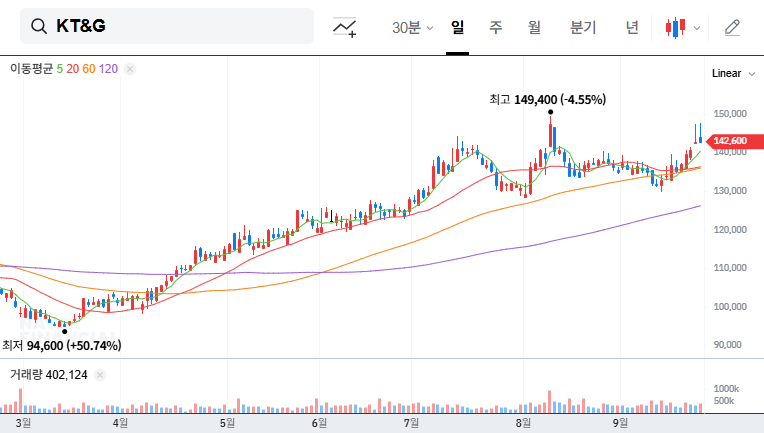
  • KT&G Acquires Swedish Nicotine Pouch Company ASF: Investment Strategy Analysis

    KT&G Acquires Swedish Nicotine Pouch Company ASF: Investment Strategy Analysis 대표 차트 이미지

    1. What Happened?: KT&G Acquires 51% Stake in ASF

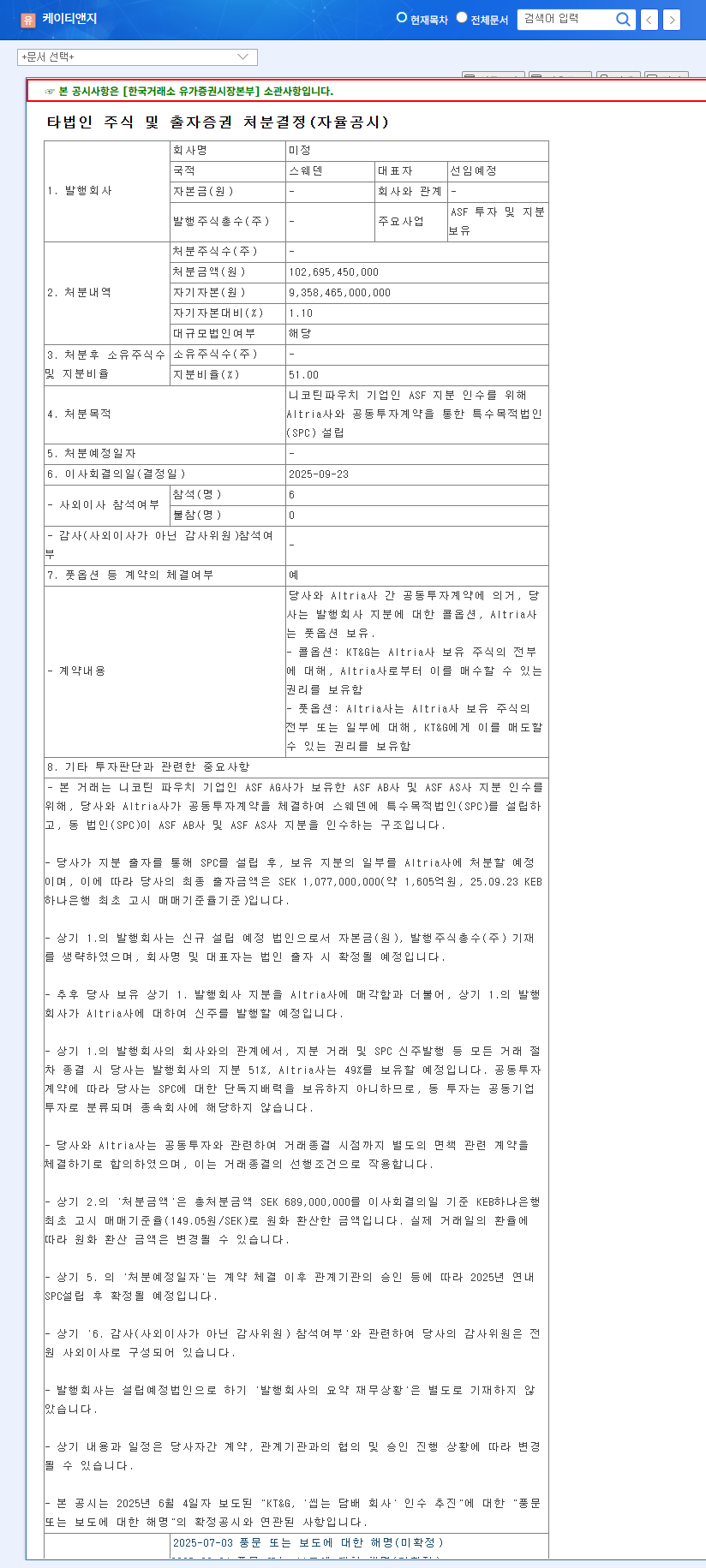
    On September 23, 2025, KT&G signed a contract to acquire a 51% stake in the Swedish nicotine pouch company ASF for 102.7 billion KRW. This investment represents 1.10% of KT&G’s capital.

    2. Why is it Important?: Securing New Growth Engine and Market Diversification

    The acquisition of ASF is a significant step towards diversifying KT&G’s business portfolio, which is currently concentrated on cigarettes and HNB (Heat-not-Burn), and entering the rapidly growing nicotine pouch market. This is expected to contribute to creating new revenue streams and securing future growth amid strengthening regulations.

    3. What’s Next?: Analyzing Opportunities and Risks

    Positive Impacts

    • New Growth Engine: Entering the rapidly growing nicotine pouch market secures a new growth engine.
    • Strengthened Global Competitiveness: Building upon the HNB partnership experience with PMI, KT&G can potentially expand into the global nicotine pouch market.
    • Business Diversification: Reduces dependence on the existing tobacco business and establishes a stable revenue structure through portfolio diversification.

    Negative Impacts and Considerations

    • Increased Financial Burden: Possibility of increased financial burden due to the 102.7 billion KRW investment. Careful monitoring is required considering the increasing debt ratio trend.
    • New Business Risks: Preparation is needed for uncertainties in the nicotine pouch market (regulatory changes, intensified competition, etc.).
    • Synergy Creation: The key is how much synergy can be created with existing businesses.

    4. What Should Investors Do?: Investment Strategy Recommendations

    • Maintain a Long-Term Perspective: Focus on long-term growth potential rather than short-term volatility.
    • Monitor Financial Health: Continuously check financial indicators such as changes in the debt ratio.
    • Track New Business Performance: Consistently analyze whether market competitiveness is secured and synergy is created after the ASF acquisition.
    • Consider Macroeconomic Variables: Understand the impact of macroeconomic variables such as exchange rates and interest rates and reflect them in investment strategies.
    What is the purpose of KT&G’s acquisition of ASF?

    KT&G aims to enter the rapidly growing nicotine pouch market through the acquisition of ASF and pursue business diversification by reducing its dependence on the existing tobacco business.

    Will this acquisition have a positive impact on KT&G’s stock price?

    It can be positive in terms of securing long-term growth momentum, but increased financial burden and new business risks should also be considered. Stock price volatility may occur depending on market conditions and the company’s strategic execution.

    What precautions should be taken when investing?

    Before making an investment decision, carefully analyze KT&G’s financial soundness changes, whether market competitiveness is secured after the ASF acquisition, and the impact of macroeconomic variables.

    KT&G Acquires Swedish Nicotine Pouch Company ASF: Investment Strategy Analysis 관련 이미지
    KT&G Acquires Swedish Nicotine Pouch Company ASF: Investment Strategy Analysis 관련 이미지
  • Orion Enters the Seafood Market: A New Wave of Growth?


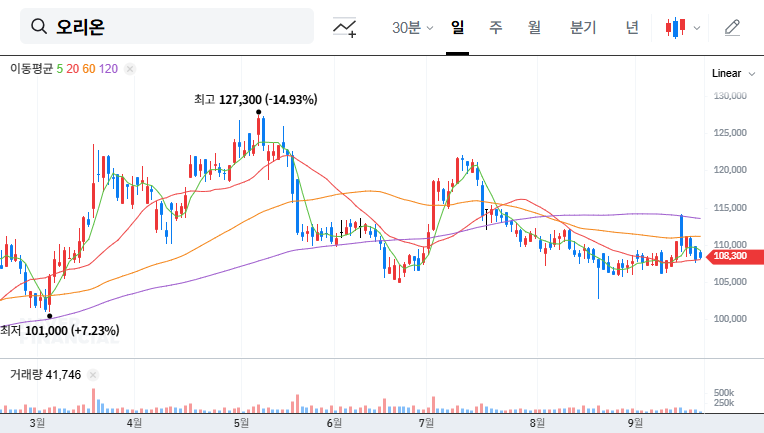
    Orion Enters the Seafood Market: A New Wave of Growth? 대표 차트 이미지


    Why is Orion Entering the Seafood Business?

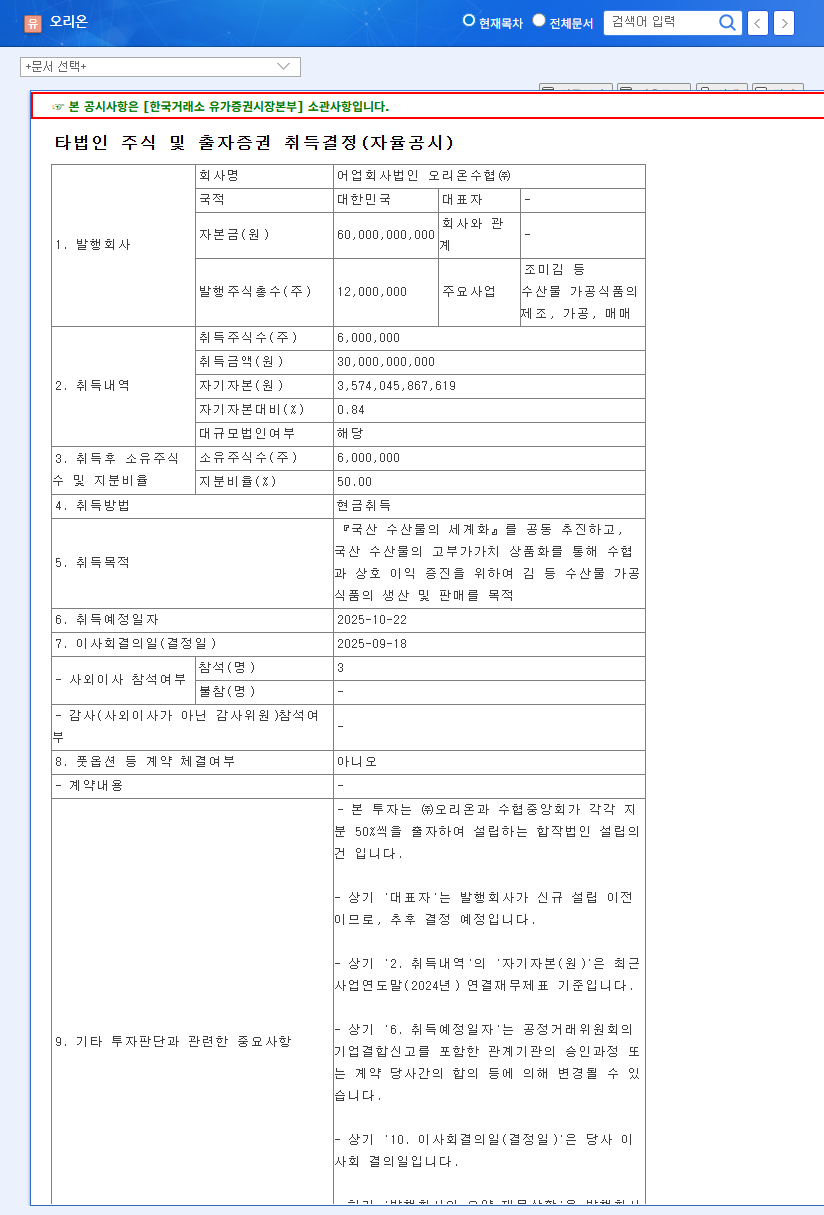
    Orion is entering the seafood processing market to overcome slowing growth in its confectionery business and secure new growth engines. The strategy aims to create new revenue streams and diversify its business portfolio by adding value to and globalizing Korean seafood, particularly seaweed.

    Potential Benefits of Orion’s Seafood Venture

    • Business Diversification and New Growth Engine: Reducing reliance on the confectionery business and establishing a stable growth foundation.
    • Synergy with Suhyup: Securing seafood processing technology and distribution networks, leveraging Orion’s global distribution channels.
    • Alignment with National Agenda: Expected government support and strengthened cooperation by pursuing the ‘Globalization of Korean Seafood’ initiative.

    Potential Risks to Consider

    • New Business Risks: Uncertainties related to entering a new market, potential decision-making issues in a joint management system.
    • Competitive Landscape: Intensifying competition in the seafood processing market, impact of raw material price volatility and exchange rate fluctuations on profitability.
    • Financial Burden: Potential increase in financial burden due to new business investment.

    Action Plan for Investors

    While Orion’s entry into the seafood business presents long-term growth potential, investors should exercise caution. Careful monitoring of Orion Suhyup Co.’s business performance and financial contribution is crucial, along with attention to market conditions. A long-term investment perspective is recommended, rather than focusing on short-term stock price fluctuations.


    FAQ

    Why is Orion entering the seafood business?

    Orion is entering the seafood processing market to overcome slowing growth in its confectionery business and secure new growth engines.


    What does Orion’s entry into the seafood market mean for investors?

    It presents an opportunity to establish a stable growth foundation through business diversification and create new revenue streams. However, there are also risks associated with entering a new business, requiring careful investment decisions.


    What is the future outlook for Orion’s seafood business?

    Positive synergy is expected due to its alignment with the national agenda of ‘globalizing Korean seafood.’ However, uncertainties exist, including intensifying market competition and raw material price volatility.


    Orion Enters the Seafood Market: A New Wave of Growth? 관련 이미지


  • Unicem Acquires High-End Entertainment: A K-Content Power Play?


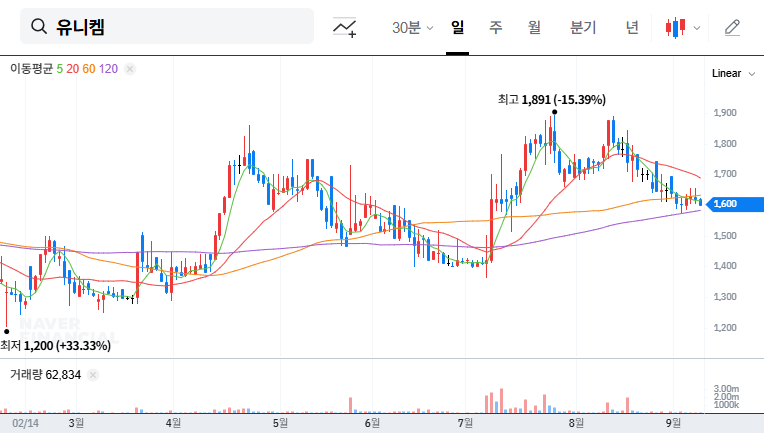
    Unicem Acquires High-End Entertainment: A K-Content Power Play? 대표 차트 이미지


    Unicem Enters Entertainment Market with High-End Acquisition

    Unicem announced on September 16, 2025, its acquisition of a 51% stake in High-End Entertainment for 6.1 billion won. The acquisition will be financed through convertible bonds.

    M&A Rationale: Why Entertainment?

    Facing slowing growth in its traditional leather business, Unicem aims to capitalize on the global K-Content boom and the expanding OTT market. Acquiring High-End is key to securing content creation capabilities and enhancing market competitiveness.

    Analyzing Potential Benefits and Risks of the M&A

    • Potential Benefits: Diversification of revenue streams, new growth engine through entertainment, potential gains from K-Content market growth
    • Potential Risks: Uncertainties in the entertainment industry, increased competition, initial investment burden, convertible bond dilution, financial impact from interest rate and exchange rate fluctuations

    Investor Action Plan: What to Watch For

    Investors should closely monitor the following:

    • High-End’s business plans and initial performance
    • Changes in Unicem’s financial structure and funding plans
    • Conversion status of convertible bonds and changes in the number of shares
    • Impact of changes in the macroeconomic environment (interest rates, exchange rates)

    Analysts view Unicem’s M&A positively, suggesting a ‘buy and monitor’ approach. However, cautious investment decisions are necessary considering the uncertainties of the entertainment business and macroeconomic factors.


    Frequently Asked Questions (FAQ)

    What is Unicem’s objective in acquiring High-End?

    Unicem aims to overcome slowing growth in its existing leather business and capitalize on the growth of the K-Content market by acquiring High-End.

    How will this acquisition affect Unicem’s stock price?

    There are both positive and negative aspects. Diversification and securing a new growth engine are positive, but the uncertainty of the entertainment business and the possibility of dilution from convertible bonds are negative factors.

    What should investors be cautious about?

    Investors should continuously monitor High-End’s business performance, changes in Unicem’s financial structure, the conversion status of convertible bonds, and the impact of macroeconomic factors.


    Unicem Acquires High-End Entertainment: A K-Content Power Play? 관련 이미지
    Unicem Acquires High-End Entertainment: A K-Content Power Play? 관련 이미지