Tag: NationalPensionService

  • (298040) Hyosung Heavy Industries Stock: Analysis of NPS Divestment & Future Outlook

    (298040) Hyosung Heavy Industries Stock: Analysis of NPS Divestment & Future Outlook

    Recent developments concerning Hyosung Heavy Industries (KRX: 298040) have presented a complex picture for investors. On one hand, an amended business report signals a welcome move towards greater corporate transparency. On the other, a notable share reduction by the National Pension Service (NPS) has raised questions. How should investors interpret these conflicting signals? This comprehensive analysis will explore the core issues, their impact on the company’s value, and provide a strategic roadmap for navigating the path ahead.

    Decoding the Two Key Events

    To understand the current investment climate for Hyosung Heavy Industries stock, we must first dissect the two pivotal events that have captured the market’s attention.

    1. Amended Business Report: A Commitment to Transparency

    Hyosung Heavy Industries recently filed an amendment to its business report, significantly expanding the details provided in its ‘Status of Single Sales/Supply Contract Execution’ section. This is more than just a procedural update; it’s a strong positive signal. The amendment now includes granular information such as contract names, counterparties, timelines, key terms, and specific financial figures. You can view the Official Disclosure on the DART system. This move directly addresses investor demand for clarity, enhancing trust and allowing for a more accurate assessment of the company’s revenue streams and operational health. For investors, learning how to analyze supply contracts is a crucial skill this report now supports.

    2. National Pension Service (NPS) Stake Reduction

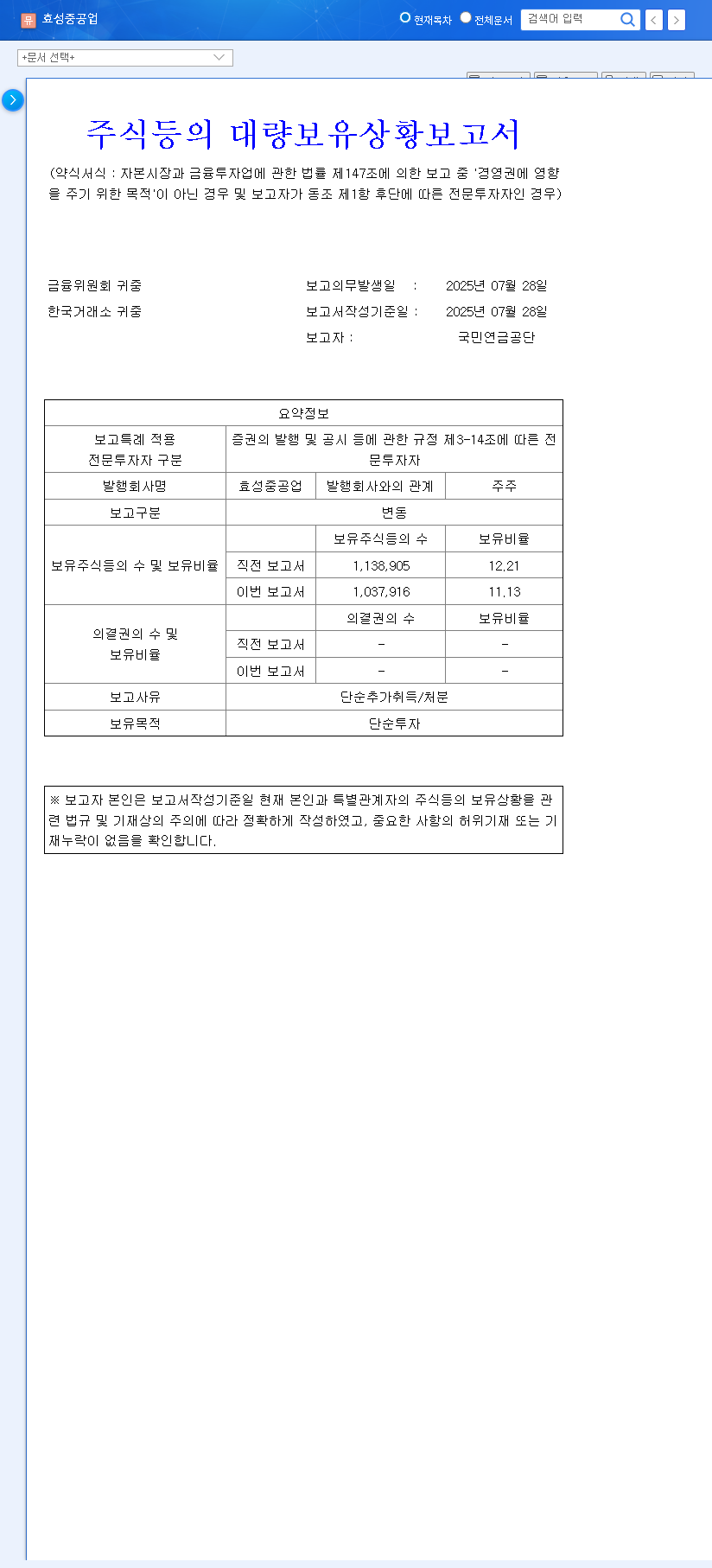
    Conversely, the National Pension Service (NPS) reported a decrease in its stake in Hyosung Heavy Industries, from 12.21% down to 11.13%. The stated purpose for the holding is ‘simple investment,’ and the change was due to ‘simple additional acquisition/disposal.’ While a share sale by a major institutional investor can create short-term selling pressure, the context is critical. This NPS divestment is likely part of a broader portfolio rebalancing strategy rather than a negative judgment on the company’s specific fundamentals. Large funds like the NPS regularly adjust their holdings across various sectors to manage risk and align with macroeconomic outlooks, a common practice in institutional investment strategy.

    While increased transparency builds long-term trust, the NPS share reduction introduces short-term market uncertainty. Understanding the nuances of both is key for any investor in Hyosung Heavy Industries.

    Impact on Fundamentals and Stock Outlook

    The enhanced reporting is an unambiguous positive for the company’s fundamentals. It increases the visibility of future revenue, clarifies business risks, and boosts management credibility. In contrast, the NPS stake reduction primarily affects short-term market sentiment and supply-demand dynamics. While it could lead to temporary price volatility, its long-term impact on the intrinsic value of Hyosung Heavy Industries is expected to be limited, provided the company’s core business remains strong.

    Macroeconomic Tailwinds for the Heavy Industries Segment

    The broader market environment offers significant opportunities for Hyosung Heavy Industries’ core business. The global push for carbon neutrality and the explosive growth of AI and data centers are fueling unprecedented demand for electricity. This directly translates to a need for robust power infrastructure, including the transformers, circuit breakers, and power generation facilities that are central to the company’s portfolio. The expansion of global power grids represents a powerful, long-term growth driver that aligns perfectly with the company’s expertise.

    A Strategic Investor’s Action Plan

    Given these factors, a prudent investor should adopt a long-term perspective. The fundamental growth story in the heavy industries segment appears intact, while the move toward transparency strengthens the investment case. The NPS divestment should be viewed as short-term market noise rather than a fundamental red flag. Consider the following actions:

    • Focus on Core Business Health: Prioritize analysis of the heavy industries segment’s order book and profitability over short-term stock fluctuations.
    • Monitor Macro Trends: Keep a close eye on global energy investments, data center construction trends, and commodity prices, as these are key performance indicators for the company.
    • Assess Financial Soundness: Use the newly transparent data to evaluate the company’s cash flow, debt levels, and risk management in its more volatile construction segment.
    • Adopt a Long-Term Perspective: Base investment decisions on the company’s intrinsic value and long-term growth potential rather than reacting to headlines about institutional ownership changes.

    Frequently Asked Questions (FAQ)

    Q1: Why is the amended business report so important for Hyosung Heavy Industries investors?

    The report provides unprecedented detail on specific contracts, allowing investors to more accurately forecast revenue, assess risk, and verify cash flow. This transparency reduces uncertainty and increases confidence in the company’s financial health and management.

    Q2: Should I be concerned about the NPS reducing its stake?

    While it can cause short-term price pressure, the fact that the NPS cited ‘simple investment’ purposes suggests it’s a portfolio management move, not a verdict on the company’s future. Its long-term impact on the value of Hyosung Heavy Industries stock is likely to be minimal.

    Q3: What are the biggest growth drivers for Hyosung Heavy Industries?

    The primary growth drivers are in the heavy industries segment. This includes rising global demand for power equipment (transformers, circuit breakers) driven by the renewable energy transition, grid modernization, and the power requirements of the rapidly growing AI and data center industries.
    (298040) Hyosung Heavy Industries Stock: Analysis of NPS Divestment & Future Outlook 관련 이미지
  • (064760) TCK Stock Analysis: Why the National Pension Service Increased Its Stake

    (064760) TCK Stock Analysis: Why the National Pension Service Increased Its Stake

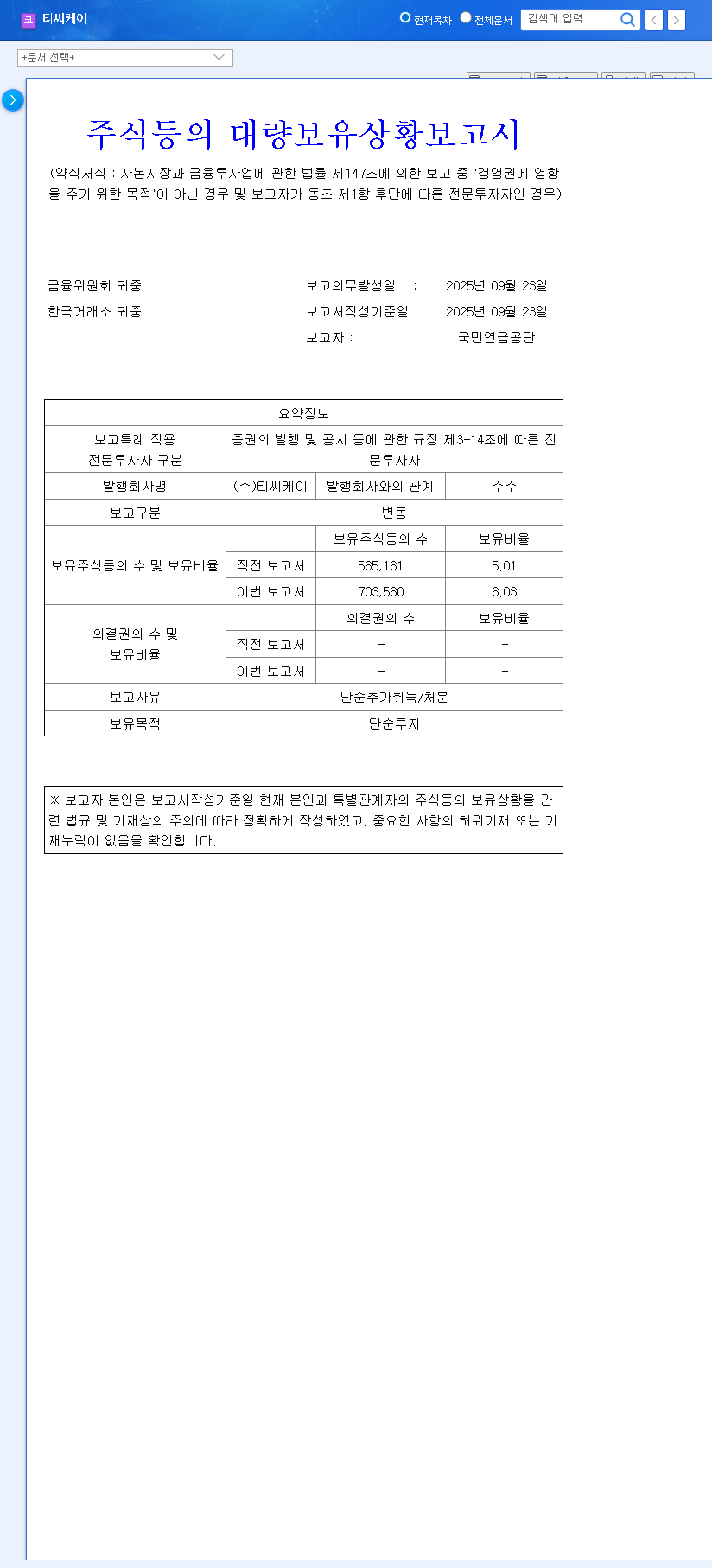
    The recent news that the TCK National Pension Service (NPS) stake has increased has sent a significant signal across the market. South Korea’s largest institutional investor has upped its holding in TCK, a pivotal semiconductor materials company, from 5.01% to 6.03%. While the official reason is ‘simple investment,’ seasoned investors know that moves by the NPS are rarely simple. This strategic acquisition warrants a deeper analysis into TCK’s fundamentals, the market environment, and the potential impact on TCK stock.

    This comprehensive guide will break down the details of the NPS investment, explore the core strengths that make TCK an attractive asset, and provide strategic insights for current and potential investors. Understanding the ‘why’ behind this move is crucial for anyone following the semiconductor industry.

    The Official Announcement: NPS Increases TCK Stake

    On October 1, 2025, the National Pension Service formally disclosed its increased shareholding in TCK. The filing confirmed a 1.02 percentage point increase, bringing their total TCK stake to 6.03%. This isn’t just a minor portfolio adjustment; when an institution with the financial might of the NPS makes such a move, it functions as a strong vote of confidence in the company’s future. The disclosure, made for ‘simple additional acquisition,’ suggests a belief in the company’s intrinsic value and long-term growth trajectory rather than a move to influence management. You can view the complete report via the Official Disclosure on DART.

    Why TCK? The Fundamentals Driving the NPS Investment

    The NPS’s decision is rooted in a thorough analysis of TCK’s robust fundamentals and the favorable market conditions surrounding the semiconductor materials sector. Let’s explore the key pillars supporting this investment.

    Exceptional Financial Health

    TCK stands out with its remarkably strong financial position. The company operates with debt-free management, a rare and valuable attribute in today’s interest-rate-sensitive environment. This financial discipline provides stability and flexibility, allowing TCK to navigate economic downturns and invest in growth opportunities without the burden of high financing costs. A stable debt-to-equity ratio and consistent positive cash flow further underscore its fiscal prudence.

    High-Growth Solid SiC Division

    The engine of TCK’s growth is its Solid SiC (Silicon Carbide) division. SiC components, particularly SiC rings, are critical consumables in the semiconductor manufacturing process, used in etching equipment. As chipmakers push for smaller, more complex, and more powerful semiconductors, the demand for high-quality SiC parts is soaring. TCK’s proprietary technology and successful domestic localization of SiC coating give it a significant competitive advantage in this high-margin market.

    Favorable Macroeconomic Environment

    Several external factors are currently working in TCK’s favor. The upward trend in EUR/KRW and USD/KRW exchange rates directly boosts the profitability of its exports. Furthermore, with the US benchmark interest rate expected to hold steady or potentially decrease, TCK’s debt-free status makes it an even more attractive investment compared to highly leveraged competitors. Stabilizing global logistics costs also help in managing raw material expenses effectively.

    An investment from a national pension fund is more than just capital; it’s a powerful endorsement of a company’s fundamentals, management, and long-term market position.

    Impact Analysis: What This Means for TCK Stock

    The TCK National Pension Service partnership has both immediate and long-term implications for the company’s stock value and market perception.

    Short-Term: Improved Credibility and Investor Sentiment

    In the short term, the news acts as a major catalyst. The endorsement from South Korea’s premier institutional investor immediately enhances TCK’s credibility. This can trigger a positive shift in investor sentiment, attracting retail and other institutional investors, which may lead to an appreciation in the TCK stock price.

    Long-Term: Foundation for Sustainable Growth

    Over the long term, the NPS’s increased stake solidifies market confidence in TCK’s core business. The presence of a stable, long-term institutional investor can reduce stock volatility and attract further foreign investment. This combination of strong fundamentals and institutional backing creates a powerful narrative for sustained upward momentum, reinforcing TCK’s position as a leader in the semiconductor materials space.

    Action Plan for Savvy Investors

    While the NPS investment is a strong bullish signal, prudent investors must conduct their own due diligence. It’s essential to weigh the company’s growth potential against broader market risks. For more context on industry trends, you can read our analysis of the semiconductor industry outlook. Institutional investment strategies are often detailed by leading financial analysts at sources like Reuters.

    Key factors to continuously monitor include:

    • Macroeconomic Variables: Keep an eye on exchange rates, interest rate policies, and raw material prices.
    • Semiconductor Cycle: Monitor global demand for semiconductors, as TCK’s performance is closely tied to the industry’s health.
    • Competitive Landscape: Watch for new technologies or competitors in the SiC market.
    • Company Reports: Pay attention to quarterly earnings reports for any changes in R&D investment ratios or reliance on major customers.

    In conclusion, the National Pension Service’s increased TCK stake is a significant vote of confidence. It validates the company’s strong fundamentals and bright future, but individual investors must pair this signal with continuous monitoring of the market to make informed decisions.

    (064760) TCK Stock Analysis: Why the National Pension Service Increased Its Stake 관련 이미지
  • (000640) Dong-A Socio Holdings Analysis: Why Korea’s National Pension Service Boosted Its Stake

    (000640) Dong-A Socio Holdings Analysis: Why Korea’s National Pension Service Boosted Its Stake

    When a financial titan like Korea’s National Pension Service (NPS) makes a significant move, the market listens. Recently, the NPS increased its ownership in Dong-A Socio Holdings, a prominent player with a market cap of 751 billion KRW. This isn’t just a routine portfolio adjustment; it’s a powerful vote of confidence that signals deep value and long-term potential. For investors, understanding the ‘why’ behind this move is critical to unlocking new opportunities.

    This comprehensive investment analysis will delve into the details of the NPS stake increase, dissect the robust fundamentals of Dong-A Socio Holdings, evaluate its key growth drivers, and outline a strategic action plan for potential investors. We will explore everything from its explosive biosimilar segment to its attractive valuation, providing the clear insights you need.

    The Signal: NPS Deepens Investment in Dong-A Socio Holdings

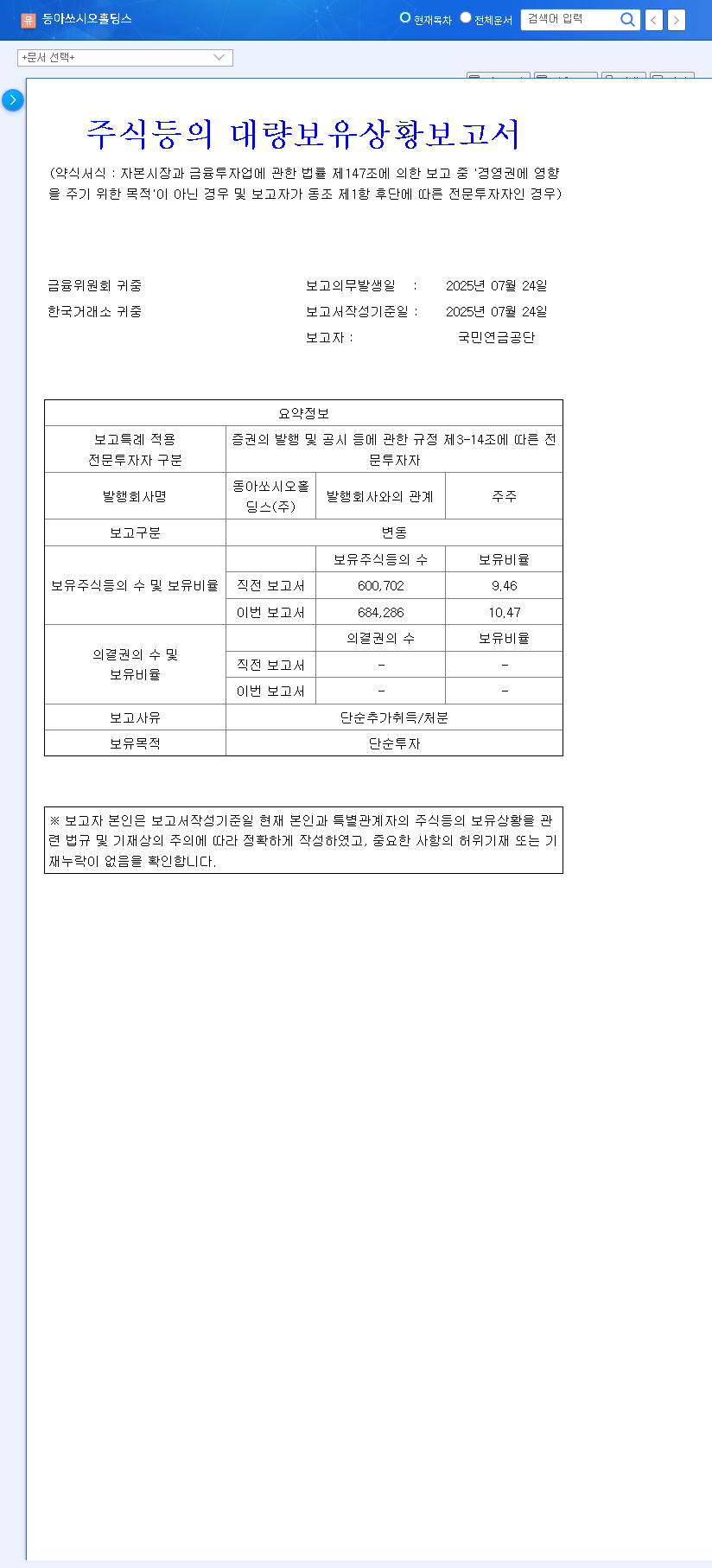
    On October 1, 2025, a significant disclosure revealed that the National Pension Service had increased its stake in Dong-A Socio Holdings from 9.46% to 10.47%. This 1.01 percentage point acquisition pushes its ownership into double-digit territory, a milestone for any institutional investor. According to the Official Disclosure, the purpose of the holding is listed as ‘simple investment’. This classification is crucial, as it implies the NPS is not seeking management control but is instead investing based on a strong belief in the company’s intrinsic value and future growth prospects.

    An increased stake from a national pension fund is one of the strongest indicators of long-term financial health and confidence in a company’s strategic direction.

    A Look Under the Hood: Robust Company Fundamentals

    The NPS’s decision is firmly rooted in the strong performance and solid financial health detailed in Dong-A Socio Holdings’ 78th semi-annual report. The company exhibits strength across multiple dimensions.

    Powering Growth: The Biosimilar & CDMO Juggernaut

    The star of the show is undoubtedly the Biosimilar and Contract Manufacturing (CDMO) segment. This division reported a staggering 129.4% surge in revenue and an unbelievable 1,646.7% increase in operating profit. This explosive growth is fueled by two key factors: the successful commercialization of the Stelara biosimilar and the rapid global expansion of the CDMO market. This positions the bio-segment as the primary engine for the company’s future growth trajectory.

    Financial Health and Attractive Valuation of Dong-A Socio Holdings

    Beyond the high-growth segments, the company’s overall financial picture is both stable and improving. The following metrics paint a clear picture of a well-managed enterprise:

    • Improved Profitability: Overall revenue grew by 4.7% while operating profit jumped by an impressive 27.7%, showcasing enhanced operational efficiency.
    • Strong Balance Sheet: Total assets and equity have increased while liabilities have decreased. The debt-to-equity ratio remains at a very manageable 84.16%.
    • Undervalued Stock: With a consolidated P/E ratio of just 8.61x, the stock is considered significantly undervalued compared to its peers. A P/B ratio of 1.11x also suggests ample room for price appreciation.
    • Shareholder Friendly: The company has demonstrated strong cash-generating capabilities and is planning quarterly dividends as part of its enhanced shareholder return policy.

    Investment Thesis: Maintain a ‘BUY’ Rating

    The combination of a major institutional investor’s backing, stellar fundamentals in a high-growth sector, and an attractive valuation makes a compelling case for Dong-A Socio Holdings. The NPS’s move enhances corporate credibility and is likely to act as a catalyst for positive investor sentiment and stock price momentum. For a deeper understanding of institutional investment strategies, you can read more at high-authority sources like Investopedia.

    Navigating Potential Headwinds: Key Risk Factors

    No investment is without risk. Prudent investors should monitor several macroeconomic and company-specific factors. For those interested, our guide on how to analyze biotech stocks offers further context.

    • Exchange Rate Volatility: A rising KRW/USD exchange rate could increase the cost of imported raw materials. Hedging strategies should be monitored.
    • Interest Rate Fluctuations: Changes in interest rates could impact the financial burden of variable-rate borrowings.
    • R&D and Pipeline Performance: Sustainable growth depends on the continued success of the R&D pipeline and new business initiatives.

    Conclusion & Final Thoughts

    The increased NPS stake in Dong-A Socio Holdings is more than just a headline; it’s a well-founded endorsement of the company’s strategy and execution. With a powerful growth engine in its bio-segment, solid financials, and an undervalued stock price, the company presents a highly attractive investment opportunity. While investors should remain mindful of market risks, the long-term outlook appears exceptionally bright.

    Disclaimer: This analysis is for informational purposes only and is based on publicly available data. The final responsibility for any investment decisions rests solely with the investor.

    (000640) Dong-A Socio Holdings Analysis: Why Korea's National Pension Service Boosted Its Stake 관련 이미지
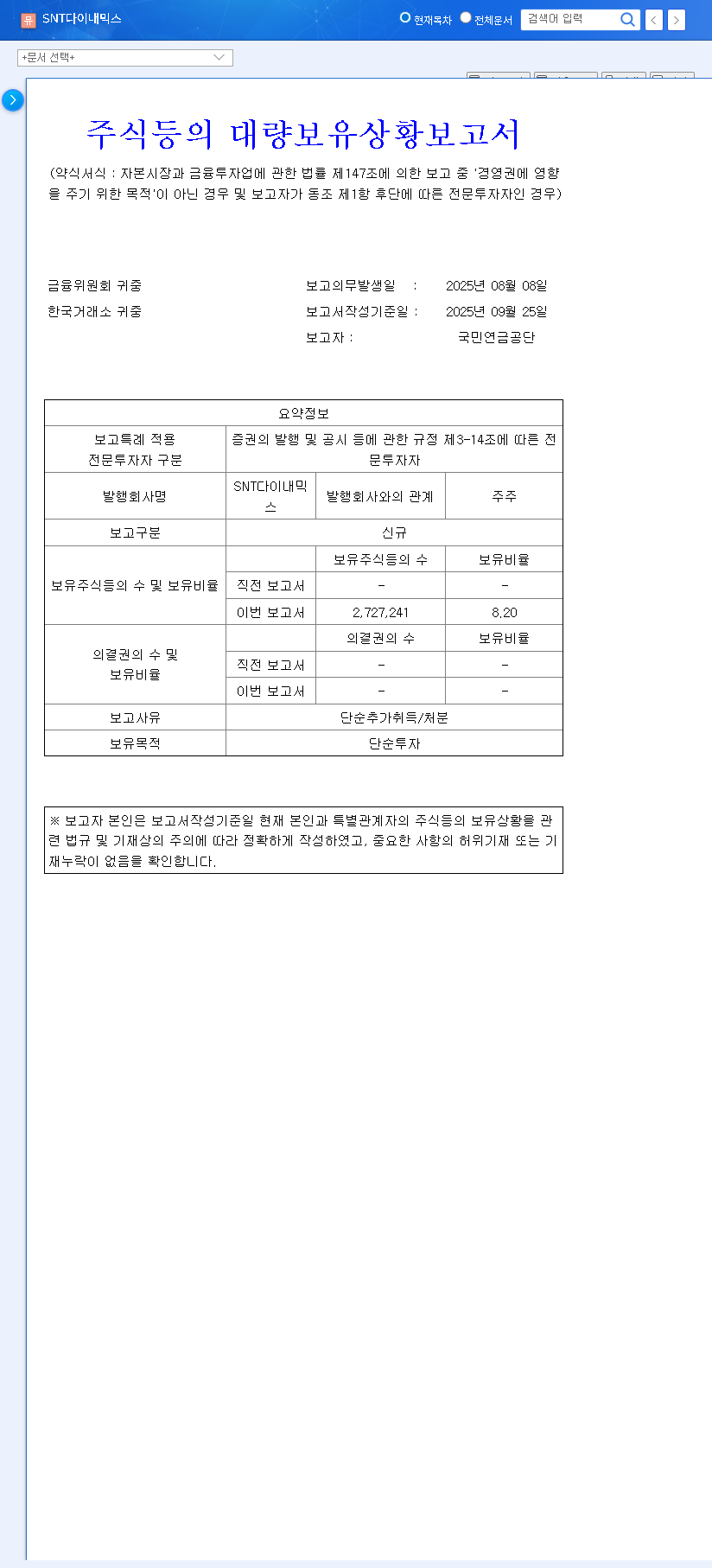
  • (003570) SNT Dynamics Investment Analysis: Decoding the NPS 8.2% Stake & Future Outlook

    (003570) SNT Dynamics Investment Analysis: Decoding the NPS 8.2% Stake & Future Outlook

    An SNT Dynamics investment has come under the spotlight after a major market-moving announcement. The National Pension Service (NPS) of Korea, the country’s largest institutional investor, has publicly disclosed an 8.20% stake in the company. While the involvement of such a significant entity often signals confidence, a deeper analysis is essential for any prudent investor. This report moves beyond the headlines to provide a comprehensive SNT Dynamics stock analysis, examining the company’s fundamentals, the implications of the NPS stake, and a strategic path forward.

    We will dissect the H1 2025 financial report to understand the opportunities and risks, providing you with the clarity needed to make an informed decision about your SNT Dynamics investment portfolio.

    The Catalyst: NPS Announces Major Stake in SNT Dynamics

    On October 1, 2025, a mandatory disclosure revealed that the National Pension Service is now a significant shareholder in SNT Dynamics. According to the official report, the stake was acquired for ‘simple investment’ purposes through ‘simple additional acquisition/disposition.’ You can view the filing directly from the Official Disclosure (Source). This classification suggests that the NPS sees long-term value in the company but does not intend to actively participate in its management. For investors, this is a powerful signal, but it’s only the beginning of the story.

    Deep Dive: A Fundamental Analysis of SNT Dynamics

    To understand the rationale behind the NPS’s SNT Dynamics investment, we must look at the company’s core financial and operational health as detailed in its H1 2025 report.

    Revenue Growth vs. Profitability Squeeze

    SNT Dynamics reported impressive top-line growth, with revenue reaching 336.7 billion KRW in the first half of 2025, a remarkable 29.9% increase year-over-year. This growth was overwhelmingly driven by a 62.7% surge in exports, highlighting the company’s strong position in the global defense and transportation markets. However, this growth did not translate to the bottom line. Operating profit actually decreased to 47.3 billion KRW. This profitability squeeze was attributed to:

    • Increased cost of sales from raw materials and production.
    • Higher selling, general, and administrative (SG&A) expenses.
    • A larger corporate tax burden.

    Financial Health Under Scrutiny

    The company’s balance sheet presents a mixed picture. While total equity grew, total liabilities grew faster, pushing the debt-to-equity ratio up to 38.13%. More concerning is the significant drop in cash flow from operating activities. This signals an urgent need to improve operational efficiency and cash management. To bolster its finances, SNT Dynamics issued exchangeable bonds in July 2025, aiming to improve its capital structure and fund future investments.

    While the NPS endorsement provides a significant confidence boost, a disciplined SNT Dynamics investment strategy must be grounded in a clear-eyed view of the company’s current profitability challenges and financial health metrics.

    External Factors & Market Headwinds

    No company operates in a vacuum. The performance of SNT Dynamics is also influenced by macroeconomic trends. Investors should monitor:

    • Exchange Rate Volatility: A strong US Dollar and Euro benefits export revenues but can inflate the cost of imported raw materials.
    • Interest Rate Environment: With global central banks maintaining higher rates, borrowing costs for capital-intensive projects could rise, impacting future profitability. For more on this, see global interest rate analysis from Reuters.
    • Geopolitical & Commodity Markets: As a key player in the defense sector, global stability and raw material prices are critical variables that can affect both demand and costs.

    Action Plan for Savvy Investors

    The news of the NPS stake is a clear positive for investor sentiment, potentially stabilizing the stock price. However, the underlying fundamentals call for a cautious and strategic approach rather than aggressive buying.

    Short-Term vs. Long-Term Perspective

    In the short term, the stock may see a positive lift, but volatility is likely until the company addresses its profitability and cash flow issues. For a long-term SNT Dynamics investment, the focus should be on key performance indicators. Investors should watch for sustained improvements in operating margins, effective cost controls, and a strengthening of the balance sheet. The growth of the global defense sector remains a significant tailwind, but execution is paramount. To learn more, read our Guide to Analyzing Defense Sector Stocks.

    Comprehensive Opinion

    The NPS’s vote of confidence is a significant endorsement of SNT Dynamics’ long-term potential. However, the current financial data suggests near-term challenges. A prudent strategy would be to monitor the company’s progress over the next few quarters. Positive momentum will be confirmed when revenue growth is accompanied by margin expansion and improved cash generation. Only then will the intrinsic value of the company truly align with the institutional confidence shown by the NPS.

    Disclaimer: This analysis is for informational purposes only and is based on publicly available data. The final responsibility for any investment decisions rests solely with the investor.

    (003570) SNT Dynamics Investment Analysis: Decoding the NPS 8.2% Stake & Future Outlook 관련 이미지