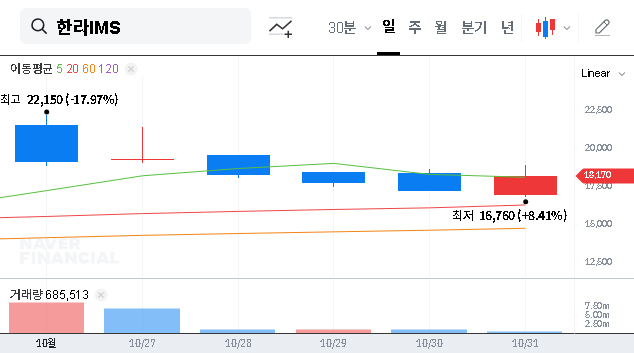
Tag: MOU

  • (092460) HANLA IMS Investment Analysis: H1 2025 Growth & Daesun Shipbuilding Deal

    (092460) HANLA IMS Investment Analysis: H1 2025 Growth & Daesun Shipbuilding Deal

    This comprehensive HANLA IMS investment analysis delves into the company’s powerful H1 2025 performance and the game-changing Memorandum of Understanding (MOU) to acquire assets from Daesun Shipbuilding. In a rapidly evolving shipbuilding industry, understanding both a company’s robust fundamentals and its ambitious growth drivers is critical for any savvy investor. We will dissect how this major expansion plan, built on a foundation of solid earnings, could redefine HANLA IMS’s corporate value and shape future investment decisions.

    Going beyond a simple earnings report, this article explores the potential synergies, latent risks, and long-term strategic implications of the acquisition. We provide the essential information needed to forecast the future of HANLA IMS stock and its position within the competitive maritime sector.

    Stellar H1 2025 Performance: A Foundation for Growth

    HANLA IMS delivered a truly impressive financial performance in the first half of 2025, establishing a powerful financial springboard for its strategic expansion plans. These results demonstrate strong operational efficiency and a healthy demand for its core products.

    Key Financial Highlights (YoY Growth)

    • Revenue: Reached KRW 62.218 billion, a remarkable 27.8% increase.
    • Operating Profit: Surged to KRW 11.289 billion, a 43.3% increase.
    • Net Income: Climbed to KRW 12.191 billion, an outstanding 54.9% increase.

    Analysis of Core Strengths

    The engine behind this growth was the company’s core businesses in shipbuilding equipment and industrial plants. Integrated control and monitoring systems were significant contributors, showcasing the company’s technological edge. Furthermore, the company’s financial health has been substantially fortified. Cash and cash equivalents saw a significant rise, and the debt-to-equity ratio improved to a very stable 19.44%. This fiscal discipline provides HANLA IMS with the flexibility and capital to pursue ambitious projects like the Daesun Shipbuilding asset acquisition without over-leveraging.

    The Daesun Shipbuilding MOU: A New Horizon for HANLA IMS

    The landmark MOU for the acquisition of Daesun Shipbuilding’s Yeongdo Shipyard assets represents a pivotal moment for HANLA IMS. On October 31, 2025, the company was selected as the conditional preferred bidder, a move that signals a bold step towards business expansion and portfolio diversification. For more details, see the Official Disclosure on DART.

    This isn’t just an acquisition; it’s a strategic transformation. By securing shipyard assets, HANLA IMS is evolving from a leading equipment supplier to a more integrated player in the shipbuilding industry, unlocking significant vertical synergies.

    Strategic Benefits and Synergies

    • Expanded Production Capacity: Acquiring the Yeongdo Shipyard grants HANLA IMS the physical infrastructure to dramatically scale its operations and enter new segments like steel shipbuilding and potentially large offshore wind substructures.
    • Portfolio Diversification: This move reduces reliance on the equipment sector, creating a more resilient business model that can better withstand cyclical downturns in specific parts of the shipbuilding industry.
    • Enhanced Competitiveness: The integration of production facilities is expected to streamline supply chains, reduce costs, and improve profitability through powerful synergies in technology, production, and sales networks.

    Calculated Risks and Considerations

    While the outlook is positive, investors must remain aware of the inherent risks. The MOU is a preliminary step, and the final terms of the contract could change. The large-scale acquisition will require significant capital, and while HANLA IMS’s financial position is robust, the impact on its balance sheet must be monitored. Finally, the post-acquisition integration of Daesun Shipbuilding’s assets and workforce will present managerial challenges that require flawless execution to realize the projected synergies. For more on industry trends, you can read about the global shipbuilding market outlook.

    Investment Thesis: A ‘Buy’ Rating with Vigilance

    Our overall assessment of the HANLA IMS investment case is highly positive. The company’s strong fundamentals, demonstrated by its H1 2025 results, provide a stable base for the significant long-term growth potential offered by the Daesun Shipbuilding deal. While short-term uncertainties exist, the strategic rationale for the acquisition is compelling and promises to substantially enhance long-term corporate value.

    Therefore, we maintain a ‘Buy’ rating for HANLA IMS stock. However, prudent investors should closely monitor the following developments before making a final decision:

    • The successful negotiation and final terms of the asset transfer contract.
    • The specific financing plan for the acquisition and its real-time impact on the company’s financial structure.
    • Early indicators of successful business integration and synergy realization post-acquisition.

    By keeping these factors in mind, investors can make well-informed decisions regarding their position in HANLA IMS. For further reading, check our analysis on the broader shipbuilding equipment market.
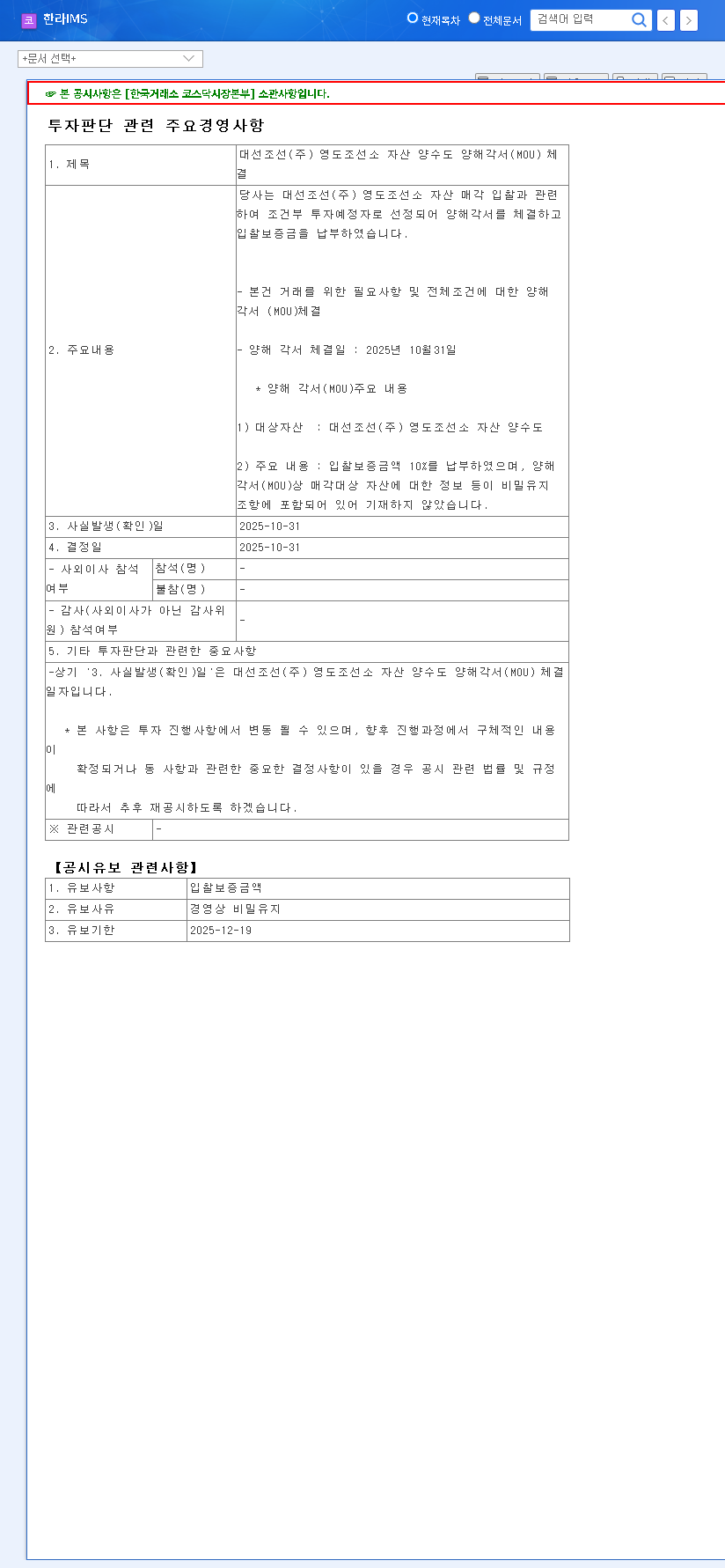
    (092460) HANLA IMS Investment Analysis: H1 2025 Growth & Daesun Shipbuilding Deal 관련 이미지
  • CCS (066790) Stock: Management Dispute Reignites, Investor Alert!

    1. What Happened?

    On July 31, 2025, CCS announced the termination of the Memorandum of Understanding (MOU) regarding the sale of its largest shareholder’s stake. The deal fell through due to the failure to lift the trading suspension, increasing the likelihood of a prolonged management dispute.

    2. Why Does It Matter?

    CCS is already facing multiple challenges, including corrections to its business report, violations of broadcasting laws, and allegations of embezzlement and breach of trust against its former largest shareholder. This MOU termination adds to the management uncertainty, potentially negatively impacting investor sentiment. A prolonged management dispute can lead to decreased management efficiency and a decline in corporate value.

    3. So, What Will Happen to the Stock Price?

    Short-term volatility is expected. Long-term, the stock price will likely depend on the direction of the management dispute, the outcome of the lawsuits, and whether CCS can improve its operating performance. Currently, CCS’s stock price is on a downward trend, but a rebound is possible if the management situation improves. However, a cautious approach to investment is necessary.

    4. What Should Investors Do?

    Before making any investment decisions, carefully consider the direction of the management dispute, the outcome of the lawsuits, the potential for improvement in operating performance, and changes in the macroeconomic environment. Minimize investment risks through additional analyses, including competitor analysis, assessment of CCS’s competitiveness, and feasibility analysis of future business strategies.

    • Key Checkpoints:
    • – Progress of the management dispute
    • – Results of related lawsuits
    • – Operating performance and financial soundness
    • – Changes in macroeconomic indicators
    Q: Why is CCS’s management dispute dragging on for so long?

    A: The resolution is complicated due to intertwined issues such as allegations of embezzlement and breach of trust against the former largest shareholder and violations of broadcasting laws. The failed stake sale makes a prolonged dispute more likely.

    Q: Is it a good time to invest in CCS stock now?

    A: CCS is currently facing high management uncertainty. Before making any investment decisions, carefully consider the management dispute, lawsuit outcomes, operating performance, and associated investment risks. This analysis is not investment advice, and investors are solely responsible for their investment decisions.

    Q: What is the outlook for CCS’s stock price?

    A: Short-term volatility is expected. The long-term stock price depends on the resolution of the management dispute, improvement in operating performance, and other factors. Prudent investment decisions are necessary.

  • KooYoung Tech’s CAR TECH Acquisition: Growth Opportunity or Hidden Risk?

    1. What is the CAR TECH Acquisition?

    On July 23, 2025, KooYoung Tech signed an MOU to acquire all shares of CAR TECH, LLC. The final acquisition price will be determined after due diligence, with a current deposit of 10 billion KRW.

    2. Why Acquire CAR TECH?

    KooYoung Tech has recently faced challenges due to declining domestic car production and the global economic downturn. The acquisition of CAR TECH is expected to increase sales, diversify business, and enhance technological capabilities. It is anticipated to supplement the sluggish existing business and expand overseas market presence.

    3. Is the Acquisition All Roses?

    • Positive Aspects: Increased sales, business diversification and synergy effects, enhanced technological capabilities.
    • Negative Aspects: Excessive acquisition price, potential post-acquisition integration failure, possibility of unforeseen issues, risks from external environmental changes (fluctuations in raw material prices/exchange rates/interest rates).

    4. What Should Investors Consider?

    While the MOU signing may have a positive short-term impact on stock prices, a long-term perspective requires careful consideration of due diligence results, acquisition price, integration success, and external environmental changes. It’s crucial to review CAR TECH’s financial status, business performance, technological capabilities, and KooYoung Tech’s financing plans and specific information on synergy effects.

    Frequently Asked Questions

    When will the CAR TECH acquisition be completed?

    The exclusive negotiation period is until November 22, 2025, and the acquisition will be completed after due diligence and final contract signing.

    What is the acquisition price?

    It will be calculated based on the net asset value of CAR TECH and adjusted after due diligence. A deposit of 10 billion KRW has been paid.

    What is the outlook for KooYoung Tech’s stock price after the acquisition?

    It may be positive in the short term, but the long-term outlook will depend on the success of the acquisition and the creation of synergy effects. Careful analysis is required before making investment decisions.