Tag: mobility

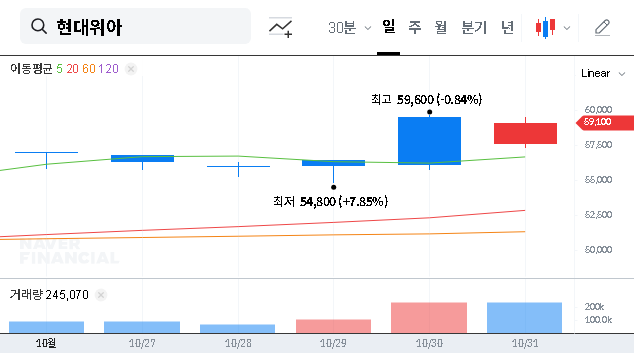
  • (011210) HYUNDAI WIA Q3 2025 Earnings Analysis: Record Revenue, Shocking Net Loss Explained

    (011210) HYUNDAI WIA Q3 2025 Earnings Analysis: Record Revenue, Shocking Net Loss Explained

    The latest HYUNDAI WIA Q3 2025 earnings report presents a complex and contradictory picture for investors. While the company delivered impressive top-line growth, with both revenue and operating profit handily beating market expectations, a significant and unexpected plunge into a net income loss has sent shockwaves through the investment community. This stark contrast between operational strength and bottom-line weakness demands a thorough investigation.

    What caused this financial paradox? Are the underlying fundamentals of Hyundai WIA strong, or does the net loss signal deeper, more systemic risks? This comprehensive Hyundai WIA earnings analysis will break down the Q3 2025 results, explore the contributing factors, and provide a strategic outlook for investors navigating this uncertainty.

    Deconstructing the HYUNDAI WIA Q3 2025 Earnings Report

    On the surface, Hyundai WIA demonstrated robust business activity. The official consolidated financial statements, which can be viewed in the company’s Official Disclosure, revealed figures that initially appeared positive. Let’s examine the key metrics against market consensus:

    • Revenue: KRW 2,151.9 billion, a solid 3.87% above analyst estimates.
    • Operating Profit: KRW 51.8 billion, a remarkable 25.42% above estimates, signaling strong operational efficiency.
    • Net Income: KRW -16.3 billion, a shocking reversal from an expected profit of KRW 86.2 billion, resulting in a -118.91% miss and a transition to loss.

    The core challenge of the HYUNDAI WIA Q3 2025 earnings is deciphering how a company with surging revenue and excellent operational control could end up with a substantial net loss. The answer lies beyond the core business operations.

    Analyzing the Discrepancy: The Good, The Bad, and The Ugly

    The Good: Factors Driving Revenue & Operating Profit

    The positive performance was not accidental. It was fueled by strong execution in key divisions. The Mobility segment, which includes core automotive components, performed well. More notably, the Special Business segment, heavily focused on defense products, saw a significant boost from increased global defense spending and successful export contracts. This diversification helped drive Hyundai WIA revenue beyond forecasts. Furthermore, the impressive operating profit margin suggests that the company’s internal cost management and efficiency initiatives are paying off, allowing it to translate higher sales into greater operational earnings.

    The Bad: Pinpointing the Net Income Loss

    The Hyundai WIA net income loss is the central mystery. Since operating profit was strong, the cause must be found in non-operating items—expenses and losses that occur outside the primary business activities. The most likely culprits include:

    • One-Off Costs: The company may have incurred significant, non-recurring charges such as asset write-downs, restructuring costs, or legal settlements.
    • Financial Expenses: Higher interest rates or losses from foreign currency exchange fluctuations could have heavily impacted the bottom line.
    • Losses from Subsidiaries: Poor performance or impairment charges related to affiliated companies, particularly the ongoing uncertainty in Russian operations, could have led to significant equity-method losses.

    Future Outlook & Investor Strategy

    The Hyundai WIA stock outlook is now at a crossroads. The market’s reaction will depend heavily on the company’s ability to clarify the nature of the net loss. If it is truly a one-time event, the strong underlying business performance could pave the way for a recovery. However, if it signals persistent issues, investor confidence may erode.

    Long-Term Growth Drivers Remain Intact

    Despite the quarterly setback, Hyundai WIA’s long-term strategy is focused on high-growth areas. The company is making significant investments in the future of mobility. Key initiatives include:

    • Electrification Components: Development and mass production of integrated coolant modules and e-axles for electric vehicles (EVs). The EV market continues to expand globally, as noted by industry experts at leading market research firms.
    • Advanced Manufacturing: Entering the market for EV component manufacturing equipment, positioning itself as a key supplier in the electrification supply chain.
    • Urban Air Mobility (UAM): Expanding into the nascent but potentially lucrative air mobility sector, showcasing a forward-thinking approach to transportation. More on this can be found in our article on Investing in Future Mobility Trends.

    Key Considerations for Investors

    Moving forward, investors should demand clarity. The company must transparently explain the specific causes of the Q3 net loss and outline concrete measures to prevent recurrence. A clear roadmap for improving profitability in the core mobility segment and managing geopolitical risks associated with its Russian operations is essential. While the long-term vision is promising, consistent execution and profitability in the present are non-negotiable for rebuilding market trust. The full HYUNDAI WIA Q3 2025 earnings report, though jarring, serves as a critical reminder that operational success must always be validated by a healthy bottom line.

    (011210) HYUNDAI WIA Q3 2025 Earnings Analysis: Record Revenue, Shocking Net Loss Explained 관련 이미지
  • (012330) Hyundai Mobis Earnings Miss in Q3 2025: A Deep Dive Analysis for Investors

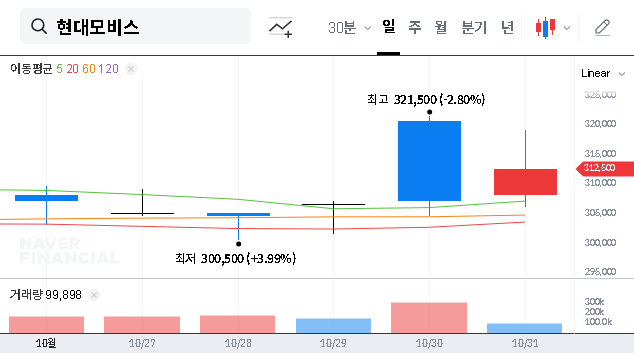
    (012330) Hyundai Mobis Earnings Miss in Q3 2025: A Deep Dive Analysis for Investors

    The latest Hyundai Mobis earnings report for Q3 2025 has sent ripples through the investment community. As a cornerstone of the global automotive supply chain, Hyundai Mobis Co., Ltd. announced provisional results that fell notably short of market consensus, particularly on profitability metrics. This performance raises critical questions for shareholders: Is this a temporary speed bump driven by market headwinds, or a sign of deeper structural issues?

    This comprehensive investor analysis unpacks the Q3 2025 results, diagnoses the core reasons behind the earnings miss, evaluates the company’s enduring strengths, and provides a strategic outlook for those monitoring Hyundai Mobis stock.

    Hyundai Mobis Q3 2025 Earnings: The Official Numbers

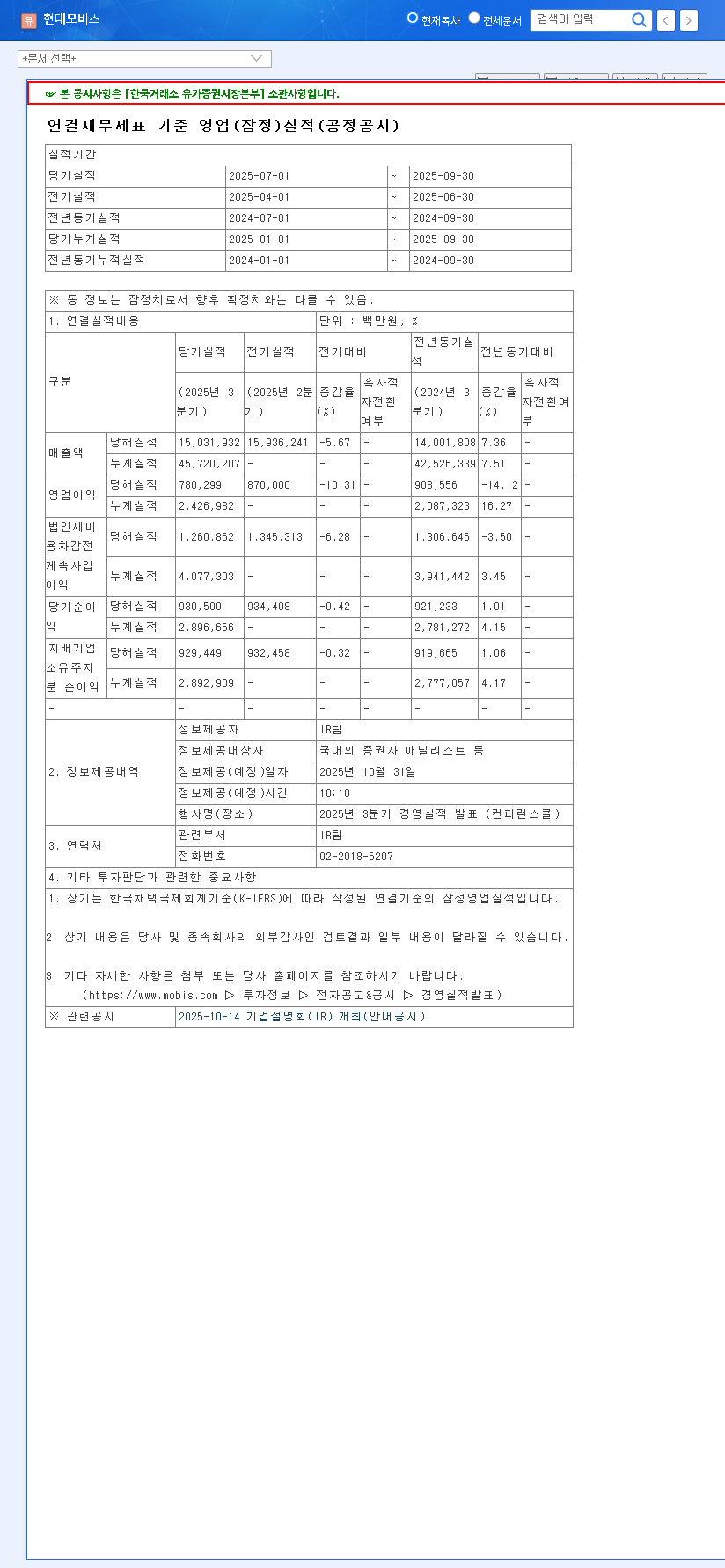
    According to the company’s provisional filing, the Hyundai Mobis Q3 2025 financial performance painted a mixed but ultimately concerning picture. While top-line revenue remained relatively close to projections, profitability saw a significant decline, signaling pressure on margins. You can view the complete report via the Official Disclosure (DART).

    Here’s a breakdown of the results compared to market estimates:

    • Sales: KRW 15,031.9 billion, which was 1.3% below the market estimate of KRW 15,227.3 billion.
    • Operating Profit: KRW 780.3 billion, a significant 9.5% below the market estimate of KRW 862.1 billion.
    • Net Profit: KRW 929.4 billion, a substantial 10.1% below the market estimate of KRW 1,033.8 billion.

    The near double-digit miss on operating and net profit is the primary concern, suggesting that cost pressures, pricing challenges, or a shift in product mix are eroding the company’s bottom line more than anticipated.

    Why Did Hyundai Mobis Underperform?

    The weaker-than-expected Hyundai Mobis earnings stem from a confluence of macroeconomic and industry-specific challenges that this premier automotive parts supplier is currently navigating.

    The EV Market Slowdown and Pricing Wars

    A key pillar of Hyundai Mobis’s growth strategy is its electrification division. However, a cooling in global EV demand, coupled with aggressive price cuts from competitors, has directly impacted profitability. This slowdown affects orders for high-value components like battery systems and electric drive units.

    The intense price competition in the EV space is not just a sales issue; it’s a margin compression crisis for the entire supply chain, and Hyundai Mobis is at the forefront of this battle.

    Adverse Macroeconomic Factors

    Several external pressures contributed to the shortfall:

    • Exchange Rate Volatility: Significant fluctuations in the USD/KRW and EUR/KRW exchange rates likely created foreign exchange losses, impacting non-operating income and, subsequently, net profit.
    • Rising Costs: Persistent volatility in raw material prices and an uptick in global logistics costs, reflected by indexes like the Baltic Dry Index, have increased the cost of goods sold, squeezing margins. For more context, you can explore market analysis on global supply chain trends.
    • High Interest Rates: A high-interest-rate environment in key markets like the US and Europe can increase corporate borrowing costs and dampen consumer demand for new vehicles.

    Strategic Outlook for Hyundai Mobis Stock

    Despite the short-term headwinds reflected in the Q3 report, the long-term thesis for Hyundai Mobis stock hinges on its ability to leverage its fundamental strengths. The company’s stable revenue from its core module assembly and after-sales parts business, particularly for Hyundai and Kia, provides a solid foundation. Furthermore, its continued investment in future mobility—autonomous driving, connectivity, and electrification—is crucial for long-term growth. To understand the broader sector, consider our guide to investing in automotive technology.

    The Bear Case: Short-Term Risks

    The market’s reaction to the Hyundai Mobis earnings miss will likely be negative in the short term. Key risks include continued margin pressure from the EV price war, ongoing macroeconomic uncertainty, and a delayed return on significant R&D investments. A failure to diversify its customer base beyond Hyundai Motor Group could also be perceived as a concentration risk.

    The Bull Case: Long-Term Potential

    The upside potential is significant. A rebound in the global EV market, securing major orders from non-affiliated global automakers, or a breakthrough in its autonomous driving technology could serve as powerful catalysts. The company’s sound financial health and extensive global network provide the resilience needed to weather current storms and capitalize on future opportunities.

    Frequently Asked Questions (FAQ)

    Q1: What were the key takeaways from the Hyundai Mobis Q3 2025 earnings?

    A1: The main takeaway is that while sales were only slightly off, profitability (operating and net profit) missed market expectations by nearly 10%. This points to significant margin pressure from a tough EV market, rising costs, and currency fluctuations.

    Q2: How does the EV market slowdown affect Hyundai Mobis?

    A2: As a major supplier of electrification components, a slowdown in EV sales directly reduces demand for its high-value products. Intense price competition in the EV sector further forces Hyundai Mobis to lower its prices, squeezing the profitability of its electrification division.

    Q3: What is the current investment recommendation for Hyundai Mobis stock?

    A3: The prevailing sentiment is a cautious ‘Hold’ or ‘Watch’. The recent earnings miss will likely create short-term downward pressure on the stock price. Investors should watch for signs of a recovery in the EV market and progress in the company’s diversification efforts before making new commitments.

    (012330) Hyundai Mobis Earnings Miss in Q3 2025: A Deep Dive Analysis for Investors 관련 이미지
  • (204320) HL Mando Q3 2025 Earnings Call: An In-Depth Investment Analysis for Future Mobility

    (204320) HL Mando Q3 2025 Earnings Call: An In-Depth Investment Analysis for Future Mobility

    The upcoming HL Mando Q3 2025 earnings call represents a pivotal moment for investors monitoring the dynamic future mobility sector. As a key player in the global automotive parts industry, HL Mando is at the forefront of innovation, and its quarterly performance provides a critical barometer for the health of the industry and the viability of its long-term strategy. This in-depth analysis will dissect the fundamentals, market expectations, and key factors investors should watch ahead of the announcement, providing a comprehensive guide for informed decision-making.

    We’ll explore the company’s financial stability, its technological advancements through subsidiary HL Klemove, and the potential risks and rewards that could influence HL Mando’s stock price post-announcement. Whether you’re a current shareholder or considering an investment, this deep dive will equip you with the essential insights needed to navigate the road ahead.

    Event Details: HL Mando Q3 2025 Earnings Call

    HL Mando CO.,LTD has officially scheduled its Investor Relations (IR) presentation to announce its Q3 2025 business results and provide crucial updates on key management affairs. This session is a vital opportunity for stakeholders to gain direct insight into the company’s performance and strategic direction.

    • Company: HL Mando CO.,LTD
    • Event: Q3 2025 Business Results Announcement & IR Session
    • Date & Time: October 30, 2025, 17:00 (KST)
    • Source: Official Disclosure (DART)

    Fundamental Analysis: The Engine of Future Mobility

    HL Mando’s investment case is built on a dual foundation: stable performance in its traditional automotive parts business and aggressive investment in next-generation technologies. The company is strategically positioning itself to not just survive, but lead the industry’s transition towards electrification and autonomous driving. This proactive stance is crucial in a market experiencing rapid technological disruption, as covered by leading financial news outlets like Reuters’ automotive section.

    Technological Edge via HL Klemove

    The subsidiary HL Klemove is the spearhead of Mando’s innovation. It focuses on core technologies that are becoming standard in modern vehicles:

    • ADAS (Advanced Driver-Assistance Systems): The building blocks of autonomous driving, including cameras, radar, and LiDAR sensors.
    • EMB (Electro-Mechanical Brake): A critical component for electric and hybrid vehicles, offering faster response and energy regeneration capabilities.
    • SbW (Steer-by-Wire): A system that replaces the mechanical steering linkage with electronic controls, enabling advanced autonomous features and vehicle design flexibility.

    Financial Health and Risk Assessment

    While pursuing aggressive R&D, HL Mando maintains a relatively stable capital structure. The company’s debt-to-equity ratio has seen an increase, but it remains within a manageable range, a common characteristic of companies in a heavy investment cycle. A key area to watch in the Q3 report will be operating cash flow, which has previously seen decreases due to significant investment outflows. Investors will be keen to see if these investments are beginning to translate into higher-margin revenue streams. However, several risks loom, including currency fluctuations, geopolitical tensions impacting supply chains, and the substantial fixed cost burden associated with advanced manufacturing.

    For a successful HL Mando investment, one must balance the company’s clear long-term growth potential in future mobility with the macroeconomic headwinds and short-term volatility inherent in the automotive sector.

    Potential Stock Impact from the Q3 Earnings Call

    The Q3 2025 earnings call will be a significant catalyst for HL Mando’s stock price. Investor sentiment will be shaped by both the reported numbers and the forward-looking guidance provided by management. Here’s a breakdown of potential positive and negative drivers.

    The Bull Case: What Could Drive the Stock Up?

    • Earnings Beat: Revenue and profit figures that exceed analyst expectations would be a clear positive signal.
    • Strong Future Mobility Growth: Tangible results, such as a significant increase in orders for ADAS sensors or SbW systems, would validate the investment strategy.
    • New Major OEM Contracts: Securing new long-term contracts with global automakers provides revenue visibility and de-risks future growth.
    • Positive Outlook: Confident guidance for Q4 and 2026, despite macroeconomic uncertainty, would reinforce the company’s growth narrative.

    The Bear Case: Potential Headwinds to Consider

    • Underperforming Results: A miss on revenue or a contraction in operating margins could spook investors.
    • Macroeconomic Concerns: Cautious commentary on global demand, supply chain issues, or the impact of inflation on raw material costs.
    • Delayed R&D Payoff: A lack of visible progress or new orders from the future mobility division despite high investment levels.
    • Increased Competition: Concerns about losing market share to traditional rivals or new entrants from the tech sector. For more on this, see our deep dive into the ADAS market.

    Investor Strategy & Key Monitoring Points

    Given the mix of strong long-term potential and short-term risks, a cautious but optimistic approach is warranted. The HL Mando Q3 2025 earnings call will be a critical data point. Investors should look beyond the headline numbers and focus on the details. Pay close attention to management’s tone and their strategic plans for navigating the complex global landscape. The key is to determine if the company’s execution matches its ambitious vision for the future of mobility.

  • Kia’s Overseas IR: Analyzing EV Growth Momentum and Investment Strategies


    Kia's Overseas IR: Analyzing EV Growth Momentum and Investment Strategies 대표 차트 이미지


    Kia’s Overseas IR: What’s it all about?

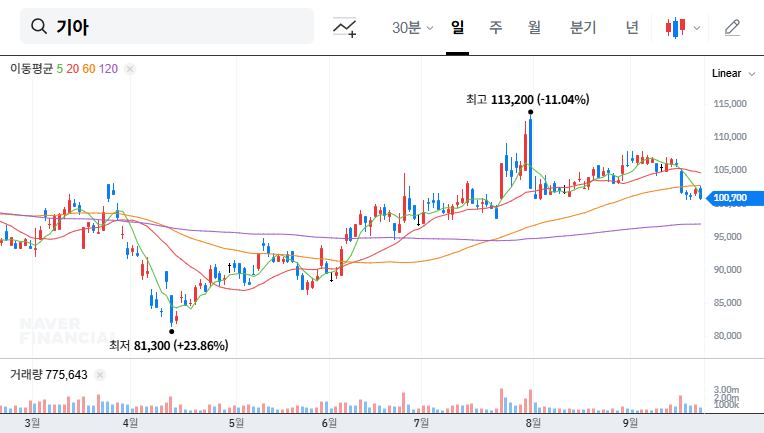
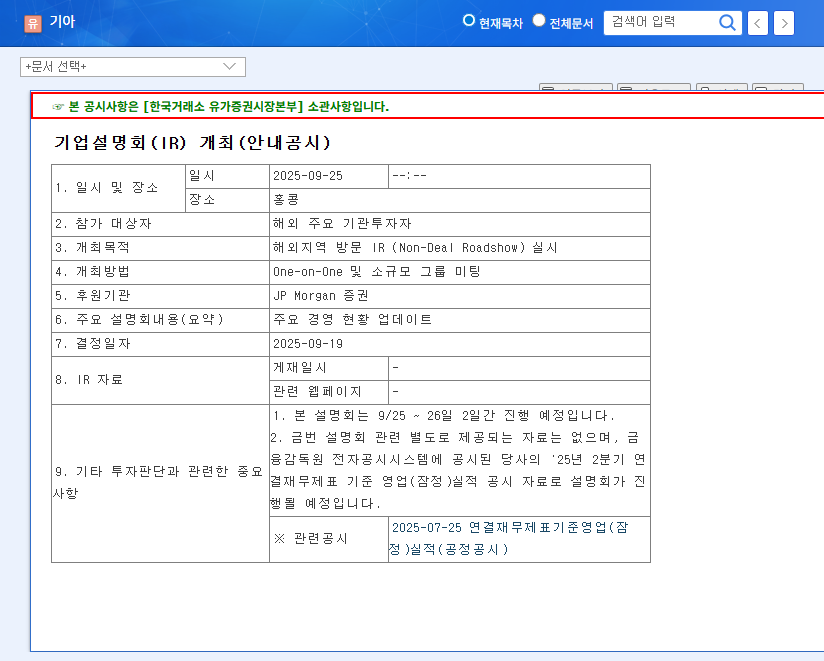
    Kia will hold a Non-Deal Roadshow for key overseas investors on September 25, 2025. The focus of this IR is not merely on attracting investment, but on enhancing corporate value and strengthening communication with investors by sharing management’s latest business status and future strategies.

    Kia’s Current Status and Future Strategies

    Kia recorded consolidated revenue of KRW 57.3671 trillion (a 6.7% YoY increase) and operating profit of KRW 5.7733 trillion (an 18.3% YoY decrease) in the first half of 2025. The revenue growth was driven by strong sales of eco-friendly vehicles in advanced markets and increased ASP due to enhanced product competitiveness. The decline in operating profit is attributed to factors such as tariffs imposed in the US market. Kia has also demonstrated success in its electrification strategy, achieving the top market share in the domestic EV market and successfully launching the EV3 in Europe. Its financial soundness is solid with a debt-to-equity ratio of 64.58%.

    External Factors to Consider for Investment

    The macroeconomic environment can impact Kia’s performance. A 10% fluctuation in the current EUR/KRW and USD/KRW exchange rates is estimated to have an impact of approximately KRW 73.7 billion on profit before corporate income tax. Investors should also closely monitor fluctuations in US and European interest rates, international oil prices, and rising raw material prices.

    What does Kia’s IR mean for investors?

    This IR presents a crucial opportunity to gain insights into Kia’s growth strategies and future vision. Investors should pay attention to the specific implementation plans for the electrification strategy, the new car launch roadmap, and strategies to address macroeconomic variables. A successful IR can boost investor confidence and positively impact stock prices. However, market evaluation of the IR results and competitor trends should also be considered.

    Key Action Plan for Investors

    • Carefully review IR materials and management presentations.
    • Monitor trends in macroeconomic indicators.
    • Analyze competitors’ IR activities and market reactions.
    • Develop an investment strategy with a long-term perspective.


    FAQ

    What are Kia’s main electric vehicle models?

    The EV6, EV9, and Niro EV are some of Kia’s key electric vehicle models.

    What is Kia’s overseas market entry strategy?

    Kia is expanding its eco-friendly vehicle sales, primarily in advanced markets, and increasing market share through region-specific strategies.

    What is Kia’s future dividend policy?

    Details on the dividend policy can be found in the IR materials.


    Kia's Overseas IR: Analyzing EV Growth Momentum and Investment Strategies 관련 이미지


  • Samhyun Announces KRW 3 Billion Share Buyback: Impact on Stock Price and Investment Strategy

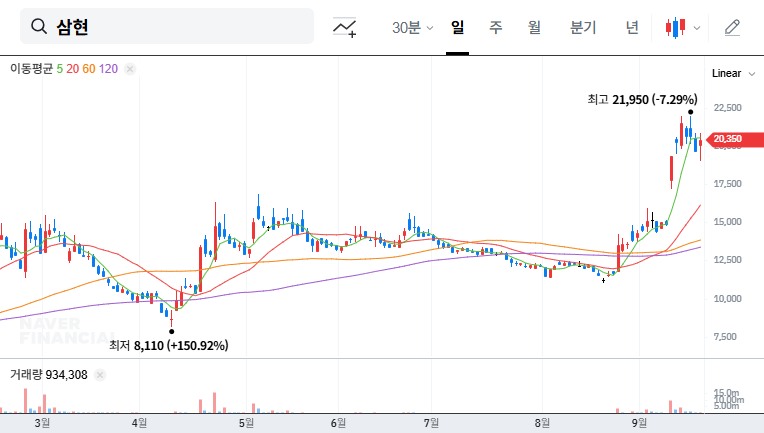
    Samhyun Announces KRW 3 Billion Share Buyback: Impact on Stock Price and Investment Strategy 대표 차트 이미지

    1. Samhyun’s Share Buyback: What Happened?

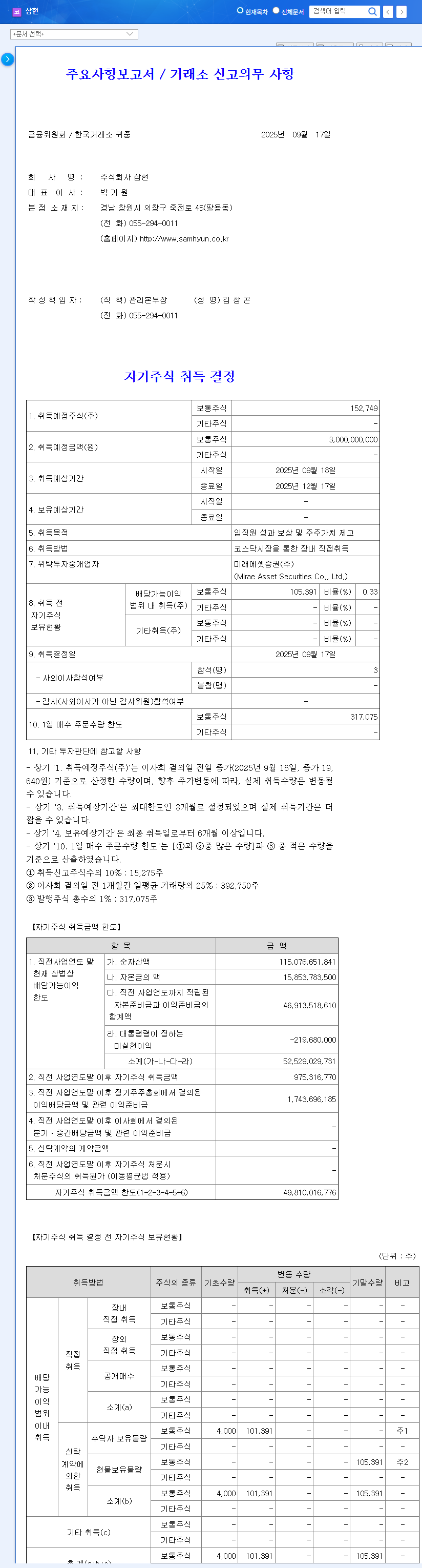
    On September 17, 2025, Samhyun announced its decision to repurchase 152,749 common shares (0.48% of total market capitalization) for approximately KRW 3 billion through open market purchases. The stated purpose is employee performance compensation and shareholder value enhancement.

    2. Why the Buyback?: Rationale and Implications

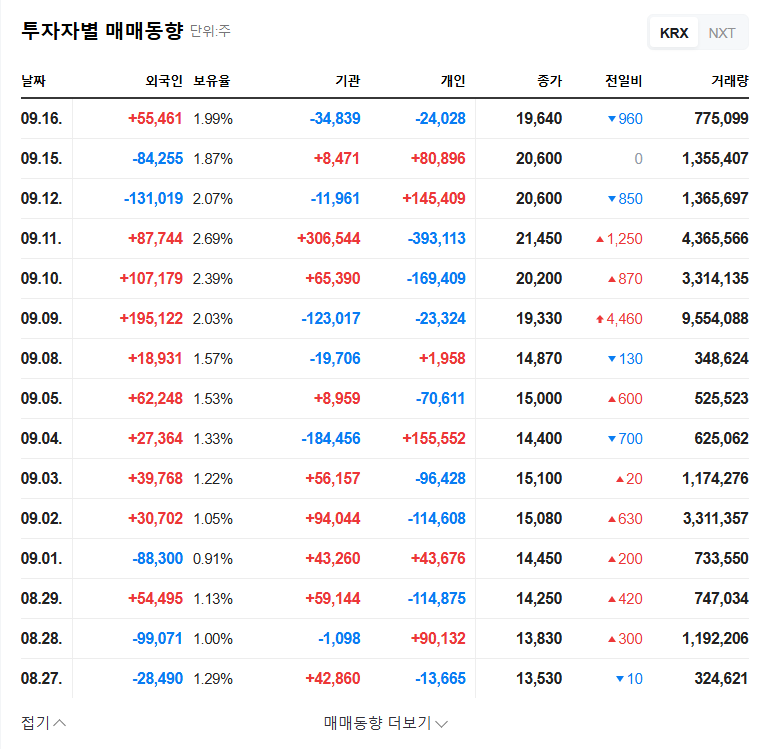
    Share buybacks can increase earnings per share by reducing the number of outstanding shares and may have a positive impact on stock price. It can also signal management’s confidence in the company’s future, potentially improving investor sentiment. Given Samhyun’s recent stock price volatility, this move could provide stability to the market.

    3. Samhyun’s Fundamentals: Unveiling Hidden Opportunities

    • Core Business: Providing ‘3-in-1 Solutions’ (integrated motor, controller, and reducer) applicable to various industries including automotive, defense, and robotics.
    • Growth Drivers: Expansion into future mobility sectors such as robotics, electric ships, and AAM.
    • Technological Prowess: First domestic producer of DCT motors, first global mass production of CVVD products, and A-SPICE CL2 certification.
    • Financial Status: Decline in revenue in the first half of 2025 and increasing debt. However, the growing proportion of defense/research institute sales is a positive sign.

    4. Market Reaction: Expert Analysis

    Concrete market expectations from analyst reports are yet to be seen. However, share buybacks generally act as a short-term positive catalyst for stock prices.

    5. Investor Action Plan: Should You Invest in Samhyun Now?

    While the share buyback is a positive signal, investment decisions require careful consideration. Existing holders may maintain a ‘hold’ position, while new investors should adopt a ‘wait-and-see’ approach, closely monitoring the company’s future performance and business strategies.

    What is the size of Samhyun’s share buyback?

    Approximately KRW 3 billion, representing 152,749 common shares (0.48% of the total market capitalization).

    What is the purpose of the share buyback?

    Employee performance compensation and enhancement of shareholder value.

    What is Samhyun’s main business?

    Samhyun provides ‘3-in-1 Solutions,’ integrating motors, controllers, and reducers for the automotive, defense, and robotics industries.

    Samhyun Announces KRW 3 Billion Share Buyback: Impact on Stock Price and Investment Strategy 관련 이미지
    Samhyun Announces KRW 3 Billion Share Buyback: Impact on Stock Price and Investment Strategy 관련 이미지
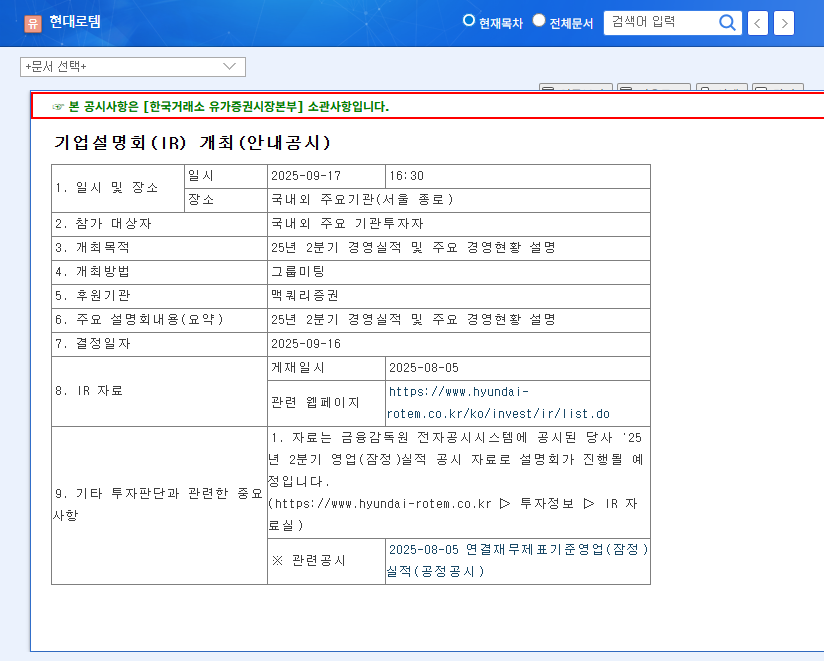
  • Hyundai Rotem’s Q2 Earnings and Future Strategy: What to Expect from the Upcoming IR?


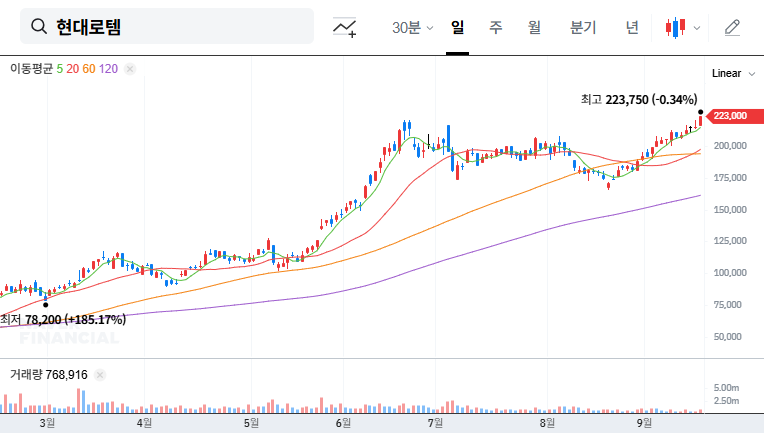
    Hyundai Rotem's Q2 Earnings and Future Strategy: What to Expect from the Upcoming IR? 대표 차트 이미지


    Hyundai Rotem’s Q2 Earnings and Future Strategy Unveiled

    Hyundai Rotem’s investor relations meeting on September 17th will be a pivotal event, unveiling the company’s Q2 2025 earnings and key management updates. Market attention is focused on the company’s performance following a remarkable first half and its strategic direction for future growth.

    Key Business Sectors: Will Growth Continue in Q2?

    • Defense Solutions: Continued growth is anticipated, driven by strong K2 tank exports and expansion of the wheeled armored vehicle business. Expansion into North American markets is a key area to watch.

    • Rail Solutions: Stable growth is expected, supported by major projects like the GTX line and the Uzbekistan high-speed rail project, alongside advancements in eco-friendly mobility solutions like hydrogen trams.

    • Eco Plant: While the first half saw a slight dip, focus remains on the growth potential of hydrogen infrastructure and smart logistics systems.

    How Will the IR Impact Hyundai Rotem’s Stock Price?

    • Positive Catalysts: Strong Q2 earnings, increased overseas defense orders, and concrete progress in hydrogen mobility could drive positive momentum for the stock price.

    • Downside Risks: Unexpectedly weak earnings, mention of business risks, or increased macroeconomic uncertainty could negatively impact the stock price.

    Action Plan for Investors

    • Carefully analyze the information presented during the IR. Positive signals may warrant consideration of additional investment.

    • Identify and assess potential risk factors and formulate a risk management plan.

    • Consider a long-term investment strategy, taking into account the company’s long-term growth potential.


    Frequently Asked Questions

    What are Hyundai Rotem’s main business segments?

    Hyundai Rotem operates three main business segments: Defense Solutions, Rail Solutions, and Eco Plant.

    What are the key takeaways to look for in this IR?

    Investors should focus on Q2 earnings, overseas defense orders, hydrogen mobility progress, and the company’s strategy to navigate global economic changes.

    What are some key risks to consider when investing in Hyundai Rotem?

    Potential risks include macroeconomic fluctuations, volatility in raw material prices, and delays in market penetration for new businesses.


    Hyundai Rotem's Q2 Earnings and Future Strategy: What to Expect from the Upcoming IR? 관련 이미지
    Hyundai Rotem's Q2 Earnings and Future Strategy: What to Expect from the Upcoming IR? 관련 이미지


  • Kia Stock Forecast: Analyzing the Opportunities and Risks Behind the Block Deal (September 2025)


    1. What Happened? Kia Experiences a Large Block Deal

    On September 15, 2025, Kia recorded a large block deal of 463,750 shares, amounting to approximately 47.2 billion KRW. This transaction, the largest by a single investor that day, could significantly influence the future stock price trend.

    2. Why? Understanding the Context Through Earnings and Market Analysis

    In the first half of 2025, Kia continued its revenue growth with increased HEV/EV sales and higher average selling prices (ASP). However, profitability slowed due to factors such as tariffs imposed in the US market. Global economic slowdown, geopolitical risks, and high interest rates are also adding to the uncertainties. While the growth of the eco-friendly car market presents an opportunity for Kia, fluctuations in exchange rates and raw material prices pose ongoing risks.

    3. So What? Stock Forecast and Investment Strategy

    The large block deal has focused market attention and may signal the future direction of the stock price. Recent net selling by foreign investors could cause short-term supply and demand instability, but further observation is needed to determine its impact on the company’s fundamentals. Kia is expected to maintain its growth momentum in the eco-friendly car market while navigating external variables, backed by its stable financial structure.

    4. Action Plan for Investors

    • Risk Management: Continuously monitor key risk factors, including US tariff policies, exchange rate fluctuations, and rising raw material prices.
    • Opportunity Capture: Consider investment strategies that leverage positive momentum, such as strong HEV/EV sales, new car launches, and expansion of future mobility businesses.
    • Information Gathering: Consistently collect and analyze relevant information, including foreign investment trends, exchange rate and raw material price fluctuations, and sales performance in major markets, to inform investment decisions.


    Frequently Asked Questions (FAQ)

    What does a large block deal signify?

    A large block deal refers to a substantial trade of shares outside of regular trading hours. It can reflect the intentions of specific investors and may be interpreted as a significant signal for future stock price movements.

    What are Kia’s future growth drivers?

    Kia is securing future growth drivers through the expansion of the eco-friendly car market and investments in new businesses. In particular, the strengthening of the EV lineup and development of autonomous driving technology are expected to contribute to enhancing long-term competitiveness.

    What should investors be aware of?

    Investors should consider external risk factors such as US tariff policies, exchange rate volatility, and rising raw material prices. It is also essential to closely monitor foreign investment trends and changes in the market environment to adjust investment strategies accordingly.


  • Kia’s September IR: Deep Dive into ESG Performance, Mobility Strategy, and Investment Outlook


    Kia's September IR: Deep Dive into ESG Performance, Mobility Strategy, and Investment Outlook 대표 차트 이미지


    1. Kia’s September IR: What to Expect

    This IR, taking place overseas, will focus on ESG performance and roadmap, H1 2025 earnings updates, and H2 business strategies. Expect detailed information on Kia’s transition to electric vehicles, strong RV and eco-friendly car sales, and future technology development.

    2. Kia’s H1 2025 Performance: Why It Matters

    • Positives: Solid revenue growth (6.7% increase), maintained double-digit operating profit margin (10.1%), strong RV and eco-friendly car sales, expanded global production capacity, increased R&D investment.
    • Negatives: Decrease in operating profit compared to the same period last year (18.3% decrease), low Mexico plant utilization rate, decline in China market share, exchange rate fluctuation risks, new business investment risks.

    H1 performance is a critical indicator of potential growth in the second half and beyond. Consider both positive and negative factors comprehensively for informed investment decisions.

    3. Key IR Takeaways and Investment Strategy: What to Do

    • ESG Management: Concrete achievements and a clear roadmap are expected to enhance investment attractiveness. Pay attention to carbon emission reduction and sustainable supply chain management.
    • Management Updates: Statements regarding strategies for the struggling China market, expansion into emerging markets beyond the US, and concretization of PBV and future mobility businesses will significantly impact investor sentiment.
    • Overseas IR: This presents an opportunity to build trust with global investors and attract further investment.

    4. Investor Action Plan

    Kia’s solid fundamentals and future growth drivers enhance its investment appeal. However, uncertainties remain, including intensifying competition in the China market and geopolitical risks. Carefully analyze the IR announcements, assess the company’s strategic direction and risk management capabilities, and make prudent investment decisions.


    FAQ

    How is Kia performing in terms of ESG?

    Kia is strengthening its eco-friendly management, focusing on its transition to electric vehicles. They have set specific targets for carbon emission reduction and sustainable supply chain management. Detailed achievements and roadmap will be revealed during the IR.

    What is Kia’s strategy for the China market?

    Kia’s market share in China is declining due to intensifying competition in the EV market. The IR is expected to provide a detailed explanation of their strategy to address this challenge.

    Should I invest in Kia?

    Kia possesses strong fundamentals and future growth drivers, but risks such as intensifying competition in the China market exist. Analyzing the IR announcements and making careful investment decisions is recommended.


    Kia's September IR: Deep Dive into ESG Performance, Mobility Strategy, and Investment Outlook 관련 이미지


  • Hyundai Motor IR: Investment Opportunity? Fact Check and Future Outlook Analysis

    Hyundai Motor IR: Investment Opportunity? Fact Check and Future Outlook Analysis 대표 차트 이미지

    1. The IR Event: What’s on the Agenda?

    Hyundai Motor will share its vision and strategies with investors at its IR on September 3, 2025. Key areas of interest include its future mobility strategy, focusing on electrification, hydrogen business, SDV transition, and its response to the global economic slowdown.

    2. Positive vs. Negative: The Two Sides of the IR Coin

    • Positive Impacts: Increased investor understanding, clear future strategies, and reduced uncertainty can improve investor sentiment and potentially boost the stock price.
    • Potential Risks: Failing to meet expectations, worsening macroeconomic conditions, and intensifying competition could negatively impact the stock price.

    3. Key Analysis: What Does Hyundai’s Future Hold?

    Hyundai Motor demonstrates positive fundamentals, including robust global sales and increased investment in future mobility. However, the global economic slowdown and intensifying competition pose risks. The key factor will be how convincingly Hyundai presents its strategies for addressing these challenges at the IR.

    4. Action Plan for Investors

    Investors should carefully analyze the IR announcements and continuously monitor changes in the market environment. It’s crucial to make investment decisions based on a long-term perspective rather than short-term market reactions. Maintain a ‘wait-and-see positive’ stance and make investment decisions based on a comprehensive consideration of the IR announcements and market response.

    Frequently Asked Questions

    How will Hyundai’s stock price react after the IR?

    The stock price may fluctuate depending on the IR announcements and market reaction. Positive news and favorable market sentiment could lead to a price increase, while the opposite scenario could result in a price decline.

    Is it a good time to invest in Hyundai now?

    Investment decisions should always be made carefully. Consider the IR announcements, market conditions, and other relevant factors before making a decision. Refer to the ‘Action Plan for Investors’ section in the article.

    What are Hyundai’s future growth drivers?

    Hyundai’s key growth drivers are future mobility areas such as electrification, hydrogen business, and SDV transition. Concrete strategies and investment plans for these sectors are expected to be announced at the IR.

    Hyundai Motor IR: Investment Opportunity? Fact Check and Future Outlook Analysis 관련 이미지
    Hyundai Motor IR: Investment Opportunity? Fact Check and Future Outlook Analysis 관련 이미지
  • Hyundai Mobis Q2 2025 Earnings: A Strong Foundation for Future Growth?

    Hyundai Mobis Q2 2025 Earnings: A Strong Foundation for Future Growth? 대표 차트 이미지

    What Happened?

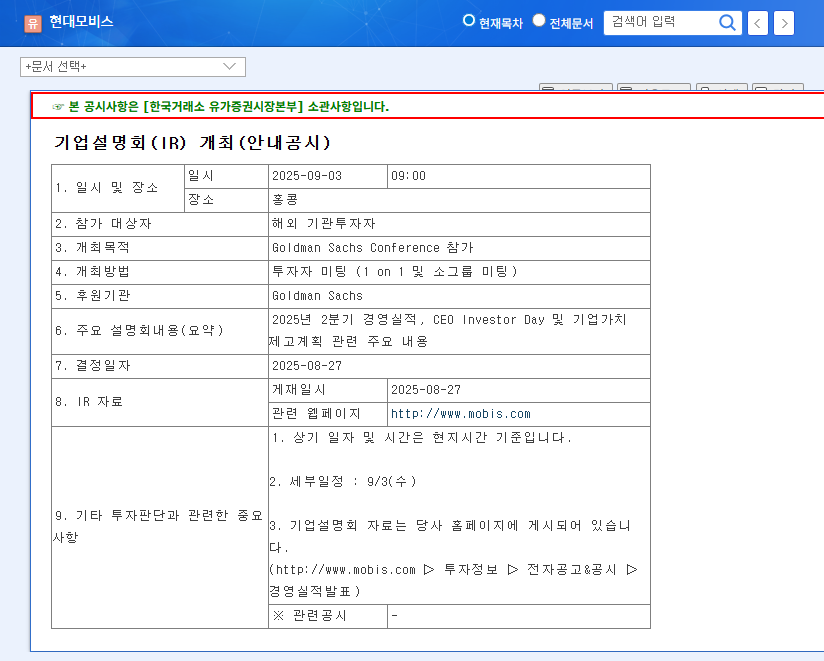
    Hyundai Mobis will host an IR presentation at the Goldman Sachs Conference on September 3, 2025, announcing its Q2 2025 earnings and future growth strategies. The ‘corporate value enhancement plan’ announcement is expected to significantly impact the stock price.

    Why Does It Matter?

    This IR goes beyond a simple earnings announcement; it’s a platform for Hyundai Mobis to present its future vision. Strategies for strengthening competitiveness in the future mobility market, including autonomous driving and electrification, along with shareholder-friendly policies, can boost investor confidence and act as a catalyst for stock price increases.

    What’s the Likely Outcome?

    • Strong Performance: Hyundai Mobis reported strong H1 2025 results with revenue of KRW 30.68 trillion (up 7.6%) and operating profit of KRW 1.64 trillion (up 39.7%).
    • Future Growth Drivers: Increased investment in future mobility technologies such as autonomous driving and electrification, coupled with the operation of a new North American plant, secures long-term growth potential.
    • Shareholder Value Enhancement: The possibility of strengthened shareholder return policies, including share buybacks, is high, which can positively impact the stock price.

    What Should Investors Do?

    Investors should carefully review the announcements from the IR and reassess Hyundai Mobis’ future growth potential and investment value. Pay close attention to future mobility business strategies, shareholder return policies, and global market response strategies when making investment decisions. Given the positive outlook, close to a ‘Strong Buy’ recommendation, an active investment strategy is worth considering.

    Frequently Asked Questions

    What are Hyundai Mobis’ main businesses?

    Hyundai Mobis focuses on manufacturing automotive modules and parts, and supplying A/S parts. The revenue proportions are 78.5% and 21.5%, respectively.

    What are the key takeaways from this IR?

    The key points to watch are the Q2 earnings announcement, future mobility business investment plans, and corporate value enhancement plans (including shareholder return policies).

    What is the investment outlook for Hyundai Mobis?

    Based on strong performance and future growth potential, a positive investment outlook is maintained. The announcements from this IR are likely to further strengthen the momentum for stock price appreciation.

    Hyundai Mobis Q2 2025 Earnings: A Strong Foundation for Future Growth? 관련 이미지