Tag: Microneedle

  • T&L Announces ₩10B Stock Buyback: A Sign of Rebound?


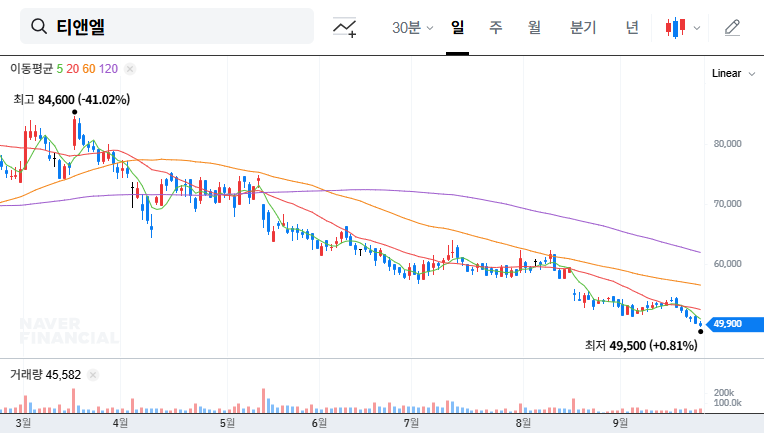
    T&L Announces ₩10B Stock Buyback: A Sign of Rebound? 대표 차트 이미지


    1. What Happened? : Stock Buyback Announcement

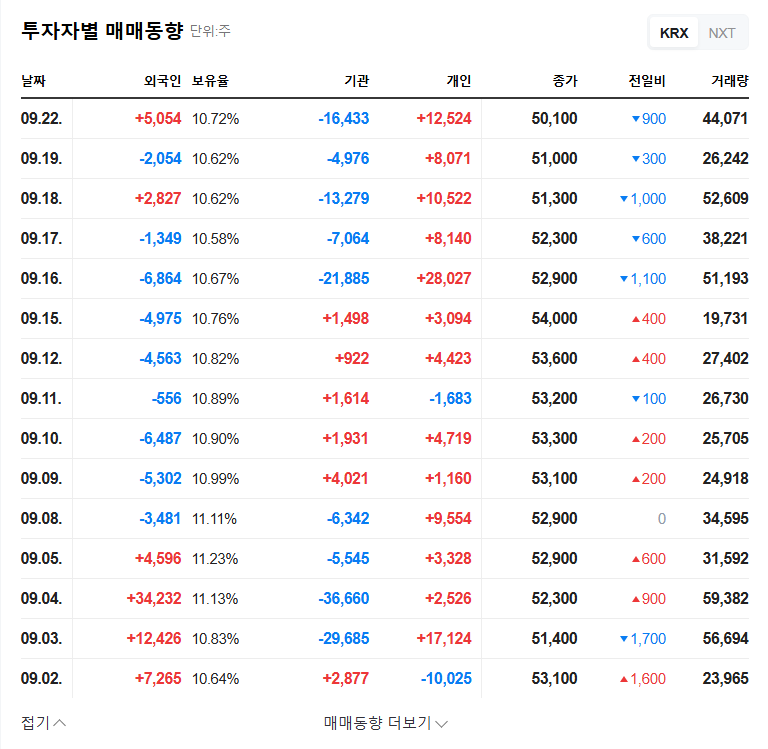
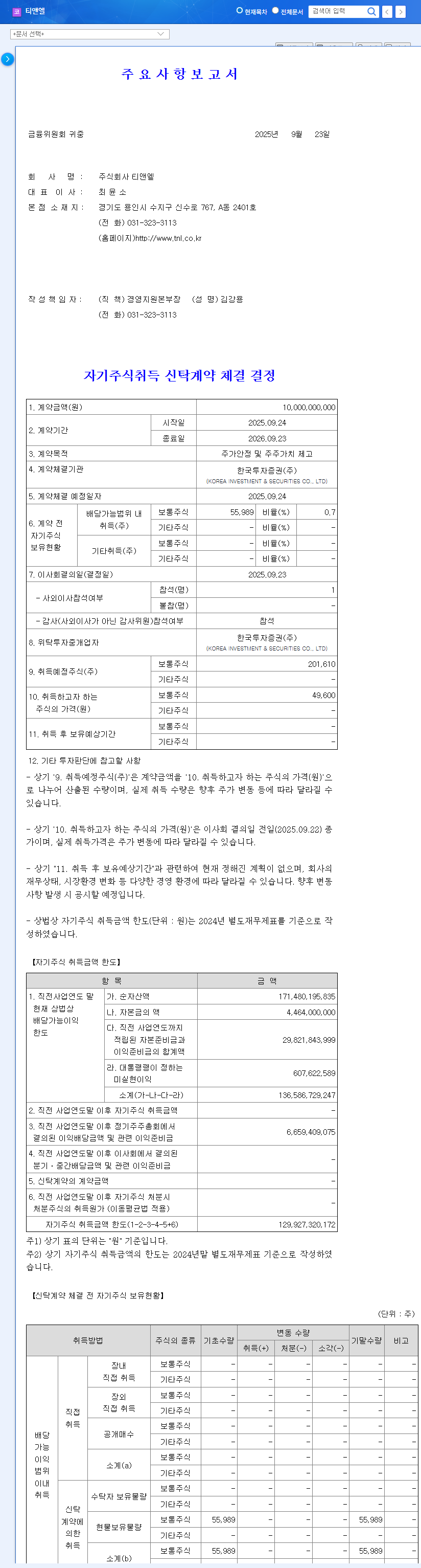
    T&L announced on September 23, 2025, a ₩10 billion stock buyback program through a trust agreement. This represents 2.46% of total outstanding shares and will be executed through Korea Investment & Securities from September 24, 2025, to September 23, 2026. The official objective is to stabilize stock prices and enhance shareholder value.

    2. Why the Buyback? : Background and Positive Impacts

    • Stock Price Defense: A defensive strategy against the recent stock price decline, aiming to establish downside rigidity through the buyback.
    • Enhancing Shareholder Value: Reducing the number of outstanding shares can increase earnings per share (EPS) and book value per share (BPS), providing tangible benefits to shareholders.
    • Demonstrating Confidence in New Business: It can be interpreted as a signal of confidence in future growth, particularly with the new microneedle patch business venture.

    3. What’s Next? : Analyzing Positive/Negative Scenarios

    • Positive Scenario: The buyback stabilizes the stock price, and as new business performance becomes visible, investor sentiment improves, leading to potential stock price appreciation.
    • Negative Scenario: The buyback’s effect is short-lived, and without improved earnings, the stock price could decline again. The ₩10 billion investment’s potential negative impact on future R&D and facility investment should also be considered.

    4. What Should Investors Do? : Action Plan

    While the buyback might positively impact the stock price in the short term, mid-to-long-term investment decisions should be made after carefully observing new business performance and earnings improvement. Investors should continuously monitor T&L’s financial soundness and new business strategy to determine the appropriate investment timing.


    FAQ

    What is the size of T&L’s stock buyback?

    ₩10 billion, which represents 2.46% of total outstanding shares.

    What is the buyback period?

    From September 24, 2025, to September 23, 2026 – one year.

    What is the purpose of the buyback?

    To stabilize the stock price and enhance shareholder value.

    What is T&L’s new business?

    Developing pharmaceuticals using microneedle patch technology.

    What should investors be aware of?

    The buyback’s effects may be short-lived, and earnings improvements need to be confirmed.


    T&L Announces ₩10B Stock Buyback: A Sign of Rebound? 관련 이미지
    T&L Announces ₩10B Stock Buyback: A Sign of Rebound? 관련 이미지


  • BIO-FD&C Stock Gift Announcement: What Does it Mean for Investors?

    BIO-FD&C Stock Gift Announcement: What Does it Mean for Investors? 대표 차트 이미지

    1. What Happened?

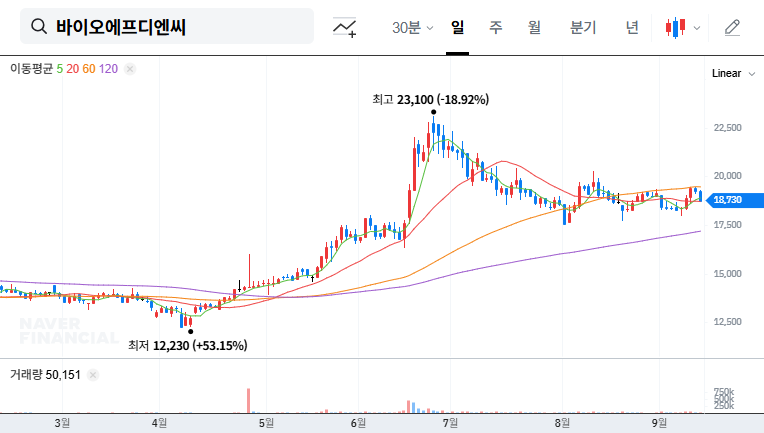
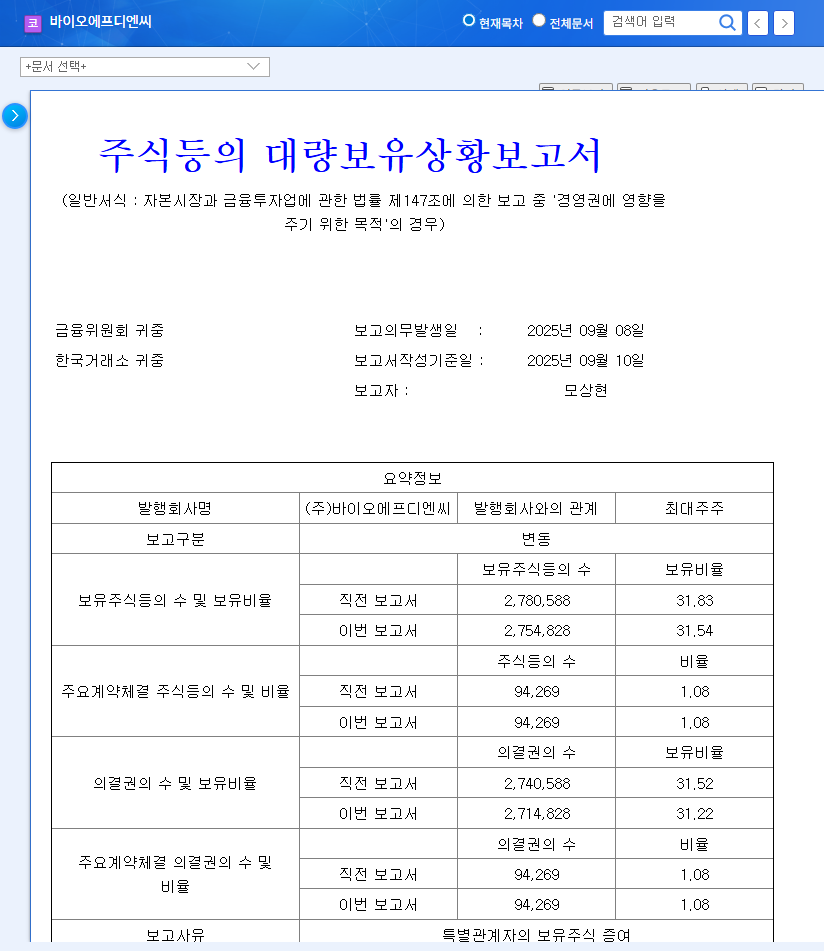
    A stock gift of 25,760 shares occurred between related parties of BIO-FD&C’s largest shareholder, resulting in a slight decrease in the majority shareholder’s stake from 31.83% to 31.54%.

    2. Why Does it Matter?

    Changes in ownership stakes can indicate potential shifts in management control, making it crucial information for investors. However, this transfer occurred between related parties and is not significant enough to impact management control. It could even be interpreted positively as contributing to long-term management stability.

    3. What’s the Impact?

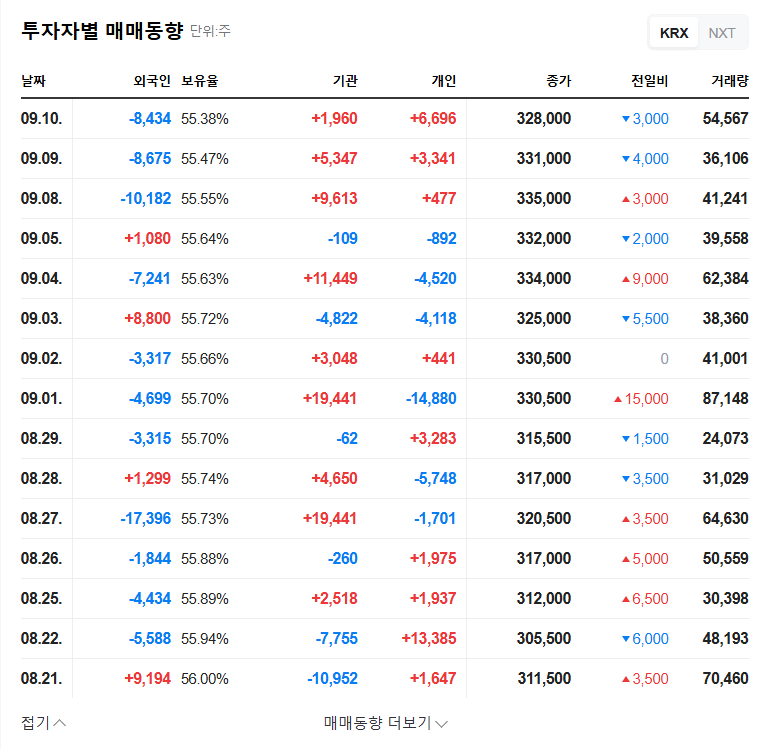
    Stock Price: The impact on the stock price in the short term is expected to be minimal. Minor stake changes are unlikely to cause significant market volatility.
    Fundamentals: BIO-FD&C maintains solid fundamentals. The growth of its effective substance business, based on plant cell platform technology, and the potential of new businesses like microneedle patches are positive indicators. Excellent financial health and continuous R&D investment support long-term growth.
    External Environment: Continuous monitoring of the impact of macroeconomic changes, such as fluctuations in exchange rates and interest rates, is necessary.

    4. What Should Investors Do?

    • • Continuously monitor future changes in major shareholders’ stakes and related disclosures.
    • • Carefully observe the commercialization and performance of new businesses (e.g., microneedle patches).
    • • Analyze the impact of macroeconomic indicator fluctuations on BIO-FD&C.
    Q: What is the impact of this stock gift on BIO-FD&C’s stock price?

    A: As this gift was between related parties and the change in ownership is small, the short-term impact on the stock price is expected to be limited.

    Q: What is the outlook for BIO-FD&C?

    A: Positive growth is expected based on solid fundamentals, promising new businesses, and a stable financial structure. The plant cell platform technology and microneedle patch business are particularly noteworthy.

    BIO-FD&C Stock Gift Announcement: What Does it Mean for Investors? 관련 이미지
    BIO-FD&C Stock Gift Announcement: What Does it Mean for Investors? 관련 이미지
  • Raphas (214260) Analysis: Steady Sales Growth, but Profitability Remains a Challenge

    1. What Happened?

    On August 18, 2025, Raphas issued a correction to its business report, rectifying an omission in the ‘Raw Materials and Production Facilities’ section regarding ‘Production Capacity and Production Performance (Separate Basis)’. While this correction doesn’t directly impact the company’s fundamentals, investors should pay attention to information disclosure practices and corporate transparency.

    2. Why Does It Matter?

    Raphas’ core competitiveness lies in its proprietary DEN technology. Based on this technology, the company has a diversified pipeline, targeting markets from cosmetics to pharmaceuticals and vaccine patches. Global partnerships are also a positive factor. However, clinical and regulatory risks, as well as intensifying competition, are potential threats.

    • Strengths: Innovative DEN technology, diversified pipeline, global partnerships
    • Weaknesses: Need for profitability improvement, financial health management
    • Opportunities: High growth potential of the microneedle market
    • Threats: Clinical and regulatory risks, intensifying competition

    3. So What Should We Do?

    In Q2 2025, Raphas recorded sales of KRW 8.1 billion, a 10.9% increase year-over-year. However, the operating loss of KRW 700 million highlights the urgent need for profitability improvement. While R&D investment is essential for long-term growth, efficient fund management and profitability strategies must be pursued simultaneously.

    Investors should focus on the following:

    • Clinical progress and results of key pipelines
    • Profitability improvement strategies and actual performance
    • Maintaining technological competitiveness and expanding market share compared to competitors

    4. Action Plan for Investors

    Raphas has high growth potential, but careful analysis is required before making investment decisions. Investors should consider the company’s financial situation, competitive landscape, and future growth strategies comprehensively and make prudent investment choices. This analysis is not an investment recommendation, and the responsibility for investment lies with the individual investor.

    Frequently Asked Questions

    What is Raphas’ core technology?

    Raphas’ core technology is its Dissolving microneedle technology (DEN). This technology provides an innovative and painless method for drug delivery through the skin.

    What are Raphas’ main business areas?

    Raphas operates in various sectors, including derma cosmetics, pharmaceuticals, and vaccine patches.

    What are the investment risks associated with Raphas?

    Investment risks associated with Raphas include delays in clinical trials and regulatory approvals, intensifying competition, and delays in profitability improvement.

  • BioFD&C’s H1 2025 Earnings Analysis: Unveiling Opportunities and Risks

    1. What Happened at BioFD&C?

    BioFD&C reported H1 2025 revenue of ₩4.6 billion (down 11.8% YoY), operating profit of ₩1.8 billion (up 49.7% YoY), and net income of ₩1.7 billion (up 101.7% YoY). While revenue missed market expectations, operating profit and net income exceeded or met forecasts.

    2. Why These Results?

    2.1 Reasons for Revenue Decline: A 35.4% drop in sales of GFX, its flagship product, is the primary driver. However, the increase in export share from 29.4% to 36.4% and the 4.15x growth in research service revenue offer positive signals.

    2.2 Drivers of Profitability Improvement: Repayment of short-term borrowings reduced interest expenses, significantly boosting operating and net income. Efficient cost management also contributed.

    2.3 Enhanced Financial Health: Significant repayment of short-term debt lowered the debt-to-equity ratio from 6.6% to 4.5%, strengthening financial stability and investment appeal.

    3. What’s Next? – Investment Implications

    3.1 Positive Aspects:

    • • Strong plant cell platform technology
    • • Improved financial structure and profitability
    • • Expansion into new businesses (microneedle patches, pharmaceuticals)
    • • Increased export share

    3.2 Negative Aspects and Risk Factors:

    • • Sluggish sales of flagship product GFX
    • • Uncertainty surrounding new business performance
    • • Intensifying competition in the biomaterials market

    3.3 Investment Strategy: While short-term concerns regarding revenue decline exist, the long-term potential of BioFD&C’s core technology and new ventures warrants attention. Careful monitoring of new business development and sales recovery of core products is crucial. A dollar-cost averaging strategy or a wait-and-see approach is recommended.

    What is BioFD&C’s core technology?

    BioFD&C leverages plant cell platform technology (gene editing, plant virtual cells, SMART-RC² technology) and boasts a library of over 250 plant cell lines. This offers advantages in safety, ease of production, and eco-friendliness compared to animal-derived ingredients.

    What were BioFD&C’s H1 2025 financial results?

    Revenue was ₩4.6 billion (down 11.8% YoY), operating profit was ₩1.8 billion (up 49.7% YoY), and net income was ₩1.7 billion (up 101.7% YoY).

    What is the outlook for BioFD&C?

    While its core technology and new business ventures are promising, declining sales of its main product and uncertainty regarding new ventures pose risks. Monitoring the progress of new businesses and sales recovery of core products is key.

  • Bio-FD&C Stock: Q1 Earnings Shock vs. Microneedle Hopes – What’s Next for Investors?

    1. What Happened? – Two Conflicting Signals

    Two recent events concerning Bio-FD&C have caught the market’s attention:

    • ① Minor Stock Sale by CEO: CEO Sang-hyun Mo sold 100 shares on the market. This is a negligible amount that does not alter the overall ownership stake and is considered irrelevant to management control.
    • ② Q1 Earnings Release: The 2025 Q1 results were announced. The core of the report is a conflicting story of a sharp revenue decline versus securing a future growth engine. This is the focus of our analysis.

    2. Why? – The Shadow of a Slump and a Glimmer of Hope

    Bio-FD&C’s current situation is a blend of ‘crisis’ and ‘opportunity’.

    The Cause of Poor Performance: A Dark Shadow

    In Q1 2025, revenue plummeted to 4.3 billion KRW from 15.5 billion KRW year-over-year. The main reasons are:

    • – Decline in Main Product (GFX) Sales: The core revenue stream was hit hard by intensified competition and a global economic slowdown.
    • – Worsening Macroeconomic Factors: A high-interest-rate environment and unfavorable KRW/USD and KRW/EUR exchange rates have put pressure on profitability.

    The Potential of a New Business: A Glimmer of Hope

    Amidst the gloomy earnings report, there was a promising update: the new microneedle patch business.

    • – High Growth Potential: The microneedle market is recognized as a field with significant growth potential.
    • – Secured Technological Edge: The company obtained a relevant patent last April, demonstrating a technological advantage beyond a simple declaration of entering the business.

    3. So What? – Short-Term vs. Long-Term Stock Outlook

    How will these conflicting pieces of news affect the stock price?

    • Short-Term Outlook (Negative): The impact of the poor Q1 earnings is likely to be the dominant factor. Downward pressure on the stock price is possible due to investor concerns.
    • Long-Term Outlook (Uncertainty with Upside): The long-term trajectory of the stock depends entirely on the success of the new microneedle business. If the venture successfully enters the market and starts delivering results, it could become a powerful growth driver, more than offsetting the current earnings slump.

    4. Investor’s Action Plan: What to Monitor

    At this juncture, Bio-FD&C investors should focus less on the short-term results and more on closely tracking the viability of its long-term growth engine. It’s crucial to adopt a long-term perspective by monitoring the following:

    • ✅ Microneedle Business Strategy: Check how their specific market entry and marketing strategies unfold.
    • ✅ Post-Q2 Earnings: Monitor future earnings reports to determine if the Q1 slump was temporary or a continuing trend.
    • ✅ Cost and FX Management: Observe how the company responds to and manages risks from raw material prices and currency fluctuations.
    • ✅ Competitor Landscape: Continuously assess Bio-FD&C’s competitive advantage by keeping an eye on the movements of domestic and international rivals.
    Q. The CEO of Bio-FD&C sold stock. Is that a bad sign?

    A. The sale was for only 100 shares and did not change the overall ownership stake of the largest shareholder and related parties. Therefore, it’s a minor event with no impact on management control and is considered negligible for the stock price.

    Q. What is the main reason for Bio-FD&C’s poor Q1 earnings?

    A. The primary cause was a decline in sales of its main product, GFX. This is attributed to intensified market competition and the impact of the global economic recession on consumption.

    Q. How likely is the new microneedle business to succeed?

    A. The market itself has very high growth potential, and Bio-FD&C has secured a technological edge by obtaining a patent. However, the key challenge, which remains to be seen, is successfully launching the product, gaining market traction, and outperforming competitors.