Tag: Medical Robot

  • (299170) WSI Co., Ltd. Convertible Claim Exercise (299170): Full Analysis & Investment Strategy

    (299170) WSI Co., Ltd. Convertible Claim Exercise (299170): Full Analysis & Investment Strategy

    The recent announcement of the WSI Co., Ltd. convertible claim exercise has sent ripples through the investment community, leaving many shareholders and potential investors asking critical questions. This corporate action, involving the conversion of debt into equity, is a pivotal moment for the company (ticker: 299170). It presents both short-term risks, like stock dilution, and long-term opportunities, such as a strengthened financial position. This comprehensive WSI stock analysis will dissect the event, examine the company’s fundamentals, and provide a clear investment strategy to navigate the potential volatility and capitalize on future growth.

    Deconstructing the Convertible Claim Exercise

    At its core, a convertible claim exercise is a mechanism where holders of convertible debt (like convertible bonds or convertible redeemable preferred shares) choose to exchange that debt for a predetermined number of common shares. On November 13, 2025, WSI Co., Ltd. officially announced this action. Understanding the specifics is the first step in a sound 299170 investment strategy.

    Key Details of the Event

    • Event Date: November 13, 2025
    • New Shares Claimed: 604,593 common shares
    • Scheduled Listing Date: November 27, 2025
    • Conversion Price: 1,654 KRW per share
    • Estimated Dilution: Approximately 1.59% of total outstanding shares

    This information, sourced from the company’s Official Disclosure (DART), highlights a crucial point: the conversion price is significantly lower than the recent stock price of 2,385 KRW. This creates an immediate arbitrage opportunity for bondholders, which can influence short-term market dynamics.

    Fundamental Analysis of WSI Co., Ltd.

    To understand the long-term convertible bonds impact, we must look beyond the single event and evaluate the underlying health of the business. WSI is a company in transition, aggressively pursuing diversification to fuel new growth.

    Strengths & Opportunities

    • Strategic Diversification: The acquisition of IntroBiopharma Co., Ltd. has created a more robust, three-pronged business model spanning distribution, pharmaceuticals, and medical robots. This reduces reliance on a single revenue stream.
    • Future-Facing Ventures: Entry into high-growth markets like medical robotics (EasyMedibot Co., Ltd.) and cardiovascular devices shows a forward-thinking strategy to capture future value.
    • Profitability Signals: A recent year-over-year increase in operating profit, driven by these new businesses, suggests the diversification strategy is beginning to bear fruit.

    Weaknesses & Risks

    • Financial Strain: The very convertible debt now being exercised has increased total borrowings, leading to net losses from derivative valuation adjustments and higher interest costs.
    • New Business Uncertainty: The medical robot and cardiovascular ventures are still nascent. They require significant capital and time to prove their market viability and become major revenue contributors.
    • Macroeconomic Headwinds: As explored in our guide to evaluating macroeconomic factors, high interest rates, a strong USD/KRW exchange rate, and volatile oil prices can pressure margins and dampen investor sentiment.

    Stock Price Impact: Short-Term Pain, Long-Term Gain?

    The WSI Co., Ltd. convertible claim exercise creates a classic conflict between short-term market mechanics and long-term corporate health.

    The primary short-term concern is stock dilution. When new shares are created, the ownership stake of existing shareholders is reduced. This can lead to a temporary drop in earnings per share (EPS) and the stock price.

    The Short-Term Outlook: Navigating Volatility

    The introduction of 604,593 new shares, priced well below the market rate, will likely create selling pressure. Investors who converted their bonds may look to lock in quick profits by selling their newly acquired shares. This supply increase could temporarily depress the stock price around the November 27th listing date. However, sophisticated investors, like those who read market analysis from sources like Bloomberg, often anticipate such events, meaning some of this impact may already be priced in.

    The Long-Term Outlook: A Healthier Company

    Looking beyond the immediate market reaction, this event is a net positive for WSI’s balance sheet. By converting debt to equity, the company reduces its liabilities and interest expense. This improves its debt-to-equity ratio, making it a financially sounder entity. The capital infusion is also critical for funding the very growth engines—pharmaceuticals and medical devices—that are key to its long-term success. A successful execution of these new ventures, funded by this move, will ultimately create far more value than the ~1.59% dilution erodes.

    Our Recommended WSI Investment Strategy

    Given the competing factors, a nuanced 299170 investment strategy is required. A one-size-fits-all approach is ill-advised.

    • For Short-Term Traders: A cautious, wait-and-see approach is prudent. The risk of downward pressure post-listing is significant. Monitoring trading volume and price action around November 27th is key before committing capital. Impulsive buying is not recommended.
    • For Long-Term Investors: The focus should be on the execution of the business strategy. This event improves the company’s financial footing to pursue its goals. The potential for a short-term price dip could represent a buying opportunity if you believe in the long-term vision of WSI’s diversified model.

    Ultimately, we recommend a ‘Conservative Wait-and-See’ stance. The potential for long-term upside is real, but the uncertainties surrounding the new ventures and the macroeconomic climate demand patience. Continuously monitor progress on the key initiatives outlined below to make an informed decision.

    Frequently Asked Questions (FAQ)

    What is the main short-term risk of the WSI convertible claim exercise?

    The main short-term risk is stock dilution and selling pressure. The addition of over 600,000 new shares can decrease the value of existing shares and lead to a temporary price drop as new shareholders sell to realize profits.

    How does this event benefit WSI Co., Ltd. in the long run?

    In the long term, it improves the company’s financial health by reducing debt and interest payments. This de-risks the balance sheet and provides the necessary capital to invest in high-growth areas like their pharmaceutical and medical robot divisions, which are crucial for future value creation.

    What should investors monitor moving forward?

    Investors should monitor the revenue growth and profitability of IntroBiopharma, tangible market penetration of the medical robot and cardiovascular businesses, improvements in the debt-to-equity ratio in subsequent quarterly reports, and the company’s response to ongoing macroeconomic trends.

    Disclaimer: This article is for informational purposes only and is based on publicly available data. It does not constitute financial advice. All investment decisions carry risk, and the ultimate responsibility lies with the individual investor.
    (299170) WSI Co., Ltd. Convertible Claim Exercise (299170): Full Analysis & Investment Strategy 관련 이미지
  • (098460) KohYoung Technology IR: H1 2025 Analysis, Stock Risks & Growth Drivers

    (098460) KohYoung Technology IR: H1 2025 Analysis, Stock Risks & Growth Drivers

    KohYoung Technology Inc. has presented a complex financial narrative for the first half of 2025, leaving investors with critical questions. While the company demonstrated operational resilience with an improved operating profit, a surprising net loss has cast a shadow over its performance. The upcoming KohYoung Technology IR (Investor Relations) conference on November 6th is now a pivotal moment for leadership to restore confidence and chart a clear path forward. This comprehensive KohYoung stock analysis will unpack the H1 2025 results, explore the underlying business trends, and outline the key factors that will determine the company’s trajectory.

    Deconstructing the KohYoung H1 2025 Performance

    At first glance, the KohYoung H1 2025 performance report is a study in contrasts. A marginal dip in revenue was offset by commendable cost management, but a sharp reversal to a net loss demands scrutiny.

    A Tale of Two Profits

    • Revenue & Operating Profit: Revenue saw a slight year-on-year decrease of 2.2%, landing at KRW 103.2 billion. This was driven by a slowdown in the 3D AOI segment. However, operating profit impressively grew by 7.5% to KRW 5.7 billion, boosting the operating margin to 5.7%. This signals strong internal cost controls.
    • The Net Loss Reversal: The most alarming figure is the shift from a KRW 14.6 billion net profit in the prior year to a KRW 1.5 billion net loss. This was primarily caused by a massive surge in other non-operating expenses from KRW 0.56 billion to KRW 11.38 billion, a point that requires detailed explanation. For a granular breakdown, investors can consult the Official Disclosure (DART).

    The core challenge for KohYoung is to prove that its profitability improvements are sustainable and that the non-operating expenses leading to the net loss are a one-off event, not a systemic issue. The upcoming KohYoung Technology IR is their main stage to make this case.

    Business Segment Analysis: Strengths, Weaknesses, and Opportunities

    A successful KohYoung investment strategy depends on understanding the performance of its individual business units. The company’s future hinges on the synergy between its established segments and its burgeoning new ventures.

    3D SPI Business: The Reliable Engine

    The 3D Solder Paste Inspection (SPI) segment remains a bright spot, showing robust growth of 6.0%. This is fueled by high demand from the automotive electronics and server industries. KohYoung’s dominant market share in the Surface Mount Technology (SMT) inspection market provides a stable foundation for the company’s revenue.

    3D AOI Business: Facing Headwinds

    The 3D Automated Optical Inspection (AOI) business experienced a 7.7% revenue decline, largely due to reduced orders from smartphone manufacturers. While the company is focusing on advanced AI-based solutions to regain momentum, this segment is susceptible to global economic volatility and shifting consumer electronics demand.

    Medical Robotics: The KYMERO Growth Catalyst

    Perhaps the most exciting long-term driver is the KYMERO medical robot. Following its U.S. FDA approval, this brain surgery medical robot is poised for entry into the lucrative North American market. As the demand for precision medicine and minimally invasive surgery grows—a trend confirmed by market analysis from sources like Bloomberg—KYMERO could become a significant new revenue stream and a core part of KohYoung’s future identity.

    Investor Checklist for the Upcoming KohYoung Technology IR

    The investor relations event on November 6th will be a crucial test of management’s transparency and strategic vision. Investors should listen carefully for clear answers to the following points:

    • Explanation for Net Loss: What were the specific non-operating expenses that caused the net loss, and what measures are in place to prevent a recurrence?
    • 3D AOI Recovery Plan: What is the concrete strategy to reverse the decline in the AOI segment and expand into new markets beyond smartphones?
    • KYMERO Commercialization Roadmap: What are the specific timelines, sales targets, and market expansion plans for the KYMERO medical robot in North America and globally?
    • Liquidity and Inventory Management: How will the company address the decline in its current ratio and worsening inventory turnover to ensure financial stability?

    Conclusion: A Pivotal Moment for Investor Confidence

    This KohYoung Technology IR is more than just a financial update; it is an opportunity to redefine the company’s investment narrative. A successful presentation that transparently addresses concerns while powerfully showcasing its growth engines like KYMERO could lead to a positive re-evaluation of its stock. Conversely, an evasive or unclear performance could exacerbate market fears. For anyone considering a KohYoung investment, the insights from this event will be indispensable in shaping a well-informed strategy.

    (098460) KohYoung Technology IR: H1 2025 Analysis, Stock Risks & Growth Drivers 관련 이미지
  • WSI (299170) Stock Forecast: Major Shareholder Divestment, Opportunity or Crisis?

    WSI (299170) Stock Forecast: Major Shareholder Divestment, Opportunity or Crisis? 대표 차트 이미지

    1. What Happened? Major Shareholder Stake Decreased by 14.55%

    WSI’s largest shareholder and related parties reduced their stake from 66% to 51.45%, a significant drop of 14.55%. This is due to over-the-counter sales and a decrease in pledged shares from loan repayments. Such a large sale can send a negative signal to the market and lead to downward pressure on the stock price.

    2. Why the Divestment? Liquidity vs. Management Control

    The exact reason for the divestment is unclear, but it is generally related to securing liquidity, improving financial structure, or a change in management control. In the case of WSI, it is presumed to be for securing funds for new business investments or alleviating the high debt burden. However, investors should also consider the possibility of a change in management control and monitor the situation closely.

    3. What’s Next? Short-term Decline vs. Long-term Growth Potential

    In the short term, downward pressure on the stock price is expected. The sale of a major shareholder’s stake negatively impacts investor sentiment. However, if the funds from the sale are effectively used for new business investments and the financial structure improves, a positive impact can be expected in the long term. However, the situation remains uncertain at present.

    4. What Should Investors Do? Conservative Observation and Close Monitoring

    Currently, a conservative approach is recommended. Investors should be aware of the possibility of a stock price decline and closely monitor the company’s financial soundness and new business performance. It is especially crucial to continuously monitor the synergy effect of the pharmaceutical business acquisition, the visibility of results from the medical robot business, and the company’s ability to repay debt. Investors should also pay attention to changes in the macroeconomic environment, such as exchange rate and interest rate fluctuations.

    Is the sale of a major shareholder’s stake a negative signal for the company?

    Generally, the sale of a major shareholder’s stake can be interpreted as a negative signal in the market. This is because the possibility of a change in management control and uncertainty about the major shareholder’s outlook for the company can negatively affect investor sentiment.

    What is the financial status of WSI?

    Despite increased sales, WSI recorded a net loss in the current period due to increased SG&A and financial costs. There are ongoing concerns about financial soundness due to the large amount of total debt and the significant size of convertible bonds and convertible preferred stock.

    Should I invest in WSI?

    Currently, a ‘conservative wait-and-see’ approach is recommended. Careful investment decisions are needed, considering the increased stock price volatility due to the sale of the major shareholder’s stake, continued financial risks, and uncertainties about the performance of new businesses. It is advisable to consider investing after confirming positive changes such as improvements in financial structure and visible results from new businesses.

    WSI (299170) Stock Forecast: Major Shareholder Divestment, Opportunity or Crisis? 관련 이미지
    WSI (299170) Stock Forecast: Major Shareholder Divestment, Opportunity or Crisis? 관련 이미지
  • Curexo (060280) IR: Medical Robot Growth vs. Declining Sales – Investor Action Plan

    Curexo (060280) IR: Medical Robot Growth vs. Declining Sales - Investor Action Plan 대표 차트 이미지

    1. What’s happening? Curexo’s upcoming IR

    Curexo will hold an Investor Relations (IR) session on September 2nd. The event will include a company overview, business performance updates, and a Q&A session.

    2. Why is it important? Assessing Curexo’s Present and Future

    This IR is the first official communication channel for investors since Curexo’s Q2 earnings release. It’s a crucial opportunity to gain insights into key investment points like the growth potential of the medical robot business, addressing concerns about declining sales, and future business strategies.

    3. Curexo Q2 2025 Earnings Analysis: Light and Shadow

    • Positive Factors:
      • Return to operating profit (KRW 637 million)
      • ‘Cuvis-Joint’ medical robot receives Japanese PMDA approval
      • Stable financial structure (Debt ratio of 10.71%)
    • Negative Factors:
      • Total sales decreased by 34.3% YoY
      • Trading business sales decreased by 46.4%
      • High proportion of related party transactions

    4. So, what should investors do? Action Plan

    Carefully review the IR information and seek answers to the following questions. Can Curexo overcome declining sales and increase corporate value through growth in the medical robot business? Pay close attention to the specific strategies and figures presented at the IR.

    • Is the plan to improve profitability in the medical robot business concrete?
    • What are the sales diversification and overseas market expansion strategies?
    • Are there plans to reduce dependence on related party transactions?

    5. Post-IR Stock Price Outlook: Expert Predictions

    Analysts are focusing on Curexo’s growth potential while expressing concerns about short-term sales decline and profitability improvement challenges. The solutions presented during this IR are expected to determine the future direction of the stock price.

    What are Curexo’s main businesses?

    Curexo engages in medical robots, implants, and trading businesses. There are high growth expectations for the medical robot business in particular.

    How was Curexo’s Q2 2025 performance?

    While operating profit returned to positive territory, total sales decreased compared to the same period last year. The decline in sales was particularly significant in the trading segment.

    What should I pay attention to in this IR?

    Key areas of interest include plans to improve profitability in the medical robot business, sales diversification strategies, and plans to reduce dependence on related party transactions.

    Curexo (060280) IR: Medical Robot Growth vs. Declining Sales - Investor Action Plan 관련 이미지
    Curexo (060280) IR: Medical Robot Growth vs. Declining Sales - Investor Action Plan 관련 이미지
  • WSI Co., Ltd. (299170) Semi-Annual Report Analysis: Balancing Business Expansion and Profitability Decline

    1. What Happened? Key Takeaways from the 2025 Semi-Annual Report

    WSI Co., Ltd. is undergoing aggressive business expansion, including medical robot development and pharmaceutical company acquisitions. While the company’s accumulated revenue for the first half of 2025 increased significantly year-over-year, it recorded a net loss, highlighting a decline in profitability.

    2. Why Did This Happen? Reasons for Business Expansion and Profitability Decline

    The revenue increase is attributed to the acquisition of IntroBioPharma and the launch of new businesses. However, high financial costs and non-operating expenses, such as derivative valuation losses, are the main causes of the net loss. Increased inventory due to investments in new businesses is also adding to the financial burden.

    3. What Should Investors Do? Action Plan

    • Monitor New Business Performance: Closely track the performance of the IntroBioPharma acquisition and the medical robot business.
    • Check Financial Health: Continuously monitor the company’s efforts to manage financial costs and improve its financial structure.
    • Analyze Macroeconomic Impact: Analyze the impact of macroeconomic changes, such as interest rates, exchange rates, and oil prices, on WSI’s profitability and business strategy.

    Frequently Asked Questions

    What are the main businesses of WSI Co., Ltd.?

    Based on pharmaceutical/medical device distribution, WSI is establishing vertical integration of distribution-manufacturing-R&D through medical robot manufacturing and pharmaceutical company acquisitions.

    What are the key takeaways from the 2025 semi-annual report?

    While revenue increased, the company recorded a net loss. High financial costs and financial burden from investments in new businesses are key issues.

    What should investors be aware of?

    Investors should consider the performance of new businesses, financial soundness, and macroeconomic changes comprehensively before making investment decisions.

  • Curexo (060280) Q1 2025 Earnings Shock: Slowing Medical Robot Growth, What’s the Investment Strategy?

    1. What Happened? Curexo’s Q1 Earnings Shock

    Curexo announced its preliminary Q1 2025 earnings on August 12, 2025. The company reported KRW 16.7 billion in revenue (-9%), KRW -0.2 billion in operating profit (-140%), and KRW -0.8 billion in net profit (-260%), significantly below market consensus.

    2. Why Did This Happen? Sluggish Medical Robot Business and Market Headwinds

    The main culprit behind the earnings miss is the deteriorating profitability of Curexo’s medical robot business. Despite increased R&D investment and new market development costs, revenue declined. The rising KRW/USD exchange rate at the end of Q1 also likely negatively impacted Curexo, an exporting company.

    • Medical Robot Business Slump: Declining sales and widening operating losses significantly impacted overall results.
    • Implant Business Holding Steady: Sales grew by nearly 40%, but it wasn’t enough to offset the medical robot business’s decline.
    • Trade Business Profitability Improvement: Despite declining sales, cost management efforts improved profitability.
    • Exchange Rate Volatility: The rising KRW/USD exchange rate put pressure on the exporting company.

    3. What Should Investors Do? Reviewing Investment Strategies

    In the short term, downward pressure on the stock price is expected. In the medium to long term, investors should closely monitor earnings trends from Q2 onward, particularly the performance and profitability improvement of the medical robot business in overseas markets. It’s crucial to continuously assess the company’s ability to execute its growth strategy and achieve results.

    • Short-term Investment Strategy: Conservative observation. Be aware of the potential for increased stock price volatility.
    • Medium to Long-term Investment Strategy: Continuously monitor medical robot business performance and profitability improvements, as well as new business strategies.

    4. Action Plan for Investors

    Avoid hasty investment decisions. Carefully evaluate the company’s future growth potential and risks, and make investment decisions cautiously. It is important to consult with experts and comprehensively analyze various information to formulate an investment strategy.

    Frequently Asked Questions

    What are Curexo’s main businesses?

    Curexo is a medical device company specializing in medical robots, implants, and trade.

    What was the biggest reason for this earnings decline?

    The deterioration in the profitability of the medical robot business segment is analyzed as the biggest reason.

    What is the outlook for Curexo?

    The medical robot market has high growth potential, but it is necessary to verify whether Curexo can overcome the current earnings slump and secure a competitive edge.

  • WSI (299170) Stock Outlook: What Does Life Asset Management’s 3.34%p Stake Increase Mean?

    1. What Happened? Life Asset Management Acquires Additional 3.34% Stake in WSI

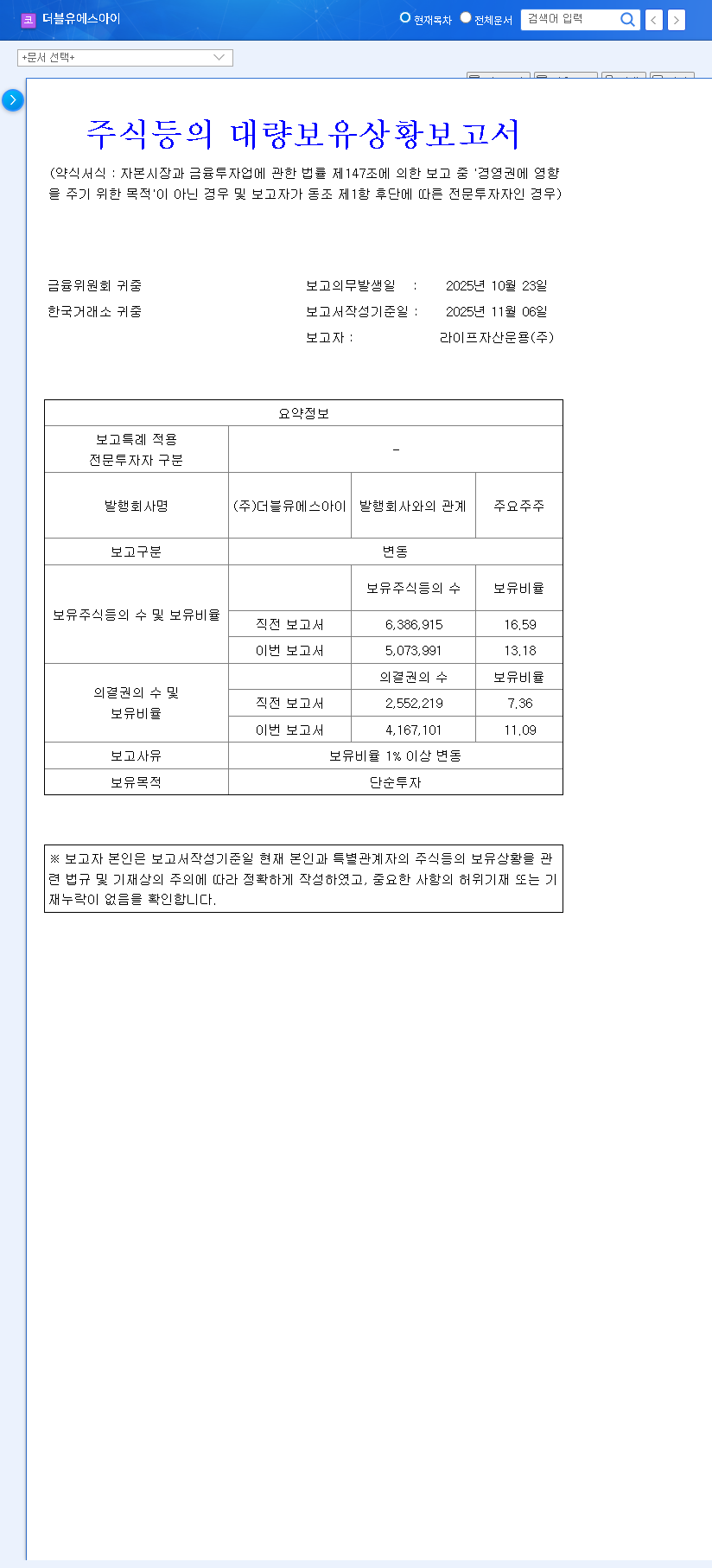
    Life Asset Management purchased an additional 3.34% stake in WSI through on-market purchases between July 31, 2025 and August 6, 2025, resulting in a total ownership of 16.59%. The purpose of the acquisition was stated as ‘simple investment.’

    2. Why? Positive Fundamentals and Growth Potential

    This investment can be interpreted as reflecting Life Asset Management’s positive outlook on WSI’s fundamentals and future growth prospects.

    • Business Diversification: WSI has diversified its business portfolio through the acquisition of IntroBio Pharma, entering the pharmaceutical market, and the establishment of EasyMediBot, a medical robot subsidiary.
    • Solid Performance: WSI recorded robust growth in operating profit and net income in Q1 2025, positively influenced by the IntroBio Pharma acquisition.
    • Strong Financials: WSI maintains a stable capital structure. The acquisition of its headquarters and subsidiaries further strengthens its long-term competitiveness.

    3. What’s Next? Potential Stock Price Momentum, But Volatility Should Be Considered

    This stake increase could boost market interest in WSI and improve investor sentiment. It may signal increased confidence from institutional investors. However, the potential for short-term selling pressure and increased volatility due to macroeconomic uncertainties should also be considered.

    4. Investor Action Plan: Close Monitoring and Prudent Investment

    Investors should closely monitor Life Asset Management’s future actions, WSI’s earnings announcements, and overall market conditions. It is crucial to take a long-term perspective and not be swayed by short-term price fluctuations. Careful analysis of the company’s fundamentals and growth potential is essential for making informed investment decisions.

    What does Life Asset Management’s stake increase in WSI signify?

    Life Asset Management has increased its stake in WSI by 3.34%, reaching a total of 16.59%. This can be seen as a sign of positive sentiment from institutional investors regarding WSI’s growth potential.

    What are the key investment points for WSI?

    Key investment points include business diversification through entry into the pharmaceutical market and medical robotics, robust earnings growth, and a stable financial structure.

    What should investors be cautious about?

    Investors should be aware of potential short-term price volatility and macroeconomic uncertainties. Thorough due diligence and market analysis are crucial before making investment decisions.

  • Koh Young Stock Forecast: Positive or Negative After the August 2025 IR?

    Koh Young’s August 2025 IR: What to Expect

    On August 7th, Koh Young will host a Non-Deal Roadshow (NDR) for domestic securities firms, presenting Q1 2025 earnings and recent business updates, followed by a Q&A session. Investors are particularly interested in the advancements of the KSMART platform and the global expansion strategy for medical robots following FDA 510(k) clearance.

    How Will the IR Impact the Stock Price?

    The stock price may be positively or negatively impacted depending on the information presented at the IR.

    • Positive Factors: A positive outlook for earnings improvement from Q2 onwards, enhanced competitiveness of the KSMART platform, and potential success in entering the US market for medical robots could boost investor sentiment.
    • Negative Factors: Disclosure of unexpected negative business developments, failure to meet market expectations, and concerns about the negative impact of the global economic slowdown and fluctuations in exchange rates/interest rates could lead to a decline in the stock price.

    What Actions Should Investors Take?

    Investors should carefully review the IR information and make investment decisions considering various factors, including competitor trends, raw material price fluctuations, and the global economic outlook. It is also important to monitor market reactions and expert analysis after the IR. Specifically, they should check for concrete performance indicators related to US market entry (KOL acquisition, SAB establishment, etc.) and establish a long-term investment strategy.

    Frequently Asked Questions

    What are Koh Young’s main businesses?

    Koh Young develops and sells 3D Solder Paste Inspection (SPI) equipment, 3D Automated Optical Inspection (AOI) equipment, and medical robots. The company possesses world-class technology, particularly in the field of electronics and semiconductor inspection equipment.

    What is the KSMART platform?

    KSMART is Koh Young’s AI-powered smart factory platform, a solution that improves the efficiency and productivity of manufacturing processes.

    What are the key takeaways to watch for in this IR?

    The key points to focus on include the earnings outlook from Q2 onwards, the global expansion strategy for medical robots after FDA approval, updates on the KSMART platform, and strategies for navigating the global economic downturn.

  • Koh Young IR Meeting (Aug 6th) Key Analysis & Investment Strategy

    What’s Happening? Koh Young’s Upcoming IR Meeting

    Koh Young will hold an IR meeting for domestic and international analysts on August 6th. The meeting will cover recent business performance, financial results, and a Q&A session to address investor inquiries.

    Why is Koh Young Important? Q1 Results and Future Growth Drivers

    In Q1 2025, Koh Young maintained robust profitability despite a decrease in sales. However, declining orders from smartphone clients raise concerns. The medical robot business, a key future growth driver, is still in its early stages, requiring time to achieve profitability. This IR meeting is expected to provide clarity on Q2 results and future outlook.

    So, What’s Next? Key IR Insights and Investment Points

    • Q2 and H1 2025 Results: Sales recovery and profit margin maintenance
    • 3D AOI & 3D SPI Business Outlook: Market share target achievement, new product launch plans
    • Medical Robot Business Progress: KYMERO’s US market entry status, post-FDA approval market response, profitability strategy
    • Future Sales Outlook: 2025 annual sales forecast and mid-to-long-term growth strategy
    • Financial Strategy: Funding plans for R&D investment, debt management strategy

    External factors such as exchange rates, interest rates, raw material prices, and the Chinese economic situation should also be considered.

    What Should Investors Do? Analyze IR Outcomes and Develop Investment Strategies

    Investors should carefully analyze the information presented at the IR meeting to formulate their investment strategies. Pay close attention to the performance of the medical robot business and Koh Young’s response to changes in the smartphone market.

    When is Koh Young’s IR meeting?

    It will be held on August 6, 2025, at 5 PM KST.

    What are Koh Young’s main businesses?

    3D AOI, 3D SPI, and medical robots.

    What should investors be aware of when investing in Koh Young?

    Consider the smartphone market slowdown, profitability of the medical robot business, and changes in the external environment.