The world of finance often hinges on subtle signals, and a recent disclosure has sent ripples through the market concerning Makus stock. The global asset management giant, Fidelity Management & Research Company LLC, has officially reported a change in its holdings, pushing its stake just over the significant 10% threshold. While the change appears minor on the surface, such moves by institutional titans are rarely without meaning. For investors tracking Makus, this development warrants a closer look.
This comprehensive analysis will break down the specifics of the Fidelity stake change, delve into the fundamental health of Makus, and explore what this could mean for your Makus investment strategy. We will examine the potential bull and bear cases to provide a well-rounded perspective for both short-term traders and long-term investors.
The Fidelity Disclosure: What Exactly Happened?
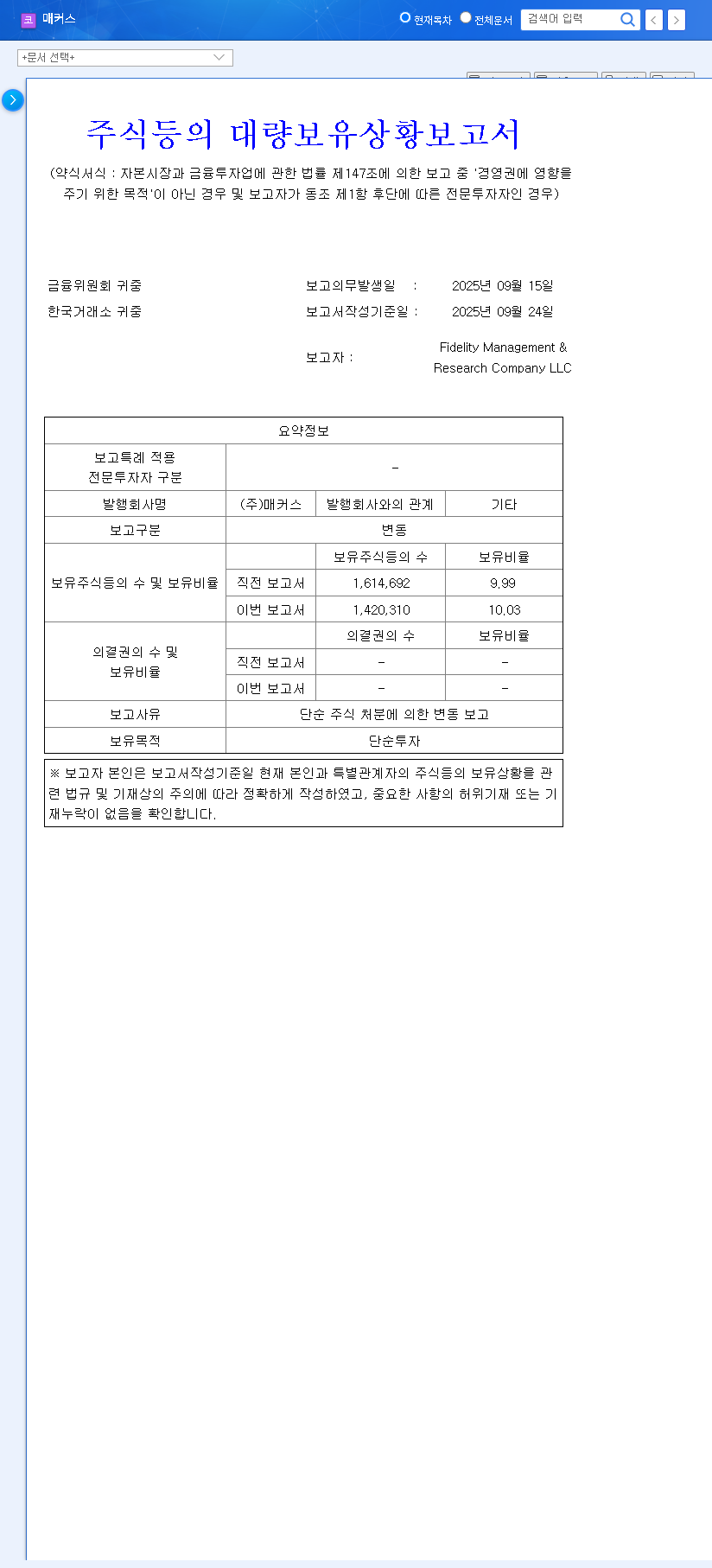
On October 10, 2025, Fidelity filed a ‘Report on Major Shareholder Status (Simplified)’, revealing an adjustment to its position in Makus (Market Cap: KRW 342.7 billion). This is a critical piece of information for anyone conducting a Makus stock analysis.
- •Reporting Entity: Fidelity Management & Research Company LLC
- •Previous Holding: 9.99% of outstanding shares
- •New Holding: 10.03% of outstanding shares
- •Stated Purpose: Simple investment
- •Source: Official Disclosure (DART)
Although categorized as a ‘simple investment,’ crossing the 10% ownership line is often interpreted as a signal of strong conviction in a company’s long-term prospects. It signifies that one of the world’s most sophisticated investors sees continued value and growth potential in Makus stock.
Under the Hood: A Deep Dive into Makus’s Financial Health
To understand why a firm like Fidelity would increase its stake in Fidelity Makus, we must examine the company’s fundamentals. A closer look reveals a picture of robust growth and prudent financial management.
Strong Growth and Liquidity
As of year-end 2024, Makus reported impressive figures. Total assets grew by 39.3% year-over-year to KRW 409.2 billion. More importantly, its cash position is exceptionally strong, with cash and equivalents surging by 122.8% to KRW 47.4 billion. This is backed by a healthy operating cash flow of KRW 49.3 billion, indicating the company generates more than enough cash from its core business to sustain operations and invest in growth—a key metric in any solid guide to fundamental analysis.
Commitment to Shareholder Value
Perhaps one of the most compelling aspects of Makus is its aggressive shareholder-friendly policy. The company has been consistently acquiring its own treasury shares since 2008. As of December 2024, it held an astonishing 41.05% of its total outstanding shares. This reduces the number of shares on the market, increasing earnings per share, and signals management’s profound belief that the stock is undervalued.
Fidelity’s increased stake, combined with Makus’s massive treasury stock holdings, paints a picture of high institutional and internal confidence. It suggests a shared belief in the company’s long-term intrinsic value, beyond short-term market noise.
Potential Impacts on Makus Stock
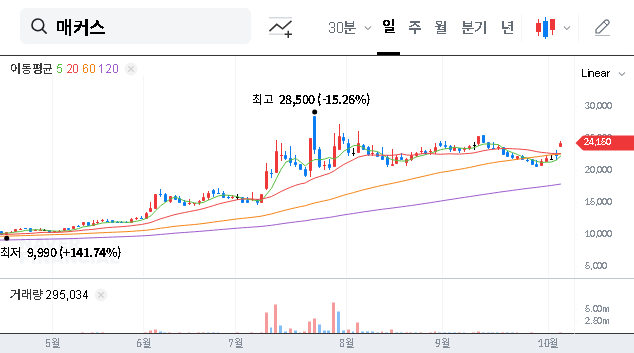
This event presents both opportunities and risks. The stock has a history of volatility, with sharp price movements often tied to specific market events. This Fidelity stake change could act as another catalyst.
The Bull Case: A Vote of Confidence
- •Institutional Trust: Fidelity’s move reaffirms trust in Makus’s management and future growth potential, potentially attracting other institutional investors.
- •Limited Supply Pressure: The small size of the transaction means there’s no immediate threat of a large block of shares hitting the market.
- •Positive Sentiment: The news can create a positive feedback loop, boosting retail investor confidence in Makus stock.
The Bear Case: Macro-Economic Headwinds
- •Short-Term Uncertainty: Any major shareholder news can temporarily increase volatility as the market digests the information.
- •Macro Environment: The stock remains vulnerable to broader market forces. As noted by market analysts at Bloomberg, factors like high currency exchange rates (KRW/USD, EUR/KRW) and global logistics costs (Baltic Dry Index) can impact Makus’s profitability regardless of internal strength.
A Smart Makus Investment Strategy
Ultimately, Fidelity’s move should be seen as a long-term positive indicator, but it doesn’t eliminate risk. A prudent Makus investment strategy depends on your time horizon and risk tolerance.
- •For Long-Term Investors: Focus on the fundamentals. The strong balance sheet, impressive cash flow, and shareholder-friendly actions are compelling reasons for a long-term position. Use market dips caused by macro fears as potential buying opportunities, rather than reasons to panic.
- •For Short-Term Traders: The stock’s inherent volatility presents opportunities. Monitor trading volumes and technical indicators closely. Be aware that the stock price may be more influenced by overall market sentiment and macroeconomic news in the near term than by this specific disclosure.
Disclaimer: This article is for informational purposes only and does not constitute investment advice. The ultimate responsibility for investment decisions rests with the individual investor.