Tag: Major Disclosure

  • (009410) TAEYOUNG E&C Rights Offering: A Deep Dive for Investors on Financial Restructuring & Risks

    (009410) TAEYOUNG E&C Rights Offering: A Deep Dive for Investors on Financial Restructuring & Risks

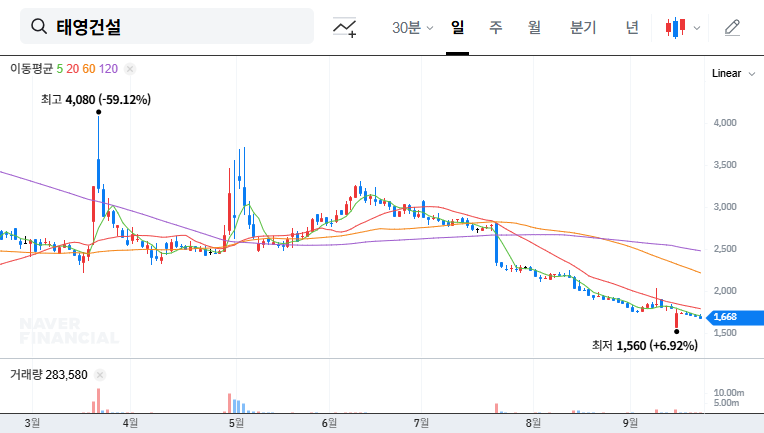
    The recent announcement of the TAEYOUNG E&C rights offering has sent ripples through the market, capturing the attention of investors closely monitoring the company’s progress. Currently navigating a comprehensive workout program, TAEYOUNG ENGINEERING & CONSTRUCTION stands at a critical juncture. Is this capital raise a definitive signal of financial recovery and a step towards normalization, or does it mask underlying risks that warrant caution? This detailed investor analysis will dissect every facet of this development, from the offering’s specifics to its long-term implications, providing the clarity needed to make informed decisions.

    This rights offering is a pivotal moment in Taeyoung E&C’s journey out of its workout program. For investors, understanding the nuances behind this move is not just important—it’s essential for assessing the company’s true recovery trajectory.

    Breaking Down the TAEYOUNG E&C Rights Offering

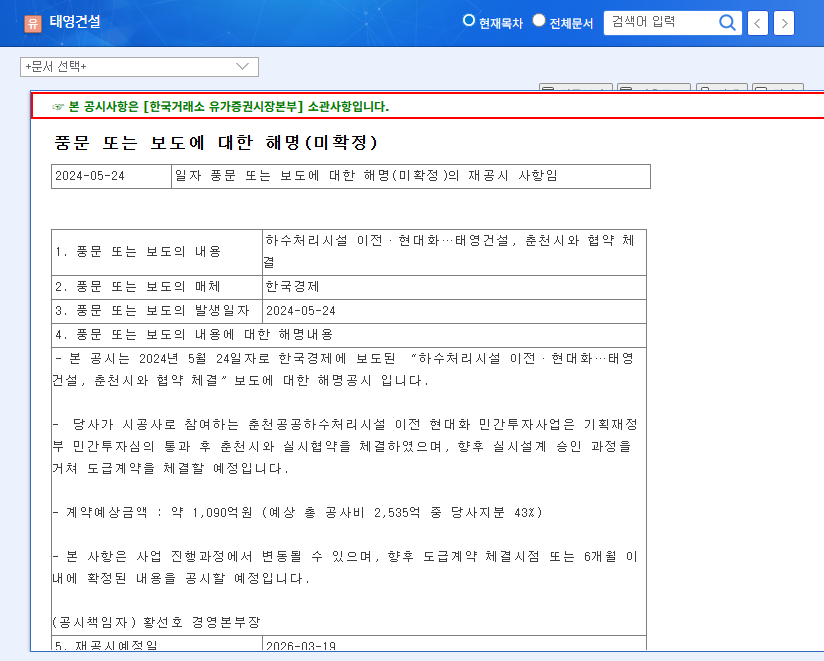
    On October 28, 2025, TAEYOUNG E&C formally announced its rights offering decision via a Major Disclosure. The move is a targeted capital infusion aimed at specific stakeholders. The core details, as per the Official Disclosure (Source: DART), are as follows:

    • Shares Issued: 28,347 common shares.
    • Issue Price: 2,310 KRW per share.
    • Total Capital Raised: Approximately 65.6 billion KRW.
    • Target Investors: Preferential allocation to 28 investors of the 68th public corporate bonds.
    • Key Dates: Payment on November 5, 2025, with listing scheduled for November 21, 2025.

    This capital raise is specifically designed to engage existing creditors, a strategic move that often signals confidence from those with intimate knowledge of the company’s financial state. The sum represents a notable portion of Taeyoung E&C’s market capitalization, underscoring the significance of this financial maneuver.

    The Strategic Rationale: Financial Restructuring and the Workout Program

    This rights offering doesn’t exist in a vacuum. It is a calculated step within Taeyoung E&C’s broader workout program—a creditor-led initiative to restore a company to financial solvency. The company’s December 2024 business report already highlighted substantial progress in its financial restructuring efforts.

    Key Recovery Milestones Achieved

    Through aggressive measures like debt-for-equity swaps, the company has engineered a remarkable turnaround on its balance sheet. Consolidated total equity surged from a deficit of 440.2 billion KRW to a positive 527.2 billion KRW by the end of 2024, completely resolving its capital impairment status. Concurrently, total liabilities were reduced, and the debt-to-equity ratio improved dramatically to a healthy 49.01%. This has been complemented by a profitable turnaround in its core construction segment, which posted an operating profit of 20.6 billion KRW despite a challenging market. This rights offering aims to build on that momentum, securing vital operating funds to accelerate the path to graduating from the workout program.

    Potential Impacts: Opportunities and Headwinds

    Positive Signals for Investors

    • Enhanced Financial Stability: The influx of cash will directly strengthen the balance sheet, reduce debt service burdens, and provide a buffer against market volatility.
    • Creditor Vote of Confidence: An offering successfully subscribed to by existing creditors is a powerful endorsement, signaling their belief in the viability of the turnaround plan. This can significantly boost broader market and investor confidence.

    Potential Risks and Considerations

    • Share Dilution: While any issuance of new shares can dilute earnings per share (EPS), the impact here is expected to be minimal as it targets a specific, limited group of creditors and the issuance ratio is low.
    • Execution Risk: The ultimate success depends on how effectively management deploys the new capital. Investors must see these funds translate into tangible business growth and profitability improvements.
    • External Market Pressures: The construction industry is highly sensitive to macroeconomic factors. As noted by sources like Bloomberg, factors like fluctuating currency exchange rates, rising interest rates, and volatile raw material prices can all impact project costs and profitability, irrespective of the company’s internal health.

    Investor Action Plan: Key Monitoring Points

    While the TAEYOUNG E&C rights offering is a fundamentally positive step, a prudent investment strategy requires diligent monitoring. Investors should keep a close watch on the following areas:

    • Workout Program Graduation: The primary goal. Track all announcements related to the successful completion of the workout program.
    • PF Risk Management: The company’s ability to manage project financing (PF) liabilities remains crucial. For more on this, see our guide on understanding PF risks in construction.
    • Capital Allocation: Scrutinize future financial reports to see how the funds from the rights offering are being used and the return on that investment.
    • Market & Order Book Health: Monitor the domestic construction market outlook and Taeyoung E&C’s ability to secure a stable pipeline of profitable projects, particularly in the public sector.

    Frequently Asked Questions (FAQ)

    Q1: What are the key details of TAEYOUNG E&C’s rights offering?

    TAEYOUNG E&C is issuing 28,347 common shares at 2,310 KRW per share to raise approximately 65.6 billion KRW. The offering is targeted specifically at 28 investors who hold the company’s 68th public corporate bonds.

    Q2: How will this rights offering affect TAEYOUNG E&C’s financial structure?

    It is expected to significantly bolster the company’s financial health by securing operating funds, easing debt repayment pressures, and providing capital for future growth, thereby accelerating its exit from the current workout program.

    Q3: How has TAEYOUNG E&C’s financial status changed since entering the workout program?

    The company has made remarkable progress. As of late 2024, it had resolved its capital impairment, with total equity turning positive at 527.2 billion KRW. The debt-to-equity ratio improved to 49.01%, and its operations returned to profitability.

    Q4: What should investors consider before investing in TAEYOUNG E&C?

    Investors should weigh the positive steps in the financial restructuring against external market risks and internal execution challenges. Key factors to monitor include the successful completion of the workout program, effective management of PF liabilities, and the profitable use of the newly raised funds.
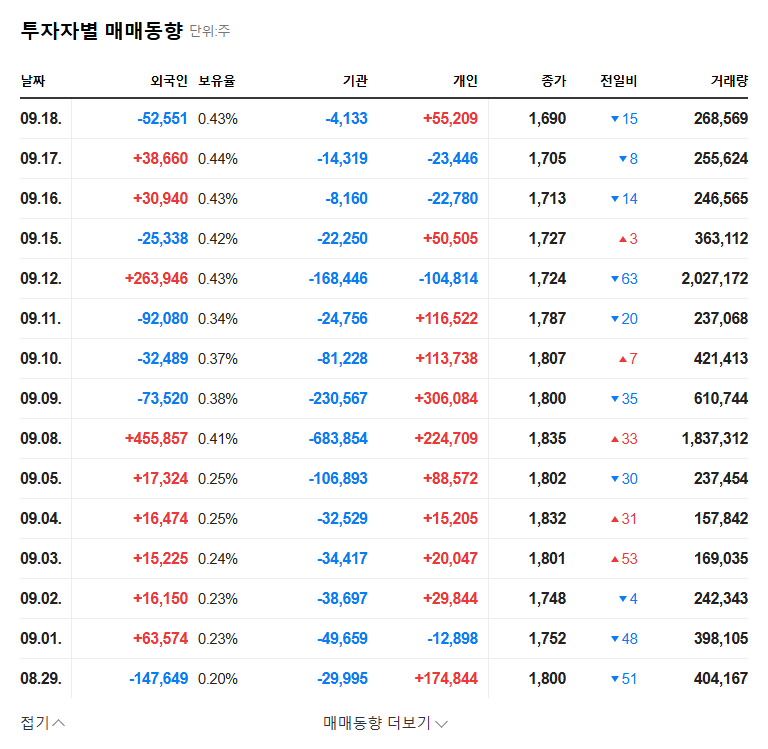
    (009410) TAEYOUNG E&C Rights Offering: A Deep Dive for Investors on Financial Restructuring & Risks 관련 이미지
    (009410) TAEYOUNG E&C Rights Offering: A Deep Dive for Investors on Financial Restructuring & Risks 관련 이미지
  • (125020) TC Materials Asset Acquisition: 2025 Stock Outlook & Investment Strategy

    (125020) TC Materials Asset Acquisition: 2025 Stock Outlook & Investment Strategy

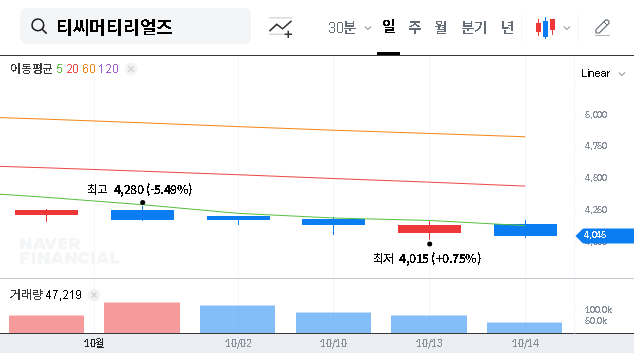
    In a significant move capturing market attention, TC Materials Co., Ltd. (티씨머티리얼즈) has announced a landmark decision to acquire tangible assets valued at ₩26.3 billion. This strategic investment, representing a substantial 34.44% of the company’s equity, is far more than a simple transaction. It signals a pivotal moment for the company’s future, raising a critical question for investors: Is this the catalyst for long-term growth or a short-term financial burden? This comprehensive analysis of the TC Materials asset acquisition will dissect the corporate fundamentals, market dynamics, and macroeconomic indicators to provide you with the clarity needed for sound investment decisions.

    We will explore the profound implications of this acquisition, weigh the opportunities against the risks, and outline a clear investment strategy to help you navigate potential stock price fluctuations. Join us as we delve into the future of TC Materials.

    Breaking Down the TC Materials Asset Acquisition

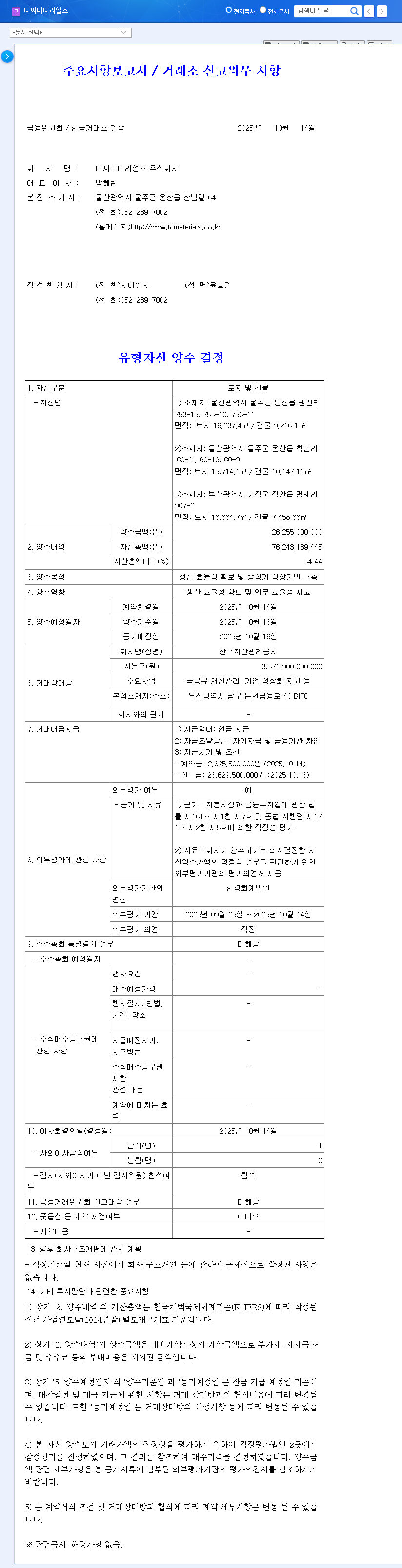
    On October 14, 2025, TC Materials officially disclosed its decision to acquire significant tangible assets, a move seen as a cornerstone for its future operational capacity and strategic positioning. The specifics of this pivotal investment are crucial for understanding its potential impact.

    Key Details of the Transaction

    • Event: Decision to acquire tangible assets (land and buildings) from the Korea Asset Management Corporation.
    • Value: ₩26.3 billion, equivalent to 34.44% of the company’s total equity.
    • Assets: Land and buildings located in Ulsan and Busan, totaling approximately 95,000㎡.
    • Purpose: Officially stated as a strategic investment to enhance production efficiency and establish a mid-to-long-term growth foundation.
    • Funding: A combination of the company’s own capital and loans from financial institutions. The final cash payment of ₩23.629 billion is due on October 16, 2025.
    • Official Disclosure: The complete details can be reviewed in the Official Disclosure (DART report).

    Current State: Corporate Health & Market Environment

    To grasp the full weight of this investment, we must first analyze TC Materials’ current financial standing and the broader economic landscape it operates within.

    Company Financial Snapshot (H1 2025)

    TC Materials operates primarily in Power Infrastructure (56.76%), Automotive Materials (20.74%), and Home Appliances (18.06%). However, its recent performance shows signs of strain:

    • Revenue: ₩144.865 billion (a slight year-over-year decrease).
    • Operating Profit: ₩3.807 billion (a significant decline).
    • Net Income: -₩1.391 billion (shifted to a deficit).
    • Key Concern: A substantial financial burden from existing borrowings and outstanding convertible bonds continues to weigh on net income. For more on this, you can read our guide on how convertible bonds impact investors.

    Macroeconomic Headwinds

    The external environment presents additional challenges. Rising government bond yields, as reported by authoritative sources like Bloomberg, suggest that borrowing costs for the new loans could be higher than anticipated. Furthermore, climbing crude oil prices and shipping indexes point to increased costs for raw materials like copper, potentially squeezing profit margins further.

    Impact Analysis: Opportunities vs. Risks

    This tangible asset investment is a double-edged sword, presenting both a clear path to growth and significant financial risks.

    This large-scale investment can be seen as a proactive commitment from management to drive future growth, but it arrives at a time of underlying financial weakness, creating a classic risk/reward scenario for investors.

    The Bull Case (Positive Implications)

    • Enhanced Production Efficiency: New facilities can streamline manufacturing, automate processes, and expand capacity, leading to long-term cost reductions.
    • Foundation for Growth: The investment strengthens TC Materials’ ability to meet rising demand in high-growth sectors like electric vehicle components and power grid modernization.
    • Increased Asset Base: Expanding tangible assets can improve the company’s long-term financial structure and borrowing capacity if it translates to higher revenue.

    The Bear Case (Negative Risks)

    • Short-Term Liquidity Strain: The ₩26.3 billion outlay is a massive expenditure that could strain cash flow, especially when combined with existing debt.
    • Increased Debt Burden: Taking on new loans on top of existing convertible bonds elevates financial risk and interest expenses, which could further suppress net income.
    • Delayed ROI: The positive effects on profitability are not immediate. Unexpected costs and a slow ramp-up period could delay the return on investment.
    • Weak Underlying Performance: Making a large investment while revenue is declining and the company is at a net loss is a bold, but risky, strategy that could amplify negative sentiment if performance doesn’t improve quickly.

    Investment Strategy & Stock Outlook

    Given these conflicting factors, a nuanced investment strategy is essential. The TC Materials stock outlook hinges on management’s ability to execute its vision without succumbing to financial pressures.

    Short-Term Outlook (3-6 Months)

    The stock price is likely to face downward pressure. The significant cash payment due in October, combined with current performance weakness and broader market concerns about interest rates, could create volatility and negative sentiment. Investors should anticipate potential price adjustments.

    Mid-to-Long-Term Outlook (1-3 Years)

    The long-term success of this acquisition depends entirely on execution. If TC Materials can leverage the new assets to improve margins, capture new contracts, and show a clear path to profitability, the investment will be a significant long-term positive for corporate value and the stock price.

    Recommendations for Investors

    • Cautious Buy: For new investors, the long-term potential is appealing. However, it is prudent to wait for the short-term volatility to subside. Monitor the company’s Q4 2025 and Q1 2026 earnings reports for signs of improving operational efficiency before committing capital.
    • Hold: For existing shareholders, this event validates a long-term growth thesis. It may be wise to hold through the short-term turbulence and focus on management’s execution of their strategic plan.
    • Monitor Closely: All investors should watch for specific details on loan terms, the new facility’s operational roadmap, and any changes in the competitive landscape.

    In conclusion, the TC Materials asset acquisition is a transformative bet on the company’s future. While it bolsters long-term growth prospects, the immediate financial risks are undeniable. Prudent investors will weigh these factors carefully, stay informed, and make strategic decisions based on execution rather than speculation.

    (125020) TC Materials Asset Acquisition: 2025 Stock Outlook & Investment Strategy 관련 이미지