In a significant development for HJ Shipbuilding & Construction (KRX: 097230), the company has officially secured a major public infrastructure contract. This move reaffirms its capabilities in the construction sector, but what does it truly mean for investors watching HJSCC stock? This comprehensive HJSC investment analysis will dissect the contract, evaluate the company’s financial standing, and provide a clear outlook on the potential risks and rewards.
We will meticulously analyze how this ₩74.9 billion project could influence corporate value, navigate the complexities of the shipbuilding and construction industries, and offer actionable insights for anyone considering an investment in HJ Shipbuilding & Construction.
The Contract: A ₩74.9 Billion Anchor for the Construction Division
On November 10, 2025, HJ Shipbuilding & Construction announced it had won the contract for the Busan Joint Fish Market modernization project. According to the Official Disclosure filed with DART, the contract with the Public Procurement Service is valued at ₩74.9 billion. This figure represents approximately 3.97% of the company’s recent annual revenue. The project is a long-term engagement, scheduled to run for four years from November 2025 to November 2029, providing a stable, predictable revenue stream for the construction arm of the business.
Company Fundamentals: A Tale of Two Divisions
To understand the impact of this new project, we must first look at the current state of HJ Shipbuilding & Construction. The company operates in two distinct but demanding sectors, each with its own set of opportunities and challenges.
While revenue is growing and operating profit has returned, the company’s high debt-to-equity ratio of 564.98% remains a critical risk factor that investors cannot ignore. Prudent financial management is paramount.
Financial Performance and Health
Recent reports indicate positive momentum, with revenue growth and a return to operating profitability. The shipbuilding division has benefited from its focus on specialized vessels, while the construction division has seen increased work on social infrastructure. However, the high debt ratio looms large, posing a significant risk, especially in a high-interest-rate environment. Effective risk management, particularly concerning foreign exchange and liquidity, is crucial for long-term stability. For context on broader industry trends, investors often consult sources like Reuters Business for market analysis.
Division-Specific Strengths and Weaknesses
- •Shipbuilding Division: Key strengths lie in the defense and specialized vessel sectors. Growing demand for eco-friendly ships also presents a major opportunity. However, the division faces intense competition from Chinese shipbuilders and potential price declines for merchant ships.
- •Construction Division: A stable revenue base is supported by public infrastructure projects, like the new Busan Joint Fish Market project, and urban redevelopment. Yet, it remains vulnerable to macroeconomic headwinds such as rising material costs, high interest rates, and a potential downturn in the real estate market.
Impact Analysis: What This Project Means for HJSCC Stock
The Positive Outlook
The four-year contract for the Busan project offers several key benefits. First and foremost, it secures a stable revenue stream, enhancing cash flow predictability and contributing positively to the construction division’s performance. This win in a competitive public tender also boosts the company’s reputation, potentially opening doors for future large-scale projects. In the long term, consistent revenue can aid in managing the high debt ratio. Furthermore, it strengthens the company’s business portfolio, reducing its reliance on the more volatile shipbuilding sector.
Risks and Considerations
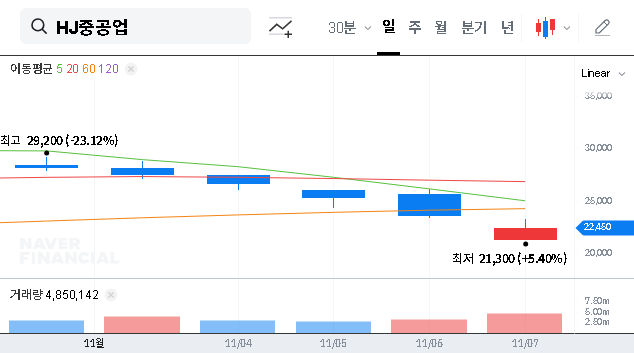
Despite the positive news, several risks persist. The broader construction market faces uncertainty from volatile raw material prices and sustained high interest rates, which could squeeze the project’s profitability over its four-year span. While the revenue is locked in, the final profit margin is not guaranteed. From a stock price perspective, the contract’s value (3.97% of annual revenue) is not large enough to trigger a significant short-term rally on its own. The stock’s performance will remain tied to overall market sentiment and developments in the shipbuilding division.
Investment Thesis & Key Takeaways
The Busan Joint Fish Market project is a clear positive for HJ Shipbuilding & Construction, but it’s a foundational piece rather than a game-changer. It enhances stability and demonstrates competence, which is crucial for long-term value creation.
- •Short-Term View: Do not expect a major stock price jump from this news alone. The market will likely remain focused on the company’s debt management and shipbuilding orders.
- •Long-Term View: The investment case for HJSCC hinges on two factors: continued success in securing profitable construction contracts and winning high-value orders for specialized or eco-friendly ships. Most importantly, investors should watch for concrete, measurable progress in reducing the company’s debt-to-equity ratio. To learn more about evaluating companies in this sector, you can read our guide on how to analyze industrial stocks.
Frequently Asked Questions (FAQ)
What is HJ Shipbuilding & Construction’s new project?
HJ Shipbuilding & Construction has secured a ₩74.9 billion contract to modernize the Busan Joint Fish Market. This is a four-year public infrastructure project running from late 2025 to late 2029.
How big is this contract for the company?
The contract value represents about 3.97% of the company’s annual revenue. While not transformative on its own, it’s a significant project that adds to a stable base of long-term work for its construction division.
What is the biggest risk for HJSCC stock investors?
The company’s primary financial risk is its high debt-to-equity ratio of over 560%. This level of debt can increase financial pressure from interest payments and limit flexibility. Progress on reducing this debt is a key indicator to watch.
Is HJSCC stock a good long-term investment?
The long-term potential of HJSCC depends on its ability to consistently win profitable projects in both construction and shipbuilding, while actively improving its financial health. This new contract is a positive step, but investors should seek a sustained trend of performance and debt reduction before making a significant commitment.