Tag: . Ltd.

  • (114840) iFamilySC Q3 2025 Dividend: A Deep Dive for Investors on Stock & Shareholder Value

    (114840) iFamilySC Q3 2025 Dividend: A Deep Dive for Investors on Stock & Shareholder Value

    In a move that signals confidence and stability, K-beauty leader iFamilySC Co,. Ltd. has announced its Q3 2025 quarterly dividend. For investors tracking iFamilySC stock, this decision is more than a simple payout; it’s a statement about the company’s financial health, the formidable growth of its flagship rom&nd brand, and its commitment to enhancing shareholder value. This analysis will dissect the details of the dividend, explore the robust fundamentals driving the decision, and outline what it means for your investment strategy in the dynamic world of K-beauty investment.

    The iFamilySC Dividend Announcement: By the Numbers

    On November 14, 2025, iFamilySC formally declared its dividend for the third quarter. According to the Official Disclosure on DART, the company will issue a cash dividend of 205 KRW per share. Shareholders of record as of September 30, 2025, are eligible for the payment, which is scheduled for December 2, 2025. Based on the stock price of 9,787 KRW at the time of the announcement, this translates to a dividend yield of approximately 0.9%. While not a high-yield figure, this move is a critical part of the company’s strategy to consistently reward its investors and demonstrate financial prudence.

    Financial Health and Brand Power: The Pillars of Growth

    A company’s ability to issue a dividend is a direct reflection of its operational success and financial stability. For iFamilySC, this decision is underpinned by impressive growth, particularly from its powerhouse cosmetics line.

    The Global Dominance of the ‘rom&nd’ Brand

    The primary engine driving iFamilySC’s success is the ‘rom&nd’ brand, which has become a global phenomenon. Cumulative revenue for Q3 2025 hit 165.5 billion KRW, a 6.3% increase year-over-year. This growth was largely fueled by a 13.8% surge in cosmetics exports, showcasing the brand’s international appeal, especially in key markets like the United States. By tapping into the preferences of the MZ generation and leveraging trends within the global K-beauty market, ‘rom&nd’ continues to solidify its competitive advantage.

    The most significant financial milestone is the turnaround in operating cash flow, which became positive at 37.6 billion KRW. This indicates strong cash-generating capabilities from core business activities, a vital prerequisite for sustainable dividend payments.

    A Fortified Financial Structure

    Beyond revenue, iFamilySC’s balance sheet tells a story of stability. As of Q3 2025, total assets grew by 18.4% to 144.8 billion KRW, with total equity rising 16.5% to 106.6 billion KRW. A stable debt-to-equity ratio of 35.7% further points to sound financial management. This robust financial footing provides the company with the flexibility to both reinvest in growth and return capital to shareholders, a dual strategy that builds long-term shareholder value.

    Navigating Challenges and Market Headwinds

    Despite the positive news, a comprehensive analysis of the iFamilySC stock outlook requires acknowledging potential challenges. The company’s operating profit saw a 26.3% decrease to 20.5 billion KRW, driven by higher selling and administrative expenses. This has compressed the operating profit margin to 12.4%. Furthermore, the current Price-to-Earnings (PER) ratio of 23.5x is relatively high, suggesting that the market has lofty expectations for future growth. Sustaining this valuation will depend on improving profitability and successfully executing on future initiatives, especially amid global macroeconomic uncertainties that could impact consumer spending.

    Investor Action Plan: Key Takeaways

    So, how should investors interpret the iFamilySC dividend announcement? The key is to look beyond the immediate yield and focus on the long-term strategic signals.

    • A Signal of Confidence: The dividend is a clear sign of management’s confidence in the company’s stable cash flow and future prospects. It enhances trust and makes the stock more attractive to long-term, value-oriented investors.
    • Focus on Fundamentals, Not Short-Term Gains: The 0.9% yield is unlikely to cause a major short-term price rally. The real story lies in the company’s ability to continue its global expansion and improve profitability.
    • Monitor Future Catalysts: Keep a close eye on the performance of R&D investments, such as big data consumer analysis and personal color services. Their ability to turn into profitable ventures will be crucial for justifying the current valuation and driving future growth.

    In conclusion, iFamilySC’s Q3 2025 dividend is a promising development that reinforces its position as a financially sound leader in the K-beauty industry. While challenges in profitability remain, the strength of the ‘rom&nd’ brand and a solid balance sheet provide a strong foundation for future success.

    Disclaimer: This analysis is based on publicly available information and is for informational purposes only. It does not constitute investment advice. All investment decisions should be made based on your own research and judgment.

  • (293940) Deep Dive: Shinhan Alpha REIT Q3 2025 Report Analysis & Investment Strategy

    (293940) Deep Dive: Shinhan Alpha REIT Q3 2025 Report Analysis & Investment Strategy

    The release of the Shinhan Alpha REIT Q3 2025 report offers investors a critical window into the health and strategic direction of one of South Korea’s premier office REITs. In an investment landscape marked by economic uncertainty, Real Estate Investment Trusts (REITs) represent a compelling option for those seeking stable, income-generating assets. This report is more than a regulatory filing; it’s a detailed roadmap outlining asset growth, profitability trends, and the financial pressures shaping the company’s future. For anyone considering a position, a thorough Shinhan Alpha REIT analysis is essential for making an informed decision.

    This deep dive will dissect the key findings from the Q3 report, contextualize them within the broader market, and provide an actionable framework for your REIT investment strategy. We’ll explore the balance between impressive portfolio expansion and the persistent headwinds of rising interest rates and operational costs.

    Key Highlights from the Q3 2025 Financial Disclosure

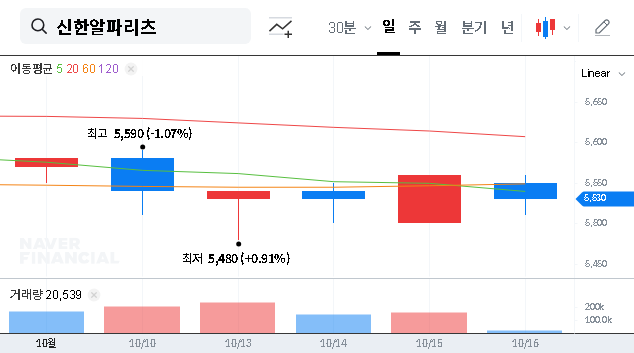
    On October 29, 2025, Shinhan Alpha REIT Co,. Ltd. published its quarterly performance data, a standard procedure for maintaining transparency with its stakeholders. While not an event that typically generates specific market forecasts, this disclosure provides the factual basis for assessing the company’s fundamental strength. The complete data was made public via the DART system. For those interested in the raw data, you can view the Official Disclosure (Source).

    The core tension for investors is balancing Shinhan’s impressive portfolio growth against the rising tide of financial costs in a volatile interest rate environment. The Q3 report puts this dynamic into sharp focus.

    Fundamental Analysis: Growth & Headwinds

    Our Shinhan Alpha REIT analysis reveals a narrative of strategic expansion coupled with macroeconomic challenges. Here’s a breakdown of the critical areas detailed in the report.

    1. Asset Portfolio Expansion and Quality

    The REIT’s commitment to growth is evident. The successful integration of assets like the BNK Tower, noted in previous reports, continues to bolster the portfolio’s total value and rental income potential. As a leading Korean office REIT, maintaining a portfolio of prime, well-located properties is crucial.

    • Positive Signal: Steady growth in asset under management (AUM) contributes directly to higher potential operating revenue and long-term capital appreciation. Occupancy rates across core assets remain remarkably high, reflecting the quality of the properties.
    • Key Concern: Each acquisition brings additional debt. Investors must scrutinize the loan-to-value (LTV) ratio and the terms of new financing to ensure growth isn’t coming at the cost of excessive financial risk.

    2. Profitability Under Pressure

    While top-line revenue from rental income shows a healthy trajectory, the net profit tells a more complex story. The challenge highlighted in the semi-annual report—rising operating and financial costs—appears to persist. This is a critical factor for any dividend-focused REIT investment strategy.

    • Revenue Growth: Increased rental income from new assets and stable occupancy from existing ones are positive drivers.
    • Cost Challenges: The global interest rate environment directly impacts borrowing costs. The Q3 report should be carefully examined for details on interest coverage ratios and the management’s hedging strategies against rate volatility. Any increase in property management fees or other operational expenses will further squeeze margins. For more on this, see our Guide to Analyzing REIT Financials.

    3. Financial Health and Debt Management

    The balance sheet remains a primary focus. Key metrics from the semi-annual report, such as the debt ratio and retained earnings, serve as a baseline. The Q3 report provides an update on whether the REIT is strengthening its financial position or facing further deterioration. Investors should look for any management commentary on plans for refinancing upcoming debt maturities or potential capital raising initiatives.

    Investor Action Plan: What to Do Now

    The release of the Shinhan Alpha REIT Q3 2025 report is a call to action for current and prospective investors. A prudent approach involves a comprehensive evaluation of the data.

    • Validate the Thesis: For long-term holders, confirm that the core strengths—high-quality assets and strong occupancy—remain intact. The continued portfolio growth is a significant positive.
    • Monitor the Risks: Pay close attention to the trajectory of financial costs. If net profit continues to decline despite revenue growth, it could impact future dividend payouts, a cornerstone of REIT investing as explained by financial authorities like Investopedia.
    • Assess Market Reaction: Observe how the market digests this information. A muted or negative stock price reaction could indicate that concerns about profitability and debt outweigh the positive news of asset growth.
    • Look Ahead: Scour the report for management’s outlook. Any guidance on future acquisitions, divestments, or financing strategies provides invaluable insight into the company’s forward-looking plans.

    Frequently Asked Questions (FAQ)

    Q1: What is the main takeaway from the Shinhan Alpha REIT Q3 2025 Report?

    The report confirms Shinhan Alpha REIT’s continued strategic growth in assets but also highlights the significant pressure on profitability from rising financial costs. It’s a mixed picture that requires careful analysis by investors.

    Q2: Are there immediate red flags for investors in this report?

    The primary area of caution is the trend of declining net profit margins. While not a red flag signifying immediate distress, it is a crucial trend to monitor as it could impact the sustainability of dividend growth if not addressed through cost management or improved financing terms.

    Q3: How does Shinhan Alpha REIT compare to other Korean office REITs?

    Shinhan Alpha REIT is known for its high-quality portfolio of prime office buildings and strong occupancy rates. However, like its peers, it is exposed to the same macroeconomic headwinds. A comparative analysis should focus on differences in debt structure, LTV ratios, and dividend yields.

    (293940) Deep Dive: Shinhan Alpha REIT Q3 2025 Report Analysis & Investment Strategy 관련 이미지
  • (114840) iFamilySC Share Buyback: A Deep Dive into the ₩3B Plan for Stock Price Stabilization

    (114840) iFamilySC Share Buyback: A Deep Dive into the ₩3B Plan for Stock Price Stabilization

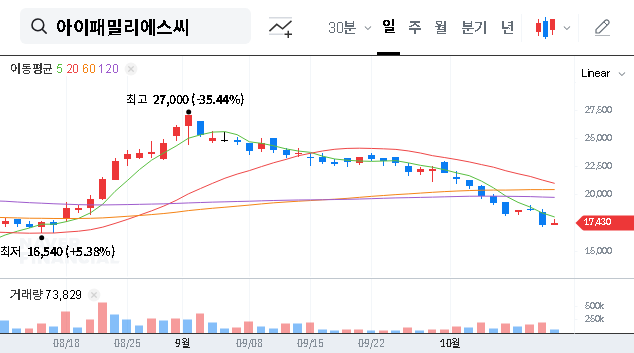
    In a significant move capturing the market’s attention, iFamilySC Co., Ltd., a notable player in the cosmetics and wedding industries, has announced a major iFamilySC share buyback program. The company has committed to a 3 billion KRW self-stock acquisition, a strategic decision often interpreted as a strong signal of confidence and a commitment to stock price stabilization. But what does this corporate maneuver truly mean for investors and the company’s future? This comprehensive analysis will explore the mechanics of this decision, its potential benefits, the inherent risks, and a strategic roadmap for current and prospective shareholders.

    The Details: A ₩3 Billion Commitment to Shareholder Value

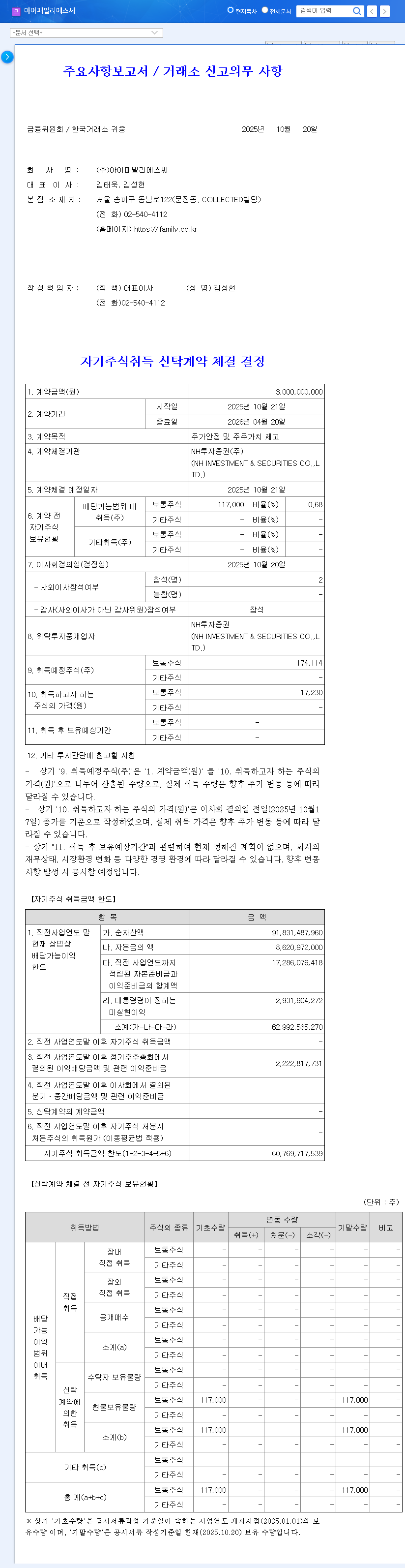
    On October 20, 2025, iFamilySC officially disclosed the execution of a 3 billion KRW self-stock acquisition trust agreement with NH Investment & Securities. This information was made public through an Official Disclosure filed with DART. The allocated amount represents approximately 1.01% of the company’s total market capitalization. The buyback program is scheduled to be implemented over a six-month period, from October 21, 2025, to April 20, 2026. This deliberate timeline is designed to methodically reduce the number of outstanding shares without causing abrupt market shocks.

    A share buyback, or repurchase, is a corporate action in which a company buys back its own outstanding shares from the open market. This reduces the number of shares available, a move that can have profound effects on the company’s financial metrics and stock valuation.

    Analyzing the Upside of the iFamilySC Share Buyback

    The primary motivations behind any share buyback are almost always centered on stock price stabilization and the enhancement of shareholder value. For iFamilySC, this strategy is expected to yield several positive outcomes:

    • Improved Supply-Demand Dynamics: By purchasing its own shares, iFamilySC reduces the total supply of stock available on the market. With demand remaining constant or increasing, this scarcity can provide strong support for the stock price, acting as a buffer during periods of market volatility.
    • Enhanced Shareholder Value via EPS Growth: A lower number of outstanding shares can lead to a higher Earnings Per Share (EPS), a key metric investors use to assess profitability. Since net income is divided by fewer shares, each remaining share represents a larger portion of the company’s earnings. For more on this, you can read about how EPS is calculated and why it matters.
    • A Powerful Signal of Confidence: This self-stock acquisition is a declaration from management that they believe their company’s stock is undervalued. It signals internal confidence in future prospects and profitability, which can significantly boost investor morale and attract new capital.

    Weighing the Potential Risks and Considerations

    While the iFamilySC share buyback is a positive development, prudent investors must also consider the potential downsides and underlying factors that could limit its effectiveness.

    The Opportunity Cost of Capital

    The 3 billion KRW allocated for this buyback is capital that cannot be used for other growth-oriented activities. Investors should question if this is the most efficient use of funds. Could this capital have generated a higher return if invested in research and development, new market expansion for its cosmetics line, or strategic acquisitions to bolster its wedding business? This is a critical consideration for long-term growth.

    A Temporary Fix or a Long-Term Solution?

    A share buyback can provide a temporary lift to the stock price, but it is not a substitute for fundamental business performance. Without genuine growth in revenue, market share, and profitability, the positive effects of the buyback may be short-lived. The true test of shareholder value creation lies in the company’s operational excellence, a topic we explored in our Analysis of iFamilySC’s Core Business Strategy.

    Market-Wide Headwinds

    In a bearish market or during periods of economic uncertainty, the impact of a share buyback can be muted. If overall investor sentiment is weak, a single corporate action may not be enough to reverse a downward trend. The success of this initiative will partially depend on the broader macroeconomic environment over the next six months.

    Investor Action Plan: Key Questions to Ask

    For those invested in iFamilySC stock, this announcement warrants a review of your investment thesis. Here are key questions to consider:

    • Does the company’s core business performance justify this capital allocation?
    • What are the company’s plans for future growth beyond this buyback?
    • Is this the beginning of a more consistent shareholder-friendly policy, such as dividends?
    • How does the company’s valuation compare to its peers after accounting for this buyback?

    The iFamilySC share buyback is a strategically positive signal. It provides a degree of downside protection and signals management’s confidence. However, long-term success will ultimately be dictated by the company’s ability to innovate and execute within its core markets. Continuous monitoring of financial reports and strategic communications is essential.

    Disclaimer: This material is for informational purposes only and does not constitute investment advice. Investment decisions should be made based on the investor’s own judgment and responsibility.

    (114840) iFamilySC Share Buyback: A Deep Dive into the ₩3B Plan for Stock Price Stabilization 관련 이미지
  • (293940) Shinhan Alpha REIT Monthly Report (Sept 2025): A Deep Dive Analysis for Investors

    (293940) Shinhan Alpha REIT Monthly Report (Sept 2025): A Deep Dive Analysis for Investors

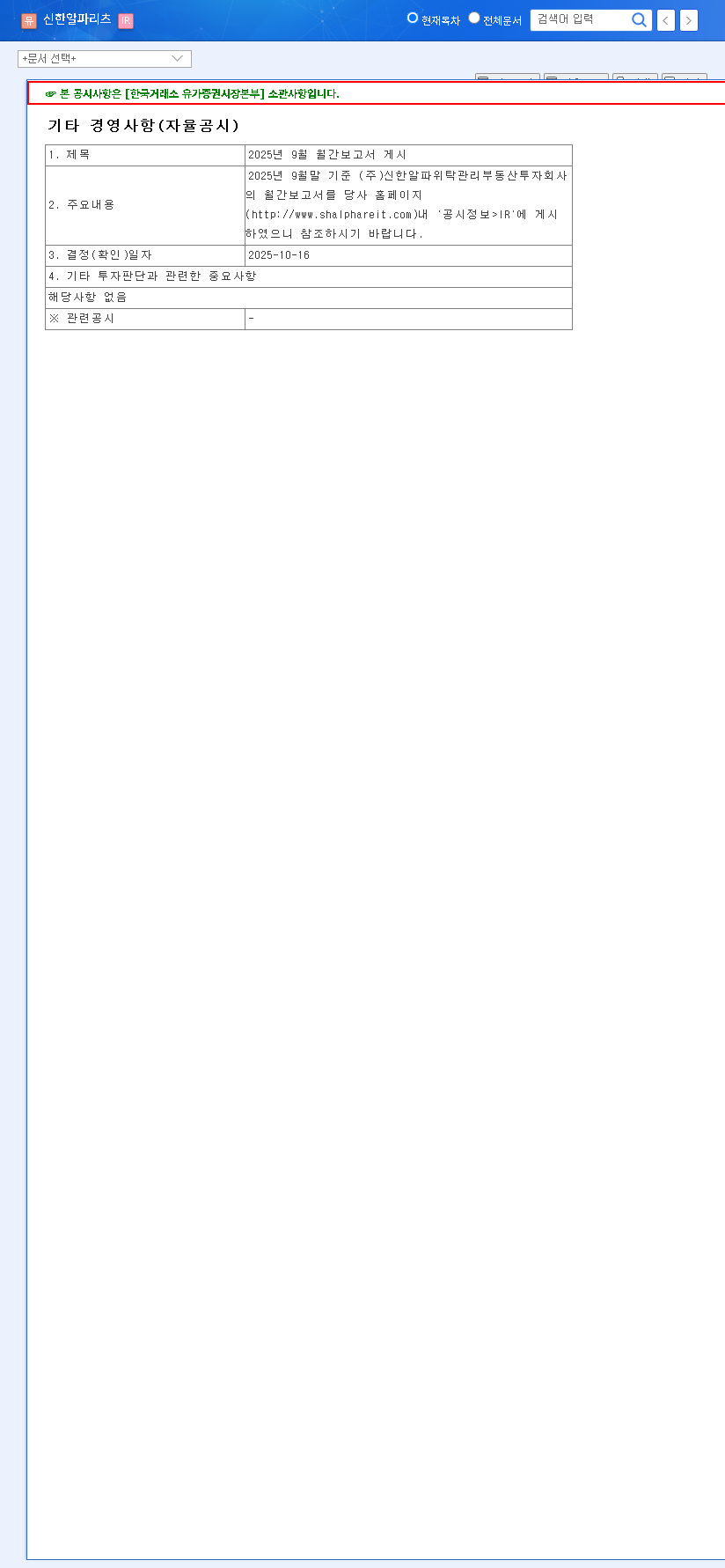
    The latest Shinhan Alpha REIT monthly report for September 2025 has been released, providing a critical data snapshot for current and prospective investors. For those involved in REIT investing, these publications are far more than a regulatory formality; they are a direct line to understanding the asset’s performance, stability, and future potential. This deep-dive analysis provides a comprehensive investor checklist to help you dissect the report, identify crucial trends, and make informed decisions about your Shinhan Alpha REIT holdings.

    While the simple act of publication is a positive sign of transparency, the real value lies within the data. An unexpected change in vacancy rates, a shift in debt structure, or new asset valuation figures can significantly impact market perception and your investment returns. Understanding how to read between the lines is paramount.

    Why This Report is a Game-Changer for Your Investment

    A Real Estate Investment Trust (REIT) is a company that owns, and in most cases operates, income-producing real estate. For investors, the appeal lies in receiving a steady stream of income through dividends without the complexities of direct property management. The health of a REIT like Shinhan Alpha REIT is directly tied to the performance of its underlying assets. The monthly report is your most reliable window into that performance.

    The official disclosure for this period provides the foundational data for this analysis. Investors are encouraged to review the primary document for complete details. Official Disclosure: Click to view DART report.

    The Ultimate Investor Checklist: Decoding the Report

    To extract maximum value from the Shinhan Alpha REIT monthly report, focus your analysis on these five critical areas. Comparing the latest figures against previous reports will reveal important trends and potential red flags.

    1. Portfolio Health: Occupancy and Leasing Momentum

    This is the lifeblood of any real estate investment trust. High occupancy rates indicate strong demand for the REIT’s properties and lead to stable rental income. Scrutinize the following:

    • Occupancy & Vacancy Rates: Are they improving, declining, or stagnant? A rising vacancy rate could signal market weakness or issues with a specific property.
    • Lease Expiry Profile: Check for a concentration of leases expiring in the near term, as this could introduce renewal risk.
    • New Lease Terms: Are new leases being signed at higher or lower rates than expiring ones? This indicates rental growth trends.

    2. Financial Vital Signs: Debt and Profitability

    A REIT’s financial structure determines its resilience and ability to grow. Pay close attention to its debt levels and how efficiently it generates profit from its revenue. For more on this, consider our internal guide on How to Analyze REIT Financial Statements.

    • Debt-to-Asset Ratio: A key indicator of leverage. A high ratio can increase risk, especially in a rising interest rate environment.
    • Interest Coverage Ratio: This shows if the REIT’s earnings can comfortably cover its interest payments. A healthy ratio is crucial for stability.
    • Funds From Operations (FFO): A key REIT profitability metric. Consistent FFO growth is a strong positive signal. Learn more about FFO at a resource like Investopedia.

    3. Asset Valuation and Portfolio Changes

    The report should offer insights into the value of the underlying real estate. Look for information on recent appraisals or revaluations. Any acquisitions or dispositions of properties are also major events that will be detailed here, impacting the REIT’s strategy and future income potential.

    Conclusion: Your Action Plan for Prudent Investment

    The publication of the Shinhan Alpha REIT monthly report is a call to action for diligent investors. It is an opportunity to move beyond passive ownership and actively engage with your investment’s fundamentals. By systematically working through this investor checklist, you can verify the health of the trust, identify emerging trends, and build confidence in your investment strategy.

    Remember, the true impact of this report depends entirely on its contents. Use this analysis as your guide, review the official DART disclosure, and continue to monitor market reactions and subsequent brokerage reports to form a complete picture. Smart REIT investing is an ongoing process of research and verification, and this monthly report is your most important tool.

    (293940) Shinhan Alpha REIT Monthly Report (Sept 2025): A Deep Dive Analysis for Investors 관련 이미지