Tag: LTC

  • (170920) LTC Stock Forecast: Institutional Sell-Off & In-Depth Investment Analysis

    (170920) LTC Stock Forecast: Institutional Sell-Off & In-Depth Investment Analysis

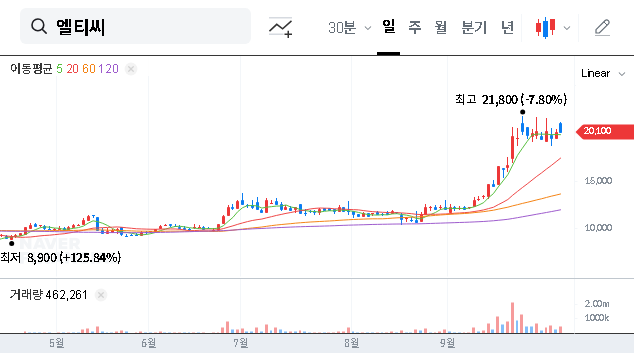
    The latest news surrounding LTC stock (170920) has sent ripples through the investment community. Soosung Asset Management, a significant institutional player, has officially reduced its holdings, a move that demands careful consideration from every current and prospective investor. This action can influence short-term market sentiment and raises critical questions about the company’s long-term trajectory. Is this a red flag signaling underlying issues, or a fleeting market event that creates a prime buying opportunity?

    This comprehensive LTC investment analysis will dissect the situation, exploring the immediate impacts, the company’s core fundamentals, and what this means for your investment strategy. We’ll provide the clarity you need to navigate the uncertainty and make an informed decision about the future of your LTC stock position.

    Understanding the News: Soosung’s Stake Reduction

    The Official Disclosure: What Changed?

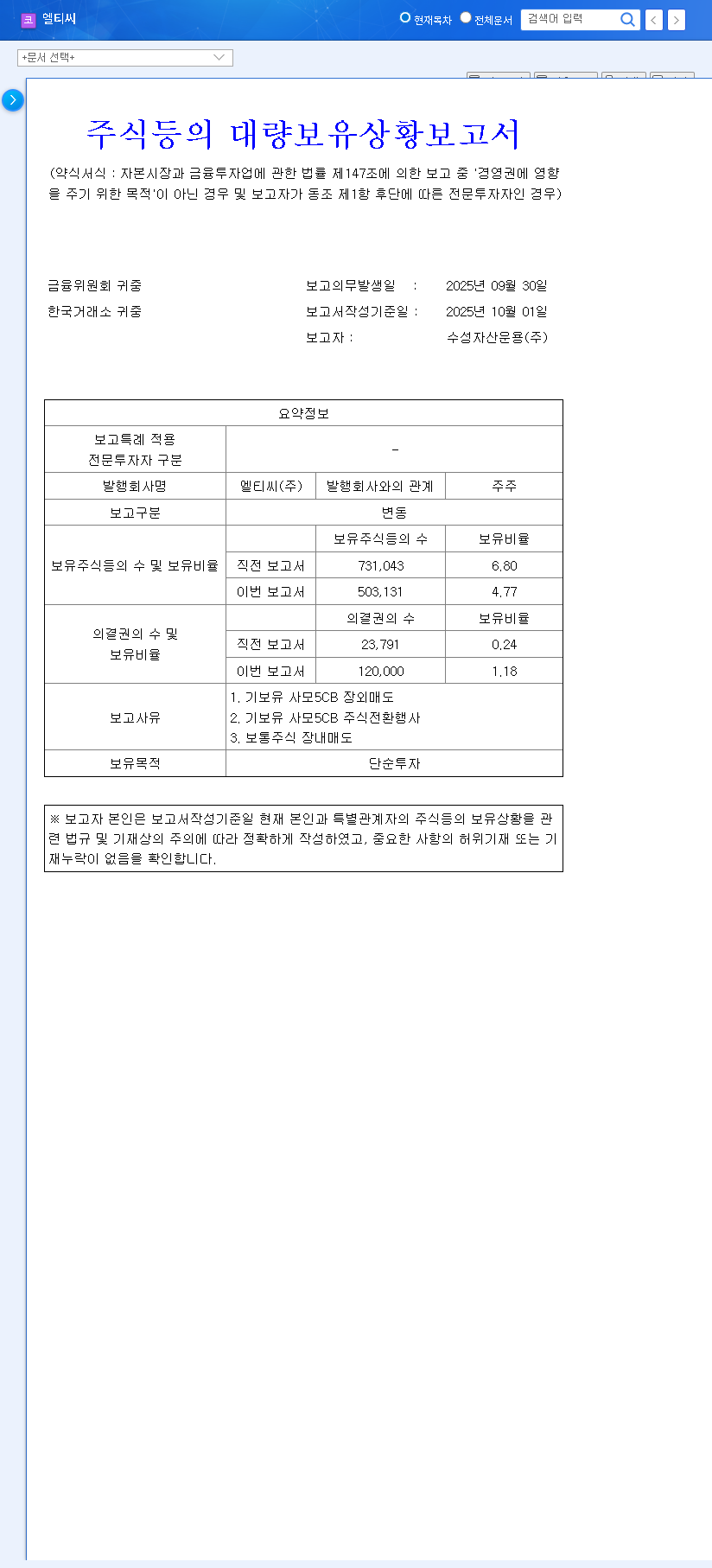
    On October 2, 2025, a significant disclosure was made. Soosung Asset Management announced a decrease in its holdings of LTC shares from 6.80% down to 4.77%. This 2.03 percentage point reduction is not a trivial adjustment and represents a substantial transaction that the market is bound to notice. You can view the Official Disclosure (DART Source) for complete transparency.

    Potential Reasons for the Sale

    An institutional sell-off is rarely driven by a single factor. The analysis points to a combination of strategic financial maneuvers:

    • Convertible Bond (CB) Strategy: Soosung executed a multi-part strategy involving its privately placed Convertible Bonds. A portion was sold off-market, while another was converted into shares, directly impacting the overall holding percentage as part of a standard CB investment cycle.
    • Profit Realization & Rebalancing: Over 200,000 common shares were sold directly on the open market. This could be a classic case of realizing profits after a period of growth or a strategic rebalancing of their portfolio to manage risk and allocate capital to other opportunities.

    It’s crucial to distinguish between a strategic portfolio adjustment by an institution and a flight from a company with failing fundamentals. Often, the former creates opportunity for retail investors.

    Analyzing the Impact on the LTC Share Price

    Immediate Market Reaction: The Supply Pressure Effect

    In the short term, news of a major investor reducing their stake can weaken investor sentiment. The on-market sale of over 200,000 shares introduces significant selling pressure. This sudden increase in supply, without an equivalent increase in demand, could lead to a temporary dip in the LTC share price. Traders should be prepared for heightened volatility.

    The Bigger Picture: Is This a Fundamental Shift for LTC Stock?

    While the short-term noise is important, long-term investors must look deeper. The 2% stake reduction is significant but may not signal a complete loss of faith in LTC’s core business. The crucial factor is whether the company’s fundamentals remain intact. While the converted CBs create a potential for future share supply (an ‘overhang’), this is a technical market factor, not necessarily a reflection of poor business performance. The real determinants of long-term value will be LTC’s operational results and broader market trends, such as those covered by financial authorities like Bloomberg’s market analysis.

    A Deep Dive into LTC’s Core Fundamentals (H1 2025)

    To truly gauge the LTC stock forecast, we must look past this single event and examine the company’s health. The H1 2025 report provides a solid foundation:

    • Resilient Revenue: Consolidated revenue reached 137.2 billion KRW, maintaining year-on-year growth. While the pace has slowed, indicating potential headwinds in the semiconductor and display sectors, the top line remains robust.
    • Improved Profitability: Operating profit showed positive improvement. This suggests strong cost management and a successful focus on higher-margin products, a sign of operational efficiency.
    • Future-Focused Investment: LTC maintains a stable capital structure while actively investing in R&D and new business ventures to secure future growth engines.

    These fundamentals suggest that the company’s intrinsic value proposition has not been fundamentally altered by Soosung’s recent sale. For more on evaluating company health, you can read our guide to fundamental analysis.

    Strategic LTC Investment Analysis: Your Action Plan

    So, how should you position yourself? Your approach to this LTC stock news depends heavily on your investment horizon.

    For the Short-Term Trader

    Caution is the word of the day. The selling pressure from Soosung could lead to price drops and volatility. Consider a wait-and-see approach or be prepared to implement strict stop-loss orders to manage downside risk if you decide to enter a position.

    For the Mid-to-Long-Term Investor

    This is where the opportunity may lie. If you believe in LTC’s solid fundamentals and its long-term strategy, a temporary price dip caused by this market event could be an attractive entry point. A patient investor who is not swayed by short-term noise may find this an ideal moment to initiate or add to a position, focusing on the recovery of the semiconductor industry and the performance of LTC’s new business ventures.
    (170920) LTC Stock Forecast: Institutional Sell-Off & In-Depth Investment Analysis 관련 이미지
  • LTC Convertible Bond Issuance: Short-term Pain, Long-term Gain?


    LTC Convertible Bond Issuance: Short-term Pain, Long-term Gain? 대표 차트 이미지


    What’s Happening? LTC Announces Convertible Bond Issuance

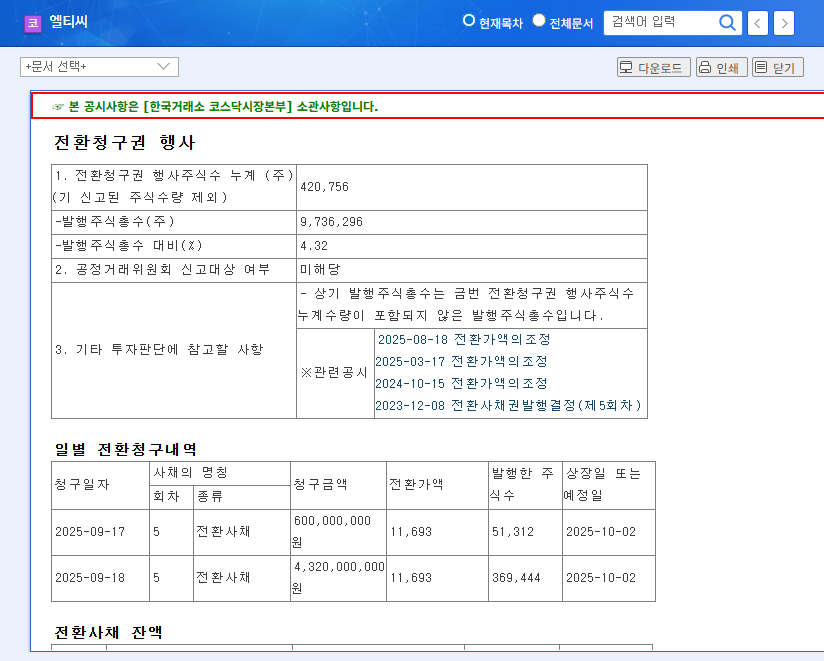
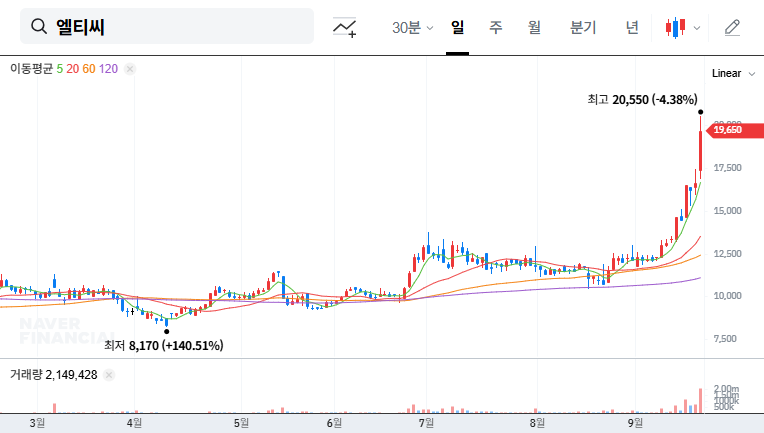
    LTC announced a new convertible bond issuance on September 18, 2025. Bondholders are exercising their conversion rights, leading to the issuance of 420,756 new shares. This represents 4.32% of the current market capitalization. The scheduled issuance date is October 2, 2025, with a conversion price of ₩11,693. The lower conversion price compared to the current stock price (₩19,650) raises concerns about potential profit-taking.

    Why the Issuance? LTC’s Financial Strategy

    LTC achieved a turnaround in the first half of 2025, demonstrating positive fundamentals. The company has secured growth momentum based on strong performance in its equipment division and the potential of new businesses (SOFC, OLED materials). This convertible bond issuance is interpreted as a strategy to improve financial structure by converting debt into equity and to enhance profitability by reducing interest expenses.

    What’s the Impact? Short-term Pain vs. Long-term Gain

    • Short-term Impact: The increased supply of shares and potential profit-taking may exert downward pressure on the stock price in the short term.
    • Long-term Impact: The issuance is expected to improve financial health by reducing debt and increasing capital, and enhance profitability by lowering interest expenses. Considering LTC’s solid fundamentals and growth potential, there is a possibility of stock price recovery in the long run.

    What Should Investors Do? Prudent Approach and Long-term Perspective

    The investment recommendation is ‘Neutral’ or ‘Hold’. Investors should approach with caution, mindful of short-term price volatility. Those who believe in LTC’s growth potential may consider a dollar-cost averaging strategy in case of price declines. Continuous monitoring of post-conversion stock movements, new business performance, and industry trends is crucial.


    Frequently Asked Questions (FAQ)

    What are convertible bonds?

    Convertible bonds are a type of debt security that gives the holder the option to convert the bond into a predetermined number of shares of the issuer’s common stock.

    Does LTC’s convertible bond issuance only have negative impacts on its stock price?

    In the short term, increased share supply can put downward pressure on the stock price. However, in the long term, improved financial structure is expected, and depending on the company’s growth, there is a possibility of a stock price increase.

    Should I invest in LTC?

    Investment decisions should be based on your own judgment. This analysis is not investment advice, and investment involves inherent risks.


    LTC Convertible Bond Issuance: Short-term Pain, Long-term Gain? 관련 이미지
    LTC Convertible Bond Issuance: Short-term Pain, Long-term Gain? 관련 이미지


  • LTC Stock Forecast: Analyzing Major Shareholder Stake Changes and Future Investment Strategies

    LTC Stock Forecast: Analyzing Major Shareholder Stake Changes and Future Investment Strategies 대표 차트 이미지

    1. What Happened? LTC Special Relationship Holder Stake Change Announcement

    The stake held by Choi Ho-seong and other special relationship holders in LTC has decreased from 30.65% to 30.18%. This decrease is due to various reasons, including on-market transactions, executive retirements, and changes in stock collateral loan agreements. Choi Ho-seong himself disposed of 18,967 shares through the exercise of CB call options.

    2. Why? LTC Fundamental Analysis and Market Conditions

    LTC experienced sluggish performance in the first half of 2025. Both operating profit and net income decreased due to declining sales in the semiconductor and FPD materials/equipment sectors and increased SG&A expenses. Currently, uncertainties such as a slowdown in the IT industry, exchange rate volatility, and rising raw material prices persist.

    3. So What? LTC Stock Forecast and Investment Strategies

    While there is a possibility of investor sentiment contracting in the short term due to the stake decrease, the mid- to long-term stock price trend depends on LTC’s fundamental recovery and the performance of its new businesses. Securing new growth engines such as QD-OLED, semiconductor equipment, OLED PR, and SOFC will be key variables. Ensuring management stability can also affect the stock price.

    4. Investor Action Plan

    • Closely monitor LTC’s earnings improvement trend and the progress of its new businesses.
    • Risk management is necessary in response to changes in macroeconomic variables and industry conditions.
    • Be mindful of the possibility of further stake changes and management changes.

    Frequently Asked Questions

    Q. Does a decrease in major shareholder stake always lead to a stock price decline?

    A. Not necessarily. Various factors, such as the reason for the stake decrease, the company’s fundamentals, and market conditions, affect the stock price. As in the case of LTC, reasons such as exercising CB call options can act as negative factors, but in the long run, the company’s growth potential and management stability have a more significant impact.

    Q. What is the expected outlook for LTC’s stock price?

    A. While there is high uncertainty in the short term, there is a possibility of mid- to long-term growth depending on the performance of new businesses such as QD-OLED and semiconductor equipment, and whether fundamentals improve. Risk management is crucial when investing.

    Q. What should investors be aware of when investing in LTC?

    A. It’s essential to consider various factors comprehensively, including the trend of earnings improvement, the progress of new businesses, the possibility of management changes, and macroeconomic variables. Consulting with an expert before investing is also a good approach.

    LTC Stock Forecast: Analyzing Major Shareholder Stake Changes and Future Investment Strategies 관련 이미지
    LTC Stock Forecast: Analyzing Major Shareholder Stake Changes and Future Investment Strategies 관련 이미지
  • LTC Announces Share Buyback: Impact on Stock Price and Investment Strategy

    1. What’s Happening with LTC’s Share Buyback?

    On August 21, 2025, LTC announced its decision to buy back 300,000 shares, approximately 2.99% of its market capitalization, worth about 3.3 billion won. The buyback is scheduled for August 29.

    2. Why the Share Buyback?

    Share buybacks are generally interpreted as a move to enhance shareholder value. Reducing the number of outstanding shares increases earnings per share (EPS) and book value per share (BPS). Furthermore, a decrease in the number of shares circulating in the market can lead to improved supply and demand dynamics.

    3. So, What About the Stock Price?

    A positive short-term impact is anticipated. The share buyback announcement can positively influence investor sentiment and provide upward momentum for the stock price. However, LTC is currently facing challenges with declining profitability. Therefore, after a potential short-term rise, the stock price is likely to revert to movements based on fundamentals. In other words, the long-term stock outlook depends on LTC’s ability to improve its earnings.

    4. What Should Investors Do?

    • Short-term investors: Consider investment strategies that capitalize on potential short-term price volatility around the buyback date.
    • Long-term investors: Continuously monitor LTC’s earnings improvements, new business performance, and macroeconomic changes before making investment decisions.
    • Risk management: Manage investment risks by considering factors like exchange rate fluctuations, risks associated with convertible bonds, and uncertainties in the semiconductor industry.
    What is a share buyback?

    A share buyback is when a company repurchases its own outstanding shares, reducing the number of shares available in the market and potentially increasing the value of remaining shares.

    Will LTC’s share buyback only have positive effects on the stock price?

    While a short-term upward momentum can be expected, sustained long-term stock price growth is unlikely without fundamental improvements in LTC’s profitability.

    What should investors consider when investing in LTC?

    Careful analysis of LTC’s future earnings, new business performance, and macroeconomic changes is crucial for making informed investment decisions. Remember to manage risk through diversification and other strategies.

  • LTC Stock Forecast: Is Soosung Asset Management’s Stake Sale a Buying Opportunity or a Warning Sign?

    1. What Happened?

    Soosung Asset Management converted its convertible bonds (CBs) in LTC into shares and then sold them on the open market, reducing its stake from 8.41% to 6.80%. While this could be a simple profit-taking move, the market may interpret it as a concern about LTC’s future prospects.

    2. Why Did They Reduce Their Stake?

    The official reason is ‘customer account decrease’ and ‘exercise of convertible bonds.’ Convertible bonds can be converted into shares at maturity, and recovering funds through this method is a common strategy for asset management companies. However, considering the recent upward trend in LTC’s stock price, the possibility of profit-taking cannot be ruled out.

    3. What Impact Will This Have on the Stock Price?

    • Short-term impact: Soosung Asset Management’s stake sale could negatively impact the stock price in the short term. A large sell-off could create downward pressure on the price.
    • Long-term impact: The long-term impact depends on LTC’s fundamentals. If the growth trend in the semiconductor and display markets continues, LTC’s earnings improvement could lead to a stock price increase.

    4. What Should Investors Do?

    Short-term investors should be wary of increased price volatility. Long-term investors should make investment decisions based on a comprehensive consideration of LTC’s business growth potential, profitability improvement, and changes in the macroeconomic environment. It is crucial to carefully review LTC’s 2025 half-year earnings announcement and monitor the specific performance of its new business ventures and profitability improvement efforts.

    What does Soosung Asset Management’s stake sale in LTC signify?

    Soosung Asset Management reduced its stake in LTC from 8.41% to 6.80% by converting convertible bonds into shares and selling them. This could be part of their investment strategy, but it can be interpreted as a negative signal by the market.

    What is the outlook for LTC’s stock price?

    In the short term, downward pressure on the stock price is expected due to the stake sale. However, the long-term direction of the stock price will depend on LTC’s fundamentals and market conditions.

    What should investors consider when investing in LTC?

    Investors should comprehensively analyze LTC’s business growth, profitability, financial structure, and macroeconomic environment. They should also be mindful of short-term price volatility.

  • LTC’s 2025 Half-Year Earnings: Turnaround Success, But Q2 Slowdown Raises Concerns

    1. LTC’s 2025 Half-Year Performance: Turnaround Achieved, But Q2 Slowdown Signals Caution

    LTC reported a return to profitability in the first half of 2025, with consolidated revenue of KRW 137.2 billion and operating profit of KRW 14.3 billion. Growth in the display and semiconductor materials/equipment business, particularly the expansion of LSE’s wafer cleaning equipment business, drove revenue growth. However, preliminary Q2 results (revenue of KRW 61.3 billion and operating profit of KRW 4.9 billion) indicate a slowdown compared to Q1, warranting close monitoring of future performance.

    2. Segment Performance: Focus on Semiconductor Equipment Growth

    The semiconductor equipment manufacturing segment significantly contributed to LTC’s improved performance, recording revenue of KRW 96.7 billion and operating profit of KRW 10.7 billion in the first half of 2025. Strong performance of LSE’s wafer cleaning equipment and the development of new process equipment played a key role, with a solid order backlog of KRW 34.9 billion. The chemical product manufacturing segment also maintained stable growth.

    3. Investment Perspective: Short-Term Uncertainty Amid Mid-to-Long-Term Growth Potential

    The Q2 earnings slowdown may negatively impact short-term investor sentiment. However, the steady growth of the semiconductor equipment segment and investments in new growth drivers, such as OLED PR development and SOFC electrolyte and separator plate development, suggest mid-to-long-term growth potential.

    4. Action Plan for Investors: Careful Investment Decisions Based on Thorough Analysis

    Investors considering LTC should carefully analyze the reasons behind the Q2 slowdown and future earnings outlook. A prudent investment decision should be made after considering various factors, including detailed segment performance, R&D investment strategies, and macroeconomic variables.

    How did LTC perform in the first half of 2025?

    LTC achieved a turnaround in the first half of 2025, reporting consolidated revenue of KRW 137.2 billion and operating profit of KRW 14.3 billion.

    What caused the slowdown in LTC’s Q2 earnings?

    The half-year report does not specify the reasons for the Q2 slowdown. Further details should be available in subsequent disclosures.

    What are LTC’s main growth drivers?

    The growth of the semiconductor equipment business, particularly LSE’s wafer cleaning equipment, is prominent, and investments in new businesses are also expected to drive future growth.

    What should investors be cautious about when investing in LTC?

    Investors should carefully consider the Q2 slowdown, the decrease in R&D expenditure ratio, and exchange rate volatility before making investment decisions.

  • LTC’s Subsidiary IPO: A Potential Catalyst for Growth? IR Analysis and Investment Strategy

    1. LTC’s IR: What Happened?

    LTC held an investor relations meeting on August 21, 2025, to discuss the planned IPO of its subsidiary. The main focus of the IR was the re-evaluation of corporate value and plans to enhance shareholder value through the subsidiary’s listing.

    2. Why Does It Matter?

    LTC returned to profitability in Q1 2025 and continues its growth trajectory. The subsidiary’s IPO presents a significant opportunity to further strengthen this growth momentum. The funds secured through the listing are expected to contribute to securing LTC’s future growth engine by being utilized for investments in new businesses and improving its financial structure.

    3. What’s the Potential Impact?

    • Positive Scenario: A successful IPO will lead to a re-evaluation of LTC’s corporate value and accelerate growth through secured investment funds. Shareholders can anticipate shareholder return policies such as increased dividends and share buybacks.
    • Potential Risks: Failure of the IPO, a low valuation, or poor performance of the subsidiary could negatively impact the stock price.

    Furthermore, the current macroeconomic environment (exchange rates, interest rates, raw material prices, etc.) can have various effects on LTC’s business and requires continuous monitoring.

    4. What Should Investors Do?

    Investors should carefully review the IR materials and information related to the subsidiary’s IPO that will be disclosed in the future. It is crucial to check the listing schedule, expected valuation, and fund utilization plan before making investment decisions. A comprehensive investment strategy should be developed, considering LTC’s core business competitiveness, financial stability, and growth potential.

    When is LTC’s subsidiary expected to go public?

    The exact IPO date has not yet been announced. It is expected that related information will be shared at the August 21st shareholder meeting.

    How will the subsidiary’s listing affect LTC’s stock price?

    A successful listing could positively impact the stock price through re-evaluation of corporate value and enhanced growth prospects. However, failure or poor performance could lead to a decline in stock price.

    What are LTC’s main businesses?

    LTC is engaged in the display and semiconductor materials and equipment business, with key products and technologies including wafer cleaning equipment, OLED PR, and SOFC.

  • LTC Announces Shareholder Return Policy: Cash & Stock Dividends + Stock Split

    1. What is LTC’s Shareholder Return Policy?

    On July 31, 2025, LTC announced plans to increase cash dividends, distribute LSE stock dividends, and implement a stock split to enhance shareholder value.

    • Cash Dividends: Dividend payout ratio increased to at least 15% (starting from FY2025), and 50% of LSE’s dividends will be distributed to LTC shareholders (assuming LSE is listed).
    • Stock Dividends: 10% of LSE’s IPO shares will be distributed as stock dividends to LTC’s common shareholders (excluding major shareholders and related parties, assuming LSE is listed).
    • Stock Split: A 100-200% stock split will be implemented to increase LTC’s trading volume (concurrently with cash/stock dividends).

    2. LTC Fundamentals and Market Conditions

    LTC’s Q1 2025 earnings were weaker year-over-year, but the order backlog for the equipment business is positive, and there is growth potential in new businesses. The current KRW/USD and KRW/EUR exchange rates are stable, but rising raw material prices and interest rates could impact LTC’s performance. The long-term growth outlook for the display and semiconductor industries is positive, but increased competition should be considered.

    3. How Will the Shareholder Return Policy Affect LTC’s Stock Price?

    Increased cash dividends could improve investor sentiment, but the actual dividend amount may vary depending on future earnings. LSE stock dividends offer additional investment opportunities, but LSE’s growth and listing status are key variables. The stock split could increase liquidity but also has the potential to dilute share prices.

    4. Investor Action Plan

    LTC’s shareholder return plan could be positive for the stock price in the short term, but investors should consider the potential dilution effect of the stock split and the uncertainty surrounding LSE’s listing and performance. It’s crucial to continuously monitor information related to LSE, LTC’s future earnings announcements, and market reactions to develop an effective investment strategy.

    LTC Shareholder Return Policy FAQs

    When will LTC shareholders start receiving increased cash dividends?

    The increased cash dividends, with a payout ratio of at least 15%, will be distributed starting from the fiscal year 2025.

    Who is eligible for the LSE stock dividends?

    Assuming LSE is listed, LTC’s common shareholders, excluding major shareholders and related parties, will be eligible for the LSE stock dividends.

    What is the potential impact of the stock split on the share price?

    The stock split will increase the number of outstanding shares, improving liquidity, but it also has the potential to dilute the share price.

  • LTC Invests ₩10 Billion in Semiconductor Materials: A Leap Forward or a Risky Gamble?

    1. LTC’s ₩10 Billion Bet on Semiconductor Materials

    On July 24, 2025, LTC announced a significant investment of ₩10 billion in semiconductor material R&D and production facilities. This represents 5.27% of their capital, indicating a serious commitment to establishing semiconductor materials as a future growth engine.

    2. LTC’s Current Landscape: Opportunities and Challenges

    Despite a decline in sales in Q1 2025, LTC increased operating and net profits through cost reduction efforts and a focus on high-value-added products. However, the low operating rate (5.4%) in their core chemical business raises concerns about future growth. While the equipment business maintains a strong order backlog, the time lag between orders and revenue creates uncertainty. New businesses in SOFC and OLED materials have yet to make significant revenue contributions.

    3. Will This Investment Reshape LTC’s Future?

    This investment reflects LTC’s bet on the growth potential of the semiconductor market. Potential benefits include securing growth drivers for new businesses, enhancing technological competitiveness and profitability through R&D, and a positive market reaction to the investment, potentially boosting stock prices. However, investors must consider the risks, including increased financial burden if the investment fails, intense market competition, potential short-term profit decline, and external factors like fluctuations in raw material prices and exchange rates. The recent rise in the won-dollar exchange rate and volatility in oil prices further amplify these risks.

    4. Action Plan for Investors

    Investors should carefully examine the specific type of semiconductor materials being targeted, detailed R&D plans, production facility scale, market competitiveness, projected sales and profitability, and risk management strategies. It’s crucial to assess the long-term growth potential rather than reacting to short-term stock price fluctuations.

    What specifically is LTC’s ₩10 billion investment focused on?

    The investment is earmarked for R&D and expansion of production facilities for semiconductor materials. Specific target materials and detailed R&D plans have not yet been disclosed.

    How will this investment impact LTC’s financial performance?

    While there is a possibility of short-term profit decline due to increased investment costs, long-term profitability improvement is expected through enhanced technological competitiveness and productivity gains.

    What should investors be mindful of?

    Investors should thoroughly consider the details of the investment, market competition, and external factors like exchange rates and raw material prices, and make investment decisions based on a long-term perspective.

  • LTC: Soaring with Subsidiary IPO? Key IR Insights & Investment Strategies

    1. What’s the LTC IR About?

    LTC will hold a shareholder meeting on July 31st regarding its subsidiary’s IPO. The IR session will discuss the IPO plan, along with potential shareholder return policies and future value enhancement strategies. This IR is anticipated to be a crucial opportunity for LTC, given its recent performance struggles.

    2. Why is LTC Listing its Subsidiary?

    LTC experienced a significant drop in sales (-89%) in its chemical division during Q1 2025, while its equipment division showed high growth (+104%). Securing funds through the subsidiary’s IPO is expected to play a vital role in improving LTC’s financial structure and securing new growth engines. Funding is urgently needed for investments in future growth drivers such as entering the QD-OLED market and the SOFC business.

    3. What’s LTC’s Future After the IR?

    The subsidiary’s listing and the announcement of shareholder return policies can positively impact stock prices in the short term. However, market reactions will depend on the specifics announced during the IR and the overall market conditions. Investors should carefully examine the subsidiary’s performance outlook, the concrete IPO plan, and the level of shareholder return measures. Clear explanations and demonstrable execution from management regarding strategies for improving the chemical division’s performance and strengthening financial stability are crucial.

    4. What Should Investors Do?

    Investors should thoroughly analyze the IR information and assess the subsidiary’s growth potential and the effectiveness of the shareholder return policies. It’s important to make investment decisions based on a long-term perspective rather than being swayed by short-term stock fluctuations. Further information gathering and future outlook analysis are recommended for making sound investment decisions.

    When is the LTC IR scheduled?

    It’s scheduled for July 31, 2025, at 2 PM.

    What are the key topics of the LTC IR?

    The subsidiary’s IPO plan, shareholder return policies, and value enhancement strategies will be discussed.

    Why is LTC’s subsidiary IPO important?

    It allows LTC to secure funds for improving its financial structure and investing in new growth engines.

    What precautions should investors take?

    Investors should carefully analyze the specifics of the IR information, the subsidiary’s growth potential, and the effectiveness of shareholder return policies.