Tag: Logistics Automation

  • (319400) HYUNDAI MOVEX Stock Analysis: Impact of Hyundai Elevator’s Major Share Sale

    (319400) HYUNDAI MOVEX Stock Analysis: Impact of Hyundai Elevator’s Major Share Sale

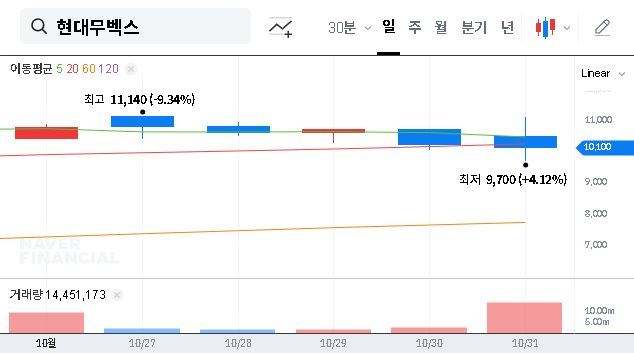
    A significant development has captured the attention of investors in HYUNDAI MOVEX (현대무벡스). Hyundai Elevator, the company’s largest shareholder, has announced a substantial reduction in its stake, sending ripples through the market and prompting questions about the future of HYUNDAI MOVEX stock. How will this shift in ownership affect the stock price, and what is the most intelligent way for investors to navigate this uncertainty?

    This comprehensive investment analysis goes beyond the surface-level news. We will dissect the event, evaluate the company’s robust fundamentals, and provide a clear, actionable investment strategy to help you identify both the risks and the hidden opportunities within this change.

    The Disclosure: Unpacking the Hyundai Elevator Stake Sale

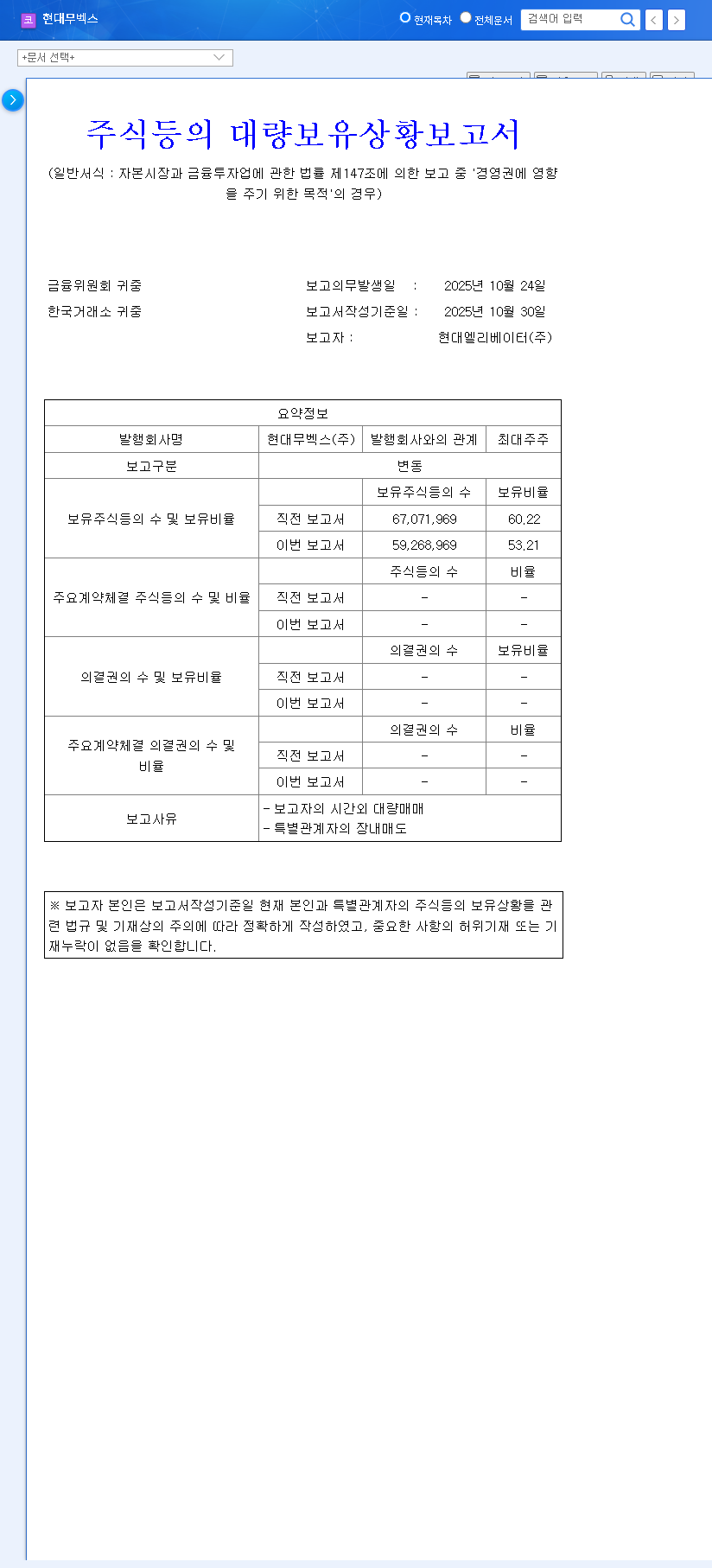
    On October 31, 2025, Hyundai Elevator formally disclosed a change in its large shareholding status for HYUNDAI MOVEX. The core of this announcement was the reduction of its stake by approximately 7 percentage points, from 60.22% down to 53.21%. This transaction was executed via an after-hours block trade and an on-market sale by a related party. Despite this sale, Hyundai Elevator’s stated purpose of holding remains ‘influence on management,’ indicating continued strategic control. You can view the complete filing in the Official Disclosure (DART Report).

    Why Does This HYUNDAI MOVEX Share Sale Matter?

    A major shareholder selling a significant block of shares can be interpreted in several ways. It could signal a strategic portfolio adjustment by Hyundai Elevator, perhaps to secure liquidity for other ventures or to focus more on its core elevator business. In the short term, such a sale often creates selling pressure and introduces uncertainty, which can negatively impact investor sentiment and the stock price.

    While the short-term market reaction may be volatile, it is crucial to remember that Hyundai Elevator retains a majority stake of 53.21%. This ensures management stability and control remain firmly in place for the foreseeable future.

    Over the long term, this could have positive effects. The increased free float of shares can enhance liquidity for HYUNDAI MOVEX stock, potentially attracting a new base of institutional and retail investors. For real-time market data and analysis, professionals often rely on platforms like Reuters Market Data.

    Beyond the Headlines: Are HYUNDAI MOVEX’s Fundamentals Strong?

    To form a sound investment thesis, we must look past the ownership change and analyze the company’s core business. HYUNDAI MOVEX demonstrates robust fundamentals, primarily powered by two key segments.

    1. Logistics Automation: The Engine of Growth (78% of Revenue)

    This is the company’s primary growth driver. Fueled by the global e-commerce boom and the push for greater efficiency in supply chains (Industry 4.0), the demand for logistics automation is soaring. HYUNDAI MOVEX is a market leader, expanding into high-value sectors like secondary battery manufacturing and cold storage solutions. Its growing international presence in China, Vietnam, the US, and Hungary further solidifies its market position.

    2. Platform Screen Doors (PSD): A Stable Foundation (15% of Revenue)

    The PSD business provides a steady stream of revenue. With a dominant domestic market share of over 50%, the company benefits from new subway line construction and the renovation of aging stations. Furthermore, successful projects like the Sydney Metro in Australia and crucial SIL certification are paving the way for expansion into the lucrative European market.

    Financial Health & Shareholder Value

    A look at the balance sheet reveals a stable financial position. While operating profit saw a slight decrease in Q2 2025 due to rising raw material costs, revenue continued to grow year-on-year. Crucially, the company’s debt-to-equity ratio has improved, indicating sound financial management. Moreover, the recent cancellation of 6.59 million treasury shares is a strong positive signal, as it enhances shareholder value by increasing earnings per share. For those unfamiliar with the benefits, you can learn more about how treasury stock cancellation works in our related article.

    Investor Action Plan: Crafting Your HYUNDAI MOVEX Strategy

    Given the short-term uncertainty from the Hyundai Elevator sale balanced against strong long-term fundamentals, we recommend a “Neutral” stance with a strategic approach.

    • Short-Term Strategy: Adopt a wait-and-see approach. Monitor how the market absorbs the newly available block of shares. A significant, sentiment-driven price drop could present a compelling phased buying opportunity for investors who believe in the company’s fundamental value.
    • Mid-to-Long-Term Strategy: Focus on the fundamentals. The growth trajectory of the logistics automation market is the primary catalyst for HYUNDAI MOVEX. Long-term investors should base their decisions on the company’s continued performance, technological innovation, and expanding order backlog.
    • Key Monitoring Points: Keep a close watch on any further announcements from Hyundai Elevator regarding its remaining stake. Also, analyze how any changes in ownership structure might influence future business strategy or M&A activity.

    In conclusion, the HYUNDAI MOVEX share sale by its parent company is a pivotal event creating short-term market noise. However, the company’s strong position in high-growth industries, stable financials, and clear path for future revenue suggest that for the patient investor, this period of uncertainty could evolve into a long-term opportunity.
    (319400) HYUNDAI MOVEX Stock Analysis: Impact of Hyundai Elevator's Major Share Sale 관련 이미지
  • (381620) Xenics Robotics Stock (381620): Deep Dive Analysis of CEO Share Sale & Future Outlook

    (381620) Xenics Robotics Stock (381620): Deep Dive Analysis of CEO Share Sale & Future Outlook

    The performance of Xenics Robotics stock (381620) has recently come under intense scrutiny following a public disclosure about changes in major shareholder equity. When a CEO and related insiders reduce their holdings, it sends ripples through the market, forcing investors to question whether it’s a routine portfolio adjustment or a warning sign about the company’s future. This comprehensive analysis will dissect the disclosure, evaluate the company’s fundamentals, and provide a clear strategic roadmap for current and potential investors.

    We’ll explore the short-term market sentiment, the long-term implications for the Xenics Robotics stock outlook, and how macroeconomic factors play into this complex equation. Let’s delve into the critical investment points for this pivotal robotics company.

    The Catalyst: Unpacking the Shareholder Stake Reduction

    Details of the Shareholding Change

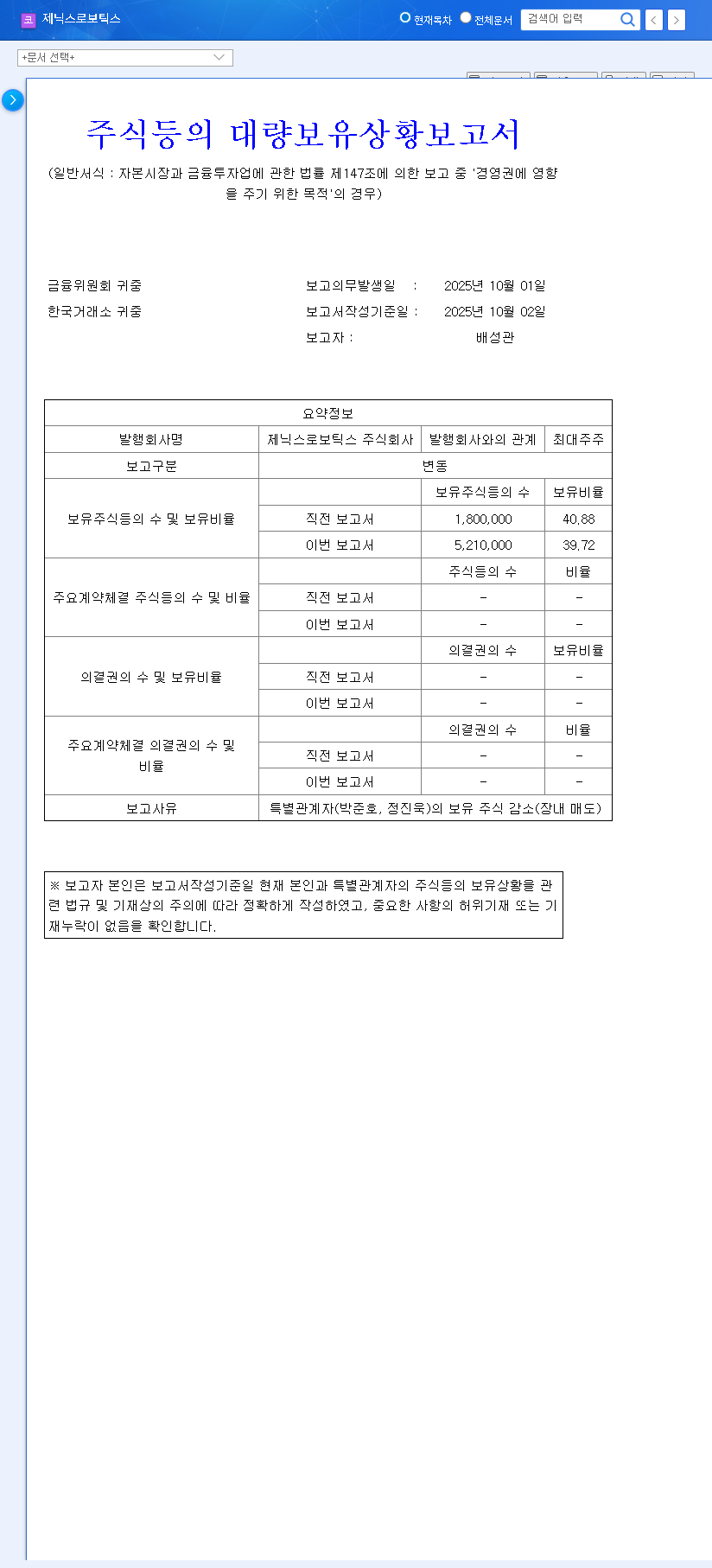
    On October 2, 2025, Xenics Robotics filed its ‘Report on Major Shareholder Status,’ a document that caught the market’s attention. According to the Official Disclosure, the combined shareholding of CEO Bae Seong-gwan and related parties decreased by 1.16 percentage points, falling from 40.88% to 39.72%. The stated purpose for holding the shares remains ‘management influence,’ which makes any reduction particularly noteworthy.

    The reduction was attributed to open market sales by two related individuals: Park Jun-ho (selling 5,588 shares) and Jung Jin-wook (selling 7,130 shares). While these individual amounts aren’t massive, the collective action from insiders raises immediate questions about their confidence in the company’s near-term prospects.

    Current State of Xenics Robotics: A Fundamental Review

    Performance Challenges vs. Financial Stability

    A thorough 381620 stock analysis reveals a company at a crossroads. The first half of 2025 painted a challenging picture:

    • Declining Revenue: Sales revenue was 12.58 billion KRW, a steep 59.1% decrease year-over-year, largely due to reduced facility investment from key clients.
    • Operating Loss: The company swung to an operating deficit of 4.45 billion KRW, pressured by rising costs and falling orders in its main Stocker and AGV/AMR business segments.

    However, beneath these top-line struggles lies a foundation of remarkable financial health. With a debt-to-equity ratio of just 14.5% and a current ratio of 440.2%, the company’s balance sheet is very stable. This financial prudence gives management significant runway to navigate the current downturn and invest in future growth.

    The core challenge for Xenics Robotics is bridging the gap between its current performance slump and its promising long-term potential in a high-growth industry.

    Securing Future Growth Engines

    Management is not standing still. The company is actively pursuing growth through strategic initiatives like establishing a U.S. subsidiary to tap into overseas markets and continuing R&D investment in next-generation technologies, including AI-powered outdoor logistics robots. The global smart factory and logistics automation market is expanding rapidly, a trend confirmed by numerous industry reports. Xenics Robotics is well-positioned to capture this growth, provided it can execute its strategy effectively.

    Investment Strategy for Xenics Robotics Stock

    The CEO shareholding reduction is a critical data point that cannot be ignored. It introduces short-term uncertainty and may signal a lack of confidence from those who know the company best. However, it’s essential to weigh this against the company’s solid financial footing and long-term market opportunity.

    Guidance for Short-Term Traders

    For those with a shorter time horizon, caution is paramount. The insider sales create a potential supply overhang and negative sentiment that could depress the Xenics Robotics stock price in the coming weeks and months. Key actions include:

    • Monitoring for any further insider selling disclosures.
    • Watching for signs of a technical breakdown below key support levels.
    • Treating the stock as highly volatile until the market digests this news.

    Guidance for Long-Term Investors

    Long-term investors should look past the immediate noise and focus on fundamental execution. The key question is whether the current performance dip is a temporary cyclical issue or a sign of deeper structural problems. A successful Xenics Robotics investment from this point will depend on:

    • Turnaround Evidence: Seeing a clear recovery in order books and revenue in upcoming quarterly reports.
    • Strategic Progress: Tangible results from the U.S. subsidiary and advancements in R&D projects.
    • Management Communication: Clear and transparent communication from leadership about their strategy to restore growth and shareholder value.

    Understanding the broader sector is also key. For more context, you can review our complete guide to investing in robotics stocks.

    Frequently Asked Questions

    What was the exact change in CEO and insider shareholding?

    The combined stake of CEO Bae Seong-gwan and related parties decreased by 1.16%, from 40.88% to 39.72%, due to open market sales by two associates.

    How is this affecting the Xenics Robotics stock price now?

    In the short term, this news can create negative pressure on the stock due to concerns about insider confidence and an increase in the supply of shares on the market. Increased volatility and investor caution are expected.

    Is Xenics Robotics financially stable despite poor performance?

    Yes. Despite recent revenue declines and an operating loss, the company maintains a very strong and stable financial structure with a low debt-to-equity ratio (14.5%) and high liquidity (440.2% current ratio).

    (381620) Xenics Robotics Stock (381620): Deep Dive Analysis of CEO Share Sale & Future Outlook 관련 이미지
  • TXRobotics After-Hours Block Trade Analysis: Opportunity or Risk? (September 22, 2025)


    What Happened?

    Before the market opened on September 22, 2025, 735,444 shares of TXRobotics were traded in an after-hours block trade worth 13.2 billion KRW. Foreign investors bought 9.4 billion KRW worth of shares, while other institutions sold 8.2 billion KRW worth.

    Why Did This Happen?

    After-hours block trades often reflect the movements of institutional investors. Foreign buying could indicate expectations for the company’s growth potential, while institutional selling could be due to various reasons, such as short-term profit-taking or portfolio adjustments. For TXRobotics, recent entry into the service robot sector and the growth potential of the logistics automation market may have been positive factors.

    What’s Next?

    This block trade could lead to short-term stock price volatility. The growth potential of the service robot business and the logistics automation market are positive factors, but short-term profit decline and financial soundness issues warrant caution. Closely monitor future earnings announcements for operating profit turnaround, new business performance, and financial improvement efforts.

    What Should Investors Do?

    • Short-term investors: Be cautious of short-term stock price volatility and make prudent investment decisions.
    • Long-term investors: Focus on the company’s long-term growth potential, but consider a dollar-cost averaging strategy in light of financial risks.


    Frequently Asked Questions

    What is TXRobotics’ main business?

    TXRobotics’ core businesses are logistics automation (wheel sorters, tilt-tray sorters) and robotic automation (AMR/AGV). They are recently expanding into the service robot sector.

    How does after-hours block trading affect stock prices?

    After-hours block trading can increase short-term stock price volatility. Trades executed before the market opens can particularly impact the opening price the next trading day.

    What are the key considerations when investing in TXRobotics?

    Be mindful of the short-term profit decline and financial stability issues. It’s also crucial to monitor changes in macroeconomic indicators and future earnings announcements.


  • SMCore’s New Majority Shareholder: M2i Corporation Replaces SK – Investment Opportunity?


    SMCore's New Majority Shareholder: M2i Corporation Replaces SK - Investment Opportunity? 대표 차트 이미지


    1. What Happened? SMCore’s Majority Shareholder Change

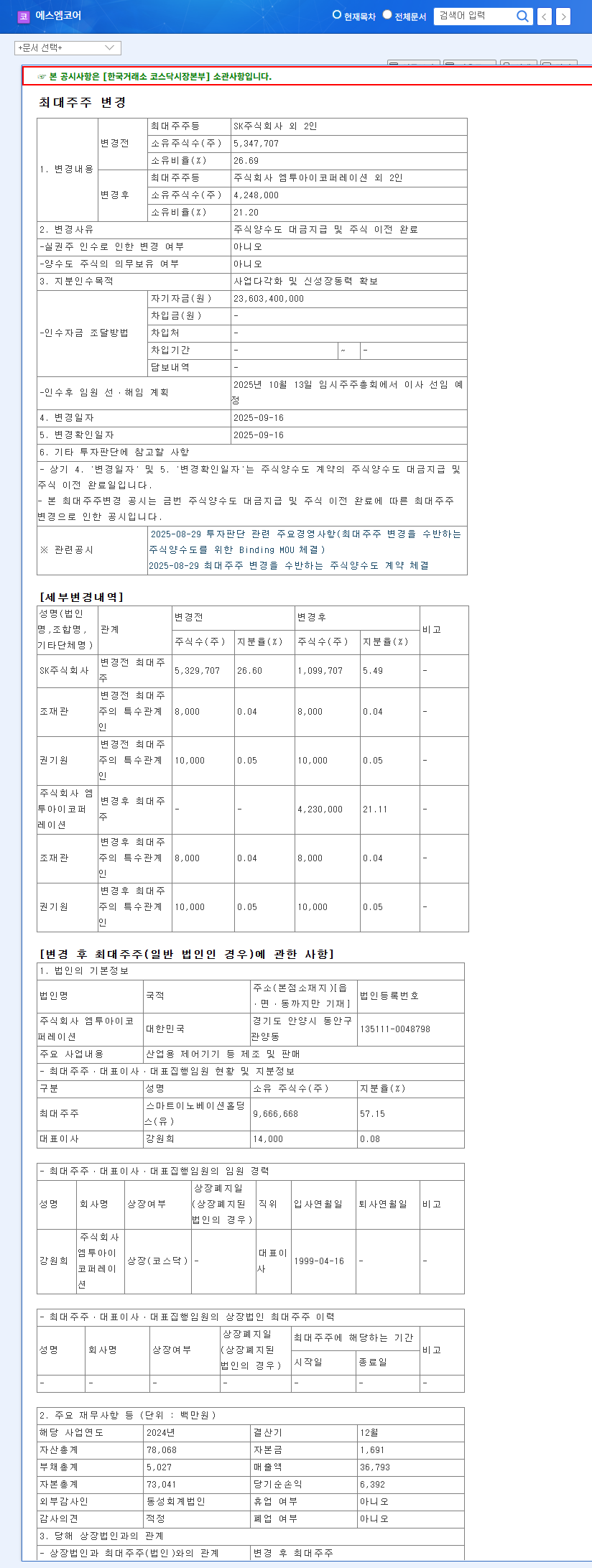
    SMCore’s majority shareholder has transitioned from SK Corporation to M2i Corporation, with the stake changing from 26.69% to 21.20%. This is more than just a shift in ownership; it could be a significant turning point for SMCore’s future.

    2. Why the Change? Acquisition Purpose and Background

    M2i Corporation acquired SMCore for business diversification and to secure new growth engines. They anticipate synergy effects, especially in smart factory and smart logistics solutions. The change in the relationship with the SK Group is also noteworthy.

    3. SMCore: A Company Overview and Fundamental Analysis

    • Strengths: Expertise in logistics automation, expansion into semiconductor/secondary battery industries
    • Financials: Revenue growth, return to profitability, but high cost of sales ratio
    • Orders: Secured order backlog of KRW 232.97 billion (positive)
    • Risks: High cost of sales ratio, exchange rate volatility, global economic fluctuations

    4. Impact of the Change: Opportunities and Threats

    Positive Impacts: Business synergy, improved management efficiency, increased investment. Potential Threats: Uncertainty in business direction, initial integration challenges, persistent high cost of sales and exchange rate volatility.

    5. Should You Invest? Investment Opinion and Strategy

    The current investment opinion is “Neutral”. Close monitoring of synergy effects, improvements in the cost of sales ratio, and exchange rate volatility management capabilities is crucial.

    6. Key Points for Investors to Watch

    • Synergy strategy with M2i Corporation
    • Efforts to improve operating profit margin
    • Exchange rate volatility management
    • Vision and execution of the new management team


    FAQ

    What is M2i Corporation?

    [Briefly explain M2i Corporation, their business areas, etc.]

    What are SMCore’s main businesses?

    SMCore operates in automated logistics systems, semiconductors, and secondary battery industries.

    What is the outlook for SMCore’s stock price after the change in majority shareholder?

    Short-term stock price volatility is expected, but the long-term outlook depends on the realization of synergies with M2i Corporation.


    SMCore's New Majority Shareholder: M2i Corporation Replaces SK - Investment Opportunity? 관련 이미지
    SMCore's New Majority Shareholder: M2i Corporation Replaces SK - Investment Opportunity? 관련 이미지


  • Hyundai Movex Designated as Investment Warning Stock: Crisis or Opportunity?

    What Happened? Background of Hyundai Movex’s Designation

    Hyundai Movex was designated as an investment warning stock on September 15, 2025, due to a rapid surge in its stock price. While a measure to protect investors, this could lead to a downturn in investment sentiment.

    Why Does This Matter? Analyzing the Short-Term/Long-Term Impact

    • Short-term impact: Increased stock price volatility and potential decline in investor sentiment are likely. Be mindful of profit-taking selling pressure.
    • Long-term impact: The designation itself has a limited direct impact on fundamentals. Growth in the logistics automation sector and overseas expansion remain positive factors. However, continuous monitoring of profitability, debt ratio, etc., is necessary.

    So, How Should You Invest? Investment Strategy Recommendations

    • Short-term investors: Be cautious of increased price volatility and consider opportunities for profit-taking following the recent price surge.
    • Long-term investors:
      • Monitor logistics automation and new business performance, cost management capabilities, and improvements in financial soundness.
      • Analyze the impact of changes in macroeconomic indicators.
      • Consider a diversified investment strategy based on company fundamentals.

    Key Investment Points

    Hyundai Movex is expected to grow steadily with the expansion of the logistics automation market and overseas expansion. However, when investing, it’s crucial to carefully analyze risk factors such as profitability, financial soundness, and macroeconomic changes before making investment decisions.

    Frequently Asked Questions

    What is an investment warning stock designation?

    An investment warning stock designation is applied to stocks that have experienced a rapid price surge in a short period to alert investors to potential risks. It’s a warning sign indicating increased investment risk due to the rapid price increase.

    What are the restrictions when a stock is designated as an investment warning stock?

    The margin requirement ratio for purchasing the stock increases, and the stock may be excluded from margin trading eligibility.

    What is the future outlook for Hyundai Movex?

    Growth in the logistics automation sector and overseas market expansion are positive, but managing risks such as profitability and financial soundness is important.

  • M2i Acquires SMcore Stake: A Game Changer in the Smart Factory Market?

    M2i Acquires SMcore Stake: A Game Changer in the Smart Factory Market? 대표 차트 이미지

    What Happened? M2i Acquires 21.11% Stake in SMcore

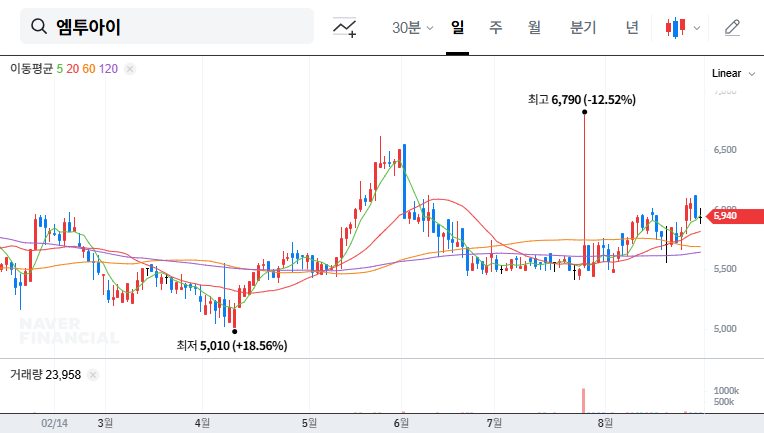
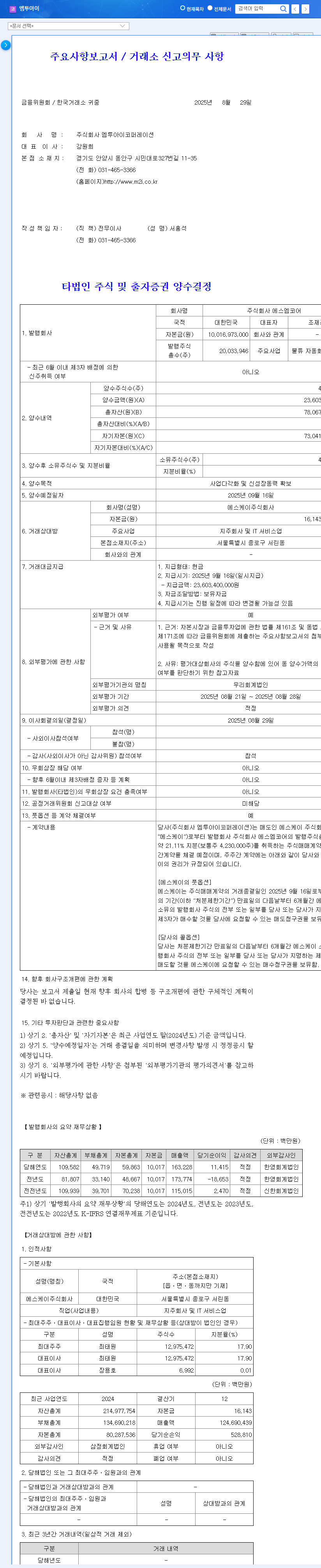
    On August 29, 2025, M2i announced its acquisition of a 21.11% stake in SMcore, a logistics automation solutions provider, for 23.6 billion KRW. The acquisition is expected to be completed on September 16, 2025.

    Why the Acquisition? Diversification and New Growth Engines

    M2i aims to expand its smart factory solutions business into the logistics automation sector and secure future growth engines. The company anticipates enhanced competitiveness as a total smart factory solutions provider by leveraging synergies between smart factory and logistics automation technologies.

    What’s Next? Potential Benefits and Risks

    • Potential Benefits:
      • Business diversification and new revenue streams
      • Synergies between smart factory and logistics automation
      • Stable acquisition based on a solid financial structure
    • Potential Risks:
      • Post-merger integration (PMI) risks
      • Uncertainty regarding synergy realization
      • Potential need for additional funding

    What Should Investors Do? A Balanced Investment Strategy

    While M2i’s acquisition of SMcore presents long-term growth potential, potential risks exist. Investors should carefully consider both the positive aspects and risk factors before making investment decisions. Closely monitoring the realization of synergies following the M&A will be crucial.

    Frequently Asked Questions

    What is M2i?

    M2i is a smart factory solutions provider, offering services such as data collection and analysis on manufacturing sites and building production management systems.

    What is SMcore?

    SMcore is a logistics automation solutions provider, offering advanced logistics systems and robotics technology.

    What is the purpose of this acquisition?

    M2i acquired SMcore for business diversification and securing new growth engines. The goal is to become a total smart factory solutions provider by leveraging the synergy between smart factory and logistics automation technologies.

    M2i Acquires SMcore Stake: A Game Changer in the Smart Factory Market? 관련 이미지
    M2i Acquires SMcore Stake: A Game Changer in the Smart Factory Market? 관련 이미지
  • SMCore Acquired by M2i Corporation: Investment Opportunity?

    SMCore Acquired by M2i Corporation: Investment Opportunity? 대표 차트 이미지

    What Happened?

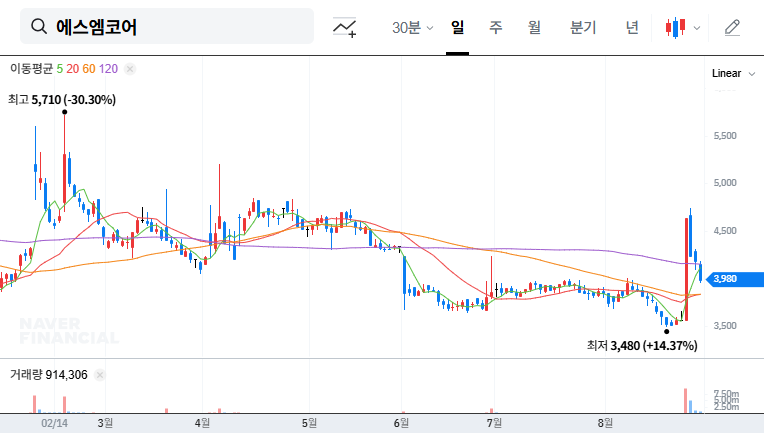
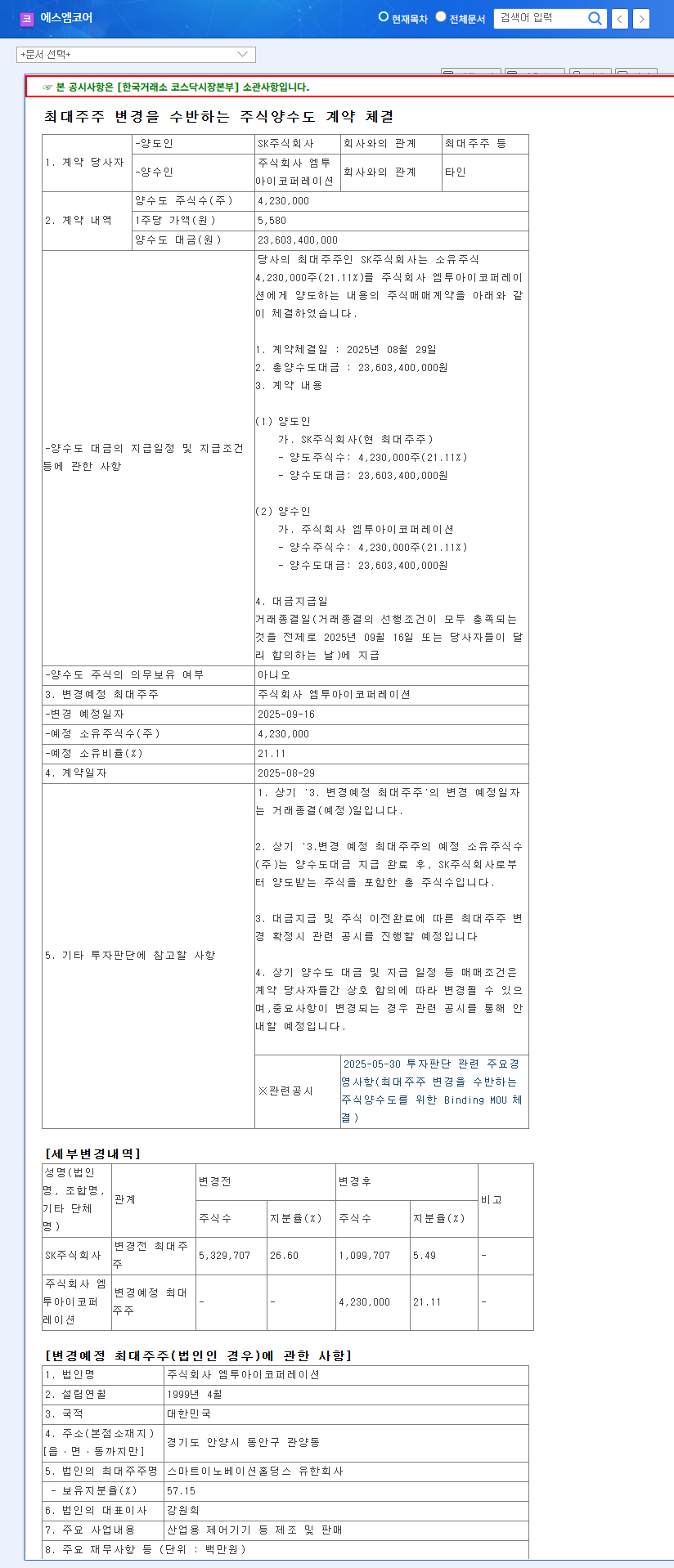
    SK Corporation sold its 21.11% stake in SMCore to M2i Corporation for 23.6 billion KRW. The transaction is expected to close on September 16, 2025.

    Why the Sale?

    SK likely divested its stake as part of its portfolio restructuring strategy. M2i Corporation, specializing in industrial control devices, is expected to create synergy with SMCore’s logistics automation systems business.

    Impact on SMCore

    Potential Positives:

    • • Enhanced competitiveness in smart factory solutions and new business opportunities
    • • Improved management transparency and efficiency under new leadership

    Potential Negatives:

    • • Uncertainty and short-term stock price volatility due to the change in management
    • • Time lag before synergy effects materialize
    • • Financial health of the new majority shareholder and SMCore’s debt management

    What Should Investors Do?

    A ‘wait-and-see’ or ‘cautious’ approach is recommended. Investors should monitor M2i Corporation’s business plans, synergy strategies, and financial soundness before making investment decisions. External factors such as fluctuations in the Indian Rupee exchange rate should also be considered.

    Frequently Asked Questions

    What is M2i Corporation?

    M2i Corporation manufactures and sells industrial control devices. They are expected to generate synergy with SMCore.

    How will this sale affect SMCore’s stock price?

    Short-term volatility is expected due to uncertainty, but the long-term impact could be positive. The realization of synergy effects will be a key factor.

    What are the key investment considerations?

    Investors should carefully evaluate the new majority shareholder’s management capabilities and business plans, the feasibility of synergy effects, and SMCore’s financial health. External factors like currency fluctuations should also be monitored.

    SMCore Acquired by M2i Corporation: Investment Opportunity? 관련 이미지
    SMCore Acquired by M2i Corporation: Investment Opportunity? 관련 이미지
  • Hyundai Movex Q2 2025 Earnings: Revenue Up, Profits Down – What’s Next?

    1. What Happened? Q2 Earnings Breakdown

    Hyundai Movex reported Q2 2025 revenue of KRW 98.8 billion (an 8% YoY increase), operating profit of KRW 4.4 billion (a 27% YoY decrease), and net profit of KRW 4.1 billion (a 37% YoY decrease). While revenue grew, profitability declined.

    2. Why Did This Happen? Analyzing the Profit Dip

    The decline in profitability is primarily attributed to increased investments in new businesses and rising raw material costs. Although growth in the logistics automation segment is promising, increased investment expenses are impacting short-term profitability.

    3. What’s Next? Future Outlook

    The growth of the logistics automation market and expansion into overseas markets are positive factors. However, continued decline in profitability could weaken competitiveness, emphasizing the need for improvement. Monitoring the macroeconomic environment will be crucial.

    4. What Should Investors Do? Investment Strategies

    Investors should be cautious of increased stock volatility in the short term. A long-term perspective should consider core business competitiveness and growth strategies. Careful investment decisions require close monitoring of profitability improvements and macroeconomic trends. Prudence is advised as we await further clarifications and plans from the company.

    What are Hyundai Movex’s main businesses?

    Hyundai Movex operates in logistics automation, platform screen doors (PSD), and IT services.

    What caused the decline in Q2 profits?

    The decline is attributed to increased investments in new businesses and rising raw material costs.

    What investment strategies should be considered?

    Be mindful of short-term volatility, and focus on long-term core business competitiveness and growth strategies. Monitor profitability improvements and macroeconomic trends closely for prudent decision-making.

  • Hyundai Movex Announces Treasury Stock Disposal: Impact on Stock Price (August 2025 Analysis)

    1. Hyundai Movex’s Treasury Stock Disposal: What Happened?

    Hyundai Movex decided to dispose of 454,666 common shares (0.41% of total outstanding shares) for approximately KRW 2.3 billion on August 7, 2025. The purpose of the disposal is to provide employee incentives, and the shares will be disposed of through Korea Investment & Securities.

    2. Why Dispose of Treasury Stock?

    The company expects this disposal to boost employee morale and motivation, positively impacting talent acquisition and retention of key personnel. This is expected to lead to improved company performance and enhance shareholder value in the long run.

    3. How Will the Disposal Affect the Stock Price?

    In the short term, increased selling pressure in the market could lead to higher stock price volatility. However, the small volume of shares and the clear purpose of the disposal minimize the likelihood of a significant price drop. Investors should focus on the potential for long-term corporate value enhancement through improved employee performance. It’s important to note that external factors like macroeconomic conditions and changes in the competitive landscape can also influence the stock price.

    4. What Investment Strategies Should Investors Consider?

    • Instead of reacting to short-term stock price fluctuations, it’s crucial to focus on the company’s long-term growth potential.
    • Continuously monitor the growth of the logistics automation and PSD businesses, as well as the company’s performance in overseas markets.
    • Pay attention to competitor activities and manage risks related to changes in the market environment.

    5. What’s the Future of Hyundai Movex?

    Hyundai Movex holds a strong competitive edge in the logistics automation and PSD markets and is securing growth momentum by expanding its IT services business. Continuous technological development and active expansion into overseas markets are expected to enhance future growth prospects.

    What’s the difference between treasury stock disposal and treasury stock retirement?

    Treasury stock disposal refers to selling treasury shares held by a company back into the market. Treasury stock retirement, on the other hand, permanently eliminates those shares. While disposal doesn’t change the number of outstanding shares, retirement reduces the number of shares in circulation, thereby increasing the value per share.

    Will this treasury stock disposal negatively impact the stock price?

    The small volume of shares being disposed of and the clear objective of providing employee incentives suggest that a significant drop in the stock price is unlikely. In the long run, it could even positively impact corporate value.

    What are Hyundai Movex’s main businesses?

    Hyundai Movex’s core businesses are logistics automation systems, platform screen doors (PSD), and IT services. It holds a high market share in logistics automation and PSD in Korea and is actively expanding into overseas markets.

  • Hyundai Movex Stock Option Exercise: What Does it Mean for Investors?

    What Happened?

    Hyundai Movex announced a stock option exercise representing 1.13% of its total shares. The new shares are scheduled to be listed on August 14, 2025.

    Why Does the Stock Option Exercise Matter?

    A stock option exercise signifies the purchase of shares by employees and is generally interpreted as a positive sign, reflecting management’s confidence in the company’s future. However, the relatively small proportion of exercised shares (1.13%) suggests a limited impact on short-term stock price fluctuations. Instead, it’s more likely to be a positive factor in the long run, demonstrating a commitment to enhancing shareholder value.

    What’s Hyundai Movex’s Current Status?

    While Q1 2025 earnings were sluggish due to seasonal factors and market conditions, the high order backlog of KRW 466.3 billion supports expectations for future earnings improvement. The growth potential of the logistics automation and platform screen door markets, consistent dividends, and treasury stock cancellation policy are also positive factors. The stock option exercise can reinforce these positive fundamentals and improve investor sentiment.

    External Environment and Stock Price Outlook

    High interest rates in the US and Europe, the possibility of a global recession, and exchange rate fluctuations could negatively impact Hyundai Movex’s business. However, the stock option exercise is expected to create positive investor sentiment, potentially mitigating downward pressure on the stock price. The stock price will likely be more influenced by Q2 earnings announcements and macroeconomic conditions than the stock option exercise itself.

    Action Plan for Investors

    • Focus on Q2 earnings announcements: Verify the reasons for the Q1 slump and future outlook.
    • Monitor the macroeconomic environment: Continuously check for the possibility of a global recession and volatility in raw material prices.
    • Analyze the competitive landscape: Evaluate Hyundai Movex’s strategies for dealing with intensifying competition.
    • Maintain a long-term perspective: Make investment decisions based on the company’s long-term growth potential.

    Frequently Asked Questions

    Will the stock option exercise positively impact the stock price?

    While it can be interpreted as a positive signal in the long term, the short-term impact may be limited. A comprehensive consideration of factors like the number of exercised shares and market conditions is necessary.

    What is the investment strategy for Hyundai Movex?

    A comprehensive judgment is needed through analyzing Q2 earnings announcements, macroeconomic conditions, and the competitive landscape. Investment decisions should be made considering the company’s long-term growth potential.

    What are Hyundai Movex’s main businesses?

    Hyundai Movex’s main businesses are logistics automation systems and platform screen doors.