Tag: LNG

  • (036460) KoreaGasCorporation Contract: Analyzing the ₩1.5T KOGAS Deal & Investor Outlook

    (036460) KoreaGasCorporation Contract: Analyzing the ₩1.5T KOGAS Deal & Investor Outlook

    In a global energy market defined by volatility and transition, stability is the ultimate currency. This makes the recent KoreaGasCorporation contract with Korea Midland Power Co., Ltd. (KOMIPO) a landmark event for investors and industry analysts. By securing a massive 1.5 trillion KRW (approx. $1.15 billion USD) long-term natural gas supply agreement, KOGAS has not only fortified its revenue stream but also sent a powerful signal about its market leadership and strategic direction for the next decade.

    This article provides an in-depth analysis of this pivotal KOGAS long-term deal, exploring its specific terms, its impact on the company’s financial health, and the critical takeaways for anyone considering a KOGAS investment. We’ll unpack what this means for future growth and stability in an ever-evolving energy landscape.

    Deconstructing the ₩1.5 Trillion KOGAS Deal

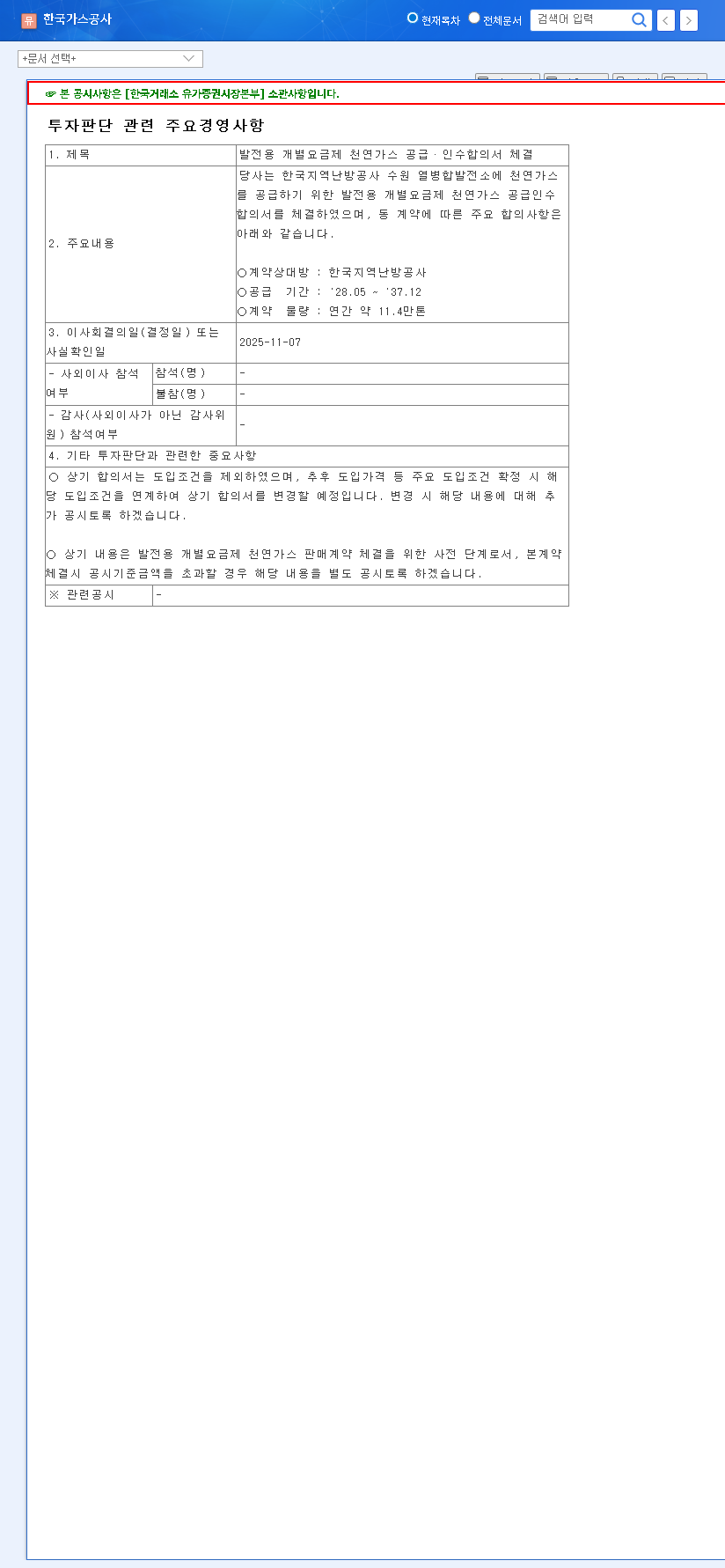
    On the surface, the numbers are impressive, but the strategic depth of the agreement is where the real value lies. KOGAS has formalized an individual tariff-based natural gas sales contract specifically for power generation, a core component of its business. The specifics of the agreement were confirmed in an Official Disclosure filed with Korea’s Financial Supervisory Service.

    Key Contract Details

    • Contract Value: 1.5191 trillion KRW (approx. $1.15 billion USD), representing a significant revenue stream.
    • Contract Duration: A 10-year term, running from January 1, 2027, to December 31, 2036.
    • Supply Destination: Incheon Combined Cycle Power Plant, a critical piece of infrastructure.
    • Revenue Impact: The deal accounts for 3.96% of the company’s recent revenue, providing a stable, predictable base for years to come.

    Strategic Significance: Beyond the Bottom Line

    This contract is more than just a large transaction; it’s a strategic maneuver that reinforces KOGAS’s role as the cornerstone of South Korea’s energy infrastructure. Securing long-term demand from a major domestic power producer like Korea Midland Power mitigates risks associated with fluctuating domestic demand and reinforces KOGAS’s market dominance.

    By locking in a decade of predictable cash flow, KOGAS can more confidently allocate capital towards future-facing growth initiatives, such as hydrogen energy and LNG bunkering, while maintaining a robust financial foundation.

    The deal is also timely. As nations navigate the energy transition, natural gas is widely seen as a critical bridge fuel. According to the International Energy Agency (IEA), natural gas will play a vital role in balancing power grids and supporting the integration of renewables. This long-term natural gas supply agreement ensures KOGAS remains central to this transition.

    Investor Analysis: Opportunities and Risks

    For current and potential investors, the KoreaGasCorporation contract presents a compelling mix of stability and future potential, but it’s essential to weigh the associated risks.

    Potential Upside for a KOGAS Investment

    • Enhanced Financial Stability: The predictable revenue stream improves financial forecasting and reduces earnings volatility.
    • Foundation for Growth: Stable cash flow frees up resources for investment in high-growth areas like South Korea’s hydrogen economy and the expanding LNG bunkering market.
    • Reaffirmed Market Leadership: This deal solidifies KOGAS’s indispensable position as the nation’s sole wholesale natural gas provider.

    Key Risks and Considerations

    While the contract is a clear positive, investors must remain vigilant. The profitability of this specific tariff agreement is not public, meaning its margin could be impacted by future LNG price swings. Furthermore, as an importer, KOGAS is perpetually exposed to macroeconomic risks, including:

    • Commodity Price Volatility: Sharp increases in international oil and gas prices can compress margins.
    • Foreign Exchange Fluctuations: A weaker Korean Won against the US Dollar increases import costs directly.
    • Market Reaction: The positive news may already be priced into the stock, limiting short-term upside. A long-term investment horizon is key.

    Conclusion: A Stable Anchor in a Sea of Change

    The 1.5 trillion KRW KoreaGasCorporation contract is a definitive win for the company. It provides a decade of revenue visibility, strengthens its financial position, and reinforces its critical role in the national energy supply chain. For investors, it transforms KOGAS into a more predictable, stable entity capable of weathering market storms while investing in the future of energy. While external risks persist, this deal provides a powerful anchor, making KOGAS a company to watch closely as it navigates the path toward sustainable growth.

    Frequently Asked Questions

    What is the core of the new KoreaGasCorporation contract?

    KOGAS has signed a 10-year natural gas sales agreement with Korea Midland Power, valued at approximately 1.5 trillion KRW, to supply the Incheon Combined Cycle Power Plant from 2027 to 2036.

    How does this deal affect KOGAS’s total revenue?

    The contract value represents approximately 3.96% of KOGAS’s recent annual revenue, establishing a secure and predictable income stream for the next decade.

    What are the primary risks associated with a KOGAS investment?

    The main risks are external and macroeconomic. They include volatility in global LNG and oil prices, fluctuations in the KRW/USD exchange rate, and shifts in domestic energy policy, all of which can impact profitability.
    (036460) KoreaGasCorporation Contract: Analyzing the ₩1.5T KOGAS Deal & Investor Outlook 관련 이미지
  • (036460) KoreaGasCorporation Q3 2025 Earnings: Profit Soars Despite Revenue Dip | In-Depth Analysis (036460)

    (036460) KoreaGasCorporation Q3 2025 Earnings: Profit Soars Despite Revenue Dip | In-Depth Analysis (036460)

    The latest KoreaGasCorporation Q3 2025 earnings report presents a fascinating paradox for investors. While top-line revenue missed market forecasts, the company delivered a surprising and robust beat on both operating and net profit. This detailed KOGAS earnings analysis unpacks the numbers, explores the underlying macroeconomic factors, and provides a forward-looking perspective on what this means for the 036460 stock.

    Is this impressive profitability a sign of fundamental strength and masterful cost control, or a temporary anomaly driven by favorable external conditions? Let’s dive deep into the official data, sourced directly from the company’s disclosure. You can view the full filing here: Official Disclosure.

    Q3 2025 Financial Snapshot: The Tale of Two Lines

    The preliminary earnings report for the period ending September 30, 2025, revealed a complex but ultimately encouraging financial picture for Korea Gas Corporation.

    The Revenue Headwind

    Total revenue came in at KRW 6.37 trillion, which was a significant 14.0% below the market consensus of KRW 7.43 trillion. This decline is not an isolated event but continues a trend seen throughout 2025. The primary drivers for this shortfall include a general economic slowdown impacting industrial energy demand and shifting consumption patterns both domestically and globally. This highlights the company’s sensitivity to broader economic cycles, a key factor for any Korea Gas Corporation investment thesis.

    The Profitability Surprise

    Despite the revenue challenge, KOGAS demonstrated remarkable resilience on the bottom line:

    • Operating Profit: Reached KRW 389 billion, a staggering 20.1% above market expectations. This points to highly effective cost management strategies and operational efficiencies being successfully implemented.
    • Net Profit: An even more dramatic outperformance, hitting KRW 87 billion, which is 182% higher than the consensus estimate. This was fueled by the strong operating profit and further boosted by non-operating factors, such as favorable foreign exchange movements or profits from asset sales.

    The key takeaway from the KoreaGasCorporation Q3 2025 earnings is the company’s ability to protect and expand its profit margins even when facing top-line pressure, signaling strong internal financial controls.

    Macroeconomic Factors at Play

    As a major energy importer, KOGAS’s performance is intrinsically linked to global macroeconomic trends. In Q3, several indicators played in its favor. A relatively stable KRW/USD exchange rate helped manage LNG import costs, while moderate WTI crude oil prices provided further relief. According to the International Energy Agency (IEA), global gas markets have been stabilizing, which benefits large-scale buyers like KOGAS. However, rising shipping costs, reflected in tanker indices, pose a potential future risk to this stability.

    SWOT Analysis: Strengths, Risks, and Future Outlook

    A balanced energy sector analysis requires looking at both the tailwinds and headwinds facing the company.

    Bull Case (Strengths & Opportunities)

    • Market Dominance: As the sole domestic LNG wholesaler, KOGAS enjoys a stable, foundational business.
    • Proven Profitability: The Q3 results prove the management’s ability to navigate cost pressures effectively.
    • Hydrogen Pivot: Aggressive investment in hydrogen energy represents a massive long-term growth driver, aligning with global decarbonization trends. For more on this, read our deep dive into Korea’s hydrogen economy.

    Bear Case (Risks & Threats)

    • Revenue Erosion: The persistent decline in revenue cannot be ignored. A prolonged economic downturn could further impact sales volume.
    • Macro Volatility: The company remains highly exposed to fluctuations in currency exchange rates and global energy prices.
    • Regulatory Landscape: The global energy transition and stricter carbon-neutral policies could pose long-term structural challenges to the natural gas business.

    Investment Opinion: Cautiously Optimistic (Neutral)

    Given the conflicting signals—strong profitability versus weak revenue—a ‘Neutral’ stance remains prudent. The KoreaGasCorporation Q3 2025 earnings demonstrate excellent operational management, but the macroeconomic and industry-wide headwinds cannot be discounted.

    Investors should closely monitor the upcoming Q4 results to see if the profit momentum can be sustained. Furthermore, tangible progress and monetization milestones in the company’s hydrogen ventures will be critical for unlocking long-term value. While KOGAS has a solid foundation, its future success will depend on its agility in a rapidly evolving energy market.

    (036460) KoreaGasCorporation Q3 2025 Earnings: Profit Soars Despite Revenue Dip | In-Depth Analysis (036460) 관련 이미지
  • (071320) KOREA DISTRICT HEATING CORPORATION (071320) Q3 2025: Investor’s Guide to Earnings & Strategy

    (071320) KOREA DISTRICT HEATING CORPORATION (071320) Q3 2025: Investor’s Guide to Earnings & Strategy

    The upcoming Q3 2025 earnings report for KOREA DISTRICT HEATING CORPORATION (KDHC), ticker 071320, represents a critical juncture for investors. Scheduled for November 7, 2025, this Investor Relations (IR) presentation is far more than a routine financial update. It is a comprehensive look into the company’s operational health, strategic direction, and resilience in a volatile energy market. For stakeholders, this event will provide vital clues about KDHC’s ability to navigate high debt, manage large-scale investments, and capitalize on its core strengths. This in-depth analysis will break down the fundamental factors, potential market reactions, and a strategic roadmap for evaluating your KDHC investment strategy.

    This IR is a pivotal moment to assess the balance between KDHC’s stable, foundational heating business and the challenges plaguing its electricity segment, all set against a complex macroeconomic backdrop.

    Event Details: The Q3 2025 Investor Briefing

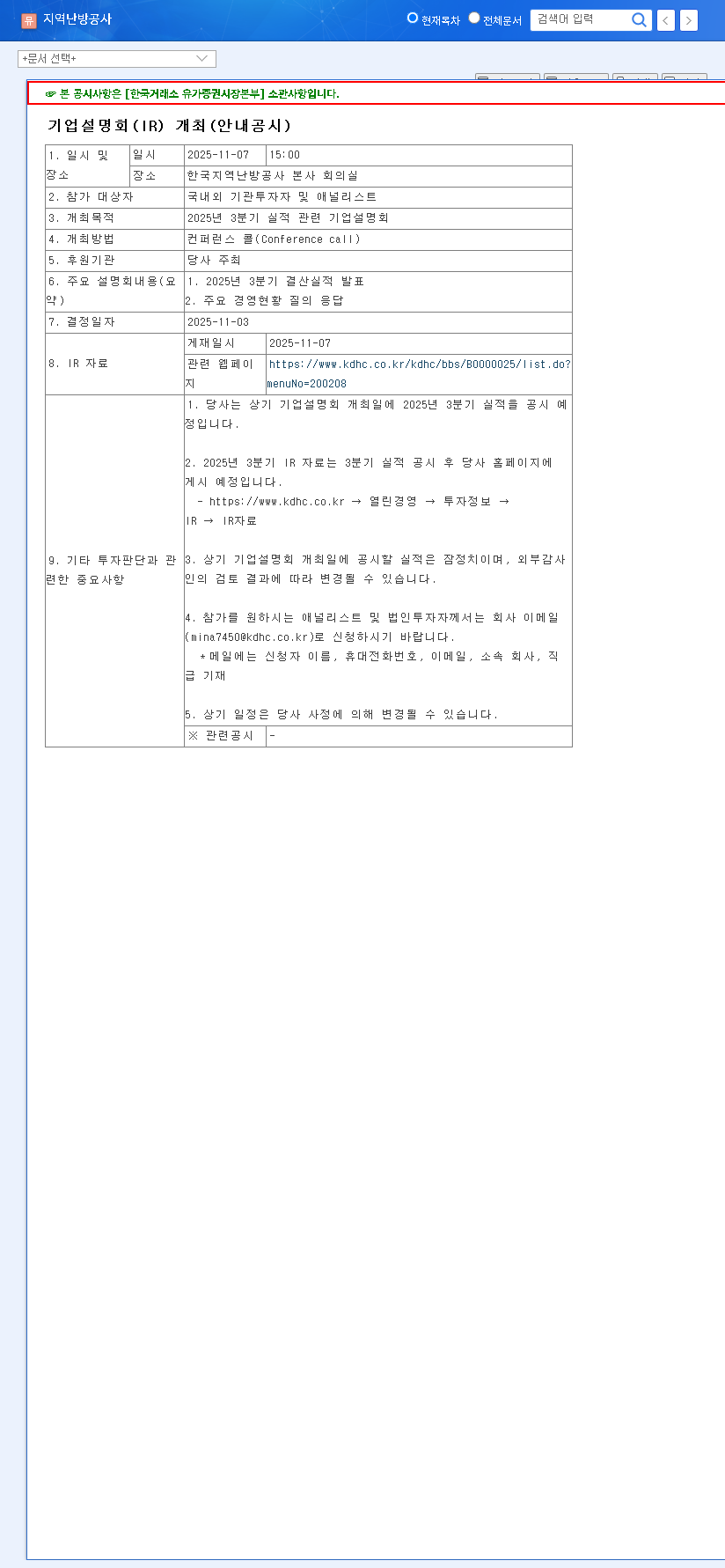
    KOREA DISTRICT HEATING CORPORATION has officially scheduled its corporate IR for November 7, 2025, at 3:00 PM (KST). The session will feature a detailed presentation of the third-quarter financial results, followed by a crucial Q&A session with management. As a public enterprise with a significant market presence, KDHC aims to use this platform to enhance transparency and directly address investor concerns. The full details can be found in the Official Disclosure (DART).

    Fundamental Analysis: The Bull vs. Bear Case for KDHC

    Understanding the company’s core strengths and weaknesses is essential before analyzing the 071320 earnings report. The investment thesis for KDHC is a tale of two sectors, balanced by strategic growth initiatives and weighed down by financial and market risks.

    Positive Factors: Stability and Future Growth

    • Rock-Solid Heat Sector Revenue: The demand for district heating is largely inelastic, providing a stable and predictable revenue stream that forms the company’s financial bedrock. This consistent cash flow is a significant defensive characteristic.
    • Strategic Growth Investments: KDHC is not standing still. Major projects, including the Suwon Combined Heat and Power Plant replacement and the Goyang Changneung District Energy initiative, are poised to become long-term growth engines, diversifying the business and aligning with modern ESG standards.
    • Favorable Cost Environment: A global downward trend in Liquefied Natural Gas (LNG) prices serves as a significant tailwind, easing the burden of raw material costs and potentially boosting margins if the trend continues.

    Negative Factors & Risks: The Challenges Ahead

    • High Debt Ratio: A debt-to-equity ratio of 236.57% (as of H1 2025) is a major red flag. In a rising interest rate environment, this high leverage can significantly increase interest expenses and squeeze profitability.
    • Underperforming Electricity Sector: Intense competition and declining wholesale electricity prices have eroded the profitability of this segment. Investors will be keenly watching for any signs of a turnaround or a strategic pivot.
    • New Project Investment Burden: While promising for the future, these large-scale projects require massive capital outlays, introducing execution risk and further straining the balance sheet in the short to medium term.
    • Macroeconomic Headwinds: The performance of KOREA DISTRICT HEATING CORPORATION is directly tied to global markets. A strengthening USD against the KRW increases import costs for LNG, while rising interest rates amplify debt service costs.

    Investor Takeaways & Strategic Checklist

    The KDHC Q3 2025 IR is an opportunity to pressure-test the company’s narrative. A positive outcome hinges on management’s ability to present a convincing plan. If Q3 earnings meet or beat expectations and the company provides a clear, confident outlook on its new projects and cost controls, the stock could see significant positive momentum. Conversely, a miss on earnings or vague commentary on risks could amplify investor concerns and lead to downward pressure.

    Prudent investors should prepare by focusing on the following:

    • Scrutinize Segment Performance: Look for specific data on the profitability drivers and detractors in both the heat and electricity sectors. Is the electricity division stabilizing?
    • Evaluate Project Milestones: Seek concrete updates on the progress, budget adherence, and expected ROI for the Suwon and Goyang Changneung projects.
    • Listen to the Macro Outlook: Pay close attention to management’s commentary on hedging strategies against currency fluctuations and their plans for managing debt in a shifting interest rate landscape.
    • Assess Market Reaction: Monitor trading volume and price action following the IR to gauge institutional sentiment and adjust your investment strategy accordingly.

    Ultimately, the outlook for KOREA DISTRICT HEATING CORPORATION stock will depend on its ability to execute its growth strategy while navigating significant financial headwinds. For further context on energy market trends, investors can consult authoritative sources like the International Energy Agency (IEA). To learn more about portfolio diversification, consider reading our guide on building a resilient investment portfolio.

    (071320) KOREA DISTRICT HEATING CORPORATION (071320) Q3 2025: Investor's Guide to Earnings & Strategy 관련 이미지
  • POSCO International’s $1.6B Investment: A Hydrogen-Fueled Leap into the Future of Energy (and What it Means for Investors)


    POSCO International's $1.6B Investment:  A Hydrogen-Fueled Leap into the Future of Energy (and What it Means for Investors) 대표 차트 이미지


    1. POSCO International’s $1.6B Investment – What Happened?

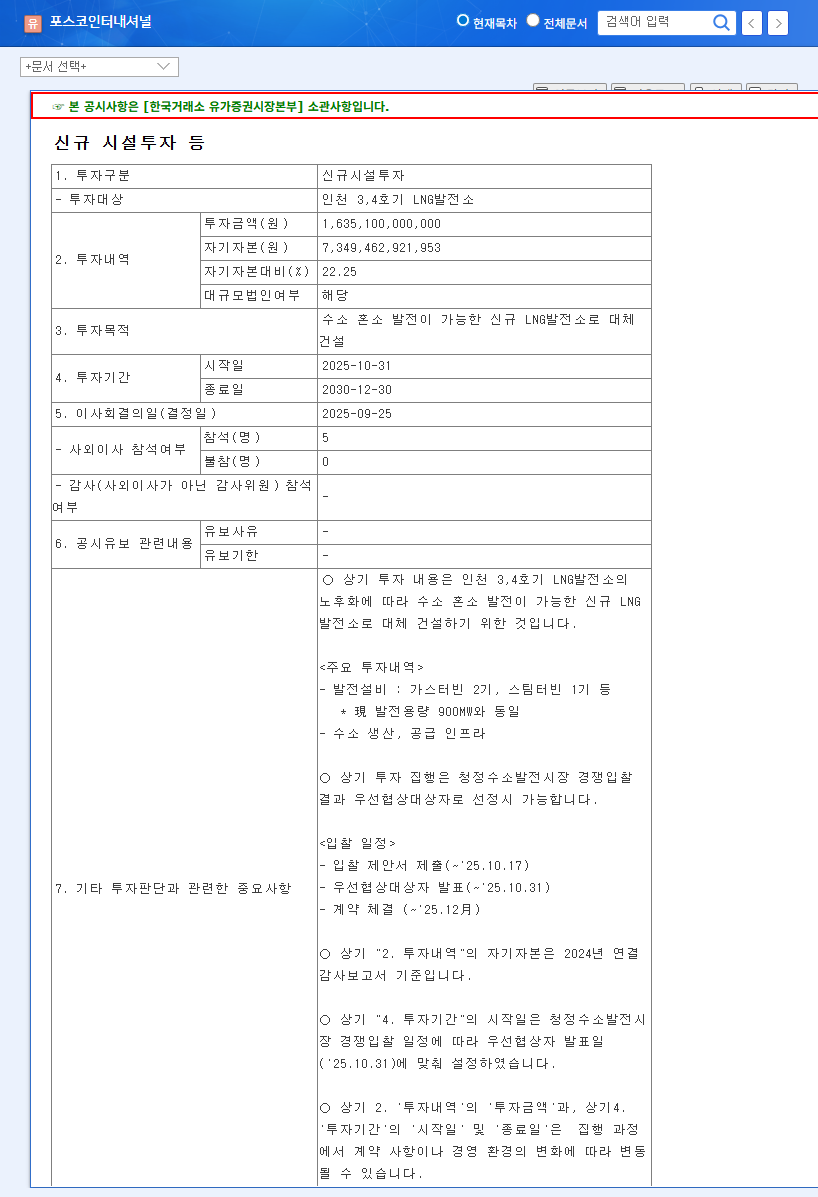
    POSCO International has committed $1.635 billion to replace its Incheon LNG power plants 3 and 4 with new, hydrogen co-firing enabled facilities. With construction slated to begin in October 2025 and completion by the end of 2030, this project is expected to play a crucial role in expanding POSCO International’s energy portfolio and strengthening its competitiveness in the future energy market.

    2. Why This Investment?

    This investment goes beyond simply replacing aging infrastructure. It addresses key strategic goals, including:

    • Leading the Green Energy Transition: Implementing hydrogen co-firing technology to reduce carbon emissions and reinforce ESG commitments
    • Securing Future Growth Engines: Establishing a foothold in the hydrogen energy market and securing a long-term revenue stream
    • Strengthening the LNG Value Chain: Enhancing LNG business competitiveness in conjunction with LNG terminal expansions

    3. The Impact – Opportunities and Risks

    Opportunities

    • Strengthened ESG profile and enhanced corporate image
    • Stable revenue generation through hydrogen co-firing and securing future growth drivers
    • Expansion and synergy creation within the LNG value chain

    Risks

    • Increased financial burden due to substantial investment costs
    • Global economic slowdown and heightened energy market volatility
    • Investment uncertainty stemming from interest rate and exchange rate fluctuations
    • Operational risks associated with hydrogen co-firing technology

    4. Action Plan for Investors

    Investors should focus on the long-term growth potential rather than short-term stock price fluctuations.

    • Establish a long-term investment strategy: Consider the growth of the green energy market and the company’s long-term vision.
    • Continuously monitor risk factors: Pay attention to macroeconomic variables, energy market volatility, and investment progress.
    • Review company disclosures and IR materials: Gain insights into detailed investment information and management’s future strategies.


    FAQ

    What is hydrogen co-firing power generation?

    Hydrogen co-firing is a power generation method that uses a mixture of hydrogen and LNG as fuel. It is an eco-friendly technology that reduces carbon emissions.

    How will this investment impact POSCO International’s stock price?

    In the short term, stock price volatility may increase due to concerns about the investment burden. However, in the long term, it is expected to have a positive impact as expectations for the expansion of eco-friendly energy businesses are reflected.

    What are POSCO International’s other business areas?

    POSCO International engages in various businesses such as steel, energy, food, and chemicals. It excels particularly in the energy sector, including the Myanmar gas field development project and LNG terminal business.


    POSCO International's $1.6B Investment:  A Hydrogen-Fueled Leap into the Future of Energy (and What it Means for Investors) 관련 이미지
    POSCO International's $1.6B Investment:  A Hydrogen-Fueled Leap into the Future of Energy (and What it Means for Investors) 관련 이미지


  • DongSung Chemical’s Treasury Stock Disposal: Impact on Stock Price (September 2025 Analysis)

    DongSung Chemical's Treasury Stock Disposal: Impact on Stock Price (September 2025 Analysis) 대표 차트 이미지

    1. What Happened?: Treasury Stock Disposal Decision

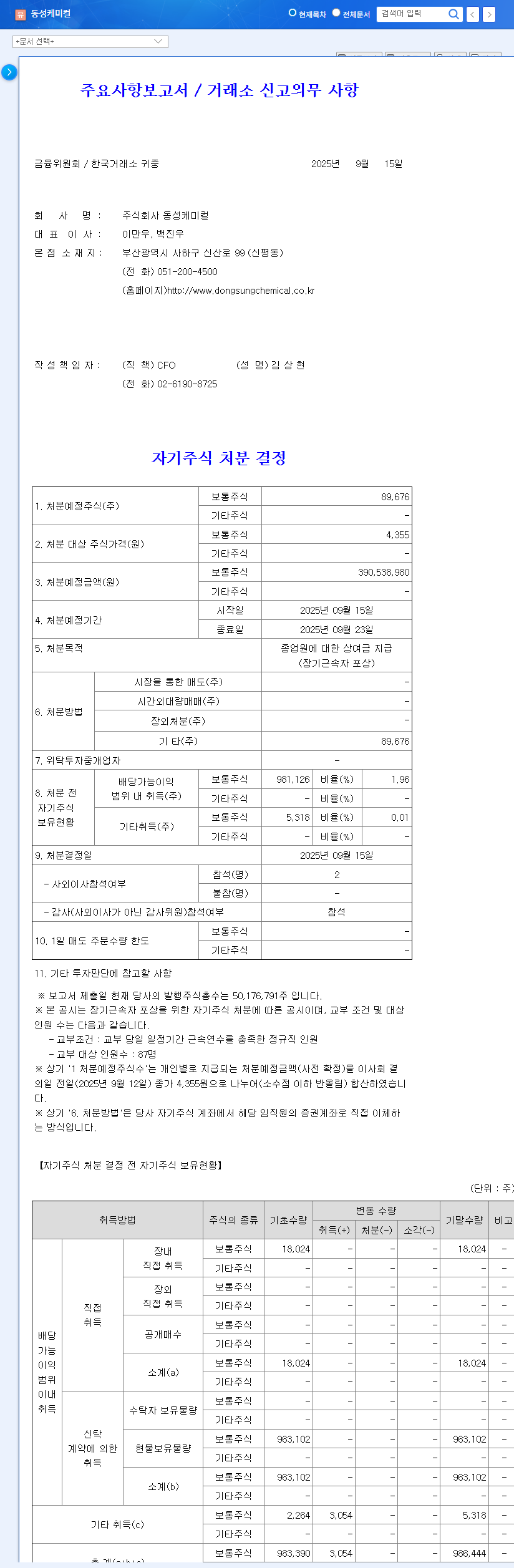
    DongSung Chemical announced the disposal of 89,676 treasury shares (0.18% of total outstanding shares) to fund employee bonuses. The purpose of the disposal is to reward long-term employees.

    2. Why Dispose of Treasury Stock?: Background and Implications

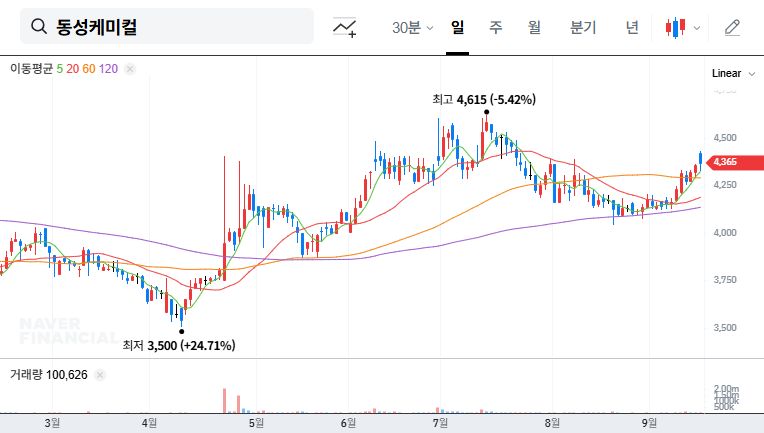
    This treasury stock disposal is part of a shareholder-friendly policy aimed at boosting employee morale and encouraging long-term service. It is expected to prevent the outflow of key personnel and enhance management stability. Due to the small size of the disposal relative to the total market capitalization, the short-term impact on the stock price is expected to be limited.

    3. DongSung Chemical’s Future?: Growth Drivers and Investment Points

    DongSung Chemical has a stable business structure with operations in chemicals (PU insulation, refrigerants, eco-friendly solvents) and bio (medical devices, derma cosmetics). In particular, the company has secured future growth engines, such as the strong performance of DongSung Finetec’s cryogenic insulation business driven by LNG market growth, and the development of eco-friendly and bio materials. However, continuous monitoring of macroeconomic conditions, such as exchange rate fluctuations and raw material price volatility, and the possibility of increased competition is necessary.

    4. What Should Investors Do?: Action Plan

    This treasury stock disposal alone is unlikely to significantly alter the investment outlook. However, considering DongSung Chemical’s business growth potential and efforts to secure future growth engines, a positive investment opinion can be maintained from a medium- to long-term perspective. It is important to develop an investment strategy while monitoring future announcements regarding additional treasury stock acquisitions or cancellations, and the realization of performance in key business segments.

    Does treasury stock disposal negatively impact stock prices?

    This treasury stock disposal is small in scale, so the short-term impact on the stock price is expected to be limited. It may even be positive for long-term growth by providing incentives to employees.

    What are DongSung Chemical’s main businesses?

    DongSung Chemical operates chemical (PU insulation, refrigerants, eco-friendly solvents) and bio (medical devices, derma cosmetics) businesses, and the growth potential of its LNG-related business is particularly promising.

    Should I invest in DongSung Chemical?

    This report is not an investment recommendation, and investment decisions should be made carefully based on individual judgment. However, DongSung Chemical has secured growth drivers and has a positive outlook in the medium to long term.

    DongSung Chemical's Treasury Stock Disposal: Impact on Stock Price (September 2025 Analysis) 관련 이미지
    DongSung Chemical's Treasury Stock Disposal: Impact on Stock Price (September 2025 Analysis) 관련 이미지
  • Hanwha Ocean Stock Forecast: 2025 Half-Year Report Analysis and Investment Strategy

    1. What Happened? Hanwha Ocean’s 2025 Half-Year Results

    Hanwha Ocean achieved a turnaround in the first half of 2025, recording sales of KRW 6.4372 trillion and operating profit of KRW 630.3 billion. The strategy of focusing on high-value vessel orders, particularly LNG carriers, proved effective. The company is also accelerating business diversification through the acquisition of plant and wind power businesses from Hanwha Corporation. However, the high debt-to-equity ratio of 98.5% remains a risk factor. Furthermore, a large block trade of KRW 1.5 trillion before the market opening on September 5th drew significant market attention.

    2. Why Did This Happen? Background and Cause Analysis

    The global LNG carrier market boom and increasing demand for eco-friendly vessels have driven Hanwha Ocean’s growth. Steady growth in the defense sector and entry into the offshore wind power market are also positive factors. However, global economic uncertainties, exchange rate fluctuations, and raw material price volatility remain threats. The block trade is presumed to be between foreign investors, but further disclosure is needed to ascertain the exact background and purpose.

    3. What’s Next? Future Outlook and Investment Strategies

    Hanwha Ocean possesses solid fundamentals and growth potential, but risk management is crucial. Strengthening competitiveness in high-value vessel orders, stabilizing the new business portfolio, proactive risk management, strengthening financial soundness, and securing leadership in eco-friendly technologies will be key drivers of future growth.

    4. What Should Investors Do? Action Plan

    • Short-term investors: Pay close attention to increased stock volatility following the block trade and monitor short-term price movements.
    • Long-term investors: Focus on the long-term growth potential driven by the expansion of the eco-friendly vessel and offshore wind power markets. Continuously monitor the company’s risk management capabilities and financial structure improvements.
    Q: What are Hanwha Ocean’s main businesses?

    A: Hanwha Ocean operates in commercial ships (LNG carriers, etc.), offshore and special vessels (defense), E&I (plant and wind power), and other businesses.

    Q: How was Hanwha Ocean’s performance in the first half of 2025?

    A: Sales reached KRW 6.4372 trillion and operating profit KRW 630.3 billion, achieving a turnaround from the same period last year.

    Q: What was the large block trade?

    A: A large block trade of KRW 1.5 trillion occurred before the market opening on September 5, 2025. It is presumed to be between foreign investors, and further disclosure is required to understand the exact background.

    Q: What should investors consider when investing in Hanwha Ocean?

    A: Investors should monitor risk factors such as high debt-to-equity ratio, exchange rate fluctuations, raw material price volatility, and information related to the large block trade.

  • SK Gas IR: Diversification Success? Investment Opportunity Analysis

    SK Gas IR: Diversification Success? Investment Opportunity Analysis 대표 차트 이미지

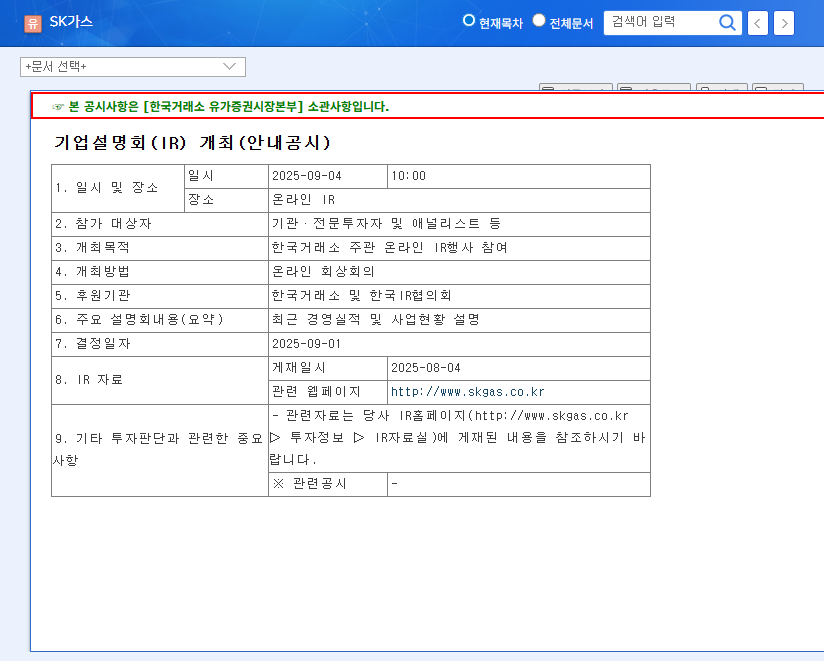
    SK Gas IR Key Takeaways: What Happened?

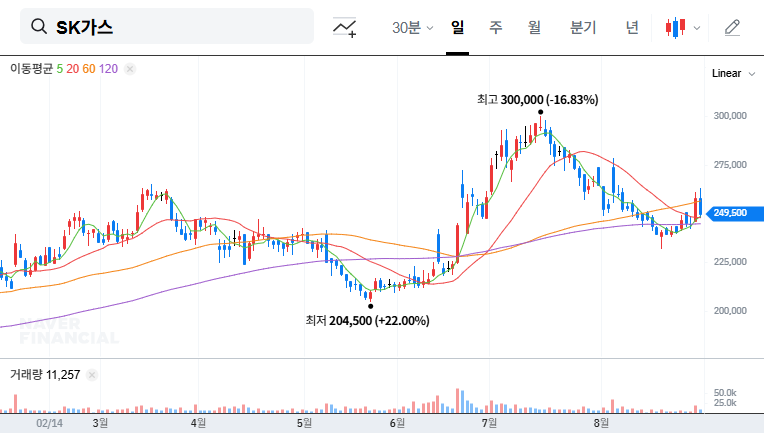
    SK Gas presented its business performance and current status at an online IR event hosted by the Korea Exchange on September 4, 2025. The company reported revenue of KRW 3.7 trillion (a 12.7% decrease YoY) and operating profit of KRW 233.6 billion (a 101.9% increase YoY) for the first half of 2025. While revenue declined, the significant increase in operating profit was attributed to new business performance and cost reduction efforts in the LPG business.

    Why Pay Attention to SK Gas?

    SK Gas is diversifying its business portfolio beyond LPG into LNG/LPG dual power generation and LNG terminal projects, securing future growth drivers. The commercial operation of new projects, expected to commence in the second half of 2024, is anticipated to diversify revenue streams and improve profitability. Furthermore, SK Gas is pursuing sustainable growth by strengthening its ESG management.

    How to Invest in SK Gas?

    A long-term perspective is crucial when considering investment in SK Gas. While the diversification strategy and focus on new growth drivers are positive, continuous monitoring of the profitability of new businesses and improvements in financial soundness is essential. Investors should also consider the impact of macroeconomic variables like exchange rates, interest rates, and oil prices on SK Gas’s earnings, along with an assessment of the company’s risk management capabilities. Post-IR market reactions and further information should be used to reassess investment decisions. Including SK Gas as part of a diversified portfolio across different sectors and asset classes is recommended for managing investment risk.

    Action Plan for Investors

    • Review IR materials and analyze management commentary.
    • Monitor the progress and profitability of new business ventures.
    • Analyze the impact of macroeconomic variables.
    • Develop a diversified investment strategy.

    Frequently Asked Questions

    What are SK Gas’s main businesses?

    SK Gas’s core business is LPG, but it is expanding into new energy businesses such as LNG/LPG dual power generation and LNG terminal projects.

    What is SK Gas’s recent financial performance?

    For the first half of 2025, SK Gas reported revenue of KRW 3.7 trillion (down 12.7% YoY) and operating profit of KRW 233.6 billion (up 101.9% YoY).

    What are the key investment considerations for SK Gas?

    Investors should carefully monitor the company’s high debt ratio, market volatility, and macroeconomic factors. It’s also crucial to track the profitability of new businesses and improvements in financial soundness.

    SK Gas IR: Diversification Success? Investment Opportunity Analysis 관련 이미지
    SK Gas IR: Diversification Success? Investment Opportunity Analysis 관련 이미지
  • POSCO International IR Analysis: September 3, 2025 Investor Relations Meeting – Key Takeaways and Investment Strategies

    POSCO International IR Analysis: September 3, 2025 Investor Relations Meeting - Key Takeaways and Investment Strategies 대표 차트 이미지

    1. POSCO International IR: What was discussed?

    POSCO International held an IR meeting in participation with the 2025 KB Korea Conference and Shinhan Premier Corporate Day, unveiling its ‘Real Value Story’ and current business progress. The key focus was on the company’s aggressive investment plans for future growth drivers, such as strengthening the LNG value chain, expanding overseas production bases for drive motor cores, and investing in palm oil refineries.

    2. Why is it important?

    This IR meeting went beyond simple information sharing; it provided investors with a crucial look into the company’s future growth potential. The presentation of solid performance in trading and energy businesses, along with concrete plans for future growth drivers, garnered significant investor attention.

    3. What are the potential impacts?

    • Positive Impacts: By clearly communicating its business vision and strategy through the IR meeting, POSCO International aims to enhance investor understanding and trust, potentially attracting new investments.
    • Negative Impacts: Performance that falls short of market expectations or the revelation of unforeseen risks could lead to a decline in stock prices.

    4. What should investors do?

    Investors should closely monitor the business plans and performance indicators presented in the IR meeting, the influence of macroeconomic variables, the performance of future growth engine businesses, and ESG management and shareholder value enhancement activities. The current investment recommendation is ‘Hold,’ and this should be reviewed based on the IR meeting results and changes in market conditions.

    What are POSCO International’s main businesses?

    POSCO International focuses on trading (steel, chemicals, food, etc.) and energy (LNG, Myanmar gas fields, etc.).

    What were the key takeaways from this IR meeting?

    Plans were announced for strengthening the LNG value chain, expanding the drive motor core business, and investing in palm oil refineries to secure future growth engines.

    What should investors be aware of when investing?

    Investors should continuously monitor the company’s ability to respond to external environmental changes, such as the global economic slowdown, geopolitical risks, and exchange rate and interest rate volatility.

    POSCO International IR Analysis: September 3, 2025 Investor Relations Meeting - Key Takeaways and Investment Strategies 관련 이미지
  • Doosan Enerbility Wins $330M LNG Plant Contract: Investment Implications

    1. What Does the $330 Million Contract Mean?

    Doosan Enerbility has signed a contract with Korea Gas Corporation to build the second phase of LNG storage tanks and auxiliary facilities at the Dangjin LNG terminal for $330 million. This is a long-term project expected to last approximately four years and four months.

    2. Why Is This Important?

    This contract win is more than just a deal; it holds significant implications for the future of Doosan Enerbility.

    • Revenue Growth and Stability: The long-term contract secures a stable revenue stream and lays the foundation for future sales growth.
    • Strengthened Business Competitiveness: It demonstrates Doosan’s expertise in LNG storage tank construction, giving them a competitive edge in future similar projects.
    • Expansion of Eco-Friendly Energy Business: Reinforces the company’s ESG commitment and secures future growth engines by strengthening their LNG business portfolio, aligning with the global shift towards carbon neutrality.

    3. What Are the Implications for Investors?

    Alongside the positives, investors should also be aware of potential risks.

    • Positive Impacts: Increased revenue, enhanced business stability, strengthened ESG management
    • Potential Risks: Fluctuations in raw material prices, construction delays, intensified competition

    Therefore, investors should consider these factors comprehensively when making investment decisions.

    4. What’s the Investment Strategy?

    This contract win is a positive sign, showcasing Doosan Enerbility’s long-term growth potential. However, instead of being swayed by short-term stock price fluctuations, investors should focus on the company’s fundamentals, future order outlook, and changes in the competitive landscape, adopting a long-term perspective when developing their investment strategy.

    Will this contract have a positive impact on Doosan Enerbility’s stock price?

    A positive impact can be expected in the long run, but short-term stock price volatility can be influenced by various factors.

    What is Doosan Enerbility’s main business?

    It is an energy and heavy industry company that manufactures power generation equipment, desalination plants, and castings & forgings.

    Is LNG an eco-friendly energy source?

    LNG is considered a more environmentally friendly energy source compared to existing fossil fuels like coal and oil due to its lower carbon emissions.

  • BHIC Secures KRW 47.6B Contract with Doosan Enerbility: What’s Next for Investors?

    1. The KRW 47.6 Billion Contract: What’s it About?

    BHIC has signed a contract with Doosan Enerbility to supply LNG combined cycle power plant equipment worth KRW 47.6 billion. This represents approximately 11.8% of BHIC’s sales. The contract period runs from August 20, 2025, to June 30, 2028.

    2. Why is this Contract Important?

    This contract is expected to contribute to BHIC’s sales growth and business stability. Specifically, the contract with Doosan Enerbility, a major corporation, can serve as a testament to BHIC’s technological capabilities and credibility.

    3. What Does This Mean for the Stock Price?

    In the short term, it’s likely to act as a positive momentum for the stock price. However, BHIC faces fundamental issues such as high debt ratio and losses from overseas operations. Therefore, the long-term stock price trend will depend on whether the company can improve its fundamentals. External factors, such as fluctuations in exchange rates, interest rates, and raw material prices, can also influence the stock price.

    4. What Should Investors Do?

    Short-term investors should pay attention to supply and demand dynamics and news related to the contract. Long-term investors should closely monitor the improvement of fundamentals, strengthening of financial soundness, and management of overseas business risks.

    Frequently Asked Questions

    What is the size of the contract?

    KRW 47.6 billion, which is approximately 11.8% of BHIC’s sales.

    Who is the counterparty to the contract?

    Doosan Enerbility.

    Will this contract positively impact the stock price?

    It may be positive in the short term, but the long-term stock price trend depends on whether the company can improve its fundamentals.

    What precautions should investors take?

    Investors should carefully consider the company’s high debt ratio, losses from overseas operations, and external factors such as fluctuations in exchange rates, interest rates, and raw material prices.