Tag: LBC

  • (314930) BIODYNE Vietnam Investment: A 4.3B KRW Move to Dominate the Southeast Asian LBC Market

    (314930) BIODYNE Vietnam Investment: A 4.3B KRW Move to Dominate the Southeast Asian LBC Market

    In a significant strategic pivot within the global healthcare sector, BIODYNE CO., LTD. has announced a landmark 4.3 billion KRW BIODYNE Vietnam investment. This move, which establishes a wholly-owned subsidiary, is far more than a simple expansion; it is a calculated entry into the heart of the burgeoning Southeast Asian market for Liquid-Based Cytology (LBC). This analysis explores the profound implications of this investment, examining the opportunities it unlocks, the potential risks involved, and the strategic path forward for the company and its investors.

    This investment represents a pivotal moment, transforming BIODYNE from a technology exporter into a direct market participant in one of the world’s fastest-growing healthcare regions.

    The Investment in Detail: A Strategic Acquisition

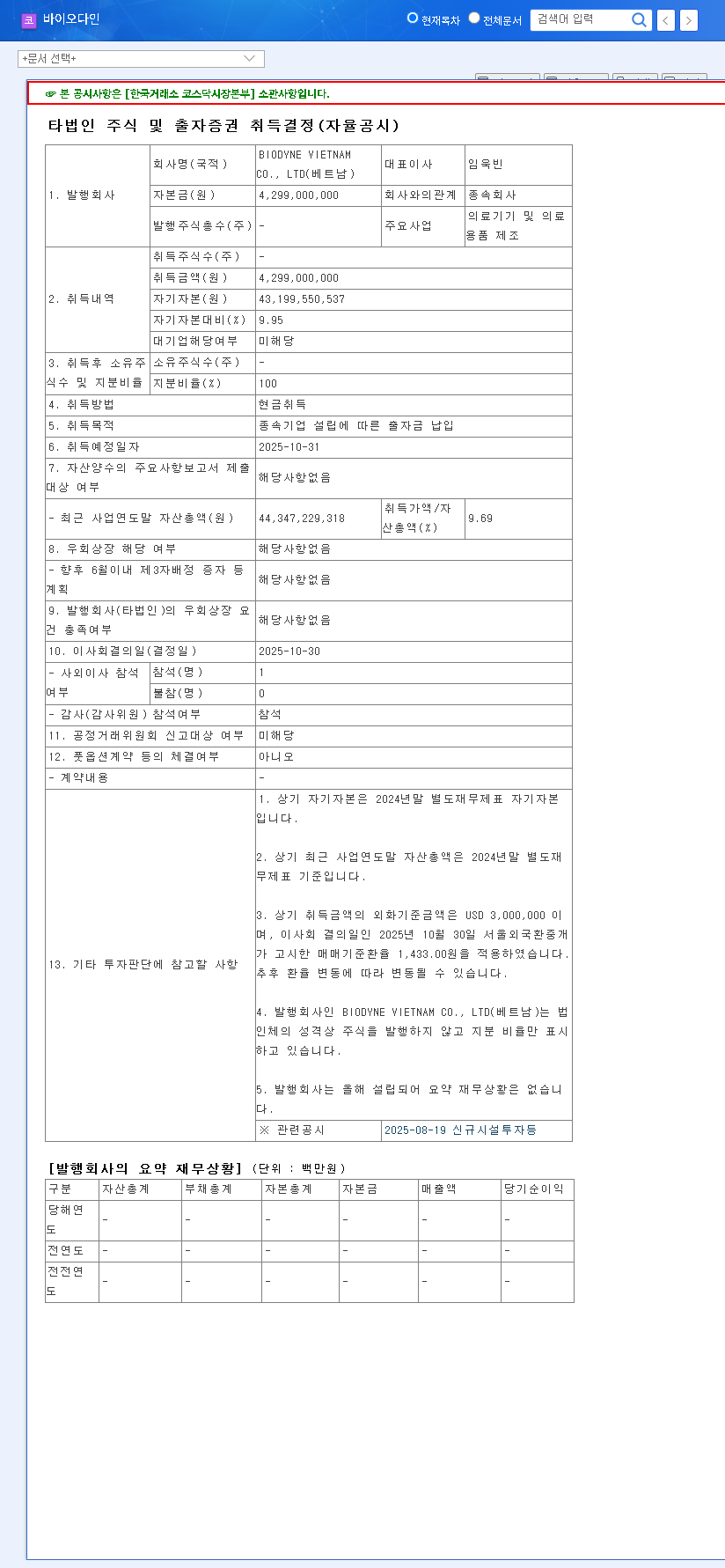
    On October 30, 2025, BIODYNE formalized its commitment by acquiring a 100% stake in its newly established local subsidiary, ‘BIODYNE VIETNAM CO., LTD’. The 4.3 billion KRW investment, which constitutes 9.95% of the company’s total equity, is a clear signal of intent. The primary objective is to build a robust manufacturing and distribution hub for medical devices and supplies, directly serving Vietnam and the wider Southeast Asian region. For full transparency, the Official Disclosure provides comprehensive details of the transaction.

    Why Vietnam? Tapping into the High-Growth LBC Market

    The choice of Vietnam is a highly strategic one, rooted in favorable market dynamics and the country’s economic trajectory. The global Liquid-Based Cytology market is experiencing accelerated growth, driven by initiatives like the World Health Organization (WHO)’s global strategy to eliminate cervical cancer. LBC testing is a cornerstone of modern screening programs, offering higher accuracy than traditional Pap smears.

    Southeast Asia’s Untapped Potential

    Southeast Asia, with its rising middle class, increasing healthcare expenditure, and improving medical infrastructure, represents a frontier of opportunity. Vietnam, in particular, stands out with its stable economic growth and government focus on modernizing healthcare. This environment is ideal for the adoption of advanced diagnostic technologies like BIODYNE’s LBC solutions.

    BIODYNE’s Technological Edge

    This expansion is built on a foundation of solid fundamentals and proprietary technology. BIODYNE’s competitive advantage in the LBC technology space is secured by several key factors:

    • Patented ‘Blowing Technology’: A unique and differentiated core technology that enhances the quality and reliability of cytological preparations.
    • Global Roche Partnership: A powerful alliance that has expanded global sales channels and solidified BIODYNE’s brand recognition and credibility.
    • Continuous Innovation: Development of new growth drivers like the ‘Earlypap Brush’ for self-collection addresses evolving market needs for accessible STD and HPV testing.
    • Robust Financial Health: With 21.2 billion KRW in current assets and a near-zero debt ratio as of H1 2025, the company is well-capitalized to fund this strategic expansion.

    Potential Impact of the BIODYNE Vietnam Investment

    Opportunities and Upside

    The establishment of a direct presence in Vietnam is expected to create a ripple effect of positive outcomes. It provides a direct channel to penetrate the Vietnam medical device market and the broader ASEAN region, unlocking new revenue streams from LBC equipment and reagent kit sales. Success in this market could amplify synergies with the Roche partnership, further cementing BIODYNE’s global status. Furthermore, developing and marketing products tailored to local needs could significantly enhance long-term profitability and elevate the company’s brand as a global healthcare innovator.

    Considerations and Risk Management

    While the outlook is promising, entering a new market carries inherent risks. BIODYNE must navigate Vietnam’s unique regulatory landscape, competitive pressures, and cultural nuances. The operational efficiency of the new subsidiary will be critical; a slow start could delay return on investment. While the initial financial outlay is manageable, investors should monitor for future capital requirements. Additionally, currency volatility (KRW/USD, KRW/EUR) will necessitate proactive hedging strategies to mitigate foreign exchange risks.

    Action Plan and Investor Outlook

    For investors, the BIODYNE Vietnam investment should be viewed as a long-term value creator. Success will hinge on diligent execution. Key focus areas include developing a hyper-localized business plan, deploying an aggressive initial marketing strategy to build brand awareness, and leveraging the existing Roche network to accelerate market entry. Continuous financial monitoring and risk management will be paramount. For those interested in this sector, understanding the nuances of such expansions is crucial. You can learn more by reading our guide on How to Evaluate MedTech Companies in Emerging Markets.

    In conclusion, BIODYNE’s strategic foray into Vietnam is a bold and logical next step in its global growth story. By establishing a local subsidiary, the company is planting a flag in the fertile ground of the Southeast Asian Liquid-Based Cytology market. While challenges must be managed, the move positions BIODYNE to capture significant market share and deliver substantial long-term value, marking a pivotal chapter in its journey to become a global leader in cytopathology.
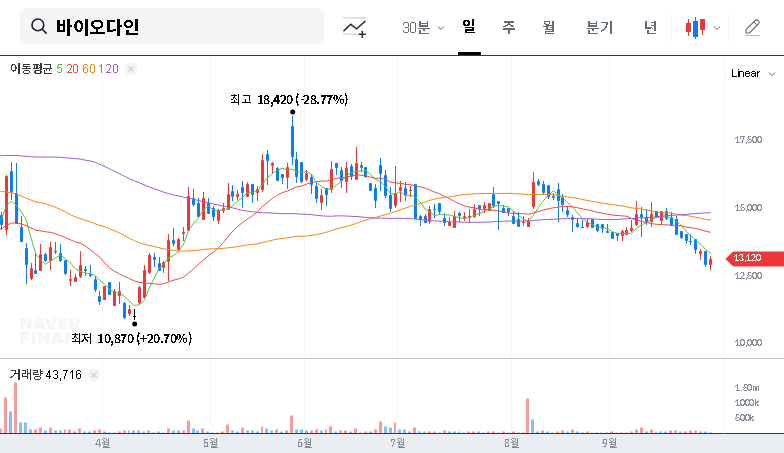
    (314930) BIODYNE Vietnam Investment: A 4.3B KRW Move to Dominate the Southeast Asian LBC Market 관련 이미지
  • (314930) Biodine Investment Strategy: 2025 IR Deep Dive & Roche Partnership Analysis

    (314930) Biodine Investment Strategy: 2025 IR Deep Dive & Roche Partnership Analysis 대표 차트 이미지

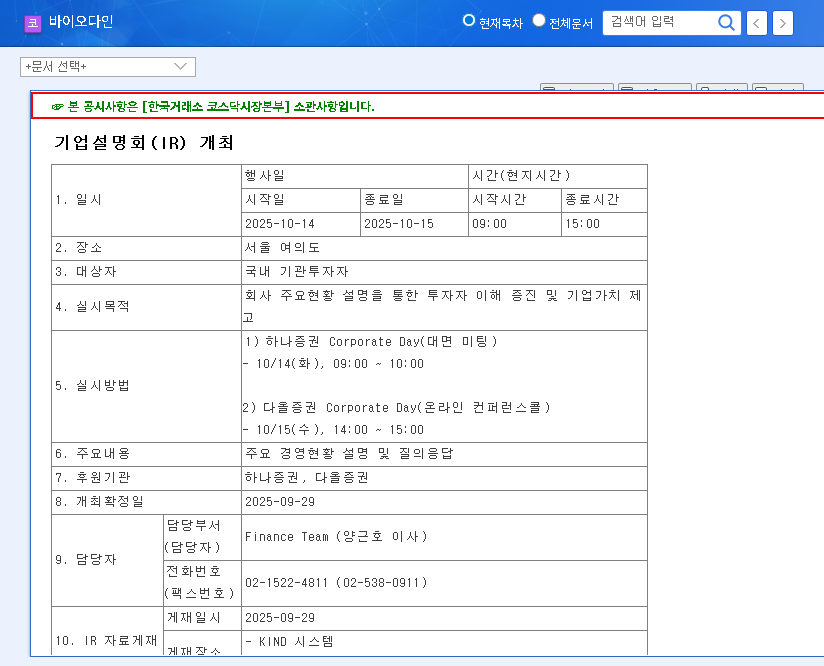
    Crafting a successful Biodine investment strategy requires a deep understanding of its current challenges and future potential. On October 14, 2025, Biodine (314930) will host a critical Investor Relations (IR) event that could significantly impact its trajectory. While currently operating at a deficit, the company’s powerful position in the Liquid Based Cytology (LBC) market and a landmark collaboration with medical device titan Roche have captured significant investor attention. This analysis will explore Biodine’s fundamentals, the potential impacts of the upcoming IR, and key considerations for investors.

    Will this IR event serve as the catalyst for Biodine to overcome its profitability hurdles and unlock new engines for global growth? For investors, this is the pivotal question.

    Biodine’s Financial Health: A Tale of Growth and Deficits

    Understanding Biodine’s financial standing is the first step in any sound investment analysis. As of June 2025, the company presents a mixed but intriguing picture. Revenue reached KRW 2.707 billion, a respectable 15.8% increase year-over-year, driven almost entirely by its core LBC diagnostic reagent kits. This demonstrates strong product demand and market traction.

    However, the bottom line tells a different story. The company reported an operating loss of KRW -509 million. This deficit is primarily due to soaring selling, general, and administrative (SG&A) expenses, which include critical investments in R&D and talent. While a concern, this spending is also the fuel for future innovation.

    Key Financial Metrics to Watch

    • Strengths: Biodine boasts a very healthy balance sheet. Cash reserves are strong at KRW 9.317 billion, the debt-to-equity ratio is exceptionally low at 7.90%, and its current ratio of 441.35% indicates abundant liquidity to cover short-term obligations.
    • Weaknesses: The persistent operating loss is the main red flag. A negative Return on Equity (ROE) of -0.84% signals that the company is not yet generating profit from shareholder equity. The Price-to-Book Ratio (PBR) of 0.75x might suggest undervaluation, but it must be weighed against the ongoing losses.

    Core Growth Drivers: Technology and Strategic Alliances

    Biodine’s long-term value proposition is anchored in its technological prowess and a game-changing strategic partnership. The company is a leader in the LBC market, particularly for cervical cancer diagnostics. Its proprietary ‘Blowing Technology’ provides a significant competitive advantage and a high barrier to entry for competitors.

    The Roche Partnership: A Gateway to Global Markets

    The most critical factor for Biodine’s future is its collaboration with Roche Diagnostics, a global leader in medical technology. The joint launch of the ‘VENTANA SP 400’ LBC equipment is set to be a major revenue driver. This partnership provides Biodine with unparalleled access to a global sales and distribution network, potentially accelerating its path to profitability. The success of this venture will be a primary focus of the Biodine IR event.

    Diversification and Regulatory Hurdles

    Beyond the Roche deal, Biodine is expanding its product pipeline with innovations like STD and HPV self-collection brushes, tapping into new segments of the diagnostics market. However, a significant short-term pressure point exists: the company must meet requirements to avoid being designated as an administrative issue by the end of 2025. This regulatory deadline forces a sharp focus on achieving profitability soon. For more details, investors can review the Official Disclosure filed with regulatory bodies.

    Formulating Your Biodine Investment Strategy

    The upcoming Biodine IR is a moment of truth. A thoughtful Biodine investment strategy should weigh the potential upside against the clear risks. Investors should listen for concrete plans and measurable milestones.

    The Bull Case (Potential Positives)

    • Global Expansion: Clear, positive sales data from the ‘VENTANA SP 400’ launch could send the stock soaring.
    • Path to Profitability: A detailed, credible plan for controlling SG&A costs and achieving a turnaround by the 2025 deadline would restore investor confidence.
    • New Market Potential: Exciting updates on the new product pipeline could reveal additional, untapped revenue streams for those looking into the broader diagnostics market.

    The Bear Case (Potential Negatives)

    • Vague Guidance: A lack of specific figures on the Roche partnership or an unclear profitability timeline could amplify concerns.
    • Cost Concerns: Failure to address the rising SG&A costs with a concrete efficiency plan may suggest the deficit will continue.
    • Macroeconomic Headwinds: An inability to articulate strategies for dealing with exchange rate fluctuations or interest rate changes could reveal vulnerabilities.

    In conclusion, the Biodine IR will be a defining event. For long-term investors, the focus should be on the tangible progress of the Biodine Roche partnership and the growth trajectory of the LBC market. For those with a shorter-term horizon, the key will be the company’s plan to achieve profitability by its 2025 deadline. A careful Biodine stock analysis post-IR is essential before committing capital.

    (314930) Biodine Investment Strategy: 2025 IR Deep Dive & Roche Partnership Analysis 관련 이미지
    (314930) Biodine Investment Strategy: 2025 IR Deep Dive & Roche Partnership Analysis 관련 이미지
  • Biodyne Invests ₩8 Billion in Vietnam Production Facility for Earlypap Launch

    1. What’s Happening? Biodyne’s ₩8 Billion Investment in Vietnam

    On August 19, 2025, Biodyne announced an ₩8 billion (18.52% of capital) investment to establish a production facility in Vietnam for Earlypap. The investment period is from August 20, 2025, to December 31, 2026.

    2. Why the Investment? Global Market Expansion with Earlypap

    Earlypap is an innovative self-sampling brush for STD, HPV, and cervical cell collection. This investment aims to establish a mass production system for Earlypap and prepare for its global launch. It also seeks to strengthen Biodyne’s partnership with Roche and secure a global supply chain, enhancing market competitiveness.

    3. What’s the Impact? Increased Growth Potential

    This investment is expected to drive Biodyne’s revenue and profitability growth through the successful market entry of Earlypap. Economies of scale from increased production are also anticipated.

    • Positive Impacts: Accelerated Earlypap growth, enhanced global competitiveness, improved revenue and profitability
    • Potential Risks: Increased financial burden, investment recovery uncertainty, exchange rate fluctuations

    4. What Should Investors Do? Careful Analysis is Key

    This investment is expected to play a crucial role in securing Biodyne’s long-term growth engine. However, due to the significant investment size, careful monitoring of financial soundness and Earlypap’s market performance is necessary. Investors should consider the potential for short-term stock price volatility and approach the investment with a long-term perspective.

    Frequently Asked Questions

    What is Earlypap?

    Earlypap is an innovative self-sampling brush for STD, HPV, and cervical cell collection.

    What is the purpose of this investment?

    To establish a mass production system for Earlypap and lay the groundwork for global market entry.

    What is the size of the investment?

    ₩8 billion, representing 18.52% of Biodyne’s capital.

  • Biodyne’s After-Hours Trading Surge: What Does ₩16.8B Mean for Investors?

    1. The ₩16.8 Billion Trade: Unpacking the Details

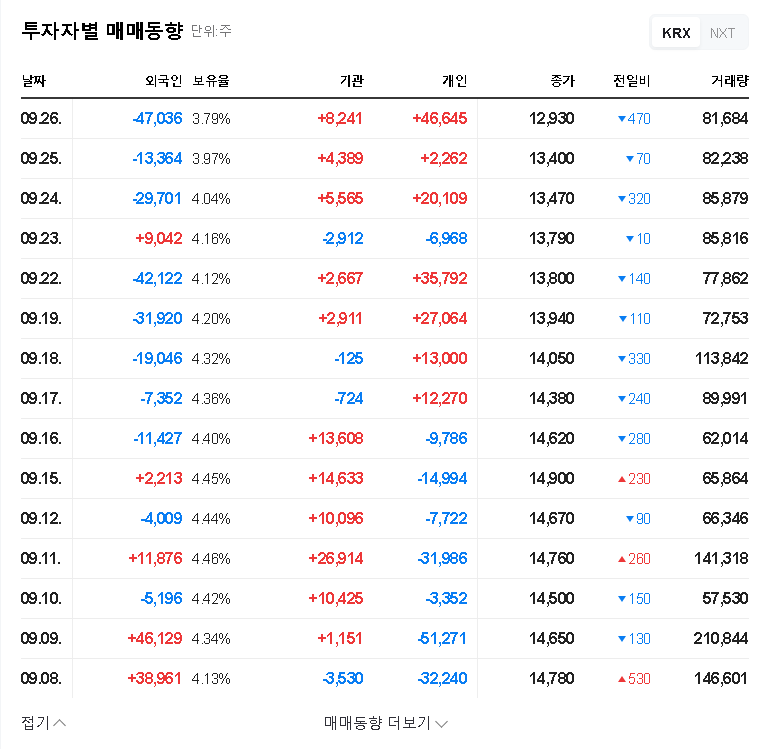
    After the market closed on August 6, 2025, 1,157,510 Biodyne shares were traded for ₩16.8 billion. Institutional investors were net buyers of ₩3 billion, while foreign investors sold a small amount.

    2. Behind the Surge: Analyzing Biodyne’s Fundamentals

    Biodyne, focusing on LBC diagnostic reagent kits, reported weak Q1 2025 earnings. However, their robust technology, partnership with Roche, growing LBC market, and new pipeline ‘Earlypap’ represent positive factors. Conversely, sluggish sales and reliance on key customers pose risks. Recent fluctuations in exchange rates, interest rates, and oil prices can also influence investor sentiment.

    3. Impact on Stock Price: What to Expect

    The ₩3 billion net buy by institutional investors can be interpreted as a positive signal, potentially providing upward momentum for the stock price. This suggests a possible re-evaluation of Biodyne’s valuation and the potential influx of new investors.

    4. Investor Action Plan: Key Points to Watch

    • Q2 Earnings Performance: Crucial for mitigating delisting risks and potential stock re-evaluation.
    • Earlypap Commercialization Progress: The success of this new pipeline is key to long-term growth.
    • Customer Diversification and Global Expansion: The implementation of strategies to reduce customer dependency is critical.
    • Further Institutional Investment Activity: Subsequent stake changes are important indicators for predicting stock price direction.

    While this large trade provides short-term positive momentum, long-term value enhancement depends on improved fundamentals and successful commercialization of the new pipeline.

    Why is Biodyne’s after-hours trading surge important?

    The ₩16.8 billion trade attracts market attention, and the ₩3 billion net buy by institutional investors suggests a potential positive impact on future stock price movements.

    What is the outlook for Biodyne’s stock price?

    Positive momentum is expected in the short term, but improved fundamentals and successful commercialization of the new pipeline are crucial for long-term price appreciation.

    What should investors be cautious about?

    Investors should closely monitor earnings improvements, Earlypap’s commercialization progress, customer diversification strategies, and further institutional investment activity.