Tag: Large Shareholding Report

  • (024060) HeunguOil Stock Analysis: Shareholder Sale & Financials Examined (2025)

    (024060) HeunguOil Stock Analysis: Shareholder Sale & Financials Examined (2025)

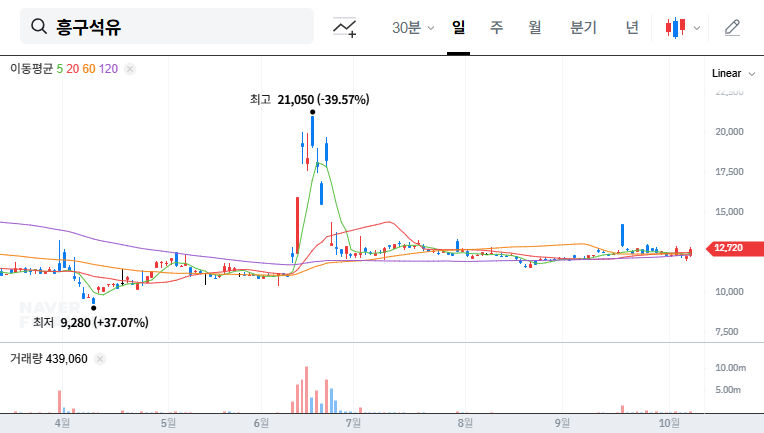
    The HeunguOil stock price is currently under intense scrutiny from the investment community. A recent disclosure revealed a significant stock sale by a major shareholder, coinciding with the company’s troubling shift to an operating loss in its H1 2025 earnings report. This combination of events has created a perfect storm of uncertainty, leaving many investors wondering about the future trajectory of this leading Korean oil distribution company.

    This comprehensive HeunguOil financial analysis will dissect the shareholder’s move, evaluate the company’s deteriorating fundamentals, and assess the broader market environment to provide a clear, actionable investment strategy. Is this a temporary dip or a sign of deeper structural issues? Let’s find out.

    The Catalyst: Major Shareholder Discloses Stake Reduction

    On October 24, 2025, a mandatory disclosure sent ripples through the market. HeunguOil announced that major shareholder Mr. Seo Sang-deok had reduced his holdings. The transaction, executed via open market sales, saw his stake decrease from 20.73% to 20.33%—a seemingly small but symbolically significant 0.4%p reduction. The stated reason was the ‘dissolution of special relationship and change in holding purpose’.

    When a long-term, major shareholder sells, it often signals a lack of confidence in the company’s near-term prospects. This action, coupled with the official reasoning, raises critical questions about the company’s internal stability and future direction. The full Official Disclosure can be viewed on the DART system, providing transparent data on the transaction.

    Diagnosing HeunguOil’s Financial Health

    The shareholder sale isn’t happening in a vacuum. It’s set against a backdrop of weakening corporate fundamentals, making this HeunguOil investment case particularly challenging.

    1. The Alarming Shift to Unprofitability

    For the first half of 2025, HeunguOil’s performance took a nosedive. Revenue fell by 7.8% year-over-year, but more alarmingly, the company swung from profit to an operating loss of KRW 980 million and a net loss of KRW 380 million. This transition to unprofitability is a major red flag for investors who rely on consistent earnings.

    2. Operational Headwinds and Cash Flow Concerns

    The problems extend beyond the top line. The company’s inventory turnover ratio plummeted from 41.50 to just 19.28 times. This indicates that products are sitting in storage for much longer, tying up capital and suggesting a severe sales slowdown. Compounding this issue, operating cash flow was a negative KRW 7.26 billion, meaning the core business is burning through cash instead of generating it—an unsustainable situation. For more on how to interpret these metrics, review our guide to fundamental analysis.

    3. The Silver Lining: A Strong Balance Sheet

    Despite the grim operational picture, HeunguOil maintains a robust financial structure. Its debt-to-equity ratio is an impressively low 17.17%, and it holds substantial tangible assets and investment properties. This strong balance sheet provides a cushion and some resilience, but it cannot indefinitely mask poor operational performance.

    HeunguOil is currently facing a ‘triple whammy’: deteriorating performance, a challenging macroeconomic environment, and wavering confidence from a major HeunguOil shareholder. This combination is likely to exert significant downward pressure on the stock price in the short term.

    Market Volatility and External Pressures

    HeunguOil’s internal struggles are amplified by external factors. As an oil importer and distributor, the company is highly sensitive to macroeconomic trends.

    • Exchange Rate Risk: The rising KRW/USD and KRW/EUR exchange rates directly increase the cost of importing raw materials, squeezing profit margins.
    • Oil Price Fluctuations: International oil prices have been volatile, making cost management difficult. According to data from the U.S. Energy Information Administration (EIA), prices fluctuated significantly in H1 2025, directly impacting HeunguOil’s cost of goods sold.
    • Limited Monetary Policy Benefit: While global interest rates are stabilizing, the positive impact on HeunguOil is minimal due to its already low debt load.

    Investor Action Plan: How to Approach HeunguOil Stock

    Given the confluence of negative factors, a cautious and disciplined approach to investing in HeunguOil stock is paramount. At this juncture, the risks appear to outweigh the potential rewards.

    Key Monitoring Points:

    • Performance Turnaround: Watch for a return to positive operating cash flow and profitability in subsequent quarterly reports.
    • Strategic Initiatives: Monitor company announcements for new business strategies, such as cost-cutting measures or diversification into alternative energy, that could signal a new growth phase.
    • Shareholder Movements: Keep a close eye on any further stake changes from Mr. Seo Sang-deok or other major institutional holders.

    In conclusion, our current investment recommendation for HeunguOil is ‘Hold’ or ‘Cautious Approach.’ The company’s solid asset base is a positive, but until there is clear evidence of a fundamental business turnaround, the investment appeal remains low. Prudence dictates waiting for confirmation of improved market conditions and internal corporate changes before committing new capital.
  • (060900) DGP Co.,Ltd. Stock Analysis: Perplexity’s 18.35% Stake & What It Means for Investors

    (060900) DGP Co.,Ltd. Stock Analysis: Perplexity’s 18.35% Stake & What It Means for Investors

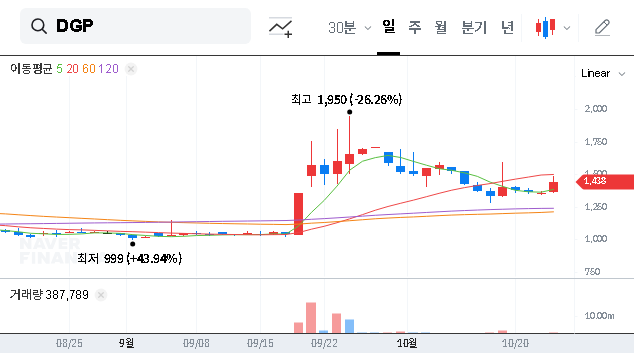
    The market is buzzing about the latest move involving DGP Co.,Ltd. stock, a small-cap company that has suddenly found itself in the spotlight. A significant disclosure has revealed that Perplexity Investment Union has acquired a substantial 18.35% stake in the company. This move has left shareholders and potential investors asking a critical question: What does this major DGP investment signify for the company’s future value and stock price?

    In this comprehensive analysis, we will dissect the details of this large-scale acquisition, explore the mechanics of the Convertible Bonds (CBs) used in the deal, and provide an expert perspective on the short-term and long-term implications for DGP’s valuation. Our goal is to equip you with the insights needed to make well-informed investment decisions.

    The Landmark Deal: Analyzing the Stake Acquisition

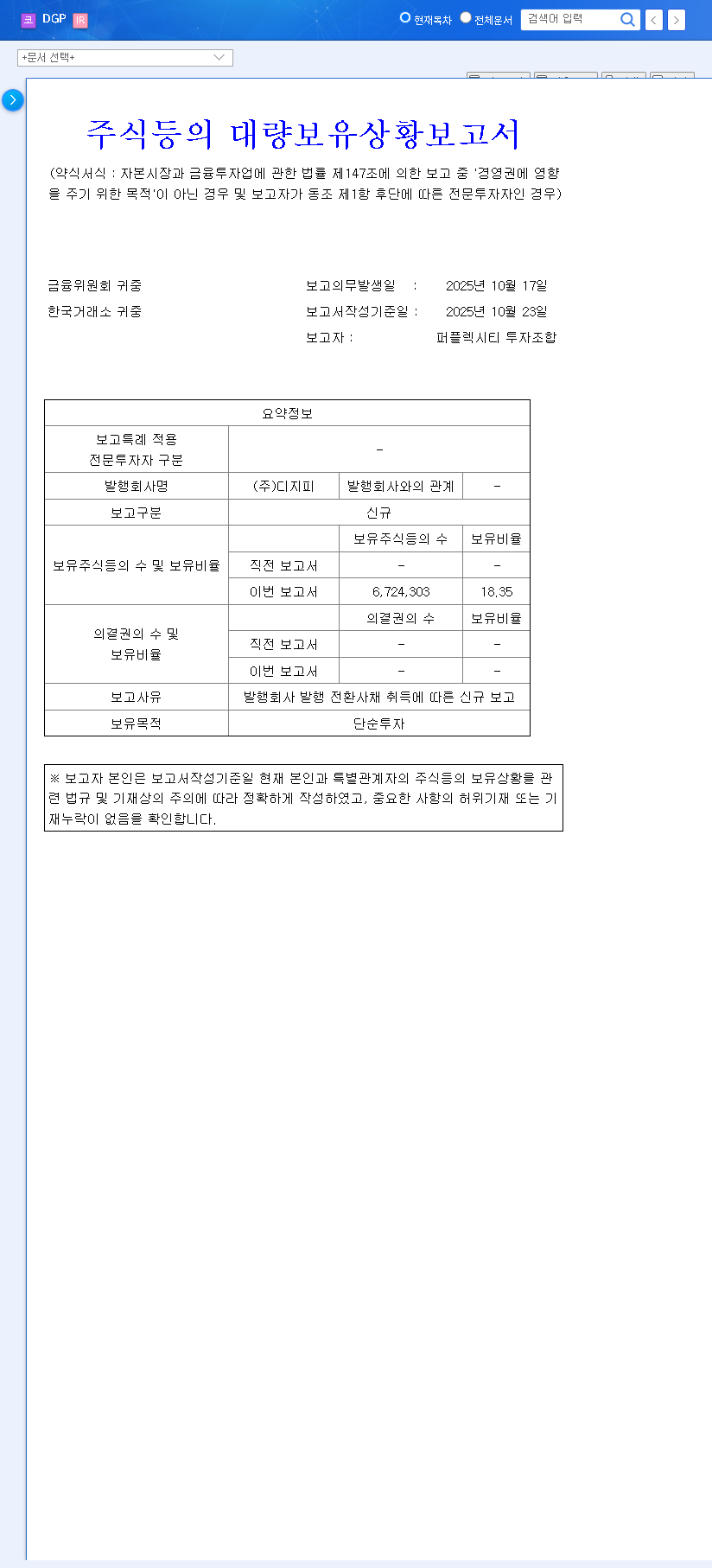
    On October 23, 2025, a ‘Report on the Status of Large Shareholdings’ was filed, sending ripples through the market. The report, available via the official disclosure system (Source: DART), detailed that Perplexity Investment Union had acquired 6,724,303 shares of DGP’s 34th series Convertible Bonds (CB). This transaction effectively gives the union a new 18.35% stake in DGP Co.,Ltd., a company with a market capitalization of KRW 43 billion. While the stated purpose of the investment is ‘simple investment,’ the sheer scale of the deal suggests a deeper confidence in DGP’s potential.

    What Are Convertible Bonds and Why Do They Matter?

    Understanding this deal requires understanding Convertible Bonds. A CB is a hybrid financial instrument that starts as a bond (a loan to the company) but carries an option for the holder to convert it into a predetermined number of common shares at a later date. For Perplexity Investment Union, this is a strategic move. It allows them to earn interest like a traditional bondholder while retaining the upside potential of an equity investor. If the DGP Co.,Ltd. stock performs well, they can convert their bonds into shares and realize significant capital gains. This indicates they are betting not just on DGP’s ability to repay debt, but on its future growth and stock appreciation. For more detailed information, you can explore our guide to advanced investment strategies.

    Projected Impact on DGP Co.,Ltd. Stock Price

    Short-Term Volatility and Market Sentiment

    In the short term, this news is a powerful positive signal. A large, sophisticated entity like Perplexity Investment Union taking such a significant position often attracts market attention, potentially increasing trading volume and driving up the stock price as retail investors follow the ‘smart money’. However, as a small-cap stock, DGP is inherently susceptible to volatility. The ‘simple investment’ clause may also temper expectations, as it suggests the union may not take an active role in management to drive immediate change. Uncertainty around the exact conversion terms of the CBs could also create short-term market jitters.

    Long-Term Value vs. Dilution Risk

    The long-term outlook is a tale of two possibilities. On one hand, this major DGP investment could trigger a fundamental re-evaluation of the company’s intrinsic value, as highlighted by authoritative financial analyses on Bloomberg. If the capital from the CB issuance is deployed effectively into high-growth projects, it could fuel substantial long-term corporate growth. On the other hand, the primary risk is share dilution. When the bonds are eventually converted into stock, the total number of outstanding shares will increase. This means that each existing share represents a smaller percentage of the company, which can put downward pressure on the earnings per share and the overall stock price if not offset by significant growth.

    Given the balance of a strong vote of confidence against the technical risks of dilution and market volatility, our provisional investment opinion is a cautious ‘Watch’. A deeper investigation is non-negotiable before committing capital.

    The Astute Investor’s Due Diligence Checklist

    To move from ‘watching’ to a definitive investment decision, a thorough investigation is essential. Here are the critical areas you must research:

    • Analyze DGP’s Fundamentals: Go beyond the headlines. Scrutinize the company’s financial health, including revenue trends, profit margins, debt levels, and cash flow. What are its core business segments and competitive advantages?
    • Profile Perplexity Investment Union: Research the investor. What is their track record? Are they known for long-term strategic partnerships or short-term profit-taking? Understanding their typical strategy provides clues to their intentions with DGP.
    • Examine the CB Terms: The devil is in the details. Find the specifics of the 34th series CB: the conversion price, maturity date, and any mandatory conversion clauses. This will allow you to calculate the potential dilution accurately.
    • Assess Market and Industry Context: How does DGP stack up against its competitors? Is the broader industry facing headwinds or tailwinds? Context is crucial for determining if this investment is a bet on the company, the industry, or both.

    Final Verdict

    The acquisition of an 18.35% stake in DGP Co.,Ltd. by Perplexity Investment Union is undeniably a significant event that validates the company’s potential. It provides a strong positive catalyst and could lead to a re-evaluation of DGP Co.,Ltd. stock. However, the ‘simple investment’ purpose and the inherent risks of convertible bonds—namely, future share dilution—necessitate caution. A comprehensive due diligence process, as outlined above, is paramount before any capital is deployed. The future trajectory of DGP’s stock will ultimately depend on the company’s ability to leverage this new capital for fundamental growth.

    (060900) DGP Co.,Ltd. Stock Analysis: Perplexity's 18.35% Stake & What It Means for Investors 관련 이미지
  • (125020) TC Materials Co., Ltd. Stake Sale: A Deep-Dive Analysis for Investors

    (125020) TC Materials Co., Ltd. Stake Sale: A Deep-Dive Analysis for Investors

    The recent TC Materials Co., Ltd. stake sale has sent ripples through the investment community. When a major shareholder divests a significant portion of their holdings, it inevitably raises questions about the company’s future trajectory and stock value. This comprehensive analysis will break down the specifics of the sale by Reinvestment/South Korea, explore the potential market impacts, and provide a clear framework for investors to navigate this period of uncertainty.

    We will delve into the official disclosures to understand the facts, assess both short-term sentiment shifts and long-term fundamental implications, and offer actionable insights for anyone holding or considering an investment in TC Materials stock.

    Deconstructing the Major Shareholder Sale

    The Who, What, and Why of the Transaction

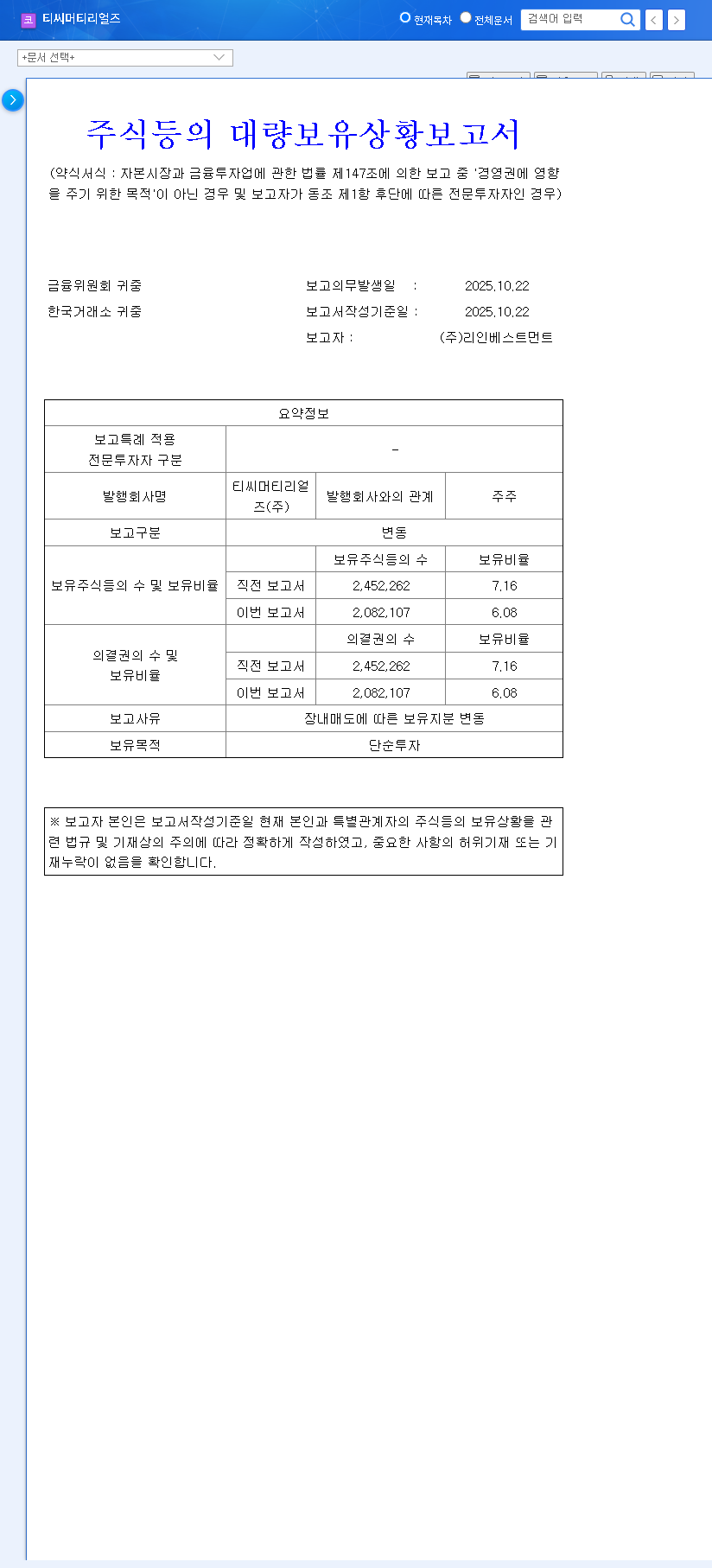
    The shareholder at the center of this event is Reinvestment/South Korea (Rebound New Technology Investment Association No. 1), a financial investor. According to public records, they executed a series of open market sales between September 25, 2025, and October 22, 2025. This activity resulted in the sale of 96,555 common shares of TC Materials Co., Ltd.

    This transaction reduced their ownership stake from 7.16% to 6.08%, a net decrease of 1.08 percentage points. The officially stated reason for the sale was a ‘decrease in shareholding due to open market sales’ for ‘simple investment’ purposes. This language typically suggests profit-taking, portfolio rebalancing, or a strategic capital reallocation rather than a direct response to a negative internal development within the company. For complete transparency, investors can review the Official Disclosure filed with DART.

    While a 1.08% reduction may seem modest, any voluntary sale by a major institutional holder is a significant market signal that warrants careful investment analysis and close attention from the broader market.

    Short-Term Market Impact and Investor Sentiment

    In the short term, a major shareholder selling shares often creates negative pressure on a stock’s price. This is driven by several key factors that influence market psychology and supply-demand dynamics. For more on this topic, see Investopedia’s explanation of shareholder disclosures.

    • Negative Signaling: The market may interpret the sale as a vote of no-confidence. Other investors might assume the seller has access to information or insights that suggest the stock is overvalued or facing headwinds.
    • Increased Supply: The act of selling a large block of shares increases the available supply on the market. If demand does not increase to absorb these new shares, the price will naturally face downward pressure.
    • Fear of Further Sales: This initial sale could signal the start of a larger divestment. The uncertainty around whether more shares will be sold can create an overhang on the stock, discouraging new buyers.

    Long-Term Outlook: Focusing on Fundamentals

    The long-term impact of the TC Materials Co., Ltd. stake sale is less about the sale itself and more about the underlying health of the business. An intelligent investor must look past the immediate market noise and focus on the company’s core fundamentals. Is the company’s revenue growing? Are its profit margins stable? Does it have a competitive advantage in its industry?

    Because the seller was a financial investor, their decision could be driven by factors entirely unrelated to TC Materials’ performance, such as meeting redemption requests or locking in profits to fund a new opportunity. A sale by a strategic partner or an insider would be a much stronger red flag. To properly assess the situation, a thorough review of the company’s financial health is crucial. You can learn more by reading our guide to analyzing financial reports.

    Investor Action Plan: What to Do Next

    Given the current information, a cautious and analytical approach is recommended. Here are key steps investors should take:

    • Dive into Financials: Scrutinize TC Materials’ latest quarterly and annual reports. Look for trends in revenue, earnings per share (EPS), and cash flow.
    • Analyze the Seller: Research Reinvestment/South Korea’s investment history. Is this part of a pattern of taking profits after a certain holding period, or is this an unusual move for them?
    • Monitor Market Consensus: Review what analysts and brokerage reports are saying about TC Materials. Does this sale contradict a broadly positive market outlook, or does it align with growing concerns?

    By gathering more information and focusing on the company’s intrinsic value, you can make a more informed decision that aligns with your investment strategy, independent of short-term market sentiment.

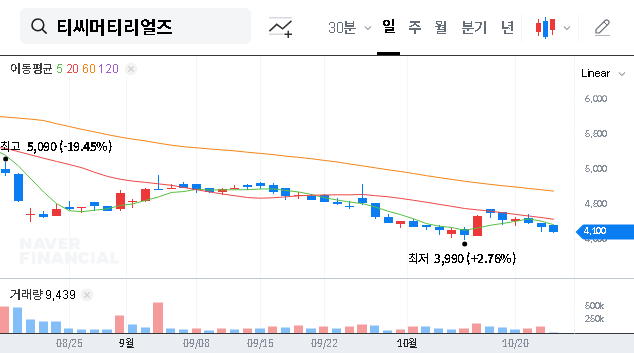
    (125020) TC Materials Co., Ltd. Stake Sale: A Deep-Dive Analysis for Investors 관련 이미지
  • (014620) SUNG KWANG BEND CO., LTD. Shareholding Change: A Deep Dive Analysis for Investors

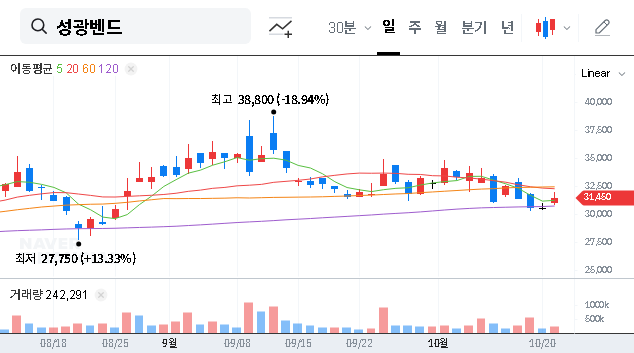
    (014620) SUNG KWANG BEND CO., LTD. Shareholding Change: A Deep Dive Analysis for Investors

    A recent SUNG KWANG BEND CO., LTD. shareholding change disclosure has sparked conversations among investors. Any shift in large shareholder stakes can be a critical signal, potentially impacting everything from management stability to the company’s stock price. This comprehensive analysis will dissect the official disclosure, clarify its meaning, and provide a strategic roadmap for investors navigating the market.

    We’ll explore the nuance behind this seemingly minor transaction and explain why long-term fundamentals should remain the cornerstone of your investment thesis for SUNG KWANG BEND CO., LTD.

    Deconstructing the Public Disclosure: What Exactly Happened?

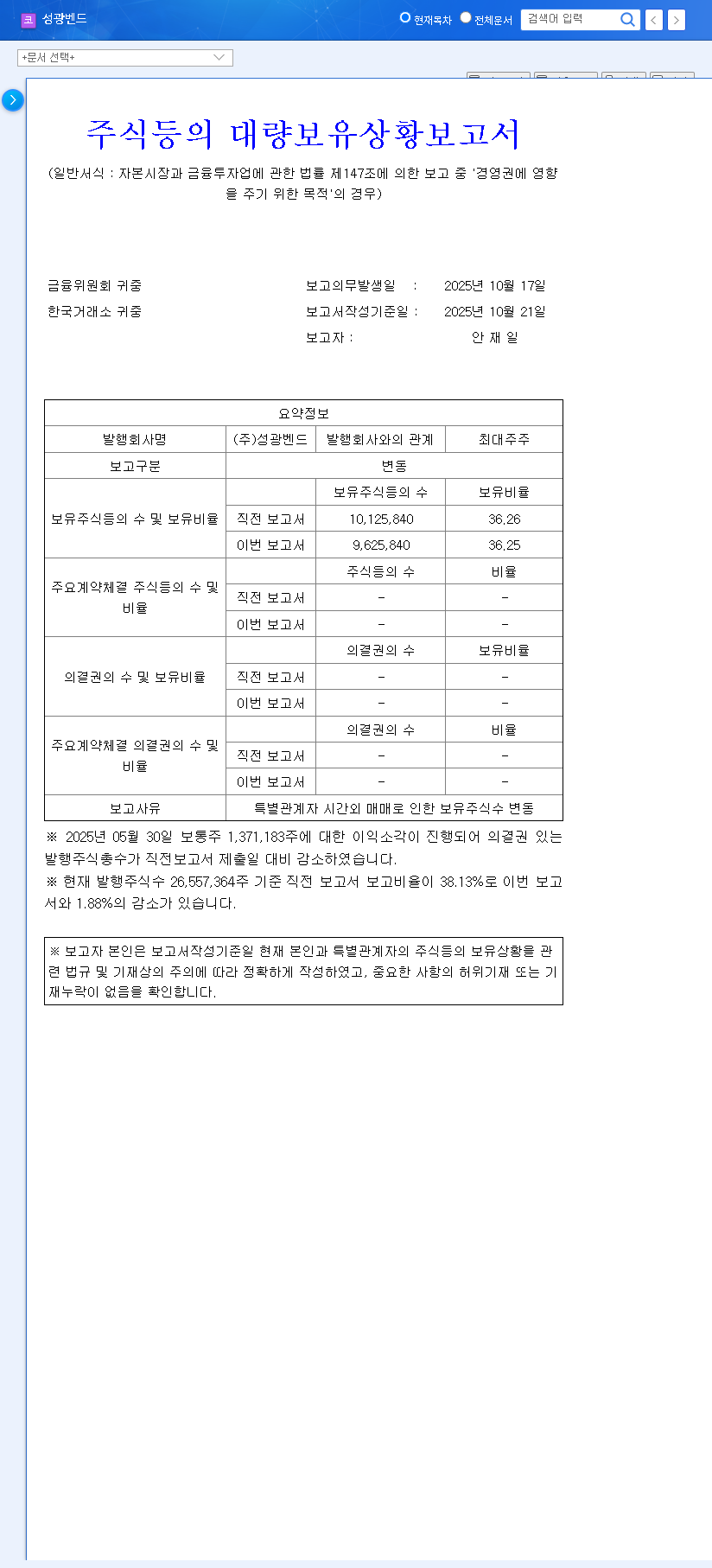
    On October 21, 2025, a ‘Report on Large Shareholdings’ for SUNG KWANG BEND CO., LTD. was filed, as per regulations. Investors can view the original filing directly from the source. You can find the Official Disclosure on the DART system. Here are the essential facts from the report:

    • Reporting Party: Ahn Jae-il and related parties.
    • Stated Purpose: To exert influence over management control.
    • Key Change: A minor decrease in total holdings from 36.26% to 36.25% (a 0.01 percentage point reduction).
    • Reason for Change: An off-market sale of 500,000 shares by a special affiliate, Ahn Jeong-gyu.
    • Purpose of Sale: Explicitly stated as ‘securing funds for future tax payments.’

    At first glance, a 0.01% change seems insignificant. However, the context—specifically the reason for the sale and the nature of the transaction—is what provides clarity and calms potential market jitters.

    The key takeaway is that this was a planned, personal financial transaction, not a strategic shift in corporate control or a sign of lost confidence in the company’s future.

    Analyzing the Impact on Management and Stock Price

    To fully grasp the implications of this SUNG KWANG BEND public disclosure, we must evaluate its effect on two primary areas: management stability and stock performance.

    Management Control: Stability Remains Intact

    The threat to management control is virtually nonexistent. A 36.25% stake held by the primary shareholder and related parties is a formidable and stable position. A 0.01% dip does nothing to alter this reality. The stated purpose of ‘Management Control Influence’ is standard language confirming their ongoing commitment, while the reason for the sale—personal tax planning—reinforces that this is not a precursor to a larger sell-off or a management dispute. This stability is often viewed positively by long-term institutional investors.

    SUNG KWANG BEND CO., LTD. Stock Price: Fundamentals Trump Minor News

    Short-Term Outlook: The immediate impact on the SUNG KWANG BEND CO., LTD. stock price should be minimal. The sale of 500,000 shares was conducted ‘off-market,’ meaning it was a direct transaction between parties and did not occur on the public stock exchange. This prevents the sudden supply influx that can drive prices down. While some minor volatility may occur as the news is digested, a significant price swing based solely on this disclosure is highly unlikely.

    Mid-to-Long-Term Outlook: This event introduces no new information about the company’s operational health or future prospects. Therefore, the stock’s long-term trajectory will continue to be dictated by fundamental drivers. Investors should focus on metrics such as order backlogs, global energy and construction project trends, raw material costs, and the company’s financial results. For a broader view, it’s helpful to consult global industry reports from sources like leading financial news outlets.

    Actionable Strategy for Investors

    Instead of reacting to headlines, a disciplined approach is essential. Here’s a smart strategy following the SUNG KWANG BEND CO., LTD. shareholding change announcement:

    • Focus on Core Value: Re-evaluate the company’s intrinsic value. Analyze its competitive advantages, market position in the pipe fitting industry, and its ability to generate consistent cash flow.
    • Monitor Key Metrics: Keep an eye on quarterly earnings reports, new contract announcements, and industry-wide demand forecasts. These are the true indicators of the company’s health.
    • Maintain a Long-Term View: This disclosure is a minor event in the company’s broader story. Avoid making rash decisions based on short-term noise. If your initial investment thesis is sound, this news does not change it.
    • Understand Disclosures: Use this as an opportunity to learn more about how to interpret market filings. Understanding the nuances can be a powerful tool. For more information, you can read our guide on How to Analyze Korean Stock Disclosures.

    In conclusion, this shareholding report from SUNG KWANG BEND CO., LTD. is a routine disclosure reflecting a personal financial need, not a red flag for the company. Prudent investors should acknowledge the news, understand its limited scope, and return their focus to the fundamental analysis that drives sustainable, long-term investment success.

    (014620) SUNG KWANG BEND CO., LTD. Shareholding Change: A Deep Dive Analysis for Investors 관련 이미지
  • (039010) HYUNDAI HT CO,LTD. Shareholding Change: An In-Depth Analysis for Investors

    (039010) HYUNDAI HT CO,LTD. Shareholding Change: An In-Depth Analysis for Investors

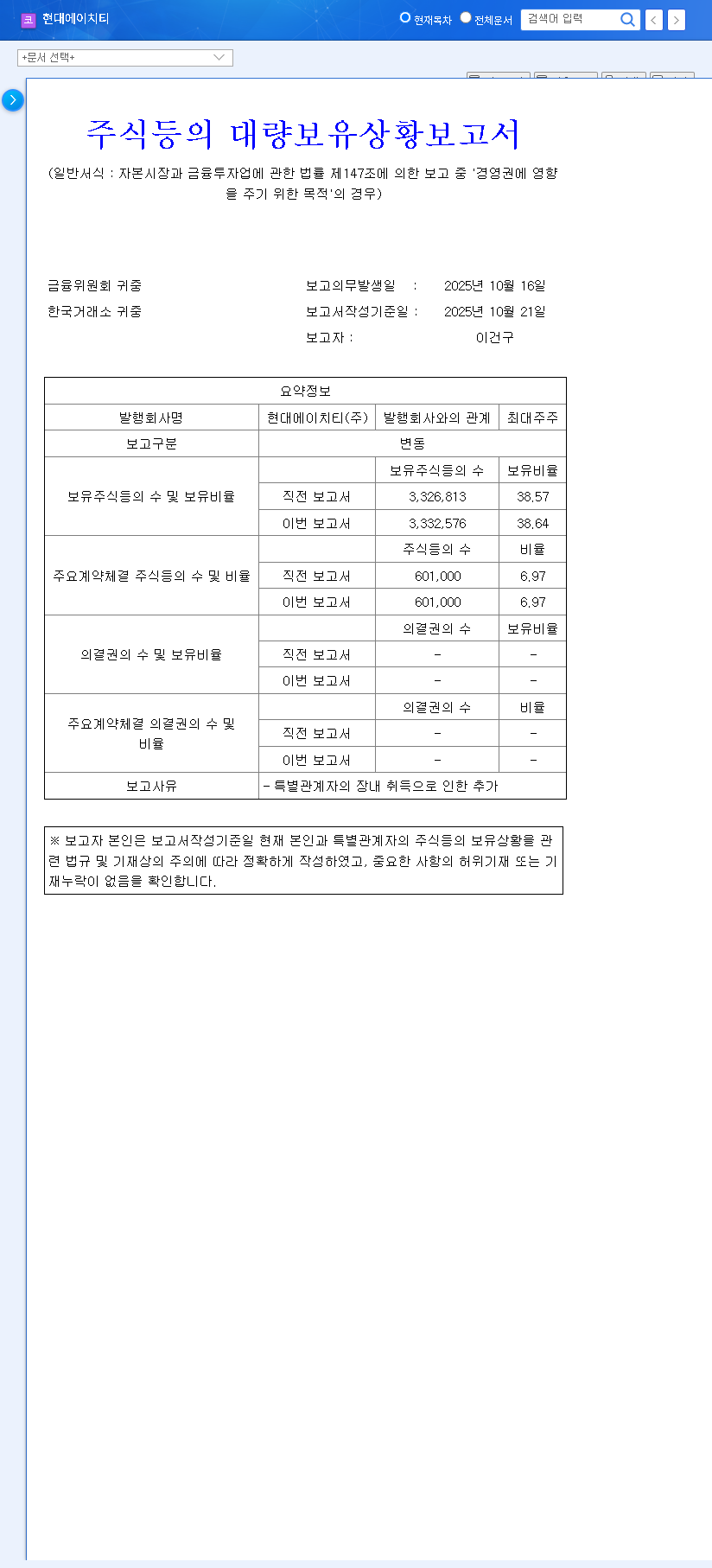
    A recent HYUNDAI HT CO,LTD. shareholding change has captured the attention of the investment community. While the increase in stake by representative Lee Geon-gu and his special related parties is a mere 0.07%, the officially stated purpose—’Influence on Management Rights’—suggests a much deeper strategic maneuver. This move, though small in percentage, is a significant signal about the future direction and stability of the company’s leadership.

    For savvy investors, understanding the nuances of such disclosures is critical. Is this a precursor to a more aggressive growth strategy, a defensive consolidation of power, or simply a formality? This comprehensive analysis will break down the filing, explore the strategic implications, and provide a clear roadmap for how to interpret this development for your investment thesis in HYUNDAI HT CO,LTD. stock.

    The Details of the Filing

    On October 21, 2025, a ‘Report on Large-Scale Holding Status of Shares, etc.’ was filed, outlining the specifics of the transaction. Here are the crucial takeaways from the official disclosure:

    • Reporting Party: Lee Geon-gu (and special related parties).
    • Purpose of Holding: Explicitly stated as ‘Influence on Management Rights’.
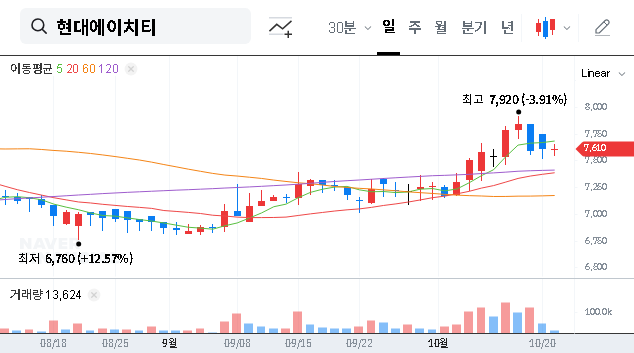
    • Stake Change: A fractional increase from 38.57% to 38.64% (a 0.07%p rise).
    • Reason for Change: An on-market purchase of 3,763 common shares by a special related party, Lee Seung-a.
    • Official Source: The complete filing can be reviewed via the Official Disclosure on DART.

    The key isn’t the size of the purchase, but the declared intent. Stating ‘Influence on Management Rights’ is a deliberate message to the market that the controlling shareholder group is actively solidifying its position and is fully engaged in the company’s governance.

    Analyzing the ‘Why’: The Significance of Management Control

    A 38.64% stake is already a formidable position, giving Lee Geon-gu and his allies significant power in shareholder meetings. So why publicly reaffirm this with a minor purchase? The answer lies in signaling and stability. Reinforcing management control sends a clear message to potential activist investors or corporate raiders that the leadership is unified and entrenched. It projects an image of stability and long-term vision, which can be reassuring to employees, partners, and long-term investors.

    Strategic Context for HYUNDAI HT CO,LTD.

    To fully grasp the impact, we must consider HYUNDAI HT’s position in the smart home and building automation industry. This sector is undergoing rapid transformation driven by AI and IoT. A fortified management team might be preparing for significant strategic moves, such as:

    • Major Capital Investments: Pouring resources into next-generation R&D without fear of short-term shareholder dissent.
    • Mergers & Acquisitions (M&A): A unified board can move more decisively to acquire smaller tech companies to integrate new capabilities.
    • Strategic Partnerships: Negotiating long-term partnerships with major construction firms or tech giants.

    This HYUNDAI HT CO,LTD. shareholding change, therefore, could be the quiet prelude to a louder, more ambitious corporate chapter.

    Investor Action Plan & Future Outlook

    While this event is a positive indicator of management commitment, it should not be the sole basis for an investment decision. A prudent investor analysis requires a multi-faceted approach. For more on corporate governance, you can review this guide on shareholder rights from Investopedia.

    Short-Term vs. Long-Term Impact

    Short-Term: The direct impact on HYUNDAI HT CO,LTD. stock price will likely be minimal. The purchase size is too small to affect supply and demand dynamics significantly. However, it can bolster investor confidence and potentially create a more stable price floor.

    Long-Term: The true impact is long-term. A stable and committed leadership is often a prerequisite for sustained growth and innovation. Investors should watch for follow-up actions over the next few quarters that align with the signal of strengthened control.

    Key Monitoring Points for Investors

    Moving forward, investors should keep a close watch on the following areas:

    • Further Filings: Any subsequent purchases by Lee Geon-gu or related parties will be highly significant.
    • Corporate Announcements: Look for news on major investments, new product lines, or M&A activity that could indicate the ‘why’ behind this move.
    • Fundamental Performance: Ultimately, the company’s value will be driven by its financial health. Continue to analyze revenue growth, profit margins, and balance sheet strength. You can learn more by reading our Guide to Fundamental Analysis.

    In conclusion, the recent shareholding change at HYUNDAI HT CO,LTD. is a classic case of reading between the lines. While the financial transaction is trivial, the strategic declaration is not. It signals a consolidation of power and a commitment to a long-term vision, providing a valuable piece of the puzzle for any investor conducting their due diligence.

    (039010) HYUNDAI HT CO,LTD. Shareholding Change: An In-Depth Analysis for Investors 관련 이미지
  • (010960) SAMHO DEVELOPMENT CO (010960): Lee Jong-ho’s Stake Hits 33.81% in a Bid for Management Influence

    (010960) SAMHO DEVELOPMENT CO (010960): Lee Jong-ho’s Stake Hits 33.81% in a Bid for Management Influence

    A significant development at SAMHO DEVELOPMENT CO (010960) has captured the market’s attention, signaling a potential shift in the company’s strategic direction. The core of this news revolves around major shareholder Lee Jong-ho increasing his stake and explicitly declaring his intent is for SAMHO DEVELOPMENT CO management influence. This is not just a passive investment; it’s a clear move to actively shape the company’s future.

    This analysis will break down the details of the share acquisition, explore the strategic implications of seeking management control, and provide a comprehensive action plan for current and prospective investors navigating this pivotal moment for SAMHO DEVELOPMENT CO.

    The Disclosure: A Closer Look at the Numbers

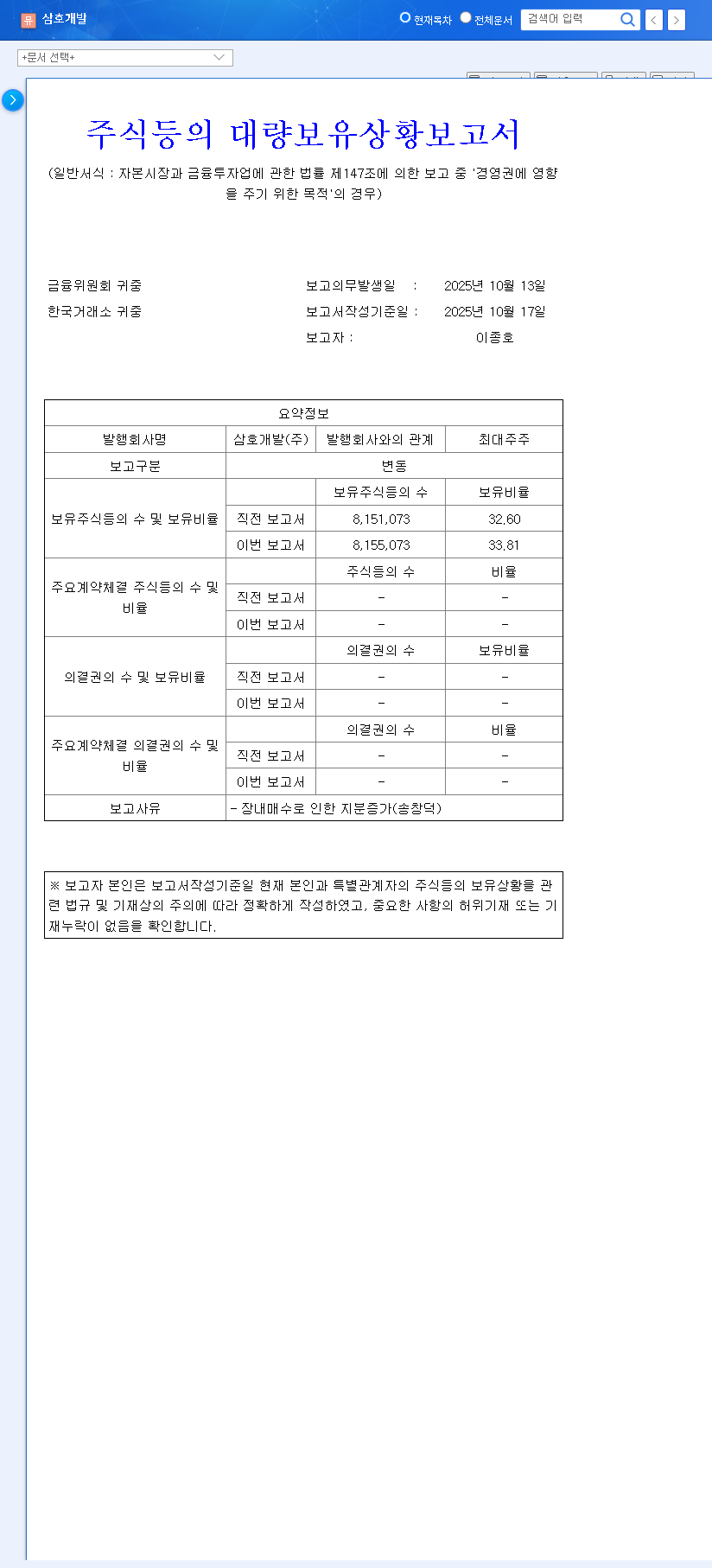
    On October 17, 2025, a ‘Large Shareholding Report’ was filed, providing concrete details of the transaction. The information, sourced directly from the Official Disclosure (DART), outlines a clear and deliberate move by Lee Jong-ho.

    • Reporting Party: Lee Jong-ho
    • New Shareholding: 33.81% (an increase of 1.21 percentage points from 32.60%)
    • Stated Purpose: Management Influence
    • Method of Acquisition: On-market purchase via a related party, Song Chang-deok.

    While a 1.21% increase may seem minor, crossing the one-third threshold (33.33%) is a critical milestone in corporate governance. This level of ownership often grants a shareholder significant power, including the ability to block special resolutions at shareholder meetings, making this a pivotal moment for the company’s internal power dynamics.

    Why ‘Management Influence’ is a Game-Changer

    The explicit declaration of ‘management influence’ distinguishes this move from a simple portfolio investment. It signals an active, not passive, approach. This suggests Lee Jong-ho intends to leverage his Lee Jong-ho stake to directly participate in key corporate decisions.

    This is a clear statement of intent. The goal is likely to steer the company’s strategy, potentially through board appointments, operational overhauls, or new capital allocation policies, all with the aim of unlocking shareholder value.

    Potential Implications of the Lee Jong-ho Stake

    • Strategic Overhaul: Lee Jong-ho may push for new growth initiatives, divestment of underperforming assets, or a revised business model to enhance profitability.
    • Enhanced Shareholder Returns: Activist shareholders often advocate for shareholder-friendly policies, such as increased dividends or share buyback programs.
    • Board Composition Changes: A primary tool for exerting influence is the nomination of new directors to the board who align with the major shareholder’s vision.

    Market Impact and Investor Action Plan

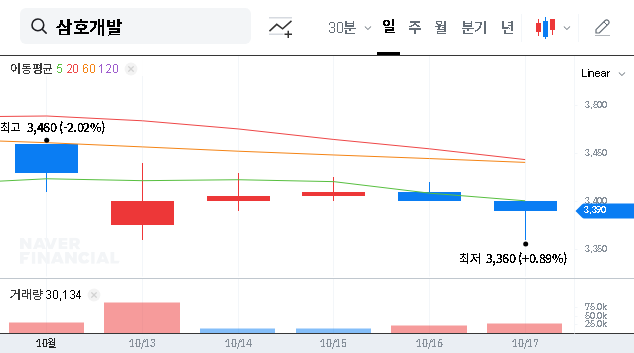
    The market often reacts positively in the short term to news of potential shareholder activism, driven by speculation of value-unlocking events. For SAMHO DEVELOPMENT CO, with a market cap of KRW 81.8 billion, this news could certainly introduce volatility. However, long-term success depends entirely on the execution and viability of the new strategic direction.

    A Cautious and Informed Approach for Investors

    Hasty decisions are ill-advised. A structured approach is necessary to evaluate the situation:

    • 1. Deep-Dive Research: Go beyond the headlines. Conduct a thorough analysis of SAMHO DEVELOPMENT CO’s financials, competitive position, and existing growth strategy. Understand what aspects an activist investor might seek to change. Our internal guide on analyzing company fundamentals can be a great starting point.
    • 2. Monitor Communications: Pay close attention to future disclosures, press releases, and statements from both the company and Lee Jong-ho. His specific plans for achieving SAMHO DEVELOPMENT CO management influence will be critical.
    • 3. Assess the Potential for Conflict: While influence can be positive, it can also lead to management disputes. Evaluate the current board and ownership structure to gauge the potential for friction, which could create uncertainty and negatively impact the stock price.

    In conclusion, Lee Jong-ho’s increased stake is more than a simple transaction; it’s a significant corporate event that places SAMHO DEVELOPMENT CO at a crossroads. For investors, this is a time for diligence and close observation, as the coming months will reveal the true impact of this strategic power play.

    (010960) SAMHO DEVELOPMENT CO (010960): Lee Jong-ho's Stake Hits 33.81% in a Bid for Management Influence 관련 이미지
  • (007370) JIN YANG PHARMACEUTICAL (007370) Stock: Analysis of Zenith Value Asset’s 6.08% CB Acquisition

    (007370) JIN YANG PHARMACEUTICAL (007370) Stock: Analysis of Zenith Value Asset’s 6.08% CB Acquisition

    The market is buzzing about JIN YANG PHARMACEUTICAL (007370) following a significant financial disclosure. A recent report reveals that Zenith Value Asset, an institutional investor, has secured a new 6.08% stake in the company. This was not a standard stock purchase, but rather an acquisition through convertible bonds (CBs). This move has sent ripples through the investment community, raising critical questions: What does this mean for the future of JIN YANG PHARMACEUTICAL stock? Is this a vote of confidence or a complex maneuver with hidden risks?

    This comprehensive analysis breaks down the event, explores the mechanics of convertible bond acquisitions, and provides a strategic outlook for investors trying to navigate this pivotal moment for JIN YANG PHARMACEUTICAL.

    Key Takeaway: A 6.08% stake acquisition by an asset management firm is a major event, signaling potential volatility and opportunity. Understanding the nuances of this deal is crucial for any current or prospective shareholder.

    The Core Event: A 6.08% Shareholding Shift

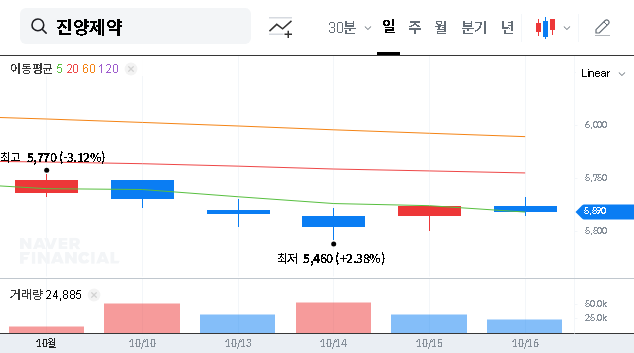
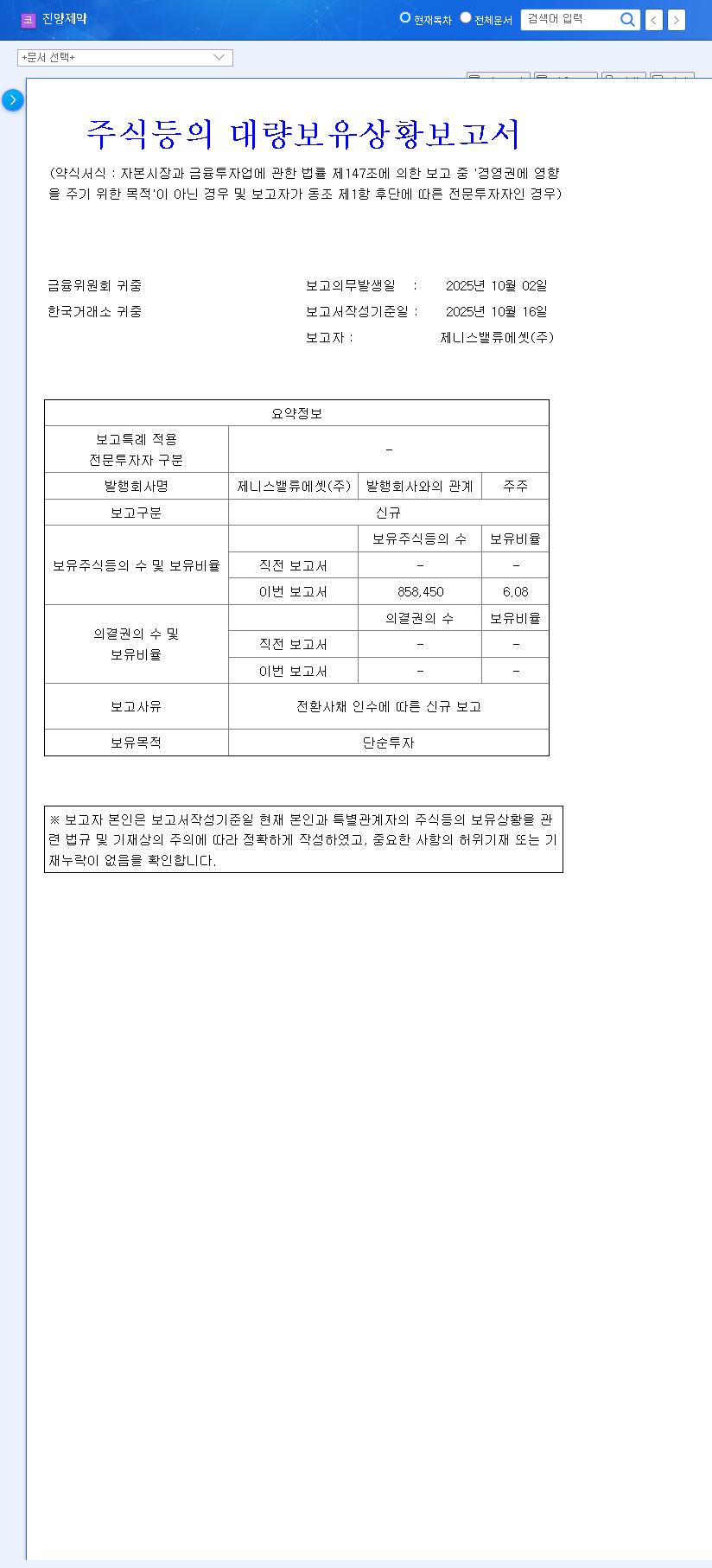
    On October 16, 2025, JIN YANG PHARMACEUTICAL (007370) filed a ‘Report on Large Volume Holdings of Shares.’ According to this document, Zenith Value Asset acquired 858,450 shares, equating to a 6.08% stake in the company. The official purpose was stated as ‘simple investment’. You can view the original filing directly from the source: Official Disclosure (DART).

    What makes this notable is the method of acquisition: through convertible bonds. A convertible bond is a type of debt security that the holder can convert into a specified number of shares of common stock in the issuing company. This hybrid nature makes it a complex instrument, blending the steady income of a bond with the growth potential of a stock.

    Analyzing the Impact on JIN YANG PHARMACEUTICAL Stock

    In a market where fresh analyst reports on JIN YANG PHARMACEUTICAL are scarce, a move this significant magnifies uncertainty. Let’s dissect the potential positive and negative implications.

    Potential Upside: A Bullish Signal?

    • Vote of Confidence: A large-scale acquisition, even if labeled a ‘simple investment,’ can be interpreted by the market as a strong sign of confidence in the company’s future prospects. Zenith Value Asset has effectively bet millions on the company’s success.
    • Increased Market Attention: This news puts JIN YANG PHARMACEUTICAL on the radar of more investors and financial media, potentially increasing trading volume and liquidity.
    • Shareholder Value Focus: The presence of a significant institutional investor could pressure management to focus more keenly on enhancing shareholder value, leading to positive strategic decisions.

    Potential Downside: Hidden Risks to Consider

    • Share Dilution: The most significant risk of a convertible bond acquisition is future dilution. When the bonds are converted into stock, the total number of outstanding shares increases, which can decrease the value of each individual share.
    • Potential Overhang: The market may become concerned about a large block of shares hitting the market if Zenith Value Asset decides to sell after conversion. This ‘stock overhang’ can suppress the price as traders anticipate the potential sale.
    • Uncertain Intentions: While the stated purpose is ‘simple investment,’ the lack of detail about Zenith’s holding period or exit strategy creates uncertainty that can lead to price volatility.

    Expert Recommendation: A Strategic Action Plan for Investors

    Given the mix of positive signals and inherent risks, a measured approach is essential. Hasty decisions are ill-advised. Here’s a strategic framework for how to respond.

    1. Conduct Deeper Due Diligence

    Before making any moves, gather more information. Focus on understanding the company’s core value, separate from this single event. Analyze its financial health, product pipeline, and competitive position. You can learn more by reading our guide to fundamental analysis.

    2. Define Your Investment Horizon

    • Short-Term Traders: This event will likely create volatility. Traders may find opportunities, but this requires strict risk management (e.g., stop-loss orders) due to high uncertainty and information asymmetry.
    • Long-Term Investors: If your analysis shows strong fundamentals for JIN YANG PHARMACEUTICAL, this could be a buying opportunity. However, be prepared for potential dilution and view the entry of Zenith as a long-term factor, not a short-term catalyst.

    3. Monitor Key Metrics

    Keep a close watch on any further disclosures regarding the convertible bonds, such as the conversion price and maturity date. Also, monitor trading volumes and institutional ownership changes in the coming quarters for clues about market sentiment.

    Disclaimer: This analysis is based on publicly available information and is for informational purposes only. It does not constitute financial advice. Market conditions can change, and investors should conduct their own research.

    (007370) JIN YANG PHARMACEUTICAL (007370) Stock: Analysis of Zenith Value Asset's 6.08% CB Acquisition 관련 이미지
  • (012330) Decoding the HYUNDAI MOBIS Large Shareholding Report: What Investors Must Know

    (012330) Decoding the HYUNDAI MOBIS Large Shareholding Report: What Investors Must Know

    A recently filed HYUNDAI MOBIS Large Shareholding Report has caught the attention of astute investors. On the surface, it appears uneventful—the total shareholding percentage remains unchanged. However, the devil is in the details. The stated purpose of ‘management influence’ and the reason of ‘change in special related parties’ are crucial signals that should not be ignored. This disclosure is more than a simple regulatory formality; it’s a potential precursor to shifts in corporate strategy and governance. For HYUNDAI MOBIS investors, understanding these subtleties is key to navigating the road ahead.

    While the numbers didn’t move, the intent did. This report shifts the focus from ‘how much’ is owned to ‘why’ it’s owned, a critical distinction in evaluating corporate governance.

    Key Takeaways from the Report

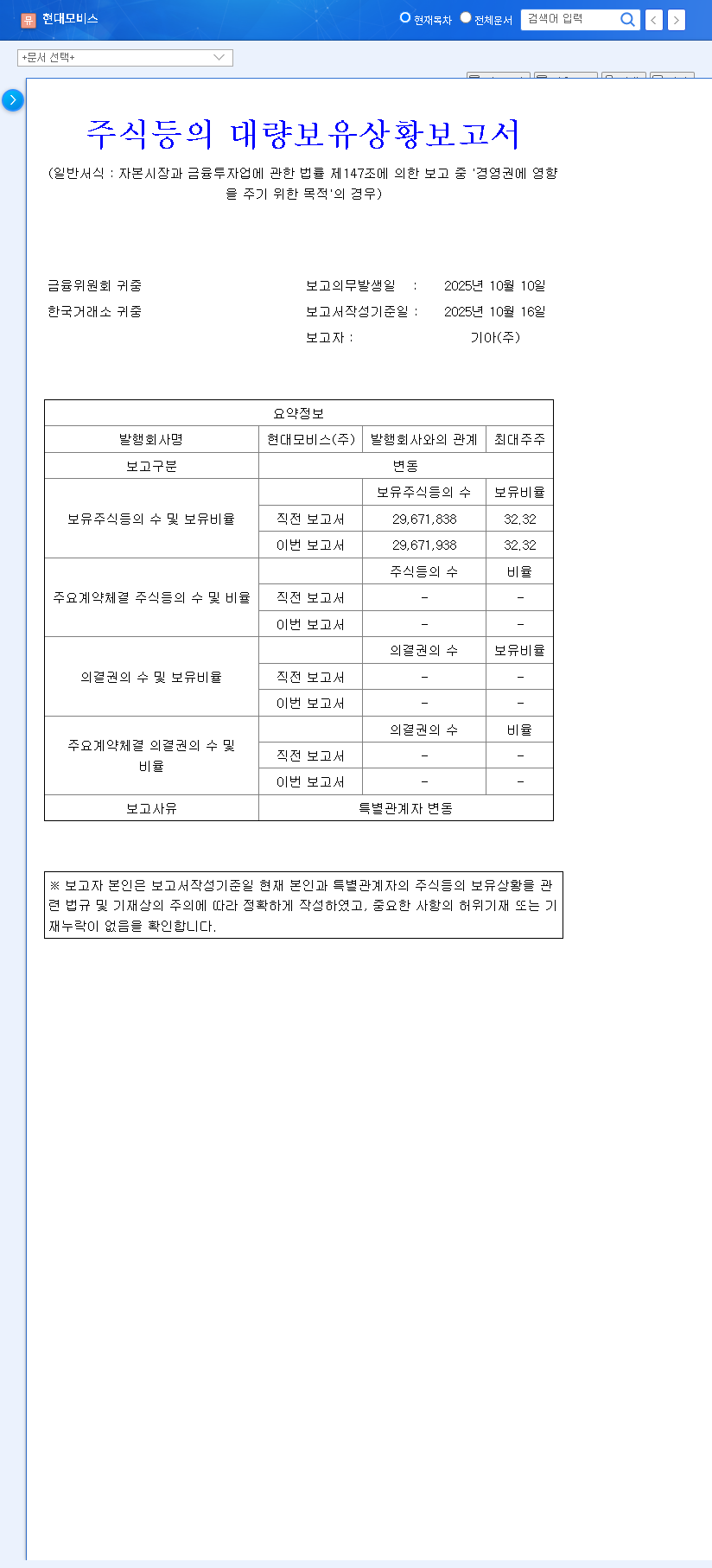
    The ‘Report on the Status of Large Shareholdings (General)’ for HYUNDAI MOBIS CO.,LTD, filed on October 16, 2025, presents a unique situation. The full filing can be reviewed in the Official Disclosure on DART. Here are the most critical points:

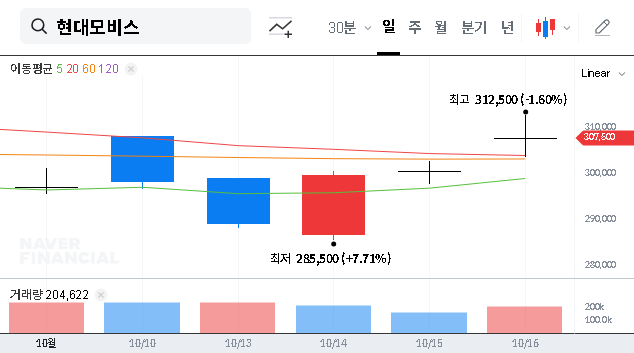
    • No Change in Total Stake: The reporting group’s total shareholding percentage remained static at 32.32%.
    • Declared Purpose – Management Influence: The shareholders explicitly stated their intent is to influence or engage with the company’s management.
    • Reason for Report – Change in Parties: The filing was triggered by a ‘change in special related parties,’ specifically the on-market purchase of 100 common shares by Kim Do-hyung.
    • Minimal Share Movement: The 100-share purchase is financially insignificant on its own but gains meaning from the context of the declared purpose.

    Why the HYUNDAI MOBIS Large Shareholding Report Matters

    The crucial element here is intent. In the world of corporate governance, especially within South Korea’s complex ‘chaebol’ structures, declarations of ‘management influence’ are closely watched. They signal a shift from passive ownership to a more active, engaged stance. This could mean the large shareholders plan to be more vocal on issues like board appointments, dividend policies, or major strategic decisions. For more background on this topic, you can explore our analysis of Hyundai Motor Group’s corporate structure.

    Interpreting ‘Change in Special Related Parties’

    This clause indicates potential realignment within the shareholder group. While the group’s total ownership is stable, the internal distribution of shares might be shifting. This could be part of a long-term succession plan, a consolidation of influence under specific family members, or preparation for future structural changes. Even a tiny purchase, when filed under this reason, serves as an official marker for these internal dynamics, providing a breadcrumb trail for analysts to follow.

    Potential Market Impact and Investor Outlook

    In the short term, the direct impact on HYUNDAI MOBIS’s stock price is likely to be minimal. The market has already priced in the existing ownership structure. However, the mid-to-long-term implications are what investors should focus on. This report could elevate market sensitivity to HYUNDAI MOBIS’s governance. Future announcements will be scrutinized more intensely, and any hint of shareholder activism could introduce volatility. As noted by financial news leaders like Bloomberg, investor focus on ESG and governance standards is at an all-time high, making these signals particularly potent.

    A Proactive Action Plan for Investors

    Rather than making rash decisions, a measured and informed approach is best. This HYUNDAI MOBIS Large Shareholding Report is a call for vigilance, not panic. Here’s a strategic plan for investors:

    • Monitor Subsequent Filings: Keep a close eye on DART for any follow-up reports. Is this a one-off event, or the first of a series of moves? The pattern is more important than the single data point.
    • Re-evaluate Corporate Governance Risk: Assess how a more active controlling shareholder group could impact the company’s direction. Does it align with your investment thesis?
    • Focus on Fundamentals: A potential governance shift doesn’t change the company’s underlying business overnight. Continue to analyze HYUNDAI MOBIS’s financial health, market position, and technological innovations.
    • Seek Expert Analysis: Review reports from major brokerage firms who may have deeper insights into the relationships between the special related parties and their historical behavior.

    Frequently Asked Questions (FAQ)

    Q1: What is the core takeaway from this HYUNDAI MOBIS report?

    A1: The key takeaway is not the unchanged 32.32% shareholding, but the declared purpose of ‘management influence’ and the internal ‘change in special related parties,’ which signals a more active stance from the controlling shareholders.

    Q2: Will the 100-share purchase affect management control?

    A2: No, the purchase itself is symbolic. Its importance comes from triggering the reporting requirement and being coupled with the ‘management influence’ declaration, which could foreshadow more significant future actions.

    Q3: How should HYUNDAI MOBIS investors react now?

    A3: Investors should adopt a ‘watch and wait’ strategy. Continue to monitor for further disclosures, analyze the company’s fundamental performance, and stay informed on expert analyses regarding its corporate governance.

    (012330) Decoding the HYUNDAI MOBIS Large Shareholding Report: What Investors Must Know 관련 이미지
  • (270660) EVERYBOT Inc. Shareholding Analysis: Is 34.19% a Threat to Management Control?

    (270660) EVERYBOT Inc. Shareholding Analysis: Is 34.19% a Threat to Management Control?

    A recent update on EVERYBOT Inc. shareholding has captured the attention of the investment community. While the major shareholder’s stake saw a minor decrease, the underlying details reveal important signals about the company’s stability, executive actions, and potential future direction. For investors, understanding these nuances is critical to navigating the stock’s trajectory.

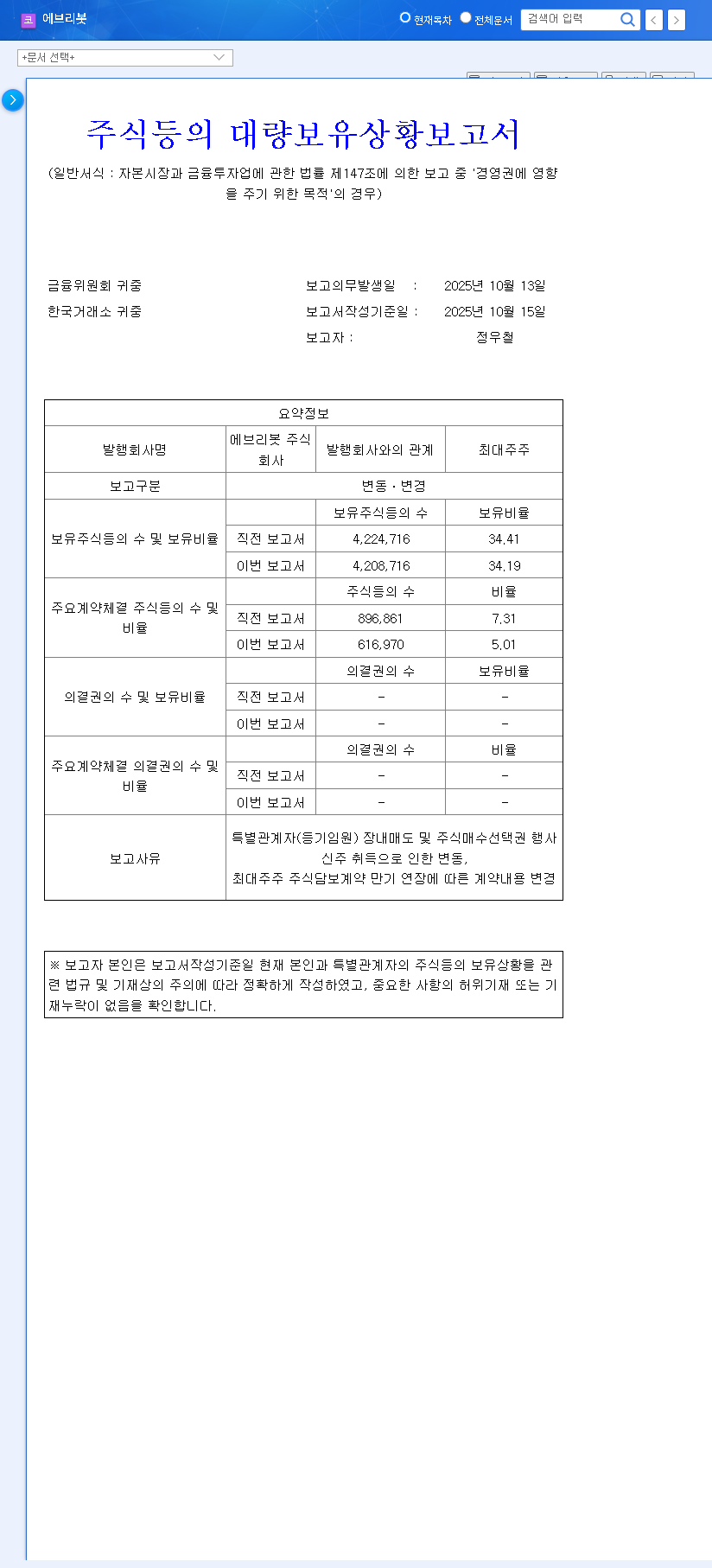
    This comprehensive investor analysis unpacks the official large shareholder report filed on October 16, 2025. We will explore the reasons behind the change, its direct impact on EVERYBOT management control, and provide a strategic outlook for current and potential shareholders. The official filing can be viewed here: Official Disclosure (Source).

    Key Details from the EVERYBOT Shareholder Report

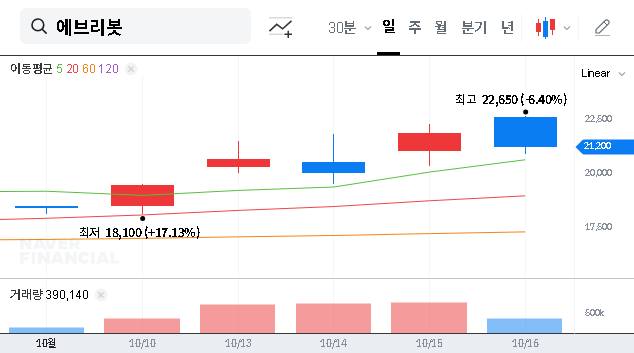
    On October 16, 2025, with a market capitalization of KRW 260.6 billion, EVERYBOT Inc. released its mandatory Large Shareholding Status Report. The headline figures show a seemingly minor adjustment, but the story is in the details:

    • Previous Shareholding: 34.41%
    • New Shareholding: 34.19%
    • Net Change: A decrease of 0.22 percentage points.

    This change was not a single event but a combination of three distinct actions, each with its own implications.

    Analyzing the Three Core Reasons for the Shift

    To perform a thorough EVERYBOT stock analysis, we must dissect each contributing factor.

    1. On-Market Sale by a Registered Executive

    Mr. Hwang Min-soo, a special related party and executive, sold 15,999 common shares. While insider selling can sometimes be a red flag, the relatively small size of this sale suggests it’s likely for personal financial planning or liquidity rather than a loss of faith in the company. However, the market often reacts cautiously to any insider sales, making it a point to monitor.

    2. New Share Acquisition via Stock Options

    The exercise of stock options introduces new shares into the market. This is beneficial for the company as it brings in capital. However, for existing shareholders, it can lead to share dilution, where the value of each individual share decreases because the total number of shares has increased. The report lacked specifics on volume and price, making a precise calculation of the dilution effect difficult at this stage.

    3. Maturity Extension of a Stock Pledge Agreement

    The major shareholder extended a stock pledge agreement. This means shares are used as collateral for a loan. Extending the agreement suggests financial stability and the ability to meet obligations, which is a positive signal. It reinforces their long-term commitment. Yet, the specific terms (like interest rates or collateral ratios) are unknown and represent a potential risk if financial conditions were to change.

    While the headline change in the EVERYBOT Inc. shareholding is minimal, the combination of an executive sale, share dilution, and a stable pledge agreement creates a complex but cautiously optimistic picture for management control.

    Impact on Management Control and Market Sentiment

    The most critical question is whether this shift weakens the primary shareholder’s grip on the company.

    Assessing EVERYBOT Management Control

    A 34.19% stake is a formidable position. In most publicly traded companies, this is more than sufficient to maintain effective management control and direct corporate strategy. The report’s explicit statement that the holding purpose is ‘management influence’ further solidifies this intent. There is no immediate threat. However, continuous dilution or further sales by related parties could slowly erode this position, potentially opening the door to activist investors in the long run. For more context, you can read about how shareholding structures affect corporate governance on our blog.

    Short-Term vs. Long-Term Market Reaction

    In the short term, the news might create minor selling pressure due to dilution fears and the executive sale. However, the impact is expected to be muted. The long-term outlook depends more on the company’s fundamental performance—its financial health, innovation in the robotics sector, and overall market position—than on this minor shareholding adjustment.

    Investor Checklist: Your Next Steps

    Based on this large shareholder report, here are actionable recommendations for investors:

    • Focus on Fundamentals: Look beyond this report. Analyze EVERYBOT’s latest financial statements, revenue growth, and profitability. Is the core business strong?
    • Monitor Future Disclosures: Pay close attention to future filings for details on the stock option exercise price and the renewed terms of the pledge agreement. This will provide a clearer risk profile.
    • Analyze the Competitive Landscape: Understand where EVERYBOT stands in the broader consumer robotics industry. Who are its main competitors, and what are its unique advantages?
    • Watch for Insider Trends: While this one sale is minor, a pattern of continued selling by multiple insiders would be a more significant warning sign.

    In conclusion, the recent update on EVERYBOT Inc. shareholding does not signal a major disruption. Management control remains secure. For the discerning investor, this event is simply one piece of a much larger puzzle, underscoring the need for continuous, fundamentals-based research rather than a reaction to isolated news.

    (270660) EVERYBOT Inc. Shareholding Analysis: Is 34.19% a Threat to Management Control? 관련 이미지
  • (029480) Kwangmu Co.,Ltd. Stake Increase: A Deep Dive into Hyupjin’s Strategy & What It Means for Investors (122330021888)

    (029480) Kwangmu Co.,Ltd. Stake Increase: A Deep Dive into Hyupjin’s Strategy & What It Means for Investors (122330021888)

    In a significant development capturing market attention, Hyupjin Co., Ltd., the largest shareholder of Kwangmu Co., Ltd., has executed a substantial Kwangmu Co.,Ltd. stake increase, cementing its position and signaling a clear intent to fortify its management control. This move has ignited widespread speculation about Kwangmu’s future, particularly concerning its struggling secondary battery materials division and overall corporate direction. Will this be the catalyst that finally propels Kwangmu out of its business stagnation, or is it a prelude to more internal restructuring? This analysis provides a comprehensive look at Hyupjin’s strategic motives, Kwangmu’s financial health, and the critical factors investors must now consider.

    The Details: A Breakdown of the Stake Increase

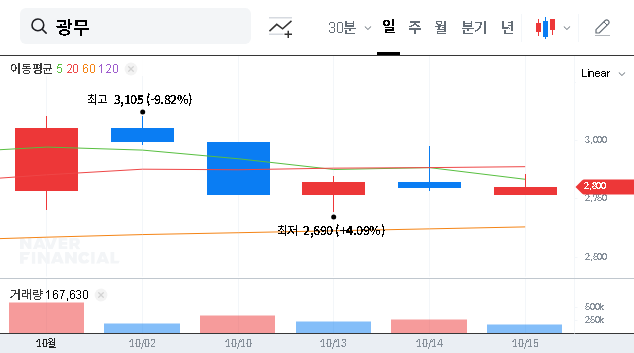
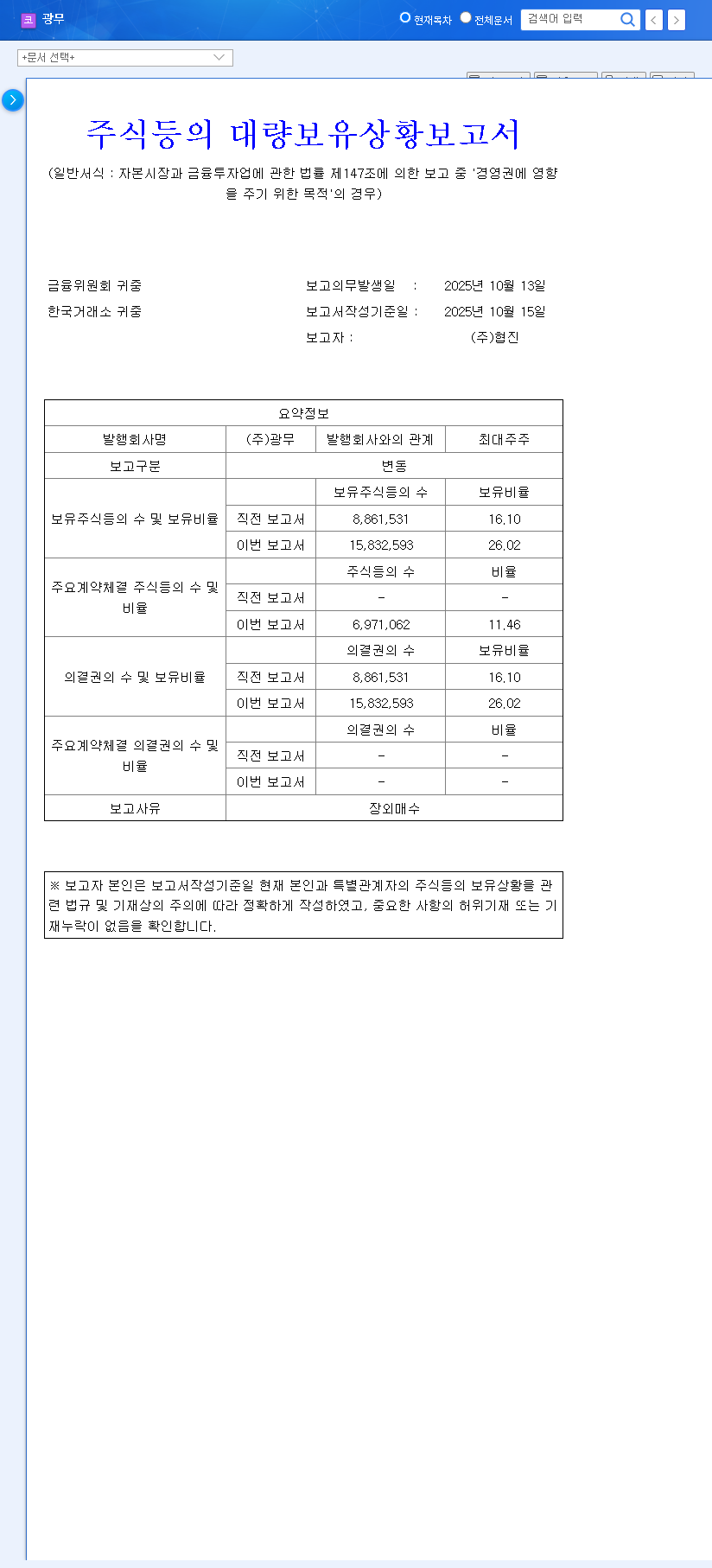
    On October 15, 2025, Kwangmu Co.,Ltd. filed a ‘Report on the Status of Large Shareholding,’ confirming the transaction. The official disclosure, available on Korea’s DART system, provides the raw data behind this strategic maneuver. You can review the Official Disclosure (Source) for complete details. Hyupjin’s actions were decisive and well-orchestrated through a series of off-market purchases.

    Key Transaction Highlights

    • Reporting Entity: Hyupjin Co., Ltd.
    • Stated Purpose: Influence over management.
    • Ownership Before Change: 16.10%
    • Ownership After Change: 26.02% (a 9.92 percentage point increase)
    • Method of Acquisition: Off-market purchases from various entities, including Hansluce Co., Ltd. and Golden Value No. 5 New Technology Investment Partnership.

    By raising its total stake to over 26%, Hyupjin has significantly tightened its grip on Kwangmu. This level of ownership provides substantial power to influence board decisions, guide strategic initiatives, and implement a more hands-on approach to management, moving far beyond the role of a passive investor.

    Analyzing Hyupjin’s Motives and Kwangmu’s Challenges

    This Kwangmu Co.,Ltd. stake increase is not an impulsive act but a calculated move rooted in Kwangmu’s current business realities and Hyupjin’s long-term vision. To understand why, we must examine Kwangmu’s fundamental weaknesses and the potential synergies Hyupjin aims to unlock.

    Kwangmu’s Precarious Position

    Kwangmu has been struggling. Its traditional business segments (NI/SI and ITO) are in decline, dragging down overall sales. More alarmingly, the secondary battery materials business—once touted as the company’s future—posted zero sales in the first half of 2025 after a modest KRW 13.21 billion in 2024. This suggests significant operational hurdles or delays in supply contracts. While its finances have seen some improvement from debt reduction, a net loss has eroded total equity. This backdrop of declining core revenue and a faltering growth engine made Kwangmu ripe for a strategic intervention.

    “Hyupjin isn’t just buying shares; it’s buying control. This is a clear signal that the era of passive oversight is over. They are moving in to directly steer the ship, likely targeting a major overhaul of the secondary battery business and a push for operational efficiency,” notes a market analyst from a leading financial publication.

    Hyupjin’s Strategic Play for Synergy and Growth

    With a firm grip on Kwangmu management control, Hyupjin can now execute its strategy more forcefully. Key objectives likely include:

    • Accountable Leadership: Installing a management team that can drive consistent strategy and be held directly responsible for performance metrics.
    • Revitalizing the Battery Business: Leveraging its own network and resources, potentially in conjunction with the acquisition of Central Advanced Materials Co., Ltd., to finally activate Kwangmu’s potential in the high-growth secondary battery materials market.
    • Aggressive Restructuring: Undertaking bold moves, such as capital increases, divestment of non-core assets, or business reorganizations, to streamline operations and focus on profitable ventures.

    Investor Outlook: Opportunities and Risks

    For investors, this event presents a double-edged sword. A proactive majority shareholder can be a powerful force for positive change, but the path to recovery is fraught with risks. A sound Kwangmu investment strategy requires weighing these factors carefully.

    The Bull Case: A Path to Turnaround

    The upside is clear: stabilized management, accelerated strategic execution, and the potential for new capital injections to fund growth. The synergy between Kwangmu and Hyupjin’s other interests could unlock value that has long been dormant, especially in high-tech materials.

    The Bear Case: Execution and Governance Risks

    However, significant risks remain. The news may cause short-term stock price volatility. More importantly, Hyupjin’s success depends entirely on its ability to execute its plan. A strong vision is meaningless without competent operational management. Investors must also watch for potential governance issues, such as conflicts with minority shareholders or the overhang from convertible bonds that could dilute equity.

    Actionable Plan for Investors

    Instead of reacting to market noise, investors should focus on monitoring tangible progress:

    • Monitor all official announcements from Hyupjin regarding its specific plans for Kwangmu.
    • Scrutinize the upcoming Q3 earnings report for any signs of revenue in the secondary battery segment.
    • Track changes in financial health and be aware of any new convertible bond issuances or conversions.

    Ultimately, the Kwangmu Co.,Ltd. stake increase is a pivotal moment. The long-term value will be determined not by this transaction alone, but by the strategic clarity, operational excellence, and disciplined execution that follows.

    (029480) Kwangmu Co.,Ltd. Stake Increase: A Deep Dive into Hyupjin's Strategy & What It Means for Investors (122330021888) 관련 이미지