Tag: Large Shareholding Report

  • (319400) HYUNDAI MOVEX Stock Analysis: Impact of Hyundai Elevator’s Major Share Sale

    (319400) HYUNDAI MOVEX Stock Analysis: Impact of Hyundai Elevator’s Major Share Sale

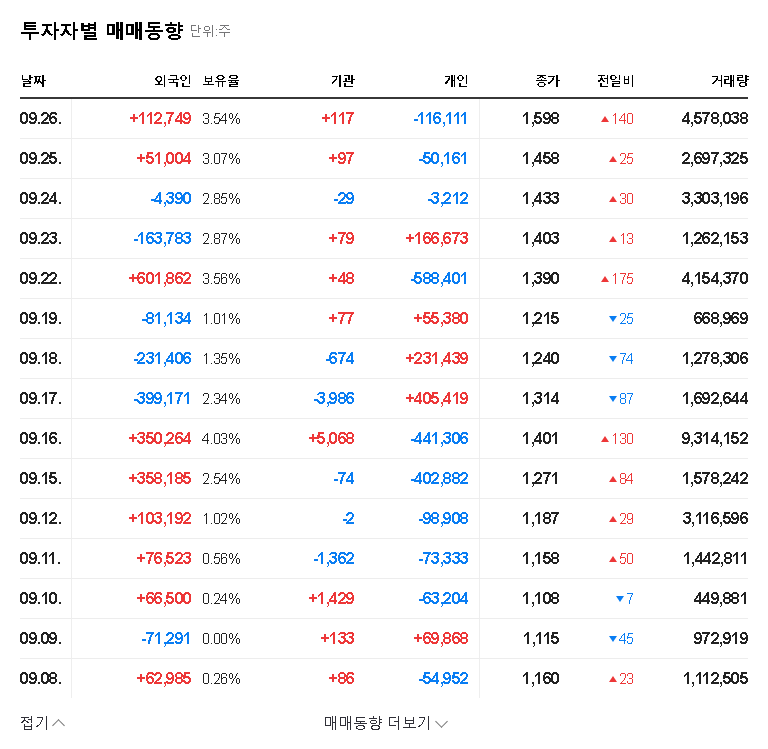
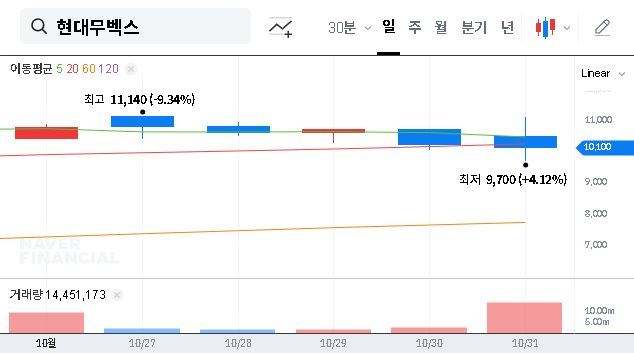
    A significant development has captured the attention of investors in HYUNDAI MOVEX (현대무벡스). Hyundai Elevator, the company’s largest shareholder, has announced a substantial reduction in its stake, sending ripples through the market and prompting questions about the future of HYUNDAI MOVEX stock. How will this shift in ownership affect the stock price, and what is the most intelligent way for investors to navigate this uncertainty?

    This comprehensive investment analysis goes beyond the surface-level news. We will dissect the event, evaluate the company’s robust fundamentals, and provide a clear, actionable investment strategy to help you identify both the risks and the hidden opportunities within this change.

    The Disclosure: Unpacking the Hyundai Elevator Stake Sale

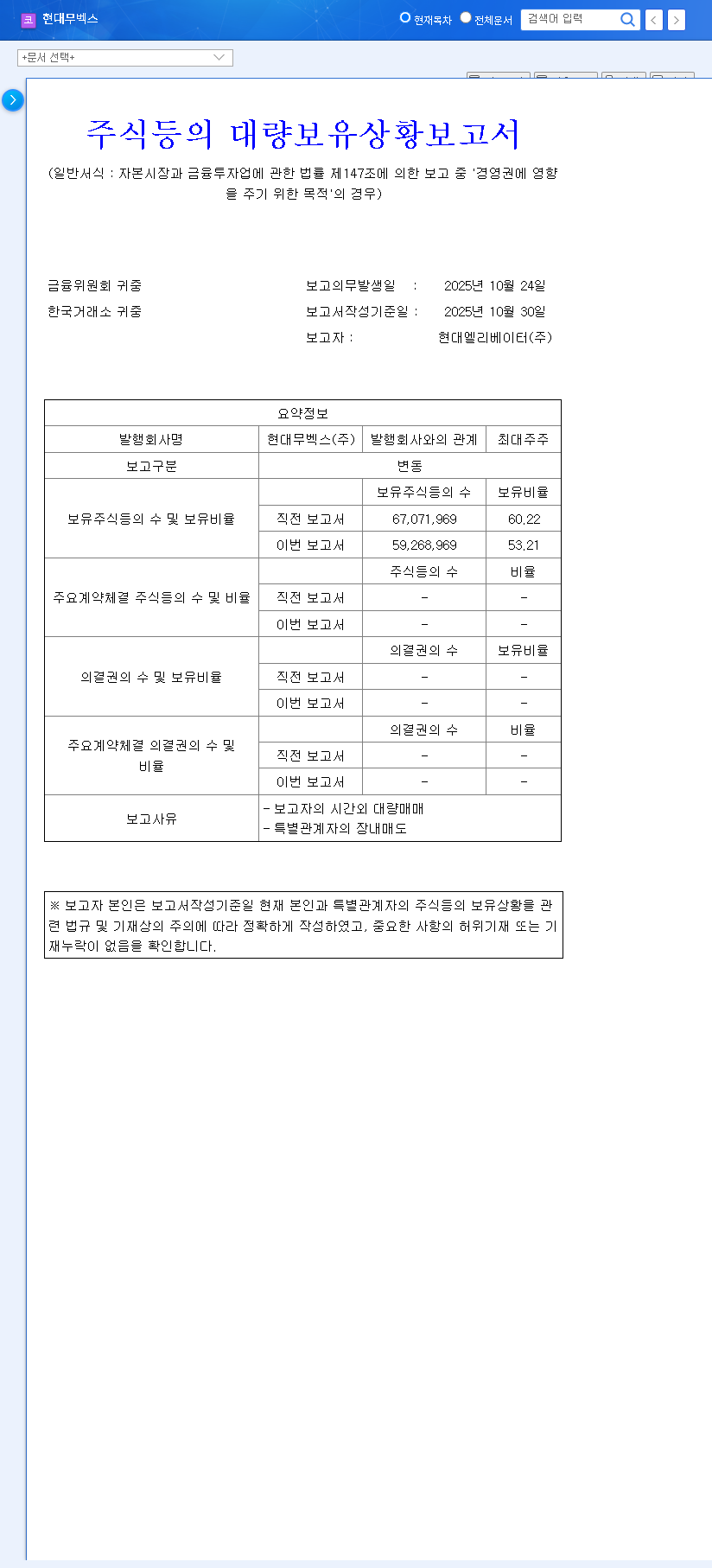
    On October 31, 2025, Hyundai Elevator formally disclosed a change in its large shareholding status for HYUNDAI MOVEX. The core of this announcement was the reduction of its stake by approximately 7 percentage points, from 60.22% down to 53.21%. This transaction was executed via an after-hours block trade and an on-market sale by a related party. Despite this sale, Hyundai Elevator’s stated purpose of holding remains ‘influence on management,’ indicating continued strategic control. You can view the complete filing in the Official Disclosure (DART Report).

    Why Does This HYUNDAI MOVEX Share Sale Matter?

    A major shareholder selling a significant block of shares can be interpreted in several ways. It could signal a strategic portfolio adjustment by Hyundai Elevator, perhaps to secure liquidity for other ventures or to focus more on its core elevator business. In the short term, such a sale often creates selling pressure and introduces uncertainty, which can negatively impact investor sentiment and the stock price.

    While the short-term market reaction may be volatile, it is crucial to remember that Hyundai Elevator retains a majority stake of 53.21%. This ensures management stability and control remain firmly in place for the foreseeable future.

    Over the long term, this could have positive effects. The increased free float of shares can enhance liquidity for HYUNDAI MOVEX stock, potentially attracting a new base of institutional and retail investors. For real-time market data and analysis, professionals often rely on platforms like Reuters Market Data.

    Beyond the Headlines: Are HYUNDAI MOVEX’s Fundamentals Strong?

    To form a sound investment thesis, we must look past the ownership change and analyze the company’s core business. HYUNDAI MOVEX demonstrates robust fundamentals, primarily powered by two key segments.

    1. Logistics Automation: The Engine of Growth (78% of Revenue)

    This is the company’s primary growth driver. Fueled by the global e-commerce boom and the push for greater efficiency in supply chains (Industry 4.0), the demand for logistics automation is soaring. HYUNDAI MOVEX is a market leader, expanding into high-value sectors like secondary battery manufacturing and cold storage solutions. Its growing international presence in China, Vietnam, the US, and Hungary further solidifies its market position.

    2. Platform Screen Doors (PSD): A Stable Foundation (15% of Revenue)

    The PSD business provides a steady stream of revenue. With a dominant domestic market share of over 50%, the company benefits from new subway line construction and the renovation of aging stations. Furthermore, successful projects like the Sydney Metro in Australia and crucial SIL certification are paving the way for expansion into the lucrative European market.

    Financial Health & Shareholder Value

    A look at the balance sheet reveals a stable financial position. While operating profit saw a slight decrease in Q2 2025 due to rising raw material costs, revenue continued to grow year-on-year. Crucially, the company’s debt-to-equity ratio has improved, indicating sound financial management. Moreover, the recent cancellation of 6.59 million treasury shares is a strong positive signal, as it enhances shareholder value by increasing earnings per share. For those unfamiliar with the benefits, you can learn more about how treasury stock cancellation works in our related article.

    Investor Action Plan: Crafting Your HYUNDAI MOVEX Strategy

    Given the short-term uncertainty from the Hyundai Elevator sale balanced against strong long-term fundamentals, we recommend a “Neutral” stance with a strategic approach.

    • Short-Term Strategy: Adopt a wait-and-see approach. Monitor how the market absorbs the newly available block of shares. A significant, sentiment-driven price drop could present a compelling phased buying opportunity for investors who believe in the company’s fundamental value.
    • Mid-to-Long-Term Strategy: Focus on the fundamentals. The growth trajectory of the logistics automation market is the primary catalyst for HYUNDAI MOVEX. Long-term investors should base their decisions on the company’s continued performance, technological innovation, and expanding order backlog.
    • Key Monitoring Points: Keep a close watch on any further announcements from Hyundai Elevator regarding its remaining stake. Also, analyze how any changes in ownership structure might influence future business strategy or M&A activity.

    In conclusion, the HYUNDAI MOVEX share sale by its parent company is a pivotal event creating short-term market noise. However, the company’s strong position in high-growth industries, stable financials, and clear path for future revenue suggest that for the patient investor, this period of uncertainty could evolve into a long-term opportunity.
    (319400) HYUNDAI MOVEX Stock Analysis: Impact of Hyundai Elevator's Major Share Sale 관련 이미지
  • (093050) LF Corp. Stock Analysis (093050): Shareholder Stake Increase vs. Loan Risks

    (093050) LF Corp. Stock Analysis (093050): Shareholder Stake Increase vs. Loan Risks

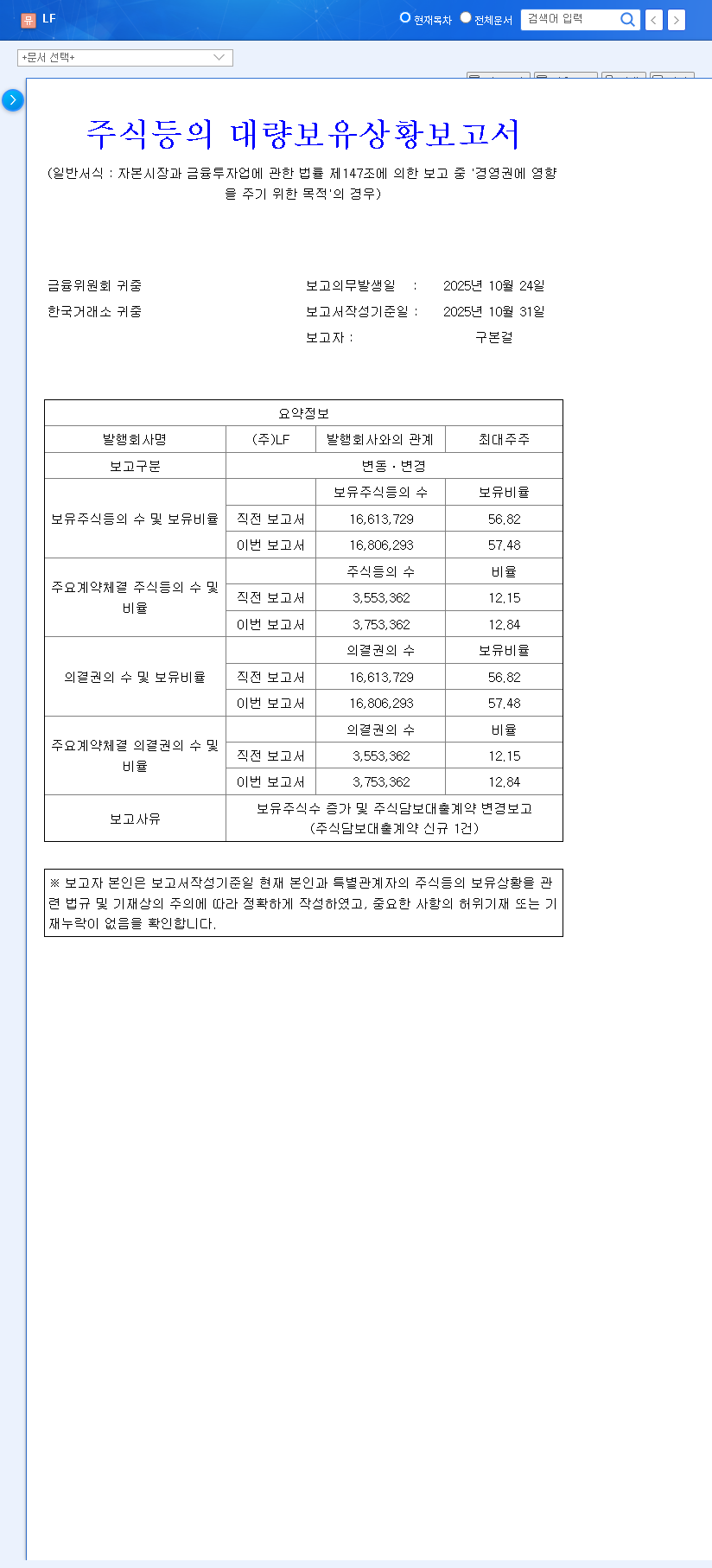
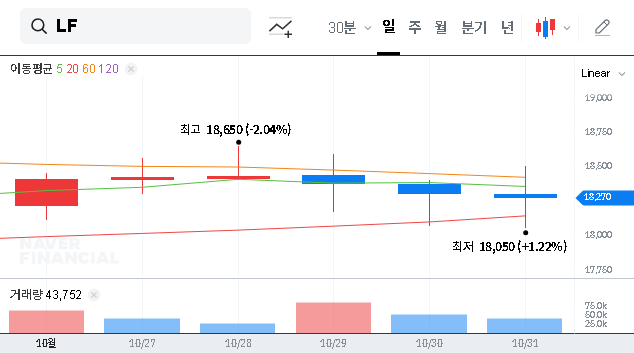
    A recent move by Koo Bon-gul, the major shareholder of LF Corp. (093050), has sent ripples through the investment community. His decision to increase his stake in the company presents a complex picture for anyone conducting an LF Corp. stock analysis. On one hand, it signals a strong belief in the company’s future and enhances management stability. On the other, the simultaneous disclosure of a new stock-backed loan introduces a layer of risk that cannot be ignored. This comprehensive guide will dissect the official report, analyze the company’s fundamentals, and provide a clear, actionable investment thesis.

    While the major shareholder’s increased stake is a vote of confidence, investors must weigh this against the potential market pressures from new stock-backed loan agreements. A cautious, informed approach is paramount.

    Deconstructing the Shareholding Report

    The catalyst for this analysis is the ‘Large Shareholding Status Report’ filed on October 31, 2025. According to this Official Disclosure, Koo Bon-gul’s total holding increased from 56.82% to 57.48%, a notable rise of 0.66 percentage points. Let’s break down the key details:

    • Primary Action: On-market purchases of 103,831 shares executed by LF D&L Co., Ltd., a related entity, between October 27 and October 31, 2025.
    • Stated Purpose: To exert and strengthen influence over management, a clear signal of long-term commitment.
    • Secondary Action: The report also disclosed one new stock-backed loan agreement, where shares are pledged as collateral.

    LF Corp.’s Fundamental Health & Market Headwinds

    Understanding the context of this share purchase requires a look at LF Corp.’s current business health and the broader economic landscape. The company operates a diversified portfolio across fashion, finance, and food, aiming for stable growth. However, it’s not immune to external pressures.

    Company Strengths

    • Financial Stability: LF Corp. holds an excellent AA- credit rating, indicating a strong capacity to meet its financial commitments, supported by stable debt and liquidity ratios.
    • Profitability Rebound: Financials from the first half of 2025 showed a significant year-on-year improvement in operating profit and net income, suggesting a successful recovery.
    • Shareholder-Friendly Policies: A history of consistent share buybacks and dividend payments underscores a management focus on delivering shareholder value.

    Macroeconomic Risks

    The global economy presents notable challenges. As reported by leading financial outlets like Bloomberg, the environment of low growth, high interest rates, and persistent inflation can severely dampen consumer spending, directly impacting the core fashion segment. Furthermore, volatility in the USD/KRW exchange rate can affect sourcing costs and profitability from overseas ventures.

    Investment Thesis: Bull vs. Bear Case for LF Corp. Stock

    The Bull Case (Positive Outlook)

    The primary bullish signal is the reinforcement of management control by Koo Bon-gul. This move boosts investor confidence by signaling a long-term commitment to the company’s vision. The continuous on-market share purchases by a related entity can create buying pressure, potentially establishing a floor for the LF Corp. stock price. This action suggests that the majority shareholder sees the stock as undervalued and anticipates future growth and appreciation.

    The Bear Case (Potential Risks)

    The most significant risk factor is the new stock-backed loan. This means a portion of the shareholder’s stake is pledged as collateral. In a scenario of a sharp stock price decline, a ‘margin call’ could occur, potentially forcing the sale of these collateralized shares on the open market. This would create significant downward pressure on the stock. For a deeper understanding of this financial instrument, you can read our guide on stock-backed loans. This financial risk, combined with the challenging macroeconomic environment, presents a compelling reason for caution.

    Conclusion: Investment Recommendation

    Considering the balance of positive signals from the major LF Corp. shareholder against the tangible risks from the loan agreement and market conditions, the current investment opinion is a HOLD.

    • For Existing Investors: Maintain your position but monitor the situation closely. Watch for further share purchases and any updates on the terms of the stock-backed loan. Keep an eye on the company’s quarterly earnings to ensure the profitability recovery continues.
    • For New Investors: A cautious, wait-and-see approach is recommended. Before entering a position, seek more clarity on the loan’s collateral ratio and repayment terms. Allow the market to digest this news and observe if the stock price establishes a new, stable base.

    (093050) LF Corp. Stock Analysis (093050): Shareholder Stake Increase vs. Loan Risks 관련 이미지
  • (214320) INNOCEAN Stock Outlook: Deep Dive on NHPEA Stake Sale & Future Growth

    (214320) INNOCEAN Stock Outlook: Deep Dive on NHPEA Stake Sale & Future Growth

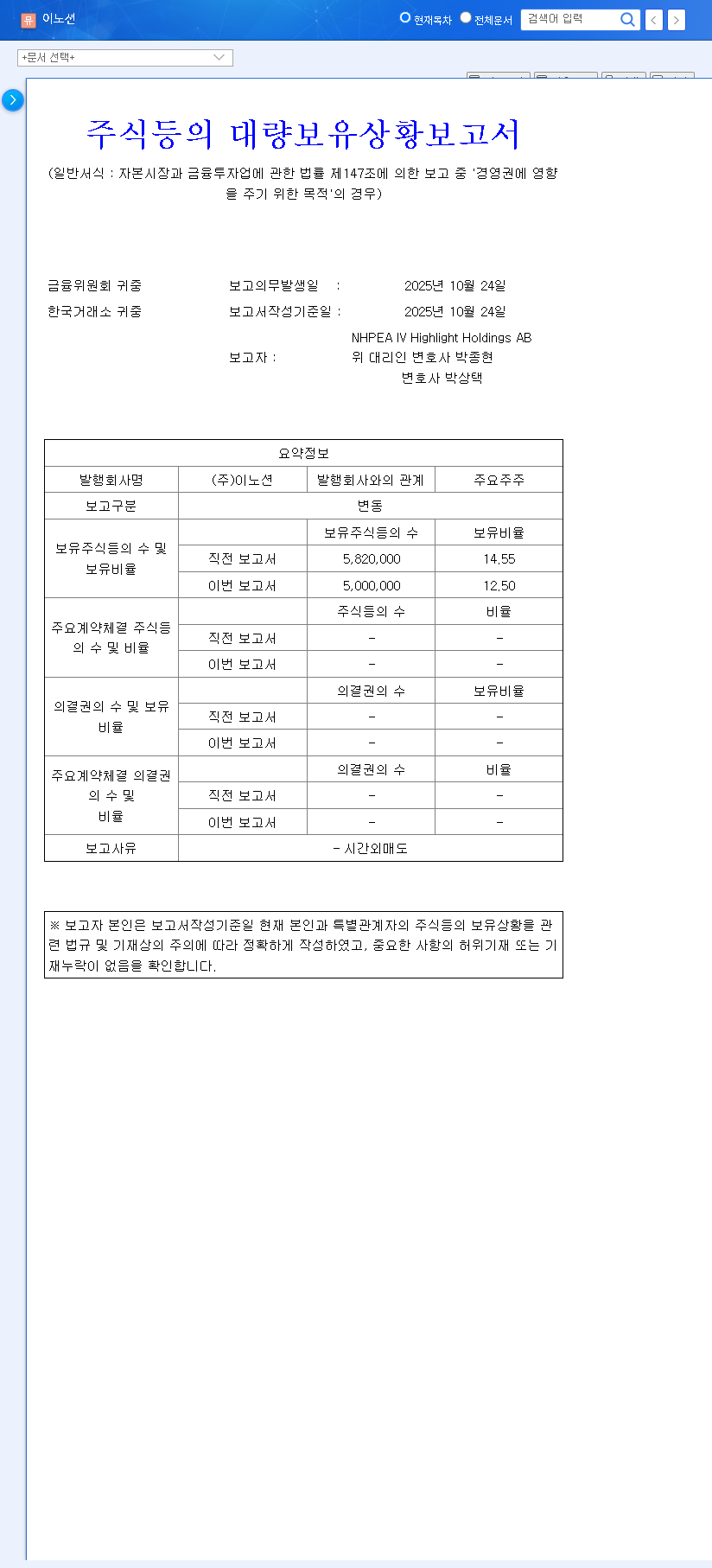
    A significant development has recently sent ripples through the investment community, directly impacting the INNOCEAN stock outlook. Major shareholder NHPEA IV Highlight Holdings AB executed a partial disposal of its shares, raising critical questions about the company’s trajectory. This move, conducted via an after-hours block trade, naturally causes investors to scrutinize INNOCEAN’s fundamentals and wonder if short-term volatility is masking long-term value. This comprehensive analysis will dissect the details of the INNOCEAN stake sale, evaluate the company’s core financial health, and provide a clear perspective on its future growth potential.

    The Catalyst: Unpacking the Major Shareholder’s Stake Sale

    On October 31, 2025, a mandatory disclosure revealed that NHPEA IV Highlight Holdings AB, a Swedish private equity fund, had reduced its stake in INNOCEAN WORLDWIDE INC. The fund sold a 2.05% stake, decreasing its holdings from 14.55% to 12.50%. This transaction was formally documented in the Official Disclosure (DART report). A sale of this magnitude, particularly through an after-hours block trade, often signals a strategic shift and can create immediate selling pressure on a stock as the market digests the new supply of shares.

    Why Would a Major Shareholder Sell?

    Interpreting the motive behind the INNOCEAN stake sale is key. Private equity funds like NHPEA typically have defined investment horizons. This sale could simply be part of a standard exit strategy to realize profits or reallocate capital. Another possibility is that the fund’s initial objective of ‘management influence’ was either achieved or deemed no longer viable. Furthermore, INNOCEAN’s recent financial performance provides important context. While consolidated revenue for the first half of 2025 saw a modest 1.3% year-on-year increase, operating profit dipped by 1.3% and net income fell more sharply by 27.6%, signaling potential profitability challenges that may have influenced the fund’s decision.

    Short-term market noise, such as a major stake sale, can often obscure the underlying fundamentals of a company. Prudent investors look beyond the immediate reaction to assess the long-term value proposition.

    A Fundamental Deep Dive: INNOCEAN’s Strengths and Headwinds

    Despite the negative short-term signal of the sale, a balanced view of the INNOCEAN stock outlook requires a thorough examination of its fundamental strengths and weaknesses. The company is not standing still; it is actively pursuing growth in high-value areas.

    The Bull Case: Core Strengths & Growth Engines

    • Proven Creative Excellence: INNOCEAN’s creative prowess is globally recognized, exemplified by winning the prestigious Cannes Lions Grand Prix for Hyundai’s ‘Night Fishing’ campaign. This validates its position as a top-tier creative agency.
    • Aggressive Digital Transformation: Through strategic M&A, including the acquisition of companies like Deeper Purple and Studio Lennon, INNOCEAN is bolstering its capabilities in data-driven and digital marketing, aligning with key modern marketing trends.
    • New Technology Ventures: The company is proactively investing in future growth by developing New Tech businesses, such as building generative AI-based marketing solutions, to create new revenue streams.
    • Shareholder-Friendly Policies: A stable dividend policy, with an average payout ratio of 51.3% over the last three years, demonstrates a commitment to returning value to shareholders.

    The Bear Case: Profitability Pressures & Risks

    Conversely, investors must consider the challenges. The decline in operating and net income, despite revenue growth, suggests margin compression. This could be due to increased costs, M&A integration expenses, or a shift towards lower-profitability business segments. Additionally, the consolidated debt ratio has increased to 1.45x due to investments, and while the separate entity debt ratio is healthy, this consolidated figure requires monitoring. Macroeconomic factors, like a potential global economic slowdown, could also dampen overall advertising spend, posing a risk to the entire sector.

    Investor Action Plan: What to Watch Moving Forward

    For those evaluating an investment in INNOCEAN, the key is to look beyond the immediate price action and focus on strategic indicators. The recent sale could even present an opportunity for new strategic investors to enter, potentially providing a future catalyst for the stock.

    • Monitor Market Absorption: Observe how effectively the market absorbs the new supply of shares from the block sale in the coming weeks. A quick absorption could signal underlying strength.
    • Track Profitability Metrics: In the next quarterly reports, focus intensely on whether revenue growth begins to translate into improved operating and net income, a sign that investments are paying off.
    • Analyze Macro Trends: Keep an eye on global economic indicators and advertising market forecasts from authoritative sources like Reuters or Bloomberg, as these will directly influence INNOCEAN’s operating environment.

    In conclusion, while the NHPEA stake sale introduces short-term uncertainty to the INNOCEAN stock outlook, the company’s long-term value hinges on its successful pivot to digital and technology-driven marketing. A cautious but watchful approach is warranted, focusing on fundamental execution over reactionary market sentiment.

    (214320) INNOCEAN Stock Outlook: Deep Dive on NHPEA Stake Sale & Future Growth 관련 이미지
  • (060570) Dreamus Company Stock Analysis: Inside the BeMyFriends Acquisition & Future Growth

    (060570) Dreamus Company Stock Analysis: Inside the BeMyFriends Acquisition & Future Growth

    The landscape for Dreamus Company is undergoing a monumental shift. The recent acquisition of a controlling stake by BeMyFriends, a pioneering force in the fandom business and creator economy, is far more than a simple line item on a balance sheet. This strategic move signals a potential new era for Dreamus Company, promising to reshape its business trajectory, unlock new revenue streams, and significantly impact its corporate value. For investors, this moment is critical. Understanding the nuances of this deal is key to navigating the opportunities and risks ahead.

    This comprehensive analysis delves into the core of the BeMyFriends acquisition, dissects the revitalized fundamentals of Dreamus Company, and projects the potential synergies that could redefine its future. We will explore the stock’s prospects and offer clear, actionable insights for your investment strategy.

    This isn’t just an acquisition; it’s a fusion of content distribution and creator monetization. The success of this venture will hinge on how effectively Dreamus Company can leverage its platform with BeMyFriends’ expertise in the rapidly growing fandom business.

    The Acquisition: BeMyFriends Takes the Helm

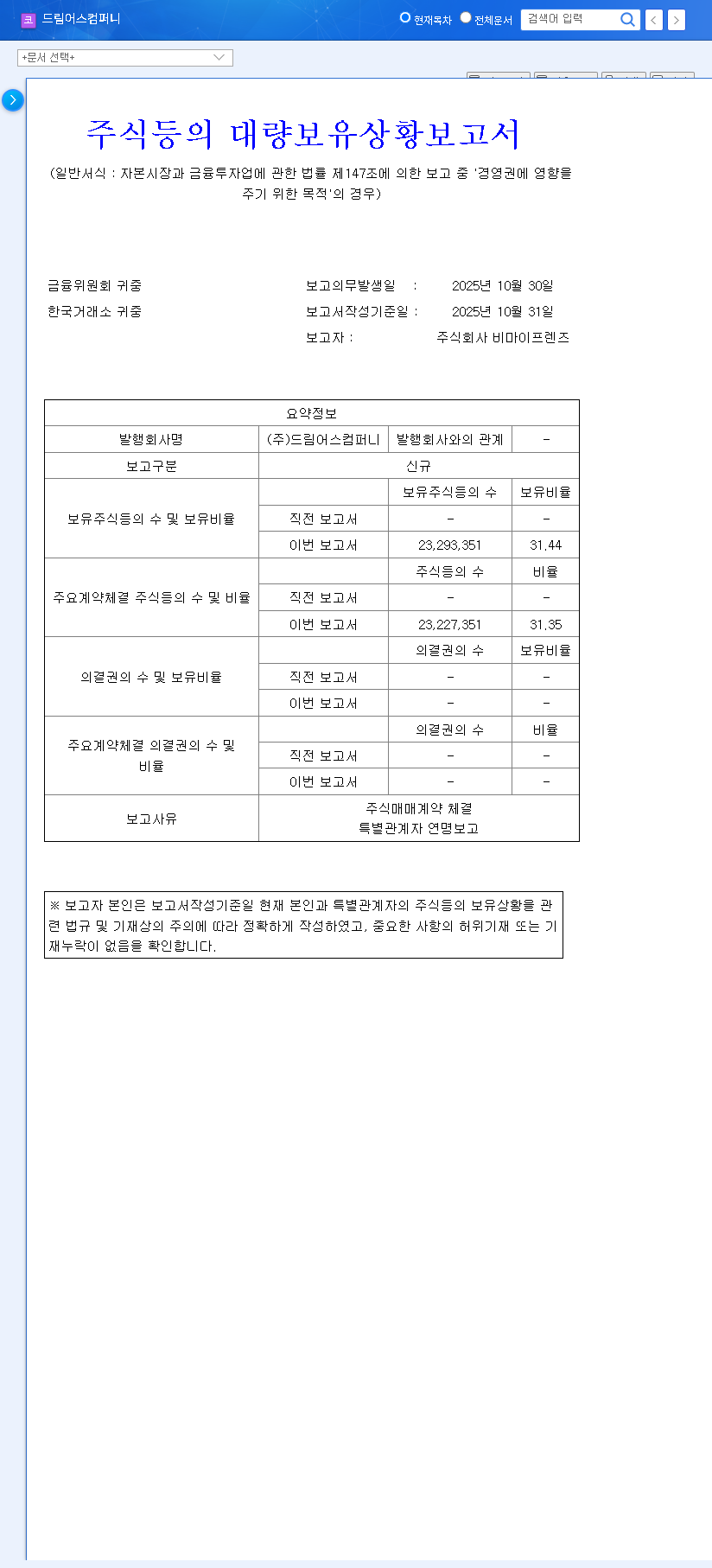
    On October 31, 2025, a pivotal change was announced. According to an Official Disclosure filed with DART, BeMyFriends secured a 31.44% stake in Dreamus Company, positioning itself to become the largest shareholder. The stated purpose was explicit: to ‘exercise management influence.’ This move confirms a clear intention to actively steer the company’s direction, not merely act as a passive investor.

    Key Details of the Transaction:

    • Acquiring Entity: BeMyFriends and its special affiliates, a key player in the booming creator economy.
    • Resulting Stake: A commanding 31.44% shareholding.
    • Acquisition Method: Strategic off-exchange purchase from major previous stakeholders including SK Square and SM Entertainment.

    Fundamental Analysis: A Company in Transformation

    Even before the BeMyFriends acquisition, Dreamus Company was laying the groundwork for a comeback. A review of its recent performance shows a company actively enhancing its core operations and financial health.

    Streamlined Operations and Financial Turnaround

    Dreamus Company has made decisive moves to streamline its business, shedding inefficient units like the Iriver division to focus squarely on its music content business. These efforts are bearing fruit. As of Q1 2025, both operating profit and net income have successfully turned to profit. The debt-to-equity ratio has dramatically improved to a healthy 45.00%, signaling a much stronger financial foundation and providing a stable platform for future growth initiatives.

    Pioneering New Growth in AI and Blockchain

    Looking forward, the company has officially added blockchain and AI to its charter. AI is already enhancing its ‘FLO’ music platform with features like ‘Quick Selection’. The next phase aims to deliver hyper-personalized services and AI-driven content creation tools. With BeMyFriends’ deep expertise in the creator and fandom business, the integration of blockchain for digital collectibles or fan engagement tokens presents a massive, tangible opportunity. This synergy could accelerate Dreamus’s entry into these high-growth sectors.

    Impact on Dreamus Company Stock and Business Strategy

    The acquisition is a catalyst that will likely create significant short-term and long-term effects. Investors analyzing the Dreamus Company stock should consider the following:

    • Short-Term Stock Momentum: The news itself, coupled with anticipation of new strategies, is likely to generate positive sentiment and increased trading volume, potentially driving the stock price upward.
    • Long-Term Value Creation: The true test will be in execution. The synergy between FLO’s music distribution and BeMyFriends’ fandom platform could create a powerful ecosystem for artists and fans, driving sustainable revenue.
    • Strategic Synergies: Imagine a platform where listening to an artist on FLO unlocks exclusive content or digital assets on a BeMyFriends-powered fan portal. This integration could dramatically increase user engagement and monetization.

    Investor Outlook: Key Factors to Watch

    For those considering an investment, the narrative for Dreamus Company has fundamentally changed. To make informed decisions, it is crucial to apply sound investment strategies and monitor these key developments:

    1. The Unveiling of BeMyFriends’ Strategic Roadmap

    The market will be eagerly awaiting a detailed plan from the new leadership. How will they integrate the two companies? What new products or services will be launched? A clear and compelling vision will be essential to sustain positive stock momentum.

    2. Execution and Synergy Realization

    Vision is one thing; execution is another. Monitor quarterly reports for signs of successful integration. Are user numbers on FLO growing? Are new, combined revenue streams emerging? Tangible results will be the ultimate driver of long-term corporate value.

    3. Sustained Financial Health

    It is vital to ensure that the recent financial turnaround is sustainable. Watch for continued profitability and disciplined cash flow management, even as the company invests in new growth initiatives. A strong financial base will be necessary to weather market competition and fund innovation.

    In conclusion, the BeMyFriends acquisition has injected a powerful dose of potential into Dreamus Company. While risks related to market competition and execution remain, the combination of a stabilizing financial core and a new, dynamic majority shareholder from the high-growth creator economy sector presents a compelling growth story. Investors should conduct their due diligence and watch the coming quarters closely, as this could be a pivotal transformation for the company and its stock.

    (060570) Dreamus Company Stock Analysis: Inside the BeMyFriends Acquisition & Future Growth 관련 이미지
  • (950200) Psomagen Inc. (KRX: 202680) Stock Analysis: Investment Outlook After Macrogen Stake Change

    (950200) Psomagen Inc. (KRX: 202680) Stock Analysis: Investment Outlook After Macrogen Stake Change

    In the dynamic world of biotechnology, investors are closely watching Psomagen Inc. (KRX: 202680), a key player in the genomic analysis market. A recent development involving its majority shareholder, Macrogen Inc., has sparked discussions about the company’s future trajectory and corporate value. This comprehensive Psomagen stock analysis aims to dissect this event, evaluate the company’s fundamental health, and provide a clear investment outlook for current and potential shareholders.

    We will explore the implications of the Macrogen stake change, delve into Psomagen’s financial performance, competitive positioning, and future growth drivers to equip you with the insights needed for an informed Psomagen investment decision.

    Unpacking the Macrogen Stake Change in Psomagen Inc.

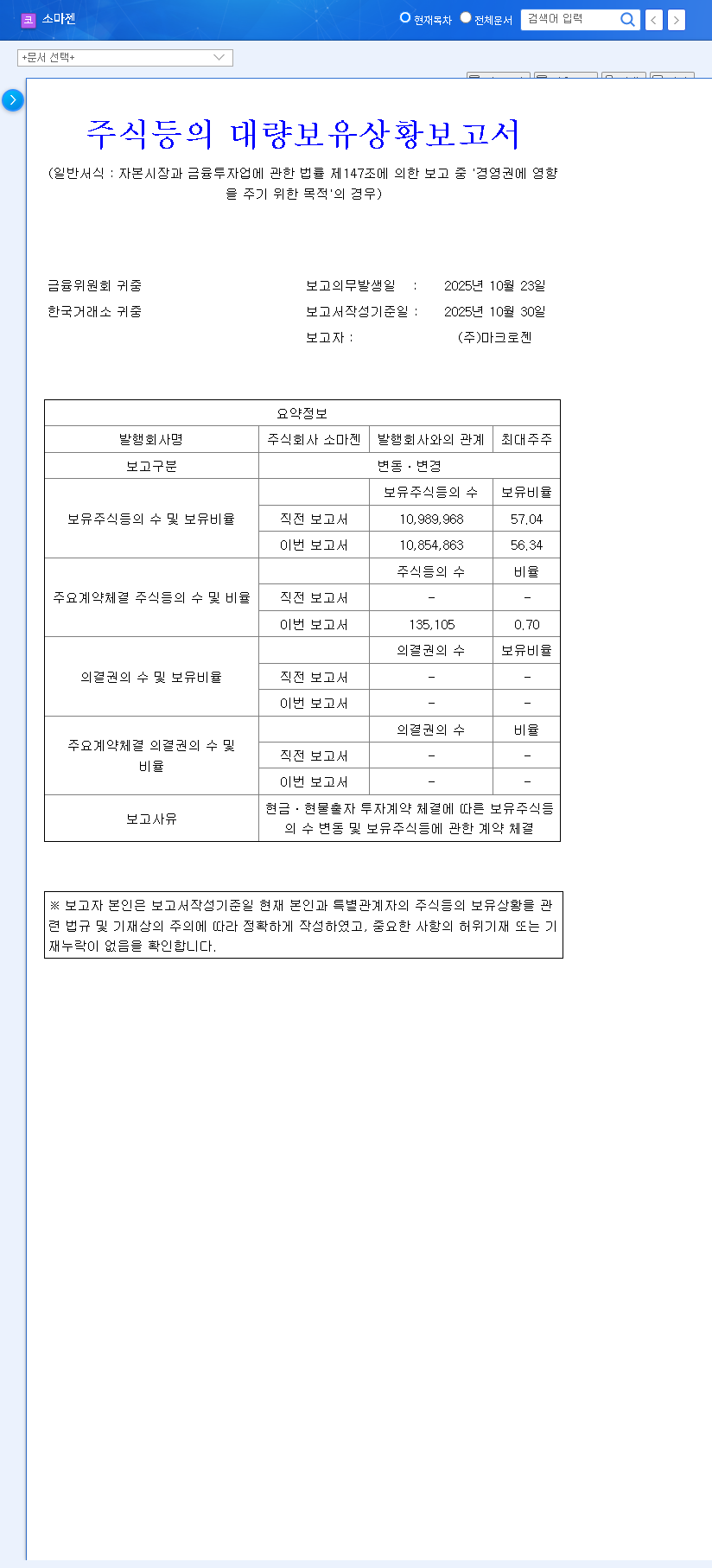
    On October 30, 2025, a mandatory disclosure revealed a shift in the ownership structure of Psomagen Inc. Macrogen Inc., the largest shareholder, announced a reduction in its equity stake. According to the Official Disclosure (Source), Macrogen sold 135,105 shares of Psomagen to GenomeforMe Co., Ltd. in an off-market transaction. This resulted in Macrogen’s ownership decreasing from 57.04% to 56.34%—a modest but notable 0.7 percentage point reduction. While this change doesn’t threaten management control, it introduces a new variable for investors: the role and intentions of GenomeforMe Co., Ltd.

    The core question for investors is whether this minor stake reduction by Macrogen is a routine portfolio adjustment or a signal of a deeper strategic shift for Psomagen Inc.

    A Deep Dive into Psomagen’s Corporate Fundamentals

    To properly assess any Psomagen investment, we must look beyond a single headline and analyze the company’s intrinsic value and operational health.

    Financial Performance (H1 2025)

    Psomagen’s recent financial story is one of aggressive growth paired with profitability struggles. While revenue saw impressive expansion, high R&D and SG&A expenses continue to weigh on the bottom line.

    • Revenue Growth: Top-line revenue increased by a robust 41.8% year-over-year to $18.93 billion.
    • Profitability Challenge: The company recorded an operating loss of $1.39 billion, highlighting the urgent need for cost management.
    • Segment Performance: Next-Generation Sequencing (NGS) remains the primary revenue driver, accounting for ~70% of total sales. However, the DTC/Microbiome segment shows mixed results, with strong growth in Japan (up 38.0%) but a decline in the US (down 26.3%).
    • Cash Flow: A positive sign is the improving trend in operating cash flow, indicating better management of working capital.

    Market Environment & Competitive Edge

    Psomagen operates in a high-growth but fiercely competitive market. The global genomics market is expanding rapidly, a trend confirmed by industry reports from sources like leading market research firms. Competition from major players like Novogene and BGI is intense. Psomagen’s key competitive advantage, particularly in the lucrative US clinical market, is its attainment of CLIA/CAP certifications, which serve as a significant barrier to entry and a marker of quality and reliability.

    Future Outlook & Growth Strategy

    The company’s strategy focuses on diversifying its portfolio into high-potential areas like single-cell analysis, proteomics, and long-read sequencing technology. Expansion in the Japanese DTC market is a key growth lever. However, the path forward hinges on profitability. Achieving operational efficiency is not just a goal but a necessity. For a broader perspective on this sector, you might find it useful to read our guide on how to evaluate biotech stocks. The synergy with Macrogen is expected to continue, bolstering R&D and sales capabilities.

    Stock Price Impact: Short-Term Jitters vs. Long-Term Value

    A complete Psomagen stock analysis must consider market reaction. The 0.7% stake reduction is unlikely to cause major short-term panic among general investors. However, the lack of clarity surrounding GenomeforMe creates uncertainty. The mid-to-long-term impact will depend entirely on whether this new partnership becomes a strategic asset or a complication. The stock, recently trading around KRW 4,265, will ultimately be driven by fundamental performance and the company’s ability to turn its revenue growth into profit.

    Final Verdict: A ‘Neutral’ Stance on Psomagen Investment

    After a thorough review, our investment opinion on Psomagen Inc. (KRX: 202680) is ‘Neutral’. The company presents a classic growth-versus-profitability dilemma.

    • Positives: Strong revenue growth, expansion into future-proof sectors, a growing market, and continued support from its major shareholder.
    • Negatives: Persistent and significant losses, intense competition, and a lack of clear market catalysts to drive investor sentiment.

    An upgrade to our rating would require tangible evidence of a turnaround in profitability and more clarity on the strategic implications of the GenomeforMe partnership. Investors should monitor quarterly earnings reports closely for signs of improved margins and operational efficiency.

    Frequently Asked Questions (FAQ)

    Q1: Is the Macrogen stake change a major concern for investors?

    The 0.7 percentage point reduction is not large enough to impact management control. The primary concern is the uncertainty around the new shareholder, GenomeforMe. The long-term impact depends on the nature of this new relationship, which requires monitoring.

    Q2: What is Psomagen’s current financial health?

    Psomagen is experiencing strong revenue growth (up 41.8% in H1 2025) but is not yet profitable due to high operating costs. Its financial health is relatively sound with improving cash flow, and projections suggest a potential turnaround to profitability in late 2025.

    Q3: What are Psomagen’s key future growth drivers?

    Future growth is expected from diversification into new technologies like long-read sequencing and proteomics, as well as strategic expansion in high-growth markets like the Japanese direct-to-consumer (DTC) genetic testing space.

    Q4: Is now a good time to invest in Psomagen stock?

    We currently hold a ‘Neutral’ opinion. While the growth story is compelling, the persistent losses make it a speculative investment. It is advisable to wait for clear signs of profitability improvement before considering a significant position in Psomagen Inc.

    (950200) Psomagen Inc. (KRX: 202680) Stock Analysis: Investment Outlook After Macrogen Stake Change 관련 이미지
  • (001210) KUMHO ELECTRIC Stock Analysis: Baro Bank’s 5.34% Stake & What It Means for Investors

    (001210) KUMHO ELECTRIC Stock Analysis: Baro Bank’s 5.34% Stake & What It Means for Investors

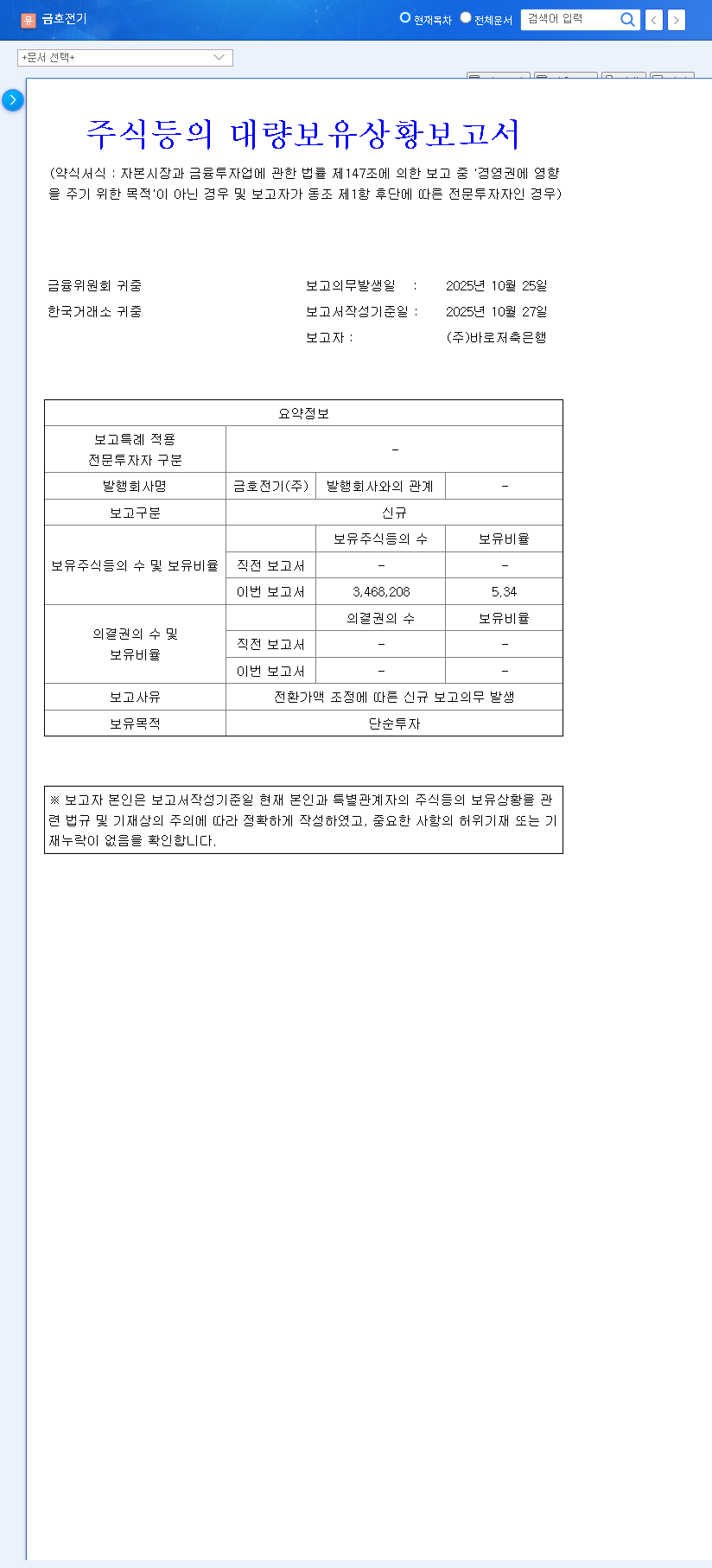
    The market is buzzing with recent news surrounding KUMHO ELECTRIC, a company at a potential turning point. A recent public disclosure has revealed a significant new investor: Baro Savings Bank has acquired a 5.34% stake. While the stated purpose is a ‘simple investment,’ the technical trigger for the report—a ‘conversion price adjustment’—hints at a more complex financial story. This development raises critical questions for current and potential investors: Is this a vote of confidence, or a sign of underlying financial intricacies? This comprehensive KUMHO ELECTRIC stock analysis will dissect this event, evaluate the company’s fundamentals, and provide a clear, actionable outlook.

    The Catalyst: Baro Savings Bank’s Strategic Entry

    On October 30, 2025, KUMHO ELECTRIC CO.,LTD filed a mandatory ‘Report on the Status of Large Shareholding,’ a document required when an entity’s ownership exceeds 5%. The report, available via the official DART system (Official Disclosure), confirmed that Baro Savings Bank now holds a 5.34% stake. Here are the key details:

    • New Major Shareholder: Baro Savings Bank/Republic of Korea
    • Ownership Stake: 5.34% (an increase from 0%)
    • Stated Purpose: Simple Investment (implying no intent for management control)
    • Reason for Report: New reporting obligation triggered by a ‘conversion price adjustment’ of the company’s convertible bonds (CBs).

    This isn’t a straightforward stock purchase. The connection to convertible bonds suggests Baro Savings Bank’s stake was acquired as part of a pre-existing financial instrument, a crucial detail for understanding their position and the company’s financial health.

    Fundamental Health Check: A Deeper KUMHO ELECTRIC Analysis

    To grasp the full impact of this news, we must look beyond the headline and analyze the underlying fundamentals of KUMHO ELECTRIC, based on its H1 2025 performance and the prevailing macroeconomic climate.

    Corporate Performance: A Challenging Picture

    • Declining Revenue: H1 2025 revenue saw a steep 24% year-on-year drop to 21.395 billion KRW. This decline reflects struggles in its core lighting business and software segments, battered by a global economic slowdown.
    • Fragile Profitability: While losses have narrowed, this improvement stems from aggressive cost-cutting rather than top-line growth. This strategy is not sustainable for long-term health.
    • Speculative New Ventures: The company is exploring new avenues like drones and NFT platforms. However, with undecided investment plans and high market volatility (especially in NFTs), these ventures add more uncertainty than stability. For more on this, you can review our guide to evaluating tech company pivots.
    • Vulnerable Financials: A significant debt load, including 3.18 billion KRW in outstanding convertible bonds, poses a risk. The company’s history of cumulative losses also prevents dividend payments, making it less attractive to income-focused investors.

    Macroeconomic Headwinds

    External factors further complicate the outlook. A rising US dollar increases the cost of imported raw materials, squeezing margins. Concurrently, volatile oil prices and rising global interest rates, as indicated by US 10-year Treasury yields, increase the company’s borrowing costs and the financial burden of its existing debt.

    Investment Outlook: Caution is Key

    The arrival of a new institutional investor like Baro Savings Bank can be interpreted in two ways. On one hand, it could signal that the bank sees deep value in KUMHO ELECTRIC stock at its current price. On the other, given the ‘simple investment’ tag and the CB-related trigger, it may simply be a passive financial position.

    The Bull Case (Potential Positives)

    • Improved Sentiment: The presence of an institutional investor may boost confidence in the short term.
    • Increased Transparency: The disclosure sheds light on the company’s convertible bond situation.

    The Bear Case (Significant Risks)

    • No Fundamental Change: A new investor doesn’t fix the core issues of falling sales and a weak business model.
    • Ongoing CB Uncertainty: The ‘conversion price adjustment’ is a red flag, indicating potential stock dilution or financial strain.
    • High Volatility: The mix of fundamental weakness and speculative news could lead to erratic stock price movements.

    Final Recommendation: A ‘Wait and Monitor’ Strategy

    Given the significant headwinds and fundamental challenges facing KUMHO ELECTRIC, a rush to invest based on this news alone would be ill-advised. The most prudent approach is a ‘Neutral’ or ‘Conservative Wait-and-See’ stance.

    Investors should closely monitor the following points before considering a position:

    • Future Filings: Watch for any further share acquisitions or changes in intent from Baro Savings Bank.
    • Performance Turnaround: Look for tangible evidence of sales recovery in the upcoming quarterly reports (Q4 2025 and Q1 2026).
    • New Business Progress: Demand concrete plans and early results from the drone and NFT initiatives.
    • Debt Management: Analyze how the company manages its convertible bond obligations and overall debt structure.

    Ultimately, while Baro Savings Bank’s investment adds an interesting new chapter to the KUMHO ELECTRIC story, the plot is still driven by the company’s ability to overcome its fundamental operational and financial challenges. Until a clear recovery is underway, caution remains the best strategy.

    (001210) KUMHO ELECTRIC Stock Analysis: Baro Bank's 5.34% Stake & What It Means for Investors 관련 이미지
  • (143160) IDIS Stock Analysis: Why IDIS Holdings is Tightening Its Grip & What It Means for Investors

    (143160) IDIS Stock Analysis: Why IDIS Holdings is Tightening Its Grip & What It Means for Investors

    A significant strategic shift is underway for IDIS Stock, drawing keen attention from the investment community. The parent company and largest shareholder, IDIS Holdings, has officially signaled its intent to strengthen management control over INTELLIGENT DIGITAL INTEGRATED SECURITY CO., LTD. (IDIS) by increasing its ownership stake. This development is more than just a line item on a report; it’s a move that could redefine the company’s long-term corporate value, strategic direction, and near-term stock performance.

    What does this consolidation of power mean for shareholders and prospective investors? This comprehensive IDIS stock analysis will delve into the specifics of the share acquisition, dissect the company’s current fundamentals, and map out the potential future for this key player in the video security market.

    The Strategic Move: IDIS Holdings Solidifies Control

    On October 28, 2025, a key filing revealed a calculated move by IDIS Holdings. According to the public announcement, the holding company, via its special affiliate Kotek Co., Ltd., increased its ownership in IDIS from 48.74% to 49.83% through open market purchases. The explicitly stated purpose of this acquisition was ‘to influence management,’ a clear signal of intent to assert greater control and steer the company’s future. This move was officially detailed in the company’s filing, which can be viewed in the Official Disclosure from the source.

    Dissecting IDIS’s Fundamentals: A Tale of Two Tapes

    To understand the context behind IDIS Holdings’ actions, a look at the current financial and business health of INTELLIGENT DIGITAL INTEGRATED SECURITY CO., LTD. is essential. As of mid-2025, the company presents a mixed but compelling picture for any IDIS investment consideration.

    The Bull Case: Strengths and Opportunities

    • Prime Market Position: IDIS is perfectly positioned to capitalize on the sustained growth of the global video security market, a sector increasingly supercharged by the integration of AI and machine learning technologies. As demand for intelligent surveillance grows, IDIS stands to be a direct beneficiary.
    • Diversification & Future Growth: The company is not resting on its laurels. It is actively pursuing new growth engines, including ventures into EV chargers and electrical equipment, which could unlock significant new revenue streams and reduce reliance on its core market.
    • Financial Stability: Despite some profitability challenges, IDIS maintains a sound financial footing characterized by a low debt ratio, providing resilience and flexibility for future investments.

    The Bear Case: Risks and Headwinds

    • Eroding Profitability: The first half of 2025 saw a year-over-year decrease in both operating and net profit, a concerning trend that signals potential margin pressure or operational inefficiencies.
    • Deteriorating Cash Flow: Operating cash flow has weakened significantly. This is a critical metric investors watch closely, and its decline suggests challenges in converting profits into actual cash, influenced by investment and financing activities. You can learn more about analyzing a company’s cash flow statement in our guide.
    • Macroeconomic Pressures: Rising prices for key components like PROCESSORs, high exchange rate volatility, and intensifying market competition from both domestic and international players are creating significant headwinds.

    The core tension for the IDIS stock is whether the parent company’s strengthened control can unlock the company’s growth potential while simultaneously resolving its pressing profitability and cash flow issues.

    Impact Analysis: Short-Term Volatility vs. Long-Term Strategy

    The strengthened management control is expected to ripple through the company in distinct ways over different time horizons.

    In the short term, the market may react positively. The continuous open market purchases can be interpreted as a vote of confidence, potentially boosting investor sentiment and the IDIS stock price. However, this optimism could be tempered by the underlying weak performance reported in the first half of the year. The upcoming Q3 earnings report will be a critical litmus test.

    In the long term, the impact could be far more profound. With a firmer grip, IDIS Holdings may push for aggressive strategic changes. This could include a rigorous drive for operational efficiency, an acceleration of the new business ventures, or even strategic M&A activity to bolster its market position. The stable management environment is conducive to long-term planning, but it also places immense pressure on leadership to deliver tangible improvements and justify their consolidation of power.

    Strategic Outlook for Investors

    Given this complex scenario, a prudent approach is recommended for any IDIS investment. Rather than reacting to the news alone, investors should adopt a watchful stance, focusing on the following key indicators:

    • Performance Turnaround: Closely monitor the upcoming quarterly earnings for signs of a reversal in the profitability decline. Look for improved margins and better cost management.
    • New Business Traction: Track the progress of the EV charger and electrical equipment ventures. Are they securing contracts, generating revenue, and moving from concept to a meaningful contributor to the bottom line?
    • Strategic Clarity: Pay attention to communications from management. Are they articulating a clear, credible strategy for value creation that goes beyond simply consolidating control? Look for specific plans and measurable goals.

    In conclusion, the increased stake by IDIS Holdings is a pivotal event for the IDIS stock. While it creates a more stable governance structure, the true test lies in execution. The investment thesis now hinges on management’s ability to leverage this control to navigate macroeconomic challenges, drive fundamental improvements, and successfully scale its new ventures. The global video security market is growing, and as noted by major analysts like Forrester, AI integration is a key driver. IDIS is in the right space, but success will be determined by strategic action, not just ownership structure.

  • (017040) KWANG MYUNG ELECTRIC (017040) Stock: Analysis of PNC Tech’s 31.50% Stake Acquisition

    (017040) KWANG MYUNG ELECTRIC (017040) Stock: Analysis of PNC Tech’s 31.50% Stake Acquisition

    A pivotal moment is unfolding for KWANG MYUNG ELECTRIC (017040), a key player in the power infrastructure industry. A recent major shareholding report has sent ripples through the market, signaling a potential shift in management control and corporate direction. On October 28, 2025, a public disclosure revealed that PNC Tech Co., Ltd. has acquired a substantial 31.50% stake, an event that could redefine the company’s future.

    This article provides a comprehensive analysis of the PNC Tech acquisition, its implications for investors, the potential impact on the Kwang Myung Electric stock, and the strategic considerations moving forward. We will explore what this change means for the company’s fundamentals and how investors can navigate the anticipated volatility.

    The Landmark Event: PNC Tech’s Strategic Acquisition

    The core of this development is the ‘Report on the Status of Large Shareholdings (General)’ filed on October 28, 2025. This report confirms PNC Tech Co., Ltd.’s acquisition of 13,651,350 shares of KWANG MYUNG ELECTRIC, amounting to a 31.50% stake. The critical detail here is the stated purpose: ‘influencing management control.’ This is not a passive investment; it’s a clear signal of intent to actively participate in the company’s governance and strategy.

    This acquisition signifies more than a change in equity; it represents a potential major shareholder change that could fundamentally alter the operational and strategic trajectory of KWANG MYUNG ELECTRIC.

    This information is based on the official public filing. Interested parties can review the complete details in the Official Disclosure on DART, Korea’s electronic disclosure system.

    Why This Acquisition is a Game-Changer

    A potential change in the largest shareholder always captures significant market attention. The implications are far-reaching, affecting everything from stock price to long-term corporate health. For an in-depth look at similar M&A trends, see this analysis from a leading financial news source.

    1. Market Volatility and Management Premium

    The phrase ‘influencing management control’ often creates market anticipation for a management premium. This premium is the amount an acquirer is willing to pay above the current market price to gain control. The expectation of this premium can lead to significant short-term volatility in the Kwang Myung Electric stock (017040) as traders and investors speculate on the outcome.

    2. Deep Shifts in Corporate Strategy

    With a new major shareholder at the helm, a comprehensive review of KWANG MYUNG ELECTRIC‘s corporate strategy is almost certain. This could manifest in several ways:

    • New Business Ventures: PNC Tech may steer the company toward new growth areas, potentially leveraging its own expertise in adjacent industries.
    • Corporate Restructuring: A new leadership could initiate restructuring efforts to improve efficiency, divest non-core assets, or streamline operations.
    • M&A and Expansion: The acquisition could be the first step in a larger plan for mergers and acquisitions to consolidate market share or enter new markets.

    3. Addressing Financial Headwinds

    It is important to note that KWANG MYUNG ELECTRIC has faced financial challenges, including risks from PF projects and a reported net loss of KRW 43.2 billion in its 44th fiscal year. This PNC Tech acquisition could be a crucial turning point. A new major shareholder might inject fresh capital, bring new financial discipline, or implement strategies to resolve these legacy issues and stabilize the company’s financial footing.

    A Strategic Roadmap for Investors

    Given the high stakes, investors must adopt a cautious yet proactive approach. Understanding the dynamics of corporate governance changes is crucial. The primary task is to monitor the flow of information closely.

    • Positive Outlook: The new shareholder could bring superior management and investment capabilities, unlocking hidden value and driving stock price appreciation. This could be the catalyst needed to resolve existing financial risks.
    • Areas of Caution: There is always a risk that the new management’s decisions may not align with the interests of minority shareholders. The short-term period will likely be marked by heightened stock price fluctuations based on news and speculation.

    Ultimately, KWANG MYUNG ELECTRIC is at a significant crossroads. The potential major shareholder change is the single most important variable influencing its valuation and future prospects.

    Frequently Asked Questions (FAQ)

    Q1: Has KWANG MYUNG ELECTRIC’s major shareholder officially changed?

    A1: Not yet. PNC Tech Co., Ltd. has reported a large shareholding of 31.50% with the intent to influence management. An official change in the designated ‘largest shareholder’ will depend on future board decisions, general meetings, or further stake acquisitions.

    Q2: How will this stake acquisition affect KWANG MYUNG ELECTRIC’s stock price?

    A2: High short-term volatility is expected due to speculation. If the market views PNC Tech’s plans favorably, the stock price could appreciate significantly. Conversely, uncertainty or negative perceptions of their strategy could lead to price declines or erratic swings.

    Q3: What should investors monitor closely?

    A3: Investors should watch for subsequent announcements from PNC Tech regarding their specific management plans. Key areas to monitor include changes to the board of directors, updates on resolving financial risks, new business model proposals, and overall macroeconomic conditions affecting the industry.

    (017040) KWANG MYUNG ELECTRIC (017040) Stock: Analysis of PNC Tech's 31.50% Stake Acquisition 관련 이미지
  • (034730) SK Inc. Shareholding Change: Full Analysis for Investors (Oct 2025)

    (034730) SK Inc. Shareholding Change: Full Analysis for Investors (Oct 2025)

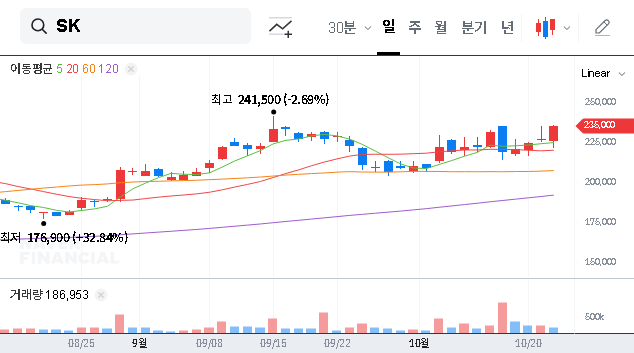
    On October 27, 2025, a mandatory disclosure rippled through the investment community, detailing a minor but notable SK Inc. shareholding change involving its chairman, Chey Tae-won. For investors holding or watching SK Inc. (KRX: 034730), such announcements can trigger a wave of questions about stock stability, management control, and long-term value. While the adjustment is fractional, understanding its context is crucial for making informed decisions.

    This comprehensive analysis breaks down the disclosure, explores the underlying reasons for the change, and evaluates the potential impact on SK Inc.’s stock price. We’ll provide a clear, actionable framework for investors to navigate this development and focus on what truly matters for the company’s future.

    The Disclosure Deconstructed: What Exactly Happened?

    The filing, formally titled “Report on the Status of Large Shareholding, etc. (General),” was submitted to South Korea’s Financial Supervisory Service. The core of the report details a slight decrease in Chairman Chey Tae-won’s stake in SK Inc. Here are the essential facts from the disclosure:

    • Reporting Entity: SK Inc. (Market Cap: 18.01 Trillion KRW)
    • Reporting Individual: Chairman Chey Tae-won
    • Previous Holding: 25.50%
    • New Holding: 25.48%
    • Net Change: -0.02 percentage points
    • Stated Reason: Change in contract regarding shares, adjustments in special relationships, and minor open market trading.

    Investors can review the complete filing directly from the source. The Official Disclosure on DART provides the full regulatory details.

    Analyzing the ‘Why’: Management Stability and Special Relationships

    Is Management Control at Risk?

    The immediate concern with any SK Inc. shareholding change is its effect on governance. However, the 0.02% decrease is negligible in the grand scheme. Chairman Chey still holds a commanding stake of over 25%, and the disclosure explicitly states his holding purpose is for ‘Influence on Management Rights.’ This signals a clear intention to maintain firm control over the conglomerate’s strategic direction. The adjustment is more likely a technical rebalancing or a minor portfolio diversification rather than a precursor to a significant shift in leadership or strategy. Therefore, management stability is expected to remain firmly intact.

    Understanding ‘Special Relationships’

    The mention of ‘change in special relationships’ is a key detail. In the context of South Korean corporate governance, this often refers to share transfers between family members, affiliated entities, or close associates. While these shifts don’t always impact the public market directly, they can hint at long-term succession planning or strategic alignments within the ownership group. Investors should monitor future disclosures for more clarity on these relationships, but for now, it appears to be an internal restructuring with no immediate external impact.

    For a diversified conglomerate like SK Inc., long-term value is driven by innovation and market leadership in its core segments—not by fractional shifts in executive shareholding.

    Stock Price Impact: Short-Term Noise vs. Long-Term Fundamentals

    In the short term, the market’s reaction to this SK Inc. stock analysis is likely to be muted. The change is too small to trigger significant selling pressure. However, algorithmic traders and speculative investors might cause minor volatility as they digest the news. The real drivers of SK Inc.’s stock price lie in its powerful and diverse business portfolio and the broader macroeconomic climate.

    SK Inc. is a holding company with major stakes in world-class enterprises like SK Hynix (semiconductors), SK On (EV batteries), and SK Telecom (telecommunications). The company’s long-term performance is far more sensitive to global semiconductor demand, the pace of EV adoption, and macroeconomic factors like interest rates and energy prices. As noted by financial analysts at sources like Bloomberg, these global trends will ultimately dictate SK Inc.’s earnings and valuation.

    Action Plan for the Prudent Investor

    This disclosure should be treated as a single data point, not a complete investment thesis. Astute investors should use this as a prompt to conduct a broader health check on their SK Inc. investment. Here’s a strategic checklist:

    • Review Business Segment Performance: Analyze the latest earnings reports from SK Hynix, SK On, and other key subsidiaries. Are they meeting growth targets and managing costs effectively?
    • Assess the Macro Environment: Evaluate how current global economic conditions, from exchange rates to commodity prices, are impacting SK’s diverse operations.
    • Consult Analyst Consensus: Check recent brokerage reports and market consensus to understand how financial experts view SK Inc.’s valuation and future price targets.
    • Understand the Filing Process: For more context, review Our Guide to Analyzing Corporate Disclosures to better interpret future reports.

    Frequently Asked Questions (FAQ)

    When was the SK Inc. shareholding change disclosed?

    The official report was filed and disclosed on October 27, 2025.

    How much did Chairman Chey Tae-won’s stake change?

    His stake decreased by a very small margin of 0.02 percentage points, from 25.50% to 25.48%.

    Does this change affect SK Inc.’s management control?

    No. The change is minimal, and Chairman Chey’s stated purpose of holding the shares is to maintain management influence. No significant impact on control is expected.

    What is the likely short-term impact on SK Inc.’s stock?

    The short-term impact is expected to be limited. While minor volatility is possible, the fundamentals of the disclosure do not warrant a major price movement.

    (034730) SK Inc. Shareholding Change: Full Analysis for Investors (Oct 2025) 관련 이미지
  • (210120) CANVAS N Stock Analysis: Sangsangin Savings Bank’s 5.34% Stake & Future Forecast

    (210120) CANVAS N Stock Analysis: Sangsangin Savings Bank’s 5.34% Stake & Future Forecast

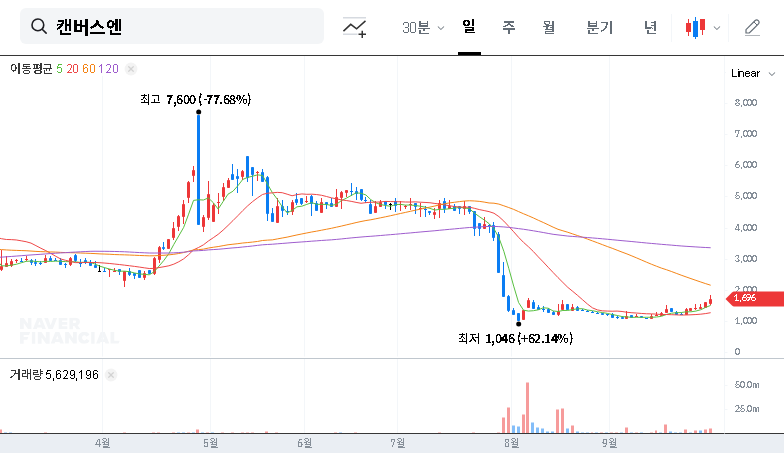
    The latest developments surrounding CANVAS N stock have captured significant investor attention. A recent disclosure reveals that Sangsangin Savings Bank has filed a Report on the Status of Large Shareholdings in CANVAS N Co.,Ltd. At a time when CANVAS N is navigating significant financial headwinds, this move by a major financial institution raises critical questions. How will this event impact the company’s stock price, and what does it signal about its future value? This article provides an in-depth analysis of the disclosure, a thorough review of CANVAS N’s fundamentals, and a strategic outlook for investors.

    We will dissect the implications of Sangsangin Savings Bank’s involvement, offering both short-term and long-term perspectives on the CANVAS N stock forecast. Let’s explore the key factors that will shape the trajectory of this dynamic media production company.

    Deconstructing the Disclosure: Sangsangin Savings Bank’s Stake

    On October 27, 2025, a pivotal filing was made public. Sangsangin Savings Bank submitted a ‘Report on the Status of Large Shareholdings (Simplified)’ regarding its position in CANVAS N Co.,Ltd. The key takeaways from this report, which you can view in the Official Disclosure, are as follows:

    • Reporting Entity: Sangsangin Savings Bank
    • Post-Report Shareholding: 5.34% of total shares
    • Holding Purpose: Simple Investment
    • Reason for Report: Reporting obligation triggered by a change in the conversion price of pre-existing Convertible Bonds (CBs).

    Crucially, this filing does not indicate a new purchase of CANVAS N stock on the open market. Instead, adjustments to the terms of convertible bonds they already held caused their potential equity stake to cross the mandatory 5% reporting threshold. This is a technical, ex-post reporting event, but its implications for the CANVAS N shareholding structure are significant.

    CANVAS N’s Financial Health: A Challenging Picture

    To understand the context of this investment, we must examine the current financial state of CANVAS N, a company specializing in drama production. The first half of 2025 painted a difficult picture:

    • Revenue: 861 million KRW (a slight year-over-year decrease).
    • Operating Profit: A loss of 1,313 million KRW.
    • Net Profit: A loss of 1,963 million KRW.

    This downturn is attributed to fierce industry competition and rising production costs. The company’s balance sheet also shows signs of stress, with a high debt ratio exacerbated by the issuance of convertible bonds. While the overseas sales of the drama ‘Perfect Family’ offer a glimmer of hope, it’s clear that CANVAS N needs a significant operational turnaround to achieve sustainable profitability.

    While Sangsangin’s report is a noteworthy event, the long-term trajectory of CANVAS N stock will ultimately be dictated by its ability to execute a fundamental business recovery, not by a single financial disclosure.

    Investment Strategy & Stock Price Outlook

    Short-Term Stock Impact: Likely Muted

    The immediate impact on the CANVAS N stock price is expected to be limited. Since this was not a new purchase but a technical re-evaluation of existing convertible debt, the market has likely already priced in the existence of these bonds. The ‘simple investment’ purpose also signals no intent to influence management, further tempering any dramatic short-term reaction.

    Mid-to-Long-Term CANVAS N Stock Forecast

    The long-term outlook is entirely dependent on CANVAS N’s internal performance. Sangsangin’s position as a significant potential shareholder is a vote of confidence, but it is contingent on the company’s ability to improve its core business. Success hinges on strengthening profitability, improving the balance sheet, and replicating the international success of projects like ‘Perfect Family’. If management can deliver on these fronts, the potential conversion of Sangsangin’s bonds could be seen as a stabilizing force, providing capital and institutional backing. If not, these bonds represent a potential overhang of share dilution. For more on how debt instruments impact stock, see this guide to understanding convertible bonds.

    Key Observation Points for Investors

    • Quarterly Earnings Reports: Watch for any signs of profitability recovery and revenue stabilization.
    • Future Bond Conversions: Monitor filings from Sangsangin Savings Bank for any actual conversion of bonds to equity, which would directly impact the CANVAS N shareholding structure.
    • New Production Pipeline: The success of future drama productions and international sales contracts is the primary growth driver.
    • Macroeconomic Trends: Keep an eye on factors like interest rates and currency fluctuations, which impact financing costs and international revenue. For context, you can follow global economic news from sources like Reuters Business.

    Frequently Asked Questions (FAQ)

    Q1: Why did Sangsangin Savings Bank report a 5.34% stake in CANVAS N?

    The report was a legal requirement triggered after a change in the conversion price of their existing convertible bonds (CBs) made their potential ownership stake exceed 5%. It was not a new purchase of CANVAS N stock.

    Q2: Is this news positive or negative for the CANVAS N stock forecast?

    It’s neutral with a slightly positive undertone. It confirms a significant financial institution’s interest in the company’s potential upside. However, the positive impact is conditional on CANVAS N improving its poor financial performance.

    Q3: What is the most critical factor for CANVAS N’s long-term stock growth?

    The single most critical factor is a fundamental business turnaround. This includes achieving operational profitability, strengthening the balance sheet, and consistently producing successful content with international appeal.

    (210120) CANVAS N Stock Analysis: Sangsangin Savings Bank's 5.34% Stake & Future Forecast 관련 이미지
    (210120) CANVAS N Stock Analysis: Sangsangin Savings Bank's 5.34% Stake & Future Forecast 관련 이미지