Tag: KWANGDONG PHARMACEUTICAL CO.

  • (009290) KWANGDONG PHARMACEUTICAL Treasury Stock Disposal: A Deep Dive for Investors

    (009290) KWANGDONG PHARMACEUTICAL Treasury Stock Disposal: A Deep Dive for Investors

    A significant strategic financing move by KWANGDONG PHARMACEUTICAL CO.,LTD has captured the market’s attention. The company’s recent decision regarding a large-scale KWANGDONG PHARMACEUTICAL treasury stock disposal is not a simple asset sale; it’s a calculated maneuver to raise capital by issuing private exchangeable bonds. This action presents both compelling growth opportunities and notable risks, such as shareholder value dilution. For investors, understanding the nuances of this decision is paramount.

    This comprehensive analysis will break down the announcement, explore the strategic rationale behind using private exchangeable bonds, weigh the potential positive and negative impacts, and provide a clear action plan for current and prospective investors.

    The Core Announcement: A Breakdown of the Treasury Stock Disposal

    On October 20, 2025, Kwangdong Pharmaceutical formally disclosed its plan to dispose of 3,793,626 shares of its own treasury stock. This figure is substantial, representing 7.24% of the company’s total outstanding shares and valued at approximately 25 billion KRW. The official filing provides the complete details of this corporate action. You can view the Official Disclosure on DART for precise information. The explicit purpose of this treasury stock disposal is to serve as the underlying asset for the issuance of privately placed exchangeable bonds.

    Why Use Private Exchangeable Bonds? The Strategic Rationale

    Rather than selling shares on the open market or pursuing a traditional loan, Kwangdong Pharmaceutical has chosen a more sophisticated financing instrument. Private exchangeable bonds are debt securities issued to a select group of investors. These bonds carry an option that allows the bondholder to exchange their bonds for a predetermined number of the company’s shares at a later date. For a deeper understanding of these financial tools, you can explore authoritative resources like Investopedia’s guide to corporate bonds.

    Advantages of this Approach:

    • Speed and Efficiency: A private placement is typically faster and involves less regulatory hurdles than a public offering, allowing the company to secure capital quickly.
    • Strategic Partnerships: Issuing bonds to specific investors can help form strategic alliances, bringing in partners who offer more than just capital, such as industry expertise or market access.
    • Favorable Terms: The equity option (the right to exchange for stock) often allows the company to offer a lower interest rate on the debt, reducing its financing costs.

    While any capital raise introduces potential dilution, the key question for investors is whether the long-term growth funded by this capital will outweigh the short-term impact on per-share value. The success hinges entirely on the execution of the company’s growth strategy.

    Potential Impacts: The Bull vs. Bear Case

    This move creates a classic tug-of-war between future potential and immediate risk. Investors must weigh both sides carefully.

    The Bull Case: Fueling Future Growth

    • Capital for Innovation: The funds raised can be injected into critical R&D projects, clinical trials, or new product development, securing the company’s future revenue pipeline.
    • Business Expansion: The capital could be used for strategic acquisitions, expanding manufacturing capabilities, or entering new geographical markets.
    • Strengthened Financials: Successful investment of the new capital will lead to higher earnings and a stronger balance sheet, ultimately increasing long-term shareholder value and justifying the initial dilution.

    The Bear Case: Dilution and Market Headwinds

    • Share Dilution: This is the most significant risk. An increase of 7.24% in the number of shares outstanding means each existing share represents a smaller piece of the company, which can decrease earnings per share (EPS).
    • Stock Overhang: The market knows these potential new shares exist. This ‘overhang’ can put downward pressure on the stock price as investors anticipate future selling or dilution.
    • Unfavorable Terms: The specific terms of the bonds (interest rate, maturity, exchange price) could be costly for the company, adding financial burden. A low exchange price, for example, would accelerate dilution.

    Action Plan for Kwangdong Pharmaceutical Investors

    Given the available information, a proactive approach is necessary. For those looking to refine their strategy, consider our guide on Analyzing Corporate Finance Actions. Investors should focus on monitoring the following key areas:

    1. Scrutinize the Bond Terms

    When disclosed, the specific terms of the private exchangeable bonds are critical. Pay close attention to the exchange price, coupon (interest) rate, and maturity date. A high exchange price (well above the current stock price) is favorable as it makes dilution less likely in the near term.

    2. Evaluate the Use of Capital

    Demand clarity on how Kwangdong Pharmaceutical plans to deploy the ~25 billion KRW. A detailed, credible plan for high-return investments is a positive sign. Vague or general corporate purposes should be viewed with caution.

    3. Monitor Company Fundamentals

    Continue to analyze the company’s quarterly earnings reports, financial health, and overall business outlook. The success of this capital raise will ultimately be reflected in these fundamental metrics over the long term.

    In conclusion, Kwangdong Pharmaceutical’s treasury stock disposal is a pivotal strategic decision. It is a calculated risk designed to accelerate growth. For investors, the path forward requires diligent monitoring and a deep analysis of forthcoming details to determine if the potential rewards justify the dilution risk.

    (009290) KWANGDONG PHARMACEUTICAL Treasury Stock Disposal: A Deep Dive for Investors 관련 이미지
  • (009290) KWANGDONG PHARMACEUTICAL Exchangeable Bond: A 2025 Investor’s Guide to the KRW 25B Issuance

    (009290) KWANGDONG PHARMACEUTICAL Exchangeable Bond: A 2025 Investor’s Guide to the KRW 25B Issuance

    The recent announcement by KWANGDONG PHARMACEUTICAL CO.,LTD (광동제약) regarding its KRW 25 billion exchangeable bond has sent ripples through the investment community. This strategic financial maneuver, featuring a 0% coupon rate, presents a complex puzzle for current and prospective shareholders. Is this a masterstroke to fuel future growth, or a precursor to shareholder value erosion? This comprehensive guide will dissect the issuance, analyze its implications, and provide a clear framework for your investment strategy.

    We will explore every facet of the KWANGDONG PHARMACEUTICAL exchangeable bond, from the core mechanics to the subtle signals it sends about the company’s confidence in its future trajectory. Let’s uncover what this financing means for the long-term value of Kwangdong Pharmaceutical stock.

    Breaking Down the KRW 25 Billion Bond Issuance

    On October 20, 2025, Kwangdong Pharmaceutical finalized its decision to raise capital through a private placement of exchangeable bonds. This move is significant, not just for the amount but for the terms agreed upon. For full transparency, investors can review the Official Disclosure filed with the Financial Supervisory Service (DART).

    Key Terms at a Glance

    • Issuance Amount: KRW 25 billion (approximately 7.24% of market cap)
    • Investor: Daishin Securities (via private placement)
    • Interest Rate (Coupon & Maturity): 0.0%
    • Exchange Price: KRW 6,590 per share
    • Exchange Period: November 28, 2025, to September 28, 2030

    A 0% interest rate is a powerful signal. It implies the investor, Daishin Securities, is betting entirely on capital appreciation. Their profit comes from the stock price surpassing the KRW 6,590 exchange price, aligning their interests with those of long-term shareholders.

    The Double-Edged Sword: Growth vs. Dilution

    An exchangeable bond issuance presents a classic risk/reward scenario for investors. Understanding both sides is crucial for developing a sound investment strategy.

    The Bull Case: Fueling the Growth Engine

    • Cost-Free Capital: Securing KRW 25 billion without any interest expense is a major win for financial health. This capital can be deployed directly into value-creating activities without the drag of debt servicing costs.
    • Strategic Investments: The funds could accelerate R&D for new drugs, expand manufacturing capabilities, or finance strategic M&A activities to enter new therapeutic areas. Successful deployment here is the primary driver for stock price appreciation.
    • Vote of Confidence: A sophisticated investor like Daishin Securities committing to a 0% coupon private placement signals strong belief in the company’s management and its ability to grow the stock’s value significantly above the KRW 6,590 threshold.

    The Bear Case: The Shadow of Stock Dilution

    • Potential for Dilution: The primary risk is stock dilution. If and when the bonds are exchanged, the number of outstanding shares will increase, which can reduce the earnings per share (EPS) and the ownership percentage of existing shareholders.
    • Stock Overhang: The mere existence of these potential new shares can create an ‘overhang’ effect, where the market price is suppressed as traders anticipate future selling pressure or dilution upon conversion.
    • Uncertainty of Fund Use: While the potential is great, the company has yet to provide a detailed, concrete plan for the funds. Until this is clarified, investors are working with a degree of uncertainty regarding the return on this new capital.

    Investor Strategy: How to Approach This Event

    A prudent investment strategy for the KWANGDONG PHARMACEUTICAL exchangeable bond event requires active monitoring and a long-term perspective. The short-term market reaction may be limited, but the long-term implications are substantial.

    Key monitoring points should include:

    • Official Fund Utilization Plan: Watch for company announcements detailing exactly how the KRW 25 billion will be spent. This is the most critical factor in determining future value creation.
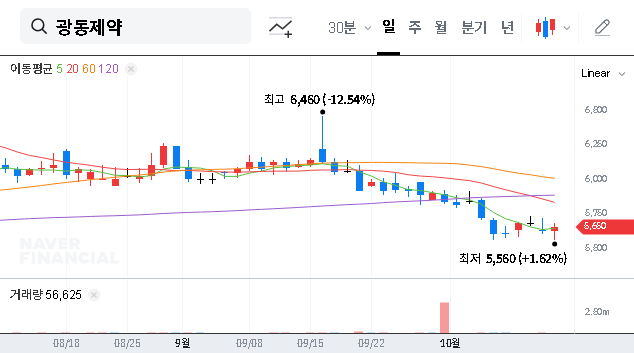
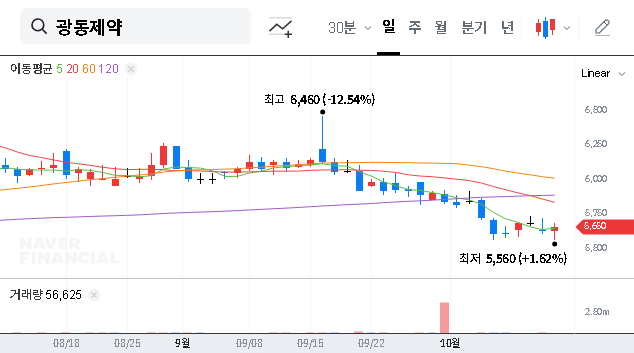
    • Stock Price vs. Exchange Price: Track the Kwangdong Pharmaceutical stock performance relative to the KRW 6,590 exchange price. Sustained trading above this level makes conversion more likely.
    • Quarterly Financial Reports: Analyze future earnings reports for early signs that the invested capital is generating a positive return, validating the company’s strategy. For more on this, see our guide to pharma investing.

    Conclusion: Kwangdong Pharmaceutical’s KRW 25 billion bond issuance is a calculated bet on its own future. For investors, it’s a call for diligent monitoring. The absence of interest payments is a clear positive, but the ultimate success of this move hinges on the company’s ability to translate this capital into tangible growth that outweighs the potential for future stock dilution. A cautious, informed, and long-term approach is the recommended strategy.

    Disclaimer: This analysis is for informational purposes only and does not constitute investment advice. All investment decisions should be made based on your own research and judgment.

    (009290) KWANGDONG PHARMACEUTICAL Exchangeable Bond: A 2025 Investor's Guide to the KRW 25B Issuance 관련 이미지
