Amidst a volatile construction sector, the challenges for KUMHO Engineering & Construction Co., Ltd. (금호건설) have intensified. A significant KUMHO E&C lawsuit demanding ₩17.5 billion in damages has emerged as a critical risk factor, compounding the company’s already precarious financial situation. With a staggering debt ratio and a difficult 2024 performance, this legal battle could have profound implications for the company’s future and its investors. This deep-dive analysis dissects the lawsuit, evaluates its impact on KUMHO E&C’s fundamentals, and provides a clear action plan for stakeholders.
The ₩17.5 Billion Lawsuit: A Closer Look
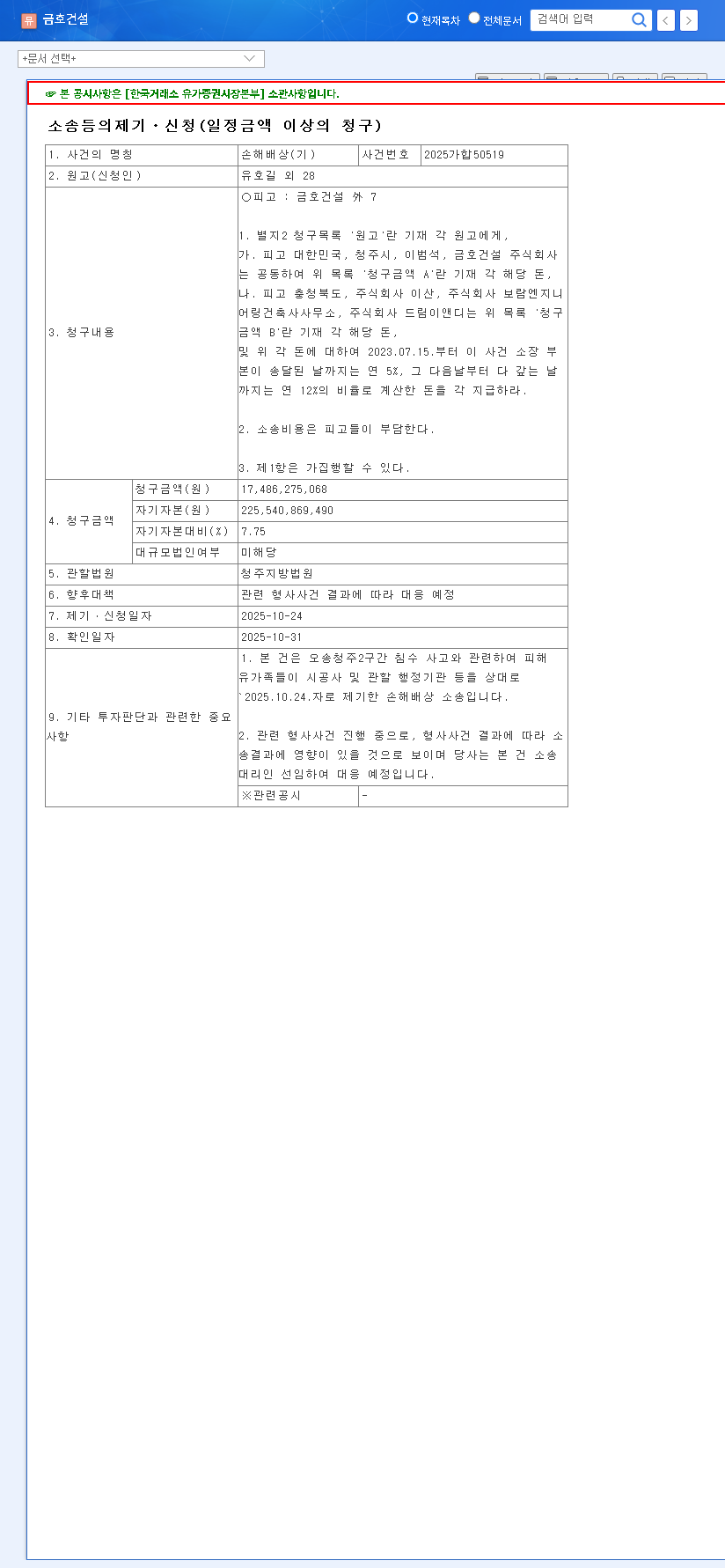
On October 31, 2025, KUMHO E&C formally disclosed the filing of a major ‘claim for damages’ lawsuit, a development that immediately captured investor attention. The case, filed at the Cheongju District Court by Yoo Ho-gil and 28 others, targets not only KUMHO E&C but also several other entities, including state bodies. The details, as per the Official Disclosure (DART), are as follows:
- •Claim Amount: A substantial ₩17.5 billion, representing approximately 7.75% of KUMHO E&C’s total assets.
- •Key Defendants: The lawsuit names the Republic of Korea, Cheongju City, Lee Bum-seok, and KUMHO Engineering & Construction, among four others.
- •Company Stance: KUMHO E&C has stated it will formulate its response based on the outcome of related criminal proceedings, adding a layer of prolonged uncertainty.
This legal challenge is not just a line item on a balance sheet; it’s a significant contingent liability that threatens to drain cash reserves and further damage market confidence at the worst possible time.
KUMHO E&C Financial Analysis: On Shaky Ground
The lawsuit arrives as KUMHO E&C navigates severe financial turbulence. The company’s recent performance paints a grim picture, making this new legal battle particularly perilous.
Worsening Performance and Alarming Debt Levels
The 2024 fiscal year was deeply challenging. Sales saw a 14% year-over-year decline, but more alarmingly, the company swung from a profit to an operating loss of ₩181.8 billion. This operational strain is magnified by a severely leveraged balance sheet.
The debt-to-equity ratio has surged to an alarming 588.78%. This level indicates extreme financial distress, significantly increasing bankruptcy risk and limiting the company’s ability to secure new financing on favorable terms.
The Compounding Risk of Uncollected Payments
Adding to the pressure are significant uncollected payments across six major projects. This issue points to underlying problems with project delays, developer funding, and escalating Project Financing (PF) risks. In a high-interest-rate environment, as detailed in this analysis of the construction market, such PF-related vulnerabilities can quickly spiral, choking off cash flow and impacting profitability.
Strategic Pivots: Can KUMHO E&C Turn the Tide?
Despite the bleak outlook, management is not standing still. The company is pursuing long-term strategies aimed at improving resilience and competitiveness, though their short-term impact may be limited.
- •Digital Transformation: Investments in a dedicated smart construction department, AI-powered safety monitoring, and BIM-centric development show a commitment to modernizing operations for future efficiency gains.
- •Selective Order Strategy: A shift towards a ‘profitability first’ approach to taking on new projects may reduce top-line revenue in the short term but is a necessary step toward rebuilding financial health and managing risk more effectively.
Investor Action Plan: Navigating the Uncertainty
Given the confluence of legal, financial, and market risks, investors must adopt a highly cautious and analytical approach. This isn’t a time for passive holding; it’s a time for active monitoring. Consider the following crucial steps:
1. Closely Monitor the Lawsuit’s Progression
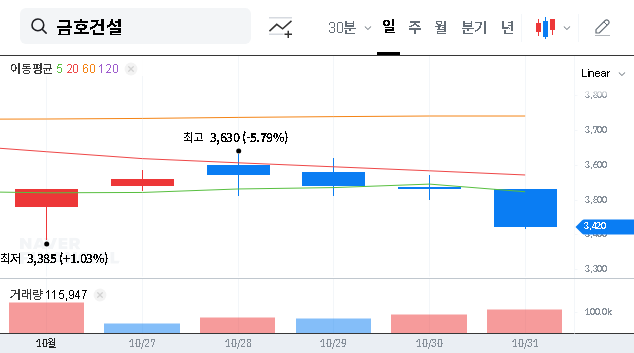
The outcome of the KUMHO E&C lawsuit is a primary catalyst. Track all court filings, official company statements, and the results of the related criminal case. Any indication of a negative ruling could trigger further stock price declines.
2. Scrutinize Financial Deleveraging Efforts
The company’s survival hinges on its ability to manage its debt. Look for concrete actions like asset sales, successful debt refinancing, or capital injections. Understanding metrics is key, and you can learn more about analyzing a company’s debt ratio here. A failure to meaningfully reduce the 588.78% debt ratio is a major red flag.
3. Assess Core Business Competitiveness
Beyond the financials, gauge the health of the core operations. Is the company still securing profitable new orders? Are they making progress on collecting outstanding payments? A shrinking order book combined with existing cash flow problems would signal a deteriorating competitive position.
In conclusion, the ₩17.5 billion lawsuit has cast a long shadow over KUMHO E&C, exacerbating existing financial vulnerabilities. While long-term strategic initiatives offer a glimmer of hope, the immediate risks are substantial. Investors must exercise extreme diligence, conducting a thorough analysis of the company’s financial recovery efforts and legal challenges before making any investment decisions.