Tag: KT

  • KT After-Hours Block Trade: Decoding the ₩33.3B Transaction & Investment Strategies


    1. KT After-Hours Block Trade: What Happened?

    On September 19, 2025, a substantial block trade of 650,789 KT shares occurred after-hours, totaling ₩33.3 billion. Notably, foreign investors were net buyers, purchasing a total of ₩35.2 billion worth of shares.

    2. Decoding the Trade: Why Does It Matter?

    After-hours block trades can offer valuable insights into market sentiment regarding a company’s value. This particular transaction could signify foreign investors’ confidence in KT. However, the possibility of this being a short-term phenomenon necessitates a deeper analysis.

    3. KT’s Fundamentals: Present and Future Outlook

    • Strengths: Accelerating transition to an AICT (AI, Cloud, IDC, Telecom) company, robust financial health, strong market position in 5G and Giga internet.
    • Weaknesses: Mature telecom market, intensifying competition in AI/cloud, ongoing legal risks.
    • Opportunities: Expanding media/content business, growth potential in the cloud/AI market.
    • Threats: Competition from global big tech companies, macroeconomic uncertainties.

    4. Market Environment Analysis: Impact on KT

    • Interest Rate and Exchange Rate Fluctuations: Potential increase in borrowing costs and impact on foreign exchange gains/losses.
    • Intensifying Competition: Challenges in maintaining and expanding market share.
    • Macroeconomic Uncertainties: Potential dampening of investor sentiment and negative impact on profitability.

    5. Investment Strategy: How Should Investors Respond?

    Investors should consider the following factors when developing a strategy for KT:

    • Monitoring AICT business performance.
    • Analyzing financial structure and debt management.
    • Staying informed about the competitive landscape and technological trends.
    • Assessing legal risks and the company’s mitigation strategies.
    • Analyzing foreign investor trends.


    FAQ: Frequently Asked Questions

    What is an after-hours block trade?

    An after-hours block trade refers to a large transaction of shares that occurs outside of regular trading hours. These trades are typically conducted between institutional investors and can influence market dynamics.

    How will this block trade impact KT’s stock price?

    While the net buying by foreign investors could create short-term upward momentum, the long-term impact will depend on KT’s underlying fundamentals and prevailing market conditions.

    Should I invest in KT?

    Investment decisions should be made based on individual assessment, and this analysis is not financial advice. Investors should carefully consider KT’s business performance, financial health, and the market environment before making any investment decisions.

  • KT After-Hours Block Trade: Foreign Investors Buy ₩7.8B, Signal for AICT Transformation?


    What Happened?: KT After-Hours Block Trade Analysis

    After the market closed on September 15, 2025, a substantial after-hours block trade of KT shares took place, totaling ₩7.8 billion (151,574 shares). The primary investors involved were foreign entities, both buying and selling.

    Why the Buy?: Analyzing Positive & Negative Factors

    Several factors may have contributed to the large foreign investment, including KT’s accelerating AICT transformation, its stable telecommunications business, and the strengthening of its media/content business. The anticipated expansion of its AI business through a strategic partnership with Microsoft is also considered a key factor. However, negative factors such as intensifying competition, substantial investment burdens, regulatory changes, and litigation risks cannot be ignored.

    Future Stock Outlook and Investment Strategy: Short-Term vs. Long-Term Perspectives

    In the short term, net foreign buying could positively impact the stock price. However, the long-term trend will depend on various factors, including the materialization of AI business results, response to the competitive landscape, and fluctuations in interest rates and exchange rates. Investors should continuously monitor the concrete performance and monetization of KT’s AI business, the competitiveness of its new business portfolio, the impact of rising interest rates and exchange rate fluctuations, and major litigation risks.

    Action Plan for Investors: Key Checkpoints

    • Verify AI Business Performance: Confirm if the collaboration with Microsoft translates into actual sales growth.
    • Analyze the Competitive Landscape: Understand the intensifying competition in the telecommunications and new business sectors and evaluate KT’s response strategies.
    • Check Financial Soundness: Analyze the financial impact of interest rate and exchange rate fluctuations and review KT’s debt management status.
    • Monitor Litigation Risks: Stay informed about the progress of ongoing lawsuits and their potential impact.


    Frequently Asked Questions (FAQ)

    What is an after-hours block trade?

    An after-hours block trade refers to a large transaction of shares outside of regular trading hours. It can significantly impact stock prices.

    Is foreign buying always positive for stock prices?

    Foreign buying is generally interpreted as a positive signal, but it can be a short-term phenomenon. It’s crucial to consider the company’s fundamentals and overall market conditions.

    What is KT’s AICT transformation strategy?

    KT is transitioning its business structure by focusing on Artificial Intelligence (AI), Cloud, and Internet of Things (IoT) to secure future growth engines.

    What should I consider before making investment decisions?

    Before making investment decisions, thoroughly analyze the company’s financial status, growth prospects, competitive landscape, and market conditions. Seeking advice from a financial professional is also recommended.


  • KTis Merges with HNC Network: Impact Analysis for Investors

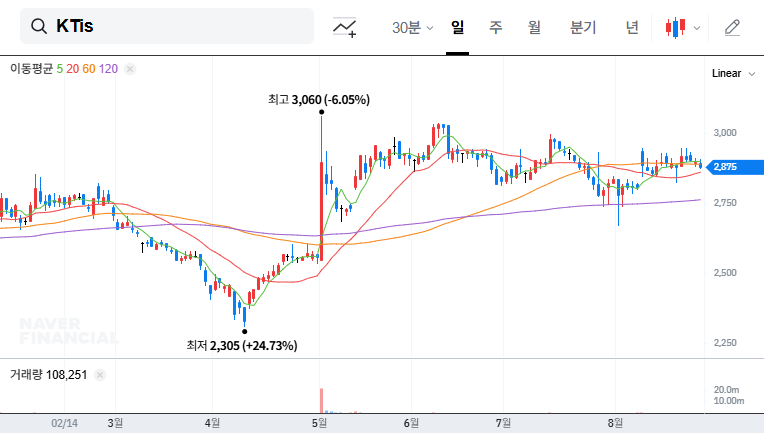
    KTis Merges with HNC Network: Impact Analysis for Investors 대표 차트 이미지

    What Happened?

    KTis will merge with its subsidiary HNC Network, with the merger date set for December 1, 2025. KTis will be the surviving entity, and HNC Network will be dissolved. By merging with HNC Network, which operates call centers and provides staffing services, KTis aims to strengthen its business competitiveness and improve management efficiency.

    Why the Merger?

    KTis has been focusing on its core contact center and distribution businesses after divesting its digital advertising division. This merger is interpreted as a strategy to enhance core business competitiveness by creating synergy in the call center business and increasing management efficiency. Cost reduction effects are also expected through organizational integration and operational streamlining.

    Potential Impact of the Merger

    • Positive Impacts: Synergy in call center business, enhanced management efficiency, potential improvement in financial structure.
    • Negative/Neutral Impacts: Potential short-term financial burden, uncertainty regarding synergy creation, potential lack of relevance with existing core businesses.

    While positive effects can be expected from the merger, factors such as short-term financial burden and uncertainty regarding synergy must also be considered.

    Action Plan for Investors

    Investors should closely monitor the synergy creation after the merger, its relevance to KTis’s core businesses, and the actual improvement in financial performance. It is crucial to pay attention to how KTis secures growth momentum and maintains competitiveness amidst the growth and intensifying competition in the AICC market. Carefully reviewing post-merger earnings announcements and management’s business strategies is essential.

    Frequently Asked Questions

    When is the merger date?

    December 1, 2025.

    What is the purpose of the merger?

    To strengthen business competitiveness and improve management efficiency.

    How will the merger affect KTis stock price?

    The potential impact of the merger can be both positive and negative. Stock price volatility may occur depending on various factors, including synergy creation and market conditions.

    KTis Merges with HNC Network: Impact Analysis for Investors 관련 이미지
    KTis Merges with HNC Network: Impact Analysis for Investors 관련 이미지
  • KT&G After-Hours Block Deal: Impact on Stock Price (August 20th Analysis)

    1. What Happened?

    After the market closed on August 20th, a substantial block deal of 51,614 KT&G shares (approximately ₩7.1 billion) took place. While relatively small compared to the market capitalization, investors are keen to understand the context of this trade and its potential impact on future stock movements.

    2. Why Did This Happen?

    While the exact parties involved and their motivations are unclear, possibilities include portfolio adjustments by institutional investors or profit-taking. Given KT&G’s recent stock price rally, profit-taking cannot be ruled out.

    3. Should You Invest in KT&G Now?

    Positive Factors

    • Solid tobacco business growth and international expansion
    • Proactive shareholder return policy (dividends, share buybacks/cancellation)
    • Strengthened ESG management and new business development

    Negative Factors

    • High debt burden and interest rate risk
    • Potential for stricter tobacco regulations
    • Foreign exchange fluctuations

    In conclusion, the after-hours block deal itself is unlikely to significantly impact KT&G’s fundamentals. Considering the recent stock price surge and foreign investor interest, it could potentially act as a short-term upward catalyst. However, before making investment decisions, it is crucial to consider both positive and negative factors and monitor market conditions closely.

    4. Investor Action Plan

    If you are considering investing in KT&G, keep the following in mind:

    • Trends in macroeconomic indicators (exchange rates, interest rates, oil prices)
    • Regulatory developments in the tobacco industry
    • Competitor analysis and market share changes

    Make informed investment decisions through consistent monitoring and analysis.

    Frequently Asked Questions

    What is an after-hours block deal?

    An after-hours block deal refers to a large transaction of shares outside of regular trading hours. It typically occurs when institutional investors buy or sell large blocks of shares through block trades.

    Will this block deal negatively affect KT&G’s stock price?

    The block deal itself does not directly impact KT&G’s fundamentals. However, it could introduce short-term volatility in the stock price.

    What should I consider before investing in KT&G?

    It is essential to consider KT&G’s fundamentals, growth prospects, dividend policy, and the regulatory environment before making an investment decision.

  • KTis (058860) Investment Analysis: Contact Center Growth vs. Distribution Business Decline

    1. What’s Happening with KTis?

    KTis continues its robust growth in the contact center business, but faces headwinds in its distribution segment, including declining sales of KT wired and wireless products and KT Plaza consignment business. The divestiture of the Townboard TV business signifies a shift in the company’s structure.

    2. Why These Developments?

    The decline in the distribution business is attributed to the changing telecommunications market environment and intensifying competition. The divestiture of the digital advertising business is a strategic move aimed at improving profitability and adjusting the business portfolio. Increased competition in the contact center market reflects the advancements in AI technology and market dynamics.

    3. What’s Next for KTis?

    KTis plans to strengthen its contact center business competitiveness by expanding its AICC business. It’s also pursuing diversification through new ventures such as financial product sales, product wholesale and brokerage, and paid job placement services. However, the recovery of the distribution business and the success of new ventures require ongoing monitoring.

    4. What Should Investors Do?

    KTis presents both growth potential and uncertainty. Investors should closely monitor the growth of the AICC business, the performance of new ventures, and the restructuring results before making investment decisions. The current investment recommendation is ‘Neutral’, with adjustments to strategy depending on future business performance and market conditions.

    What are KTis’s main businesses?

    KTis primarily focuses on contact center operations, alongside distribution and digital advertising businesses. The company is currently expanding its AI Contact Center (AICC) operations and pursuing new ventures like financial product sales.

    What is the investment outlook for KTis?

    While the growth in the contact center business is positive, the declining distribution business and uncertainties surrounding the restructuring pose challenges. Careful monitoring of AICC business growth and new business performance is crucial.

    What are the key factors to consider when investing in KTis?

    Investors should consider the performance of the distribution business, the company’s strategy following the digital advertising divestiture, the success of new ventures, and changes in macroeconomic indicators.

  • KT&G H1 2025 Earnings Analysis: Unexpected Net Profit Decline – What’s Next?

    1. What Happened? KT&G H1 2025 Earnings Breakdown

    KT&G reported revenue of KRW 15,479 billion (slightly up YoY) and operating profit of KRW 3,498 billion (slightly up YoY) for the first half of 2025. However, net profit came in at KRW 1,435 billion, significantly below the market consensus of KRW 2,587 billion.

    2. Why Did This Happen? Analyzing the Net Profit Decline

    The decline in net profit is attributed to factors such as losses from derivative transactions, investment losses, and increased corporate tax expenses. A detailed analysis of the semi-annual report and consolidated financial statements is necessary for further insights.

    3. What’s Next? Outlook and Investment Strategies

    KT&G’s core tobacco business, coupled with its growing HNB and health functional food segments, demonstrates operational stability. However, a thorough understanding of the reasons behind the net profit decline, management’s plans to address it, and the company’s H2 outlook are crucial. The rising KRW/USD exchange rate may benefit KT&G as an exporter, but FX risk should also be considered.

    4. Investor Action Plan: What Should You Do?

    • Seek additional information regarding the net profit decline.
    • Review the company’s future earnings guidance and growth strategies.
    • Monitor the competitive landscape and regulatory changes in the tobacco and health functional food industries.

    Frequently Asked Questions

    Q: Why was KT&G’s H1 2025 net profit lower than expected?

    A: The decline is likely due to losses from derivative transactions, investment losses, and increased corporate tax expenses. Refer to the semi-annual report and consolidated financial statements for details.

    Q: Is it a good idea to invest in KT&G?

    A: While the core business appears stable, investors should carefully consider the net profit issue, management’s response, and future growth strategies before making investment decisions.

    Q: How will exchange rate fluctuations affect KT&G?

    A: A weaker KRW can positively impact export revenue, but it also introduces the risk of foreign exchange losses.

  • KT&G Q2 2025 Earnings Analysis: A Mixed Bag for Investors

    What Happened? – KT&G Q2 2025 Earnings Breakdown

    KT&G reported revenue of KRW 15,479 billion and operating profit of KRW 3,498 billion, surpassing market projections. However, net profit came in lower than expected at KRW 1,435 billion.

    • Revenue: KRW 15,479 billion (YoY +20%)
    • Operating Profit: KRW 3,498 billion (YoY +48%)
    • Net Profit: KRW 1,435 billion (YoY -50%)

    Why the Change? – Key Drivers of Performance

    Strong performance in overseas HNB (Heat-not-Burn) tobacco sales and growth in the real estate business drove the increase in revenue and operating profit. The decline in net profit is attributed to temporary factors related to investment activities. Key business segment performance is as follows:

    • Tobacco Business: 12.6% growth driven by HNB expansion in overseas markets.
    • Real Estate Business: 94.3% increase due to the utilization of idle land.
    • Health Functional Foods: 6.7% decline, but positive outlook with increasing demand from the MZ generation.

    What’s Next? – Investment Strategies

    KT&G maintains long-term growth potential based on its solid fundamentals and active shareholder return policy. However, continuous monitoring of the factors impacting net profit and future earnings improvement will be crucial.

    • Maintain a Long-Term Perspective: Consider the company’s competitive strength in the tobacco business and efforts to secure new growth engines when developing a long-term investment strategy.
    • Manage Risk: Closely monitor the reasons for the decline in net profit and future outlook, and manage risk through strategies like dollar-cost averaging.
    • Shareholder Return Policy: Expect benefits from shareholder return policies such as share buybacks, cancellations, and dividends.

    Frequently Asked Questions

    What are the key takeaways from KT&G’s Q2 earnings?

    Revenue and operating profit exceeded expectations, while net profit fell short. Growth in overseas tobacco sales and the real estate business were positive drivers. The decline in net profit is attributed to temporary investment-related factors.

    What should investors watch out for?

    Investors should monitor the factors impacting net profit and track future earnings improvement. External factors such as exchange rate fluctuations should also be considered.

    What is the outlook for KT&G?

    The company maintains long-term growth potential based on solid fundamentals and an active shareholder return policy. However, ongoing attention to competitive landscape changes and regulatory risks is necessary.

  • KTis H1 2025 Earnings Analysis: Navigating Growth in the AICC Market Amidst Revenue Decline

    1. KTis H1 2025 Earnings: Key Highlights

    KTis reported KRW 140.7 billion in revenue (-8.0% YoY), KRW 6.5 billion in operating profit (+2.0%), and KRW 5.4 billion in net profit (+23.0%) for Q2 2025. While revenue fell short of market projections, both operating and net profits exceeded expectations, presenting a mixed performance.

    2. Analyzing Revenue Decline and Growth Drivers

    The revenue decline can be attributed to intensified competition in the telecommunications market and the overall economic slowdown. The divestiture of the digital advertising division also contributed to the decline. However, continued growth in the AICC segment provides a positive counterpoint. KTis benefits from a stable business foundation through synergies with the KT Group and strengthens its competitive edge through AICC solution development and operational expertise.

    3. Business Restructuring and Future Strategy

    The sale of the digital advertising business unit signifies KTis’s strategic focus on core competencies and strengthening its financial health. This move is interpreted as a strategy to secure long-term growth drivers. Furthermore, KTis is increasing investment in AI technology, aligning with the growth trajectory of the AICC market, which is expected to propel future growth.

    4. Action Plan for Investors

    In the short term, concerns regarding revenue decline may coexist with optimism surrounding improved profitability. For a mid-to-long-term perspective, investors should consider the overall picture, including AICC market growth, synergies with the KT Group, and the outcomes of business restructuring, to inform their investment decisions. Key factors to monitor include AICC project wins, progress in the sale of the digital advertising division, and maintaining a technological edge over competitors.

    What are KTis’s main businesses?

    KTis focuses on contact centers, distribution, and directory assistance services, with a strong emphasis on targeting the AI Contact Center (AICC) market.

    How did KTis perform in H1 2025?

    While revenue was below expectations, operating and net profit exceeded forecasts. KTis recorded KRW 140.7 billion in revenue, KRW 6.5 billion in operating profit, and KRW 5.4 billion in net profit.

    What is the outlook for KTis?

    Long-term growth is expected due to benefits from the growing AICC market and business restructuring. However, continuous monitoring is necessary regarding revenue recovery.

  • KT&G After-Hours Block Trade: What Does It Mean for Investors?

    1. Decoding the 19.1 Billion KRW Block Trade

    On August 12th, a significant after-hours trade of 135,727 KT&G shares, totaling 19.1 billion KRW, was executed. Notable foreign investor activity, with both buying (29.6 billion KRW) and selling (45.5 billion KRW), suggests potential shifts in supply and demand dynamics.

    2. KT&G Q1 Earnings: Continued Robust Growth

    KT&G reported solid Q1 2025 results, with consolidated revenue of 1.49 trillion KRW, a 15.4% year-on-year increase. Strong tobacco sales, coupled with growth in health functional foods and real estate, contributed to this positive performance. Furthermore, expansion in overseas tobacco markets, the strong ‘Cheong Kwan Jang’ brand, and ESG investments point to future growth potential.

    3. Key Investment Considerations

    • Macroeconomic Uncertainty: Global interest rate hikes and inflation could impact investor sentiment.
    • Intensifying Competition: Increased competition in the tobacco and health functional foods markets may pressure KT&G’s profitability.
    • Corporate Governance Issues: Minority shareholder proposals and corporate governance concerns could affect the company’s valuation.
    • After-Hours Trade Impact: Be mindful of potential short-term stock price volatility.

    4. Investor Action Plan

    While KT&G demonstrates strong fundamentals and growth, the large block trade and macroeconomic uncertainties warrant a cautious investment approach. Closely monitor foreign investor flows and upcoming earnings releases to inform your investment strategy.

    Frequently Asked Questions

    How do after-hours block trades affect stock prices?

    After-hours block trades can increase short-term price volatility. Depending on the buyers/sellers and the reasons behind the trade, the price can move up or down and influence overall investor sentiment.

    What is the outlook for KT&G’s stock price?

    KT&G is expected to maintain growth based on strong fundamentals. However, investors should be cautious due to macroeconomic uncertainties, intensifying competition, and corporate governance issues.

  • KT Q2 2025 Earnings: A Positive Surprise for Investors? Key Analysis and Investment Strategies

    1. KT Q2 Earnings: Exceeding Expectations

    KT announced its Q2 2025 earnings, showcasing strong performance across the board. Revenue reached ₩74.274 trillion (a 2.4% YoY increase), operating profit reached ₩10.148 trillion (a 17.2% YoY increase), and net income reached ₩6.879 trillion (a 2.0% YoY increase). These figures surpassed market expectations, particularly operating profit, which significantly outperformed forecasts by 17.2%.

    2. Drivers of Growth: Core Business Strength and New Ventures

    This positive surprise was driven by several factors. The core ICT business, including 5G subscriber growth, higher ARPU, and sustained growth in the high-speed internet business, contributed significantly. Furthermore, ongoing cost management efforts improved profitability. The company’s strategic partnership with Microsoft also played a crucial role, boosting performance in the AI/cloud sector, aligning with the growth strategies outlined in the Q1 report.

    3. Investment Strategies: Positive Momentum and Potential Risks

    These strong earnings are expected to create positive momentum for KT’s stock price and reinforce market confidence in its transition to an AICT company. However, investors should remain mindful of potential risks, including intensifying competition in the telecommunications market, 5G-related issues, and macroeconomic factors. Investment decisions should consider the performance of the AI/cloud business, 5G risk management, and macroeconomic conditions.

    4. Future Outlook: Continued Growth Potential

    KT is expected to maintain stable performance based on the robust growth of its core ICT business. Combined with the growth potential of its AI/cloud business, the company demonstrates strong potential for continued growth. Investors should consider both short-term momentum and long-term growth potential when developing their investment strategies.

    Frequently Asked Questions

    What were KT’s key financial results for Q2 2025?

    KT reported revenue of ₩74.274 trillion, operating profit of ₩10.148 trillion, and net income of ₩6.879 trillion. All figures exceeded market expectations.

    What were the main drivers of this strong performance?

    Key drivers include strong performance in the core ICT business (5G subscriber growth, higher ARPU, high-speed internet growth), significant contributions from the AI/cloud business, and ongoing cost management efforts.

    What should investors consider when evaluating KT?

    Investors should be aware of potential risks, such as increased competition in the telecommunications market, 5G-related challenges, and macroeconomic factors. It’s crucial to monitor the performance of the AI/cloud business, 5G risk management, and macroeconomic conditions.