Tag: KOREAN AIR LINES CO.

  • (003490) Korean Air Lines L3Harris Contract: Deep Dive into the ₩631.9B Aerospace Deal

    (003490) Korean Air Lines L3Harris Contract: Deep Dive into the ₩631.9B Aerospace Deal

    The recent Korean Air Lines L3Harris contract marks a pivotal moment for the airline’s burgeoning aerospace division. In a landmark deal, Korean Air secured a long-term supply agreement worth ₩631.9 billion (approximately $460 million USD) with L3Harris Technologies, a global aerospace and defense titan. This agreement, centered on crucial Korean Airborne Early Warning & Control (AEW&C) components, is far more than a simple revenue entry; it signals a strategic deepening of Korean Air’s role in the high-stakes global defense supply chain. This analysis will dissect the contract’s details, explore its profound impact on Korean Air’s fundamentals, and provide a clear-eyed outlook for investors.

    Deconstructing the Landmark Agreement

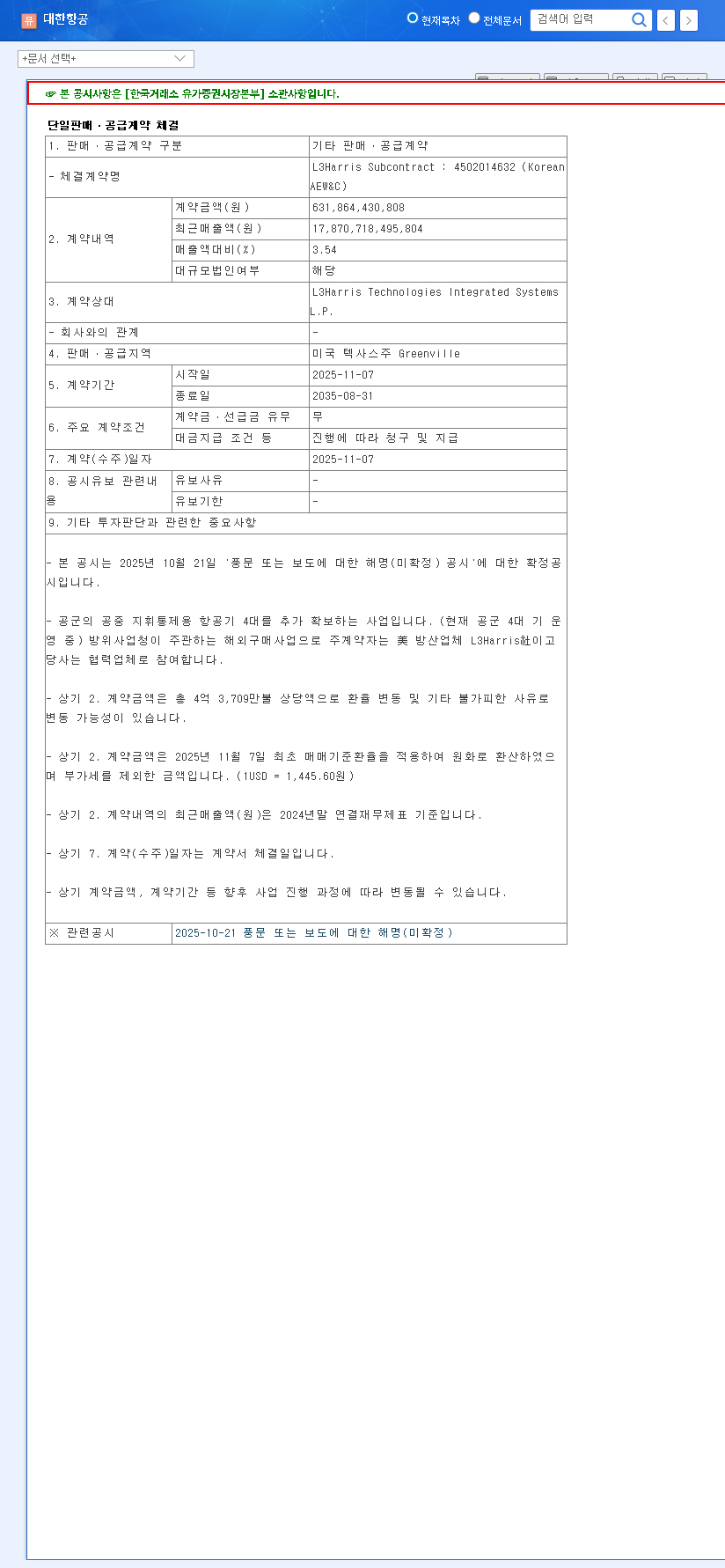
    Announced on November 7, 2025, this significant supply contract formalizes a long-term partnership with L3Harris Technologies Integrated Systems L.P., a key player in the U.S. defense sector. The scale and duration of this deal underscore its strategic importance for the Korean Air aerospace division.

    Key Contract Specifics

    • Total Value: ₩631.9 billion, representing 3.54% of Korean Air’s recent total revenue.
    • Contract Duration: A nearly decade-long term from November 7, 2025, to August 31, 2035.
    • Scope of Work: Supply of critical components for Korea’s advanced AEW&C aircraft, a vital national security asset.
    • Counterparty: L3Harris Technologies, a top-tier U.S. defense contractor known for its advanced technology solutions.

    Strategic Impact on Korean Air’s Aerospace Ambitions

    This long-term agreement is a powerful catalyst, expected to deliver several fundamental benefits that extend well beyond the balance sheet. It solidifies the aerospace division’s position as a core pillar of future growth for the company.

    This contract is not just about revenue; it’s a vote of confidence in our technological prowess and a gateway to deeper integration within the global aerospace and defense market.

    Securing Predictable, Long-Term Revenue

    In an industry often marked by cyclicality, a ten-year contract provides an invaluable stream of predictable revenue. This stability enhances financial planning, de-risks future investments in the aerospace division, and provides a buffer against volatility in the passenger airline market.

    Expanding Presence in the U.S. Defense Market

    The deal, centered in Greenville, Texas, provides Korean Air with a crucial foothold in the highly competitive U.S. market. Successfully executing this AEW&C components supply contract will bolster the company’s reputation and strengthen its relationships with the U.S. government and other defense contractors, potentially unlocking future large-scale opportunities.

    Market Outlook and Investor Considerations

    While the long-term strategic benefits are clear, investors should analyze the Korean Air Lines L3Harris contract within a broader market context. Large-scale agreements like this typically boost investor sentiment, which can positively influence Korean Air stock performance. However, macroeconomic variables will play a significant role over the contract’s lifespan.

    • Exchange Rate Fluctuations: As a USD-denominated contract, swings in the KRW/USD exchange rate will directly affect the revenue and profitability when converted back to Korean Won.
    • Profitability Margins: While defense contracts are often stable, the specific profit margins are not public. Investors must monitor company reports for insights into the project’s overall profitability.
    • External Factors: The ongoing progress of the Asiana Airlines merger, geopolitical stability, and global economic trends will continue to influence Korean Air’s overall business environment.

    Final Analysis & Investor Takeaway

    The ₩631.9 billion agreement with L3Harris Technologies is an undeniable strategic win for Korean Air. It validates the capabilities of its aerospace division, ensures a decade of stable revenue, and opens doors for future growth. This development provides a strong tailwind for the company’s long-term fundamental health.

    For investors, this news supports a positive, long-term outlook. However, a cautious ‘Neutral’ stance is advisable in the short term. Key variables, including undisclosed contract profitability and macroeconomic volatility, require continuous monitoring. Investment decisions should be made after considering these factors alongside the broader aviation industry landscape. For complete transparency, the original filing can be reviewed in the Official Disclosure.

    Frequently Asked Questions

    What is the core of the Korean Air Lines L3Harris contract?

    It is a long-term supply contract valued at ₩631.9 billion, where Korean Air will provide key components for Korean AEW&C (Airborne Early Warning & Control) aircraft to U.S. defense company L3Harris Technologies over nearly 10 years.

    How does this contract affect Korean Air’s revenue?

    While representing 3.54% of total revenue, its primary benefit is not a massive short-term boost but rather the establishment of a stable, predictable revenue stream for the aerospace division over the next decade, which enhances financial stability.

    What does this mean for the future of Korean Air’s aerospace business?

    This deal significantly elevates the profile of Korean Air aerospace, confirming its technical expertise. It acts as a springboard for securing more high-value contracts and expanding its footprint in the lucrative U.S. defense market.
    (003490) Korean Air Lines L3Harris Contract: Deep Dive into the ₩631.9B Aerospace Deal 관련 이미지
  • (003490) Korean Air Q3 2025 Earnings Call: A Deep Dive for Investors (KRX: 003490)

    (003490) Korean Air Q3 2025 Earnings Call: A Deep Dive for Investors (KRX: 003490)

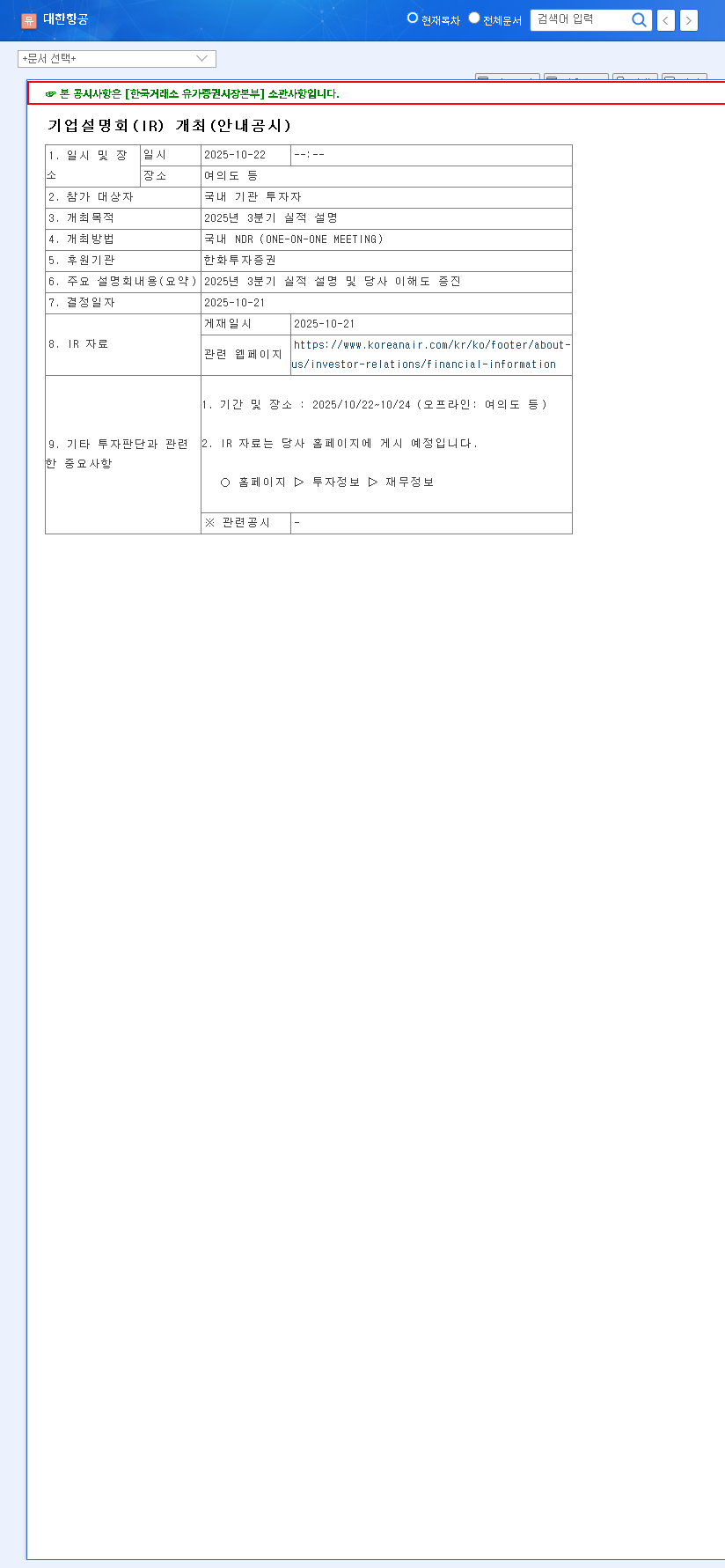
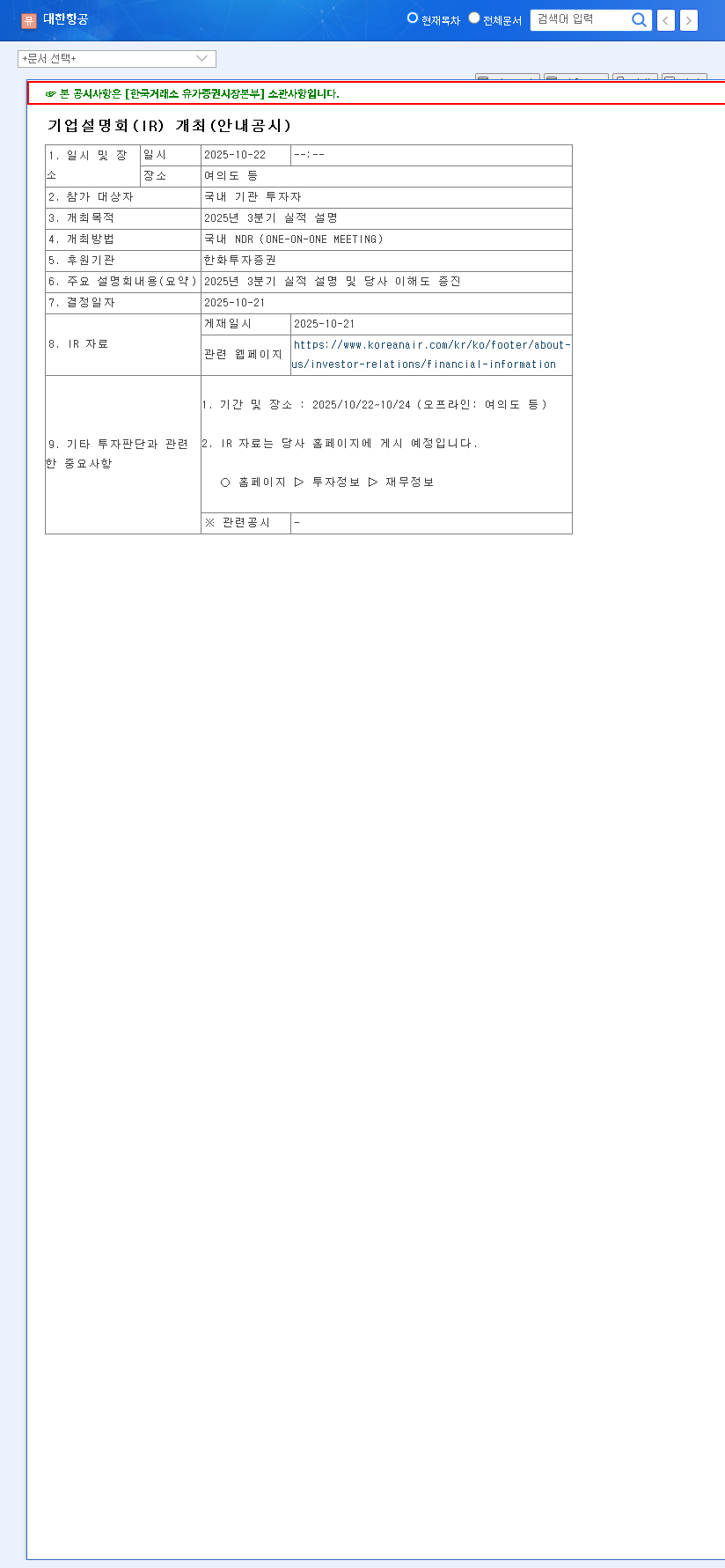
    Korean Air Lines Co., Ltd. (KRX: 003490) has scheduled its highly anticipated Korean Air Q3 2025 earnings call for October 22, 2025. This event is more than a routine financial report; it’s a critical moment for investors to gauge the airline’s health, operational efficiency, and strategic direction in a dynamic global market. For those interested in investing in Korean Air, this call will provide invaluable data points that could significantly influence the Korean Air Lines stock price and long-term valuation.

    This comprehensive guide provides an in-depth Korean Air financial analysis, outlining what to watch for, potential market scenarios, and a strategic action plan to help you make informed decisions.

    Why This Earnings Call Carries Extra Weight

    The Q3 2025 report comes at a pivotal time. The airline industry continues to navigate a complex environment shaped by fluctuating fuel prices, evolving international travel demand, and intense competition. For Korean Air specifically, investors will be keenly listening for updates on several key fronts: progress on the landmark Asiana Airlines merger, performance of its high-margin cargo division, and strategies to manage rising operational costs. The management’s commentary during this call will be just as important as the numbers themselves, offering clues about future profitability and growth.

    An earnings call is a window into a company’s soul. The numbers tell you the past, but the management’s tone, transparency, and strategic vision tell you about the future.

    Key Metrics to Watch in the Korean Air Q3 2025 Report

    To conduct a thorough Korean Air financial analysis, move beyond the headline revenue and profit figures. Here are the specific metrics that will reveal the true health of the business:

    1. Passenger Revenue and Load Factor

    Look for a strong passenger load factor (the percentage of available seats filled), especially on lucrative long-haul international routes. Strong figures here indicate robust demand and efficient capacity management. Also, pay attention to Revenue per Available Seat Kilometer (RASK), which measures the airline’s efficiency in generating revenue from its passenger capacity.

    2. Cargo Division Performance

    Korean Air’s cargo arm has been a significant profit driver. Investors should scrutinize cargo yields and volumes. A continued strong performance in this segment can offset potential softness in passenger demand and provide a stable revenue stream, a key differentiator for the Korean Air Lines stock.

    3. Operating Profit Margin and Fuel Costs

    The operating margin reveals how well the company is controlling its costs. Fuel is the largest variable expense for any airline. Listen for commentary on the company’s fuel hedging strategies and how effectively they are mitigating the impact of volatile oil prices on their bottom line.

    A Strategic Action Plan for Investors

    Proactive preparation is key. The Korean Air Q3 2025 earnings call can be a major catalyst. Here’s how to prepare and react:

    • Benchmark Against Expectations: Before the call, research the market consensus. High-authority financial news sources like Reuters or Bloomberg provide analyst estimates for revenue and earnings per share (EPS). The stock’s reaction will largely depend on whether the actual results beat, meet, or miss these expectations.
    • Analyze the Official Filing: Don’t just listen to the presentation. The most detailed information is in the official report filed with regulators. You can access the primary source directly via the Official Disclosure on DART.
    • Listen to the Q&A Session: The management’s prepared remarks are scripted. The unscripted Q&A with analysts often reveals the most crucial insights into challenges, competition, and strategic pivots. Pay close attention to the tone and confidence of the executives.
    • Update Your Investment Thesis: Does the new information confirm or challenge your reasons for investing in Korean Air? Use the results to refine your valuation models and long-term outlook. For more on this, review our guide to fundamental airline stock analysis.

    Frequently Asked Questions (FAQ)

    Q1: When is the Korean Air Lines Q3 2025 earnings conference call?

    Korean Air has announced it will hold its Q3 2025 earnings conference call on October 22, 2025.

    Q2: Why is an earnings call important for investors?

    An earnings call is a direct line to company leadership, providing transparent disclosure of financial performance, operational details, and future business outlook. Investors use this information to assess the company’s value and make informed investment decisions.

    Q3: What should investors focus on after the earnings call?

    After the release, investors should analyze whether the results beat market expectations, assess the future guidance provided by management, and listen for any unexpected risk factors or opportunities that arise during the Q&A session.

    By staying informed and analytical, investors can use the Q3 2025 earnings call as a powerful tool to navigate their investment journey with Korean Air Lines. Make sure to mark your calendar and prepare your questions.

    (003490) Korean Air Q3 2025 Earnings Call: A Deep Dive for Investors (KRX: 003490) 관련 이미지
  • (003490) Korean Air Q3 2025 IR: A Deep Dive for Investors | Stock Analysis & Strategy

    (003490) Korean Air Q3 2025 IR: A Deep Dive for Investors | Stock Analysis & Strategy

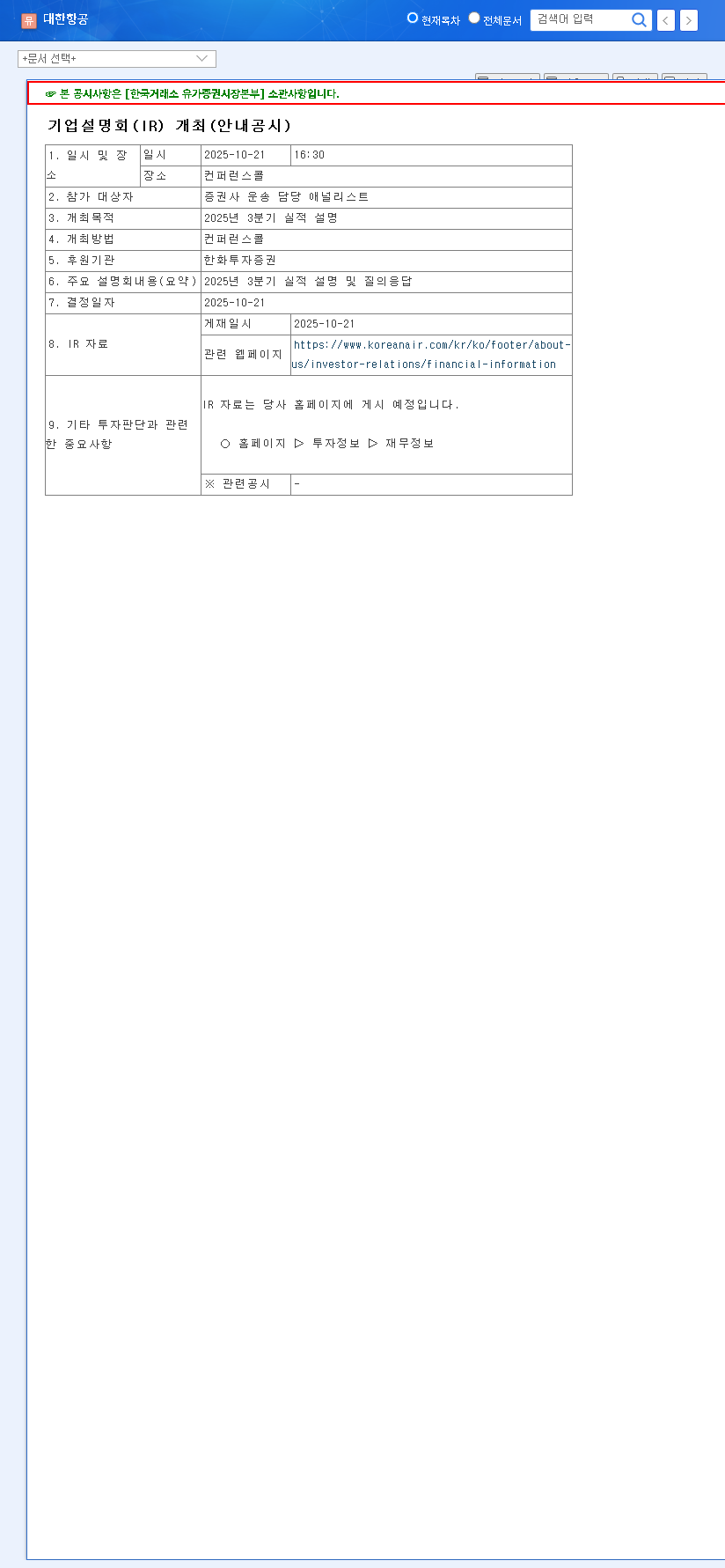
    The upcoming Korean Air Q3 2025 IR (Investor Relations) earnings call is a pivotal event that has the global aviation and investment communities on high alert. Scheduled for October 21, 2025, at 16:30 KST, this announcement is far more than a simple financial report; it’s a comprehensive health check that will provide critical insights into the airline’s performance, strategic direction, and future profitability. For investors, understanding the nuances of this event is key to navigating potential stock volatility and making informed decisions about their airline stock investment portfolio.

    This in-depth analysis will dissect the potential scenarios for Korean Air’s stock price, outline a strategic action plan for investors, and explore the key metrics you need to watch. We will delve into both the bullish and bearish cases to provide a balanced perspective for your investment strategy.

    Why the Korean Air Q3 2025 IR is a Market-Moving Event

    An earnings call serves as a direct line of communication between a company’s management and its shareholders. During this event, Korean Air will not only present its third-quarter financial results but also provide forward-looking guidance. This guidance, coupled with the Q&A session with analysts, often has a more significant impact on the Korean Air stock price than the historical data itself. The market is forward-looking, and this call offers the clearest glimpse into the company’s future.

    Investor sentiment is often shaped not just by the numbers reported, but by the confidence, clarity, and strategic vision projected by the leadership team during the earnings call.

    Key Metrics to Watch

    Beyond top-line revenue and net income, seasoned investors will be scrutinizing several key performance indicators (KPIs):

    • Passenger Load Factor: A measure of how much of the airline’s passenger carrying capacity is utilized. A high load factor indicates strong demand.
    • Cargo Revenue & Yield: The cargo division has been a significant profit driver. Any changes in demand or pricing power are critical.
    • Operating Margins: This reveals the company’s efficiency in managing costs, especially volatile expenses like jet fuel.
    • Asiana Merger Progress: Updates on regulatory approvals and integration plans for the merger with Asiana Airlines will be a major focus.

    Stock Price Scenarios: Bull vs. Bear Case

    The outcome of the KAL earnings call will likely push the stock in one of two directions. Here are the potential scenarios investors should prepare for.

    The Bullish Case (Potential for a Stock Rally)

    • Earnings Beat: Revenue and profits exceeding analyst consensus would be a powerful positive catalyst.
    • Optimistic Future Guidance: A strong forecast for Q4 and beyond, citing robust travel demand and stable cargo markets, would boost investor confidence.
    • Positive Merger News: Announcing successful navigation of key regulatory hurdles for the Asiana merger could unlock significant perceived value.

    The Bearish Case (Potential for a Stock Decline)

    • Earnings Miss: Failing to meet market expectations, particularly on profitability, could trigger a sell-off.
    • Cautious Outlook: Management expressing concerns over rising fuel costs, slowing cargo demand, or a global economic slowdown would create uncertainty.
    • Vague Q&A Responses: Evasive or unclear answers to analyst questions about risks or challenges could be interpreted negatively.

    A Smart Investment Strategy for the IR Event

    Reacting emotionally to headlines can be detrimental. A structured approach is essential. Your Korean Air investment strategy should involve preparation, active listening, and objective post-call analysis.

    • Before the Call: Review past performance and understand the current analyst consensus. Analyze broader industry trends from sources like reputable financial news outlets to contextualize Korean Air’s performance.
    • During the Call: Listen beyond the headline numbers. Pay close attention to management’s tone and the specific questions asked by analysts, as they often highlight key areas of concern or opportunity.
    • After the Call: Take time to digest the information. Analyze the official financial documents. The Official Disclosure can be found on Korea’s DART system (Source). Observe the market’s reaction over the next few days, not just the initial minutes.

    Frequently Asked Questions (FAQ)

    When is the Korean Air Q3 2025 IR event?

    Korean Air’s Q3 2025 Investor Relations (IR) earnings call is scheduled for October 21, 2025, at 16:30 KST.

    What is the main purpose of this IR event?

    The primary purpose is to present the detailed financial performance for Q3 2025, provide an outlook for the future, and engage in a transparent Q&A session with investors and analysts.

    How might this IR affect Korean Air’s stock price?

    The stock price can be significantly impacted. Positive results and a strong outlook can lead to a rally, while disappointing figures or cautious guidance may cause a decline. The market’s reaction depends on how the results compare to expectations.

    (003490) Korean Air Q3 2025 IR: A Deep Dive for Investors | Stock Analysis & Strategy 관련 이미지
  • (003490) Korean Air Lines Q3 2025 Earnings Analysis: Stock Under Pressure After 53% Profit Miss

    (003490) Korean Air Lines Q3 2025 Earnings Analysis: Stock Under Pressure After 53% Profit Miss

    The latest KOREAN AIR LINES Q3 2025 earnings report has sent a wave of concern through the investment community. On October 21, 2025, the airline disclosed provisional results that fell dramatically short of market consensus, sparking immediate questions about the company’s trajectory and the stability of Korean Air stock. With a staggering 53% miss on net profit, investors are now seeking clarity on the underlying causes and a strategic path forward.

    This comprehensive analysis will deconstruct the Q3 results, explore the potential catalysts behind the underperformance, and assess the immediate and long-term implications for investors. We provide an actionable playbook for navigating this period of uncertainty and evaluating the future of your investment in Korean Air Lines.

    Deconstructing the KOREAN AIR LINES Q3 2025 Earnings Miss

    KOREAN AIR LINES CO.,LTD announced its provisional Q3 2025 operating results, revealing a significant disconnect from analyst expectations. The full details were released in their official filing (Source: Official Disclosure). Here’s a breakdown of the key figures versus market consensus:

    • Revenue: Reported KRW 4,008.5 billion, a 36% miss compared to the expected KRW 6,240.1 billion.
    • Operating Profit: Came in at KRW 376.3 billion, falling 30% short of the KRW 534.1 billion forecast.
    • Net Profit: The most alarming figure, at KRW 91.9 billion, was a shocking 53% below the anticipated KRW 193.9 billion.

    The sharp 83% sequential drop in net profit from Q2 to Q3 signals more than just seasonal fluctuation; it points towards potential structural issues or severe external pressures impacting the airline’s bottom line.

    What Caused the Turbulence? Unpacking the Underperformance

    A miss of this magnitude is rarely due to a single factor. A confluence of industry headwinds and company-specific challenges likely contributed to the disappointing airline earnings analysis.

    Macroeconomic and Industry Headwinds

    The global airline industry is highly sensitive to economic shifts. The revenue shortfall suggests a potential slowdown in international passenger demand or a significant drop in cargo freight rates, which had been a strong point for airlines post-pandemic. Furthermore, volatile jet fuel prices remain a major concern. Even a small increase in fuel costs can erode margins significantly, a factor that likely contributed to the operating profit miss. For a broader view on energy markets, authoritative sources like the U.S. Energy Information Administration (EIA) provide regular updates on fuel price trends.

    Company-Specific Challenges

    The severe drop in net profit points towards issues beyond core operations. Non-operating losses, such as adverse foreign exchange movements (especially a weaker KRW against the USD), can heavily impact debt servicing and aircraft leasing costs. Additionally, one-time expenses or increased tax burdens could have played a role. While operating profit saw a slight increase from Q2 despite falling revenue (hinting at some cost control), the massive net profit decline suggests these non-operating factors were substantial.

    Market Impact and the Future of Korean Air Stock

    The market’s reaction to such a significant earnings miss is typically swift and negative. Investors should be prepared for the following outcomes:

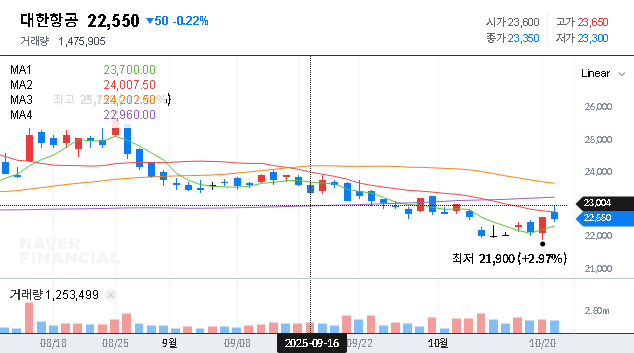
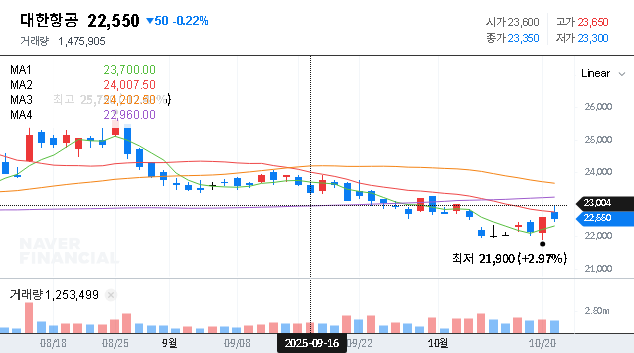
    • Short-Term Price Volatility: Expect immediate downward pressure on the Korean Air stock price as the market digests the news. Increased trading volume and volatility are likely.
    • Revised Analyst Ratings: Brokerages and financial analysts will almost certainly revise their future earnings forecasts, target prices, and ratings downwards.
    • Erosion of Investor Confidence: A persistent failure to meet expectations can damage management’s credibility and weaken long-term investor confidence, making capital raising more challenging.

    An Investor’s Playbook: Strategic Guidance and Next Steps

    In a volatile market, a measured and informed approach is crucial. Here is some investor guidance for those holding or considering an investment in Korean Air Lines.

    • Analyze the ‘Why’: Look beyond the headlines. Scrutinize the company’s upcoming investor relations calls and detailed financial statements for management’s explanation of the root causes.
    • Benchmark Against Peers: Compare these results with other major airlines. Is this an industry-wide problem or a Korean Air-specific issue? This context is vital for making an informed decision.
    • Evaluate Future Guidance: Pay close attention to any revised guidance for Q4 2025 and the full year 2026. Management’s outlook will be a key indicator of their confidence in a recovery.
    • Review Your Portfolio: Re-assess your investment thesis for Korean Air. Does it still align with your risk tolerance and long-term goals? For more on portfolio strategy, consider our Guide to Diversifying Your Stock Holdings.

    While the KOREAN AIR LINES Q3 2025 earnings are undoubtedly disappointing, long-term investors should focus on the company’s fundamental strengths, competitive position, and its strategic plan to navigate these challenges. A knee-jerk reaction is rarely the best course of action in the airline stock market.

    (003490) Korean Air Lines Q3 2025 Earnings Analysis: Stock Under Pressure After 53% Profit Miss 관련 이미지
  • (003490) KOREAN AIR LINES Stock: Analysis of ₩3 Trillion Airborne Control Aircraft Project

    (003490) KOREAN AIR LINES Stock: Analysis of ₩3 Trillion Airborne Control Aircraft Project

    A major development is casting a new light on KOREAN AIR LINES stock as reports surface about its potential involvement in a massive ₩3 trillion national defense initiative. The project in question involves sophisticated airborne control aircraft, a move that could signal a significant strategic shift for the aviation giant. This analysis delves into the official company disclosure, the potential financial upside, and the inherent risks for investors eyeing this new chapter for Korean Air.

    We will break down what this airborne control aircraft project entails, evaluate the short and long-term implications for the company’s valuation, and outline a prudent investment strategy based on the available information. Is this a catalyst for sustained growth or a speculative venture still shrouded in uncertainty?

    The Disclosure: Unpacking the ₩3 Trillion Opportunity

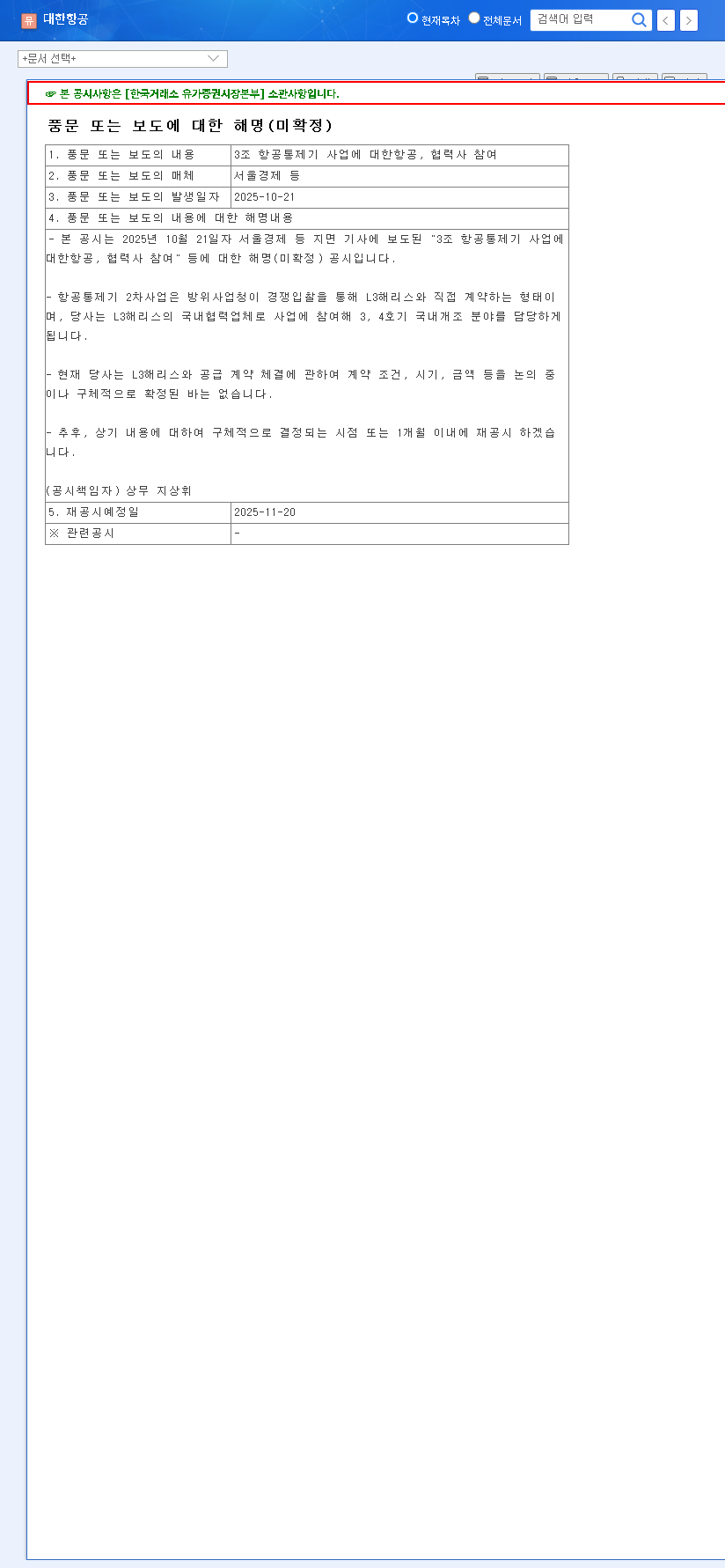
    On October 21, 2025, news outlets began reporting that KOREAN AIR LINES was poised to partner in the second phase of a major defense acquisition. In response, the company issued a clarification to address the speculation. The core of the announcement reveals a potential partnership with a global defense technology leader, L3Harris, for the domestic modification of the 3rd and 4th airborne control aircraft for the Defense Acquisition Program Administration (DAPA).

    KOREAN AIR LINES has officially stated that while a supply contract with L3Harris is under discussion, crucial details such as contract terms, timing, and financial scope are not yet confirmed. The company has committed to a re-disclosure by November 20, 2025.

    This ‘unconfirmed’ status is critical. While the news validates a new business opportunity, it also introduces a layer of uncertainty that investors must navigate carefully. The company’s clarification can be viewed in full via its Official Disclosure (DART).

    Analyzing the Impact on KOREAN AIR LINES Stock

    Prior to these reports, market expectations for KOREAN AIR LINES’ involvement in a project of this nature were minimal. Therefore, this development should be analyzed as a new, potential catalyst rather than an impact on existing business fundamentals. We can assess the potential effects from both short-term and long-term perspectives.

    Short-Term: A Mix of Opportunity and Caution

    In the immediate term, the news flow is a net positive for investor sentiment. It highlights the company’s technical capabilities and opens the door to a lucrative new sector. However, the unconfirmed nature of the deal will likely temper any significant, sustained rally in KOREAN AIR LINES stock until concrete details emerge.

    • Positive Catalyst: The prospect of a large-scale, multi-trillion Won KAL defense contract can generate excitement and attract speculative interest.
    • Credibility Boost: Being considered for such a high-tech project validates KOREAN AIR LINES’ aerospace engineering and maintenance (MRO) divisions.
    • Key Risk: The ‘unconfirmed’ status is the primary headwind. A failure to secure the contract or unfavorable terms could lead to investor disappointment.

    Mid- to Long-Term: The Path to Business Diversification

    The most compelling aspect of this KOREAN AIR LINES investment thesis is the potential for strategic diversification. The commercial airline industry is notoriously cyclical and sensitive to economic shocks, fuel prices, and global events. Securing a significant role in the defense sector would provide a stable, long-term revenue stream insulated from these pressures.

    Successful execution of this L3Harris partnership could establish KOREAN AIR LINES as a key player in South Korea’s defense-industrial ecosystem. This opens doors to future projects, from aircraft maintenance to advanced modifications and systems integration. For more context on the industry, see our guide to investing in aerospace and defense stocks.

    Investment Strategy: Key Points to Watch

    Given the current information, a ‘watchful waiting’ approach is the most prudent strategy. The potential upside is clear, but the risks of premature investment are tangible. Investors should focus on the following key points leading up to the November 20, 2025 re-disclosure date.

    • Contract Confirmation: The binary outcome of whether the contract is signed is the most critical factor.
    • Financial Details: Once confirmed, the contract’s total value for KOREAN AIR LINES, its duration, and expected profit margins will determine the actual financial impact.
    • Scope of Work: Understanding the company’s precise role—whether it involves complex systems integration or more basic airframe modification—will be key to assessing its long-term value creation. Defense contractors like L3Harris Technologies have extensive global supply chains, and KOREAN AIR’s role within it matters.

    In conclusion, the potential entry into the airborne control aircraft project is a genuinely exciting development for KOREAN AIR LINES. It represents a tangible step toward becoming a more resilient and diversified aerospace leader. While short-term volatility in KOREAN AIR LINES stock is expected, the long-term strategic merit is undeniable. The upcoming disclosure will be the true determinant, and investors should remain vigilant for the confirmed details.

    (003490) KOREAN AIR LINES Stock: Analysis of ₩3 Trillion Airborne Control Aircraft Project 관련 이미지