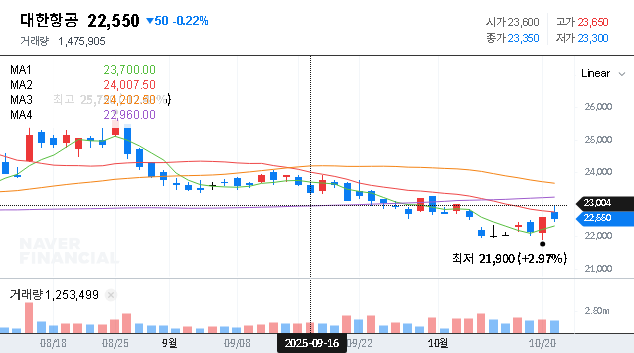
The latest KOREAN AIR LINES Q3 2025 earnings report has sent a wave of concern through the investment community. On October 21, 2025, the airline disclosed provisional results that fell dramatically short of market consensus, sparking immediate questions about the company’s trajectory and the stability of Korean Air stock. With a staggering 53% miss on net profit, investors are now seeking clarity on the underlying causes and a strategic path forward.
This comprehensive analysis will deconstruct the Q3 results, explore the potential catalysts behind the underperformance, and assess the immediate and long-term implications for investors. We provide an actionable playbook for navigating this period of uncertainty and evaluating the future of your investment in Korean Air Lines.
Deconstructing the KOREAN AIR LINES Q3 2025 Earnings Miss
KOREAN AIR LINES CO.,LTD announced its provisional Q3 2025 operating results, revealing a significant disconnect from analyst expectations. The full details were released in their official filing (Source: Official Disclosure). Here’s a breakdown of the key figures versus market consensus:
- •Revenue: Reported KRW 4,008.5 billion, a 36% miss compared to the expected KRW 6,240.1 billion.
- •Operating Profit: Came in at KRW 376.3 billion, falling 30% short of the KRW 534.1 billion forecast.
- •Net Profit: The most alarming figure, at KRW 91.9 billion, was a shocking 53% below the anticipated KRW 193.9 billion.
The sharp 83% sequential drop in net profit from Q2 to Q3 signals more than just seasonal fluctuation; it points towards potential structural issues or severe external pressures impacting the airline’s bottom line.
What Caused the Turbulence? Unpacking the Underperformance
A miss of this magnitude is rarely due to a single factor. A confluence of industry headwinds and company-specific challenges likely contributed to the disappointing airline earnings analysis.
Macroeconomic and Industry Headwinds
The global airline industry is highly sensitive to economic shifts. The revenue shortfall suggests a potential slowdown in international passenger demand or a significant drop in cargo freight rates, which had been a strong point for airlines post-pandemic. Furthermore, volatile jet fuel prices remain a major concern. Even a small increase in fuel costs can erode margins significantly, a factor that likely contributed to the operating profit miss. For a broader view on energy markets, authoritative sources like the U.S. Energy Information Administration (EIA) provide regular updates on fuel price trends.
Company-Specific Challenges
The severe drop in net profit points towards issues beyond core operations. Non-operating losses, such as adverse foreign exchange movements (especially a weaker KRW against the USD), can heavily impact debt servicing and aircraft leasing costs. Additionally, one-time expenses or increased tax burdens could have played a role. While operating profit saw a slight increase from Q2 despite falling revenue (hinting at some cost control), the massive net profit decline suggests these non-operating factors were substantial.
Market Impact and the Future of Korean Air Stock
The market’s reaction to such a significant earnings miss is typically swift and negative. Investors should be prepared for the following outcomes:
- •Short-Term Price Volatility: Expect immediate downward pressure on the Korean Air stock price as the market digests the news. Increased trading volume and volatility are likely.
- •Revised Analyst Ratings: Brokerages and financial analysts will almost certainly revise their future earnings forecasts, target prices, and ratings downwards.
- •Erosion of Investor Confidence: A persistent failure to meet expectations can damage management’s credibility and weaken long-term investor confidence, making capital raising more challenging.
An Investor’s Playbook: Strategic Guidance and Next Steps
In a volatile market, a measured and informed approach is crucial. Here is some investor guidance for those holding or considering an investment in Korean Air Lines.
- •Analyze the ‘Why’: Look beyond the headlines. Scrutinize the company’s upcoming investor relations calls and detailed financial statements for management’s explanation of the root causes.
- •Benchmark Against Peers: Compare these results with other major airlines. Is this an industry-wide problem or a Korean Air-specific issue? This context is vital for making an informed decision.
- •Evaluate Future Guidance: Pay close attention to any revised guidance for Q4 2025 and the full year 2026. Management’s outlook will be a key indicator of their confidence in a recovery.
- •Review Your Portfolio: Re-assess your investment thesis for Korean Air. Does it still align with your risk tolerance and long-term goals? For more on portfolio strategy, consider our Guide to Diversifying Your Stock Holdings.
While the KOREAN AIR LINES Q3 2025 earnings are undoubtedly disappointing, long-term investors should focus on the company’s fundamental strengths, competitive position, and its strategic plan to navigate these challenges. A knee-jerk reaction is rarely the best course of action in the airline stock market.