Tag: KoreaGasCorporation

  • (036460) KoreaGasCorporation Contract: Analyzing the ₩1.5T KOGAS Deal & Investor Outlook

    (036460) KoreaGasCorporation Contract: Analyzing the ₩1.5T KOGAS Deal & Investor Outlook

    In a global energy market defined by volatility and transition, stability is the ultimate currency. This makes the recent KoreaGasCorporation contract with Korea Midland Power Co., Ltd. (KOMIPO) a landmark event for investors and industry analysts. By securing a massive 1.5 trillion KRW (approx. $1.15 billion USD) long-term natural gas supply agreement, KOGAS has not only fortified its revenue stream but also sent a powerful signal about its market leadership and strategic direction for the next decade.

    This article provides an in-depth analysis of this pivotal KOGAS long-term deal, exploring its specific terms, its impact on the company’s financial health, and the critical takeaways for anyone considering a KOGAS investment. We’ll unpack what this means for future growth and stability in an ever-evolving energy landscape.

    Deconstructing the ₩1.5 Trillion KOGAS Deal

    On the surface, the numbers are impressive, but the strategic depth of the agreement is where the real value lies. KOGAS has formalized an individual tariff-based natural gas sales contract specifically for power generation, a core component of its business. The specifics of the agreement were confirmed in an Official Disclosure filed with Korea’s Financial Supervisory Service.

    Key Contract Details

    • Contract Value: 1.5191 trillion KRW (approx. $1.15 billion USD), representing a significant revenue stream.
    • Contract Duration: A 10-year term, running from January 1, 2027, to December 31, 2036.
    • Supply Destination: Incheon Combined Cycle Power Plant, a critical piece of infrastructure.
    • Revenue Impact: The deal accounts for 3.96% of the company’s recent revenue, providing a stable, predictable base for years to come.

    Strategic Significance: Beyond the Bottom Line

    This contract is more than just a large transaction; it’s a strategic maneuver that reinforces KOGAS’s role as the cornerstone of South Korea’s energy infrastructure. Securing long-term demand from a major domestic power producer like Korea Midland Power mitigates risks associated with fluctuating domestic demand and reinforces KOGAS’s market dominance.

    By locking in a decade of predictable cash flow, KOGAS can more confidently allocate capital towards future-facing growth initiatives, such as hydrogen energy and LNG bunkering, while maintaining a robust financial foundation.

    The deal is also timely. As nations navigate the energy transition, natural gas is widely seen as a critical bridge fuel. According to the International Energy Agency (IEA), natural gas will play a vital role in balancing power grids and supporting the integration of renewables. This long-term natural gas supply agreement ensures KOGAS remains central to this transition.

    Investor Analysis: Opportunities and Risks

    For current and potential investors, the KoreaGasCorporation contract presents a compelling mix of stability and future potential, but it’s essential to weigh the associated risks.

    Potential Upside for a KOGAS Investment

    • Enhanced Financial Stability: The predictable revenue stream improves financial forecasting and reduces earnings volatility.
    • Foundation for Growth: Stable cash flow frees up resources for investment in high-growth areas like South Korea’s hydrogen economy and the expanding LNG bunkering market.
    • Reaffirmed Market Leadership: This deal solidifies KOGAS’s indispensable position as the nation’s sole wholesale natural gas provider.

    Key Risks and Considerations

    While the contract is a clear positive, investors must remain vigilant. The profitability of this specific tariff agreement is not public, meaning its margin could be impacted by future LNG price swings. Furthermore, as an importer, KOGAS is perpetually exposed to macroeconomic risks, including:

    • Commodity Price Volatility: Sharp increases in international oil and gas prices can compress margins.
    • Foreign Exchange Fluctuations: A weaker Korean Won against the US Dollar increases import costs directly.
    • Market Reaction: The positive news may already be priced into the stock, limiting short-term upside. A long-term investment horizon is key.

    Conclusion: A Stable Anchor in a Sea of Change

    The 1.5 trillion KRW KoreaGasCorporation contract is a definitive win for the company. It provides a decade of revenue visibility, strengthens its financial position, and reinforces its critical role in the national energy supply chain. For investors, it transforms KOGAS into a more predictable, stable entity capable of weathering market storms while investing in the future of energy. While external risks persist, this deal provides a powerful anchor, making KOGAS a company to watch closely as it navigates the path toward sustainable growth.

    Frequently Asked Questions

    What is the core of the new KoreaGasCorporation contract?

    KOGAS has signed a 10-year natural gas sales agreement with Korea Midland Power, valued at approximately 1.5 trillion KRW, to supply the Incheon Combined Cycle Power Plant from 2027 to 2036.

    How does this deal affect KOGAS’s total revenue?

    The contract value represents approximately 3.96% of KOGAS’s recent annual revenue, establishing a secure and predictable income stream for the next decade.

    What are the primary risks associated with a KOGAS investment?

    The main risks are external and macroeconomic. They include volatility in global LNG and oil prices, fluctuations in the KRW/USD exchange rate, and shifts in domestic energy policy, all of which can impact profitability.
    (036460) KoreaGasCorporation Contract: Analyzing the ₩1.5T KOGAS Deal & Investor Outlook 관련 이미지
  • (036460) KoreaGasCorporation (KOGAS) Q3 Earnings 2025: A Deep Dive for Investors

    (036460) KoreaGasCorporation (KOGAS) Q3 Earnings 2025: A Deep Dive for Investors

    Investors are keenly awaiting the upcoming KoreaGasCorporation Q3 Earnings announcement, scheduled for its Investor Relations (IR) conference on November 20, 2025. In a landscape defined by volatile international energy markets and shifting business dynamics, this event is far more than a routine financial update. It represents a pivotal moment for KOGAS, offering crucial insights into its strategic direction, financial resilience, and long-term investment appeal. This analysis will dissect the company’s recent performance and explore the key catalysts and risks that will be in focus during the Q3 call.

    Based on a thorough review of the H1 2025 semi-annual report, we will delve into the critical issues facing the company. The management’s plans for its substantial receivables, the stabilization of key overseas projects, and tangible progress in new growth areas like hydrogen energy are the three pillars that will determine market sentiment. For those following the KOGAS stock outlook, this IR is a must-watch event. You can view the official filing for the upcoming IR call on the DART system: Official Disclosure.

    Reviewing H1 2025: Understanding the Headwinds

    The first half of 2025 presented significant challenges for KOGAS, largely driven by external market forces. A comprehensive KOGAS financial analysis reveals a notable downturn in key metrics, setting the stage for the importance of the Q3 recovery narrative.

    Key Financial Performance Breakdown

    • Revenue & Profit Contraction: H1 2025 revenue fell by a sharp 46.6% year-on-year to KRW 19.5 trillion, while operating profit declined 58.3% to KRW 1.07 trillion. This was primarily a result of lower global LNG import prices, which directly impacts sales revenue.
    • Price & Demand Volatility: While city gas tariffs were frozen, power generation gas prices fluctuated with oil prices and exchange rates, trending downwards. This volatility, coupled with a drop in the average utilization rate to 29.8% from 36.3%, reflects softer gas demand. For more on global trends, see reports from the U.S. Energy Information Administration (EIA).
    • High Debt Ratio: A significant concern remains the high debt-to-equity ratio of 363.79%. While operating cash flow improved due to inventory reduction, this leverage is a key risk factor investors will be watching closely.

    Core Focus for the KoreaGasCorporation Q3 Earnings Call

    The upcoming KOGAS Investor Relations call will be scrutinized for clarity on several key operational and strategic fronts. A positive or negative outcome will likely hinge on the company’s ability to present a convincing path forward in these areas.

    1. Receivables Management: The Path to Financial Health

    The accumulation of receivables from unrecovered gas supply costs is perhaps the single most pressing issue for KOGAS. Investors will demand a concrete plan detailing the scale of these receivables, a clear timeline for their collection, and the regulatory mechanisms (such as tariff adjustments) that will support this process. Any sign of progress here will directly improve the company’s cash flow and perceived financial stability.

    2. Overseas Projects: De-risking and Profitability

    Profitability from overseas resource development projects, such as Australia’s GLNG and Prelude, has been hampered by falling natural gas prices and production issues. The market will be looking for updates on operational stabilization, cost control measures, and revised profitability outlooks for these major assets. A clear strategy to de-risk this portfolio is essential for bolstering long-term value.

    3. New Business Vision: Hydrogen and Beyond

    While the current revenue contribution is small, KOGAS’s ventures into hydrogen energy and LNG bunkering are critical for its future growth narrative. These initiatives align with the global transition to cleaner energy. Investors will expect updates on infrastructure development, partnership milestones, and a clear roadmap showing how these new businesses will become meaningful profit centers. Understanding this vision is key to assessing the company’s long-term competitive advantage. To learn more, you can read our guide on investing in the hydrogen economy.

    Investor Takeaway: The Q3 IR call is a critical inflection point. A positive scenario involves better-than-expected earnings, a credible receivables collection plan, and a compelling vision for new energy businesses. A negative scenario would be characterized by continued uncertainty, delayed tariff hikes, and further write-downs on overseas assets. Prudent investors should prepare for both outcomes.

    Frequently Asked Questions (FAQ)

    What drove KOGAS’s poor performance in H1 2025?

    The primary drivers were external: a significant drop in global LNG import prices reduced revenue, and volatile exchange rates impacted costs. This led to a 46.6% decline in revenue and a 58.3% fall in operating profit compared to the previous year.

    What is the biggest concern for KOGAS’s financial health?

    The high debt-to-equity ratio, standing at over 360%, is a major concern. This leverage, combined with massive outstanding receivables, creates significant financial risk and pressure on the company’s balance sheet.

    What are KOGAS’s key future growth drivers?

    Beyond its core gas business, KOGAS is banking on new initiatives in hydrogen energy and LNG bunkering. These align with global green energy policies and represent a crucial diversification strategy for long-term growth and sustainability.

    Ultimately, the KoreaGasCorporation Q3 Earnings call will provide the clarity investors need. By carefully analyzing the company’s statements on receivables, overseas projects, and future growth, stakeholders can make more informed decisions about the company’s trajectory.

    (036460) KoreaGasCorporation (KOGAS) Q3 Earnings 2025: A Deep Dive for Investors 관련 이미지
  • (036460) KoreaGasCorporation Q3 2025 Earnings: Profit Soars Despite Revenue Dip | In-Depth Analysis (036460)

    (036460) KoreaGasCorporation Q3 2025 Earnings: Profit Soars Despite Revenue Dip | In-Depth Analysis (036460)

    The latest KoreaGasCorporation Q3 2025 earnings report presents a fascinating paradox for investors. While top-line revenue missed market forecasts, the company delivered a surprising and robust beat on both operating and net profit. This detailed KOGAS earnings analysis unpacks the numbers, explores the underlying macroeconomic factors, and provides a forward-looking perspective on what this means for the 036460 stock.

    Is this impressive profitability a sign of fundamental strength and masterful cost control, or a temporary anomaly driven by favorable external conditions? Let’s dive deep into the official data, sourced directly from the company’s disclosure. You can view the full filing here: Official Disclosure.

    Q3 2025 Financial Snapshot: The Tale of Two Lines

    The preliminary earnings report for the period ending September 30, 2025, revealed a complex but ultimately encouraging financial picture for Korea Gas Corporation.

    The Revenue Headwind

    Total revenue came in at KRW 6.37 trillion, which was a significant 14.0% below the market consensus of KRW 7.43 trillion. This decline is not an isolated event but continues a trend seen throughout 2025. The primary drivers for this shortfall include a general economic slowdown impacting industrial energy demand and shifting consumption patterns both domestically and globally. This highlights the company’s sensitivity to broader economic cycles, a key factor for any Korea Gas Corporation investment thesis.

    The Profitability Surprise

    Despite the revenue challenge, KOGAS demonstrated remarkable resilience on the bottom line:

    • Operating Profit: Reached KRW 389 billion, a staggering 20.1% above market expectations. This points to highly effective cost management strategies and operational efficiencies being successfully implemented.
    • Net Profit: An even more dramatic outperformance, hitting KRW 87 billion, which is 182% higher than the consensus estimate. This was fueled by the strong operating profit and further boosted by non-operating factors, such as favorable foreign exchange movements or profits from asset sales.

    The key takeaway from the KoreaGasCorporation Q3 2025 earnings is the company’s ability to protect and expand its profit margins even when facing top-line pressure, signaling strong internal financial controls.

    Macroeconomic Factors at Play

    As a major energy importer, KOGAS’s performance is intrinsically linked to global macroeconomic trends. In Q3, several indicators played in its favor. A relatively stable KRW/USD exchange rate helped manage LNG import costs, while moderate WTI crude oil prices provided further relief. According to the International Energy Agency (IEA), global gas markets have been stabilizing, which benefits large-scale buyers like KOGAS. However, rising shipping costs, reflected in tanker indices, pose a potential future risk to this stability.

    SWOT Analysis: Strengths, Risks, and Future Outlook

    A balanced energy sector analysis requires looking at both the tailwinds and headwinds facing the company.

    Bull Case (Strengths & Opportunities)

    • Market Dominance: As the sole domestic LNG wholesaler, KOGAS enjoys a stable, foundational business.
    • Proven Profitability: The Q3 results prove the management’s ability to navigate cost pressures effectively.
    • Hydrogen Pivot: Aggressive investment in hydrogen energy represents a massive long-term growth driver, aligning with global decarbonization trends. For more on this, read our deep dive into Korea’s hydrogen economy.

    Bear Case (Risks & Threats)

    • Revenue Erosion: The persistent decline in revenue cannot be ignored. A prolonged economic downturn could further impact sales volume.
    • Macro Volatility: The company remains highly exposed to fluctuations in currency exchange rates and global energy prices.
    • Regulatory Landscape: The global energy transition and stricter carbon-neutral policies could pose long-term structural challenges to the natural gas business.

    Investment Opinion: Cautiously Optimistic (Neutral)

    Given the conflicting signals—strong profitability versus weak revenue—a ‘Neutral’ stance remains prudent. The KoreaGasCorporation Q3 2025 earnings demonstrate excellent operational management, but the macroeconomic and industry-wide headwinds cannot be discounted.

    Investors should closely monitor the upcoming Q4 results to see if the profit momentum can be sustained. Furthermore, tangible progress and monetization milestones in the company’s hydrogen ventures will be critical for unlocking long-term value. While KOGAS has a solid foundation, its future success will depend on its agility in a rapidly evolving energy market.

    (036460) KoreaGasCorporation Q3 2025 Earnings: Profit Soars Despite Revenue Dip | In-Depth Analysis (036460) 관련 이미지
  • (036460) KoreaGasCorporation Natural Gas Supply Deal: A Deep Dive into the KOGAS & Suwon CHP Plant Contract

    (036460) KoreaGasCorporation Natural Gas Supply Deal: A Deep Dive into the KOGAS & Suwon CHP Plant Contract

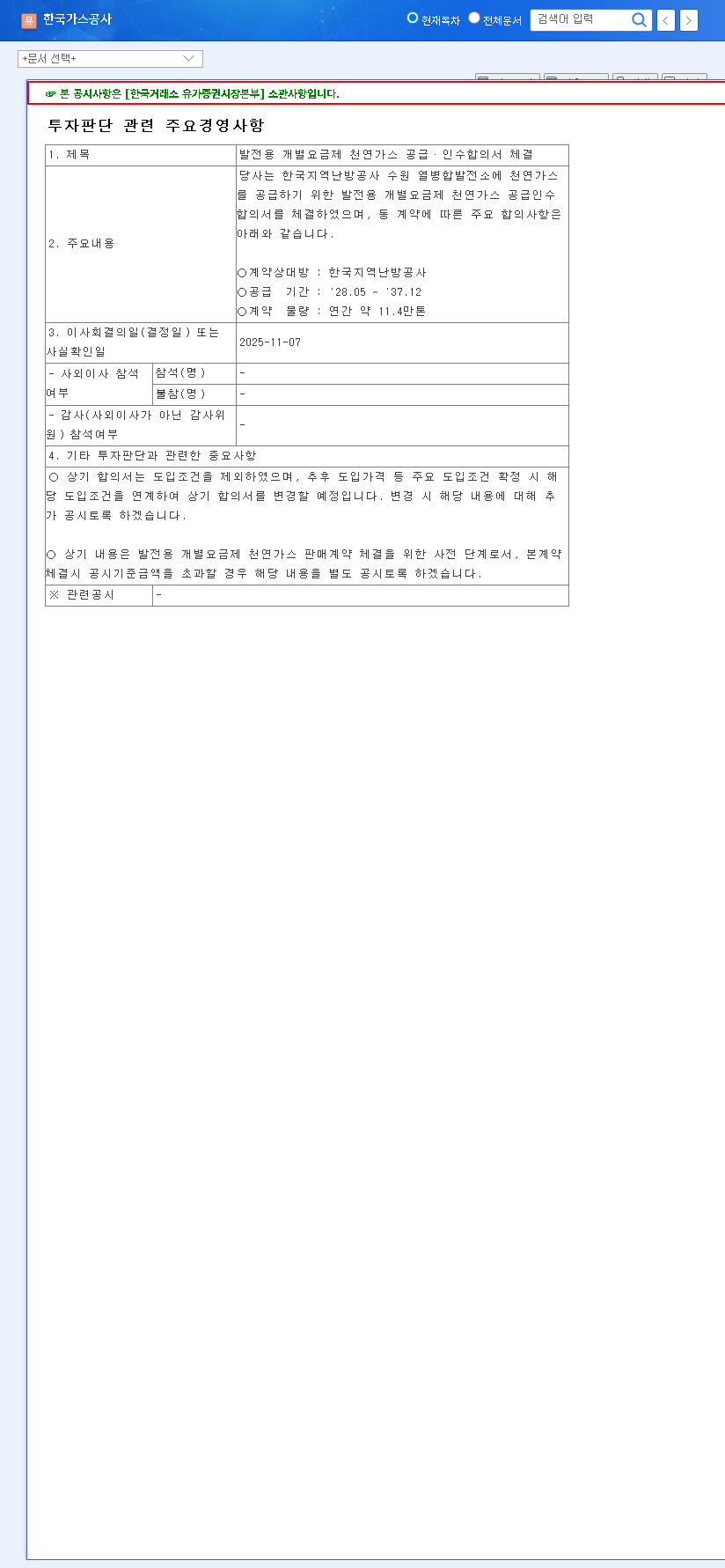
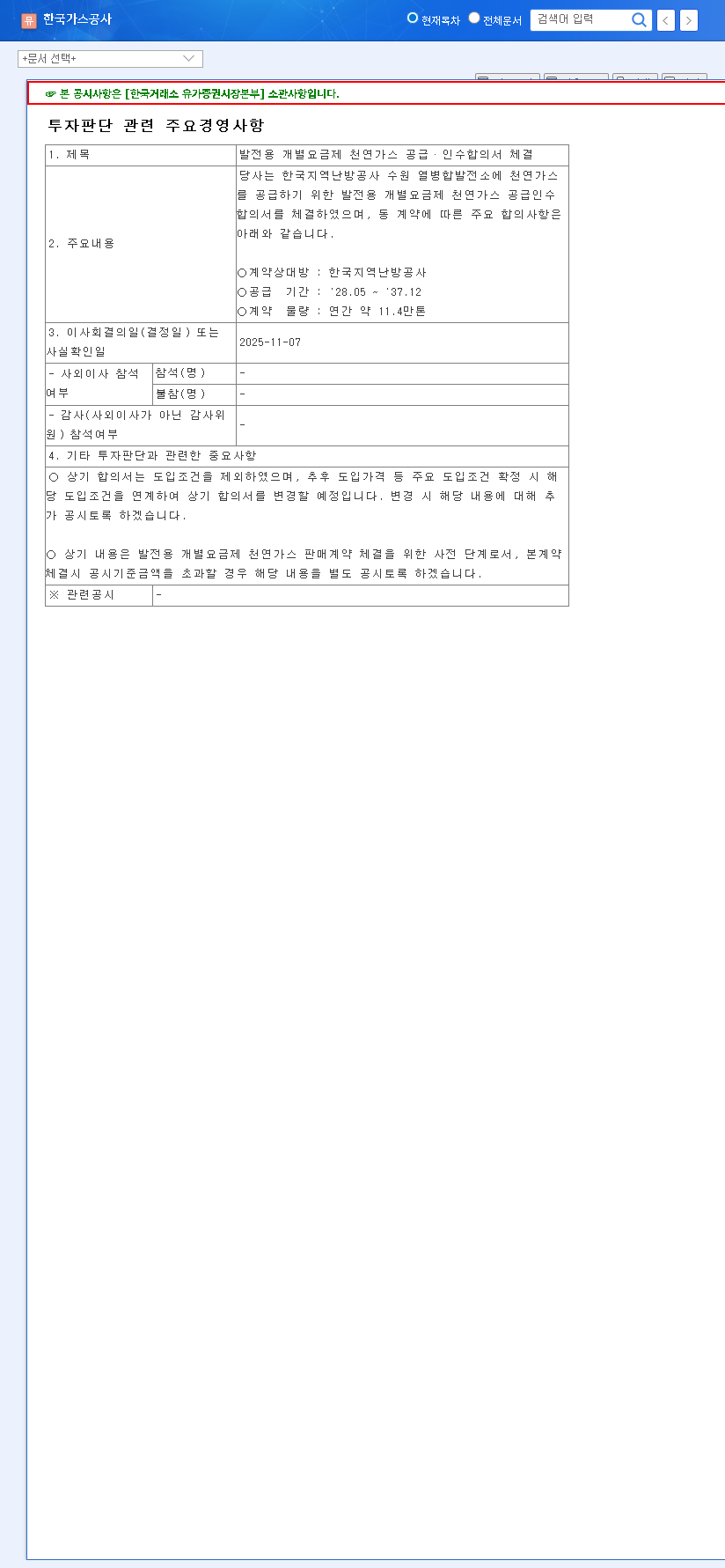
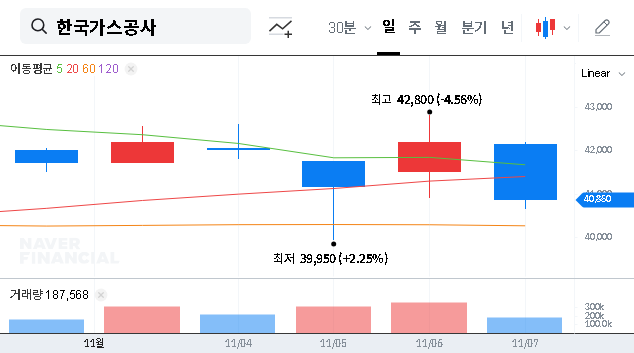
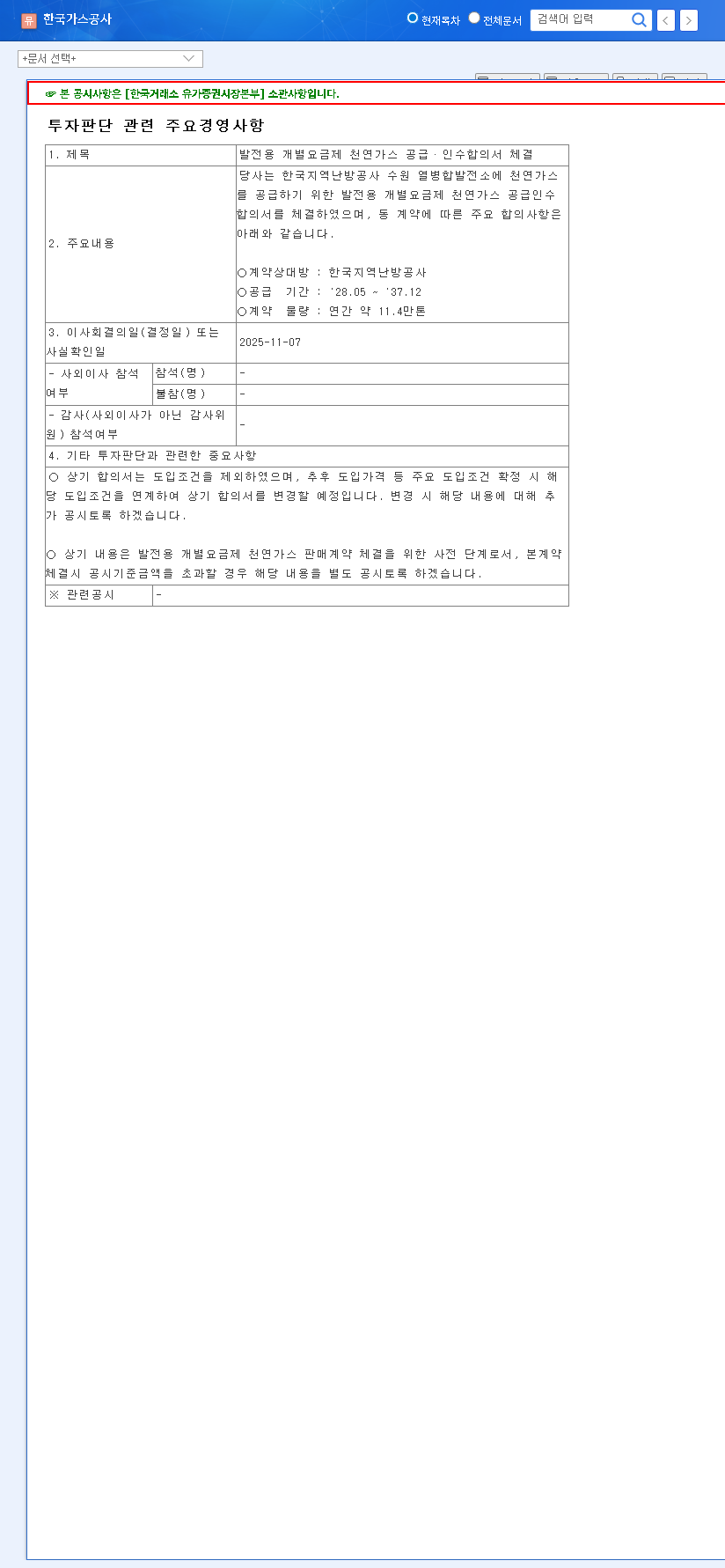
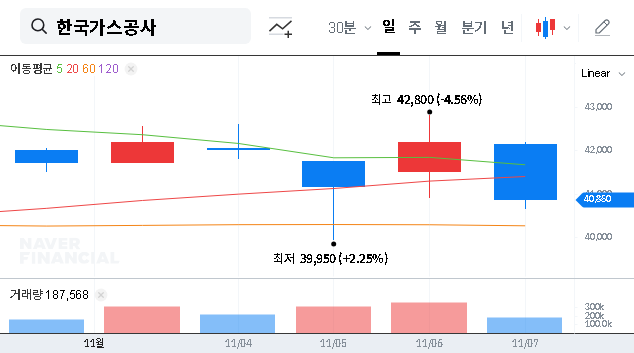
    In a significant strategic move, KoreaGasCorporation (KOGAS) has secured a major long-term KoreaGasCorporation natural gas supply agreement with Korea District Heating Corporation’s Suwon Combined Heat and Power (CHP) plant. This pivotal contract, officially disclosed on November 7, 2025, is poised to substantially strengthen KOGAS’s financial fundamentals, stabilize revenue streams, and reinforce its dominant market position for years to come. This analysis will explore the profound implications of this deal for the company and its investors.

    Deconstructing the KOGAS Supply Contract

    The agreement, officially titled ‘Agreement for Supply and Offtake of Natural Gas for Power Generation under Individual Tariff System,’ outlines a long-term partnership that ensures a stable energy source for the Suwon CHP plant. This isn’t merely a transactional sale; it’s a foundational agreement that provides crucial visibility into future earnings for KOGAS.

    Key Contract Specifics

    • Counterparty: Korea District Heating Corporation (Suwon CHP Plant)
    • Volume: Approximately 114,000 tons of natural gas annually.
    • Duration: A substantial 9.5-year term, from May 2028 to December 2037.
    • Mechanism: Supply under the individual tariff system, which de-risks revenue from volatile market price fluctuations.
    • Official Disclosure: The complete details can be found in the Official DART Filing.

    Core Impact on the KOGAS Financial Outlook

    The strategic importance of this KOGAS supply contract extends far beyond simple sales figures. It directly addresses key financial metrics and bolsters the company’s long-term strategic initiatives.

    Stabilizing Revenue and Enhancing Profitability

    By locking in a decade of consistent demand, KOGAS secures a highly predictable revenue stream. The individual tariff system is the hero of this story, insulating KOGAS from the often-erratic swings of the global LNG spot market. This model generates revenue based on pre-agreed terms, ensuring profit stability and mitigating investment risk—a crucial factor for a company managing large-scale infrastructure and import logistics.

    This contract effectively transforms a portion of KOGAS’s future revenue from a variable, market-dependent figure into a fixed, predictable annuity. This de-risking is a significant win for long-term financial planning and shareholder confidence.

    Addressing Financial Structure and Debt Management

    With a reported debt-to-equity ratio of 363.76% in H1 2025, debt management is a critical focus for KOGAS. The stable, long-term cash flow guaranteed by this deal provides the necessary foundation to methodically reduce this debt ratio. Predictable earnings improve the company’s credit profile, potentially lowering future borrowing costs and providing a stronger base for strategic investments, such as those in the burgeoning hydrogen sector. For more on global trends, see reports from the International Energy Agency (IEA).

    Strategic Implications and Investor Takeaways

    This deal reinforces the core strengths of KOGAS while providing a launchpad for future growth. As the sole natural gas wholesaler in South Korea, KOGAS already enjoys a dominant market position. This contract further entrenches that dominance and aligns perfectly with national energy policy, which views natural gas as a critical bridge fuel in the transition to renewables. You can read more about this in our analysis of South Korea’s energy transition goals.

    Opportunities for Investors

    • Improved Fundamentals: The contract provides a clear path to enhanced revenue stability and better debt management, strengthening the company’s overall financial health.
    • Positive Market Signal: It reaffirms KOGAS’s operational excellence and its ability to secure long-term, high-value contracts, potentially leading to positive stock re-evaluation.
    • Future Growth Catalyst: A stable core business in KoreaGasCorporation natural gas supply frees up capital and reduces risk for strategic ventures into hydrogen and other next-generation energy solutions.

    Risk Factors to Monitor

    While overwhelmingly positive, investors should remain aware of potential headwinds. The global energy market is susceptible to geopolitical shocks that can affect LNG supply chains and pricing. Furthermore, the capital-intensive nature of new ventures like hydrogen carries inherent execution risk. Continuous monitoring of macroeconomic conditions, regulatory changes, and progress on these new initiatives is advised.

    In conclusion, the KOGAS supply contract with the Suwon CHP plant is a landmark agreement. It provides a decade of financial stability, strengthens the company’s market leadership, and solidifies the foundation from which KOGAS can pursue its ambitious future growth plans.

    (036460) KoreaGasCorporation Natural Gas Supply Deal: A Deep Dive into the KOGAS & Suwon CHP Plant Contract 관련 이미지