Tag: Korea Zinc

  • (010130) KOREA ZINC INC. Stock Analysis 2025: Investment Outlook & Future Growth

    (010130) KOREA ZINC INC. Stock Analysis 2025: Investment Outlook & Future Growth

    As global markets navigate economic uncertainty, a comprehensive KOREA ZINC INC. stock analysis is critical for investors. As a global leader in the non-ferrous metals industry, KOREA ZINC (KRX: 010130) stands at a crossroads, facing headwinds in its core business while aggressively pursuing future growth engines. This deep-dive analysis, based on H1 2025 reports and regulatory filings, explores the company’s financial health, new ventures, and the risks that lie ahead. The insights within are drawn from publicly available information, including the company’s Official Disclosure, providing a transparent view for formulating a prudent investment strategy for 2025 and beyond.

    H1 2025 Performance: A Tale of Two Businesses

    The first half of 2025 presented a challenging environment for KOREA ZINC’s traditional operations. The core non-ferrous metal manufacturing and sales division witnessed a significant downturn, a critical factor in any KOREA ZINC analysis.

    Core Business Downturn Amidst Market Headwinds

    Revenues for the core division were recorded at KRW 4.85 trillion, a stark decrease of approximately 40% year-over-year. This slump was primarily driven by a combination of falling prices and reduced sales volumes for key metals such as zinc and lead. The persistent weakness in lead prices, in particular, exerted considerable pressure on profitability. Similarly, KGTRAIDING Corp., the company’s import-export arm, reported a 42% revenue drop, reflecting the lower unit prices for zinc, lead, and aluminum on the global market, as tracked by institutions like the London Metal Exchange (LME).

    Despite a 40% revenue decline in its core non-ferrous metals business, KOREA ZINC’s strategic pivot to secondary battery materials and renewable energy signals a clear focus on long-term, sustainable growth drivers.

    Navigating Corporate and Macroeconomic Volatility

    Beyond market prices, the outlook for KOREA ZINC INC. stock is heavily influenced by internal governance and the broader macroeconomic landscape. Recent developments have brought both relief and continued caution.

    Partial Resolution in Management Dispute

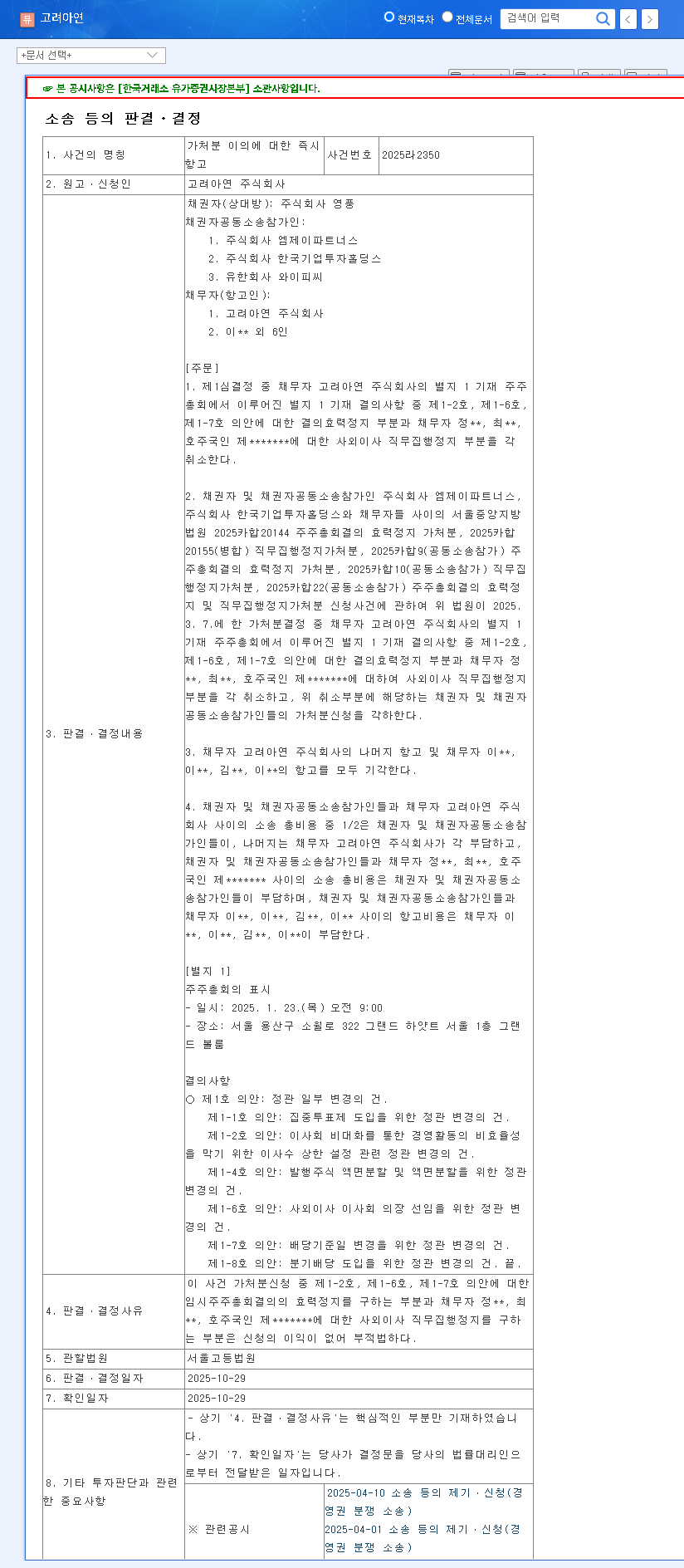
    A significant overhang of uncertainty began to clear following a key ruling from the Seoul High Court (2025ra2350). The court’s decision to rescind a suspension order on several resolutions from a prior shareholder meeting has been interpreted as a positive step. While the core dispute with Youngpoong Corp. remains, this ruling eases immediate governance concerns and may signal a more stable path forward, a crucial element for investor confidence.

    Impacts of Global Financial Conditions

    The global interest rate environment remains a key variable. With the U.S. and Europe holding rates steady to combat inflation, and South Korea maintaining its benchmark rate, corporate financing costs are under pressure. This environment affects everything from borrowing costs to investor sentiment, which investors can learn more about in our guide to the Korean stock market.

    • Precious Metals Surge: Geopolitical tensions and central bank buying fueled a massive rally, with gold and silver prices surging approximately 39% and 26%, respectively. This provides a significant boost to KOREA ZINC’s precious metals segment.
    • Non-Ferrous Weakness: In contrast, zinc and lead prices remained subdued due to sluggish global industrial demand, particularly from China, and oversupply issues.
    • Cost Pressures: Rising international crude oil prices and volatile freight indices present ongoing challenges for production and logistics costs.

    Pivoting to Future Growth Engines

    Perhaps the most compelling part of the KOREA ZINC 2025 story is its strategic diversification into high-growth sectors. The company is actively working to secure its future beyond traditional smelting.

    Expansion into Battery Materials and Renewable Energy

    KOREA ZINC is making significant strides in two key areas aligned with global megatrends:

    • Secondary Battery Materials: Subsidiaries like Kemco Co., Ltd. are positioning to supply IRA-compliant nickel sulfate for the EV market. Despite a temporary slowdown, the long-term potential of this market is immense and is expected to become a core growth driver.
    • Renewable Energy & Hydrogen: Through Ark Energy in Australia, the company is building a renewable energy portfolio. This not only aligns with ESG goals but also aims to generate long-term, stable profits, hedging against the volatility of commodity markets.

    Investment Thesis: A Neutral Stance with Cautious Optimism

    Considering all factors, the investment outlook for KOREA ZINC INC. stock warrants a “Neutral” rating. The company’s strong financial foundation (AA+ credit rating) and strategic pivot are highly positive. However, significant risks temper the immediate upside.

    Key Risks and Investor Action Plan

    Investors should maintain a cautious approach and monitor the following key areas:

    • Management Dispute: Track the outcomes of ongoing lawsuits, as they can impact corporate governance and stability.
    • New Business Performance: Watch for tangible revenue contributions and profitability milestones from the battery and energy divisions.
    • Market Volatility: Pay close attention to commodity prices and currency fluctuations. A 10% change in exchange rates, for instance, could impact net profit by approximately KRW 217.3 billion.
    • Macroeconomic Shifts: Monitor global inflation trends and interest rate policies, as they will directly influence the non-ferrous metals market.

    In conclusion, while KOREA ZINC has undeniable long-term potential, the combination of a struggling core business and external uncertainties requires a patient and watchful investment strategy. The success of its diversification will ultimately determine the future trajectory of its stock value.

    Disclaimer: This analysis is for informational purposes only and is not intended as financial advice. Investment decisions should be made based on personal research and consultation with a qualified financial advisor.
    (010130) KOREA ZINC INC. Stock Analysis 2025: Investment Outlook & Future Growth 관련 이미지
  • (010130) Korea Zinc Investment Analysis: NPS Acquires 5% Stake – What’s Next for Investors?

    (010130) Korea Zinc Investment Analysis: NPS Acquires 5% Stake – What’s Next for Investors?

    The market is buzzing with a significant development for any Korea Zinc investment strategy: The National Pension Service (NPS), South Korea’s largest institutional investor, has officially disclosed a 5% stake in the non-ferrous metals giant. This move, while categorized as a ‘simple investment,’ sends powerful signals through the financial community. For current and prospective investors, this raises critical questions about the company’s future valuation, stability, and growth prospects. This comprehensive analysis will dissect the implications of the NPS stake in Korea Zinc, evaluate the company’s fundamentals, and provide a strategic outlook to guide your decisions.

    NPS Secures Major Stake: The Details

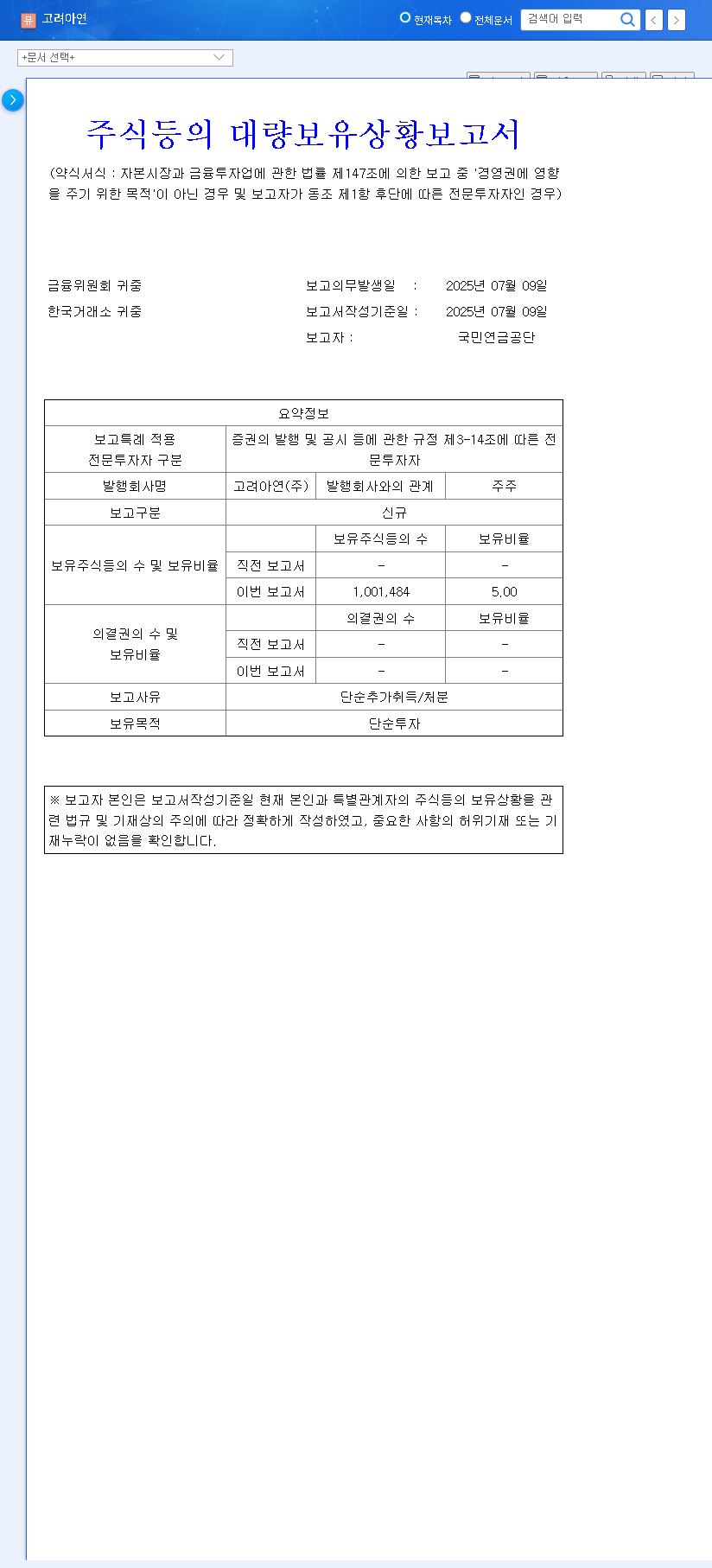
    On October 1, 2025, the National Pension Service filed a ‘Report on the Status of Large Shareholding,’ revealing its acquisition of a 5.00% stake in Korea Zinc Co., Ltd. This makes the NPS a major shareholder in a company boasting a market capitalization of over 17.8 trillion KRW. The stated purpose of this holding is for ‘simple investment,’ a classification that merits careful interpretation. You can view the Official Disclosure (DART) for complete transparency. The involvement of an entity with the scale and long-term horizon of the NPS invariably influences market perception and can impact stock stability.

    While a ‘simple investment’ label suggests a hands-off approach, the sheer weight of an NPS endorsement can act as a powerful vote of confidence in a company’s underlying value and long-term potential.

    Deep Dive: Korea Zinc Stock Analysis & Fundamentals

    To understand the context of this Korea Zinc investment, we must perform a thorough fundamental analysis, examining both the macroeconomic environment and the company’s internal health.

    Global Economic and Commodity Headwinds

    Korea Zinc’s profitability is intrinsically linked to global commodity prices and currency fluctuations. The current landscape presents a mixed bag of opportunities and threats. For a broader view on market trends, investors often consult authoritative sources like Reuters Financial News.

    • Interest & Exchange Rates: While US interest rates create funding pressure, the strong USD/KRW exchange rate benefits export competitiveness.
    • Zinc & Lead: Zinc prices show modest gains but face slowdown concerns, while lead prices have declined due to oversupply.
    • Precious Metals: Gold and Silver have surged, providing a significant boost to this business segment amid geopolitical uncertainty.
    • Nickel: Prices have fallen due to slowing demand in the secondary battery market, impacting subsidiaries like Kemco.

    Performance Across Business Segments

    The company’s diversified portfolio shows varied performance. The core non-ferrous metals business remains robust, with strong gold and copper sales offsetting weaker lead and silver volumes. However, subsidiaries like Sun Metals and KG Trading have seen revenues decline due to currency effects and reduced sales. The secondary battery materials segment (Kemco) has also faced challenges from falling nickel prices. The renewable energy arm, Ark Energy, represents a key area for future growth but currently has variable revenue streams.

    Financial Health and Key Risk Factors

    As of mid-2025, Korea Zinc maintains a strong financial structure with total assets of 148.4 trillion KRW against 70.0 trillion KRW in liabilities. While operating profit saw a decline, net income grew substantially. The company’s commitment to cancelling over 2 million treasury shares signals a focus on enhancing shareholder value. However, a prudent Korea Zinc stock analysis must acknowledge significant risks:

    • Market Volatility: The company’s profits are sensitive to commodity and currency fluctuations.
    • Management Disputes: Ongoing legal disputes and shareholder proposals create a cloud of uncertainty over corporate governance. For more details, you can read our analysis on corporate governance trends.
    • Regulatory Risks: Stricter environmental and safety regulations could increase operational costs and legal liabilities.

    Investment Strategy: Navigating Your Korea Zinc Investment

    The National Pension Service’s Korea Zinc acquisition is a stabilizing, positive signal. It suggests confidence in the company’s long-term value despite short-term headwinds. However, investors should adopt a nuanced strategy.

    For the short-term investor, the NPS news may provide a modest boost to sentiment, but the fundamental risks—especially commodity price swings and management disputes—will likely limit any explosive price growth. A cautious approach is warranted.

    For the long-term investor, the focus should be on several key areas. Monitor the tangible progress and profitability of the new growth engines in renewable energy and secondary battery materials. Keep a close watch on the resolution of the management disputes, as a stable governance structure is crucial for long-term value creation. Finally, continue to track the actions of the NPS; any further increase in their stake could signal deepening confidence and positively influence the stock’s trajectory.

    In conclusion, while the NPS’s entry is a significant positive, a successful Korea Zinc investment requires a comprehensive approach that balances this institutional endorsement against the tangible risks and opportunities within the company and the broader market.

    Disclaimer: This analysis is for informational purposes only and does not constitute investment advice. All investment decisions should be made based on your own research and judgment.

    (010130) Korea Zinc Investment Analysis: NPS Acquires 5% Stake – What's Next for Investors? 관련 이미지
  • Korea Zinc Transfers $5.7B Treasury Stock to Employee Stock Ownership Plan: Impact and Investment Strategy


    Korea Zinc Transfers $5.7B Treasury Stock to Employee Stock Ownership Plan: Impact and Investment Strategy 대표 차트 이미지


    Korea Zinc’s $5.7B Treasury Stock Transfer: What Happened?

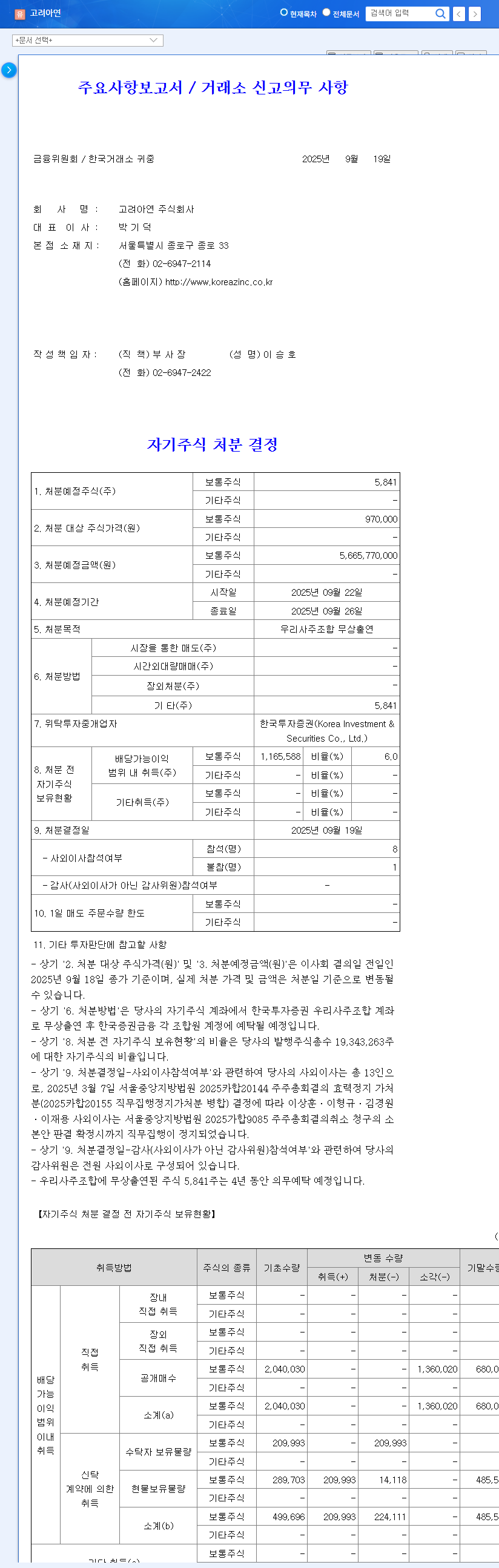
    On September 19, 2025, Korea Zinc decided to transfer 5,841 common shares (approximately $5.7 billion) to its ESOP.

    Why the Treasury Stock Transfer?

    The company stated that this decision aims to invigorate the ESOP, fostering employee ownership and driving long-term performance growth. This is interpreted as a strategy to link employee motivation with company growth.

    How Will This Impact Stock Prices?

    • Short-term Impact: The transferred shares represent only 0.029% of the total outstanding shares, minimizing any direct impact on stock prices. A positive effect on employee morale is anticipated.
    • Long-term Impact: This move has the potential to create a virtuous cycle of improved employee performance and company growth, contributing to enhanced long-term competitiveness and potentially increasing shareholder value.

    What Should Investors Do?

    This treasury stock transfer should be viewed from a long-term perspective, focusing on the company’s growth potential rather than short-term price fluctuations. Consider these factors when developing your investment strategy:

    • • The effectiveness of employee motivation and actual performance improvement
    • • External factors like market conditions for non-ferrous metals
    • • Korea Zinc’s fundamentals and long-term growth strategy


    Frequently Asked Questions (FAQ)

    Will Korea Zinc’s treasury stock transfer affect stock prices?

    A significant short-term impact is unlikely due to the small number of shares involved. The focus should be on the potential for long-term growth through increased employee motivation.

    What does treasury stock transfer mean?

    It refers to a company disposing of its own shares, which it holds in its treasury. This can be done through various methods like selling or transferring them.

    Is it a good time to invest in Korea Zinc?

    Investment decisions should always be made cautiously. Consider various factors, including this treasury stock transfer, the company’s fundamentals, and overall market conditions. Consulting a financial advisor is recommended.


    Korea Zinc Transfers $5.7B Treasury Stock to Employee Stock Ownership Plan: Impact and Investment Strategy 관련 이미지


  • Korea Zinc Stock Forecast: Value Enhancement Plan Announced! Is it a good investment opportunity?


    Korea Zinc Stock Forecast: Value Enhancement Plan Announced! Is it a good investment opportunity? 대표 차트 이미지


    What happened? – Korea Zinc announces value enhancement plan

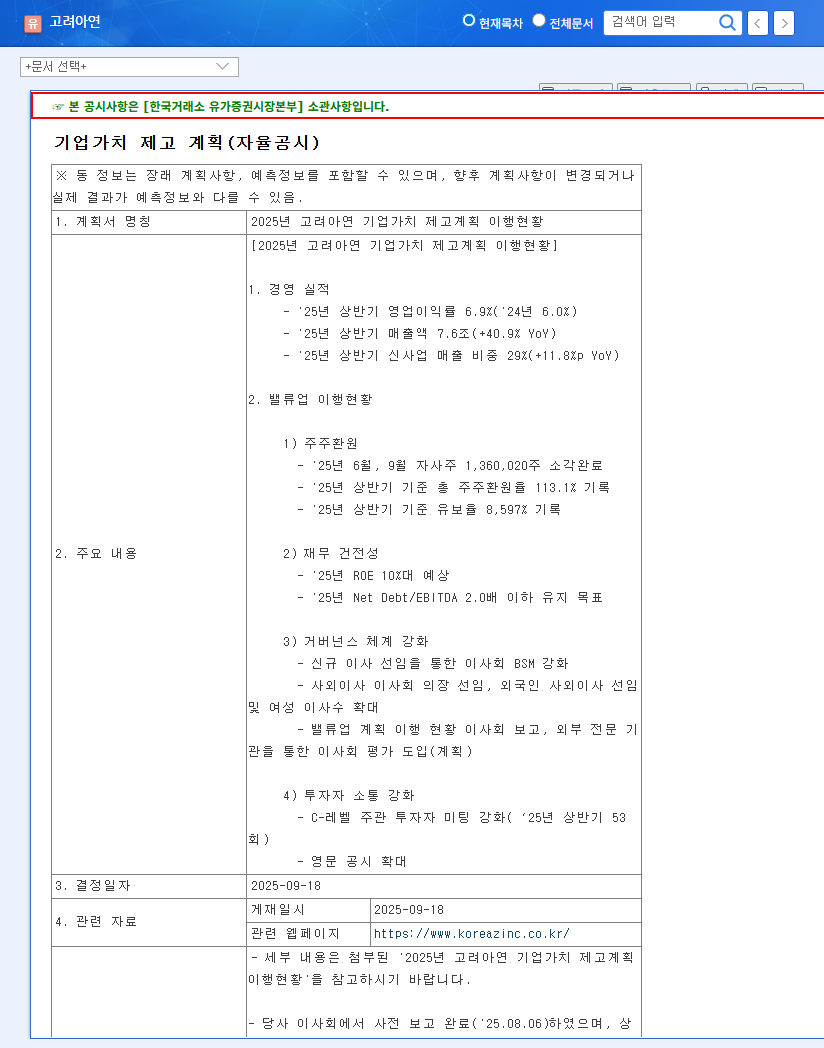
    Korea Zinc announced its ‘2025 Value Enhancement Plan Implementation Status’ on September 18, 2025. Key details are as follows:

    • Solid first-half earnings: Achieved an operating profit margin of 6.9%, sales of KRW 7.6 trillion, and expanded the new business sales ratio to 29%.
    • Enhanced shareholder return: Completed treasury stock cancellation, maintained a high shareholder return rate (113.1%) and a retained earnings ratio (8,597%).
    • Financial soundness goals: Maintaining ROE in the 10% range and achieving a Net Debt/EBITDA ratio of 2.0 or less.
    • Strengthened governance system and expanded investor communication: Strengthened board functions and expanded investor meetings.

    Why is this announcement important? – Expected fundamental improvement and investor sentiment boost

    This announcement is an important indicator, showcasing Korea Zinc’s concrete implementation plan and performance of its value-up program. Investors can gain confidence in the company’s growth potential and shareholder return policy through this announcement. In particular, the growth of new businesses and enhanced shareholder return are expected to significantly improve investor sentiment.

    So, what will happen next? – Stock price increase potential and analysis of potential risk factors

    This announcement is expected to have a positive impact on stock prices in the short term. However, potential risk factors, such as raw material price volatility, management disputes, and the possibility of a global economic slowdown, should also be considered.

    What should investors do? – Risk management required amid positive outlook

    Korea Zinc’s future is positive. Solid performance and shareholder-friendly policies enhance investment attractiveness. However, before making investment decisions, careful analysis of potential risk factors and establishing a long-term investment strategy is necessary.


    Frequently Asked Questions (FAQ)

    What are Korea Zinc’s main businesses?

    Korea Zinc is a company that produces non-ferrous metals based on its smelting business. It produces zinc, lead, gold, silver, and copper, and has recently been actively expanding into new businesses.

    What are the key points of this value enhancement plan?

    The key points are strengthening shareholder return, accelerating new business growth, securing financial soundness, strengthening the governance system, and expanding investor communication.

    What should be considered when investing in Korea Zinc?

    Continuous monitoring of external factors such as raw material price volatility, management disputes, and the possibility of a global economic slowdown is necessary.


    Korea Zinc Stock Forecast: Value Enhancement Plan Announced! Is it a good investment opportunity? 관련 이미지


  • Korea Zinc’s $1.8B Share Buyback: Impact on Stock Price and Investment Strategy

    Korea Zinc's $1.8B Share Buyback: Impact on Stock Price and Investment Strategy 대표 차트 이미지

    1. What Happened?

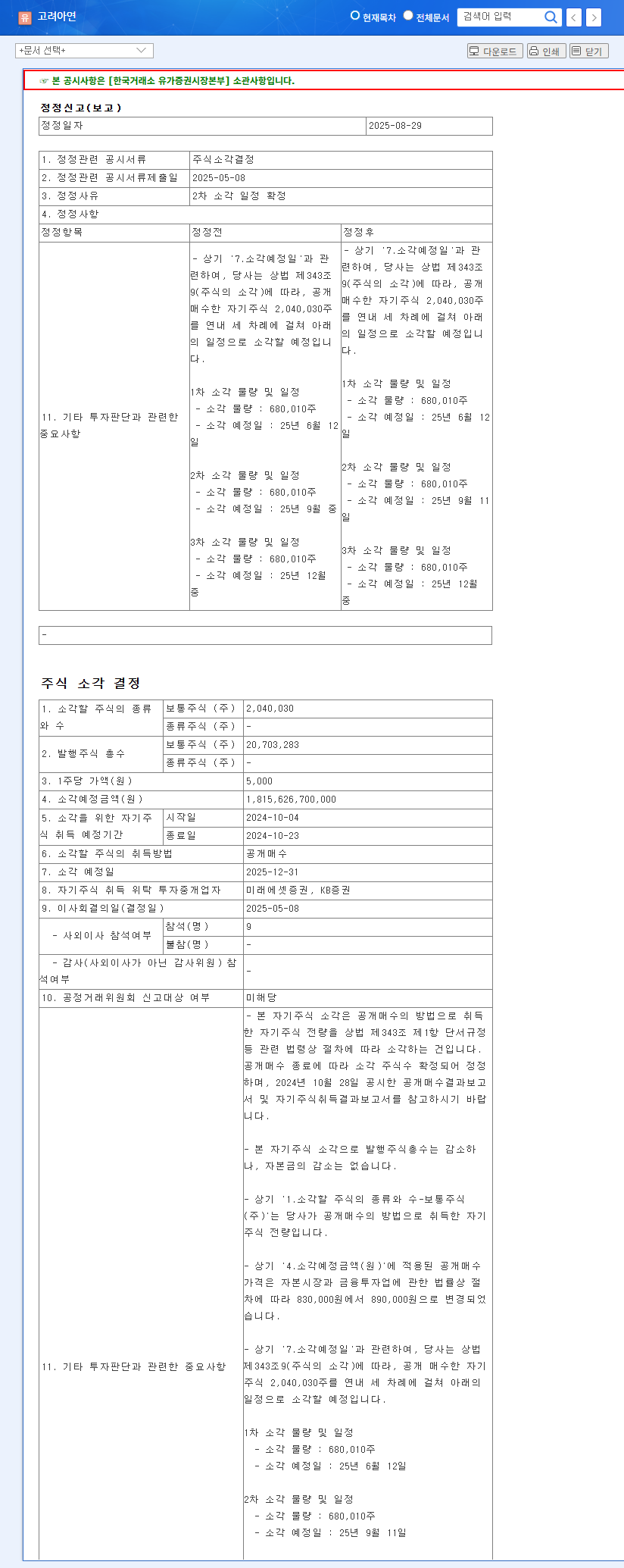
    Korea Zinc will repurchase and retire approximately KRW 1.8156 trillion worth of its own shares by the end of 2025. This represents a significant portion, about 11.28%, of its outstanding shares.

    2. Why the Buyback?

    Share buybacks are a common way to return value to shareholders. Reducing the number of outstanding shares increases earnings per share (EPS) and book value per share (BPS), potentially driving up the stock price. It’s also interpreted as a strategic move to consolidate friendly stakes amidst the ongoing management dispute.

    3. So, What Happens to the Stock Price?

    • Short-Term Impact: The announcement can boost investor sentiment and lead to a short-term price increase. However, the substantial $1.8 billion outflow could pose a short-term financial burden.
    • Long-Term Impact: The long-term stock performance depends on the company’s fundamentals, growth potential of new businesses, and the outcome of the management dispute.

    4. What Should Investors Do?

    • Short-Term Investors: Capitalize on the potential short-term momentum, but carefully consider when to take profits.
    • Long-Term Investors: Closely monitor the management dispute, new business performance, and any further shareholder return policies, adjusting investment strategies accordingly. Consider the potential for weakened financial health.
    What is a share buyback?

    A share buyback is when a company repurchases its own shares from the market and retires them. This reduces the number of outstanding shares, increasing the value of each remaining share, which is generally beneficial for shareholders.

    How will Korea Zinc’s buyback affect its stock price?

    While it can be a positive catalyst in the short term, the long-term impact will depend on the company’s fundamentals, new business growth, and the resolution of the management dispute.

    What should investors be cautious about?

    Investors should carefully consider the potential financial burden from the large cash outflow and the ongoing management dispute. The macroeconomic environment and volatility in the base metals market should also be monitored.

    Korea Zinc's $1.8B Share Buyback: Impact on Stock Price and Investment Strategy 관련 이미지
  • Korea Zinc’s Q2 2025 Earnings: An Earnings Surprise Overshadowed by Management Disputes

    1. Korea Zinc’s Q2 2025 Performance: What Happened?

    Korea Zinc reported revenue of KRW 3.8253 trillion (above expectations), operating profit of KRW 258.8 billion (below expectations), and net income of KRW 329.7 billion (significantly above expectations) for Q2 2025. Strong gold and silver prices, combined with the stable performance of its non-ferrous metal business, drove revenue growth. Non-operating income gains contributed significantly to the surge in net income. The growth potential of the secondary battery materials business is also a positive factor.

    2. Drivers of Growth and Decline: Why These Results?

    Revenue Growth Drivers: The primary drivers were the rise in gold and silver prices and solid sales in the non-ferrous metals segment.
    Operating Profit Decline Drivers: Volatility in raw material prices and increased investment in new businesses impacted operating profit.
    Net Income Surge Drivers: The significant increase in non-operating income due to higher gold and silver prices was the key factor, along with positive sentiment surrounding the growth of the secondary battery materials business.

    3. Key Takeaways for Investors: What Does it Mean?

    • Positives: Robust core business performance, benefitting from rising gold and silver prices, high-growth potential in secondary battery materials, and a stable financial structure.
    • Risks: Ongoing management dispute, raw material price volatility, and foreign exchange fluctuations.

    While the management dispute creates uncertainty, the company’s strong fundamentals and growth potential suggest a positive outlook for long-term investors. Short-term investors should closely monitor developments related to the dispute.

    4. Investor Action Plan

    Investors considering Korea Zinc should carefully evaluate the ongoing management dispute, analyze the company’s future business prospects, and make informed decisions. It’s crucial to refer to relevant news, expert analysis, and align investment strategies with individual risk tolerance and investment goals.

    Frequently Asked Questions

    Q: What is Korea Zinc’s main business?

    A: Korea Zinc’s core business is non-ferrous metal smelting, producing zinc, lead, gold, and silver. They are also actively investing in secondary battery materials and renewable energy.

    Q: How will the management dispute affect Korea Zinc?

    A: The management dispute introduces uncertainty and can negatively impact investor sentiment in the short term. The outcome of the dispute could lead to increased stock price volatility, requiring caution from investors.

    Q: What should investors consider when evaluating Korea Zinc?

    A: Investors should consider factors such as Korea Zinc’s core business performance, metal price fluctuations, developments in the management dispute, and the growth potential of its secondary battery materials business. Consulting with a financial advisor is also recommended.

  • Korea Zinc Q1 2025 Earnings: Declining Revenue, Surprising Net Profit Growth. What’s the Investment Strategy?

    1. Korea Zinc Q1 2025 Earnings: Key Highlights

    Korea Zinc reported revenue of KRW 24.614 trillion in Q1 2025, significantly below market expectations of KRW 37.478 trillion. However, operating profit remained relatively stable at KRW 2.665 trillion, and net profit surged to KRW 3.281 trillion, exceeding the market consensus of KRW 1.321 trillion by a significant margin.

    2. Analyzing the Drivers of Earnings Fluctuation

    The main reasons for the revenue decline were the slowdown in the Chinese domestic market and volatility in raw material prices. Falling zinc and lead prices negatively impacted the company’s performance. Conversely, the surge in gold and silver prices drove the significant increase in net profit.

    3. Performance Analysis by Business Segment

    • Non-ferrous Metals: While rising gold and silver prices had a positive impact, the sluggish domestic demand for zinc posed a challenge.
    • Secondary Battery Materials: Despite the decline in nickel prices affecting performance, new facility investments are expected to act as a long-term growth driver.
    • Resource Recycling: Growth in the Metal Scrap Trading segment partially offset the overall revenue decline.

    4. Action Plan for Investors

    A cautious approach is advised for short-term investments in Korea Zinc due to ongoing uncertainties like raw material price fluctuations and management disputes. However, from a long-term perspective, with the company securing new growth engines such as secondary battery materials, a dollar-cost averaging strategy could be considered.

    Frequently Asked Questions

    What were Korea Zinc’s Q1 2025 revenue and net profit?

    Revenue was KRW 24.614 trillion and net profit was KRW 3.281 trillion.

    Why did the net profit significantly exceed market expectations?

    The surge in gold and silver prices was the primary driver.

    What are Korea Zinc’s main business segments?

    Non-ferrous metals, secondary battery materials, and resource recycling.

    What should investors consider when investing in Korea Zinc?

    Investors should consider risk factors such as raw material price volatility and management disputes.

  • Korea Zinc Q1 2025 Earnings Analysis: Surprising Net Profit Surge, But What’s the Catch?

    1. What Happened in Q1 2025?

    Korea Zinc reported revenue of KRW 3.8254 trillion (consensus +3.1%), operating profit of KRW 258.9 billion (consensus -6.7%), and net profit of KRW 331.1 billion (consensus +153.1%). While revenue remained strong thanks to rising non-ferrous metal prices and new business growth, operating profit fell short of expectations. Net profit, however, saw explosive growth due to non-operating income factors.

    2. Why the Fluctuation in Earnings?

    Positive Factors: Rise in gold and silver prices, favorable exchange rates, growth in new businesses (secondary battery materials, resource circulation, etc.)
    Negative Factors: Unclear reasons for lower operating profit, high debt ratio, concerns over global economic slowdown, management dispute risk

    3. Future Investment Strategy?

    Korea Zinc is a company with both growth potential and risks. Before making investment decisions, investors should carefully consider factors such as the reasons for the lower operating profit, the profitability of new businesses, improvements in financial structure, and the progress of management disputes. The current investment opinion is ‘Neutral’.

    4. Investor Action Plan

    • Analyze the reasons for lower operating profit and check disclosures.
    • Monitor the performance and profitability of new businesses.
    • Check financial soundness indicators (e.g., debt ratio).
    • Keep an eye on news and disclosures related to the management dispute.
    • Monitor trends in non-ferrous metal prices and exchange rates.

    Frequently Asked Questions

    Q: Why did Korea Zinc’s net profit surge in Q1 2025?

    A: It is presumed to be due to non-operating income factors, but further analysis is needed to pinpoint the exact cause. This can be confirmed through future disclosures.

    Q: What are the key points to consider when investing in Korea Zinc?

    A: Investors should consider factors such as the reasons for lower operating profit, the high debt ratio, the possibility of a global economic slowdown, and the ongoing management dispute.

    Q: What are Korea Zinc’s future growth drivers?

    A: Promising growth drivers include secondary battery materials, resource circulation, and renewable energy businesses.

  • Korea Zinc Q2 2025 Earnings: Key IR Insights and Stock Forecast

    What Happened?: Korea Zinc’s Q2 IR Announcement

    Korea Zinc announced its Q2 2025 earnings release and Investor Relations (IR) presentation on July 31, 2025.

    Why It Matters: Mixed Q3 Results Raise Investor Questions

    While Q3 saw increased revenue due to rising zinc, gold, and silver prices, net profit declined due to falling lead prices and weakness in some business segments. Investors are eager to understand Q2 performance and the outlook for the future, particularly regarding zinc prices and management’s strategic direction.

    What’s Next?: Key IR Focus Points & Stock Forecast

    • Zinc Price: Decreasing LME inventories are positive, but the global economic slowdown could dampen demand.
    • Gold & Silver Prices: Safe-haven demand may drive prices higher, but volatility is expected.
    • Lead Price: Continued downward pressure is anticipated due to China’s economic slowdown and oversupply.
    • Macroeconomic Impact: Fluctuations in exchange rates, interest rates, and commodity prices directly affect Korea Zinc’s profitability. Pay close attention to management’s risk management strategies.

    Depending on the IR outcome, the stock price could experience significant short-term volatility. Positive earnings and a favorable zinc price outlook could drive the stock higher, while negative factors could lead to a decline. Long-term, the success of the company’s investment plans will be a key driver of stock performance.

    Investor Action Plan:

    Carefully review the IR presentation and pay close attention to management’s Q&A to address uncertainties. Monitor market reactions and adjust your investment strategy based on new information.

    FAQ

    When will the Q2 earnings be released?

    Korea Zinc’s Q2 2025 earnings will be released during the IR presentation on July 31st.

    What is the outlook for zinc prices?

    Declining LME inventories suggest a potential supply shortage, but the global economic slowdown could reduce demand. The IR presentation should offer a more detailed outlook.

    What is the outlook for Korea Zinc’s stock price?

    Short-term volatility is expected depending on the IR outcome and market conditions. Long-term stock performance will depend on the success of the company’s investment plans.

  • Korea Zinc Stock Forecast: Impact of Legal Dispute with Youngpoong

    1. The Youngpoong-Korea Zinc Legal Dispute: What Happened?

    On October 2, 2024, Youngpoong filed a criminal complaint against Korea Zinc’s board of directors. The case is currently under investigation by the prosecution, and Korea Zinc plans to disclose further details upon confirmation of specific facts or within six months.

    2. Why is this Legal Dispute Significant?

    This legal battle could considerably affect Korea Zinc’s financial stability and future growth strategy. Negative impacts such as increased legal costs, business disruptions, and weakened investor sentiment are anticipated. The additional financial burden could be particularly detrimental to Korea Zinc, which already has a high debt-to-equity ratio. The diversion of management’s focus and increased uncertainty could also negatively impact business operations.

    3. Korea Zinc Stock Forecast: What’s the Potential Impact?

    Increased stock price volatility is expected in the short term. The long-term impact will depend on various factors, including the outcome of the legal dispute, fluctuations in raw material prices and exchange rates, the global economic climate, and the performance of new business ventures. Rising gold and silver prices are positive factors, while a global economic downturn and slowing Chinese economic growth could pose negative challenges. The success of new ventures, such as Pedalpoint’s acquisition of Kataman Metals and Kemco’s investment in an all-in-one nickel refinery, will also be key variables.

    4. Investor Action Plan

    • • Closely monitor the progress and outcome of the legal dispute.
    • • Regularly review Korea Zinc’s financial statements and disclosures.
    • • Keep an eye on macroeconomic variables such as raw material prices, exchange rates, and global economic indicators.
    • • Minimize investment losses through portfolio diversification and risk management.
    What is the cause of the legal dispute between Youngpoong and Korea Zinc?

    The exact cause is yet to be revealed, and the case is currently under investigation by the prosecution.

    How will this legal dispute affect Korea Zinc’s stock price?

    It may cause increased stock price volatility in the short term and affect the stock price in the long term depending on the outcome of the legal dispute and the macroeconomic climate.

    How should investors respond?

    Investors should closely monitor the progress of the legal dispute, financial information, and macroeconomic indicators, and minimize investment losses through portfolio diversification and risk management.