Tag: Kang Deok-hyun

  • (140670) RS AUTOMATION (140670) Stock Analysis: CEO Increases Stake – A Deep Dive for Investors

    (140670) RS AUTOMATION (140670) Stock Analysis: CEO Increases Stake – A Deep Dive for Investors

    RS AUTOMATION CO.,LTD. (140670) Investment Analysis

    A recent major disclosure from RS AUTOMATION CO.,LTD. (140670) has caught the attention of the market: CEO Kang Deok-hyun has significantly increased his ownership stake. This move, officially intended to strengthen management control, sends a powerful signal to current and potential investors. But what does this insider confidence mean when weighed against the company’s recent performance and the challenging macroeconomic climate? This comprehensive analysis will break down the event, dissect the company’s fundamentals, and provide a clear investment perspective.

    We will explore the implications of this shareholding change, the impact of the associated rights issue, and whether the long-term potential in the robot motion control market outweighs the short-term financial headwinds facing RS AUTOMATION CO.,LTD.

    The Core Event: CEO Stake Increase Explained

    1. What Happened?

    On October 27, 2025, a mandatory disclosure was filed detailing a significant change in the ownership structure of RS AUTOMATION CO.,LTD. The key takeaway is that CEO Kang Deok-hyun increased his personal shareholding by 2.15 percentage points, moving from 26.40% to 28.55%. This was achieved through a strategic allocation of new share warrants from a rights issue, followed by off-market sales. The officially stated purpose was to bolster ‘influence over management.’ You can view the Official Disclosure (Source) for complete details.

    2. Why It Matters: Interpreting the CEO’s Actions

    An insider increasing their stake is often viewed as one of the strongest bullish signals. It suggests that the person with the most intimate knowledge of the company’s operations, challenges, and future prospects believes the stock is undervalued. This act of strengthening management control can also reassure investors that leadership is stable and committed to a long-term vision, reducing concerns about potential hostile takeovers or rudderless strategy.

    While the CEO’s increased ownership is a vote of confidence, investors must balance this against the dilutive effect of the rights issue and the company’s recent profitability challenges to form a complete picture.

    Deep Dive: Corporate & Macroeconomic Analysis

    Corporate Fundamentals of RS AUTOMATION CO.,LTD.

    An analysis of the company’s 2024 financials reveals a period of difficulty. Revenue saw a 5.5% year-over-year decrease to 76.8 billion won, accompanied by a double-digit slide in operating profit. This points to a significant deterioration in profitability, likely driven by sluggishness in the key semiconductor and display industries. For more information on this sector, you can read our guide to the semiconductor industry outlook.

    • Financial Structure: The debt-to-equity ratio has climbed to a concerning 135.2%, indicating increased financial risk.
    • Inventory Management: On a positive note, inventory turnover has improved to 5.0 rotations. However, the overall inventory level remains high, which could tie up capital.
    • Future Investment: The company is not standing still. R&D expenses have risen to 6.39% of revenue, signaling a firm commitment to innovation and securing future growth drivers in the promising robot motion control and energy sectors.

    Macroeconomic & Industry Headwinds

    The company operates in a complex global environment. A rising KRW/USD exchange rate could increase import costs for raw materials, while volatile oil prices add uncertainty to operational expenses. Furthermore, while central bank interest rates are on hold, persistent concerns about a global economic slowdown could continue to dampen investment and demand in the industrial automation sector. However, the long-term outlook for automation and robotics remains strong, as detailed in reports by authorities like the International Federation of Robotics.

    Investment Thesis & Action Plan

    Overall Assessment: A Tale of Two Stories

    The investment analysis for RS AUTOMATION CO.,LTD. presents a classic conflict between short-term pain and potential long-term gain. On one hand, CEO Kang Deok-hyun’s stake increase is a powerful endorsement from the inside. The company’s focus on high-growth sectors like robotics and its dedication to R&D are commendable. On the other hand, the deteriorating 2024 financials, high debt ratio, and potential for share dilution from the rights issue present clear and immediate risks.

    Recommended Investment Strategy

    Given the mixed signals, a patient and watchful strategy is advised.

    • Short-Term (3-6 Months): Adopt a Conservative Observation approach. Monitor the 140670 stock price closely for volatility caused by the off-market sales and rights issue absorption. Wait for the next quarterly earnings report to see if profitability trends are beginning to reverse.
    • Long-Term (1-3 Years): Base decisions on tangible results. Look for evidence that R&D investments are leading to new products or market share gains. A significant improvement in the debt-to-equity ratio and a sustained turnaround in the semiconductor sector would be strong buy signals.

    Disclaimer: The contents of this report are for informational purposes only and are not intended as investment advice or recommendations.
    (140670) RS AUTOMATION (140670) Stock Analysis: CEO Increases Stake – A Deep Dive for Investors 관련 이미지
  • (140670) RS AUTOMATION Share Sale: CEO’s Move & Rights Offering Explained | Investor Analysis

    (140670) RS AUTOMATION Share Sale: CEO’s Move & Rights Offering Explained | Investor Analysis

    The recent RS AUTOMATION share sale by CEO Kang Deok-hyun has sent ripples through the investment community, raising critical questions about the company’s trajectory and the stability of its leadership. On October 20, 2025, a disclosure revealed that the CEO sold a significant portion of his holdings in KOSDAQ: 140670. While the stated purpose was to fund his participation in an upcoming rights offering, such an insider sale inevitably creates uncertainty. This comprehensive investor analysis breaks down the transaction, explores the implications of the rights offering, and provides a strategic roadmap for current and potential shareholders.

    Deconstructing the RS AUTOMATION Share Sale

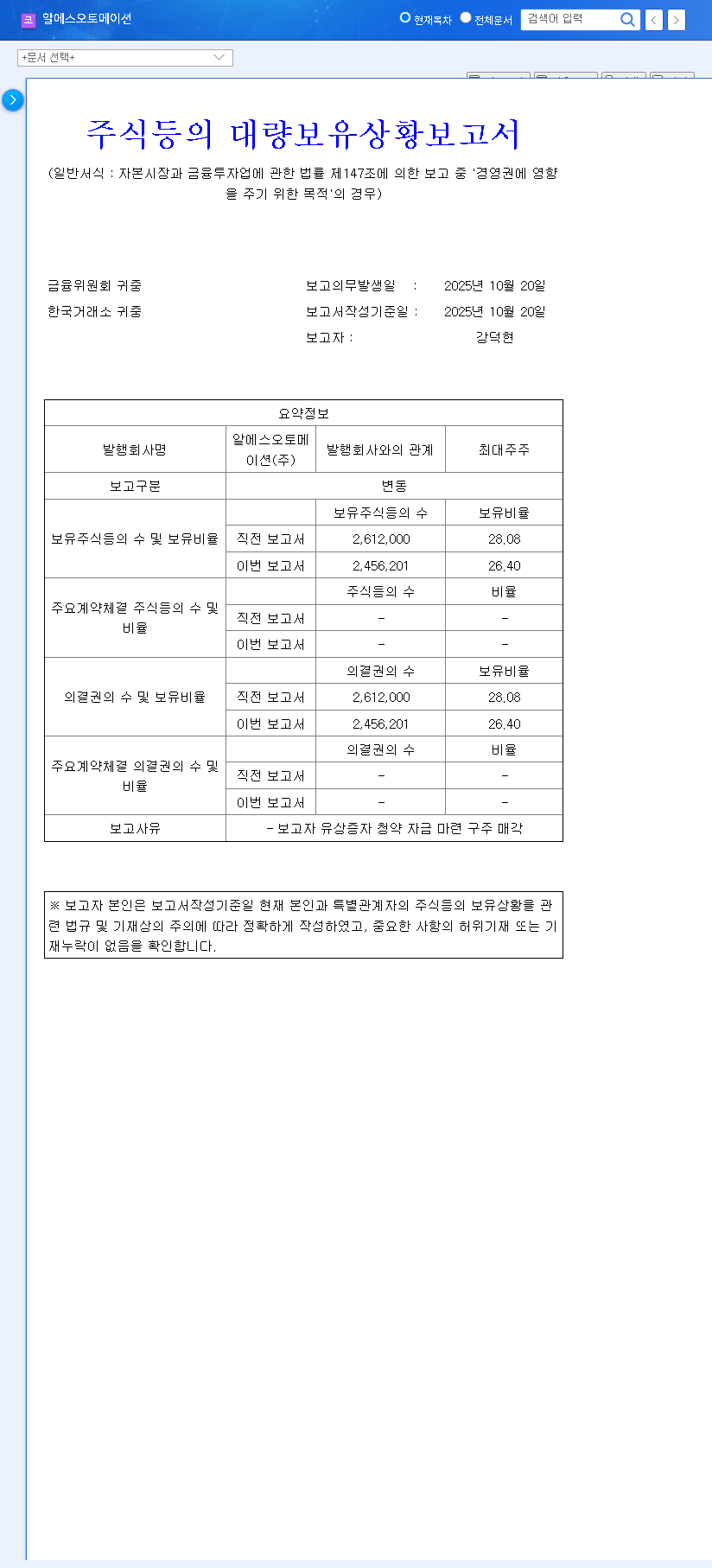
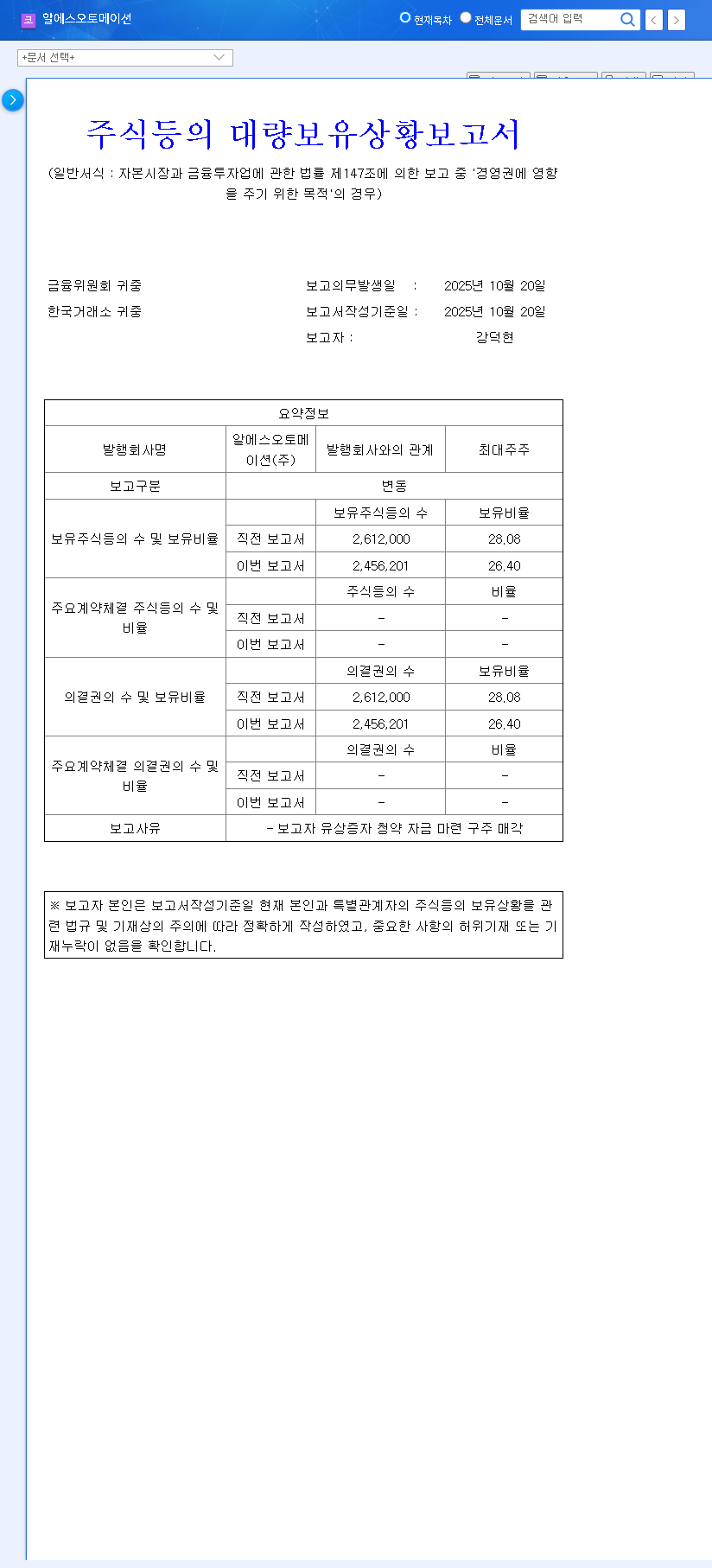
    The transaction, as detailed in the official filing, involved the off-market sale of shares held by CEO Kang Deok-hyun for the explicit purpose of influencing management. This detail is crucial, as it separates the sale from a simple portfolio diversification. The key figures from the disclosure are as follows:

    • Shareholding Before Report: 28.08%
    • Shareholding After Report: 26.40%
    • Total Change: -1.68% (123,551 shares sold)
    • Stated Reason: To secure funds for a rights offering subscription.

    This information is based on the report filed with the Financial Supervisory Service, which can be viewed in the Official Disclosure (DART). The context provided is vital for a complete investor analysis.

    The CEO’s move presents a dual signal: a commitment to the company’s future via the rights offering, clouded by the immediate negative sentiment of an insider sale to raise the necessary capital.

    The Rights Offering: A Double-Edged Sword?

    To understand the CEO’s actions, one must first understand the mechanism at play: the rights offering. A rights offering is a way for a company to raise capital by inviting existing shareholders to purchase additional new shares, often at a discount to the market price. While it can be a positive sign of growth and investment, the need for the CEO to sell existing shares to participate introduces complexity.

    Why the RS AUTOMATION Share Sale is a Mixed Signal

    On one hand, the CEO’s participation in the rights offering signals his belief in the company’s long-term strategy. The funds raised are typically used for expansion, R&D, or debt reduction—all potentially value-creating activities. However, the fact that he needed to liquidate a portion of his stake to do so could be interpreted negatively, suggesting personal cash flow constraints or an unwillingness to inject new, external capital. This nuance is central to any analysis of KOSDAQ: 140670 at this juncture.

    Potential Impact on Stock Price and Fundamentals

    Short-Term Market Reaction

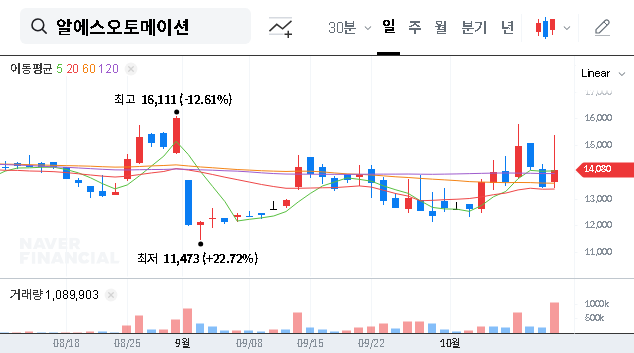
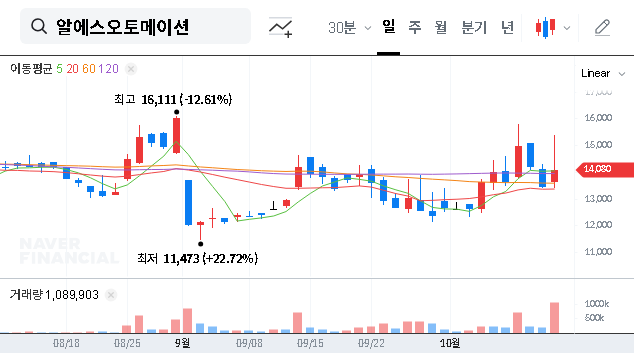
    In the short term, the market is likely to react with caution. An insider sale, especially of shares tied to management control, often creates downward pressure on the stock price. The key mitigating factor is the declared reason. Unlike a sale signaling a lack of confidence, this one is tied to a reinvestment event. Still, investors should brace for potential volatility as the market digests this news.

    Long-Term Fundamental Outlook

    The long-term impact hinges entirely on the success of the rights offering and how the capital is deployed. For a high-tech company like RS AUTOMATION, a leader in robotics and industrial automation, this capital could fuel innovation and capture market share. Conversely, if the funds are used inefficiently, the move will have been detrimental. The focus for long-term investors should shift from the sale itself to the company’s subsequent strategic execution. For more on this, you can read our guide on evaluating corporate capital allocation.

    Strategic Action Plan for Investors

    Navigating this situation requires diligence. Here are the critical steps investors should take:

    • Analyze the Rights Offering Details: Once published, scrutinize the offering’s terms. The issue price, scale, and specific purpose of the funds are paramount for assessing shareholder dilution and future growth prospects.
    • Review Company Financials: Conduct a thorough review of RS AUTOMATION’s balance sheet, income statement, and cash flow. Is the company fundamentally strong, or is this capital raise a sign of financial distress?
    • Consult Market Analysis: Review reports from credible financial institutions and analysts. Understanding the broader market consensus, such as expert commentary on the tech sector, provides valuable external context.
    • Monitor Shareholding Trends: Keep a close eye on any further changes in shareholding from CEO Kang Deok-hyun or other major institutional investors.

    Final Takeaway

    The RS AUTOMATION share sale by its CEO is not a simple red flag but a complex event with layered implications. While the immediate market reaction may be negative, the ultimate outcome will be determined by the company’s strategic use of the capital raised from the rights offering. Investors should proceed with a strategy rooted in deep, fundamental analysis rather than a knee-jerk reaction to headlines.

    (140670) RS AUTOMATION Share Sale: CEO's Move & Rights Offering Explained | Investor Analysis 관련 이미지