A recent disclosure regarding a K Auction shareholding change has sent ripples through the investment community. For stakeholders in K Auction Inc. (케이옥션), a leader in South Korea’s art market, this news raises a critical question: Does this signal reinforced management stability, or does it mask deeper fundamental challenges? This comprehensive K Auction stock analysis will dissect the disclosure, evaluate the company’s financial health, and provide a strategic outlook to help you make informed investment decisions.
We will explore the implications for K Auction’s corporate value, considering both the macroeconomic environment and the company’s ambitious new ventures. Let’s delve into the future of K Auction and what this pivotal moment means for its trajectory.
The Disclosure: Key Details of the K Auction Shareholding Change
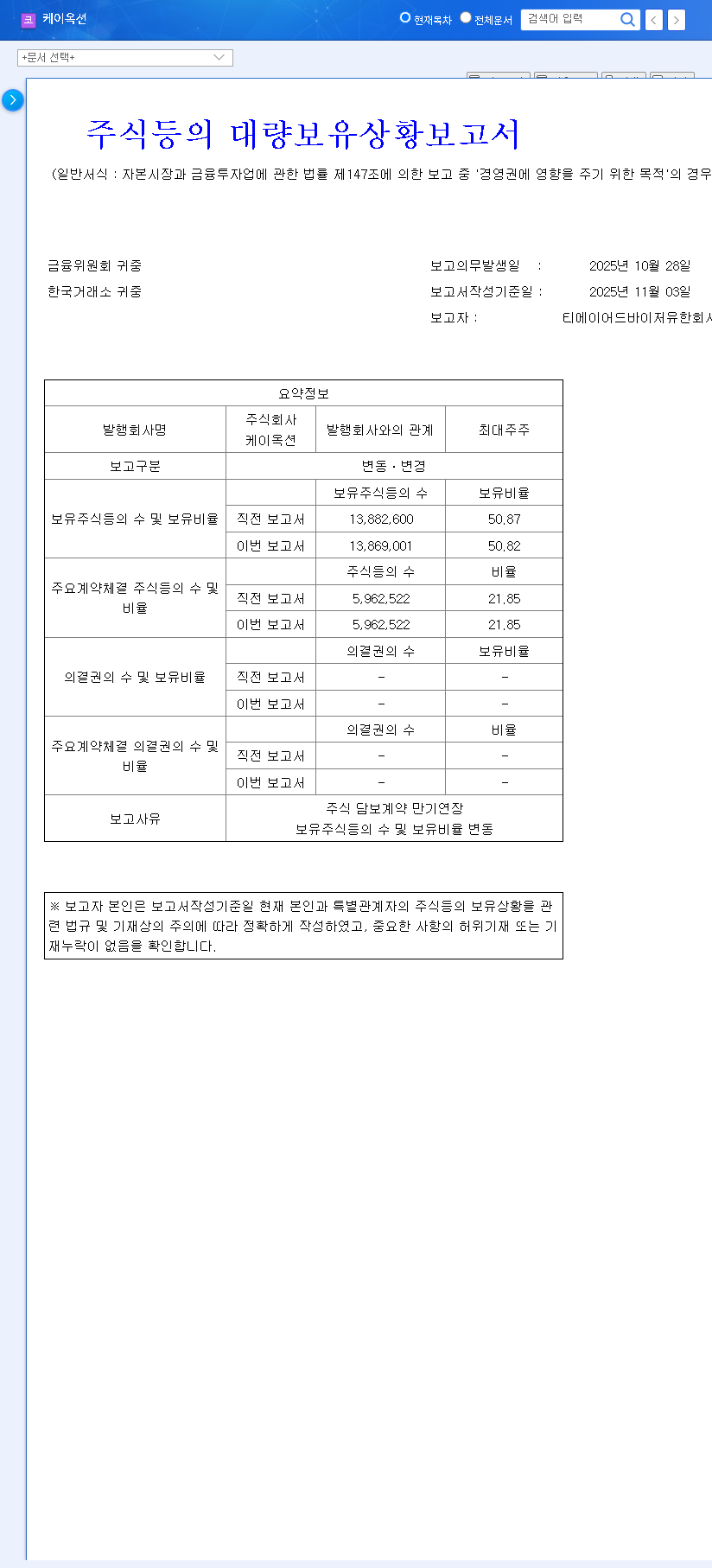
On November 3, 2025, K Auction Inc. filed a “Report on the Status of Large Shareholding,” revealing a minor but significant shift in its ownership structure. According to the Official Disclosure from DART, the reporting entity, TA Advisor Co., Ltd., adjusted its stake. Here are the crucial details:
- •Reporting Entity: TA Advisor Co., Ltd.
- •Purpose of Holding: Explicitly stated as ‘Influence over Management’.
- •Shareholding Change: A slight decrease from 50.87% to 50.82% (a 0.05 percentage point change).
- •Reason for Change: Extension of a stock collateral agreement maturity.
While the percentage change is minimal, the context is key. TA Advisor’s continued majority stake and its stated purpose signal a commitment to maintaining control, which is often viewed positively for short-term stability.
Diagnosing the Fundamentals: Beyond the Headlines
To truly understand the impact of the K Auction shareholding change, we must look past the announcement and analyze the company’s underlying financial health and the market it operates in.
Financial Health Under a Microscope
The 2025 half-year report paints a challenging picture. Revenue is trending downwards, and a persistent operating loss of KRW -1.767 billion highlights significant profitability issues. The primary culprit is a sharp decline in revenue from art sales, a core business segment. Furthermore, a high-cost structure, dominated by selling, general, and administrative (SG&A) expenses, continues to squeeze margins. The addition of KRW 49 billion in long-term borrowings also raises flags about the company’s financial leverage and soundness.
Navigating a Tough Macroeconomic and Art Market Environment
K Auction does not operate in a vacuum. The broader economic climate, as reported by sources like Bloomberg, shows sustained high-interest rates, which can dampen investment sentiment across all asset classes, including art. A strong exchange rate increases the cost of acquiring art from overseas, potentially impacting inventory and auction offerings. While the secondary auction market remains an oligopoly, the primary market is seeing intensified competition, pressuring K Auction from multiple angles.
Pivoting to the Future: The STO Market Gamble
Amid these challenges, K Auction is exploring new frontiers. A significant strategic move is its planned entry into the Security Token Offering (STO) market by issuing art investment contract securities through its affiliate, Together Art. An STO allows for fractional ownership of high-value assets like fine art, potentially democratizing art investment and opening up a new revenue stream. This is a bold, high-risk, high-reward strategy. Success could redefine K Auction’s corporate value, but failure could strain already tight resources. The execution of this new venture will be a critical factor in any future K Auction stock analysis.
Strategic Outlook for Investors
So, what does this all mean for investors? The shareholding disclosure provides a degree of comfort regarding management stability. However, this stability doesn’t automatically fix the foundational issues. The path forward for K Auction’s stock price depends less on this disclosure and more on the company’s ability to execute a turnaround.
The key takeaway for investors is to look beyond the immediate news. Long-term value will be driven by tangible improvements in profitability, successful cost management, and the realized potential of new ventures like the STO market.
Instead of a reactive approach, a prudent strategy involves monitoring key performance indicators: progress on cost-cutting initiatives, recovery in art sales revenue, and milestones achieved in the STO business. For those interested in the sector, our guide on How to Invest in the Art Market provides broader context.
Frequently Asked Questions (FAQ)
Q1: What does the recent K Auction shareholding change mean for management?
A1: It primarily reinforces short-term management stability. With TA Advisor Co., Ltd. maintaining a clear majority stake (over 50%) and stating their purpose as ‘influence over management,’ the risk of a hostile takeover or abrupt leadership change is significantly reduced.
Q2: What are the biggest challenges facing K Auction right now?
A2: The company’s primary challenges are financial. It is facing a continuous operating loss, declining revenues in its core art sales division, a high-cost structure, and concerns about its debt load from long-term borrowings.
Q3: How should I adjust my investment strategy based on this news?
A3: This single event should not be the sole basis for an investment decision. It is a piece of a larger puzzle. Investors should focus on the company’s fundamental recovery plan. Watch for improvements in quarterly earnings reports, successful cost-cutting measures, and tangible progress in new business areas like STOs before making significant moves.