Tag: JB FINANCIAL GROUP CO.

  • (175330) JB Financial Group (JB FINANCIAL GROUP CO.,LTD) Q3 2025 IR Analysis: Stock Outlook & Investor Guide

    (175330) JB Financial Group (JB FINANCIAL GROUP CO.,LTD) Q3 2025 IR Analysis: Stock Outlook & Investor Guide

    The financial community has its eyes set on JB FINANCIAL GROUP CO.,LTD as it prepares for a significant investor relations event. On November 13, 2025, the company will present its Q3 2025 group management performance at the ‘2026 Corporate Day’ hosted by Yuanta Securities. This event is a critical moment for the company to communicate its financial health and strategic direction directly to investors and analysts. This comprehensive analysis will explore the fundamental strengths and weaknesses of JB FINANCIAL GROUP CO.,LTD, dissect the potential impact of this IR event on its stock price, and outline a clear action plan for current and prospective investors.

    The Upcoming IR Event: What Investors Need to Know

    The scheduled Investor Relations (IR) event for JB FINANCIAL GROUP CO.,LTD is more than just a presentation of numbers; it’s a pivotal platform for direct dialogue. The company will unveil its Q3 2025 group management performance and address key areas of market interest. This is a crucial opportunity for the leadership to build confidence, manage expectations, and provide clarity on its future trajectory amidst a complex economic landscape. The full details of the event have been filed and can be reviewed in the Official Disclosure (DART), which serves as the primary source for this announcement.

    Fundamental Analysis: A Tale of Strength and Headwinds

    Based on its H1 2025 report, JB FINANCIAL GROUP CO.,LTD recorded a consolidated net profit of KRW 370.4 billion, a marginal 0.1% year-on-year increase. While this indicates stability, a closer look reveals a mixed performance across its subsidiaries, with Jeonbuk Bank and JB Woori Capital showing growth while Gwangju Bank experienced a slowdown.

    Core Strengths: The Pillars of Stability

    • Superior Profitability: The company maintains an industry-leading position with a controlling interest Return on Equity (ROE) of 13.1% and a Return on Assets (ROA) of 1.11%, signaling efficient use of shareholder equity and assets to generate profit.
    • Operational Efficiency: An impressive Cost-Income Ratio (CIR) of 35.8% demonstrates excellent cost management capabilities, a key advantage in a competitive market.
    • Robust Capitalization: A stable capital structure is confirmed by a BIS capital adequacy ratio of 14.36% and a common equity tier 1 (CET1) ratio of 12.40%, providing a strong buffer against financial shocks.
    • Diversified Growth Engines: Strong growth in overseas ventures (Cambodia PPCBank performance up 50.4%) and asset management (net profit up 243%) highlights successful diversification and future growth potential.

    Identified Weaknesses & Market Risks

    • Regional Slowdown: Gwangju Bank’s net profit decreased by 7.9%, a concerning sign attributed to intensified regional competition and a cooling real estate market.
    • Macroeconomic Uncertainty: Broader economic factors, including potential real estate PF risks, rising household debt, and interest rate fluctuations, could negatively impact asset quality and Net Interest Margin (NIM). For more context, see this analysis on global economic trends from Reuters.
    • Intensifying Competition: The rise of agile internet-only banks and fintech innovators continues to challenge the market share and profitability of traditional financial institutions.

    The core challenge for JB Financial Group is not its current stability, but its ability to navigate future uncertainty. The IR event’s true value lies in management’s ability to present a credible and compelling strategy to address these macroeconomic and competitive pressures.

    Stock Price Impact: Scenarios for the JB Financial Group Stock

    The IR event can act as a significant catalyst for the JB Financial Group stock. In the best-case scenario, if Q3 earnings exceed market consensus and management provides a confident, data-backed outlook on risk management and growth, investor sentiment will likely turn positive. This enhanced transparency can reduce information asymmetry and drive the stock price upward. Conversely, a miss on earnings or vague, unconvincing strategies could amplify investor concerns, leading to a negative market reaction. The outcome hinges entirely on the substance of the announcement.

    Strategic Action Plan for Investors

    At present, a ‘Neutral’ stance on the event itself is prudent. The key is to be prepared to act based on the information revealed on November 13. Investors should focus on the following:

    • Analyze the Numbers: Scrutinize the Q3 earnings report. Look beyond the headline profit number to metrics like Net Interest Margin (NIM) trends, loan growth quality, and delinquency rates.
    • Listen to the Narrative: Pay close attention to management’s commentary on future growth strategies, particularly regarding digital innovation, overseas expansion, and plans to mitigate real estate market risks.
    • Adopt a Long-Term View: Avoid knee-jerk reactions to short-term price volatility. Investment decisions should be grounded in the long-term fundamental health and competitive positioning of JB FINANCIAL GROUP CO.,LTD. For more on this, read our guide on how to evaluate financial stocks for the long term.

    In conclusion, while the foundational metrics of JB FINANCIAL GROUP CO.,LTD appear robust, its future performance is tied to its strategic response to a dynamic environment. This upcoming IR event will provide the clarity investors need. A thorough post-event analysis is essential before committing to or altering an investment position. The market will be watching closely, and so should you.

    (175330) JB Financial Group (JB FINANCIAL GROUP CO.,LTD) Q3 2025 IR Analysis: Stock Outlook & Investor Guide 관련 이미지
  • (175330) JB Financial Group Q3 2025 Earnings: A Deep Dive into Growth & Stock Outlook

    (175330) JB Financial Group Q3 2025 Earnings: A Deep Dive into Growth & Stock Outlook

    A critical date is approaching for investors tracking the Korean financial market. The upcoming JB Financial Group earnings announcement for Q3 2025, scheduled for October 29, 2025, is poised to be more than just a routine update. It represents a key inflection point that could significantly influence the company’s stock trajectory and reinforce its underlying financial fundamentals. This comprehensive investment analysis delves into the expectations surrounding the Q3 report and the accompanying Investor Relations (IR) event, providing a detailed look at the growth drivers, potential risks, and what it all means for current and prospective shareholders. The official disclosure for this event can be found on DART: Official Disclosure.

    Analyzing the JB Financial Group Q3 2025 Earnings Forecast

    Market consensus points towards a highly positive quarter for JB Financial Group (175330). Projections based on full-year 2025 estimates indicate a substantial year-over-year improvement, showcasing the group’s strengthening profitability and operational efficiency. The IR event, scheduled for 9:00 AM on the day of the announcement, will be a crucial platform for management to communicate these results and their future vision directly to investors.

    The projected leap in operating and net profit is the standout story for Q3. It suggests that the group’s strategic initiatives are not just working but are accelerating, positioning it to outperform in a competitive landscape.

    Projected Q3 2025 Financial Highlights

    The following figures, estimated as of December 2025, paint a bullish picture for the JB Financial Group Q3 2025 performance:

    • Revenue: Projected at approximately KRW 110 billion, signaling consistent top-line growth.
    • Operating Profit: Expected to reach around KRW 90 billion, a significant surge from the KRW 38.3 billion recorded in Q3 of the previous year.
    • Net Profit: Forecasted at approximately KRW 70 billion, more than doubling the KRW 33.1 billion from the prior year’s Q3.
    • Return on Equity (ROE): Expected to maintain a robust level of approximately 13%, consistent with the strong annual ROE of 14.02%.

    Deep Dive: Growth Drivers & Financial Fundamentals

    Several key factors are underpinning this anticipated success. Understanding these drivers is essential for a complete investment analysis of the company’s health.

    Positive Catalysts Fueling Momentum

    • Exceptional Profitability: A sustained ROE around 13% is highly competitive and speaks to the company’s efficient use of capital to generate profits—a core pillar of strong financial fundamentals.
    • Strategic Diversification: Growth is not solely reliant on traditional banking. Expansion into non-banking sectors like asset management and credit finance, combined with successful overseas ventures such as PPCBank in Cambodia, creates a more resilient and stable revenue stream. For more context, you can review our previous analysis of their H1 2025 performance.
    • Digital Forward-Thinking: Active investment in digital finance, including initiatives like MyData, is crucial for future-proofing the business. This enhances customer experience and operational efficiency, which is vital for competing against agile FinTech challengers.
    • Resilience in a Stable Market: The company is demonstrating an ability to thrive despite pressures like stable policy rates that can squeeze Net Interest Margins (NIM). A stable bond market provides a favorable environment for managing its investment portfolio effectively.

    Potential Risks and Headwinds to Monitor

    No investment is without risk. Prudent investors should keep a close watch on the following potential challenges that could impact the JB Financial Group stock performance:

    • Subsidiary Performance: The lackluster performance from Gwangju Bank in H1 2025 was a point of concern. Its recovery and contribution in Q3 will be a major focus area for analysts.
    • Asset Quality Concerns: The management of asset quality at JB Woori Capital, particularly regarding real estate Project Financing (PF) and the trend of non-performing loans (NPLs), remains a crucial risk factor to monitor.
    • Intensifying Competition: The financial landscape is evolving rapidly. The rise of internet-only banks and innovative FinTech firms, as analyzed by sources like Bloomberg, creates continuous pressure on traditional players to adapt and innovate or risk losing market share.

    Investment Outlook and Strategic Conclusion

    The overall outlook for the JB Financial Group earnings event is decidedly positive. The expected results are likely to be well-received by the market, potentially acting as a strong short-term catalyst for the stock price.

    Stock Outlook: Short-Term vs. Long-Term

    Short-Term: A positive market reaction to the strong Q3 earnings report is highly probable. A confident and clear strategic vision presented at the IR event could further bolster investor sentiment and lead to stock price appreciation.

    Mid-to-Long-Term: The company’s ability to sustain growth hinges on the successful execution of its long-term strategies. Continued diversification, digital transformation, and robust ESG management will be key to unlocking continuous corporate value. However, investors must remain aware of macroeconomic shifts and competitive pressures that could introduce volatility.

    Key Questions for the IR Event

    Investors should listen closely during the IR event for answers to these critical questions:

    • What are the specific plans to manage risk assets like real estate PF?
    • How will the company accelerate its digital roadmap to compete with new-age financial firms?
    • What is the outlook for shareholder return policies, including dividends and share buybacks?

    By focusing on these strategic details beyond the headline numbers, investors can make more informed decisions and better position themselves for success. The upcoming announcement is a key moment to re-evaluate JB Financial Group’s powerful growth narrative.

    (175330) JB Financial Group Q3 2025 Earnings: A Deep Dive into Growth & Stock Outlook 관련 이미지
  • (175330) JB Financial Group Share Cancellation: An In-Depth 2025 Investment Analysis

    (175330) JB Financial Group Share Cancellation: An In-Depth 2025 Investment Analysis

    In a significant move to bolster shareholder confidence, JB Financial Group has recently announced a substantial ₩40 billion treasury share cancellation. This strategic decision sends a powerful message about the company’s robust financial health and unwavering commitment to enhancing shareholder value. For investors, this action prompts critical questions: What are the immediate and long-term effects on the stock? And how does this fit into the broader picture of the company’s fundamentals and the macroeconomic landscape?

    This comprehensive investment analysis unpacks the nuances of the JB Financial Group share cancellation, evaluates its H1 2025 performance, identifies key risk factors, and provides a forward-looking perspective for potential investors. If you’re considering adding JB Financial Group stock to your portfolio, this is essential reading.

    The ₩40 Billion Share Cancellation: A Signal of Strength

    On October 28, 2025, JB Financial Group’s board approved the cancellation of 1,805,869 common treasury shares, valued at approximately ₩40 billion. This figure represents 0.94% of the company’s total market capitalization. The official details of this decision can be reviewed in the company’s public filing (Official Disclosure).

    A share cancellation, or share buyback and retirement, is a direct method of returning capital to shareholders. By reducing the number of outstanding shares, the earnings attributable to each remaining share (Earnings Per Share, or EPS) increases, which can make the stock more attractive and potentially drive up its price. This action is widely seen as a bullish signal, indicating that management believes the company’s stock is undervalued and has confidence in its future earnings.

    “A share cancellation of this magnitude is more than just a financial transaction; it’s a clear declaration of management’s confidence in future profitability and a tangible commitment to increasing shareholder value.”

    In-Depth Fundamental Investment Analysis

    Beyond the share cancellation, a thorough investment analysis of JB Financial Group requires a look at its core strengths and potential weaknesses, based on H1 2025 performance.

    Strengths: A Foundation of Stability and Growth

    • Consistent Profitability: A consolidated net profit of ₩370.4 billion shows a stable earnings base, even in a challenging economic climate.
    • Industry-Leading Ratios: Return on Equity (ROE) of 13.1% and Return on Assets (ROA) of 1.11% are top-tier, showcasing superior profitability. An exceptionally low Cost-to-Income Ratio (CIR) of 35.8% highlights highly efficient operations.
    • Robust Capital Adequacy: With a BIS capital ratio of 14.36% and CET1 ratio of 12.40%, the group comfortably exceeds regulatory requirements, ensuring financial resilience.
    • Diversified Growth Engines: Strong performance from subsidiaries like JB Woori Capital, strategic overseas expansion in Cambodia and Vietnam, and a forward-thinking digital transformation strategy point to sustainable future growth. For more on this, see our analysis of emerging market banking.

    Concerns & Risk Factors to Monitor

    • Gwangju Bank Performance: A 7.9% year-over-year decline in net profit suggests vulnerability to macroeconomic headwinds, particularly concerning potential non-performing loans in real estate project financing (PF).
    • Asset Quality Metrics: An uptick in Gwangju Bank’s NPL ratio and JB Woori Capital’s real estate PF delinquency rate warrants close observation as signs of potential credit risk.
    • Interest Rate Pressure: A declining Net Interest Margin (NIM) at Jeonbuk Bank could signal broader pressure on profitability for the entire banking sector as interest rates stabilize or fall.
    • Macroeconomic Headwinds: The broader economic environment, including a cooling real estate market and the rise of FinTech competition, presents ongoing challenges. Authoritative sources like Reuters provide regular updates on these global financial trends.

    Overall Assessment and Investment Outlook

    The JB Financial Group share cancellation is an unequivocally positive development for current and prospective shareholders. It underscores a strong balance sheet and a management team focused on delivering value. This action is likely to provide a supportive tailwind for the stock price in the short to medium term.

    However, long-term shareholder value is ultimately driven by fundamental performance. Investors must weigh the positive signal of the buyback against the existing challenges. The company’s ability to navigate asset quality concerns, adapt to the interest rate environment, and successfully execute its digital and overseas strategies will be the true determinant of its long-term success.

    In conclusion, while the share cancellation makes JB Financial Group an attractive proposition, prudent investors should maintain a balanced view. It is crucial to monitor the identified risk factors and the company’s strategic responses continuously.

    Key Takeaways for Investors

    • Positive Signal: View the share cancellation as a strong vote of confidence from management in the company’s intrinsic value.
    • Monitor Fundamentals: Pay close attention to quarterly reports for trends in asset quality (NPL ratios), net interest margins, and the performance of key subsidiaries.
    • Long-Term Vision: Evaluate the progress of digital transformation and international expansion as key drivers of future growth beyond the traditional banking model.

    Disclaimer: This article is for informational purposes only and does not constitute investment advice. All investment decisions should be made with the consultation of a qualified financial professional.

    (175330) JB Financial Group Share Cancellation: An In-Depth 2025 Investment Analysis 관련 이미지
  • (175330) JB Financial Group Dividend 2025: In-Depth Analysis & Investment Strategy

    (175330) JB Financial Group Dividend 2025: In-Depth Analysis & Investment Strategy

    In a landscape of market volatility, the recent announcement of the JB Financial Group quarterly dividend has captured the attention of savvy investors. A company’s dividend policy is more than just a payout; it’s a powerful statement about its financial health, management confidence, and commitment to its shareholders. This comprehensive analysis will dissect what this dividend means, explore the robust fundamentals supporting it, and outline a strategic approach for potential and current investors.

    JB Financial Group’s latest dividend signals a clear focus on sustainable shareholder returns, backed by top-tier profitability and prudent risk management. This approach prioritizes long-term value over short-term gains.

    Decoding the Dividend Announcement

    JB Financial Group has declared a cash dividend of 160 KRW per common share. The key dates for investors are a record date of November 12, 2025, and a payment date of November 27, 2025. Based on the current stock price, this translates to a dividend yield of approximately 0.7%. While this figure may seem modest, it’s a strategic move that underscores a commitment to consistent, predictable shareholder return rather than chasing a high, potentially unsustainable, short-term yield. This consistency is often a hallmark of a mature and financially sound institution.

    Robust Fundamentals: The Engine Behind the Payout

    A dividend is only as reliable as the company paying it. The decision from JB Financial Group is supported by a foundation of impressive financial strength and operational efficiency, as detailed in its recent reports. For a complete financial picture, investors can review the Official Disclosure (DART Source).

    Key Financial Health Indicators

    • Exceptional Profitability: With a consolidated net profit of KRW 370.4 billion in Q2 and an ROE (Return on Equity) of 13.1%, the group demonstrates top-tier profitability. This efficiency is further highlighted by a low Cost-to-Income Ratio (CIR) of 35.8%, proving its adept cost management.
    • Solid Capital Adequacy: The Common Equity Tier 1 (CET1) ratio stands at a healthy 12.40%. This crucial metric, which compares a bank’s core equity capital to its risk-weighted assets, signifies a strong buffer to absorb unexpected losses and navigate economic turbulence. To learn more, you can read about understanding key financial ratios for banking institutions.
    • Diversified Subsidiary Performance: Strong growth from Jeonbuk Bank, JB Woori Capital, and particularly the Cambodian subsidiary PPCBank (which saw a 50.4% net profit increase) showcases successful diversification. While Kwangju Bank’s decreased profit is a point to monitor, the overall portfolio remains robust.

    Future Outlook and Investment Strategy

    The quarterly JB Financial Group dividend is not just a reward for past performance; it’s a bridge to future growth. The group’s forward-looking strategy includes ambitious targets that could significantly enhance shareholder value over the long term. This includes targeting an ROE of 15% and a shareholder return ratio of 50%.

    Growth Catalysts and Risk Factors

    Future growth is expected to be driven by digital transformation initiatives and strategic fintech partnerships, which will enhance competitiveness and operational efficiency. However, investors must remain vigilant. Macroeconomic factors like interest rate changes and currency fluctuations can impact profitability. As noted by sources like Reuters, the global financial climate requires careful navigation. Internally, the rise in the non-performing loan (NPL) ratio at JB Woori Capital to 2.71% is a specific risk that warrants continuous monitoring and proactive management from the group.

    An Action Plan for Prudent Investors

    • Adopt a Long-Term View: The current JB Financial stock strategy points towards long-term value creation. Focus on the company’s intrinsic growth potential rather than short-term market noise.
    • Monitor Key Risks: Keep an eye on macroeconomic trends and the asset quality of key subsidiaries. The company’s ability to manage these risks will be critical to its performance.
    • Track Shareholder Return Goals: The group’s progress towards its ambitious ROE and shareholder return ratio targets will be a leading indicator of its future dividend capacity and overall investment appeal.

    In conclusion, the JB Financial Group quarterly dividend is a positive indicator of financial stability and a shareholder-friendly policy. For investors with a long-term horizon, the company’s solid fundamentals and clear growth strategy present a compelling case for consideration as part of a well-diversified portfolio.

    (175330) JB Financial Group Dividend 2025: In-Depth Analysis & Investment Strategy 관련 이미지
  • (175330) JB Financial Group Share Buyback & H1 2025 Earnings: A Deep Dive for Investors

    (175330) JB Financial Group Share Buyback & H1 2025 Earnings: A Deep Dive for Investors

    In a significant move for investors, JB Financial Group has released its H1 2025 earnings report, showcasing stable profitability, and simultaneously announced a substantial KRW 40 billion share buyback program. These developments raise critical questions: What do they signal about the company’s confidence? And how should investors position themselves in light of this news? This comprehensive analysis will break down the financial performance, explore the strategic implications of the share buyback, and provide a clear outlook on what’s next for JB Financial Group’s stock.

    This report moves beyond the headlines, offering actionable insights by dissecting the fundamental drivers and potential risks facing JB Financial Group. We aim to equip you with the knowledge needed to make informed investment decisions.

    Unpacking the H1 2025 Financial Performance

    JB Financial Group reported a consolidated net profit of KRW 370.4 billion for the first half of 2025. While this represents a marginal 0.1% year-over-year increase, the stability in a challenging macroeconomic environment is noteworthy. The overall performance was a mixed bag across its key subsidiaries, reflecting different market exposures and operational focuses.

    Subsidiary Performance Breakdown

    • Jeonbuk Bank: Posted a healthy net profit of KRW 116.6 billion, up 3.4%, demonstrating resilient growth.
    • Gwangju Bank: Saw a 7.9% decrease in net profit to KRW 148.4 billion, largely attributed to headwinds from a slowing real estate market and increased household loan risks.
    • JB Woori Capital: Continued its strong trajectory with a 6.6% profit increase to KRW 131.7 billion.
    • PPCBank (Cambodia): Contributed KRW 25.0 billion, highlighting the value of its international diversification.

    The Group’s fundamentals remain robust, with an industry-leading Return on Equity (ROE) of 13.1% and a low Cost-to-Income Ratio (CIR) of 35.8%. The Common Equity Tier 1 (CET1) Ratio stands at a stable 12.40%, indicating solid capital adequacy. For a detailed breakdown, you can view the Official Disclosure on the DART system.

    The KRW 40 Billion Share Buyback: A Signal of Confidence

    Perhaps the most significant news for investors is the decision to execute a KRW 40 billion JB Financial Group share buyback. This move, representing nearly 1% of the company’s market capitalization, is a powerful tool for enhancing shareholder value. A share buyback reduces the number of shares outstanding, which can increase key metrics like Earnings Per Share (EPS) and often leads to a higher stock price due to improved supply-demand dynamics.

    This action is widely interpreted as a signal from management that they believe the company’s stock is undervalued. By investing its own capital to repurchase shares, the board demonstrates strong confidence in the firm’s future prospects and financial stability. The buyback is scheduled to run from October 29, 2025, to February 3, 2026.

    Future Outlook: Opportunities and Risks

    While the buyback and stable earnings paint a positive picture, a balanced investment thesis requires examining both the potential upsides and the challenges ahead. Investors should stay informed by following broader market analysis from sources like Reuters Financial News.

    Key Investment Opportunities

    • Enhanced Shareholder Returns: The aggressive share buyback signals a commitment to returning capital to shareholders, which is highly attractive to investors.
    • Strong Profitability Metrics: High ROE and ROA relative to peers indicate efficient and profitable operations.
    • Digital Transformation: Ongoing investments in MyData services and fintech partnerships (e.g., Toss Bank) position the group for future growth in the digital banking landscape.

    Potential Headwinds to Monitor

    • Subsidiary Performance: The slowdown at Gwangju Bank needs to be watched closely, as prolonged weakness could drag down group results.
    • Asset Quality: The rising Non-Performing Loan (NPL) ratio at JB Woori Capital (2.71%) requires careful risk management to prevent further deterioration.
    • Macroeconomic Pressures: High inflation, interest rate volatility, and currency fluctuations pose risks to the entire banking sector’s profitability and credit quality.

    Conclusion: An Investor’s Action Plan

    The overall investment outlook for JB Financial Group appears positive, anchored by solid fundamentals and a strong commitment to shareholder value via the share buyback. The short-term impact of the buyback is likely to be supportive of the stock price.

    For the mid-to-long term, success will depend on the company’s ability to navigate the identified risks. Investors should monitor the performance recovery at Gwangju Bank, asset quality trends at JB Woori Capital, and the progress of its digital initiatives. For those looking to learn more about this sector, our guide on How to Analyze Bank Stocks provides valuable context. Ultimately, while JB Financial Group presents a compelling case, diligent monitoring of these key variables is essential for any investment strategy.

    Disclaimer: This analysis is for informational purposes only and does not constitute financial advice. All investment decisions should be made based on your own research and discretion.

    (175330) JB Financial Group Share Buyback & H1 2025 Earnings: A Deep Dive for Investors 관련 이미지
  • (175330) JB FINANCIAL GROUP CO.,LTD H1 2025 Performance: In-Depth Analysis & Strategic Outlook

    (175330) JB FINANCIAL GROUP CO.,LTD H1 2025 Performance: In-Depth Analysis & Strategic Outlook

    In a landscape of increasing financial market uncertainty, the performance of JB FINANCIAL GROUP CO.,LTD for the first half of 2025 has emerged as a beacon of stability and growth. This detailed analysis unpacks the impressive H1 2025 results, exploring the core fundamentals that drive its success and the strategic initiatives positioning it for the future. We will delve into the group’s profitability, efficiency, and asset quality, while also examining the macroeconomic variables and competitive pressures that lie ahead.

    Can JB FINANCIAL GROUP CO.,LTD uphold its vision of being ‘a small but most profitable strong financial group’ amidst challenges like interest rate shifts and digital disruption? This report provides a comprehensive outlook for investors and market analysts alike.

    H1 2025 Performance: A Story of Resilience and Growth

    Demonstrating remarkable resilience, JB FINANCIAL GROUP CO.,LTD announced consolidated financial results for H1 2025 that significantly surpassed market consensus. The group reported an operating profit of KRW 281.1 billion and a net profit of KRW 208.3 billion. These figures represent a solid year-over-year increase of 5% in operating profit and 2% in net profit, underscoring a trajectory of steady growth. The full details can be reviewed in the Official Disclosure (Source).

    Despite a slight dip in Q2 compared to the preceding quarter—often attributed to seasonal factors—the overall H1 performance is viewed as a strong foundation for achieving the group’s annual targets.

    Analyzing the Core Fundamentals

    The strong JB Financial Group performance is not accidental; it is built on a solid foundation of profitability, efficiency, and prudent asset management. Let’s break down these key pillars.

    Impressive Profitability Metrics

    Profitability remains a standout feature for the group, placing it in the top tier of Korean financial holding companies and reinforcing its fundamental strength.

    • High ROE and ROA: With a Return on Equity (ROE) of 13.1% and Return on Assets (ROA) of 1.11%, the group demonstrates its superior ability to generate profit from shareholder equity and its asset base.
    • Diversified Revenue Streams: While interest income from the banking sector provides a stable core, improved results from subsidiaries like JB Woori Capital and a strategic push for non-interest income have created a more balanced and resilient revenue model.

    Exceptional Cost Management

    In today’s competitive financial landscape, efficiency is paramount. JB FINANCIAL GROUP CO.,LTD excels in this area, as evidenced by its industry-leading Cost-Income Ratio (CIR) of 35.8%. This low ratio indicates that the group manages its operational costs with extreme effectiveness, allowing a larger portion of its income to translate directly into profit.

    Proactive Asset Quality Management

    While overall financial indicators remain stable, the group is vigilantly monitoring potential risks. A notable point of attention is the increase in JB Woori Capital’s Non-Performing Loan (NPL) ratio from 2.00% to 2.71%. This uptick highlights a potential risk factor that necessitates enhanced asset quality management, including strategic NPL sales, to safeguard the balance sheet in the second half of the year.

    Securing Future Growth Drivers

    JB FINANCIAL GROUP’s strategy extends beyond managing current operations; it is actively building a diversified portfolio to secure long-term growth. To understand this better, you can review our comprehensive analysis of the Korean banking sector.

    • Overseas Expansion: The group’s international ventures are bearing significant fruit. Notably, Phnom Penh Commercial Bank in Cambodia saw its net profit surge by 50.4%, proving the success of its overseas expansion strategy.
    • Fintech Collaboration: By embracing the digital shift, the group is future-proofing its business. Strategic partnerships, such as joint loans with Toss Bank, allow it to tap into new customer segments and respond nimbly to the evolving digital finance ecosystem.

    Outlook: Key Variables and Response Strategies for H2

    The second half of 2025 presents both challenges and opportunities. Global macroeconomic trends, as reported by sources like Bloomberg, will play a critical role. Potential U.S. policy rate cuts could put downward pressure on domestic interest rates, squeezing the Net Interest Margin (NIM). This makes the push for non-interest income even more critical.

    Domestically, intensified household debt management and the potential for increased defaults among vulnerable borrowers are key risks. However, JB FINANCIAL GROUP’s history of agile response to market shifts and its strong digital foundation position it well to navigate these headwinds.

    Investor Action Plan: Key Factors to Monitor

    For investors tracking JB FINANCIAL GROUP CO.,LTD, the robust H1 2025 results are reassuring. Looking ahead, focus should be on the execution of its core strategies:

    • Enhanced Risk Management: Monitor the group’s handling of real estate project financing (PF) and its management of vulnerable loan segments. Sustaining high asset quality is non-negotiable.
    • Digital & Revenue Diversification: Watch for tangible results from efforts to grow non-interest income and enhance digital channel competitiveness. These are key to defending profitability in a potentially lower-interest-rate environment.
    • Sustained Growth Momentum: Keep an eye on the performance of overseas businesses and the synergies generated from fintech collaborations. These are the primary engines for future value creation.

    In conclusion, JB FINANCIAL GROUP CO.,LTD’s H1 2025 performance reaffirms its status as a highly efficient and profitable entity. If it continues to execute its strategic priorities with precision, the group is well-positioned for sustainable growth, making it a compelling name to watch in the Korean financial sector.

    Disclaimer: This report is for informational purposes only and is based on publicly available information. It is not intended as investment advice. All investment decisions should be made based on the investor’s own judgment and responsibility.

    (175330) JB FINANCIAL GROUP CO.,LTD H1 2025 Performance: In-Depth Analysis & Strategic Outlook 관련 이미지
  • (175330) JB Financial Group Stock: A Deep Dive on the ₩30B Share Buyback & 2025 Investment Outlook

    (175330) JB Financial Group Stock: A Deep Dive on the ₩30B Share Buyback & 2025 Investment Outlook

    The recent announcement of a significant ₩30 billion share buyback has put JB Financial Group squarely in the spotlight for investors. This strategic move, coupled with solid financial performance in H1 2025, raises a critical question: is now the opportune moment to invest? This comprehensive analysis explores the group’s core fundamentals, the direct implications of this shareholder-friendly action, and the broader macroeconomic environment to provide a clear investment outlook for 2025 and beyond.

    We’ll dissect the numbers, evaluate the risks, and offer an expert opinion on what investors should monitor, helping you determine if a JB Financial Group investment aligns with your financial strategy.

    H1 2025 Financial Performance: A Story of Stability

    In the first half of 2025, JB Financial Group demonstrated resilient growth, with its consolidated total assets reaching an impressive ₩70.188 trillion. The consolidated net profit stood at ₩370.4 billion, marking a slight but steady year-on-year increase. This stability was bolstered by strong performances from key subsidiaries, including Jeonbuk Bank (+3.4%) and JB Woori Capital (+6.6%).

    Key profitability metrics remain best-in-class, with a Return on Equity (ROE) of 13.1% and a Return on Assets (ROA) of 1.11%. These figures signal exceptional efficiency in generating profits from shareholder equity and total assets. Furthermore, the group’s capital adequacy ratios, such as the Common Equity Tier 1 (CET1) ratio of 12.40%, indicate a robust and healthy financial foundation capable of weathering economic shifts.

    Despite the strong overall picture, it’s crucial to note the 6.2% decrease in separate net profit, largely attributed to a declining Net Interest Margin (NIM) of 2.61%. Additionally, a rise in JB Woori Capital’s Non-Performing Loan (NPL) ratio to 2.71% warrants careful observation.

    The ₩30 Billion Share Buyback: A Signal of Confidence

    On October 27, 2025, JB Financial Group made a pivotal announcement: a decision to acquire and cancel 1,298,543 of its own common shares, valued at ₩30 billion. This strategic maneuver, detailed in the company’s Official Disclosure (DART), is a powerful tool for enhancing shareholder value. But what does a share buyback truly mean for investors?

    Essentially, by reducing the number of outstanding shares, the company increases the value of each remaining share. This mechanically boosts key metrics like Earnings Per Share (EPS) and Book Value Per Share (BPS). As explained by financial experts at Investopedia, it’s also a strong signal from management that they believe the company’s stock is undervalued, projecting confidence in future financial health.

    Potential Positive Impacts on JB Financial Group Stock

    • Enhanced Shareholder Value: A direct increase in EPS makes the stock more attractive.
    • Improved Investor Sentiment: The move is seen as a commitment to shareholder returns, which can attract new investors.
    • Stock Price Support: Reducing the supply of shares can create upward pressure on the stock price, especially in the short term.

    Core Analysis: The Bull vs. The Bear Case

    Key Strengths (The Bull Case)

    The long-term JB Financial Group outlook is supported by several fundamental strengths. Its stable capital structure provides a cushion against economic volatility, while industry-leading profitability metrics showcase its efficiency. The group is also actively diversifying its business into non-banking sectors and expanding into high-growth Southeast Asian markets. Coupled with an accelerated digital transformation and a commitment to ESG management, these factors position the company for sustainable growth.

    Potential Threats (The Bear Case)

    However, potential headwinds must be considered. The primary concern is sustained pressure on Net Interest Margin (NIM) if benchmark interest rates continue to fall. Risks associated with real estate project financing (PF) require vigilant monitoring to prevent a rise in non-performing assets. Finally, fierce competition within the financial sector and broad macroeconomic uncertainty, including global slowdowns, pose ongoing challenges to profitability and growth.

    Investment Opinion and Path Forward

    JB Financial Group presents a compelling case built on robust fundamentals and a proactive shareholder return policy. The share buyback is an undeniable positive, likely to provide short-term support for the stock price and bolster investor confidence. However, the persistent macroeconomic uncertainties and industry-specific risks, particularly interest rate sensitivity, cannot be ignored.

    Therefore, our investment opinion remains Neutral. While the foundation is solid, investors should proceed with caution. The market may have already priced in some of the positive news from the buyback. For those considering a JB Financial Group investment, it is crucial to monitor several key areas. To learn more about evaluating bank performance, you might find our guide on analyzing key financial metrics useful.

    Key Monitoring Points for Investors:

    • Asset Quality Trends: Keep a close watch on the NPL ratio and real estate PF risk management.
    • Interest Rate Environment: Track central bank policies and their impact on the group’s NIM.
    • Growth Engine Performance: Evaluate the success of overseas expansion and digital initiatives.
    • Shareholder Return Policy: Look for continued commitment to shareholder-friendly actions beyond this buyback.

    Frequently Asked Questions (FAQ)

    Q1: What are the highlights of JB Financial Group’s H1 2025 performance?

    A1: JB Financial Group reported stable growth with total assets of ₩70.188 trillion and a net profit of ₩370.4 billion. It boasts industry-leading profitability with an ROE of 13.1% and ROA of 1.11%, though a declining Net Interest Margin (NIM) is a point of concern.

    Q2: How will the ₩30 billion share buyback affect the stock?

    A2: The share buyback is designed to increase shareholder value by reducing the number of shares, which boosts key metrics like Earnings Per Share (EPS). It signals management’s confidence and can lead to improved investor sentiment and potential short-term upward momentum for the stock price.

    Q3: What are the primary risks for a JB Financial Group investment?

    A3: The main risks include continued pressure on profitability from falling interest rates (NIM compression), potential credit quality issues related to real estate project financing, intense market competition, and overarching macroeconomic uncertainties that could impact the entire financial sector.

    Q4: What is the current investment consensus on JB Financial Group?

    A4: The current consensus is ‘Neutral’. While the company’s fundamentals are strong and the share buyback is a positive catalyst, significant macroeconomic risks justify a cautious approach. Investors are advised to monitor key performance indicators before making a final decision.

    Disclaimer: This content is for informational purposes only and is based on publicly available data. It should not be construed as financial advice or a solicitation to buy or sell any securities. The final responsibility for investment decisions rests with the individual investor.

    (175330) JB Financial Group Stock: A Deep Dive on the ₩30B Share Buyback & 2025 Investment Outlook 관련 이미지
  • (175330) JB Financial Group Q3 2025 Earnings: A Deep Dive Analysis for Investors

    (175330) JB Financial Group Q3 2025 Earnings: A Deep Dive Analysis for Investors

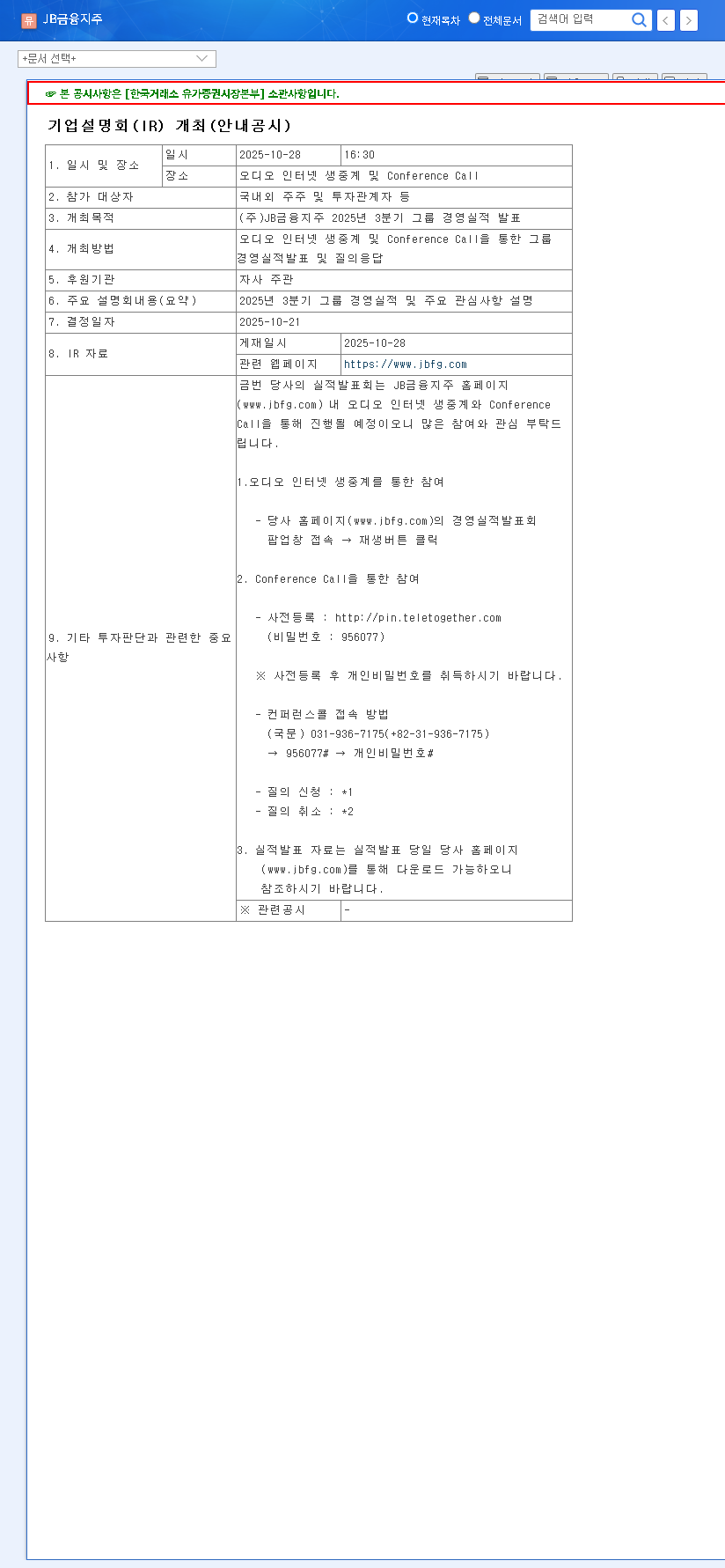
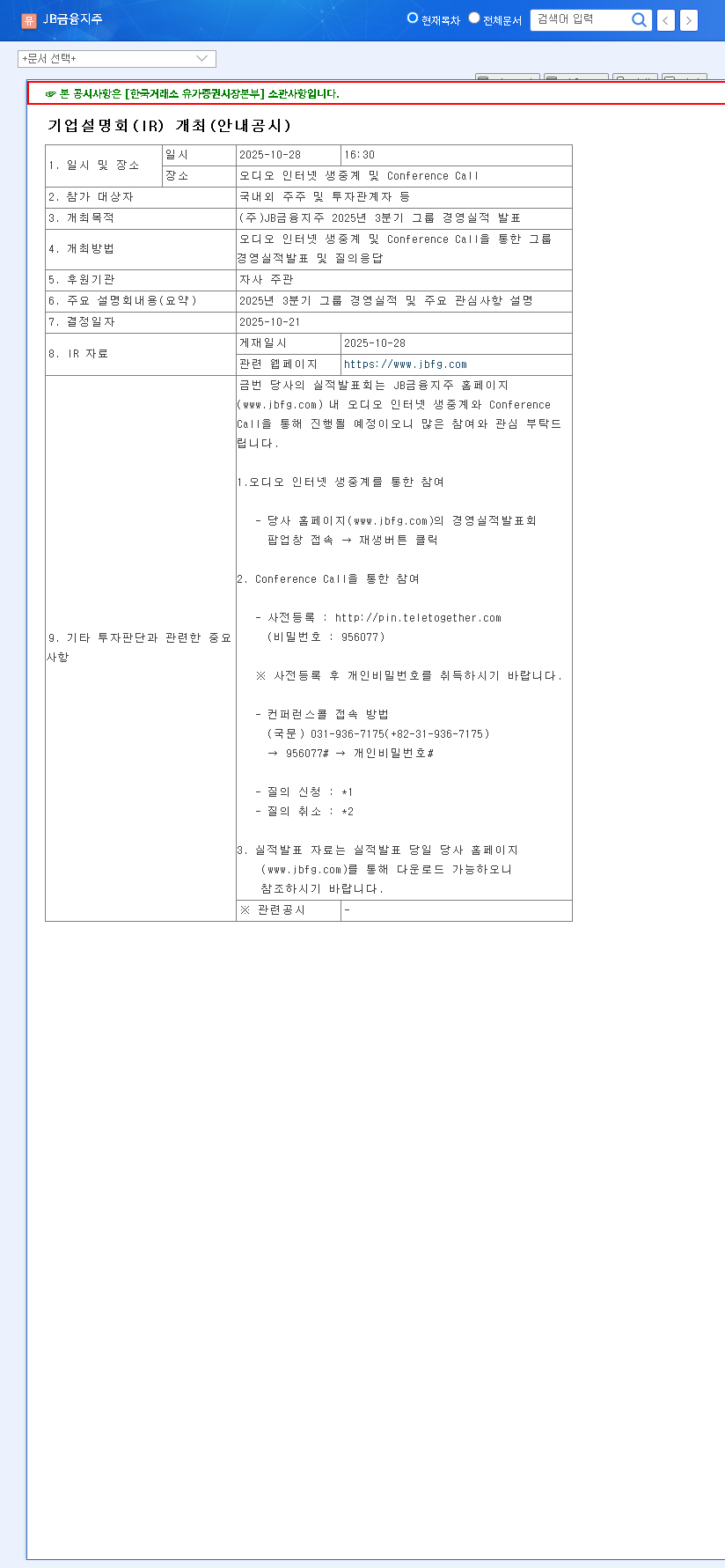
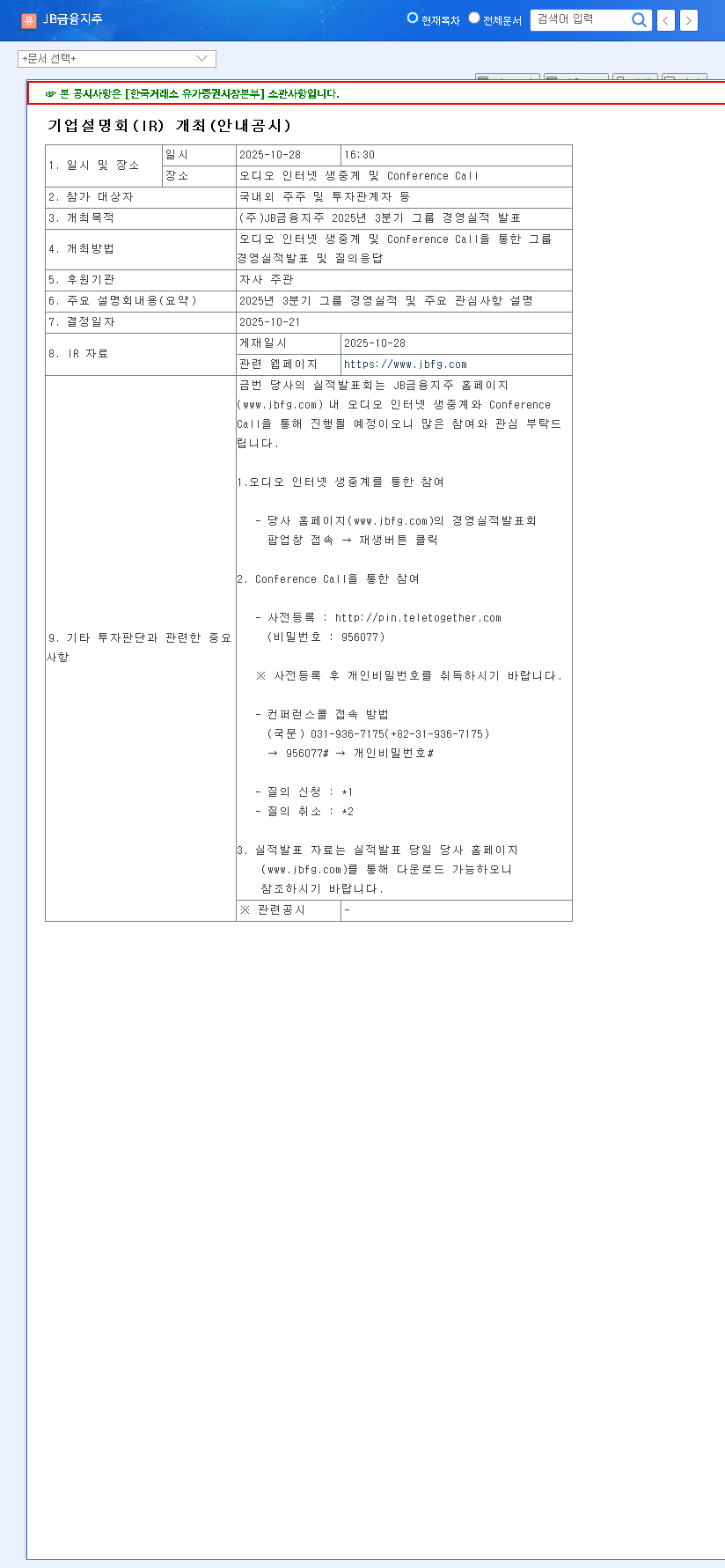
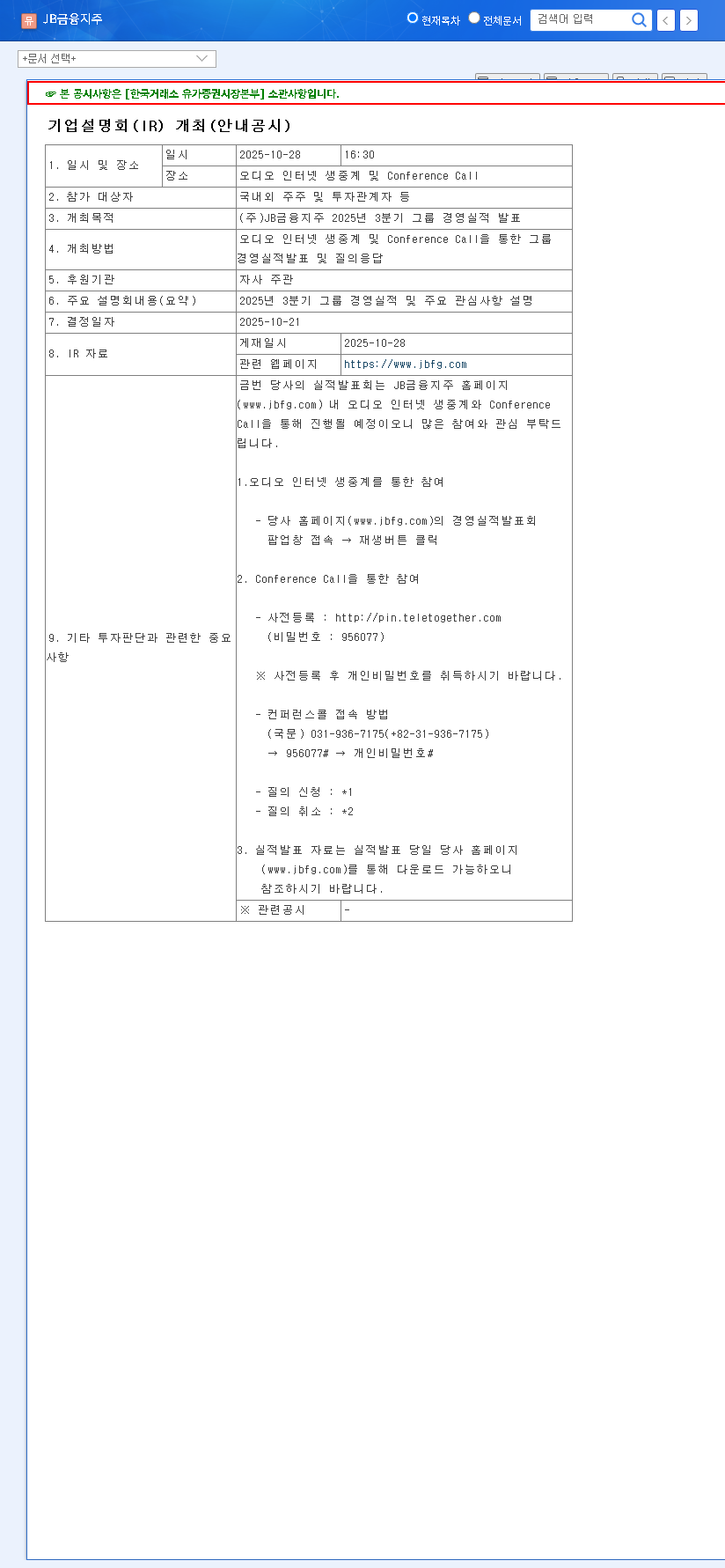
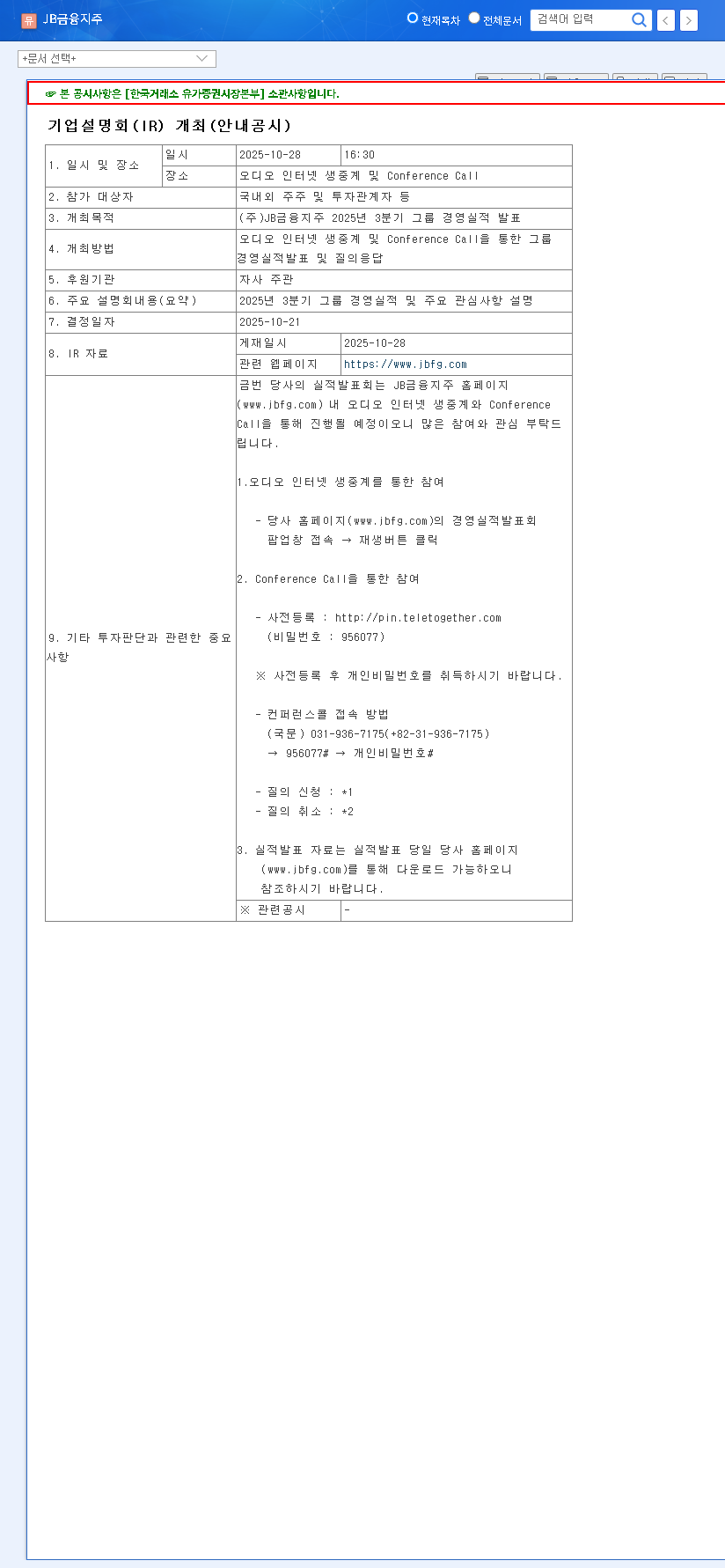
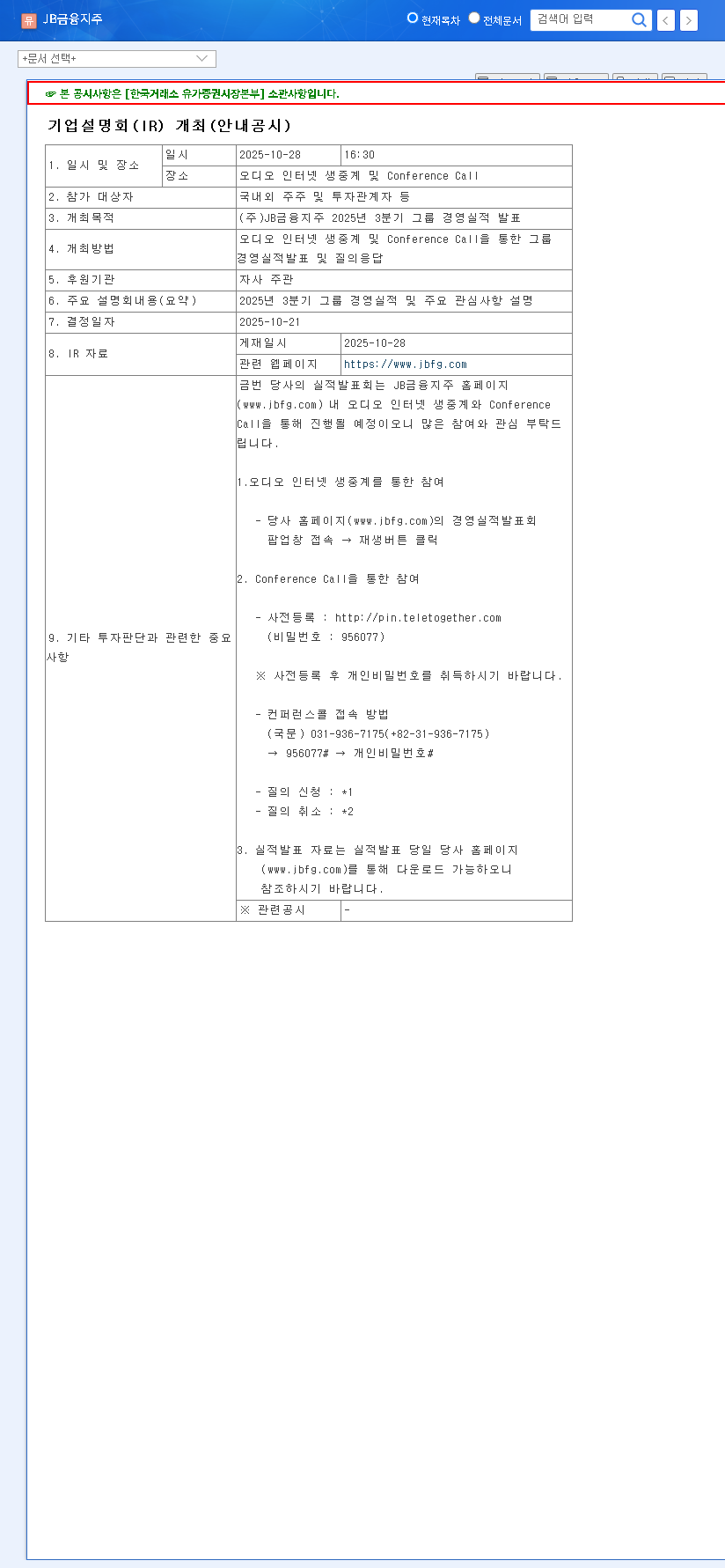
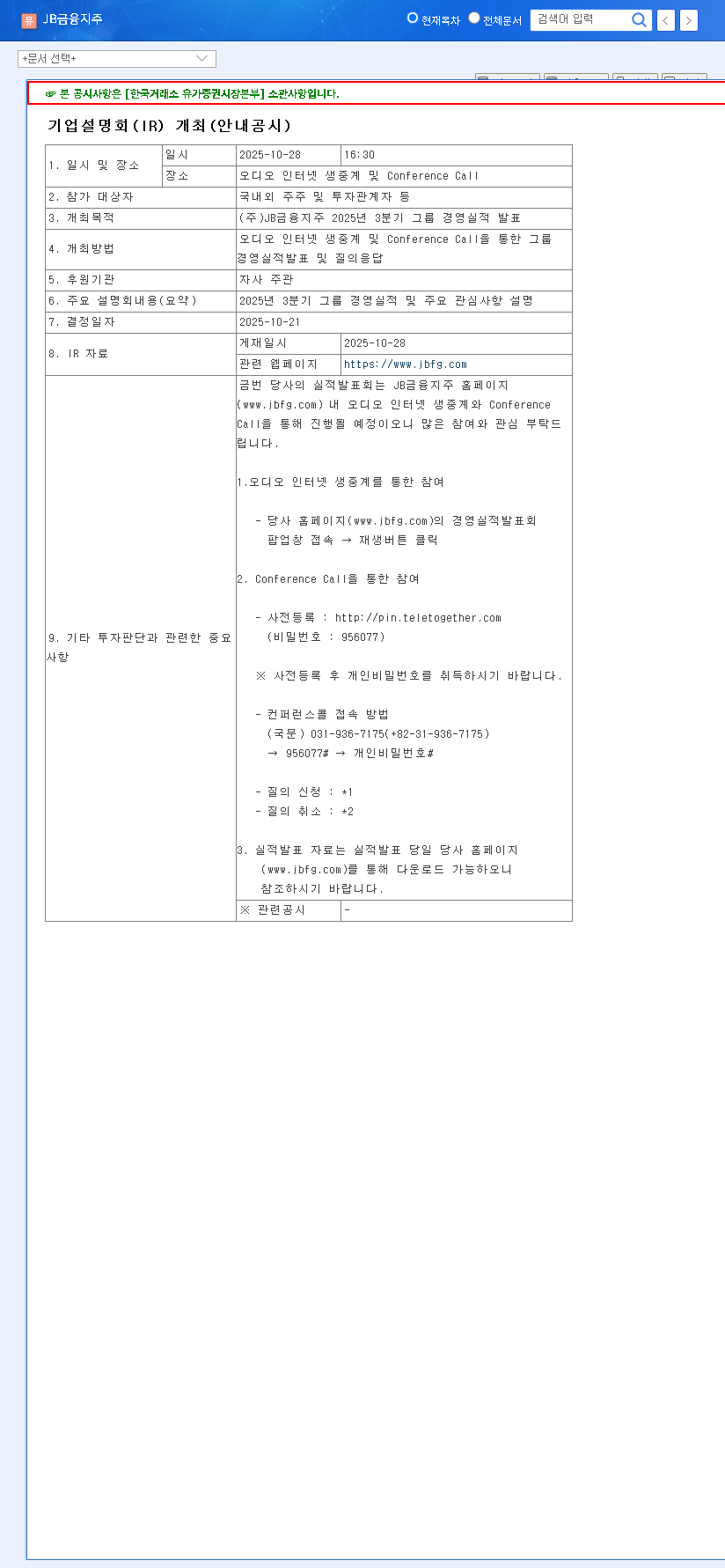
    The upcoming JB Financial Group Q3 2025 earnings investor relations (IR) call is more than just a routine financial update; it’s a critical moment that could define the company’s stock trajectory for the remainder of the year. Scheduled for October 28th, this event will provide investors with a direct look into the company’s performance, profitability, and strategic direction amid a dynamic economic landscape. For those holding or considering a position in JB Financial Group stock, understanding the nuances of this report is paramount for making informed decisions.

    This in-depth analysis will dissect the key details of the event, explore the critical financial metrics to watch, and outline potential scenarios—positive, negative, and neutral—to help you build a robust financial investment strategy. We will delve into what an ‘earnings surprise’ could mean for the stock and what risk factors might be revealed.

    Event Overview: The Q3 2025 JB Financial Group IR

    JB Financial Group has officially scheduled its conference call to discuss its third-quarter performance and address key questions from the investment community. This is a vital opportunity for transparency and for management to build investor confidence.

    • Event: JB FINANCIAL GROUP CO.,LTD Q3 2025 Group Management Performance IR
    • Date & Time: October 28, 2025 (Tuesday), 16:30 KST
    • Purpose: To announce and explain Q3 2025 performance and address key matters of interest.
    • Official Disclosure: The announcement was made via a corporate presentation filing. You can view the Official Disclosure (Source: DART) here.

    Key Financial Metrics to Watch

    To properly analyze the JB Financial Group Q3 2025 earnings, investors should look beyond the headline revenue and profit numbers. Here are the crucial metrics that will reveal the true health of the institution:

    Net Interest Margin (NIM)

    NIM measures the difference between the interest income generated by the bank and the amount of interest paid out to their lenders. A stable or expanding NIM is a sign of strong profitability, especially in a fluctuating interest rate environment.

    Loan Growth and Asset Quality

    Look for steady, sustainable growth in the loan portfolio. Equally important is the Non-Performing Loan (NPL) ratio, which indicates the percentage of loans in default or close to it. A low and stable NPL ratio is critical for investor confidence.

    Return on Equity (ROE)

    ROE measures how effectively management is using investors’ money to generate profits. A higher ROE compared to competitors, such as those detailed in our banking sector competitor analysis, suggests superior operational efficiency.

    Beyond the numbers, the management’s forward-looking guidance will be the most significant catalyst. Listen closely for their outlook on the macroeconomic environment and future growth initiatives.

    Analyzing Potential Stock Price Scenarios

    The market’s reaction to the JB Financial Group IR will likely fall into one of three scenarios.

    Positive Scenario: The Earnings Surprise

    If Q3 earnings significantly exceed market expectations (an ‘earnings surprise’), it could trigger a substantial stock price rally. This would likely be driven by higher-than-expected NIM, strong loan growth, and positive guidance on future profitability. Clear communication and a confident outlook from management can amplify this effect, boosting investor trust.

    Negative Scenario: Performance Misses the Mark

    Conversely, if earnings fall short of consensus estimates, the stock could face downward pressure. This might be caused by shrinking margins, rising NPLs, or cautious guidance from management about economic headwinds. Any unexpected negative disclosures could further dampen investor sentiment.

    Neutral Scenario: In Line with Expectations

    If the results are largely in line with what analysts have already predicted, the impact on the stock price may be minimal. In this case, the market has already ‘priced in’ the expected performance. The stock may trade sideways until a new catalyst emerges.

    Your Post-IR Investment Action Plan

    A prudent financial investment strategy requires careful analysis after the information is released. Focus on these key areas:

    • Brokerage Reports: After the call, analyst reports from major firms like Bloomberg Intelligence will provide context, updated earnings forecasts, and target prices.
    • Management’s Tone: Assess the confidence and clarity of the executive team during the Q&A session. Their tone can often be as telling as the numbers themselves.
    • Market Reaction: Monitor trading volume and price action in the days following the announcement. Heavy volume on a price increase is bullish; heavy volume on a decline is bearish.

    Ultimately, the JB Financial Group Q3 2025 earnings call is a pivotal event. By preparing ahead of time and conducting thorough post-event analysis, investors can navigate the potential volatility and make strategic decisions based on a comprehensive understanding of the company’s performance and outlook.

    (175330) JB Financial Group Q3 2025 Earnings: A Deep Dive Analysis for Investors 관련 이미지
  • (175330) JB FINANCIAL GROUP Analysis: CRMC’s 6.59% Stake & What It Means for Investors

    (175330) JB FINANCIAL GROUP Analysis: CRMC’s 6.59% Stake & What It Means for Investors

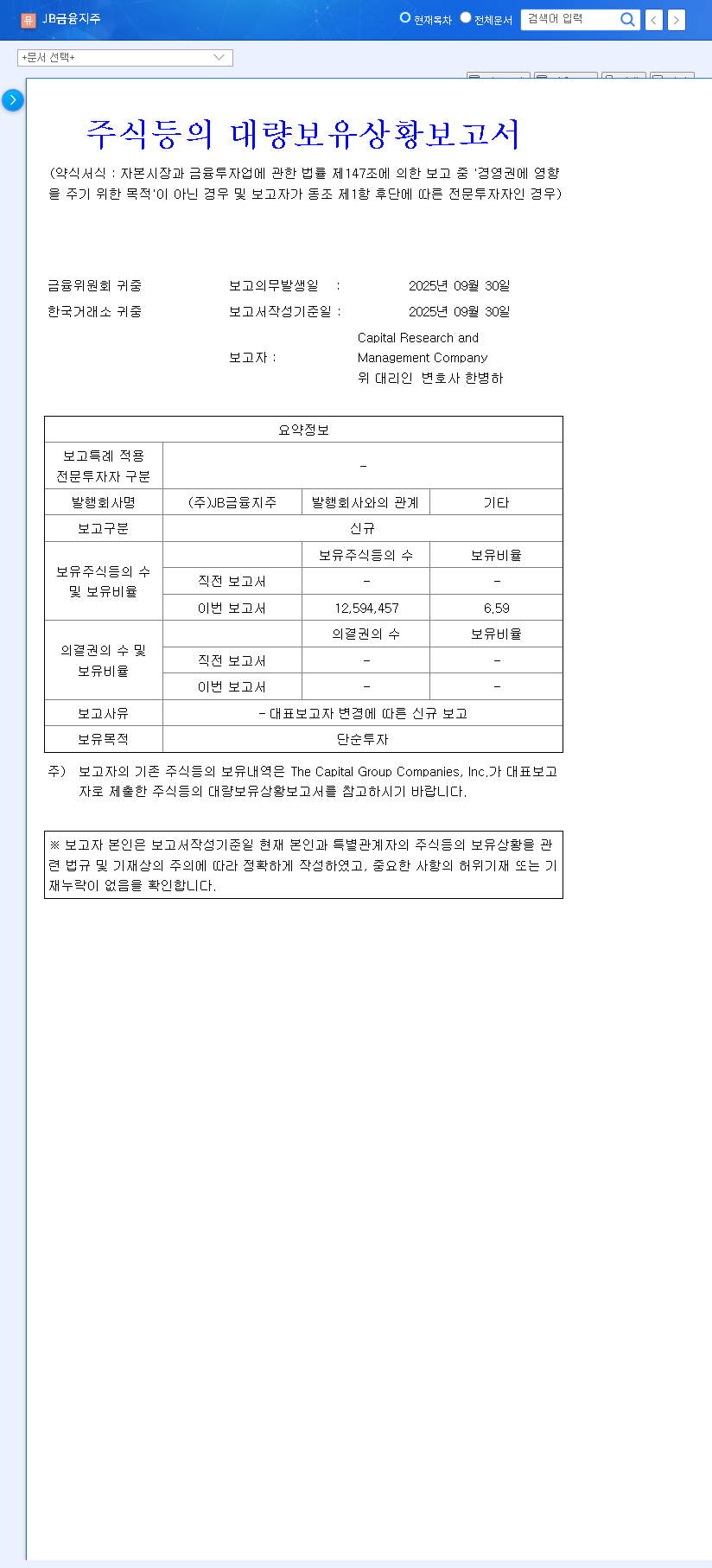
    In a move that has sent ripples through the financial community, global asset management giant Capital Research and Management Company (CRMC) has secured a significant 6.59% stake in JB FINANCIAL GROUP (175330). This isn’t just a routine transaction; when a firm of CRMC’s caliber makes such a substantial investment, savvy investors pay close attention. What does this strategic move signal about the future of JB FINANCIAL GROUP stock, and what are the key implications for your investment strategy?

    This comprehensive analysis will delve into the details of the acquisition, the robust fundamentals that likely attracted this top-tier investor, and the potential market impact. We’ll provide you with the expert guidance needed to navigate this pivotal moment for JB FINANCIAL GROUP.

    The Landmark Announcement: CRMC’s Strategic Stake

    On October 14, 2025, an official disclosure confirmed that Capital Research and Management Company acquired a 6.59% stake in JB FINANCIAL GROUP CO.,LTD. While the stated purpose was for “simple investment,” the sheer scale of the transaction and CRMC’s reputation suggest a deeper conviction. You can view the Official Disclosure (Source) for complete transparency.

    An investment from a global powerhouse like CRMC is more than just capital; it’s a powerful endorsement of a company’s corporate value, management, and long-term growth potential.

    Why This Investment in JB FINANCIAL GROUP Matters

    CRMC is one of the world’s largest and most respected investment managers, known for its deep fundamental analysis and long-term investment horizon. Their decision to invest in JB FINANCIAL GROUP likely stems from a positive assessment of several key factors:

    • Undervalued Growth Potential: The firm may believe the market has not fully priced in the future growth prospects of JB FINANCIAL GROUP, particularly concerning its digital transformation and overseas expansion.
    • Solid Financial Health: As we’ll explore below, the company’s strong fundamentals provide a stable foundation for sustained performance.
    • Confidence in Management: This move signals trust in the leadership team’s ability to execute its strategy and deliver shareholder value.

    A Deep Dive into JB FINANCIAL GROUP’s Fundamentals (H1 2025)

    CRMC’s decision was undoubtedly data-driven. The H1 2025 report for JB FINANCIAL GROUP showcases a company firing on all cylinders despite a challenging economic environment.

    Impressive Profitability and Efficiency

    The company has demonstrated consistent, high-level profitability. This financial strength is a core component of our JB Financial Group analysis.

    • Net Income: Achieved a consolidated net income of KRW 370.4 billion.
    • High Returns: Maintained an excellent ROE (Return on Equity) of 13.1% and ROA (Return on Assets) of 1.11%, indicating highly efficient use of capital.
    • Cost Management: The Cost-to-Income Ratio (CIR) stands at an impressive 35.8%, showcasing a lean and efficient operational structure.
    • Global Strength: Overseas operations, like Cambodia’s PPCBank, contributed a solid net profit of KRW 25 billion.

    Stable Capital Adequacy & Risk Management

    In the banking sector, stability is paramount. JB FINANCIAL GROUP maintains a robust capital buffer, with a Common Equity Tier 1 (CET1) Ratio of 12.40%. This is a key indicator of a bank’s ability to withstand financial distress. To learn more, see this overview of capital adequacy ratios from a leading financial authority. While asset quality requires ongoing monitoring—particularly around real estate project financing (PF) risks—the current non-performing loan ratios remain at manageable levels.

    Action Plan for Investors: How to Proceed

    The CRMC investment is a significant positive signal. However, prudent investment requires a balanced approach. Here’s what to focus on:

    • Monitor Institutional Flow: Keep an eye on any further changes in CRMC’s holdings or statements from the firm regarding their investment thesis.
    • Track Performance: Pay close attention to the upcoming H2 2025 earnings report. Look for continued strength in profitability and progress on strategic initiatives like digital transformation.
    • Assess Macro Risks: Stay informed about macroeconomic factors like interest rate trends and real estate market stability, which are crucial for the banking sector. Explore our guide to analyzing banking stocks for more context.

    In conclusion, the Capital Research and Management Company investment validates the strong fundamental case for JB FINANCIAL GROUP. For investors, this moment presents a compelling opportunity to evaluate a financially robust company that is now firmly on the radar of one of the world’s most influential asset managers.

    (175330) JB FINANCIAL GROUP Analysis: CRMC's 6.59% Stake & What It Means for Investors 관련 이미지
  • (175330) JB Financial Group Stock: Why a Major Investor Sold Out & What It Means for You

    (175330) JB Financial Group Stock: Why a Major Investor Sold Out & What It Means for You

    Unpacking the Major Stake Sale in JB Financial Group

    News of a significant investor exit can send ripples of uncertainty through the market, and the recent development concerning JB FINANCIAL GROUP CO.,LTD is no exception. The Capital Group Companies, a major institutional investor, has completely divested its 6.64% stake, a move that naturally raises questions for current and potential shareholders. Is this a red flag signaling underlying issues, or is it merely a strategic portfolio adjustment? This comprehensive analysis delves into the official report, assesses the fundamental impact, and provides a clear-eyed view to help you navigate the short-term noise and make informed investment decisions.

    The Event: A Complete Divestment by a Key Investor

    On October 14, 2025, a mandatory disclosure was filed, revealing a significant shift in the ownership structure of JB FINANCIAL GROUP CO.,LTD. The filing, categorized as a ‘Report on Large Shareholding Status,’ confirmed that The Capital Group Companies, Inc. liquidated its entire position in the company. The sale involved multiple funds managed by the investment giant, reducing their holding from 6.64% to zero.

    For full transparency, the details of this transaction are publicly available. You can view the Official Disclosure on the DART system, South Korea’s primary electronic disclosure platform.

    Key Details of the Transaction:

    • Issuer: JB FINANCIAL GROUP CO.,LTD
    • Selling Entity: The Capital Group Companies, Inc. and its related funds.
    • Stake Sold: Complete divestment of a 6.64% stake.
    • Reason Cited: Termination report due to a change in the representative reporter.

    Decoding the ‘Why’: Is This Cause for Alarm?

    The crucial detail lies in the officially stated reason: ‘termination due to a change in the representative reporter.’ This is not a vote of no confidence in the company’s management or future prospects. Instead, it typically points to internal restructuring, fund consolidation, or portfolio rebalancing within the investment firm. Such moves are common for large asset managers juggling numerous global funds.

    This event does not signal a direct change in the fundamental value of JB Financial Group. Its assets, profitability, and capital structure remain unaffected by this ownership change. The core business is intact.

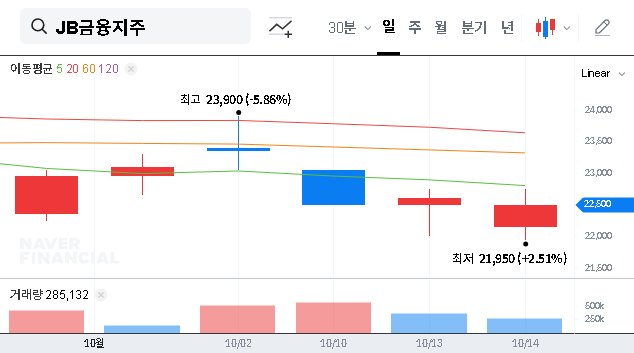
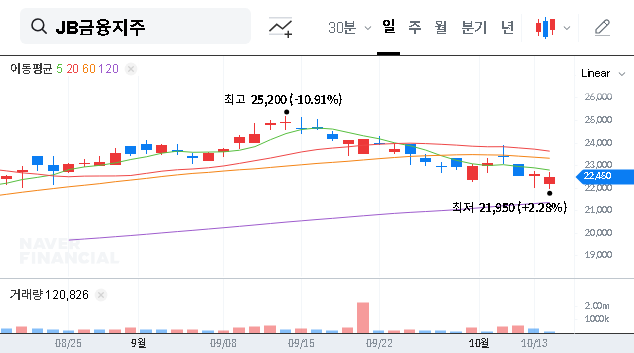
    However, while fundamentals are unchanged, market perception can be powerful. The exit of a well-known investor can create short-term headwinds, primarily affecting investor sentiment and creating supply-demand pressure as a large block of shares is absorbed by the market.

    Market Context: A Look at the Bigger Picture

    No stock operates in a vacuum. The recent price action of JB Financial Group stock has been influenced by broader global macroeconomic trends. Persistent high-interest rates and shifting expectations for rate cuts have created volatility across the financial sector. The declining foreign ownership rate, from nearly 41% in 2020 to around 37% recently, reflects a wider trend of capital flow adjustments in emerging markets. This large-scale sale will contribute to that decline, potentially impacting supply and demand dynamics in the near term.

    An Investor’s Playbook: What to Do Now

    A prudent investor must weigh the short-term market sentiment against the long-term fundamental value of the company. Based on its recent semi-annual reports, JB FINANCIAL GROUP CO.,LTD continues to demonstrate robust fundamentals and stable profitability.

    Key Considerations for Your Strategy:

    • Focus on Fundamentals: Look past the headline. The company’s intrinsic value, profitability, and net interest margin (NIM) have not changed. For more on this, see our guide on How to Analyze Bank Stocks.
    • Monitor for Opportunity: Short-term downward pressure caused by supply/demand imbalance can create attractive entry points for long-term investors who believe in the company’s core business.
    • Assess Your Timeline: Short-term traders may be wary of the volatility, but long-term, value-oriented investors may see this as an opportunity to accumulate shares at a better price.
    • Watch for Future Catalysts: Keep an eye on upcoming earnings announcements and strategic business plans from JB Financial Group’s management. Their response and performance will ultimately drive the stock’s future.

    Conclusion: A Test of Sentiment, Not Fundamentals

    In summary, the divestment by The Capital Group is a significant event that is likely to cause short-term price volatility for JB FINANCIAL GROUP CO.,LTD stock. However, the evidence suggests this is driven by the investor’s internal strategy rather than a fundamental flaw in the company. For investors with a long-term horizon, any resulting price weakness could represent a strategic buying opportunity, provided their own due diligence aligns with the company’s continued stable performance and robust fundamentals.

    (175330) JB Financial Group Stock: Why a Major Investor Sold Out & What It Means for You 관련 이미지