Tag: Investor Strategy

  • (006260) LS Cable & System Rights Offering: A Deep Dive into LS Corp’s ₩157.6B Growth Strategy

    (006260) LS Cable & System Rights Offering: A Deep Dive into LS Corp’s ₩157.6B Growth Strategy

    A ₩157.6 Billion Bet: Inside the LS Cable & System Rights Offering

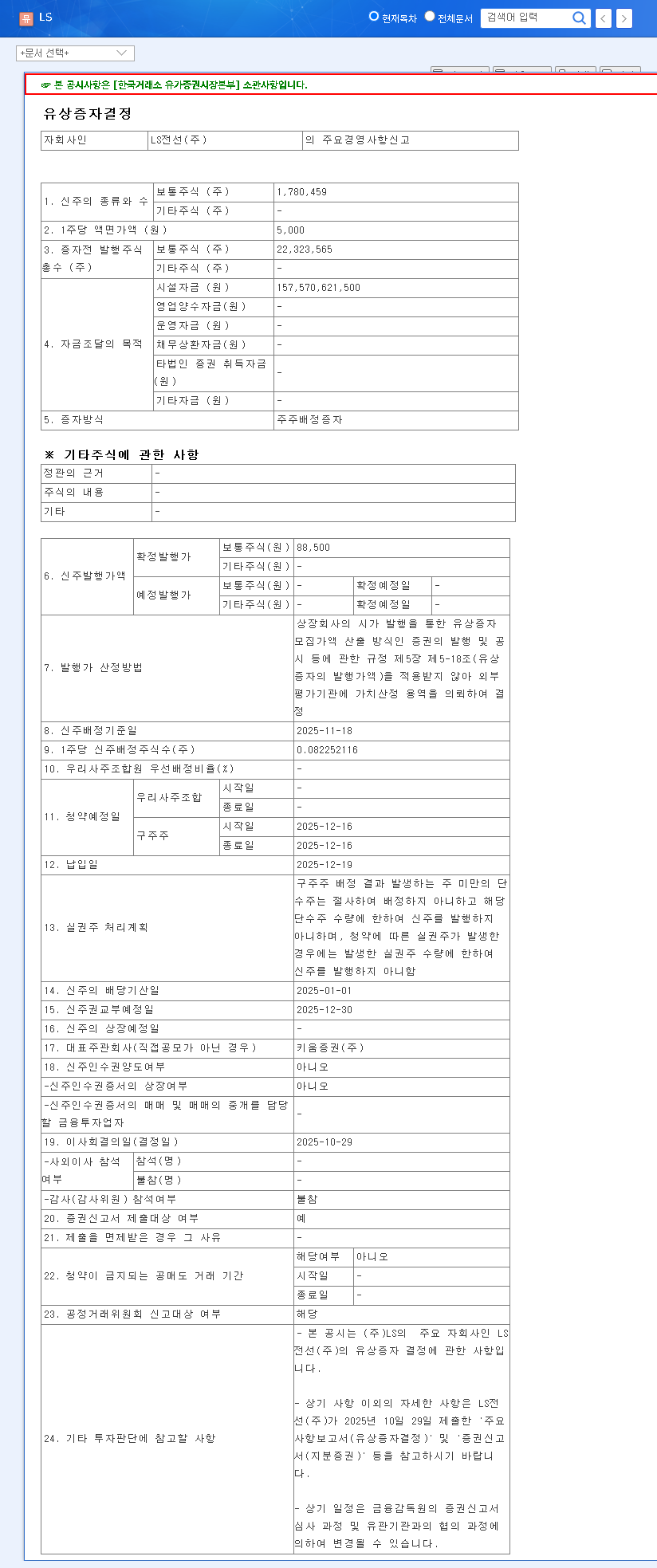
    The recent announcement of the LS Cable & System rights offering, a massive capital injection totaling 157.6 billion KRW, represents a pivotal moment for its parent company, LS Corp. This strategic maneuver is not merely a financial transaction; it’s a clear signal of the company’s ambitious plans for future growth, technological advancement, and a reinforced commitment to LS Corp shareholder value. For investors, this move presents both opportunities and critical questions. How will these funds be utilized, and what does this capital increase signal about the broader LS Corp investment strategy? This comprehensive analysis will break down every facet of the offering, providing investors with the clarity needed to navigate this development.

    Deconstructing the Rights Offering: The Core Details

    Announced on October 30, 2025, this shareholder rights offering grants existing shareholders the right to subscribe to new shares, directly funding the company’s expansion. Understanding these corporate actions is key for any investor; you can learn more about the fundamentals of corporate finance on our related resources page. Here are the essential details of the plan:

    • Total Amount: 157.6 billion KRW
    • Issuance Method: Shareholder Rights Offering
    • Offering Ratio: 0.08 new shares per existing share
    • Primary Purpose: Exclusively for facility investments
    • Subscription Period: December 16 – December 19, 2025

    The Grand Strategy: Fueling LS Group Growth

    This rights offering is a cornerstone of LS Corp.’s dual-pronged strategy: securing future growth engines while simultaneously enhancing shareholder value. It’s a calculated move to fortify the company’s market position and financial health for the long term, directly contributing to the overall LS Group growth trajectory.

    A Clear Commitment to Shareholder Returns

    LS Corp. has recently clarified its shareholder return policy, stating its intent to use financial resources for “dividend expansion” and other methods to boost LS Corp shareholder value. This offering should be viewed through that lens. By strengthening a key subsidiary, the parent company increases its capacity for future returns, creating a synergistic relationship between growth investment and shareholder rewards.

    Fortifying Financials for Future Expansion

    The influx of capital will significantly bolster LS Cable & System’s balance sheet. This financial fortification extends to the entire LS Group, enhancing its investment capacity and overall stability. The primary allocation of these funds is earmarked for critical facility investments, aimed at expanding production capacity and upgrading technology. This is confirmed by the company’s Official Disclosure (Source: DART), which outlines the use of proceeds. This strategic investment is designed to secure a competitive edge in a rapidly evolving global market.

    This isn’t just about raising money; it’s about investing in dominance. The funds from the LS Cable & System rights offering are a direct injection into the company’s technological and production backbone, positioning it for long-term market leadership.

    The Investor’s Playbook: Critical Monitoring Points

    While the long-term outlook appears promising, savvy investors must remain vigilant. Success hinges on execution and market conditions. Here are the key factors to monitor as part of your LS Corp investment strategy:

    • Subscription Success & Market Sentiment: The subscription rate among existing shareholders will be the first major indicator of market confidence. A high rate signifies strong investor belief in the company’s vision.
    • Investment Execution & Transparency: Monitor company reports for specific details on how the ₩157.6B is being deployed. Is it on schedule? Are the projected efficiencies being realized? Transparency is paramount.
    • Macroeconomic Headwinds: The global economic climate is volatile. Keep an eye on interest rates, raw material costs (especially copper), and global shipping indices, as these directly impact profitability. Authoritative sources like Bloomberg’s market analysis can provide valuable context.
    • Competitive Landscape: The cable industry is fiercely competitive. Track the R&D, capital expenditures, and market share of key rivals to ensure LS Cable & System maintains its competitive advantage.

    Conclusion: A Strategic Pivot for LS Group

    The LS Cable & System rights offering is far more than a line item on a balance sheet. It is a strategic, forward-looking investment in the future of the entire LS Group. While short-term concerns about share dilution are valid, the long-term potential for increased corporate value, enhanced competitiveness, and greater shareholder returns is significant. For investors, the path forward requires diligent monitoring and a clear understanding of the company’s long-term vision. This move could very well be the catalyst that powers the next decade of LS Group growth.

    Frequently Asked Questions (FAQ)

    Why did LS Cable & System decide on a rights offering?

    LS Cable & System plans to secure 157.6 billion KRW for facility investments through this rights offering. The primary purpose is to fund investments aimed at future growth, such as expanding production capacity and strengthening technological competitiveness.

    What is the impact of this rights offering on LS Corp. as a whole?

    As a major subsidiary, LS Cable & System’s enhanced financial health through these facility investments is expected to positively influence LS Group’s overall investment capacity, financial stability, and long-term growth potential.

    What does the rights offering mean for existing LS Corp. shareholders?

    While a rights offering can raise short-term dilution concerns, this action is aimed at long-term corporate value appreciation. If aligned with LS Group’s shareholder return initiatives, it enhances long-term LS Corp shareholder value. Existing shareholders receive the right to subscribe for new shares.

    What should investors monitor regarding the LS Corp investment strategy?

    Investors should comprehensively monitor the rights offering subscription rate, the specificity and execution of the facility investment plan, macroeconomic changes, and competitor trends to assess LS Group’s mid-to-long-term growth potential.
    (006260) LS Cable & System Rights Offering: A Deep Dive into LS Corp's ₩157.6B Growth Strategy 관련 이미지
  • (103140) POONGSAN CORPORATION Q3 2025 Earnings Call: A Deep-Dive Stock Analysis

    (103140) POONGSAN CORPORATION Q3 2025 Earnings Call: A Deep-Dive Stock Analysis

    The upcoming POONGSAN CORPORATION Q3 2025 earnings call, scheduled for October 31st, represents a pivotal moment for investors. As the market weighs the phenomenal growth of its defense division against headwinds in its non-ferrous metals sector, this event will provide crucial clarity on the company’s trajectory. This in-depth Poongsan stock analysis dissects the company’s H1 2025 performance, explores the key factors that will influence its stock price, and provides a strategic checklist for investors tuning into the call.

    Will Poongsan’s management team successfully address profitability concerns and leverage its defense sector momentum to inspire market confidence? The answer will significantly shape its valuation for the foreseeable future.

    A Tale of Two Divisions: H1 2025 Performance Review

    To understand what’s at stake in the Q3 2025 earnings report, we must first analyze Poongsan’s performance in the first half of the year. The results paint a picture of a company with a powerful growth engine but facing significant margin pressures. For a complete breakdown of the financials, investors can refer to the Official Disclosure on DART.

    Revenue Growth vs. Profitability Squeeze

    In H1 2025, Poongsan reported impressive sales of 2.45 trillion KRW, an 8.7% increase year-over-year. This top-line growth was almost entirely fueled by its booming defense division, capitalizing on the global expansion of K-defense exports. However, this success was overshadowed by a decline in profitability. Operating profit fell by 19.4% to 163.3 billion KRW, and net income saw a steeper drop of 29.4% to 105.8 billion KRW. This squeeze on margins is attributed to a combination of lower sales volumes in the non-ferrous metals segment and rising operational costs.

    Decoding the POONGSAN CORPORATION Q3 2025 Earnings Call

    The upcoming investor relations (IR) event is more than just a presentation of numbers; it’s a critical stress test of the company’s strategy. The market’s reaction will hinge on how effectively management addresses key concerns and outlines a path to sustainable, profitable growth.

    Potential Stock Price Catalysts (The Bull Case)

    • Continued Defense Sector Dominance: If Q3 results show sustained or accelerated growth in the defense division, confirming a strong order backlog and new export contracts, it will reinforce the primary investment thesis for many shareholders.
    • Stabilization in Non-Ferrous Metals: Any sign of a turnaround or a concrete strategy to improve profitability in the struggling non-ferrous metals segment would be a significant positive surprise.
    • Positive Future Guidance: A confident and specific outlook for Q4 2025 and early 2026, especially if it exceeds current market consensus, could trigger a re-rating of the stock.

    Potential Headwinds and Risks (The Bear Case)

    • Earnings Miss: If Q3 earnings fall short of expectations, particularly on the profit front, it could confirm fears that rising costs are eroding the benefits of defense sector growth.
    • Macroeconomic Pressures: Management’s commentary on the impact of global economic slowdowns, volatile copper prices, and currency fluctuations will be scrutinized. A pessimistic tone could spook investors. Keep track of global commodity prices on authoritative sites like Reuters Markets.
    • Vague Strategic Vision: A failure to clearly articulate plans for new growth drivers or R&D initiatives (such as combat drones) could lead to concerns about long-term innovation.

    Investor Action Plan: Key Questions for the IR

    Informed investors should approach the Poongsan investor relations call with a clear set of questions. Focus on these critical areas to cut through the noise and assess the company’s true health and potential. You can also review our complete guide to analyzing K-defense stocks for more context.

    • Profit Margin Details: What specific steps are being taken to combat rising raw material and administrative costs?
    • Defense Order Pipeline: Can you provide more color on the size, duration, and geographic diversity of the current defense order book?
    • Non-Ferrous Metals Strategy: What is the detailed plan to revive sales and/or improve profitability in this segment? Are you considering strategic alternatives?
    • Capital Allocation: How will the company balance R&D investment, debt management, and shareholder returns in the coming year?

    In conclusion, while Poongsan’s robust revenue growth and leading position in the K-defense industry are undeniable strengths, the upcoming Q3 2025 earnings call will be crucial for addressing persistent profitability concerns. A transparent and confident management presentation could unlock significant shareholder value, while ambiguity could lead to short-term volatility. Investors should listen closely and be prepared to act based on the substance of the report and the subsequent Q&A session.

    (103140) POONGSAN CORPORATION Q3 2025 Earnings Call: A Deep-Dive Stock Analysis 관련 이미지
  • (108230) TOPTEC Lawsuit: Full Analysis of the ₩11.6B Penalty & Impact on TOPTEC Stock

    (108230) TOPTEC Lawsuit: Full Analysis of the ₩11.6B Penalty & Impact on TOPTEC Stock

    In a significant development for TOPTEC investors, the company has been dealt a major blow in its legal battle with Samsung Display. The recent verdict in the TOPTEC lawsuit mandates a staggering ₩11.6 billion (approx. $8.5 million USD) penalty for punitive damages. This ruling represents a critical inflection point, raising serious questions about the company’s financial stability, operational future, and stock performance.

    This comprehensive analysis dissects the court’s decision, explores the far-reaching consequences of the penalty, and provides actionable insights for current and prospective investors. We will delve into the financial strain, potential reputational damage, and the key risk factors to monitor as the situation unfolds.

    The Verdict: A Deep Dive into the TOPTEC Lawsuit

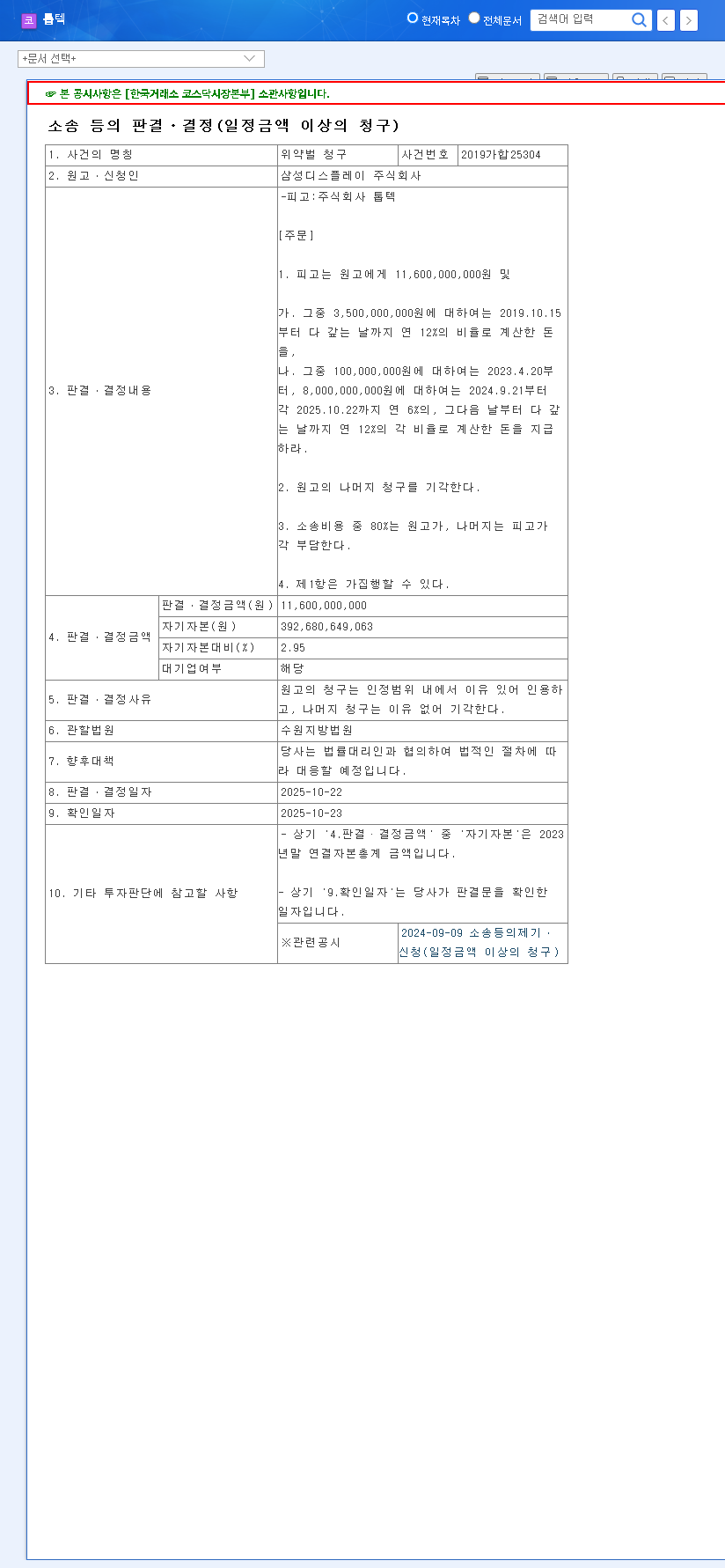
    On October 23, 2025, the Suwon District Court delivered an unfavorable judgment against TOPTEC COMPANY,LIMITED in the punitive damages claim (Case No. 2019gahap25304) initiated by Samsung Display Co., Ltd. The court ordered TOPTEC to pay the substantial sum of ₩11.6 billion. The official filing confirms the core details of this ruling. You can view the Official Disclosure (DART) for primary source verification.

    Key Details of the Judgment

    • Principal Amount: A penalty of ₩11.6 billion payable to Samsung Display.
    • Interest Accrual: Additional interest payments at rates of 6% or 12% per annum on different portions of the amount, compounding the financial burden from dates in 2019, 2023, and 2024.
    • Litigation Costs: TOPTEC is also liable for 20% of the total litigation costs, adding another layer of expense.

    The ₩11.6 billion penalty isn’t just a line item on a balance sheet; it’s a direct challenge to TOPTEC’s liquidity and a significant test of investor confidence in the company’s governance and risk management.

    Financial & Operational Fallout of the ₩11.6 Billion Penalty

    The consequences of this verdict extend beyond the immediate cash outlay. The TOPTEC ₩11.6 billion penalty will create ripples across its entire financial structure and business reputation.

    Gauging the Financial Strain

    Numerically, the ₩11.6 billion fine represents 2.95% of TOPTEC’s total assets (as of year-end 2023) and a more significant 6.2% of its market capitalization. This creates an immediate and pressing liquidity challenge. The company must now devise a strategy to fund this payment, which could involve depleting cash reserves, selling assets, or taking on new debt. Each of these options carries its own risks, from hindering future R&D investment to increasing leverage. For more on how companies manage such obligations, you can read about corporate liquidity strategies on authoritative financial sites like Investopedia.

    Reputation and Business Continuity Risks

    While the verdict may not halt daily operations, the reputational damage could be long-lasting. Losing a high-profile TOPTEC lawsuit to a global giant like Samsung Display can erode trust with other clients and partners. Potential customers may become wary of entering into complex contracts, fearing similar disputes. This tarnished credibility could put TOPTEC at a competitive disadvantage when bidding for new projects, impacting its long-term growth pipeline.

    Outlook for TOPTEC Stock and Investor Strategy

    For TOPTEC investors, the path forward requires careful navigation. The market’s reaction is likely to be swift, but a considered, long-term approach is essential.

    Short-Term Volatility vs. Long-Term Fundamentals

    In the short term, the TOPTEC stock price is expected to face significant downward pressure as the market digests the news of the ₩11.6 billion liability. Investor sentiment will likely turn negative. However, the long-term outlook depends entirely on management’s response. If the company can transparently address the payment plan and demonstrate the continued strength of its core automation business, it may be able to rebuild confidence over time. Investors should review our guide on Analyzing Tech Sector Stocks Under Duress for more context.

    Key Risk Factors to Monitor

    • Appeal Strategy: A decision to appeal could delay the payment but prolong market uncertainty. A decision not to appeal signals acceptance and a move towards resolution.
    • Funding Plan: Watch for official announcements on how TOPTEC will finance the ₩11.6 billion payment. This will be a key indicator of its financial health.
    • Future Disclosures: Upcoming quarterly and annual reports must be scrutinized for writedowns, updated guidance, and management’s commentary on the lawsuit’s impact.

    Frequently Asked Questions (FAQ)

    What is the exact amount TOPTEC must pay Samsung Display?

    TOPTEC must pay ₩11.6 billion in punitive damages, plus accumulating interest and a portion of the legal fees.

    How will this ruling affect TOPTEC’s finances?

    The penalty, which is 2.95% of total assets, will significantly strain short-term liquidity. The company will likely need to arrange special financing or use a large portion of its cash reserves, which could impact its operational flexibility.

    What is the expected impact on TOPTEC’s stock price?

    A negative short-term impact on the stock price is highly probable due to increased financial risk and negative investor sentiment. The long-term performance hinges on the company’s strategic response.

    What should TOPTEC investors do now?

    Investors should avoid panic-selling and instead focus on monitoring official company communications regarding its funding plan and appeal strategy. Re-evaluating the company’s fundamental business strength against this new financial risk is a prudent next step.

    (108230) TOPTEC Lawsuit: Full Analysis of the ₩11.6B Penalty & Impact on TOPTEC Stock 관련 이미지
  • (029480) Kwangmu Management Dispute: EGM Injunction & Stock Analysis for Investors

    (029480) Kwangmu Management Dispute: EGM Injunction & Stock Analysis for Investors

    The ongoing Kwangmu management dispute has escalated significantly, capturing the attention of the investment community. A recent court filing to block a critical Extraordinary General Meeting (EGM) has cast a pall of uncertainty over the company’s future leadership and strategic direction. For current and prospective investors, this is a pivotal moment that demands careful analysis and a clear understanding of the potential risks and outcomes. This comprehensive guide breaks down the situation, explores the underlying causes, and provides actionable insights for navigating the turbulence ahead.

    The Catalyst: An Injunction to Halt the EGM

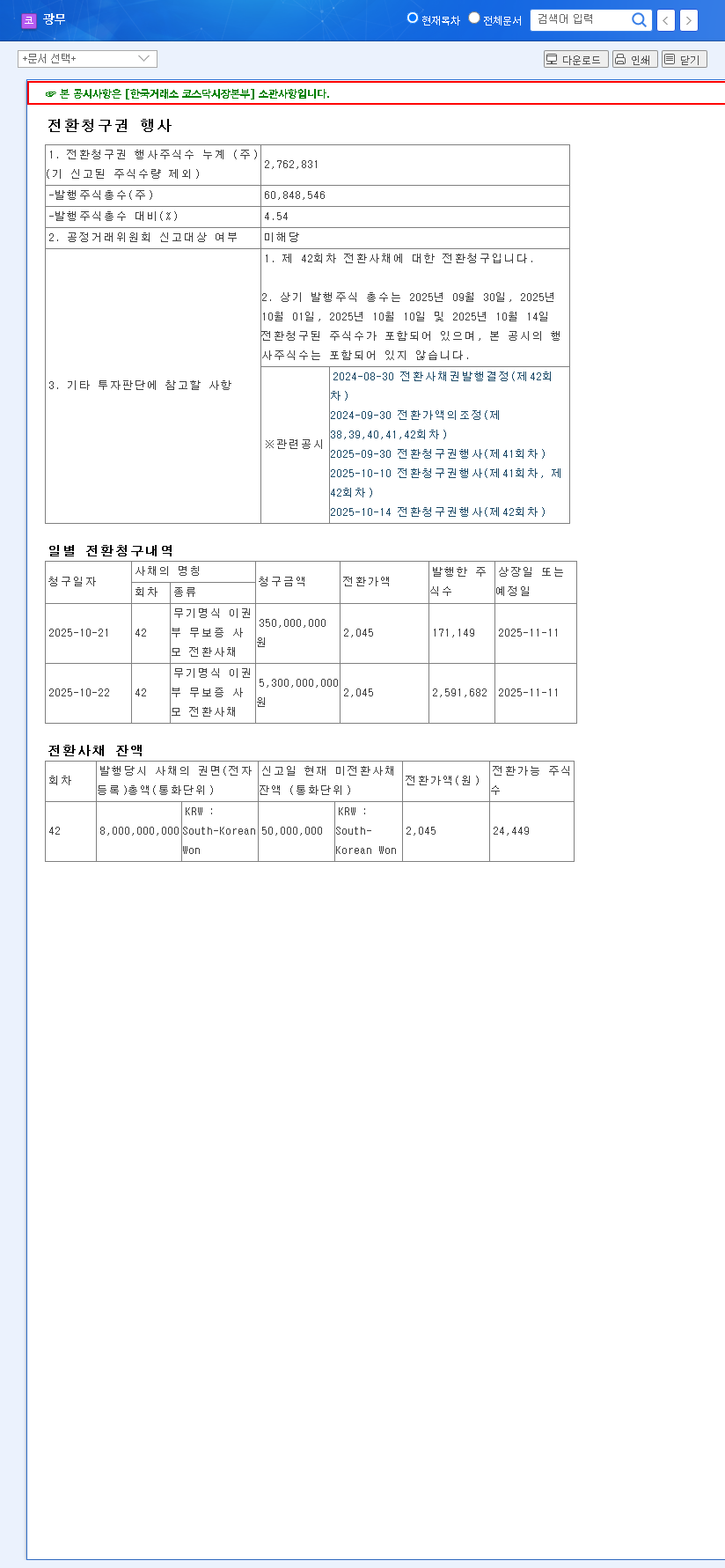
    On October 22, 2025, Kwangmu Co., Ltd. formally disclosed that a lawsuit had been filed seeking an injunction to prohibit its upcoming EGM, which was scheduled for November 28, 2025. The filing, lodged in the Seoul Central District Court by ‘Lee OOO and one other,’ names Kwangmu and another party as defendants. This legal maneuver is a direct challenge to the company’s current leadership and signals a deep-seated conflict over control. The official disclosure for this event can be viewed directly from the source: Official DART Report. The company has stated its intention to respond proactively through its legal representatives, but the battle lines have been drawn.

    Decoding the Kwangmu Management Dispute

    While the public filing is the tip of the iceberg, the root causes of the Kwangmu management dispute are likely complex. Based on the nature of the legal action, we can infer several potential scenarios that investors should consider:

    Possibility 1: Hostile Takeover Attempt

    An EGM is a classic battleground for hostile M&A activity. An external entity or a rival shareholder faction may be attempting to seize control by calling a meeting to replace board members or pass resolutions favorable to their agenda. The injunction, in this case, would be a defensive move by the incumbent management or their allies to stall the takeover attempt and buy time to rally support.

    Possibility 2: Internal Power Struggle

    The conflict may not be external but rather an internal schism. Disagreements among major shareholders or within the management team over corporate strategy, succession planning, or capital allocation can boil over into a public power struggle. One faction might have called the EGM to force a change, prompting the opposing side to resort to legal measures to block it. This scenario points to a severe breakdown in corporate governance.

    Possibility 3: Shareholder Activism

    Another angle is a dispute involving minority shareholder rights. Activist investors, feeling that their interests are being ignored or that management is underperforming, might have initiated the EGM to address specific grievances. The current leadership may view this as a disruptive action and are using the courts to quash it. Understanding the rights of shareholders is crucial in these situations, a topic covered extensively by authorities like the U.S. Securities and Exchange Commission.

    Regardless of the cause, a public management dispute creates significant operational and financial headwinds. The primary risk for investors is prolonged uncertainty, which can paralyze decision-making and erode shareholder value.

    Impact Analysis: What This Means for Kwangmu Stock

    The fallout from the Kwangmu EGM injunction will likely be felt in both the short and long term.

    • Short-Term Impact: Expect heightened stock price volatility. News of a management dispute often triggers fear, leading to sell-offs and downward pressure on the stock. Trading volumes may spike as speculators enter the fray, but the overall investor sentiment is likely to be negative until clarity emerges.
    • Long-Term Impact: A protracted legal battle could lead to management paralysis. Critical business decisions, new investments, and strategic partnerships may be put on hold. This stagnation can cause Kwangmu to lose its competitive edge. Furthermore, the company will incur significant legal fees, impacting its bottom line.

    Investor Guidance: A Prudent Action Plan

    Navigating the Kwangmu management dispute requires a cautious and informed approach. Rash decisions can be costly. Consider the following steps:

    • Monitor Official Channels: Keep a close watch on court decisions and official disclosures from Kwangmu. Avoid reacting to market rumors and focus on verified information.
    • Review Your Portfolio: Assess your exposure to Kwangmu stock. If it represents an oversized portion of your portfolio, consider rebalancing to mitigate risk through diversification.
    • Understand the Stakes: Analyze the potential outcomes. If the incumbent management wins, will it lead to stability or continued friction? If the challengers win, what is their vision for the company? For more on this, see our guide on How to Analyze Corporate Governance Risks.

    Ultimately, the resolution of this dispute will determine the company’s trajectory. Until then, caution is the most valuable asset for any investor involved with Kwangmu Co., Ltd.

    Disclaimer: This analysis is based on publicly available information and should not be considered direct investment advice. All investment decisions should be made after conducting personal due diligence.

    (029480) Kwangmu Management Dispute: EGM Injunction & Stock Analysis for Investors 관련 이미지