The ongoing CCS 066790 management dispute has taken a critical turn, placing investors on high alert. A recent public disclosure reveals a shareholder has initiated legal action to compel access to the company’s books, a move that signals deepening distrust and intensifies the already severe turmoil surrounding Korea Cable T.V Chung-Buk System Co., Ltd. (CCS, 066790). This development is not merely a legal footnote; it is a significant catalyst that could accelerate the company’s path toward a potential delisting, compounding its grave financial and operational challenges.
For any stakeholder, understanding the implications of this shareholder lawsuit is paramount. This article provides a comprehensive CCS 066790 financial analysis, dissecting the latest disclosure, its impact on the company’s fundamentals, and the escalating CCS delisting risk.
Decoding the Shareholder Lawsuit: A Public Vote of No Confidence
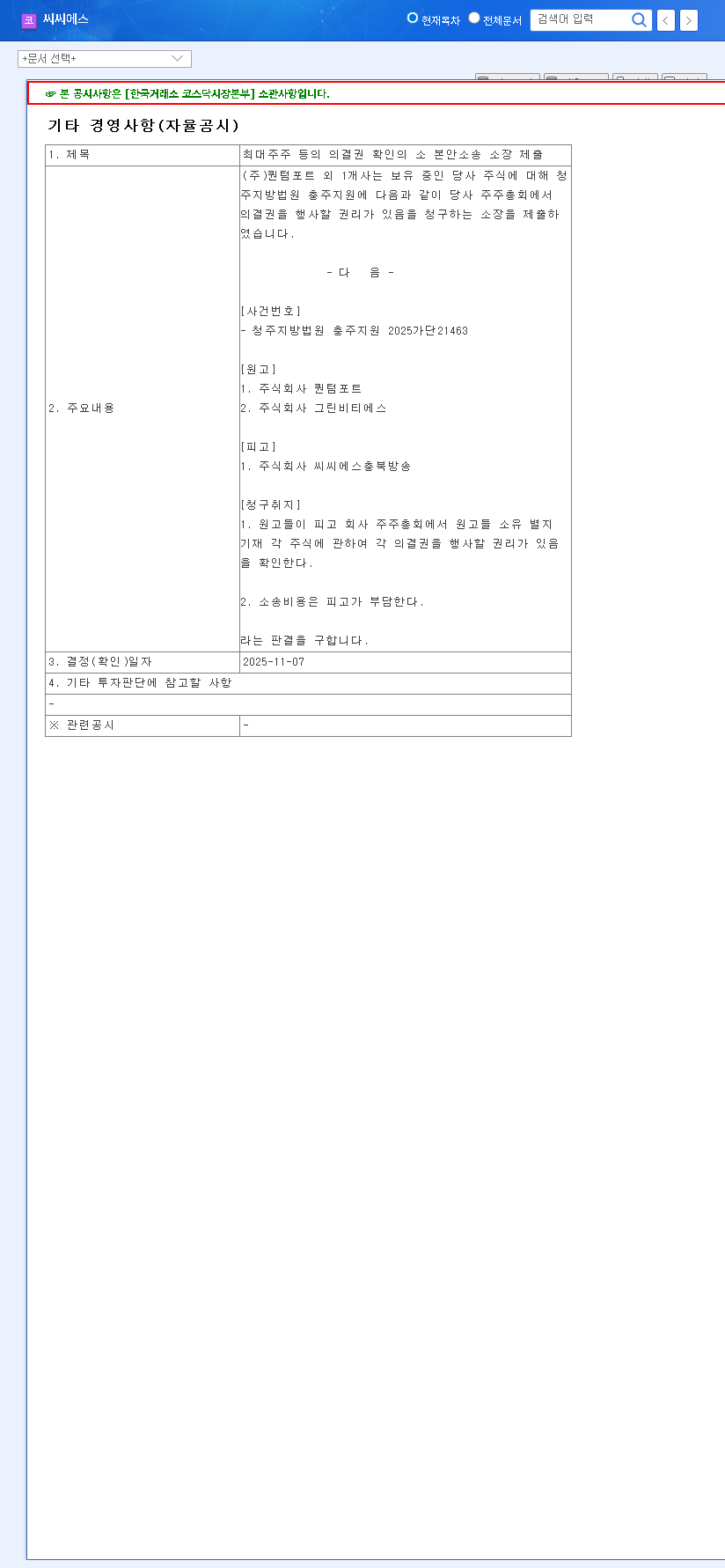
On November 12, 2025, CCS disclosed a filing titled “Application for Indirect Compulsory Enforcement of Provisional Disposition to Permit Inspection and Copying of Books, etc.” According to the Official Disclosure on DART, a shareholder, Mr. Choi, has requested court intervention to force management to provide access to critical financial and operational documents. This legal maneuver, known as indirect compulsory enforcement, is a powerful tool used when a party believes management is obscuring information or mismanaging company assets.
This legal action is not just a procedural matter; it is a public declaration of profound distrust in the current leadership. It transforms a private CCS 066790 management dispute into a formal, public crisis with severe financial penalties attached.
A Company in Crisis: In-depth CCS 066790 Financial Analysis
This lawsuit doesn’t exist in a vacuum. It is a symptom of a deeply troubled company. The fundamentals of Korea Cable T.V Chung-Buk System have been deteriorating for years, creating a perfect storm of risk.
Irrecoverable Financial Condition
- •Persistent Revenue Decline: The company’s core business in the hyper-competitive cable TV industry is shrinking, with no clear strategy for a turnaround.
- •Widening Losses: Both operating and net losses are expanding, indicating a fundamental inability to generate profit from its primary operations.
- •Severe Liquidity Pressure: A high provision for doubtful accounts suggests the company is struggling to collect what it’s owed, further straining its cash flow.
Endless Management Disputes and Litigation
The company’s leadership has been in a state of constant flux, paralyzing strategic decision-making. The instability is characterized by frequent changes in major shareholders, delays in regulatory approval, and a litany of legal battles. This environment makes it nearly impossible to execute a coherent business plan. Investors looking to protect themselves may want to review our guide on how to analyze at-risk stocks.
The Domino Effect: How This Lawsuit Amplifies CCS Delisting Risk
This latest CCS shareholder lawsuit acts as a powerful accelerant to the company’s existing problems, pushing it closer to the brink.
- •Intensified Management Paralysis: Management must now divert precious time and capital to fighting a legal battle instead of fixing the business. This further prolongs any hope of normalization.
- •Accelerated Cash Burn: If the court sides with the shareholder and CCS fails to comply, it faces a penalty of 20 million KRW per day. For a company already in financial distress, this is a potentially fatal blow to its liquidity.
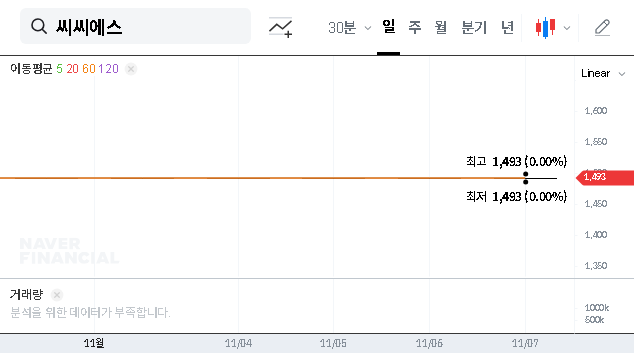
- •Shattered Investor Confidence: With the company already designated an ‘Administrative Issue Stock’ and trading suspended, this public dispute solidifies its toxic reputation. This makes attracting new capital virtually impossible and severely amplifies the CCS delisting risk.
Conclusion: Extreme Caution Required for CCS 066790
The situation at Korea Cable T.V Chung-Buk System Co., Ltd. is dire. The shareholder lawsuit is a clear indicator that internal conflicts have reached a boiling point, further threatening the company’s survival. With a paralyzed management, deteriorating financials, and a mounting pile of legal and regulatory issues, the prospect of business normalization appears distant. Investors must exercise extreme caution, as the underlying risks, including the potential for a complete delisting, are substantial and growing daily.
Disclaimer: This analysis is for informational purposes only and is based on publicly available information. It does not constitute investment advice. All investment decisions should be made based on your own judgment and research.