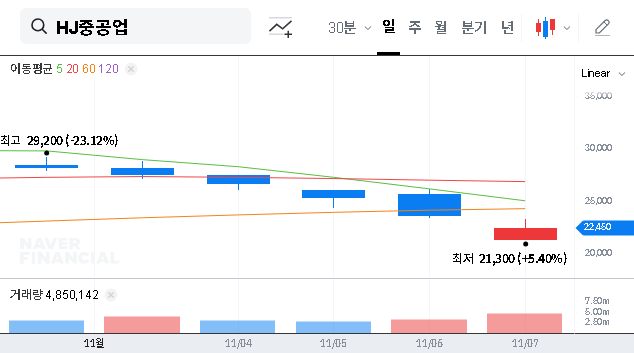
The South Korean market was stunned on November 7, 2025, when HJ Shipbuilding & Construction Co., Ltd. (HJ중공업) announced a complete and total halt of all projects within its construction division. This report provides a comprehensive analysis of the HJ Shipbuilding & Construction crisis, examining the root causes, the severe financial impact, and the potential fallout for the company and its investors. The decision, confirmed in an Official Disclosure, puts the company’s future in serious jeopardy.
This unprecedented HJ Shipbuilding construction halt affects projects valued at 1.0345 trillion KRW, which accounts for a staggering 54.85% of the company’s recent total revenue. It’s not just a pause; it’s a full stop for a core business segment.
Analyzing the Root Causes of the Construction Halt
While the official announcement was sparse on details, a confluence of severe financial and operational pressures likely forced the company’s hand. This was not a sudden event but the culmination of mounting construction industry risks that the company could no longer contain.
Crippling Liquidity Pressure
The most significant factor is almost certainly a severe liquidity crisis. With a dangerously high debt-to-equity ratio of 565% as of mid-2025, HJSC was already on unstable ground. This ratio indicates that the company has far more debt than equity, making it extremely difficult to secure new financing or manage existing debt obligations. The project suspension will only worsen cash flow, creating a vicious cycle of financial distress.
Supply Chain Instability and Soaring Costs
The company’s own semi-annual report flagged the rising costs of essential construction materials like aggregates and steel. As noted by global economic reports from sources like Bloomberg, persistent inflation and supply chain bottlenecks have eroded profit margins across the industry. For a company with weak financials like HJSC, these price fluctuations can be the final blow, making projects unprofitable and unsustainable.
Underlying Operational and Contractual Issues
Beyond financials, other factors could have contributed to the halt:
- •Client Disputes: Potential conflicts over contract terms, significant payment delays, or major design change disagreements could have led to work stoppages on key sites.
- •Regulatory Hurdles: Stricter safety regulations, such as the Serious Accidents Punishment Act in South Korea, may have introduced compliance challenges or unforeseen costs that the company was unable to bear.
- •Safety Incidents: An undisclosed major safety issue at one or more sites could have triggered a regulatory shutdown or an internal decision to halt all work pending review.
The Devastating Financial Impact and Market Fallout
The HJSC financial impact will be swift and severe, creating ripple effects that threaten the company’s existence and impact the wider market. This halt is more than a line item on a balance sheet; it’s an existential threat.
The immediate consequence is a catastrophic revenue drop. With 54.85% of its income stream frozen, HJSC is projected to post massive losses. This will severely strain its ability to service its enormous debt, making default a real possibility. For a deeper understanding of how debt affects companies in this sector, you can read our guide on analyzing financial ratios in construction firms.
- •Stock Price Collapse: Investor confidence has been shattered. The stock is expected to face extreme downward pressure, potentially hitting daily trading limits and facing a prolonged downturn.
- •Credit Rating Downgrade: Credit agencies will likely downgrade HJSC’s debt to ‘junk’ status, making it nearly impossible to raise new capital.
- •Supply Chain Contagion: The halt will trigger a domino effect, pushing countless subcontractors and suppliers toward insolvency, causing job losses and regional economic damage.
- •Reputational Ruin: The company’s credibility is in tatters. Securing future construction contracts will be incredibly difficult, if not impossible, even if it survives the current crisis.
Investor Analysis: Navigating the HJ Shipbuilding & Construction Crisis
For current and potential investors, the situation is critical. The worst-case scenario, which includes bankruptcy or court receivership, is now firmly on the table. A cautious and informed approach is paramount.
Q: What caused the HJ Shipbuilding construction halt?
A: The halt is believed to be caused by a severe liquidity crisis, evidenced by a 565% debt-to-equity ratio, combined with soaring raw material costs and potential contractual disputes or regulatory problems.
Q: What is the direct financial impact on the company?
A: The suspension freezes projects worth over 1 trillion KRW, representing 54.85% of revenue. This will cause a sharp decline in revenue and profit, deepen the liquidity crisis, and likely lead to massive losses and a potential default.
Q: What should investors do now?
A: Extreme caution is advised. Investors should closely monitor all future disclosures from the company regarding its recovery plans, debt restructuring efforts, and any potential asset sales. A thorough reassessment of the company’s viability is essential before making any investment decisions. The risk of significant capital loss is exceptionally high.
Q: Could this crisis spread to the company’s shipbuilding division?
A: Yes. While the shipbuilding division is operationally separate, a severe financial crisis in the construction arm could drain capital from the entire company, hindering the shipbuilding division’s ability to secure funds for new projects and investments.