Tag: Investment Analysis

  • (064350) Hyundai-Rotem IR (064350): Deep Dive into Q3 2025 Performance & Stock Outlook

    (064350) Hyundai-Rotem IR (064350): Deep Dive into Q3 2025 Performance & Stock Outlook

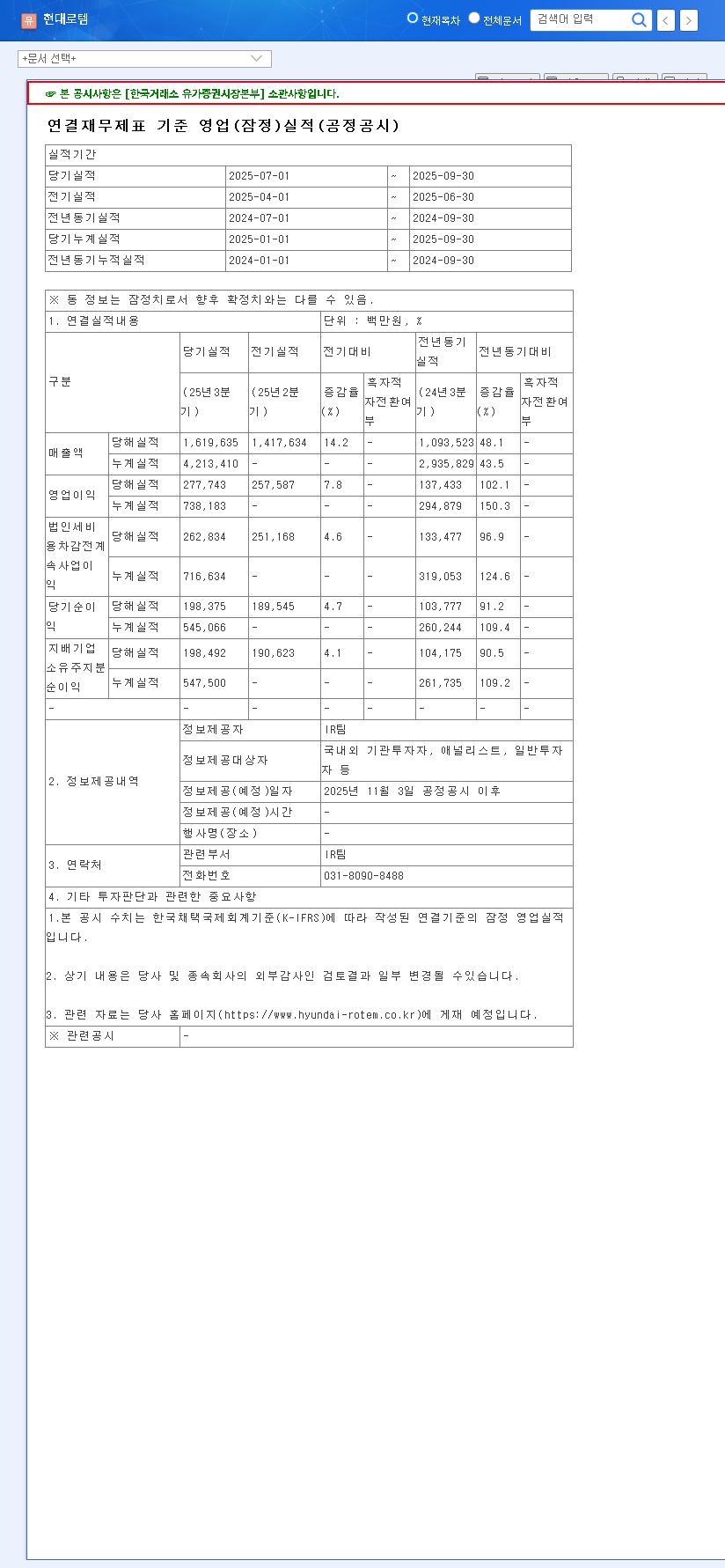
    On November 11, 2025, Hyundai-Rotem Co. (ticker: 064350) will hold a pivotal Investor Relations session for domestic institutional investors. This Hyundai-Rotem IR is far more than a routine update; it’s a strategic platform to showcase the company’s Q3 2025 performance, validate its robust fundamentals, and outline its vision for future growth. For investors monitoring the Hyundai-Rotem stock, this event offers critical insights into its trajectory, from soaring overseas defense orders to pioneering eco-friendly rail solutions. This analysis will delve into the key discussion points and their potential market impact.

    Core Business Segments: Analyzing the Growth Drivers

    Hyundai-Rotem’s diversified portfolio is its greatest strength. The upcoming IR will provide color on the performance and outlook for its three primary divisions, which are the core Hyundai-Rotem growth drivers.

    1. Defense Solution (55% Revenue Share)

    The Defense Solution segment remains the company’s primary revenue engine, fueled by strong international demand. The export success of the K2 main battle tank, particularly to Poland, has solidified Hyundai-Rotem’s position as a global defense powerhouse. Ongoing geopolitical tensions in Eastern Europe and other regions continue to drive defense budget increases, creating a sustained demand pipeline. Investors at the Hyundai-Rotem IR will be keen to hear about progress on subsequent K2 export batches and expansion plans for its wheeled armored vehicle projects, which offer diversification within the land systems market.

    2. Rail Solution (36% Revenue Share)

    The Rail Solution division is capitalizing on the global shift towards sustainable transportation. Steady performance is anchored by domestic projects like the Great Train eXpress (GTX), but the real excitement lies in future-facing technologies. The commercialization of hydrogen-powered electric trams represents a significant leap into next-generation mobility. As governments worldwide commit to reducing carbon emissions, the demand for green public transit solutions is expected to surge, positioning this segment for significant long-term growth. We expect the Hyundai-Rotem Q3 performance report to detail new order prospects in this high-potential area.

    3. Eco-Plant (9% Revenue Share)

    Though the smallest segment, Eco-Plant holds immense potential. This division focuses on crucial future industries, including hydrogen infrastructure (production, storage, charging stations) and smart logistics automation. As the hydrogen economy develops, a trend supported by organizations like the International Energy Agency (IEA), Hyundai-Rotem’s early investments could yield substantial returns. The IR should provide updates on tangible project milestones and the strategy for scaling these nascent but critical operations.

    Investors should focus on the synergy between the Rail Solution and Eco-Plant divisions. Success in hydrogen trams is directly linked to the development of a robust hydrogen infrastructure, creating a powerful internal growth loop.

    Financial Stability and Strategic Outlook

    A strong balance sheet underpins Hyundai-Rotem’s ambitious growth plans. The company has demonstrated impressive financial discipline, significantly improving its debt-to-equity ratio to 134% from 163% at the end of the previous year. This deleveraging enhances financial stability and provides greater flexibility for future investments. Furthermore, a robust operating cash flow and a stable A+ credit rating signal strong operational health and facilitate favorable access to capital. For a deeper look at industry financials, you can explore our comprehensive industrial sector analysis.

    The company is also investing heavily in its future. The 109.9 billion KRW commitment to R&D for technologies like wearable robotics and advanced hydrogen systems is a clear indicator of its long-term vision. These investments are crucial for maintaining a competitive edge and unlocking new markets.

    Key Questions for the Hyundai-Rotem IR

    As the event unfolds, investors should seek answers to several critical questions that will influence the Hyundai-Rotem stock valuation:

    • Order Pipeline: Beyond the current Polish contract, what is the status of other K2 tank and armored vehicle export negotiations?
    • Profitability Margins: How are fluctuating raw material costs and exchange rates impacting margins, and what hedging strategies are in place?
    • Hydrogen Roadmap: What is the concrete commercialization timeline for hydrogen trams and the expected ramp-up in the Eco-Plant’s infrastructure business?
    • Capital Allocation: How does the company plan to allocate capital between R&D, shareholder returns, and further debt reduction?

    The answers provided during the Hyundai-Rotem IR will be critical. Positive surprises in Q3 earnings, the announcement of a major new order, or a clear, confident roadmap for new technologies could serve as powerful catalysts for the stock. Conversely, any guidance that falls short of expectations or highlights significant macroeconomic headwinds could lead to downward pressure.

    For complete transparency and to review the primary data, investors should consult the company’s official filing with the Financial Supervisory Service. Official Disclosure: Click to view DART report.
    (064350) Hyundai-Rotem IR (064350): Deep Dive into Q3 2025 Performance & Stock Outlook 관련 이미지
  • (291810) Pintel Co.,Ltd. Acquisition by Sapientia: A Deep Dive on Stock Price Impact & Future Value (291810)

    Pintel Co.,Ltd. at a Crossroads

    The recent Pintel Co.,Ltd. acquisition news has sent ripples through the investment community. On November 10, 2025, a major announcement revealed that Sapientia acquired a controlling stake in Pintel Co.,Ltd. (KRX: 291810), a company navigating significant financial headwinds. This pivotal moment raises a critical question for current and potential investors: What does this change in leadership mean for the Pintel stock price and its long-term corporate value? This comprehensive analysis examines Pintel’s fundamentals, the implications of the Sapientia deal, and the strategic outlook for its AI-driven technology in the smart transportation sector.

    With Sapientia explicitly stating ‘management influence’ as its goal, significant operational and strategic shifts are not just possible—they are expected. This report provides the crucial details investors need to navigate the changes ahead.

    The Acquisition Details: Sapientia Takes Control

    The transaction, detailed in an Official Disclosure on the DART system, confirmed that Sapientia acquired 3,998,257 shares of Pintel in an off-market deal. This move catapulted Sapientia’s ownership to a commanding 35.17% stake. An acquisition of this magnitude is a clear signal of intent. Sapientia isn’t a passive investor; they are positioning themselves to actively steer the company’s future, a critical development for a business like Pintel that has struggled with profitability.

    Pintel Financial Analysis: A Challenging Picture

    Sapientia’s investment is particularly noteworthy given Pintel’s precarious financial state. The semi-annual report for 2025 paints a stark picture of a company in need of a turnaround. Understanding this context is vital for any Pintel financial analysis.

    Deteriorating Profitability and Cash Flow

    Revenue for the first half of 2025 plummeted to 1,334 million KRW, a staggering 76.7% drop from the previous year. Compounding the issue, research and development costs of 1,622 million KRW outstripped total revenue, widening the operating loss to -2,657 million KRW. Furthermore, inventory assets ballooned by 173%, signaling potential issues with sales and product management. This has placed significant strain on operating cash flow, increasing financial pressure on the company.

    Growth Potential vs. Current Reality

    Despite the grim financials, Pintel holds potential. Its core business revolves around AI video analysis technology, a key component in the burgeoning smart transportation and smart city sectors. The global Intelligent Transportation Systems (ITS) market is projected to grow significantly. Pintel’s technological edge, evidenced by its PREVAX 4.0 platform and patent portfolio, positions it to capture a piece of this market. However, a heavy reliance on a few government contracts and a single major customer (Company A) introduces substantial revenue risk that the new management must address.

    Impact of the Sapientia Pintel Deal

    The Sapientia Pintel partnership could unfold in several ways, presenting both opportunities and risks that will influence the future Pintel stock price.

    Positive Catalysts: Capital, Strategy, and Synergy

    The most immediate benefit is management stabilization. Sapientia’s involvement can provide the strategic direction and, potentially, the capital injection Pintel desperately needs. This could stabilize operations and fund crucial R&D and business development efforts. Furthermore, synergies with Sapientia’s own network or technology portfolio could accelerate Pintel’s market penetration and product development. Historically, management acquisition events often boost investor confidence, which could provide short-term upward momentum for the stock.

    Potential Risks: Uncertainty and Execution

    Change, however, brings uncertainty. A new management team may implement strategies that clash with the existing corporate culture or pivot away from established projects, causing short-term disruption. The core issue remains Pintel’s weak fundamentals. If Sapientia cannot engineer a rapid and tangible improvement in revenue and profitability, the initial optimism surrounding the acquisition could fade, and the stock price may languish. The possibility of restructuring to improve efficiency also cannot be ruled out.

    Investor Action Plan for Pintel (291810) Stock

    For those considering an investment in Pintel, a nuanced approach is required. Here are key factors to monitor following the Pintel Co.,Ltd. acquisition:

    • Monitor New Management’s Plan: Pay close attention to official announcements from Sapientia and Pintel regarding their go-forward strategy, financial restructuring plans, and R&D investment priorities.
    • Track Fundamental Improvement: The ultimate driver of long-term value will be results. Watch quarterly reports for signs of revenue growth, margin improvement, and positive cash flow. For more on this, see our guide to evaluating tech company turnarounds.
    • Evaluate Synergy Realization: Look for concrete evidence of synergy. Are there new joint ventures, technology integrations, or client introductions that stem directly from the Sapientia relationship?
    • Analyze Market Dynamics: Keep an eye on the competitive landscape in the AI video analysis and smart city markets. Pintel’s success depends not only on its own execution but also on maintaining its technological edge.

    In conclusion, while Sapientia’s acquisition offers a potential lifeline and a path to recovery for Pintel Co.,Ltd., the road ahead requires careful execution. Short-term stock price movements may be driven by speculation, but long-term success will be dictated by tangible financial and operational improvements.

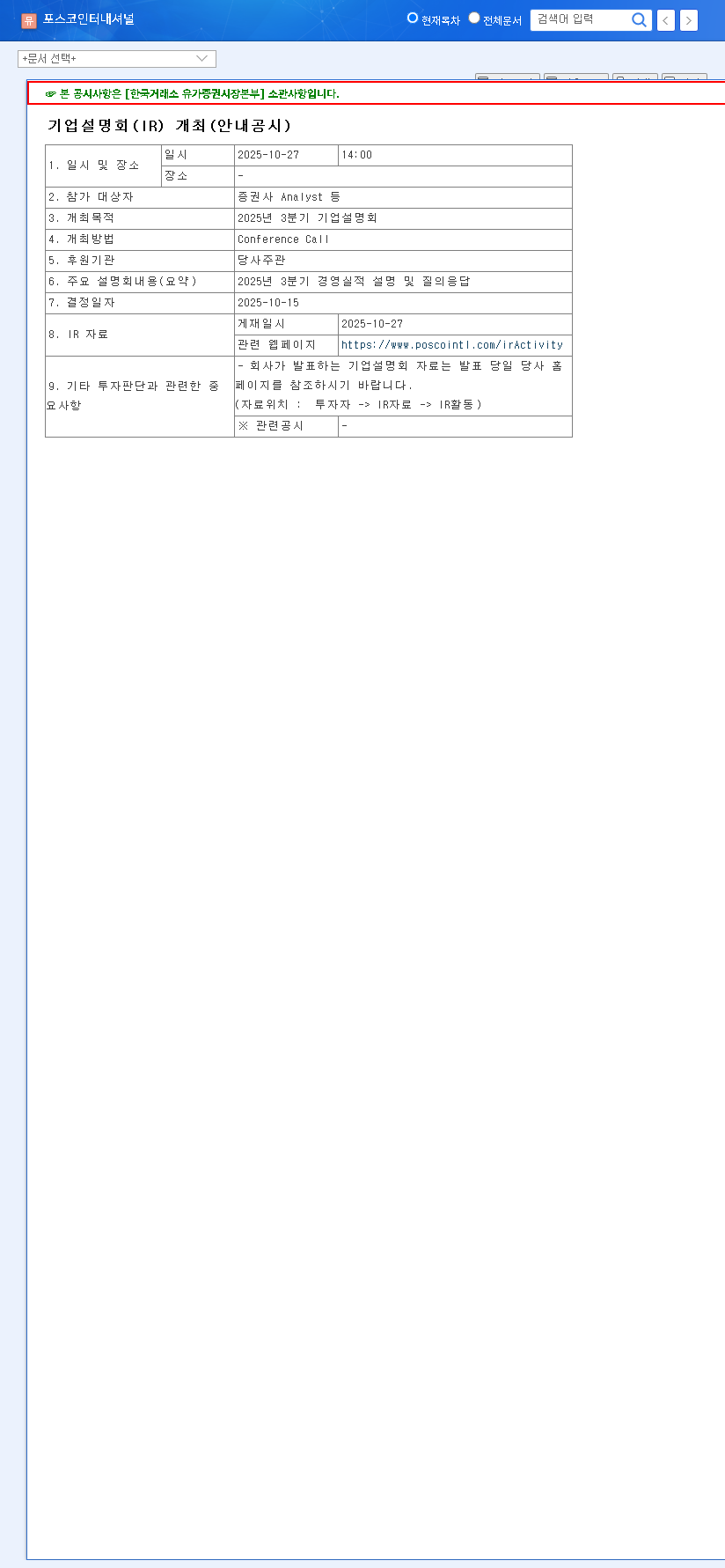
  • (047050) POSCO INTERNATIONAL Stock Analysis: Is the 2025 Overseas IR a Major Buy Signal?

    (047050) POSCO INTERNATIONAL Stock Analysis: Is the 2025 Overseas IR a Major Buy Signal?

    As POSCO INTERNATIONAL (047050), a titan of South Korean industry, prepares for its critical overseas Institutional Investor Relations (IR) event on November 17, 2025, investors are watching closely. This isn’t just another corporate meeting; it’s a strategic move to redefine its narrative on the global stage. This comprehensive POSCO INTERNATIONAL analysis will dissect the company’s evolving business model, financial health, and the immense potential and risks tied to this upcoming IR, helping you determine if POSCO INTERNATIONAL stock represents a compelling buy opportunity.

    POSCO INTERNATIONAL’s Strategic Pivot: Beyond Trading

    Once known primarily as a trading company, POSCO INTERNATIONAL is undergoing a profound transformation. The company is aggressively diversifying its portfolio to capture value in high-growth sectors, aiming to build a more resilient and future-proof business structure.

    From Legacy Operations to Future-Proof Industries

    The core of this evolution lies in shifting focus from traditional trading to securing dominant positions in future-oriented industries. Key areas of expansion include:

    • Energy Value Chain: Expanding beyond simple resource trading into the entire LNG value chain, from exploration and production to storage and power generation.
    • Eco-Friendly Mobility: Becoming a key supplier of drive motor cores, an essential component for electric vehicles (EVs), tapping into the global shift towards green transportation.
    • Secondary Battery Materials: Investing in the supply chain for materials crucial for lithium-ion batteries, a market with explosive growth potential. Learn more about the trends in the global EV battery market.

    Robust Financial Health and Shareholder Value

    Despite market volatility, POSCO INTERNATIONAL maintains a solid financial foundation. Its AA-(Stable) credit rating and a manageable debt-to-equity ratio (102.93% in 2024) signal stability. Furthermore, the company’s commitment to shareholder returns through policies like interim dividends adds to its investment appeal.

    Analyzing the 2025 Overseas IR: A Critical Juncture

    The upcoming overseas IR, technically a Non-Deal Roadshow (NDR), is a platform for direct engagement with global fund managers. The goal is to clearly articulate the company’s vision and convince the market that its intrinsic value is higher than its current stock price suggests. The success of this event could be a major catalyst for the 047050 stock.

    This overseas IR is POSCO INTERNATIONAL’s opportunity to bridge the gap between its ambitious strategic transformation and the market’s current perception, potentially unlocking significant shareholder value.

    The Bull Case: Opportunities from the IR Event

    A successful IR could yield several positive outcomes:

    • Enhanced Investor Confidence: Direct communication can build trust and attract new foreign investment, providing a tailwind for the stock price.
    • Clear Growth Narrative: A detailed presentation of the company’s value-enhancement plans can foster positive analyst ratings and investor sentiment.
    • Uncertainty Reduction: Addressing investor concerns head-on can mitigate perceived risks and increase transparency, making the stock more attractive.

    The Bear Case: Potential Risks and Headwinds

    However, investors must also consider the risks. The 2024 performance saw a decrease in sales and operating profit, largely due to a global economic slowdown and commodity market volatility. If the company presents a pessimistic outlook or fails to deliver a convincing strategy, it could backfire. The feasibility of its plans, as detailed in its Official Disclosure filed with DART, will be under intense scrutiny.

    Investment Thesis: A Deep Dive into POSCO INTERNATIONAL Stock

    After weighing the factors, the long-term outlook for POSCO INTERNATIONAL stock appears positive, with the IR event serving as a potential near-term catalyst. The current valuation seems to undervalue its strategic pivot and future earnings potential.

    Key Investment Points (BUY)

    • Attractive Valuation: With a Price-to-Earnings (PER) ratio of 16.20x and a Price-to-Book (PBR) ratio of 0.54x as of 2024, the stock appears undervalued relative to its intrinsic worth and growth prospects. A successful IR could trigger a significant re-rating.
    • Clear Growth Roadmap: The strategic shift into energy, mobility, and battery materials provides a clear path to long-term value creation that is not yet fully priced into the stock.
    • Fundamental Strength: The company’s stable financial position provides a solid base from which to execute its ambitious growth initiatives.

    Acknowledging the Risk Factors

    • Macroeconomic Headwinds: Prolonged high interest rates and geopolitical instability could continue to pressure the business environment.
    • Commodity Volatility: The energy business remains sensitive to fluctuations in international oil and LNG prices.
    • Execution Risk: The success of large-scale investments in new sectors is not guaranteed and carries inherent operational risks.

    Final Verdict: Is Now the Time to Buy?

    In conclusion, the 2025 overseas IR is a pivotal moment for POSCO INTERNATIONAL. While short-term challenges and macroeconomic risks persist, the company’s strategic direction, robust fundamentals, and attractive valuation present a compelling long-term investment case. For investors with a tolerance for market volatility and a belief in the company’s transformation strategy, the current price level offers a sound entry point ahead of a potentially significant re-evaluation by the global market.

    (047050) POSCO INTERNATIONAL Stock Analysis: Is the 2025 Overseas IR a Major Buy Signal? 관련 이미지
  • (432320) KB STAR REIT’s Signature Tower Investment: A 2024 Analysis for Investors

    For investors closely monitoring the dynamic Korean real estate market, KB STAR REIT Co., Ltd. has recently made a significant strategic move that warrants careful examination. The company announced its intention to acquire beneficiary certificates for the ‘Signature Tower,’ a prime office asset in Seoul’s central business district (CBD). This 19 billion KRW investment, funded through a rights offering, presents a classic dilemma: Is this a masterstroke to fortify its portfolio for long-term growth, or a risky gamble amidst market uncertainty and potential shareholder dilution? This comprehensive analysis will dissect the fundamentals of the deal, its market context, and the critical implications for investors.

    Our analysis is based on publicly available information, including the company’s Official Disclosure on DART, providing a credible foundation for our insights.

    The Anatomy of the Signature Tower Deal

    On November 10, 2024, a subsidiary of KB STAR REIT detailed its plan to acquire 19 billion KRW in beneficiary certificates tied to the Signature Tower. This includes a 16 billion KRW investment in preferred certificates and a 3 billion KRW investment in common certificates. The capital for this acquisition is slated to be raised via a rights offering, a method that directly involves existing shareholders. The underlying asset, Signature Tower, is not just any building; it’s a Grade A office tower in a coveted location, representing a tangible and potentially stable source of rental income.

    Fundamental Impact Analysis: A Double-Edged Sword

    To understand the impact of the Signature Tower investment, we must first consider the REIT’s current financial standing. Recently, the company has faced headwinds, including a significant operating loss driven by impairment charges on existing properties and a rising debt-to-equity ratio. This new acquisition must be viewed through that lens.

    Opportunity: Portfolio Fortification and Revenue Growth

    The primary upside is the addition of a high-quality, core asset to the portfolio. Prime office buildings in Seoul’s CBD, like Signature Tower, tend to command stable occupancy rates and consistent rental income, even during economic downturns. This move could diversify KB STAR REIT’s asset base and provide a reliable new stream of revenue. By funding this through a rights offering instead of debt, the REIT avoids further leveraging its balance sheet, a prudent move given its current debt ratio. This aligns with a broader strategy seen across the industry where REITs are selectively acquiring prime assets to weather market volatility, a trend noted in recent global real estate market reports.

    Risk: Shareholder Dilution and Market Uncertainty

    The most immediate concern for current investors is the REIT rights offering. By issuing new shares to raise capital, the value of existing shares can be diluted. The success of this move hinges on whether the long-term income from Signature Tower outweighs the short-term dilution effect. Furthermore, the commercial real estate market is not without its risks. Factors like rising interest rates, which increase borrowing costs and can compress asset values, and potential shifts in office demand post-pandemic, pose external threats. The success of this investment depends heavily on meticulous management and a stable or growing rental market in Seoul.

    The acquisition of Signature Tower is a strategic pivot for KB STAR REIT, trading short-term financial dilution for the potential of long-term asset stability and enhanced rental income. The execution will be critical.

    Key Considerations for KB STAR REIT Investors

    For those invested in or considering an investment in KB STAR REIT, the path forward requires diligent monitoring. Understanding the fundamentals of how REITs operate is more important than ever. Here are the crucial points to watch:

    • Rights Offering Terms: Pay close attention to the offering price. A significant discount to the market price could lead to greater dilution and short-term price pressure.
    • Signature Tower Performance: Once acquired, the key metrics will be occupancy rates, rental income, and operating expenses. These figures will determine the actual return on investment.
    • Financial Health Improvement: Watch for progress in reducing the overall debt-to-equity ratio and a return to positive operating income, beyond one-time charges.
    • Macroeconomic Indicators: Keep an eye on central bank interest rate policies and commercial real estate trends in the Seoul office market, as these will heavily influence performance.

    Conclusion: A Calculated Risk for Future Growth

    In summary, KB STAR REIT’s move to acquire the Signature Tower is a calculated risk. It addresses the need to strengthen its portfolio with a prime asset while navigating a challenging financial landscape. For investors, this creates short-term uncertainty but also a potential long-term value driver. The ultimate success will depend on the effective integration of the new asset, favorable market conditions, and the management’s ability to restore overall profitability. Cautious optimism, coupled with close monitoring of the key factors outlined above, is the most prudent approach.

  • (466410) Synapsoft Corp. IR (466410): A Deep Dive into Q3 Earnings and Document AI Future

    The upcoming Synapsoft Corp. IR event, scheduled for November 18, 2025, is poised to be a pivotal moment for the South Korean Document AI leader. As Synapsoft Corp. (466410) prepares to disclose its Q3 2025 operating results, investors are keenly watching for a clear roadmap for its AI and SaaS business strategies. With the Synapsoft Corp. stock facing a challenging downward trend, this event represents a critical opportunity for the company to restore confidence and showcase its long-term growth trajectory. This comprehensive analysis will delve into the company’s fundamentals, the competitive landscape, and the key metrics investors should scrutinize during the presentation.

    Understanding Synapsoft and the Document AI Revolution

    Before diving into the specifics of the IR event, it’s essential to understand Synapsoft’s core business. The company operates at the intersection of digital document processing and artificial intelligence, a field known as Document AI. This technology automates the extraction, interpretation, and processing of data from various document types—from unstructured PDFs to scanned images. The market for these solutions is expanding rapidly as businesses seek to enhance efficiency and unlock insights from their vast document repositories. According to reports from leading market analysts, the global Document AI market is projected to see double-digit annual growth, driven by digital transformation initiatives worldwide.

    Synapsoft has established itself as a key player with a suite of AI-powered products like ‘Synap OCR’, ‘Synap DocuAnalyzer’, and the cloud-native ‘Synap Assistant’. These tools are crucial for industries ranging from finance to legal, making the company’s performance a bellwether for the broader Korean AI sector.

    Core Strengths and Growth Catalysts

    Proprietary Technology in a High-Growth Market

    Synapsoft’s primary advantage lies in its proprietary technology. Its ‘Synap OCR’ (Optical Character Recognition) solution, for example, is lauded for its high Korean character recognition rates, a significant competitive moat in its home market. Extensive project experience and government certifications like CSAP/GaaS further solidify its position, creating high barriers to entry for competitors. The growth of the overarching Document AI market provides a powerful tailwind for the company’s core business.

    Strategic Transition to SaaS and New Services

    The company is actively transitioning towards a Software-as-a-Service (SaaS) model with new cloud-based offerings like ‘Synap Assistant’ and ‘SAIDA’. This strategic shift is crucial for securing recurring revenue streams, improving scalability, and expanding its customer base. A successful SaaS transition could lead to a significant re-rating of the Synapsoft Corp. stock by the market, which typically values recurring revenue models more highly.

    The success of Synapsoft’s future hinges on its ability to convert its technological leadership in Document AI into a scalable, profitable SaaS business model. This IR is the company’s chance to prove that strategy is on track.

    Addressing Headwinds: Risks to Consider

    Slowing Growth and Margin Pressure

    Despite the promising market, recent performance has raised flags. The first half of 2025 saw a slight year-over-year revenue decrease, and the operating margin has been on a declining trend. While net income saw a boost from financial gains, investors will be looking for improvements in core operating profitability. This slowdown is a major concern that management must address head-on during the Synapsoft Corp. IR.

    The High Cost of Innovation

    Innovation in AI requires substantial and sustained investment in Research & Development. While Synapsoft’s commitment to R&D is vital for long-term competitiveness, these significant expenditures can weigh on short-term profitability. A key challenge is demonstrating a clear return on this investment through new product adoption and revenue generation, a topic that will surely be a focus of investor questions.

    Investor Action Plan: What to Watch in the Synapsoft Q3 Earnings Call

    For a thorough investor analysis, focus on the following key areas during the presentation. The company’s detailed financials can be reviewed in its Official Disclosure on DART.

    • Q3 Performance Metrics: Look beyond the headline revenue and profit numbers. What is the growth rate of the AI and SaaS segments specifically? Are there signs that the operating margin decline is stabilizing?
    • SaaS Transition KPIs: Ask about key SaaS metrics like Monthly Recurring Revenue (MRR), customer acquisition cost (CAC), and churn rate. Concrete data here will be more valuable than vague promises.
    • Competitive Differentiation: How does Synapsoft plan to win against intensifying competition in the Document AI space? What is their strategy for international expansion?
    • Future Outlook & Guidance: Any financial guidance for Q4 2025 and early 2026 will be critical in shaping market expectations. A confident outlook could trigger a stock price recovery.

    By focusing on these points, you can better evaluate the long-term investment thesis for Synapsoft Corp. beyond the short-term stock price volatility.

    Frequently Asked Questions (FAQ)

    Q1: What are Synapsoft Corp.’s main business areas?

    Synapsoft Corp. focuses on Document AI solutions and services that integrate digital document processing with AI technology. They offer various AI-based solutions such as ‘Synap OCR’, ‘Synap DocuAnalyzer’, ‘Synap DU LLM’, and ‘Synap Assistant’.

    Q2: What key information should investors look for in the Q3 2025 earnings announcement?

    Investors should pay close attention to whether revenue growth slowdown persists, the sustainability of AI sector growth, and the company’s specific explanations for the declining operating margin and plans for profitability improvement. Additionally, market adoption strategies for new services and R&D investment performance are crucial.

    Q3: What are the main risk factors to consider when investing in Synapsoft Corp.?

    Key risk factors include continued revenue growth slowdown, declining operating margins, delayed visible results despite high R&D investment, and macroeconomic variables such as exchange rate volatility.

    Q4: What are Synapsoft Corp.’s long-term growth drivers?

    High growth potential of the AI and Document AI markets, technological competitiveness such as ‘Synap OCR’s superior Korean recognition rate, accelerated cloud-based SaaS transition, and the launch of new AI services like ‘Synap Assistant’ are considered long-term growth drivers.

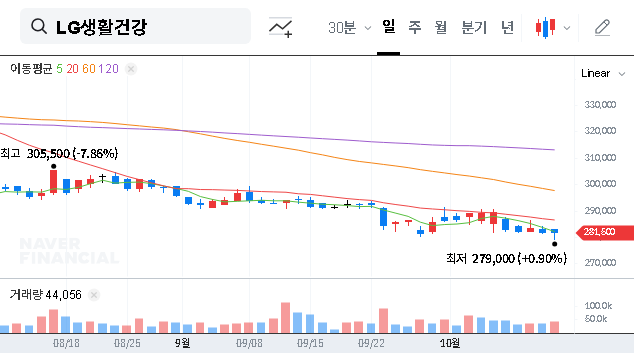
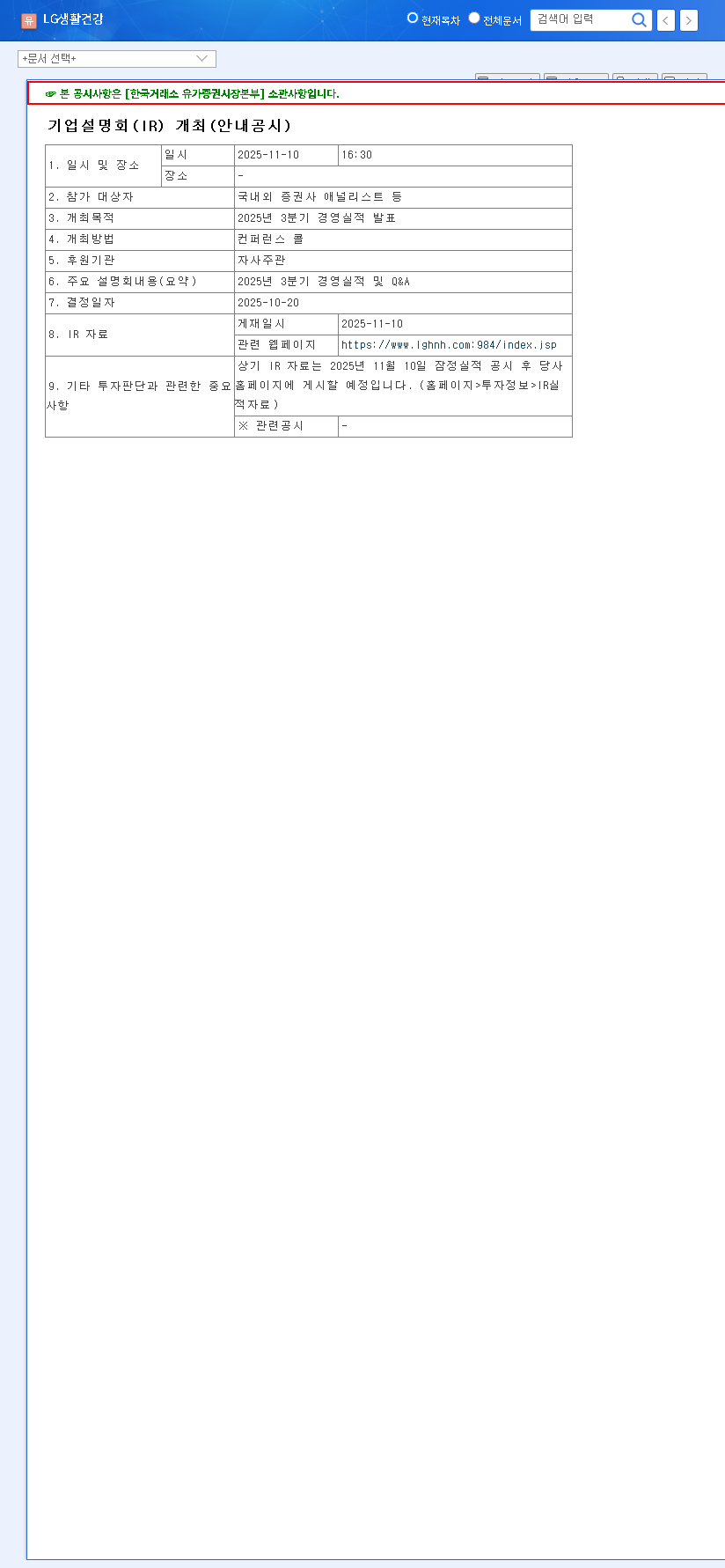
  • (051900) LG H&H Q3 2025 Earnings Analysis: Deep Dive into Stock Underperformance & Investment Strategy

    (051900) LG H&H Q3 2025 Earnings Analysis: Deep Dive into Stock Underperformance & Investment Strategy

    The recent LG H&H Q3 2025 earnings report sent a wave of concern through the investment community. As a cornerstone of the Korean consumer goods market, LG Household & Health Care’s significant miss on key financial metrics has triggered questions about its short-term stability and long-term growth trajectory. This comprehensive LG H&H stock analysis unpacks the disappointing results, explores the underlying causes of the underperformance, and outlines a clear LG H&H investment strategy for navigating the path ahead.

    For investors holding or considering a position in LG H&H, understanding the nuances of this performance dip is critical. We’ll delve into macroeconomic pressures, segment-specific challenges, and the crucial factors that will dictate the company’s recovery and future stock performance.

    The Q3 2025 Earnings Shock: By the Numbers

    On November 10, 2025, LG H&H released its preliminary Q3 earnings, which fell alarmingly short of market consensus estimates. The official figures, as detailed in their public filing (Source: DART), reveal a troubling trend:

    • Revenue: KRW 1.58 trillion, a 2.0% decrease from the KRW 1.615 trillion estimate.
    • Operating Profit: KRW 46.2 billion, a significant 15.1% miss compared to the KRW 54.4 billion estimate.
    • Net Profit: KRW 18.2 billion, a staggering 41.5% plunge below the KRW 31.1 billion estimate.

    While the revenue dip was a concern, the dramatic collapse in operating and net profit has understandably spooked investors. This points to severe margin compression, where the costs of doing business are rising much faster than sales, eroding the company’s core profitability.

    Dissecting the LG H&H Q3 2025 Earnings Underperformance

    This poor performance wasn’t caused by a single issue but rather a perfect storm of external pressures and internal challenges across all of the company’s business segments.

    Crippling Macroeconomic Headwinds

    The global economic environment created significant hurdles for LG H&H in Q3:

    • Weak Consumer Sentiment: Persistently high interest rates globally have tightened household budgets, leading to reduced discretionary spending on beauty and premium home products.
    • Adverse Exchange Rates: A strong US dollar against the Korean Won (KRW) inflated the cost of imported raw materials, directly squeezing profit margins.
    • Rising Input Costs: Surging oil prices increased costs for logistics, distribution, and petroleum-based packaging, particularly impacting the Refreshment (beverage) segment.

    Segment-Specific Weaknesses Exposed

    No division was immune to the downturn, with the crucial Beauty segment facing the most intense pressure.

    • Beauty (Cosmetics): The engine of LG H&H’s growth is sputtering. Despite strength in its luxury brands like ‘The History of Whoo’, the company is losing ground in the hyper-competitive Chinese market. A slow recovery in global travel retail and weaker-than-expected performance in new markets compounded the issue. For more context, see our complete analysis of the Korean cosmetics market.
    • HDB (Household & Daily Beauty): As a mature business, the HDB segment struggled to generate enough growth to compensate for the Beauty division’s woes. While it remains a market leader, its limited growth potential was evident in these results.
    • Refreshment (Beverages): The stable demand for its Coca-Cola brand couldn’t shield this segment from margin erosion. The aforementioned currency and raw material price volatility directly hit its bottom line, turning a stable revenue stream into a less profitable one.

    The Q3 earnings miss is a clear negative signal. Investors should brace for significant short-term downward pressure on LG H&H’s stock price as the market recalibrates its valuation based on these weakened fundamentals.

    Revised Investment Strategy & Future Outlook

    While LG H&H maintains a sound financial structure with a low debt-to-equity ratio, declining profitability is a major concern. The company’s future stock performance hinges on its ability to navigate current challenges and reignite growth. An effective LG H&H investment strategy must be cautious and observant.

    Key Catalysts for Recovery to Monitor

    • Q4 & 2026 Guidance: Watch closely for signs of a rebound in the next earnings report and management’s strategy for the upcoming year.
    • Geographic Diversification: Success in North American and Japanese markets is now paramount to reduce reliance on the volatile Chinese market.
    • Innovation Pipeline: The market reception of new products, particularly in high-margin areas like beauty devices (‘LG Pra.L’), will be a crucial indicator.

    Recommendation: Cautious Hold

    Given the short-term headwinds and stock price vulnerability, a ‘buy’ recommendation is premature. We advise a cautious ‘Hold’ for existing investors. New investors should wait for clear evidence of a turnaround, such as a stabilized Chinese market share and improved profit margins, before initiating a position. The risk of further decline is tangible until management presents a convincing recovery plan.

    Frequently Asked Questions (FAQ)

    Q1: What was the main reason for the LG H&H Q3 2025 earnings miss?

    A1: It was a combination of factors, primarily a slowdown in the high-profit Beauty segment due to intense competition in China, coupled with rising raw material and logistics costs that squeezed profitability across all divisions.

    Q2: How will this underperformance affect the LG H&H stock price?

    A2: The stock is expected to face significant downward pressure in the short term. The substantial miss in profit expectations signals deep-seated issues that will likely lead to weakened investor confidence and a lower valuation.

    Q3: Is LG H&H still a good long-term investment?

    A3: The company has strong brands and a solid financial foundation, but its long-term appeal now depends on its ability to adapt. A successful diversification away from China and innovation in new product categories are essential for a positive long-term outlook.

    (051900) LG H&H Q3 2025 Earnings Analysis: Deep Dive into Stock Underperformance & Investment Strategy 관련 이미지
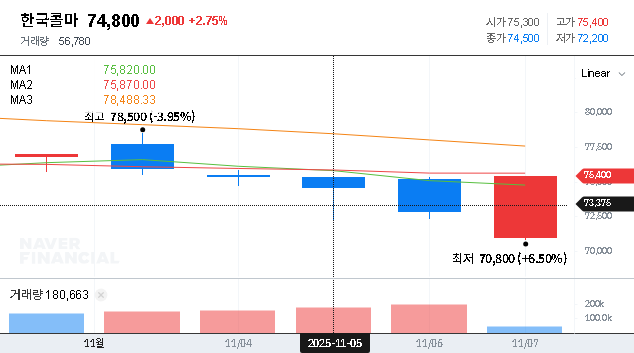
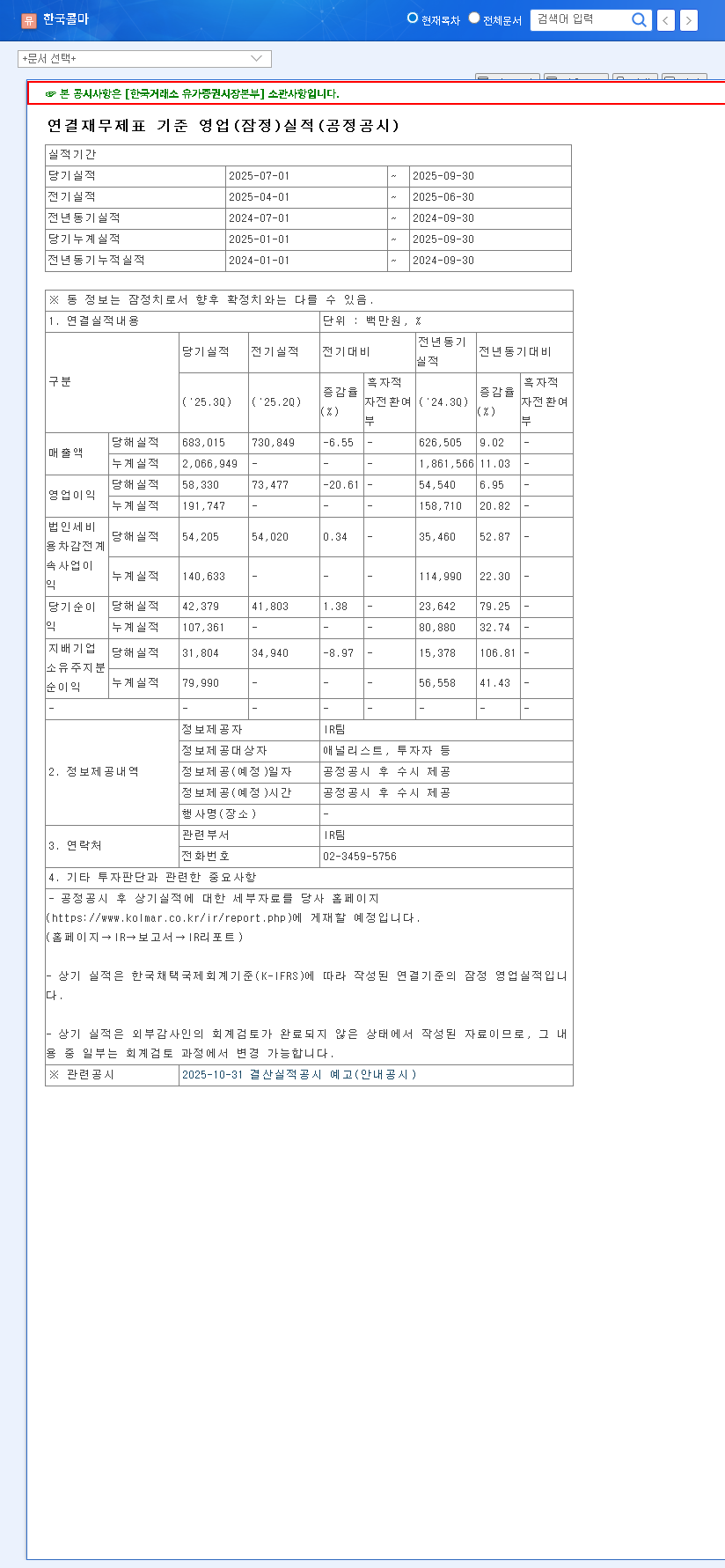
  • (161890) KOLMAR KOREA Q3 2025 Earnings & IR: An In-Depth Investment Analysis

    (161890) KOLMAR KOREA Q3 2025 Earnings & IR: An In-Depth Investment Analysis

    KOLMAR KOREA CO.,LTD, a global powerhouse in the cosmetics Original Design Manufacturing (ODM) industry, is preparing for its highly anticipated Investor Relations (IR) session on November 11, 2025. This event is more than a standard earnings call; it’s a critical moment for investors to gauge the company’s resilience, strategic direction, and future growth potential. This detailed KOLMAR KOREA investment analysis will dissect the company’s fundamentals and explore what the upcoming IR revelations mean for its valuation.

    Event Overview: The KOLMAR KOREA Q3 2025 IR

    KOLMAR KOREA has scheduled its IR session for domestic institutional investors as a Non-Deal Roadshow (NDR) to foster transparent communication. The primary focus will be on the Q3 2025 earnings report and an overview of key management initiatives.

    • Date & Time: November 11, 2025, at 9:00 AM
    • Agenda: Presentation of Q3 2025 earnings, management status update, and an interactive Q&A session.
    • Purpose: To enhance investor understanding and confidence in the company’s operational health and strategic vision.

    This event was formally announced via an Official Disclosure on the DART system, providing transparency to the market.

    A Deep Dive into KOLMAR KOREA’s Robust Fundamentals

    KOLMAR KOREA’s strength lies in its diversified yet synergistic business portfolio. The impressive financial results for the first half of 2025 (consolidated) already set a positive tone, with revenue hitting KRW 1.3839 trillion (an 11.9% YoY increase) and operating profit soaring by 28% to KRW 133.4 billion. This performance underscores the effectiveness of its multi-pronged strategy.

    Cosmetics ODM: The Engine of Growth

    The core cosmetics ODM business remains the company’s primary growth driver, with H1 2025 revenue of KRW 753.9 billion. KOLMAR KOREA is expertly capitalizing on the global K-beauty phenomenon and the rise of agile indie brands that rely on experienced ODM partners for R&D and production. The company’s consistent investment in innovative formulations, such as vegan and derma-cosmetics, aligns perfectly with current market trends. You can learn more about the dynamics of this sector in our report on the global cosmetics ODM market.

    Pharmaceuticals (HK inno.N): A Pipeline for the Future

    The pharmaceutical arm, HK inno.N, is a crucial pillar, contributing KRW 469.0 billion in H1 revenue. Its flagship product, ‘K-CAB,’ continues its successful overseas expansion, providing a stable revenue stream. More importantly, HK inno.N’s robust pipeline of new drugs represents a significant long-term growth engine, promising future blockbusters and diversifying the company’s reliance on the cosmetics cycle.

    Packaging (Yonwoo): The Sustainable Edge

    Yonwoo, the packaging subsidiary, is increasingly vital in an era of conscious consumerism. With KRW 134.3 billion in H1 revenue, its focus on developing eco-friendly materials and innovative, premium designs gives KOLMAR KOREA’s clients a competitive edge on crowded retail shelves. This vertical integration provides both cost efficiencies and a strategic advantage.

    For investors, the key isn’t just past performance but the credibility of future projections. This KOLMAR KOREA IR is the ultimate test of that credibility, especially concerning international expansion and R&D returns.

    Strategic Implications: What This IR Means for Investors

    The outcomes of the KOLMAR KOREA IR can significantly influence market sentiment and the company’s stock valuation. A strong presentation could catalyze a positive re-evaluation, while any perceived weakness could introduce volatility.

    Potential Positive Catalysts

    • Earnings Beat: If Q3 2025 earnings surpass consensus estimates from leading financial analysts, it would reaffirm the company’s strong execution.
    • Clear Growth Roadmap: A detailed and convincing strategy for North American/European expansion and new client acquisition could boost investor confidence.
    • Positive Forward Guidance: An optimistic outlook for Q4 2025 and 2026 would signal continued momentum.

    Potential Risks to Monitor

    • Guidance Miss: Any unexpected weakness in the KOLMAR KOREA earnings or a cautious outlook could trigger a short-term stock sell-off.
    • Margin Pressure: Investors will be keenly watching for commentary on raw material costs and supply chain stability, which could impact profitability.
    • Vague Strategy: A lack of specific details during the Q&A could amplify uncertainty and negatively impact sentiment.

    Investor Action Plan: Key Questions for the IR

    This IR is an invaluable opportunity to look beyond the numbers. Investors should focus on the quality of management’s answers to tough questions. Pay close attention to the details shared about Q3 performance, the transparency of the management status report, and the clarity of the vision presented. The Q&A session will be particularly telling, offering a chance to gauge management’s grasp of the challenges and opportunities ahead. Ultimately, the market’s reaction will hinge on whether KOLMAR KOREA can successfully articulate a compelling narrative of sustainable, profitable growth.

    (161890) KOLMAR KOREA Q3 2025 Earnings & IR: An In-Depth Investment Analysis 관련 이미지
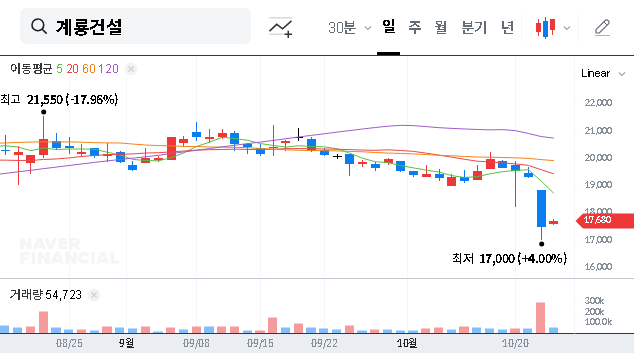
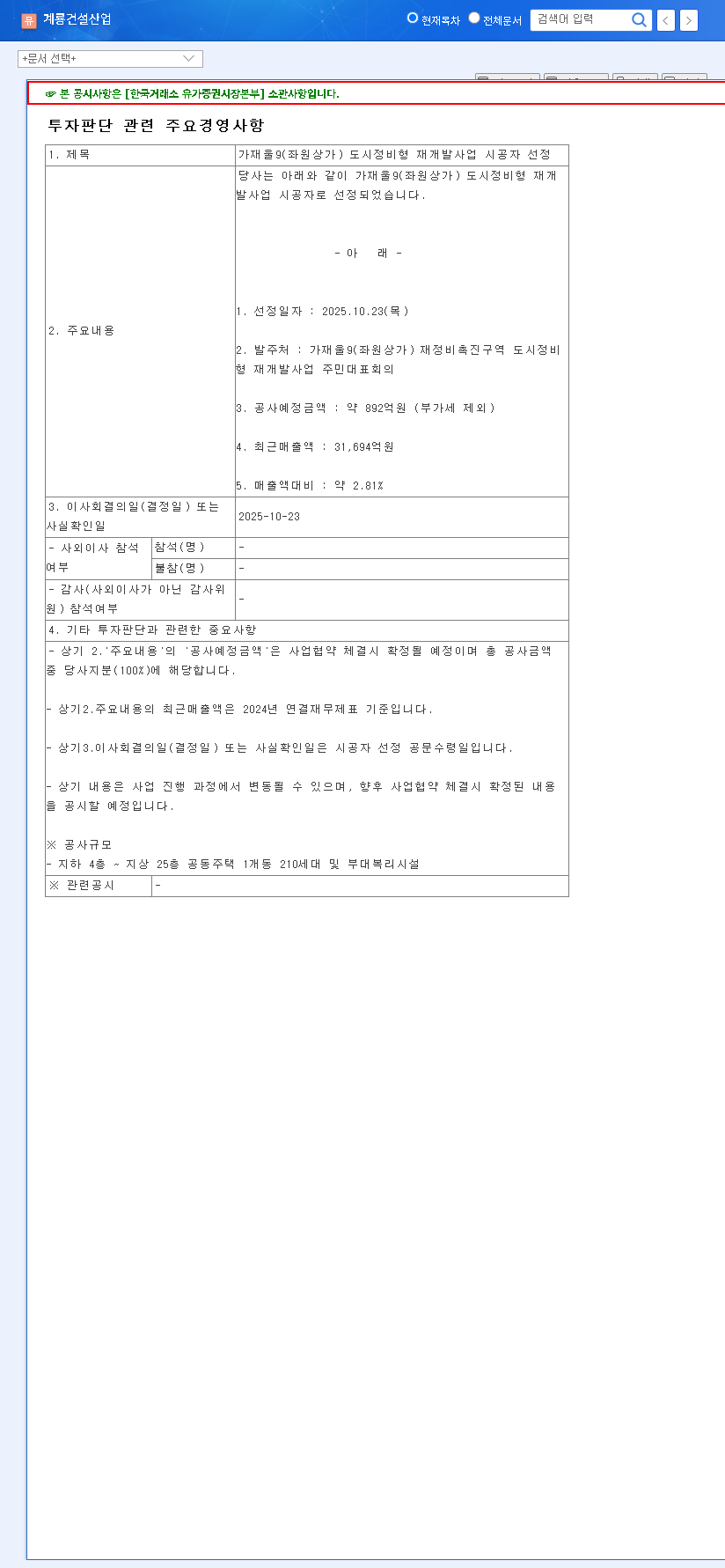
  • (013580) KYE-RYONG CONSTRUCTION Wins KRW 74.8B Subrogation Claim: A Deep Dive into the Financial Impact

    (013580) KYE-RYONG CONSTRUCTION Wins KRW 74.8B Subrogation Claim: A Deep Dive into the Financial Impact

    The successful resolution of the KYE-RYONG CONSTRUCTION subrogation claim has sent a clear signal of stability and resilience to the market. After a protracted legal battle, KYE-RYONG CONSTRUCTION INDUSTRIAL CO.,LTD has secured a decisive victory in the appellate court, overturning a massive subrogation claim valued at approximately KRW 74.8 billion. This outcome not only removes a significant financial overhang but also enhances the company’s reputation for robust risk management. This in-depth analysis will explore the details of the lawsuit, the profound financial implications of this victory, and what it means for investors and the broader construction industry.

    Understanding the KRW 74.8 Billion Lawsuit

    To grasp the significance of this win, it’s essential to understand the case’s origins. The lawsuit was a subrogation claim filed by NH Property Insurance Co., Ltd. A subrogation claim allows an insurer, after paying a claim to their policyholder, to step into the shoes of that policyholder and sue a third party who may have been responsible for the loss. In this instance, the claim originated from a fire at the Gimhae Livestock Product Complex Distribution Center, which caused substantial damages paid out to the Bukyeong Pork Cooperative by their insurer, NH Property Insurance.

    NH Property Insurance then sought to recover its payout of KRW 74.8 billion by suing the parties it deemed responsible: Kukbo Machinery Co., Ltd., whose worker’s negligence was identified as the direct cause of the fire, and KYE-RYONG CONSTRUCTION, the primary contractor on the project, alleging a breach of contract. The legal battle hinged on whether KYE-RYONG CONSTRUCTION held contractual liability for the actions of a subcontractor’s employee.

    The Path to Victory: A Legal Timeline

    The legal journey for KYE-RYONG CONSTRUCTION was a two-stage success. The company had already secured a favorable judgment in the first instance court, which dismissed the claim against them. However, the plaintiff, NH Property Insurance, appealed the decision, extending the period of uncertainty. The final confirmation came from the Seoul High Court in the ‘Subrogation Claim Lawsuit (2025나205964)’, which upheld the initial verdict. The court definitively dismissed the plaintiff’s appeal and ordered them to cover all litigation costs, bringing a conclusive end to the matter.

    This ruling is a powerful affirmation of the company’s legal and contractual diligence, demonstrating that liability was correctly attributed to the party directly at fault, thereby protecting the primary contractor from indirect and extensive financial repercussions.

    Financial Fortification: The True Impact of the Ruling

    The dismissal of the KRW 74.8 billion claim is far more than just a legal headline; it’s a monumental event for the financial health of KYE-RYONG CONSTRUCTION. A loss in this case would have represented a severe blow to the company’s equity and cash flow, potentially hindering future growth and investment. The victory provides immediate and long-term financial stability.

    Key Financial Takeaways

    • Elimination of Contingent Liability: The most direct benefit is the removal of a massive potential debt from the balance sheet. This improves the company’s financial ratios and makes it more attractive to lenders and investors. The full details of the ruling can be reviewed in the company’s Official Disclosure.
    • Strengthened Shareholder Value: Removing such a significant risk factor directly enhances corporate value and provides peace of mind to shareholders, contributing to long-term stock price stability.
    • Increased Financial Flexibility: With this legal uncertainty resolved, management can now allocate capital and resources towards strategic initiatives, such as new project bids, technological advancements, or debt reduction, without the shadow of a massive potential payout.

    Broader Implications for Construction Legal Disputes

    This case serves as a critical reminder of the complex risks inherent in the construction industry. The successful defense by KYE-RYONG CONSTRUCTION highlights the importance of meticulous contract management and clear delineation of responsibilities among all parties on a project site. Other firms can learn from this outcome, underscoring the need for robust legal frameworks to protect against unforeseen liabilities stemming from subcontractors. For further reading, authoritative sources like the Construction Law Journal often provide deep analysis of such landmark cases.

    Investor Outlook: What’s Next for KYE-RYONG CONSTRUCTION?

    While the market may have partially priced in this victory after the first court ruling, the finality of the appeal removes any lingering doubt. For long-term investors, this is a decidedly positive development. The focus now shifts to the company’s future strategy. With newfound financial certainty, investors should monitor how KYE-RYONG CONSTRUCTION leverages this position. Key areas to watch include updates to the company’s future project pipeline and announcements regarding capital expenditure. The company’s demonstrated ability to navigate complex legal challenges should also boost confidence in its overall governance and risk management capabilities.

    In conclusion, the successful defense against the KYE-RYONG CONSTRUCTION subrogation claim is a landmark achievement. It solidifies the company’s financial foundation, enhances corporate value, and serves as a testament to its proficient legal and operational management.

    (013580) KYE-RYONG CONSTRUCTION Wins KRW 74.8B Subrogation Claim: A Deep Dive into the Financial Impact 관련 이미지
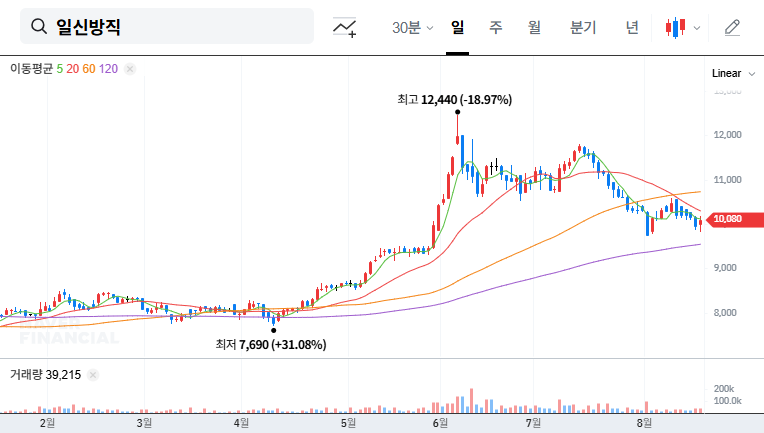
  • (003200) ILSHIN SPINNING CO.,LTD Earnings (Q3 2025): Analysis, Stock Outlook & Investment Strategy

    (003200) ILSHIN SPINNING CO.,LTD Earnings (Q3 2025): Analysis, Stock Outlook & Investment Strategy

    The latest ILSHIN SPINNING CO.,LTD earnings report for the third quarter of 2025 has revealed significant challenges, causing concern among investors. While revenue saw a marginal increase, a sharp and unexpected decline in operating profit has cast a shadow over the company’s short-term outlook. This comprehensive analysis will dissect the Q3 2025 results, explore the underlying causes for the performance dip, and outline a prudent investment strategy for navigating the path ahead.

    Breaking Down the ILSHIN SPINNING CO.,LTD Q3 2025 Earnings Report

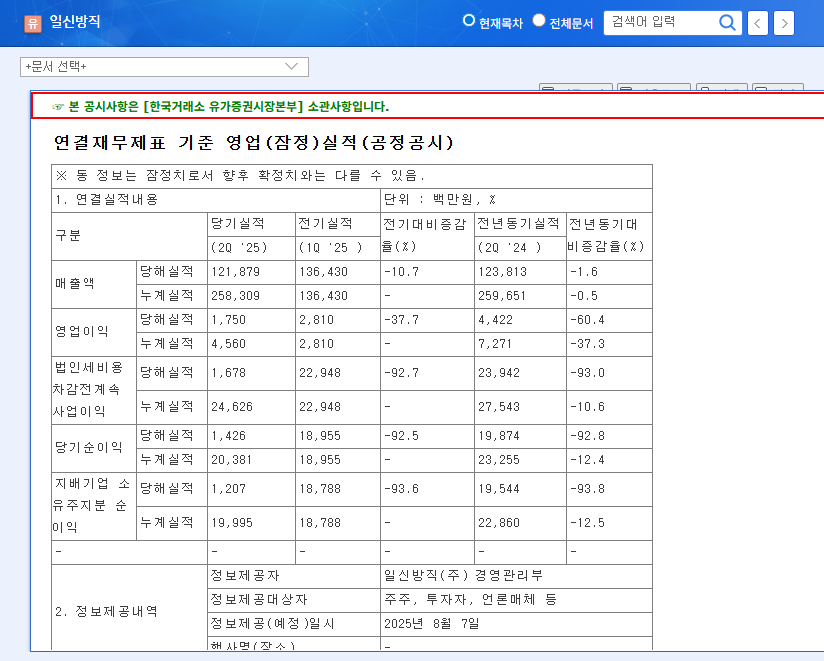
    On November 10, 2025, ILSHIN SPINNING CO.,LTD released its provisional financial results, providing a critical snapshot of its health. The market reacted swiftly to the numbers, which pointed to a clear deterioration in profitability. The official figures, as filed with the regulator, can be found in the Official Disclosure on DART.

    Here are the key takeaways from the announcement:

    • Revenue: KRW 124.3 billion, showing a minor increase from the previous quarter.
    • Operating Profit: KRW 0.9 billion, a significant and concerning plunge compared to the prior quarter.
    • Net Profit: KRW 1.1 billion, also marking a sequential decrease.

    The dramatic fall in ILSHIN SPINNING operating profit is the central story of this report. It marks the second straight quarter of decline and signals deep-seated issues that revenue growth alone cannot mask.

    Core Factors Behind the Profitability Decline

    The weak performance isn’t due to a single issue but a convergence of internal business struggles and harsh external economic conditions. Understanding these factors is crucial for any ILSHIN SPINNING stock analysis.

    Persistent Headwinds in the Core Textile Business

    The company’s primary textile segment has been underperforming for some time, posting an operating loss of KRW 3.6 billion in the first half of 2025. The Q3 results suggest this trend has continued, if not worsened. Structural issues within the global textile industry, coupled with sluggish domestic and international demand, have compressed margins and limited growth.

    Challenging Macroeconomic Environment

    A perfect storm of macroeconomic factors has exacerbated the company’s problems. As reported by leading financial outlets like Bloomberg, the global economic climate has been unforgiving.

    • Adverse Exchange Rates: High EUR/KRW and USD/KRW rates directly increase the cost of importing essential raw materials like cotton, squeezing profitability at the source.
    • High Interest Rates: Elevated benchmark rates in both Korea and the U.S. amplify financial costs, making debt servicing more expensive and pressuring the bottom line.
    • Raw Material Volatility: Fluctuations in the price of crude oil and other key inputs create uncertainty and make cost management a significant challenge.

    The Real Estate Business: A Stabilizing Force

    On a more positive note, the company’s real estate leasing and management division continues to be a reliable source of income. It generated KRW 6.2 billion in operating profit during H1 2025, providing a crucial buffer against the losses in the textile segment. However, its stable contribution was not enough to offset the severe downturn in the core business, highlighting the need for diversification or a textile turnaround.

    A Prudent Investment Strategy for ILSHIN SPINNING

    Given the recent ILSHIN SPINNING CO.,LTD earnings, investors should adopt a cautious and observant stance. While short-term volatility and downward pressure on the stock price are likely, a long-term perspective requires monitoring several key indicators. For more background, you can read our guide to investing in the South Korean textile industry.

    • Textile Turnaround Strategy: Watch for any new management initiatives, cost-cutting measures, or shifts in market strategy aimed at reviving the core business in Q4 and beyond.
    • Diversified Business Growth: Monitor the performance of other ventures, such as cosmetics and alcoholic beverages, to see if they can become meaningful growth engines.
    • Macroeconomic Response: Assess the company’s risk management and its ability to adapt to ongoing changes in currency exchange rates and interest rates.
    • Shareholder Value: Pay attention to the company’s dividend policy and any other actions taken to enhance shareholder returns, as this can indicate management’s confidence.

    Frequently Asked Questions (FAQ)

    What were the key figures from ILSHIN SPINNING’s Q3 2025 earnings?

    ILSHIN SPINNING reported revenue of KRW 124.3 billion, an operating profit of just KRW 0.9 billion, and a net profit of KRW 1.1 billion. The most notable figure was the sharp decline in operating profit from the previous quarter.

    What is the primary cause of the poor operating profit?

    The decline is attributed to a combination of persistent struggles in its core textile business and significant macroeconomic pressures, including high raw material costs, unfavorable currency exchange rates, and rising interest rates.

    What is the expected impact on ILSHIN SPINNING’s stock price?

    In the short term, the disappointing earnings are likely to increase market concerns and put downward pressure on the stock price. A long-term recovery will depend on a fundamental turnaround in its core operations and overall market conditions.

    (003200) ILSHIN SPINNING CO.,LTD Earnings (Q3 2025): Analysis, Stock Outlook & Investment Strategy 관련 이미지
    (003200) ILSHIN SPINNING CO.,LTD Earnings (Q3 2025): Analysis, Stock Outlook & Investment Strategy 관련 이미지
  • (389260) Dae Myoung Energy Stock Analysis: ₩13.9B Incheon Airport Solar Project Sparks Growth

    (389260) Dae Myoung Energy Stock Analysis: ₩13.9B Incheon Airport Solar Project Sparks Growth

    In a significant development for the renewable energy sector, Dae Myoung Energy Co. Ltd. (389260) has secured a landmark contract that promises to reshape its growth trajectory. The announcement of a ₩13.9 billion solar installation project with the prestigious Incheon International Airport Corporation is not just a major revenue boost; it’s a powerful validation of the company’s capabilities and a critical event for investors. This deep-dive analysis will unpack the contract details, evaluate the impact on Dae Myoung Energy stock, and provide a comprehensive forecast for potential investors.

    The Landmark Incheon Airport Solar Project Deal

    Dae Myoung Energy has officially announced a single sales and supply contract for the ‘North Breakwater Solar Power Installation Project’ with Incheon International Airport Corporation. The deal, valued at a substantial ₩13.9 billion, represents a remarkable 20.52% of the company’s total revenue from 2022. This development was confirmed in an Official Disclosure. The project’s timeline is set from November 7, 2025, to July 7, 2027, spanning approximately one year and eight months of strategic development and execution.

    This isn’t just another contract. Partnering with a national infrastructure giant like Incheon International Airport elevates Dae Myoung Energy’s profile significantly, demonstrating its trusted capacity for executing large-scale, high-stakes projects. This achievement will serve as a powerful reference, potentially unlocking further opportunities in public-sector renewable energy initiatives across the nation.

    Why This Contract is a Game-Changer

    The significance of the Incheon Airport solar project extends far beyond its immediate monetary value. It acts as a powerful catalyst for both short-term performance and long-term strategic positioning.

    Immediate Financial Injection and Profitability

    The contract is poised to directly enhance revenue and profitability between late 2025 and mid-2027. This influx of capital is crucial, especially following a reported revenue decrease in H1 2025. Despite lower revenues, the company managed to increase its operating and net profits, signaling improved operational efficiency. This project will supercharge that trend, providing a stable, high-value revenue stream.

    Strengthening Core Business Divisions

    Dae Myoung Energy’s fundamentals are rooted in several key areas. This project positively impacts its primary renewable energy EPC division and solidifies its market leadership.

    • EPC Division (55% of Revenue): With a robust order backlog of ₩284.4 billion, this new contract adds another layer of security and growth potential. It reinforces the company’s expertise in both solar and wind power construction.
    • Power Generation (38% of Revenue): While this division provides stable income from long-term contracts, it remains exposed to REC (Renewable Energy Certificate) price volatility. Successful EPC projects help fund and expand these generation assets.
    • O&M Services (5% of Revenue): High-profile projects like the Incheon Airport one often lead to long-term operations and maintenance contracts, feeding this growing, high-margin business segment.

    This contract is a clear signal of market confidence in Dae Myoung Energy. Securing a project of this scale with a public entity like Incheon Airport validates their technical expertise and solidifies their role as a key player in South Korea solar power development.

    Dae Myoung Energy Stock: Outlook & Investment Strategy

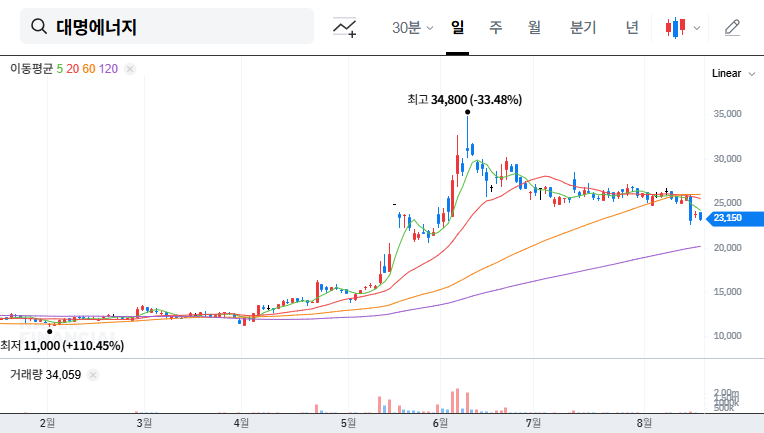
    For investors, this news presents a compelling, multi-faceted opportunity. The announcement is expected to create significant positive short-term momentum for the Dae Myoung Energy stock as the market digests the news of secured future revenues. Historically, such large contract announcements lead to increased investor interest and stock price volatility.

    Mid-to-Long-Term Growth Drivers

    Beyond the initial spike, the long-term outlook is enhanced. The successful completion of this project will be a powerful case study, positioning Dae Myoung Energy favorably for future large-scale tenders. This aligns perfectly with the South Korean government’s supportive policies for renewable energy expansion, a key tailwind for the entire industry. The global trend towards clean energy, as documented by authorities like the International Energy Agency, provides a stable backdrop for sustained growth.

    Key Risks and Considerations

    Despite the overwhelmingly positive news, prudent investors must remain aware of potential risks. The company’s long-term debt and financial liabilities require careful monitoring. Efficient cash flow management will be critical during the project’s execution phase. Furthermore, macroeconomic factors such as interest rate hikes (increasing debt servicing costs) and currency volatility (affecting the cost of imported components) remain external risks. For those new to this area, understanding the fundamentals is key; consider reading our Guide to Investing in Renewable Energy Stocks.

    In conclusion, this contract is a highly positive catalyst for Dae Myoung Energy. We maintain a positive outlook, but recommend investors closely track project milestones, quarterly financial reports, and the company’s efforts to improve its overall financial structure. The successful execution of the Incheon Airport solar project could mark the beginning of a new era of growth for the company.