Tag: Investment Analysis

  • G2GBIO After-Hours Block Deal: Unpacking the Implications and Investment Strategies (September 15, 2025)


    1. What Happened? – Analyzing the After-Hours Block Deal

    Before the market opened on September 15, 2025, a significant after-hours block deal involving 24,717 shares of G2GBIO took place, totaling ₩4.9 billion. Foreign investors showed strong interest, recording a net buy of ₩62.6 billion on the same day.

    2. Why Did This Happen? – Background and Context

    This block deal suggests the involvement of institutional or strategic investors. Coming just before the KOSDAQ listing, it can be interpreted as a signal of fundraising and investment expansion. However, the unclear nature of the parties involved and their objectives introduces potential stock price volatility.

    3. What Does This Mean? – Analyzing the Positive and Negative Impacts

    • Positive Impacts: Improved investor sentiment, heightened listing anticipation, reaffirmed market interest in DDS technology
    • Potential Risks: Uncertainty about the parties involved, risk of capital market law violations, continued operating losses

    The current macroeconomic environment, including interest rates, exchange rates, and commodity prices, is not expected to significantly impact G2GBIO.

    4. What Should Investors Do? – Action Plan

    While positive investor sentiment is expected in the short term, the objectives of the involved parties and the resolution of any capital market law violation risks are key variables for price fluctuations. The successful development of the pipeline, technology transfer, and CDMO business performance will be the driving forces behind long-term stock price growth. Investors should carefully consider both the positive signals and potential risks and closely monitor public announcements, news, and business progress.


    Frequently Asked Questions

    What is an after-hours block deal?

    It refers to a large volume of shares traded outside of regular trading hours. It’s often conducted by institutional investors and also known as a block trade.

    Will this transaction positively affect G2GBIO’s stock price?

    It could boost investor sentiment in the short term, but the long-term impact depends on the parties’ objectives and the company’s fundamentals.

    What is G2GBIO’s main business?

    G2GBIO operates a DDS platform based on its sustained-release drug microparticle technology (InnoLAMP), develops pipelines including Alzheimer’s treatments, and engages in CDMO business.
  • KT After-Hours Block Trade: Foreign Investors Buy ₩7.8B, Signal for AICT Transformation?


    What Happened?: KT After-Hours Block Trade Analysis

    After the market closed on September 15, 2025, a substantial after-hours block trade of KT shares took place, totaling ₩7.8 billion (151,574 shares). The primary investors involved were foreign entities, both buying and selling.

    Why the Buy?: Analyzing Positive & Negative Factors

    Several factors may have contributed to the large foreign investment, including KT’s accelerating AICT transformation, its stable telecommunications business, and the strengthening of its media/content business. The anticipated expansion of its AI business through a strategic partnership with Microsoft is also considered a key factor. However, negative factors such as intensifying competition, substantial investment burdens, regulatory changes, and litigation risks cannot be ignored.

    Future Stock Outlook and Investment Strategy: Short-Term vs. Long-Term Perspectives

    In the short term, net foreign buying could positively impact the stock price. However, the long-term trend will depend on various factors, including the materialization of AI business results, response to the competitive landscape, and fluctuations in interest rates and exchange rates. Investors should continuously monitor the concrete performance and monetization of KT’s AI business, the competitiveness of its new business portfolio, the impact of rising interest rates and exchange rate fluctuations, and major litigation risks.

    Action Plan for Investors: Key Checkpoints

    • Verify AI Business Performance: Confirm if the collaboration with Microsoft translates into actual sales growth.
    • Analyze the Competitive Landscape: Understand the intensifying competition in the telecommunications and new business sectors and evaluate KT’s response strategies.
    • Check Financial Soundness: Analyze the financial impact of interest rate and exchange rate fluctuations and review KT’s debt management status.
    • Monitor Litigation Risks: Stay informed about the progress of ongoing lawsuits and their potential impact.


    Frequently Asked Questions (FAQ)

    What is an after-hours block trade?

    An after-hours block trade refers to a large transaction of shares outside of regular trading hours. It can significantly impact stock prices.

    Is foreign buying always positive for stock prices?

    Foreign buying is generally interpreted as a positive signal, but it can be a short-term phenomenon. It’s crucial to consider the company’s fundamentals and overall market conditions.

    What is KT’s AICT transformation strategy?

    KT is transitioning its business structure by focusing on Artificial Intelligence (AI), Cloud, and Internet of Things (IoT) to secure future growth engines.

    What should I consider before making investment decisions?

    Before making investment decisions, thoroughly analyze the company’s financial status, growth prospects, competitive landscape, and market conditions. Seeking advice from a financial professional is also recommended.


  • BH’s KRW 14.4B Stock Buyback: A Turning Point for Share Price?


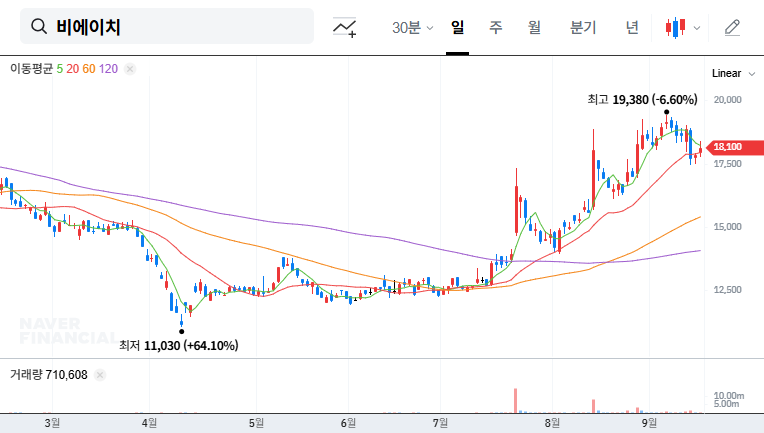
    BH's KRW 14.4B Stock Buyback: A Turning Point for Share Price? 대표 차트 이미지


    1. What Happened? BH Announces Stock Buyback!

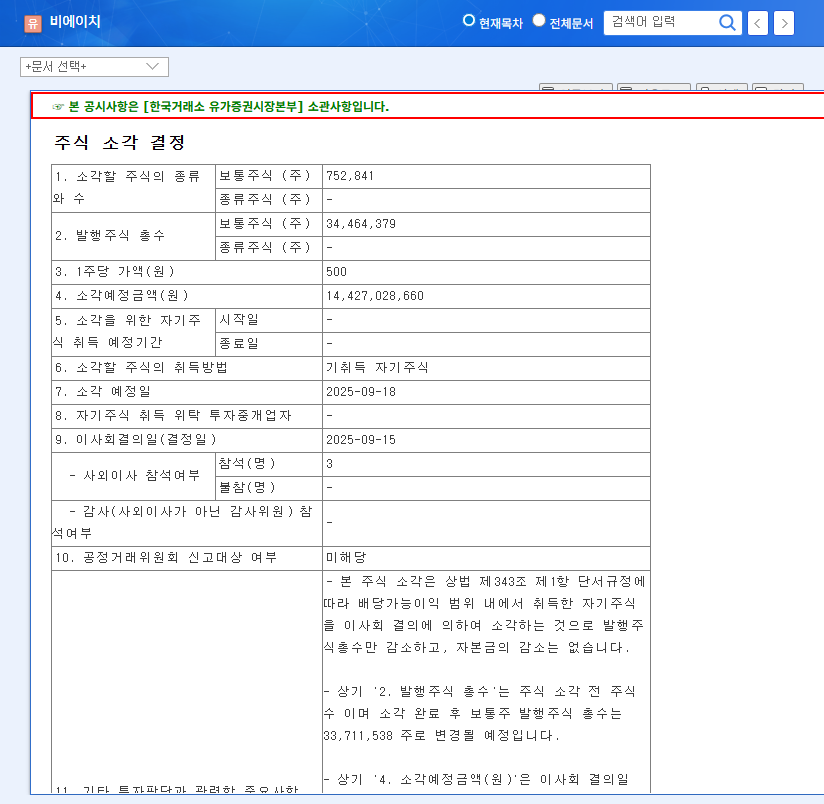
    BH announced on September 18, 2025, that it will buy back 752,841 common shares (2.35% of market capitalization), totaling KRW 14.4 billion. This repurchase utilizes previously acquired treasury stock.

    2. Why? Background and Implications

    This buyback is interpreted as a response to the company’s weak performance in the first half of 2025. Sales decreased by 58.8% year-on-year, and operating income recorded a loss of KRW 9.3 billion. In this context, the stock buyback demonstrates BH’s commitment to enhancing shareholder value and improving investor sentiment.

    3. What’s Next? Analyzing Short-Term/Long-Term Impacts

    Short-term, there is potential for upward momentum in the stock price due to positive market reaction to the shareholder return policy. However, the long-term share price hinges on the recovery of the FPCB business and the growth of the automotive electronics business. While the automotive segment shows growth potential, it’s not yet substantial enough to offset the FPCB slump. Macroeconomic conditions (exchange rates, interest rates, raw material prices) and uncertainties in the IT market will also influence the stock price.

    4. Investor Action Plan

    • Short-term investors: Focus on stock price movements immediately after the buyback announcement and consider short-term profit-taking strategies.
    • Long-term investors: Closely monitor FPCB business recovery, automotive business growth, macroeconomic indicators, etc.

    Disclaimer: This content is not investment advice, and all investment decisions are the responsibility of the investor.


    FAQ

    What is a stock buyback?

    A stock buyback, or share repurchase, is when a company buys its own shares back from the marketplace, reducing the number of outstanding shares and increasing the value per share.

    Do stock buybacks always have a positive impact on the stock price?

    While it can be interpreted as a positive signal in the short term, the long-term stock price depends on the company’s performance and fundamentals.

    What is the outlook for BH?

    The key variables are the recovery of the FPCB business and the growth of the automotive electronics division. Macroeconomic conditions and IT market trends also need close monitoring.


    BH's KRW 14.4B Stock Buyback: A Turning Point for Share Price? 관련 이미지
    BH's KRW 14.4B Stock Buyback: A Turning Point for Share Price? 관련 이미지


  • Kolmar Korea IR Analysis: Q2 2025 Earnings and Stock Outlook


    Kolmar Korea IR Analysis: Q2 2025 Earnings and Stock Outlook 대표 차트 이미지


    What Happened? Kolmar Korea’s Q2 Earnings IR

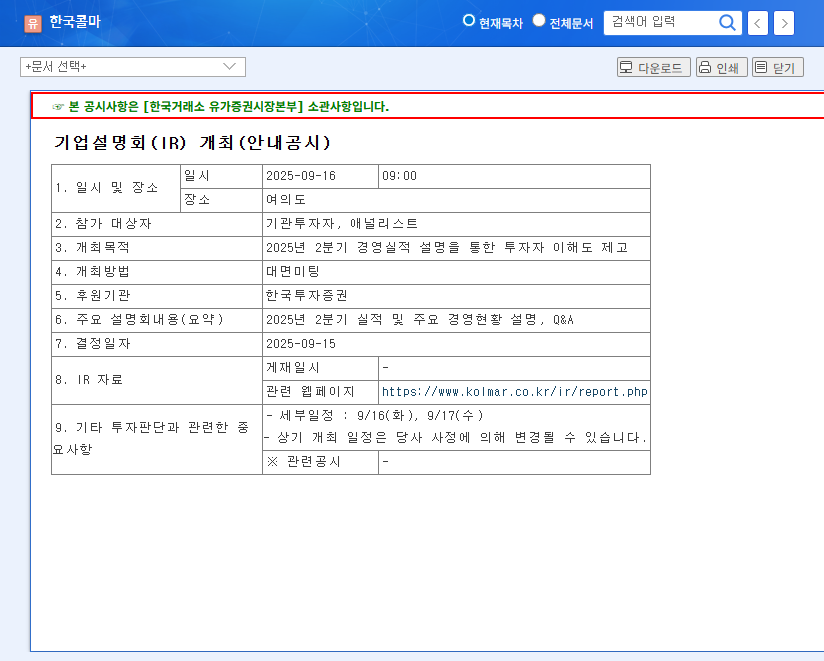
    Kolmar Korea held an investor relations (IR) meeting on September 16, 2025, to present its Q2 2025 earnings and discuss key management updates. The IR included a presentation on the company’s performance for the first half of 2025, followed by a Q&A session with investors.

    Why is it Important? Analyzing Kolmar Korea’s Fundamentals and Growth Potential

    Kolmar Korea maintains strong fundamentals, driven by its robust cosmetics ODM business and the growth of its pharmaceuticals and H&B segments. The enhanced competitiveness of Yeonwoo’s packaging business and ESG management efforts also contribute positively. As of H1 2025, the company reported revenue of KRW 1.38 trillion, up 11.9% year-on-year, and operating profit of KRW 133.4 billion, up 37.6% year-on-year, indicating positive performance trends.

    What are the Outcomes and Future Outlook? Analyzing the Short-Term and Long-Term Impact

    • Short-Term Impact: Stock price volatility is expected depending on the announced Q2 earnings and future growth momentum. Positive results exceeding market expectations could lead to a stock price increase, while the opposite could exert downward pressure.
    • Long-Term Impact: Investor confidence in the company’s management strategies, new growth drivers, and risk management plans will influence the long-term stock performance. The company’s strategy to address exchange rate volatility and global economic uncertainty, along with its ability to maintain core business competitiveness and leverage synergy within its business portfolio, will be key factors.

    What Should Investors Do? Key Investment Points and Action Plan

    Investors should carefully analyze the IR presentation and consider the company’s business competitiveness, financial soundness, and ability to adapt to changes in the macroeconomic environment when making investment decisions. Focus should be placed not only on the reported figures but also on the company’s future growth strategy and plans to address risk factors.


    Frequently Asked Questions

    What are Kolmar Korea’s main businesses?

    Kolmar Korea operates in cosmetics ODM, pharmaceuticals, H&B, and packaging.

    What were the key takeaways from this IR?

    The key takeaways were the announcement of Q2 2025 earnings, key management updates, and a Q&A session with investors.

    How will the IR results affect the stock price?

    The results, along with future growth strategies and plans to address risk factors, can positively or negatively impact the stock price.


    Kolmar Korea IR Analysis: Q2 2025 Earnings and Stock Outlook 관련 이미지
    Kolmar Korea IR Analysis: Q2 2025 Earnings and Stock Outlook 관련 이미지


  • GS Engineering & Construction Wins $300M Sajik District 3 Redevelopment Project: Investment Opportunity?

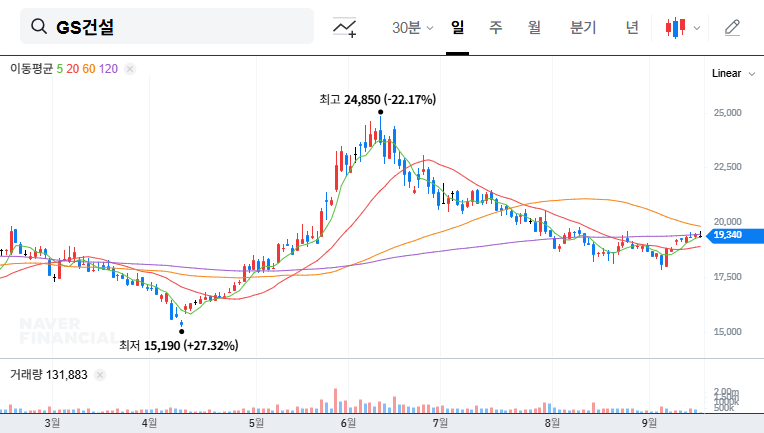
    GS Engineering & Construction Wins $300M Sajik District 3 Redevelopment Project: Investment Opportunity? 대표 차트 이미지

    1. Sajik District 3: A Catalyst for GS E&C’s Growth?

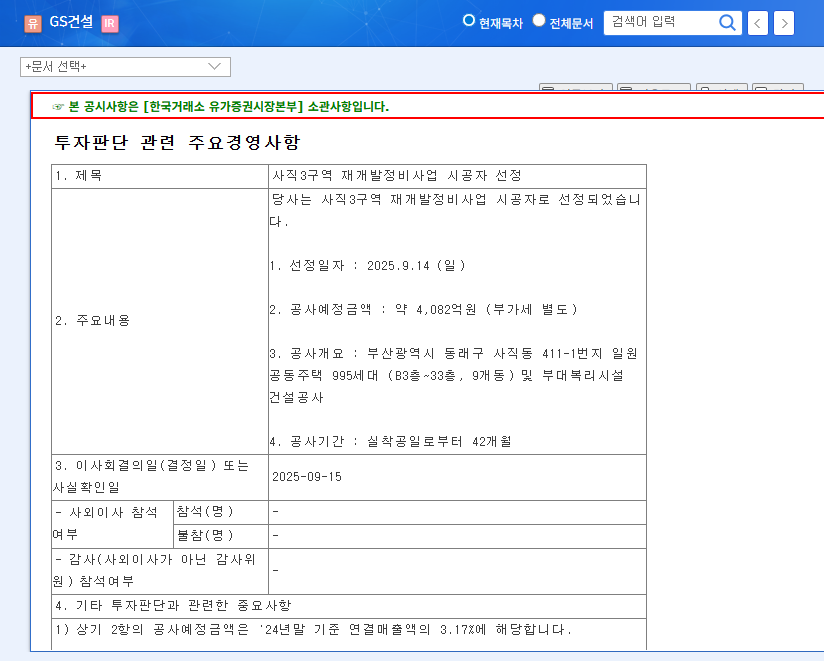
    GS E&C secured a substantial $300 million contract for the Sajik District 3 redevelopment, encompassing 995 residential units and ancillary facilities. This win is expected to boost GS E&C’s order backlog and contribute to future revenue growth.

    2. Positive Factors: Driving Growth and Stability

    • Revenue Growth and Stability: The $300 million contract will directly impact future revenue growth and contribute to a stable business foundation.
    • Expanding Busan Presence: This project strengthens GS E&C’s foothold in Busan, increasing the potential for future projects in the region.
    • Brand Enhancement: Leveraging the ‘Xi’ brand recognition, successful execution of this redevelopment project can further enhance brand value.

    3. Risk Factors: Proceed with Caution

    • Macroeconomic Uncertainty: Interest rate hikes, currency fluctuations, and other macroeconomic uncertainties could impact the construction industry.
    • Incheon Geomdan Incident: Costs and legal outcomes related to the past incident remain a potential burden for GS E&C.

    4. Investment Strategy: A Prudent Approach

    While this win provides positive momentum for GS E&C, potential risks exist. A cautious approach is recommended, carefully monitoring macroeconomic indicators and developments related to the Incheon Geomdan incident.

    What is the scale of the Sajik District 3 redevelopment project?

    The project is valued at approximately $300 million and includes the construction of 995 residential units and ancillary facilities.

    Will this project positively impact GS E&C’s stock price?

    While it is expected to provide positive momentum in the short term, macroeconomic conditions and other risk factors must be considered.

    What precautions should investors take?

    Investors should carefully monitor interest rates, currency fluctuations, and developments related to the Incheon Geomdan incident and invest prudently.

    GS Engineering & Construction Wins $300M Sajik District 3 Redevelopment Project: Investment Opportunity? 관련 이미지
    GS Engineering & Construction Wins $300M Sajik District 3 Redevelopment Project: Investment Opportunity? 관련 이미지
  • Hanwha Aerospace After-Hours Block Deal Analysis: Short-Term Impact and Long-Term Investment Value


    1. What Happened?

    An after-hours block deal of Hanwha Aerospace shares worth 12.2 billion KRW (12,613 shares) took place on September 10, 2025. While the transaction size is relatively small compared to the company’s market capitalization, the notable buying activity from foreign investors is worth examining.

    2. Why Did This Happen?

    While this after-hours block deal could be a simple position adjustment, it’s highly likely influenced by Hanwha Aerospace’s recent positive fundamentals. According to the 2025 semi-annual report, the company’s impressive growth in the marine business, stable revenue base in the defense sector, and future growth potential in the aerospace business are attracting investor interest.

    3. What’s Next?

    • Positive Factors: The net buying by foreign investors is a positive market signal, and the company’s strong fundamentals could act as momentum for stock price appreciation.
    • Considerations: Macroeconomic uncertainties and company-specific risks should be carefully considered when making investment decisions. Further analysis is needed to understand the exact background of the after-hours transaction.

    4. What Should Investors Do?

    Instead of reacting to short-term price fluctuations, it’s essential to focus on the company’s mid-to-long-term growth potential. Investors should develop their investment strategies by continuously monitoring foreign investment trends, macroeconomic variables, and business-specific risk factors.


    FAQ

    How does the after-hours block deal affect the stock price?

    The transaction size is relatively small compared to the market capitalization, suggesting a limited short-term impact. However, the net buying by foreign investors can be interpreted as a positive sign.

    What are the key investment points for Hanwha Aerospace?

    The company’s diversified business portfolio in growth sectors like marine, defense, and aerospace, combined with its strong fundamentals, makes it an attractive investment.

    What should investors be aware of?

    Investors should continuously monitor macroeconomic uncertainties and company-specific business risks.


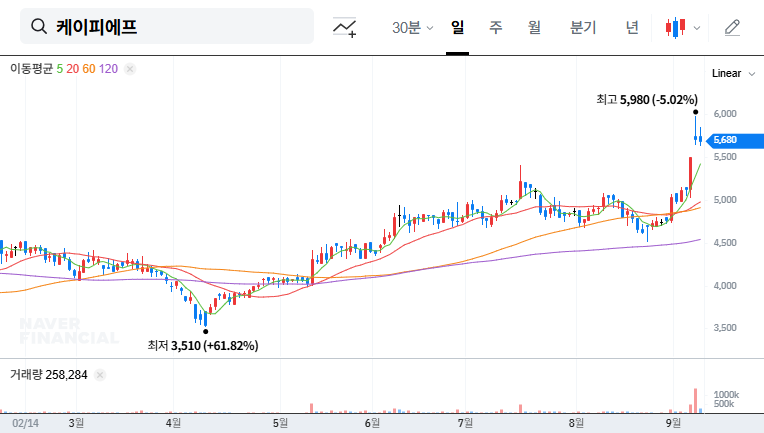
  • KPF(024880) Announces Shareholder Return Plan: Opportunity or Risk?


    KPF(024880) Announces Shareholder Return Plan: Opportunity or Risk? 대표 차트 이미지


    1. What is KPF’s Shareholder Return Plan?

    • Dividend in kind: TMC shares (1 TMC share per 31 common shares)
    • Tax benefits on dividends through capital reduction
    • Treasury stock cancellation worth KRW 4.5 billion (approx. 1.09 million shares)
    • Enhanced IR activities and increased public disclosures to boost stock price

    2. Why Announce This Plan Now?

    KPF has recently experienced declining performance due to the global economic slowdown and sluggishness in related industries. Both sales and operating profit decreased in the first half of 2025 compared to the same period last year, and profitability remains low. The shareholder return policy is interpreted as a strategy to alleviate shareholder concerns and improve investment sentiment.

    3. Investment Implications of the Shareholder Return Plan

    Positive aspects: Dividends in kind and treasury stock cancellation can contribute to enhancing shareholder value. If TMC’s listing is successful, shareholders can gain additional profits through the dividends.
    Negative aspects: Given the continued sluggish performance, the shareholder return policy alone may not be enough to drive stock price growth. The possibility of delays in TMC’s listing and macroeconomic uncertainties also pose investment risks.

    4. Action Plan for Investors

    Before making investment decisions, investors should closely monitor KPF’s performance trends, news related to TMC’s listing, and macroeconomic variables. It is crucial to focus on long-term improvements in corporate fundamentals rather than being swayed by short-term stock price fluctuations. The success of TMC’s listing will be a critical factor in KPF’s investment outlook.


    Frequently Asked Questions (FAQ)

    What is KPF’s main business?

    KPF manufactures fasteners, automotive parts, and marine cables.

    What is TMC?

    TMC is a subsidiary of KPF that manufactures cables, targeting the North American market.

    When will the dividends be paid?

    The dividends are expected to be paid as part of the 62nd fiscal year-end dividend after the completion of TMC’s listing. However, the listing schedule has not yet been finalized.

    What are the key points to consider when investing in KPF?

    Investors should consider the recent decline in performance, uncertainties surrounding TMC’s listing, and macroeconomic variables.


    KPF(024880) Announces Shareholder Return Plan: Opportunity or Risk? 관련 이미지
    KPF(024880) Announces Shareholder Return Plan: Opportunity or Risk? 관련 이미지


  • Asiana IDT’s ₩67.3B Contract with Asiana Airlines: Opportunity or Risk?


    Asiana IDT's ₩67.3B Contract with Asiana Airlines: Opportunity or Risk? 대표 차트 이미지


    1. What Happened?

    Asiana IDT has signed a contract to manage and maintain Asiana Airlines’ IT systems. The contract is worth a substantial ₩67.3 billion, representing 34.7% of Asiana IDT’s projected 2024 revenue. The contract duration is one year, covering 2025.

    2. Why Does it Matter?

    This contract offers Asiana IDT a chance to secure stable revenue in the short term. However, investors need to consider several factors, including profitability, dependence on the airline industry, and securing future growth engines. The fact that Asiana IDT is currently recording negative operating and net income is a critical consideration. Careful analysis is needed to determine if this contract will translate into actual profitability improvements.

    3. What Should Investors Do?

    • Profitability Analysis: Scrutinize the contract’s specific profit margins to assess the potential for actual profitability improvements.
    • Airline Industry Dependence: Continuously monitor the airline industry’s recovery and Asiana Airlines’ financial health.
    • Future Growth Drivers: Observe whether Asiana IDT is diversifying its business portfolio by adopting new technologies like cloud and AI, and exploring new business ventures.

    4. Investor Action Plan

    Instead of being swayed by short-term stock fluctuations, investors should focus on long-term monitoring of Asiana IDT’s profitability improvements and business diversification efforts. Basing investment decisions solely on current financial information is not advisable; further research and careful consideration are essential.


    Frequently Asked Questions (FAQ)

    Will this contract improve Asiana IDT’s financial performance?

    While it will contribute to increased revenue in the short term, the impact on profitability needs careful analysis. As Asiana IDT currently has negative operating and net income, the key question is how much this contract can improve its profitability.

    What is the outlook for Asiana IDT’s stock price?

    The stock price might experience a positive impact in the short term. However, the long-term outlook depends on Asiana IDT’s ability to improve profitability and diversify its business. Investors should prioritize fundamental analysis over short-term stock fluctuations.

    What are the key considerations for investors?

    Investors need to consider Asiana IDT’s high dependence on the airline industry and its current weak profitability. Before investing, carefully examine the details of the contract and Asiana IDT’s future growth strategy.


    Asiana IDT's ₩67.3B Contract with Asiana Airlines: Opportunity or Risk? 관련 이미지
    Asiana IDT's ₩67.3B Contract with Asiana Airlines: Opportunity or Risk? 관련 이미지


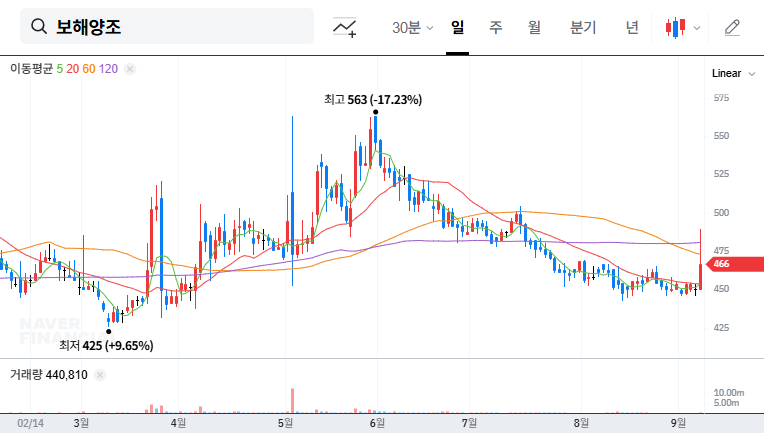
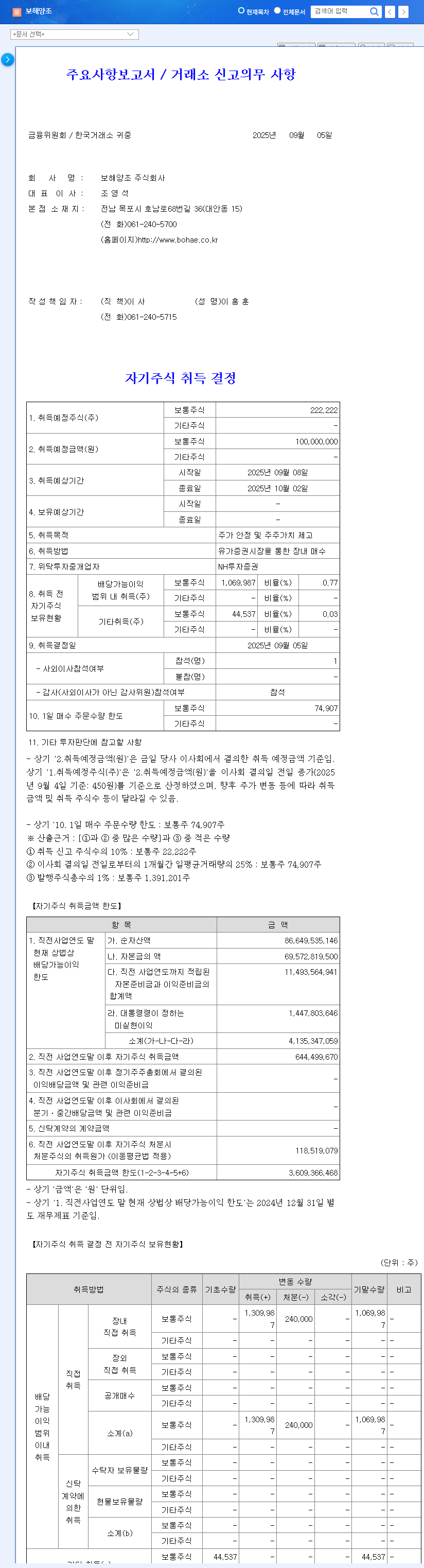
  • Bohae Brewery Announces Share Buyback: What It Means for Investors (September 2025 Analysis)


    Bohae Brewery Announces Share Buyback: What It Means for Investors (September 2025 Analysis) 대표 차트 이미지


    What Happened?

    Bohae Brewery has decided to repurchase KRW 100 million worth of its common stock (222,222 shares) through the open market to stabilize stock prices and enhance shareholder value.

    Why the Buyback?

    Despite a decline in sales in the first half of 2025, Bohae Brewery posted solid results with significant increases in operating profit and net income. The share buyback decision, under these circumstances, demonstrates confidence in the company’s growth potential and its commitment to boosting stock prices.

    What’s the Impact?

    • Positive Impacts:
      • Stock price stabilization and improved investor sentiment
      • Potential for re-evaluation of corporate value
    • Potential Risks and Considerations:
      • Limited impact due to the small buyback size
      • No fundamental change in the business
      • Influence of market conditions and overall investor sentiment

    Investor Action Plan

    The investment recommendation is ‘Hold.’ While the buyback is a positive signal, its limited scale and the volatile market conditions warrant caution. Investors should carefully consider future buyback progress, changes in macroeconomic indicators, and competitive analysis before making investment decisions.


    FAQ

    How does a share buyback affect stock price?

    Share buybacks typically reduce the number of outstanding shares, increasing earnings per share (EPS) and potentially driving up the stock price. However, in Bohae’s case, the small size of the buyback is likely to have more of a psychological stabilizing effect than a significant short-term price surge.

    What is the outlook for Bohae Brewery?

    While the improved financial performance in the first half of 2025 is positive, macroeconomic uncertainties, such as concerns about an economic downturn, still exist. Therefore, it’s crucial to closely monitor future earnings trends and market conditions.

    What precautions should investors take?

    While the share buyback can be a positive sign for corporate value, it shouldn’t be the sole basis for investment decisions. Investors should consider the company’s fundamentals, market conditions, and competitive landscape comprehensively before investing.


    Bohae Brewery Announces Share Buyback: What It Means for Investors (September 2025 Analysis) 관련 이미지
    Bohae Brewery Announces Share Buyback: What It Means for Investors (September 2025 Analysis) 관련 이미지


  • CCS (066790) Injunction Dismissal: A Positive Sign? Key Analysis for Investors!


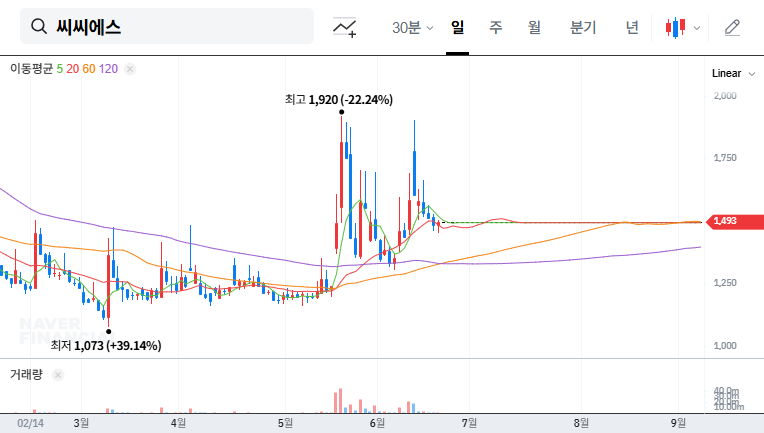
    CCS (066790) Injunction Dismissal: A Positive Sign? Key Analysis for Investors! 대표 차트 이미지


    What Happened with CCS?

    On September 5, 2025, CCS announced that the court dismissed the injunction application filed against it (2025카합586). While this may appear as a resolution in the management dispute, an appeal has been filed, so it’s too early to be relieved.

    Why is the Dismissal Important?

    In the short term, the dismissal is positive as it reduces uncertainty surrounding the management dispute. However, CCS is still designated as a managed stock and trading remains suspended, with weak fundamentals. Therefore, it’s difficult to conclude that this dismissal alone solves CCS’s fundamental problems.

    What’s Next for CCS?

    • Ongoing Management Dispute: With the appeal filed, the management dispute is still ongoing.
    • Deteriorating Fundamentals: Poor operating performance and weakened financial health pose serious fundamental problems.
    • Delisting Risk: If the reasons for management designation are not resolved, CCS faces the risk of delisting.

    What Should Investors Do?

    Investors should not be swayed by short-term news and should carefully consider their investment decisions by closely monitoring CCS’s fundamental improvements, delisting possibility, and the final outcome of the management dispute. Hasty investments can lead to significant losses.


    FAQ

    Will the dismissal of the injunction positively impact CCS’s stock price?

    It may have a positive impact in the short term, but it’s unlikely to lead to a sustained rise as CCS’s fundamental problems remain unresolved.

    Is there a possibility of CCS being delisted?

    If the reasons for management designation are not resolved, there is a possibility of delisting. Investors should proceed with caution.

    Is it advisable to invest in CCS?

    Currently, investing in CCS carries a very high risk. Careful investment decisions are crucial.


    CCS (066790) Injunction Dismissal: A Positive Sign? Key Analysis for Investors! 관련 이미지