Tag: Interest Rate Hike

  • (448730) SamsungFN REIT (448730) Analysis: Stable Assets vs. High-Interest Headwinds

    (448730) SamsungFN REIT (448730) Analysis: Stable Assets vs. High-Interest Headwinds

    For investors seeking steady dividend income from the property market, Real Estate Investment Trusts (REITs) are a cornerstone portfolio choice. A prime example is SamsungFN REIT Co., Ltd. (448730), a trust known for its portfolio of high-quality commercial assets. With the recent publication of its October 2025 monthly report, investors have a fresh opportunity to evaluate its performance. But what lies beneath the surface of this routine disclosure?

    This comprehensive SamsungFN REIT analysis will dissect the latest report, explore the company’s fundamental strengths and weaknesses, and place its performance within the challenging macroeconomic landscape. We will uncover the critical details that matter for your investment strategy, moving beyond the headlines to provide actionable insights.

    Deconstructing the October Monthly Report

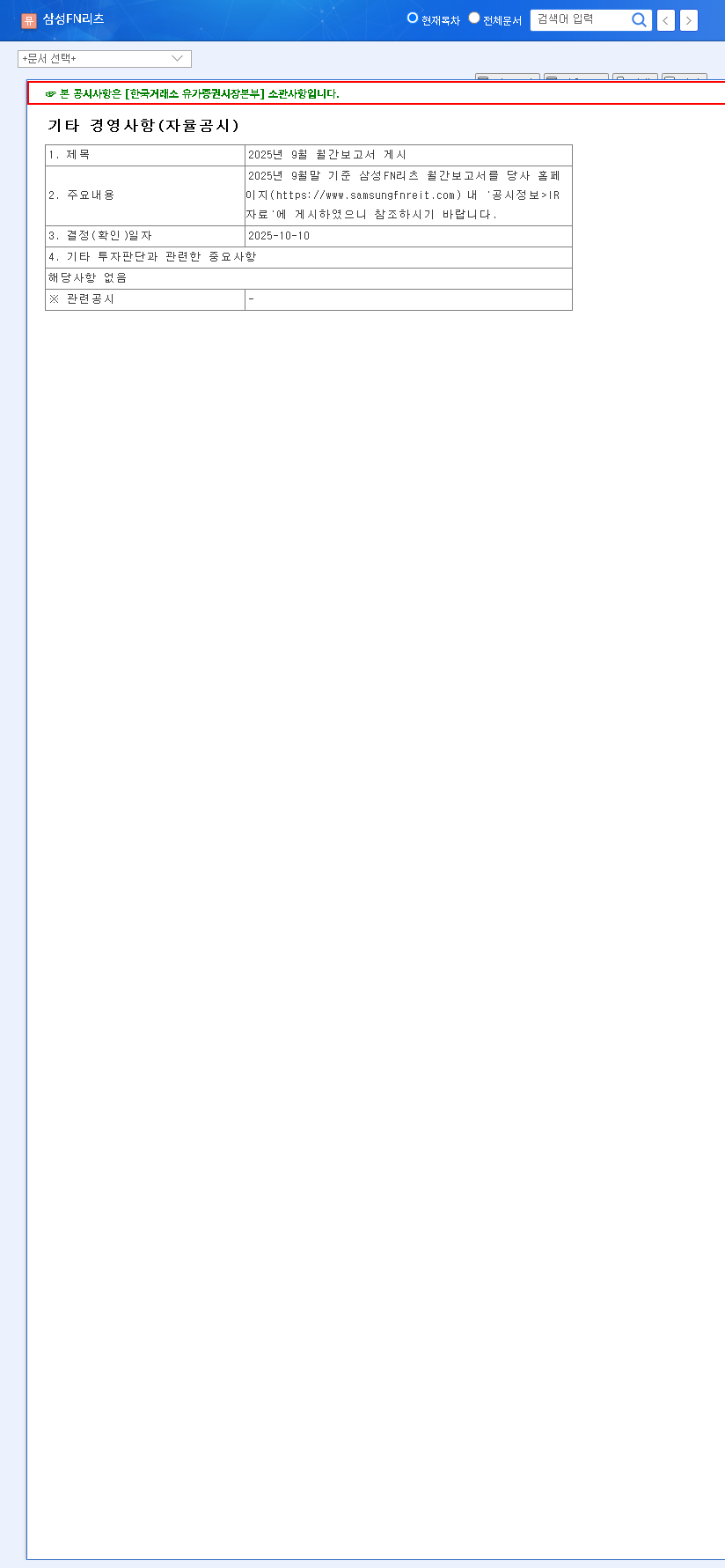
    On November 10, 2025, SamsungFN REIT released its October monthly report, a voluntary disclosure aimed at maintaining transparency with its investors. You can view the Official Disclosure on the DART system. While these reports rarely contain market-shaking news, they are vital for due diligence. They confirm operational continuity and provide the data points necessary to track the company’s health over time. The true value isn’t in the announcement itself, but in the details of rent collection, tenant stability, and financial shifts revealed within.

    The central challenge for SamsungFN REIT is a classic tug-of-war: the stability of its prime real estate assets versus the relentless pressure of a high-interest-rate environment.

    Fundamental Analysis: A Tale of Two Forces

    The financial health of SamsungFN REIT is a story of conflict between its rock-solid asset base and the harsh reality of rising financial costs. While its prime properties in Seoul—FNTower Daechi, FNTower Soonhwa, and FNTower Pangyo—boast a 100% occupancy rate with blue-chip tenants, the balance sheet reveals the strain.

    Key Financials (as of July 31, 2025)

    • Operating Revenue: KRW 12.15 billion (up 3.11% YoY), showing healthy rental income growth.
    • Operating & Net Income: Down 7.85% and 10.71% respectively. This is the red flag, directly caused by higher interest payments on its debt.
    • Debt-to-Equity Ratio: At 112.58%, this level warrants caution and demands a clear strategy for deleveraging or managing financial costs effectively.
    • Dividend Stability: Despite falling profits, the planned dividend of KRW 69 per share remains consistent, signaling a strong commitment to shareholder returns.

    The Power of a Premier Asset Portfolio

    The core strength of the SamsungFN REIT stock lies in its assets. Tenants like Samsung Life Insurance, Shinsegae International, and Hanwha Systems are not just names; they represent long-term, stable lease agreements that generate predictable cash flow. This 0% vacancy rate is the envy of the commercial real estate world and provides a significant buffer against economic downturns. For more on evaluating property portfolios, see our guide on How to Analyze a REIT’s Assets.

    Macroeconomic Headwinds: The Bigger Picture

    No company operates in a vacuum, and REIT investment is particularly sensitive to macroeconomic trends. The current environment presents several key challenges:

    • Persistent High-Interest Rates: Central banks in both the U.S. and Korea are maintaining a hawkish stance. As highlighted by market analysis from sources like Bloomberg, this directly increases the cost of borrowing for SamsungFN REIT, squeezing profit margins.
    • Bond Market Pressure: High yields on government bonds (like the U.S. 10-year Treasury) create a ‘risk-free’ alternative for income-seeking investors, making REIT dividends seem less attractive by comparison and potentially putting downward pressure on the stock price.
    • Inflation and Rent Negotiation: While inflation can justify future rent increases, this is not automatic. The ability to raise rents will depend heavily on the economic health of its tenants and the REIT’s negotiation power.

    Investor Strategy and Outlook

    For current and prospective investors in SamsungFN REIT (448730), the path forward requires careful monitoring of key performance indicators. The stability of its assets provides a strong foundation, but navigating the high-interest environment is paramount.

    What to Watch For:

    • Cost Management: Look for specific strategies from management on how they plan to reduce financial costs, whether through refinancing debt or other efficiency measures. This will be critical for restoring profit growth.
    • Debt Structure: Pay close attention to future financing plans. How the company manages its high debt-to-equity ratio will significantly impact its long-term financial health and risk profile.
    • Lease Renewals & Yields: While occupancy is perfect, the terms of future lease renewals are key. Investors should analyze upcoming reports for any changes in lease yields or tenant stability.

    In conclusion, the October report confirms that SamsungFN REIT is a high-quality operator facing significant external pressures. Its investment appeal hinges on its ability to leverage its premier asset base to weather the macroeconomic storm. Cautious optimism is warranted, but diligent monitoring of the factors outlined above is essential for making an informed investment decision.
    (448730) SamsungFN REIT (448730) Analysis: Stable Assets vs. High-Interest Headwinds 관련 이미지
  • (448730) Samsung FN REIT Analysis: Unpacking the September 2025 Report & Your Investment Strategy

    (448730) Samsung FN REIT Analysis: Unpacking the September 2025 Report & Your Investment Strategy

    The latest monthly report for the Samsung FN REIT has been released, and for investors, this isn’t just another financial update—it’s a critical roadmap. As of September 2025, the real estate investment trust stands at a crossroads, balancing a portfolio of prime assets against the persistent headwinds of a high-interest-rate environment. This comprehensive Samsung FN REIT analysis will dissect the report’s findings, evaluate the underlying risks and opportunities, and provide a clear, strategic action plan for navigating your investment moving forward.

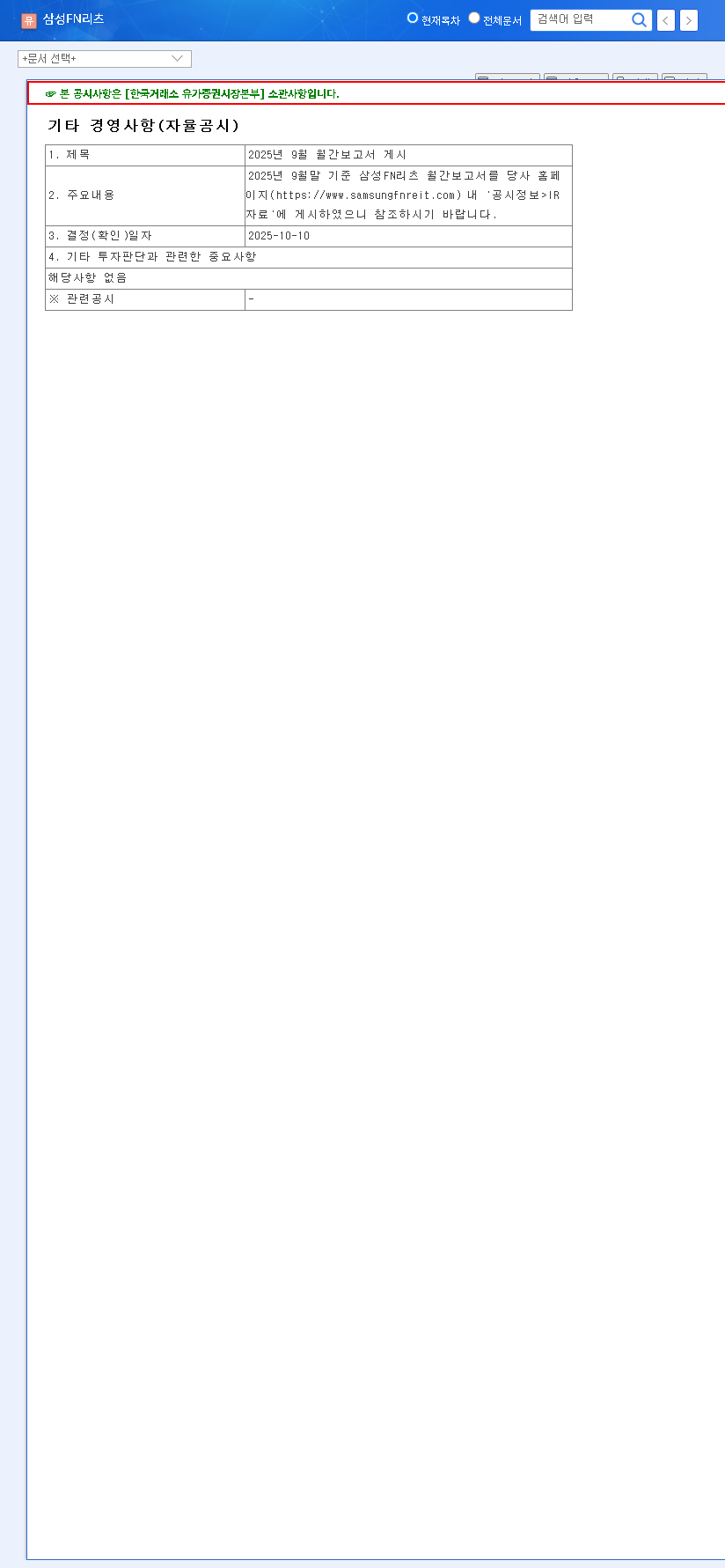
    The report, officially published on October 10, 2025, serves as a vital tool for transparency, offering a direct look into the fund’s operational health and financial stability. For those following the concerns raised in the July business report, this update provides crucial continuity and insight. You can view the full document directly from the source: Official Disclosure.

    Deep Dive: Analyzing Samsung FN REIT’s Strengths

    At its core, the investment appeal of Samsung FN REIT is built on a foundation of stability and quality. These are not just abstract concepts; they are tangible assets and agreements that generate consistent returns for shareholders.

    Rock-Solid Rental Income & Premier Assets

    The REIT’s primary strength lies in its predictable cash flow, secured by long-term lease agreements with tenants boasting high credit ratings, such as Samsung Life Insurance, S1, and Hanwha Systems. This is further supported by a portfolio of prime commercial real estate, including:

    • Daechi Tower & S1 Building: Located in Seoul’s prestigious Gangnam and central business districts, these properties command high rental rates and benefit from perennial demand.
    • Pangyo Office: Situated in Korea’s ‘Silicon Valley,’ this asset caters to a thriving tech industry, ensuring high occupancy and growth potential.
    • Zero Vacancy Rate: As of the last report, a 0% vacancy rate is a powerful testament to the quality of the assets and the stability of the tenant base, directly supporting consistent dividend payouts.

    Unpacking the Risks: Navigating the Headwinds

    While the strengths are compelling, savvy investors must scrutinize the challenges outlined in the Samsung FN REIT report. The current macroeconomic climate, defined by elevated interest rates, casts a significant shadow over the REIT’s financial structure.

    The Weight of Debt and Interest Rate Sensitivity

    The fund’s high debt ratio and accumulated deficits remain a primary concern. A significant portion of its borrowings is subject to floating interest rates, making its profitability highly sensitive to central bank policies. As global financial institutions maintain a hawkish stance to curb inflation, this exposure becomes a critical risk factor. For more context on global interest rate trends, you can refer to analysis from authoritative sources like Reuters Financial News.

    The report highlights a crucial sensitivity: a 100-basis-point (1%) change in interest rates is projected to impact the REIT’s net income by approximately KRW 1.075 billion. This direct correlation underscores the vulnerability of its bottom line.

    Furthermore, while the reliance on Samsung Group affiliates as major tenants ensures stability, it also introduces a concentration risk. Any significant shift in the Samsung Group’s corporate strategy or financial health could have a cascading effect on the REIT.

    Your Strategic Investment Action Plan

    A successful REIT investment strategy requires more than a passive approach. Based on the September report, here are actionable steps to consider:

    • Monitor Debt & Interest Expense Trends: Scrutinize any changes in the total debt load and the interest expense line item compared to the July report. Look for signs of proactive debt management or interest rate hedging strategies, which would be a strong positive signal.
    • Track Lease Renewals and Vacancy: While currently at 0%, keep an eye on upcoming lease expiration dates. Successful renewals at favorable terms are key to maintaining income stability. Any increase in vacancy, however small, would be a red flag.
    • Assess Asset Valuations: Note any revaluation of the underlying properties. A downturn in the broader real estate market could lead to a decrease in the REIT’s net asset value (NAV), impacting its share price.
    • Contextualize Your Portfolio: Consider how this real estate investment trust fits within your overall portfolio. For a deeper understanding of how REITs work, you might find our Beginner’s Guide to REIT Investing helpful.

    Conclusion: The Path Forward for Investors

    The September 2025 monthly report for Samsung FN REIT confirms a dual reality: a high-quality, stable asset base grappling with significant macroeconomic pressures. The long-term appeal of its prime real estate portfolio is undeniable. However, the short-to-medium-term outlook is heavily dependent on management’s ability to navigate interest rate volatility and manage its debt profile effectively. By diligently analyzing the key indicators in this and future reports, investors can make informed, cold-headed decisions that align with their financial goals and risk tolerance.

    (448730) Samsung FN REIT Analysis: Unpacking the September 2025 Report & Your Investment Strategy 관련 이미지
  • Samyang Foods Q2 2025 Earnings: A Stumble in Buldak’s Global Flight? Analyzing the Miss and Future Outlook

    1. What Happened?: Q2 Earnings Miss – The Numbers

    Samyang Foods announced its Q2 2025 earnings on August 14th. Revenue reached ₩553.1 billion, 2% below expectations. Operating profit came in at ₩120.1 billion, a 7% miss, while net income significantly underperformed at ₩84.1 billion, a 16% shortfall.

    2. Why?: Unpacking the Underperformance

    The primary drivers for this underperformance are rising raw material costs and increased investment spending. Fluctuations in international oil prices and freight rates directly impacted the cost structure. Furthermore, the global interest rate hike cycle added to financial burdens. However, there’s a silver lining: Buldak’s overseas sales continue to grow, with H1 revenue up 33.6% year-on-year to ₩1.0821 trillion.

    3. What’s Next?: Outlook and Investment Strategy

    The market may react negatively to the short-term underperformance. However, Buldak’s robust global growth and aggressive overseas expansion support long-term potential. Investors should monitor risk factors such as raw material prices, exchange rate volatility, and uncertainties surrounding new business ventures.

    4. Investor Action Plan

    • Be mindful of short-term stock volatility and develop a medium to long-term investment strategy.
    • Monitor raw material price and exchange rate trends.
    • Assess the progress and monetization strategies of new business ventures.
    • Analyze competitor activities and market changes.

    Frequently Asked Questions

    Why did Samyang Foods’ Q2 earnings miss estimates?

    The main factors were rising raw material costs, increased investment spending, and the global interest rate hike cycle.

    Is Buldak losing its popularity?

    No, the Buldak brand continues its global growth trajectory, with overseas sales consistently increasing.

    Is Samyang Foods a good investment?

    While short-term stock volatility is possible, the global competitiveness of the Buldak brand and the long-term growth potential make it a worthwhile investment. However, continuous monitoring of risk factors is crucial.

  • NH Investment & Securities Q1 2025 Earnings: Strong Performance, But What Lies Ahead?

    1. NH Investment & Securities Q1 2025 Earnings Analysis

    NH Investment & Securities reported a net operating revenue of KRW 556.7 billion and net income of KRW 208.2 billion in Q1 2025, both up year-over-year. While the IB division shined, Sales & Trading underperformed due to decreased market trading volume. A key positive is their robust financial health, with a net capital ratio of 1,652.3%.

    2. Key Focus Points for the Upcoming IR

    The August 4th IR will provide a detailed analysis of Q1 results and unveil mid- to long-term growth strategies. Key areas of interest include the sustainability of IB growth, plans to address the Sales & Trading slump, and strategies to navigate market uncertainties such as Fintech competition and interest rate hikes. Management’s approach to market expectation management will also be closely watched.

    3. Market Conditions and the Future of NH Investment & Securities

    Various market indicators, including US interest rate hikes, fluctuations in the KRW/USD exchange rate, and international oil prices, can impact NH Investment & Securities’ fundamentals. Pay close attention to factors that can directly affect overseas business profitability, operational strategies, and trading revenue. The possibility of a global economic slowdown should also be considered.

    4. Action Plan for Investors

    Potential investors in NH Investment & Securities should carefully evaluate the concreteness and feasibility of the mid- to long-term growth strategies presented at the IR. Assess the effectiveness of their revenue diversification and risk management plans and their ability to adapt to changing market conditions. Make informed investment decisions considering market volatility, and manage risk through continuous information gathering and analysis.

    What are the key highlights of NH Investment & Securities’ Q1 2025 earnings?

    Revenue and profit increased due to strong performance in the Investment Banking division, but Sales & Trading underperformed. Financial soundness remains very strong.

    What will be announced at the August IR?

    The IR will cover Q1 earnings analysis, mid- to long-term growth strategies, and market expectation management.

    What should investors be aware of when considering investing in NH Investment & Securities?

    Investors should consider factors such as increasing market competition, macroeconomic uncertainties, and fluctuations in interest rates and exchange rates. It’s crucial to make investment decisions based on a comprehensive analysis of information presented at the IR and prevailing market conditions.