Tag: INNOSPACE Co.

  • (462350) INNOSPACE Stock Analysis: Decoding the Rights Sale & Your 2025 Investment Strategy

    (462350) INNOSPACE Stock Analysis: Decoding the Rights Sale & Your 2025 Investment Strategy

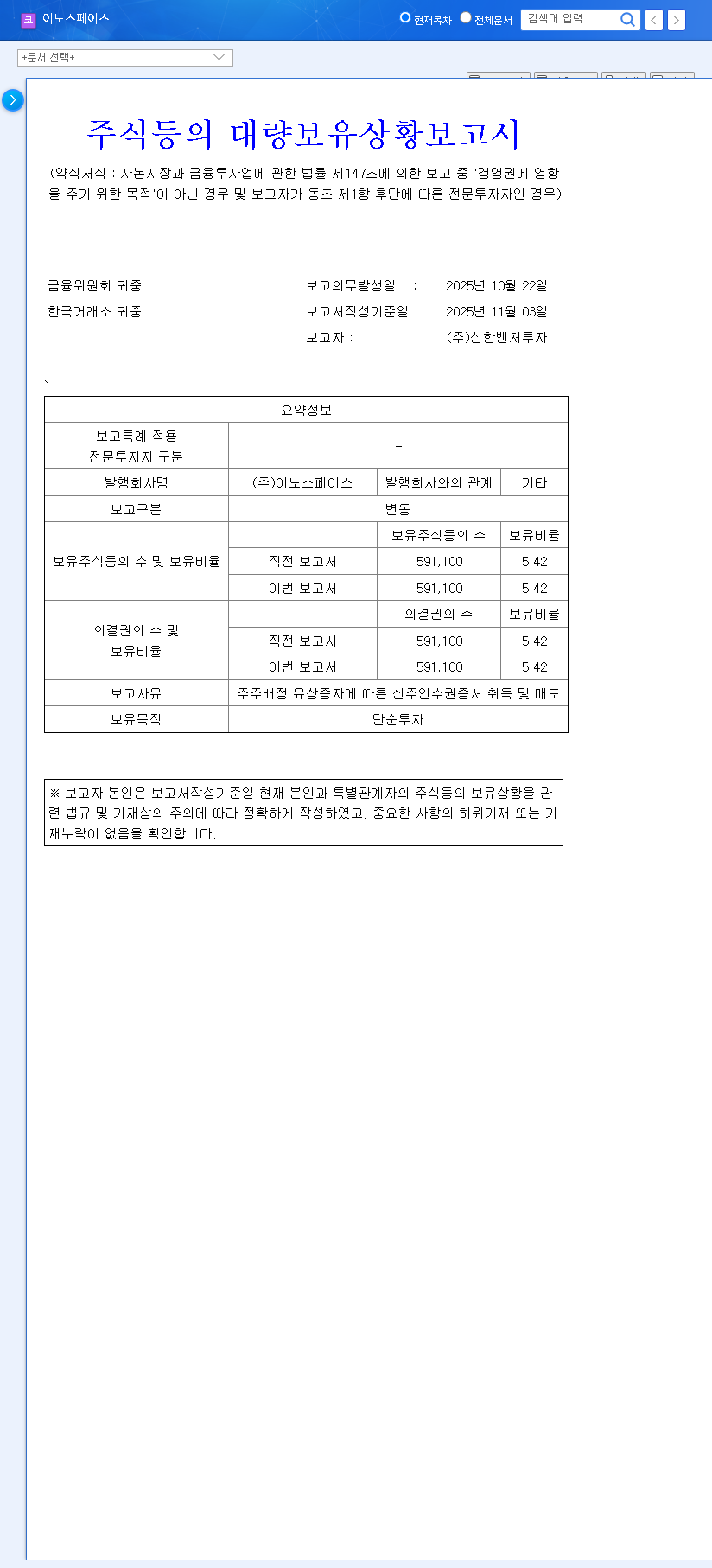
    For investors tracking INNOSPACE stock, a recent disclosure has raised critical questions. A filing by major shareholder Shinhan Venture Investment revealed a nuanced move: the sale of new share subscription rights. While their direct shareholding percentage remains unchanged, this action sends a subtle but important signal to the market. What does this mean for the future of INNOSPACE, and how should you adjust your investment strategy in response? This comprehensive analysis will break down the event, explore the company’s core fundamentals, and provide an actionable plan for navigating the path ahead.

    We will dissect the implications of this financial maneuver, offering expert-level insights into INNOSPACE’s technological promise, its current financial challenges, and the broader macroeconomic factors at play.

    Deconstructing the Disclosure: What is a Subscription Rights Sale?

    On November 4, 2025, a ‘Report on the Status of Large Shareholdings’ was filed, as detailed in the official disclosure on Korea’s DART system (Source). At first glance, nothing changed; the shareholding of Shinhan Venture Investment and its associated funds held steady at 5.42%. However, the reason cited was the ‘acquisition and sale of new share subscription rights.’

    In simple terms, INNOSPACE is raising capital through a shareholder-allocated rights offering, giving existing shareholders the ‘right’ to purchase new shares, often at a discount. Instead of exercising these rights to increase their stake, Shinhan Venture Investment chose to sell them on the open market. This can be interpreted in several ways: it could be a strategic move to recover their initial investment, a rebalancing of their portfolio, or a signal that they see better opportunities elsewhere rather than doubling down on their INNOSPACE investment.

    INNOSPACE Stock Analysis: Balancing Potential and Risk

    To understand the long-term outlook for INNOSPACE stock, we must look beyond this single event and evaluate the company’s foundational strengths and weaknesses.

    The Bull Case: A Frontier Technology Leader

    • Pioneering Hybrid Rocket Technology: INNOSPACE’s core advantage lies in its unique hybrid rocket engine, which combines the stability of liquid propellants with the simple structure of solid propellants. This can lead to safer, more cost-effective launches—a significant differentiator.
    • Tapping the Small Satellite Boom: The global satellite launch market for smallsats is expanding rapidly. According to market analysis by organizations like the Space Foundation, demand for dedicated small satellite launches is projected to grow exponentially, and INNOSPACE is positioned to capture a piece of this lucrative market.
    • Future-Proofing with Reusability: The company’s roadmap includes the development of reusable rocket technology, a crucial step for long-term competitiveness and profitability in the modern space race.

    The Bear Case: Financial Headwinds

    • Pre-Revenue Status: As of the first half of 2025, INNOSPACE has not yet generated revenue from its primary satellite launch services. The journey from successful test launches to consistent commercial operations is long and capital-intensive.
    • High R&D Burn Rate: Developing cutting-edge aerospace stock technology is expensive. The company reported a significant operating loss of 30.6 billion KRW, primarily driven by R&D spending, which puts pressure on its financial stability.
    • Debt and Capital Structure: With a net debt ratio of 17.28% and a total debt ratio of 36.3%, the company’s balance sheet carries notable risk, especially in a fluctuating interest rate environment.

    The core challenge for INNOSPACE is bridging the gap between its technological promise and achieving commercial viability. The recent move by a major investor highlights the market’s sensitivity to this execution risk.

    Investment Strategy and Outlook

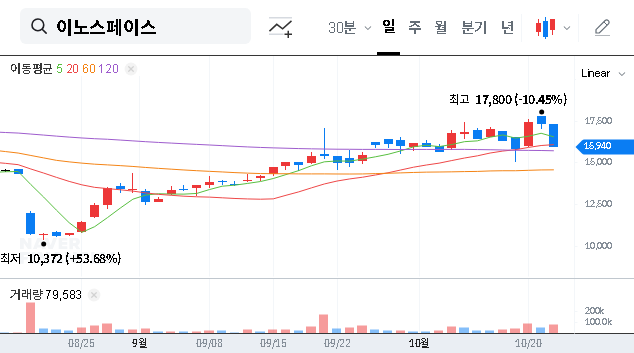
    The sale of subscription rights will likely exert short-term downward pressure on INNOSPACE stock as the market processes this signal of potential ‘risk-off’ sentiment from an early investor. However, this does not alter the company’s long-term fundamental trajectory.

    Action Plan for Investors

    • For Short-Term Traders: Exercise extreme caution. The stock will likely experience heightened volatility. Wait for the price to stabilize and for clear signals of market sentiment before considering an entry.
    • For Long-Term Investors: If you believe in the disruptive potential of INNOSPACE’s technology and the growth of the space economy, a short-term dip could present a strategic buying opportunity. Your focus should be on the company’s ability to hit its technological and commercial milestones, not on short-term price fluctuations. Consider reading our guide to investing in high-growth tech stocks for more context.

    Key Monitoring Points Moving Forward

    Stay focused on tangible progress. The most important indicators for INNOSPACE’s future will be:

    • Commercial Contracts: The announcement of the first commercial satellite launch contracts will be a major de-risking event.
    • Path to Profitability: Any updates on the timeline for generating positive cash flow and achieving profitability.
    • Technological Milestones: Successful full-scale engine tests, orbital launch successes, and progress on reusable vehicle development.

    In conclusion, while the actions of a major shareholder warrant attention, the ultimate value of INNOSPACE stock will be written in the stars—forged by its ability to execute its ambitious vision and turn groundbreaking technology into a sustainable business.
    (462350) INNOSPACE Stock Analysis: Decoding the Rights Sale & Your 2025 Investment Strategy 관련 이미지
  • (462350) INNOSPACE CEO Stake Increase: A Deep Dive into the Rights Offering & Management Control

    (462350) INNOSPACE CEO Stake Increase: A Deep Dive into the Rights Offering & Management Control

    In the dynamic world of corporate finance, even minor shifts can signal major strategic undercurrents. The recent INNOSPACE Co., Ltd. stake change by CEO Kim Soo-jong has captured significant investor attention. While a 0.30%p increase may seem trivial on the surface, its occurrence amidst a crucial rights offering suggests a calculated move to fortify management control and signal unwavering confidence in the company’s future trajectory. This analysis will delve deep into the mechanics of this event, its strategic implications, and what it means for current and prospective investors.

    We will unpack the official disclosures, explore the purpose behind the INNOSPACE rights offering, and provide a comprehensive guide for evaluating the company’s long-term potential in light of these developments.

    Decoding the INNOSPACE Co., Ltd. Stake Change

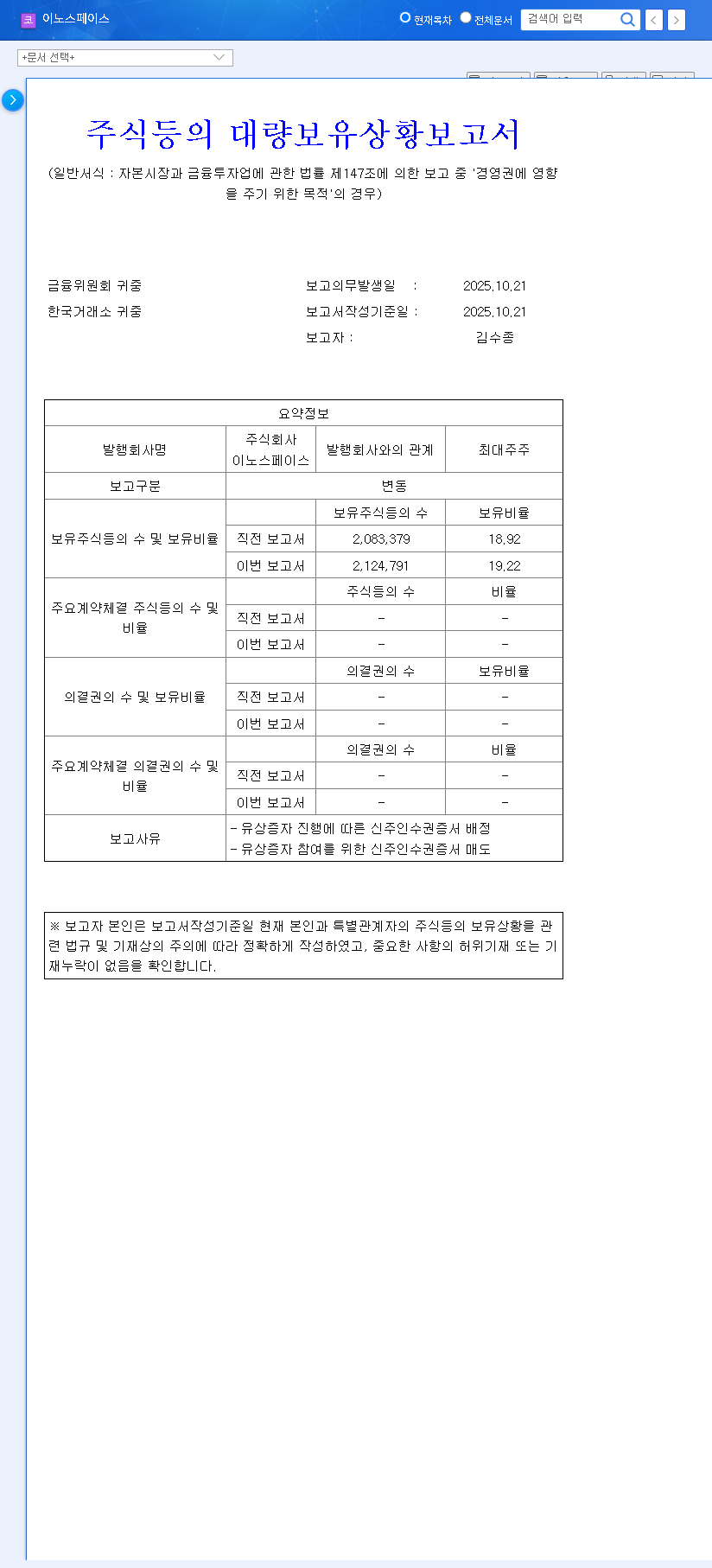
    On October 22, 2025, a mandatory filing revealed a notable adjustment in the ownership structure of INNOSPACE Co., Ltd. According to the ‘Report on the Status of Large-Volume Holdings of Shares,’ CEO Kim Soo-jong’s personal stake increased from 18.92% to 19.22%—a net gain of 0.30 percentage points. This change was not a simple open-market purchase but a direct result of the company’s ongoing capital increase via a rights offering.

    The mechanism involved the allocation of stock subscription rights (also known as warrants or BWs) to existing shareholders. Mr. Kim exercised a portion of his rights to acquire new shares while partially selling other rights certificates, ultimately resulting in a slight but meaningful increase in his overall holdings. The complete details of this transaction can be verified in the Official Disclosure filed with the regulatory authorities.

    The Strategic Intent: Bolstering Management Control

    The filing explicitly states the purpose of the holding as ‘Influence over Management Rights.’ This declaration is the most critical piece of the puzzle. During a rights offering, a major shareholder’s stake can be diluted if they choose not to subscribe to the new shares. CEO Kim Soo-jong’s actions not only prevented dilution but actively increased his control, sending a powerful message to the market.

    A CEO increasing their stake during a capital raise is often interpreted as the ultimate ‘vote of confidence.’ It signals a deep belief in the company’s strategic direction and the value that will be unlocked by the newly raised funds.

    This move can be seen as a defensive strategy to solidify his leadership and ensure the long-term vision for INNOSPACE remains intact. It reinforces his commitment and aligns his personal financial interests directly with those of all shareholders, which is a positive indicator for corporate governance.

    The Bigger Picture: Understanding the INNOSPACE Rights Offering

    The INNOSPACE Co., Ltd. stake change is a subplot in the larger story of its rights offering. A rights offering is a method for a company to raise fresh capital by offering new shares to its existing shareholders, typically at a discount to the market price. While this can be a highly effective way to fund growth, it comes with considerations:

    • Potential for Growth: The raised capital can be used to fund research and development, expand operations, enter new markets, or pay down debt, all of which can enhance long-term shareholder value.
    • Risk of Dilution: The issuance of new shares increases the total number of shares outstanding, which can dilute the ownership percentage and earnings per share (EPS) for existing shareholders who do not participate.
    • Market Signal: The success and purpose of the offering are key. A well-subscribed offering for clear growth initiatives is viewed positively, while one to cover operational shortfalls may be seen as a red flag.

    Investor Checklist: Key Areas for Due Diligence

    While the CEO’s move is a positive signal, savvy investors must look beyond this single event. A comprehensive analysis of the INNOSPACE rights offering and the company’s fundamentals is crucial. Consider these points before making any investment decisions:

    • Use of Proceeds: How exactly will INNOSPACE deploy the new capital? Look for detailed plans in their investor disclosures that outline specific, value-generating projects.
    • Offering Terms: Analyze the offering price, the number of new shares, and the potential dilutive impact. Is the discount offered attractive?
    • Core Business Health: Evaluate INNOSPACE’s underlying business performance, competitive position, and industry outlook. The new capital should augment a strong foundation, not patch a weak one. You can learn more by reading our deep dive on INNOSPACE’s Q3 performance.
    • Shareholder Structure: Monitor the actions of other major shareholders. Are they also participating in the offering, or are they selling their rights? This provides insight into the sentiment among large, informed investors.

    Conclusion: Look to the Long-Term Horizon

    In conclusion, CEO Kim Soo-jong’s stake increase at INNOSPACE is more than a minor administrative update; it’s a strategic affirmation of leadership and confidence. However, for investors, the true determinant of future value will not be this 0.30%p shift but the successful execution of the company’s strategy funded by the rights offering. The market’s focus will now turn to how effectively INNOSPACE utilizes this fresh capital to innovate, grow, and outperform its competition. Cautious and thorough research, focused on the company’s fundamentals and long-term plans, remains the best path forward.

    (462350) INNOSPACE CEO Stake Increase: A Deep Dive into the Rights Offering & Management Control 관련 이미지
  • (462350) INNOSPACE Stock Analysis: Why Did Kolon Investment Sell Its Rights? An Investor’s Guide

    (462350) INNOSPACE Stock Analysis: Why Did Kolon Investment Sell Its Rights? An Investor’s Guide

    Unpacking Kolon Investment’s Move on INNOSPACE Stock

    This comprehensive INNOSPACE stock analysis delves into a significant, yet easily misinterpreted, corporate disclosure. A recent filing reveals that a major institutional shareholder, Kolon Investment, participated in a rights offering only to immediately sell all acquired stock subscription rights. At first glance, the shareholder report shows an increased stake, but the truth is far more nuanced. What does this sophisticated financial maneuver mean for the future of INNOSPACE stock, and how should you, the investor, react? We’re here to decode the data and provide a clear, actionable investor guide.

    The key takeaway is not the superficial increase in shareholding percentage, but the strategic decision by Kolon Investment to liquidate the acquired rights. This signals a portfolio adjustment rather than a deepening long-term commitment.

    Decoding the Disclosure: What Exactly Happened?

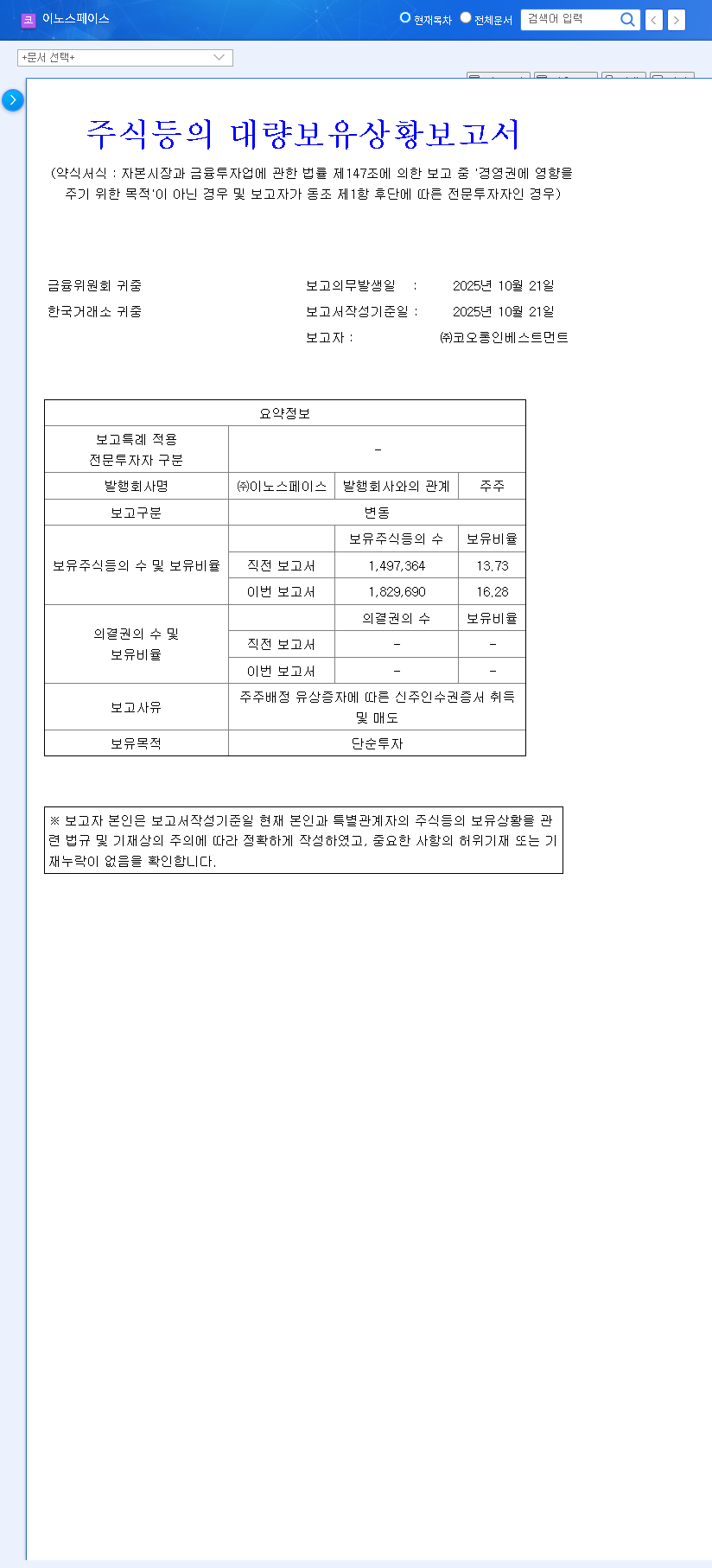
    On October 21, 2025, a ‘Report on Status of Large Shareholder’ for INNOSPACE Co., Ltd. was filed, detailing shifts in ownership by Kolon Investment and its affiliates. While the report showed their potential shareholding rise from 13.73% to 16.28%, this number included newly acquired stock subscription rights (also known as warrants). The crucial detail, however, is that Kolon Investment and its related entities sold 100% of these rights in an off-market transaction on the very same day they were reported.

    Why Sell the Stock Subscription Rights?

    An institutional investor’s decision to sell stock subscription rights instead of exercising them to buy actual shares can be driven by several strategic factors. This is not necessarily a direct negative verdict on INNOSPACE’s core business but rather a financial calculation by the investor.

    • Immediate Profit Realization: The rights themselves have value and can be sold for an immediate, risk-free profit, especially if the market price of the underlying stock is favorable. This locks in gains without injecting more capital.
    • Portfolio Rebalancing: Kolon Investment might be reallocating capital to other opportunities they deem more attractive at the moment. Selling the rights provides immediate liquidity for these new investments.
    • Risk Aversion: Exercising the rights means buying more INNOSPACE stock and increasing exposure. Selling the rights avoids this additional risk while still capitalizing on their participation in the offering.

    Impact on INNOSPACE Stock: Short-Term vs. Long-Term

    The actions of a major shareholder like Kolon Investment can create significant ripples. It’s vital for investors to distinguish between immediate market sentiment and the company’s long-term fundamental health.

    Short-Term Market Headwinds

    • Negative Investor Sentiment: The market may interpret the sale as a lack of confidence from a key insider, leading to weakened sentiment and potential selling pressure.
    • Overhang Concerns: This action raises questions about whether Kolon might sell its existing shares in the future. This ‘overhang’ risk can suppress the stock price as the market anticipates a large block of shares potentially hitting the market.

    Long-Term Fundamental Outlook

    While the short-term noise can be distracting, the long-term trajectory of INNOSPACE stock depends on its intrinsic value. This transaction does not directly impact the company’s operations, technology, or market position. If the company continues to execute its business plan effectively, its fundamental strength will ultimately dictate its stock performance. For a deeper understanding of this, you might want to read our guide on how to analyze corporate fundamentals.

    An Actionable Investor Guide for INNOSPACE Shareholders

    Navigating these events requires a calm and analytical approach. Instead of reacting to headlines, focus on diligent research and strategic monitoring.

    • Focus on Fundamentals: Re-evaluate INNOSPACE’s business model, competitive advantages, and growth prospects. Is the core investment thesis still intact?
    • Monitor Institutional Activity: Keep an eye on future filings. Will Kolon reduce its existing stake, or was this a one-off event to raise capital?
    • Analyze Market Reaction: Observe how the stock price and trading volume behave in the coming weeks. A quick recovery could indicate that the market has absorbed the news, while prolonged weakness might signal deeper concerns.
    • Consult Credible Sources: Always refer back to primary sources for your information. You can review the complete filing discussed in this analysis directly from the source. For more information, see the Official Disclosure. For definitions of financial terms, resources like Investopedia can be invaluable.

    Disclaimer: This article is an analysis based on publicly available information and is intended for informational purposes only. It does not constitute investment advice. All investment decisions should be made based on your own research, judgment, and financial situation.

    (462350) INNOSPACE Stock Analysis: Why Did Kolon Investment Sell Its Rights? An Investor's Guide 관련 이미지