Tag: Industry Analysis

  • (086280) Hyundai Glovis Stock Analysis (086280): Q3 Earnings Miss & Long-Term Investment Outlook

    (086280) Hyundai Glovis Stock Analysis (086280): Q3 Earnings Miss & Long-Term Investment Outlook

    This comprehensive Hyundai Glovis stock analysis dives into the company’s recent Q3 2025 earnings report, which fell short of market expectations. While the numbers may cause short-term concern for investors, a closer look reveals a strategic pivot towards long-term growth. We will dissect the financial results, evaluate the underlying fundamental strengths and risks, and outline a prudent investment strategy for navigating the current landscape.

    Is the recent dip in Hyundai Glovis earnings a warning sign, or does it present a strategic entry point for long-term investors who believe in the company’s future in smart logistics and green energy? Let’s explore the data.

    Deconstructing the Q3 2025 Earnings Miss

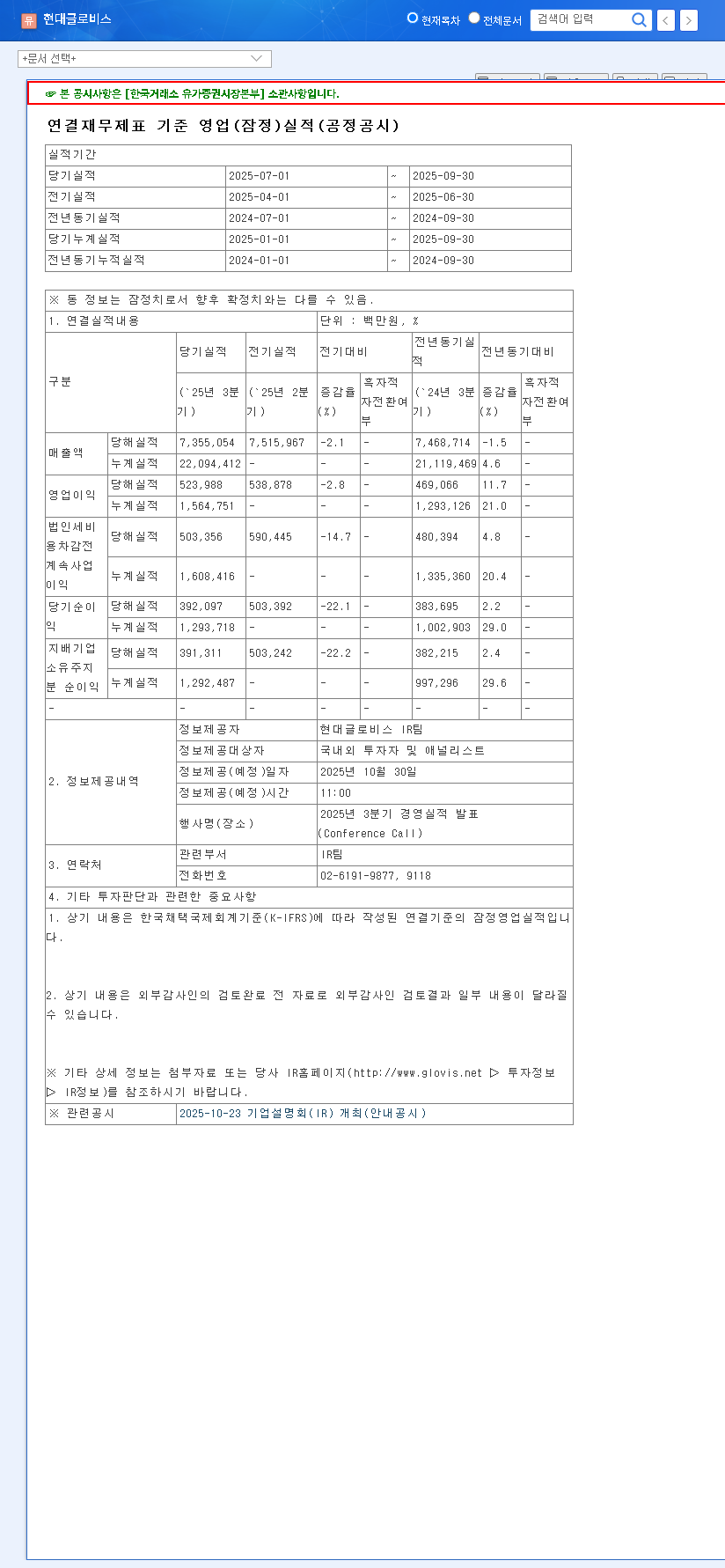
    On October 30, 2025, Hyundai Glovis released its provisional consolidated financial results, revealing a slight underperformance against analyst consensus. The market reacted with caution, particularly to the more significant drop in net profit.

    Here is a breakdown of the results compared to market estimates, as detailed in the Official Disclosure (DART):

    • Revenue: KRW 7,355.1 billion (Missed estimate of KRW 7,611.4 billion by -3.3%)
    • Operating Profit: KRW 524.0 billion (Missed estimate of KRW 530.3 billion by -1.2%)
    • Net Profit: KRW 391.3 billion (Missed estimate of KRW 428.1 billion by -8.6%)

    The shortfall, particularly in net profit, can be attributed to a combination of factors, including fluctuating global freight rates and increased initial investment costs for new business ventures. This suggests a strategic allocation of capital towards future growth, even at the expense of immediate profitability.

    Core Strengths: Building the Foundation for Future Growth

    Despite the short-term earnings pressure, a thorough Hyundai Glovis stock analysis must look beyond a single quarter. The company is aggressively positioning itself in high-growth sectors that promise substantial long-term returns.

    Strategic Expansion into High-Growth Areas

    Hyundai Glovis is not just a traditional logistics firm; it’s evolving into a future-focused mobility and energy solutions provider. Key initiatives include:

    • EV Battery Logistics & Recycling: Tapping into the circular economy, this venture addresses the entire lifecycle of EV batteries, a critical component of the sustainable energy transition. This aligns perfectly with the growth of its parent, Hyundai Motor Group. For more on this trend, see our guide to investing in the EV supply chain.
    • Smart Logistics Solutions: The acquisition of Altio enhances its capabilities in automated warehousing and AI-powered logistics, driving efficiency and offering high-margin services to third-party clients.
    • Clean Energy Shipping: Expanding its fleet and capabilities for LNG, hydrogen, and ammonia transport positions the company at the forefront of the global energy shift.

    Solid Financials and ESG Leadership

    The company’s stable credit ratings (Moody’s Baa1, S&P BBB+) provide a solid financial bedrock for these growth investments. Furthermore, its consistent inclusion in the DJSI World Index and high marks for climate change response (CDP ‘A’ rating) attract a growing pool of ESG-focused institutional capital, which can support the stock’s valuation over time.

    While the market may react to a single quarter’s data, savvy investors focus on the strategic capital allocation and structural changes that build long-term enterprise value. Hyundai Glovis’s investments in future-proof industries are a clear signal of its forward-looking strategy.

    Navigating Risks and Market Headwinds

    No investment is without risk. A balanced Hyundai Glovis investment thesis must acknowledge potential challenges:

    • Macroeconomic Sensitivity: As a global logistics provider, the company’s performance is tied to global trade volumes and economic health. A potential global slowdown, as tracked by institutions like The World Bank, could impact its core shipping and logistics segments.
    • New Business Uncertainty: While promising, new ventures in EV recycling and hydrogen transport carry execution risk and require significant upfront capital, which can continue to weigh on short-term profits.
    • Competitive Landscape: The logistics industry is fiercely competitive. Hyundai Glovis must continue to innovate to maintain its edge and protect its margins against both established players and new tech-driven disruptors.

    Investment Strategy: A Prudent Approach

    Given the crosscurrents of short-term weakness and long-term potential, a tiered investment strategy is advisable for the 086280 stock.

    • Short-Term (1-3 Months): A cautious, observational stance is warranted. The market may need time to digest the Hyundai Glovis earnings miss, and further price volatility is possible. Avoid chasing the stock and wait for a clear support level to form.
    • Mid-to-Long Term (1 Year+): For investors with a longer time horizon, price corrections could offer an attractive entry point. The strategy should be to ‘buy on dips,’ accumulating a position based on the long-term growth narrative. Key catalysts to monitor are the revenue growth and margin expansion in the new business segments.

    In conclusion, while the Q3 2025 earnings were underwhelming, they do not derail the compelling long-term story. The ongoing transformation of Hyundai Glovis into a comprehensive, future-oriented logistics and energy solutions company remains intact. Investors who can look past the immediate noise may be rewarded as these strategic initiatives begin to bear fruit and contribute meaningfully to the bottom line.
    (086280) Hyundai Glovis Stock Analysis (086280): Q3 Earnings Miss & Long-Term Investment Outlook 관련 이미지
  • (000270) Kia October 2025 IR: A Deep Dive Analysis for Investors | Stock Outlook (000270)

    (000270) Kia October 2025 IR: A Deep Dive Analysis for Investors | Stock Outlook (000270)

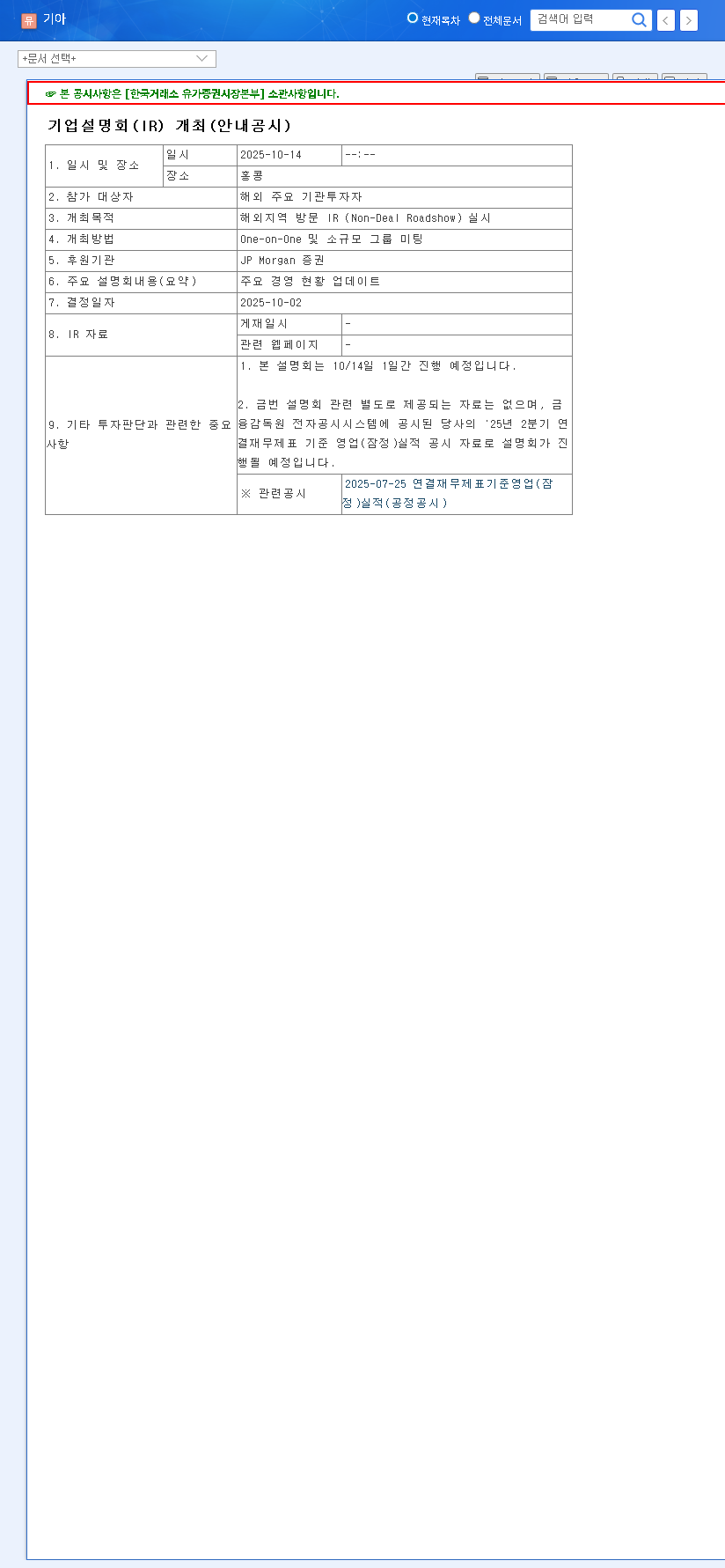
    As the automotive industry navigates a complex global landscape, the upcoming Kia October 2025 IR (Investor Relations) event is drawing significant attention. This Non-Deal Roadshow represents a pivotal moment for Kia (KRX: 000270) to connect with the global investment community, articulate its strategic vision, and reinforce confidence in its future trajectory. For current and prospective shareholders, this event is more than just a corporate presentation; it’s a critical source of information that could significantly influence Kia’s stock analysis and long-term valuation.

    This comprehensive guide will dissect the significance of Kia’s investor relations event, analyze the company’s current fundamentals, evaluate the potential impact on stock performance, and provide a clear action guide for making informed investment decisions. We will explore both the bullish catalysts and the bearish risks facing the automotive giant.

    Understanding the Kia October 2025 IR Event

    Kia has officially scheduled an overseas Non-Deal Roadshow for October 14, 2025, to deliver a crucial update on its key management status. The primary purpose of this Kia investor relations initiative is to foster transparent communication with international investors, showcase the company’s robust operational health and future-forward strategy, and ultimately attract new capital. You can view the Official Disclosure for this event on DART.

    The market’s reaction will largely depend on the clarity, confidence, and substance of the ‘key management status update’ presented during this IR. A well-executed presentation can significantly bolster investor sentiment.

    A Deep Dive into Kia’s Current Fundamentals (Ticker: 000270)

    A thorough Kia fundamentals review reveals a company with significant strengths but also facing notable headwinds. Understanding this balance is key to interpreting the information that will be shared at the Kia October 2025 IR.

    Positive Catalysts: Strengths and Opportunities

    • Impressive Sales Growth: Kia demonstrated strong top-line performance in the first half of 2025, with sales reaching 57.4 trillion KRW, a 6.7% increase. This was driven by a successful premium brand strategy and a higher average selling price (ASP).
    • Electrification Leadership: With successful models like the EV6 and EV9, and a promising pipeline including the EV3, EV4, and the Tasman pickup, Kia is cementing its position as a leader in the EV transition. This focus is crucial for long-term growth. For more details, you can read our full review of Kia’s electrification strategy.
    • Rock-Solid Financials: A low debt-to-equity ratio of 64.58% signals excellent financial health. This stability provides Kia with the flexibility to navigate economic downturns and invest heavily in R&D without undue risk.
    • Global Footprint: A resilient and diversified global production and sales network allows Kia to adapt to shifting regional demand and mitigate supply chain disruptions effectively.

    Negative Headwinds: Risks and Concerns

    • Profitability Squeeze: Despite higher sales, operating profit fell by 18.3% and net income by 52.3%. This compression is a major concern, potentially linked to rising costs and the threat of tariffs in key markets like the United States.
    • Rising Inventory Levels: An inventory of 13.4 trillion KRW is manageable but could become a significant liability if global demand softens, forcing discounts that would further erode margins.
    • Macroeconomic Pressures: The entire auto sector is vulnerable to high-interest rates, geopolitical instability, and rising protectionism. These factors, as reported by outlets like Reuters, can suppress consumer demand and disrupt operations.
    • Intense EV Competition: The electric vehicle market is becoming increasingly crowded. Fierce competition from Tesla, BYD, and legacy automakers could trigger price wars and escalate marketing costs, impacting Kia’s profitability in this key growth segment.

    Potential Impact on Kia’s Stock Analysis and Valuation

    The IR event itself won’t change the Kia fundamentals overnight, but it can act as a powerful catalyst for its stock price. A transparent and forward-looking presentation can enhance investor trust, highlight the company’s long-term value proposition, and attract new institutional buyers. Conversely, a presentation that fails to address the key risks or falls short of expectations could trigger a negative reaction, leading to a decline in the stock price.

    Actionable Investment Insights: What to Watch For

    Investors should listen closely for management’s commentary on four critical areas during the Kia October 2025 IR:

    1. 1. Profitability and Cost Controls: How does Kia plan to combat margin compression? Look for specific strategies to mitigate tariff impacts, manage raw material costs, and improve operational efficiency.
    2. 2. Electrification Monetization: Beyond new models, what is the clear path to profitability for the EV division? Investors need to see a detailed roadmap for monetizing this significant investment.
    3. 3. Financial Risk Management: What are Kia’s hedging strategies against currency fluctuations (KRW/USD, KRW/EUR) and interest rate volatility? A robust risk management plan is essential.
    4. 4. Regional Growth Strategies: How will Kia address slowdowns in key markets like China and Europe? Listen for differentiated sales and marketing plans tailored to each region.

    In conclusion, this IR event is a valuable opportunity for prudent investors to conduct a thorough Kia stock analysis. While short-term price volatility is likely, the long-term outlook will depend on whether management can convincingly articulate a strategy that leverages its strengths to overcome its current challenges. Careful analysis of the information presented will be crucial for assessing the true investment value of the 000270 stock.

    Frequently Asked Questions

    Q1: When is the Kia October 2025 IR event?

    A1: Kia’s overseas Non-Deal Roadshow is scheduled for October 14, 2025.

    Q2: What is the main goal of this Kia investor relations event?

    A2: The primary goal is to communicate directly with global investors, provide an update on the company’s management status and future strategy, and attract potential new investment.

    Q3: What key topics should investors focus on?

    A3: Investors should focus on Kia’s plans for improving profitability, its EV monetization strategy, financial risk management, and specific strategies for enhancing competitiveness in key global markets.

    Q4: How might this IR event affect Kia’s stock price?

    A4: The stock may experience short-term volatility based on the news and sentiment from the event. A strong, confident presentation could boost the stock price, while a weak one could cause a decline. The long-term impact depends on the credibility of the growth strategies presented.

    (000270) Kia October 2025 IR: A Deep Dive Analysis for Investors | Stock Outlook (000270) 관련 이미지
  • CHOSUN REFRACTORIES Secures KRW 55.6 Billion Contract with POSCO: Investment Strategy Analysis


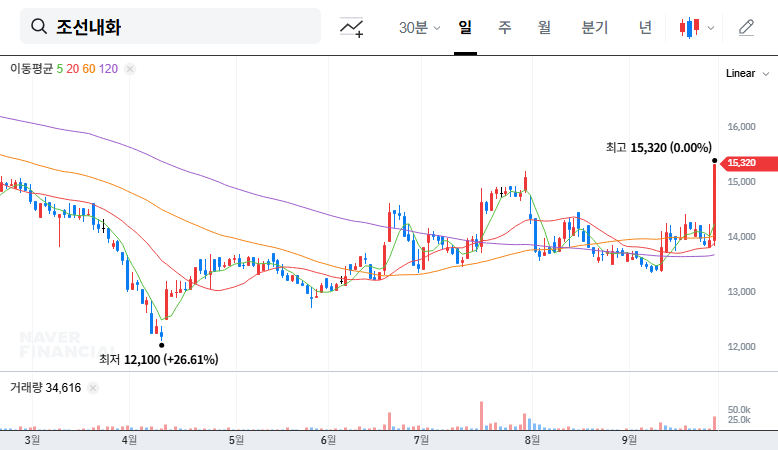
    CHOSUN REFRACTORIES Secures KRW 55.6 Billion Contract with POSCO: Investment Strategy Analysis 대표 차트 이미지


    CHOSUN REFRACTORIES and POSCO’s KRW 55.6 Billion Deal: What Happened?

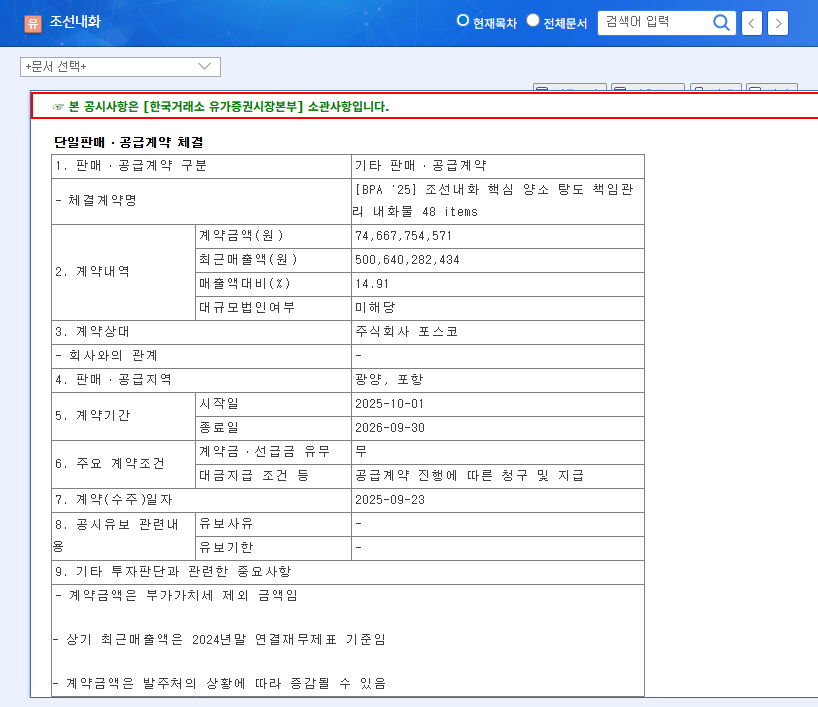
    On September 24, 2025, CHOSUN REFRACTORIES signed a KRW 55.6 billion supply contract with POSCO for refractory materials. This significant contract represents approximately 11.11% of CHOSUN REFRACTORIES’ annual revenue and is valid for one year, from October 1, 2025, to September 30, 2026.

    The Significance of the Contract: Why Does It Matter?

    This contract signifies more than just a revenue increase for CHOSUN REFRACTORIES. It secures stable sales and strengthens the relationship with a key client, POSCO, paving the way for long-term growth. It also holds the potential for improved profitability through economies of scale.

    Financial Status and Market Environment Analysis: What’s Next?

    • Financial Status: Despite revenue growth, CHOSUN REFRACTORIES experienced slightly weakened profitability in the first half of 2025. However, this contract is expected to lay the groundwork for profit improvement.
    • Market Environment: Uncertainties such as a global economic slowdown, exchange rate fluctuations, and rising raw material prices persist. This contract, however, should help mitigate the impact of these external factors.

    Action Plan for Investors: What Should You Do?

    • Monitor Profitability: Continuously monitor whether actual profitability improves following the contract.
    • Risk Management: Pay close attention to the company’s strategies for addressing external factors like raw material prices and exchange rate fluctuations.
    • Long-Term Perspective: Don’t be swayed by short-term stock price fluctuations; consider the company’s long-term growth potential.


    FAQ

    What is the scale of this contract?

    KRW 55.6 billion, representing approximately 11.11% of CHOSUN REFRACTORIES’ annual revenue.

    What is the contract period?

    One year, from October 1, 2025, to September 30, 2026.

    How will this contract affect CHOSUN REFRACTORIES’ stock price?

    It is likely to act as a short-term upward momentum for the stock price. However, the long-term impact will depend on market conditions and the company’s performance.

    What precautions should investors take?

    Investors should closely monitor external factors such as raw material price fluctuations, exchange rate fluctuations, and interest rate changes, as well as the company’s ability to manage profitability.


    CHOSUN REFRACTORIES Secures KRW 55.6 Billion Contract with POSCO: Investment Strategy Analysis 관련 이미지


  • Waldex Stock Forecast: VIP Asset Management Acquires 11% Stake – Is it a Buying Opportunity?

    What Happened? VIP Asset Management Acquires 11% of Waldex

    VIP Asset Management purchased an additional 158,433 shares of Waldex, increasing its stake from 7.25% to 11.01%. Despite the stated purpose of “simple investment,” this significant increase has drawn considerable market attention.

    Why Did VIP Asset Management Invest in Waldex?

    Waldex announced strong results for Q1 2025. Driven by the semiconductor market recovery, sales increased by 11.56% year-on-year, maintaining a high operating margin of 19.9%. Growing demand for high-performance semiconductors, such as AI and HBM, coupled with increased production capacity from new plant expansions, further enhances Waldex’s future growth potential.

    What’s Next? Waldex Stock Forecast Analysis

    • Positive Impacts:
      • VIP Asset Management’s increased stake can act as a positive signal to the market, providing upward momentum for the stock price.
      • It is likely to attract further attention and investment from institutional investors.
    • Considerations:
      • The impact of macroeconomic indicators, such as the semiconductor industry cycle, interest rate and exchange rate fluctuations, should be considered.
      • Continuous monitoring of Waldex’s fundamental improvements, including customer concentration and subsidiary operation rates, is necessary.

    Investor Action Plan

    While this stake increase can be interpreted as a positive signal in the short term, investment decisions should be made cautiously. A comprehensive analysis of Waldex’s fundamentals, macroeconomic conditions, and future stake changes is crucial for developing a long-term investment strategy.

    Frequently Asked Questions

    How will VIP Asset Management’s increased stake in Waldex affect the stock price?

    It’s likely to act as positive momentum for the stock price in the short term. However, the long-term stock performance will depend on the company’s fundamentals and macroeconomic conditions.

    What is the outlook for Waldex?

    Waldex has high growth potential due to the semiconductor market recovery, increasing demand for high-performance semiconductors, and new business investments. However, it also faces challenges such as customer concentration and improving subsidiary operating rates.

    What should investors consider when investing in Waldex?

    It’s important to analyze the company’s fundamentals, macroeconomic indicators, and future stake changes comprehensively and develop a long-term investment strategy.

  • Hanwha Vision Q2 2025 Earnings Analysis: Below Expectations, Increased Net Loss… Investment Strategy?

    1. Hanwha Vision Q2 Earnings: Key Highlights

    Hanwha Vision reported revenue of KRW 457.2 billion, operating profit of KRW 56.3 billion, and a net loss of KRW 9.7 billion for Q2 2025. While revenue and operating profit saw a slight increase compared to the previous quarter, the significant expansion of the net loss is the key takeaway.

    2. Analyzing the Factors Behind the Underperformance

    The increased net loss is attributed to a combination of factors, including the sluggish performance of the industrial equipment segment, continued losses in the semiconductor design segment, and unexpected additional costs. The global economic downturn and rising raw material prices significantly impacted the profitability of the industrial equipment segment.

    3. External Environmental Factors

    • Exchange Rates: The rise in the KRW/USD exchange rate and the decline in the KRW/EUR exchange rate had a mixed impact on exports in the security segment.
    • Raw Material Prices: Rising oil prices increased cost pressures for the industrial equipment segment.
    • Interest Rate Hikes: Increased funding costs and dampened investment sentiment.
    • Global Economic Downturn: The decline in the China Containerized Freight Index suggests decreased demand in the industrial equipment segment.

    4. Outlook and Investment Strategy

    Hanwha Vision’s future outlook hinges on the recovery of the industrial equipment segment, improvement in the profitability of the semiconductor design segment, and the success of its new AI-based businesses. Investors should carefully consider these factors and develop their investment strategies based on detailed segment-by-segment performance analysis, competitor analysis, and sensitivity analysis of external environmental changes.

    Frequently Asked Questions

    What are the main reasons for Hanwha Vision’s poor Q2 performance?

    The underperformance is attributed to the sluggish industrial equipment segment, continued losses in the semiconductor design segment, and unexpected additional costs.

    What is the outlook for Hanwha Vision’s stock price?

    The outlook is highly dependent on the recovery of the industrial equipment segment, improvement in the profitability of the semiconductor design segment, and the success of its new AI-based businesses.

    What should investors consider when investing in Hanwha Vision?

    Investors should develop their investment strategies based on detailed segment-by-segment performance analysis, competitor analysis, and sensitivity analysis of external environmental changes.

  • Dowooinsys: A Risky Bet Despite UAMCO’s Investment? Fundamental Analysis and Investment Strategy

    1. What Happened?

    UAMCO Zelkova No.1 Private Equity Fund acquired 1,446,759 shares of Dowooinsys, securing a 16.33% stake. Participation from other investors, including Mason Capital and MZ Small- and Medium-sized Business Investment Association No. 5, was also confirmed.

    2. Why Does It Matter?

    This large influx of capital could positively impact the stock price in the short term. However, due to Dowooinsys’s shaky fundamentals, long-term stock price appreciation is uncertain. The 2024 audit report reveals Dowooinsys is grappling with declining profitability, a high debt ratio, and sensitivity to exchange rate and interest rate fluctuations. Fluctuations in oil prices, cost structure, and intensifying competition are presumed to be the main causes of the deteriorating profitability.

    3. What Should Investors Do?

    Avoid being swayed by short-term stock price fluctuations and closely monitor Dowooinsys’s fundamental improvements. Carefully analyze management strategies, including plans for profitability improvement, financial stabilization, and foreign exchange risk management. Also consider external factors such as the mobile display industry outlook and UAMCO’s investment strategy.

    4. Investor Action Plan

    • Short-term investors: Consider investing given the potential for short-term price increases, but be aware of high volatility. Set a stop-loss level and closely monitor market conditions.
    • Long-term investors: It is advisable to invest after confirming improvements in Dowooinsys’s fundamentals. Continuously monitor management’s strategy announcements and earnings improvement trends.
    How will UAMCO’s investment affect Dowooinsys?

    While a short-term stock price increase can be expected, the long-term impact depends on whether Dowooinsys improves its fundamentals.

    Why are Dowooinsys’s fundamentals unstable?

    Declining profitability, high debt-to-equity ratio, and sensitivity to exchange rate and interest rate fluctuations are the primary reasons.

    What precautions should investors take?

    Don’t be swayed by short-term stock price fluctuations. Consider the overall picture, including fundamental improvements, industry outlook, and UAMCO’s investment strategy.

  • Finemtek’s $17.5 Billion Investment: A Signal for Foldable Phone Market Expansion and Future Growth

    Finemtek’s New Leap: An Analysis of its $17.5 Billion New Facility Investment

    Finemtek has decided to make a substantial new facility investment of 17.5 billion won to respond to the expansion of the foldable phone market and enhance its ultra-precision laser production capacity. This investment, equivalent to 10.64% of its capital, is scheduled to proceed for approximately 1.5 years from July 17, 2025, to January 20, 2027. This move is considered a core element of Finemtek’s long-term growth strategy.

    1. Why is Finemtek Making a Large-Scale Investment Now?

    This investment is the result of deep consideration regarding several situations Finemtek faces and its future prospects.

    • Current Status and Outlook of Existing Business (IT Components):

      • Reasons for Q1 Performance Slump: In Q1 2025, Finemtek experienced a revenue decline due to a combination of factors including the global economic slowdown, a temporary stagnation in the foldable phone market, and the deceleration of the electric vehicle market. Furthermore, the upward trend in international oil prices and uncertainty in the shipping market likely negatively impacted profitability by increasing raw material costs and logistics expenses. (Related Chart: stock_chart_441270.md)
      • Future Market Recovery Prospects and Variables: While the foldable phone market is expected to rebound from 2026 onwards, and the EV market is projected for long-term growth, this will heavily depend on the pace of global interest rate hikes and economic recovery. In particular, the trends in US, Korean, and European benchmark interest rates (US_benchmark_rate.md, Europe_benchmark_rate.md, Korea_benchmark_rate.md) and long-term government bond yields (US_10yr_treasury.md, Korea_10yr_treasury.md) will be crucial determinants of the timing and strength of the market recovery.
      • Importance of FX and Interest Rate Risk Management: The ongoing volatility in the KRW/USD and KRW/EUR exchange rates (EUR_KRW_exchange_rate.md, USD_KRW_exchange_rate.md) can directly impact Finemtek’s profitability, given its reliance on imported raw materials. Notably, the recent upward trend in the KRW/USD exchange rate could exacerbate raw material price increases, further highlighting the importance of FX and interest rate risk management, as mentioned in the Q1 report.
    • Potential and Challenges of New Business (Medical Devices):

      • Entry into the US Low-Cost Disposable Medical Device Market: Finemtek aims to secure new growth drivers by entering the US low-cost disposable medical device market. However, this market is expected to have high entry barriers and intense competition. Additionally, macroeconomic uncertainties such as changes in US trade policies and gold price fluctuations related to safe-haven demand (refer to gold_price.md) must be considered.
      • Investment Plans and Synergistic Effects: The lack of detailed investment plans and funding strategies for the medical device business introduces uncertainty regarding its success. While revenue is expected from 2026, the scale of investment and potential funding difficulties could negatively impact enterprise value. However, Finemtek’s precision convergence manufacturing technology holds potential for synergistic effects with the medical device business.

    2. How Will Finemtek’s $17.5 Billion Investment Impact its Future?

    This new facility investment is expected to have a positive impact on Finemtek’s future.

    • Responding to Foldable Phone Market Expansion and Enhancing Competitiveness: The 17.5 billion won investment will help Finemtek proactively respond to the growth of the foldable phone market and strengthen its competitive edge by expanding its ultra-precision laser production capacity (CAPA). This is anticipated to drive sales growth and improve profitability in the long run.
    • Securing Growth Drivers through New Business: The entry into the medical device business is a strategy to overcome the limitations of its existing business and capture new growth opportunities. If successful in market penetration, it will significantly contribute to diversifying Finemtek’s portfolio and increasing its enterprise value.

    3. Key Points for Investors to Watch

    The success of Finemtek’s investment is contingent upon various external factors. Investors should closely monitor the following:

    • Timing and Speed of Global Economic Recovery: Especially if interest rate hikes continue, consumer sentiment may weaken, and investment may decrease, leading to a slower market recovery.
    • Volatility of Raw Material Prices and Exchange Rates: Continued increases in raw material prices and exchange rate fluctuations could burden Finemtek’s profitability.
    • Success of US Medical Device Market Entry: Competitive landscape, regulatory changes, and Finemtek’s execution capabilities will be critical for success.
    • Correlation Analysis with Stock Price: Analyzing the correlation between past stock price movements (stock_chart_441270.md) and the announcement of this investment is crucial for predicting market reactions.

    In conclusion, Finemtek’s 17.5 billion won new facility investment signals a positive move to secure future growth drivers and enhance competitiveness, despite short-term performance headwinds. However, the success of this investment hinges on thorough responses to external environmental changes, strengthening existing business competitiveness, and successfully establishing its new business ventures. We recommend careful investment decisions while closely monitoring Finemtek’s future endeavors.

    Q1: What is the purpose of Finemtek’s 17.5 billion won investment?

    Finemtek has decided to make a new facility investment of 17.5 billion won to respond to the expansion of the foldable phone market and enhance its ultra-precision laser production capacity (CAPA).

    Q2: Is Finemtek’s performance expected to improve due to this investment?

    The new investment is expected to contribute to sales growth and improved profitability in the long term. However, external factors such as the timing of global economic recovery, raw material prices, and exchange rate fluctuations may affect performance.

    Q3: What is the outlook for Finemtek’s new medical device business?

    The US low-cost disposable medical device market is expected to have high entry barriers and intense competition, but it holds growth potential through synergies with Finemtek’s precision manufacturing technology. However, the success of the business depends on the concretization of investment plans and market penetration.

    Q4: What should investors be cautious about when investing in Finemtek?

    Investors should carefully monitor the speed of global economic recovery, the volatility of raw material prices and exchange rates, the success of entry into the US medical device market, and changes in the investment environment due to interest rate fluctuations.

    Q5: What were the reasons for Finemtek’s Q1 performance slump?

    The Q1 performance slump was attributed to a combination of factors, including the global economic slowdown, temporary stagnation in the foldable phone market, deceleration of the EV market, and increases in raw material prices and shipping market uncertainties.