Tag: Improvement Plan

  • (082660) Cosnine Delisting Decision (082660): A Deep-Dive Analysis for Investors

    (082660) Cosnine Delisting Decision (082660): A Deep-Dive Analysis for Investors

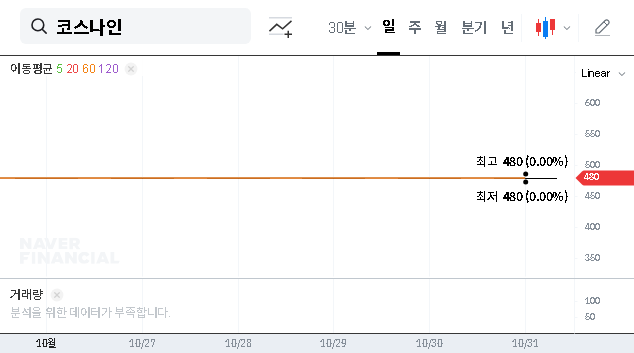
    The future of Cosnine Co., Ltd (082660) hangs in the balance, with a critical Cosnine delisting decision looming on the horizon. After submitting its corporate improvement plan to the Korea Exchange (KRX) on October 31, 2025, all eyes are now on the KOSDAQ Market Committee, which is set to deliver its final verdict by November 28, 2025. With stock trading currently suspended, this decision is not just a procedural step; it represents a moment of truth for the company and a point of extreme peril for its investors. This comprehensive Cosnine investor analysis will dissect the multifaceted crisis, evaluate the potential outcomes, and provide actionable guidance for stakeholders navigating this period of intense uncertainty.

    The Critical Crossroads: What is the Cosnine Delisting Decision?

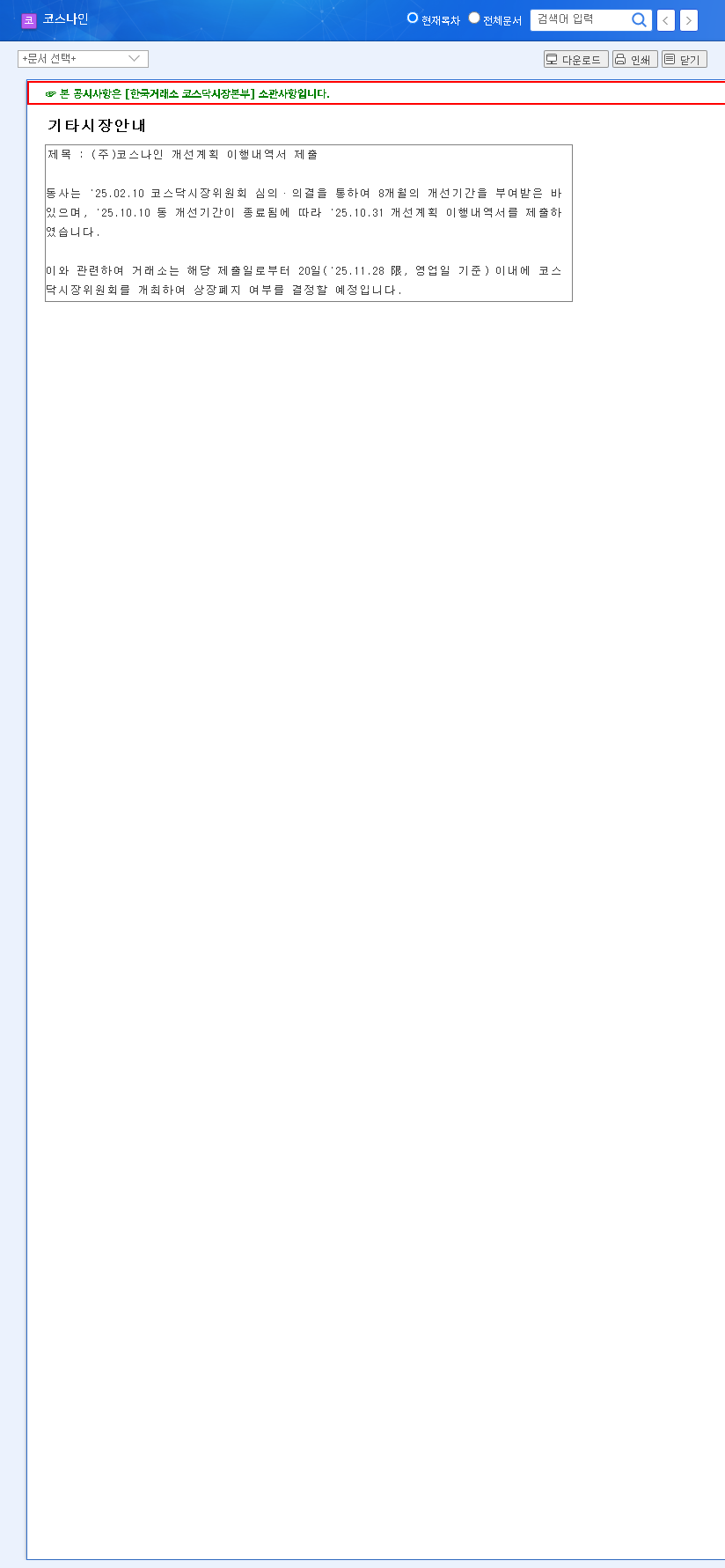
    On February 10, 2025, Cosnine was granted an eight-month improvement period to address severe deficiencies threatening its status as a publicly-traded company. The culmination of this period was the submission of its improvement plan execution report. This document, available via the official disclosure on DART (Source), is now under intense scrutiny by the KRX. The committee will evaluate whether the company has made sufficient, sustainable changes to warrant its continued listing on the KOSDAQ market. The verdict will determine if the 082660 stock will ever trade again or if it will be permanently removed from the exchange.

    A Cascade of Crises: Analyzing Cosnine’s Core Issues

    Cosnine’s predicament is not the result of a single misstep but a deep-seated corporate crisis rooted in governance failures, financial decay, and a collapse in business fundamentals.

    Management Instability and Governance Failures

    The company’s history is marred by severe governance issues. The initiation and subsequent termination of rehabilitation proceedings created significant doubt about its operational viability. More damaging are the allegations of embezzlement and breach of trust, which have shattered corporate credibility and investor confidence. Such issues are a major red flag for regulators like the KRX, as they undermine the principles of market transparency and fairness. A lack of trustworthy leadership makes any turnaround plan, no matter how well-written, difficult to believe.

    Dire Financial Health

    A look at Cosnine’s financials reveals a company in distress. The key indicators point towards a rapidly deteriorating situation:

    • Sustained Operating Losses: The first half of 2025 saw a widening of operating losses, demonstrating that the core business is not only unprofitable but is becoming increasingly so.
    • Worsening Cash Flow: Cash flow from operations has plummeted, a clear sign that the company is struggling to generate the cash needed to sustain itself, let alone invest in growth.
    • Questionable Debt Reduction: While the overall debt size has decreased, this was primarily due to large-scale bond repayments, which may signal severe liquidity pressure rather than a healthy deleveraging process.

    Eroding Business Competitiveness

    The company’s primary cosmetics business is in decline, with a significant drop in revenue from a major client, Lion Korea Co., Ltd. This instability is compounded by the tarnished corporate image, which naturally leads to diminished trust from customers and partners. Furthermore, while Cosnine has added new business objectives like renewable energy and AI to its articles of incorporation, there is a stark lack of concrete plans or reported investments. This raises serious doubts about the feasibility of such a pivot, especially for a company lacking the capital and stability to execute it effectively.

    Given the confluence of management scandals, financial instability, and a weakening core business, investing in Cosnine Co., Ltd at this juncture involves an exceptionally high level of risk. The possibility of a total loss of capital is significant.

    Investor Action Plan & Future Outlook

    For current and prospective investors, the path forward requires extreme caution. The outcome of the Cosnine delisting decision is the single most important variable. If the KRX decides to delist, trading will be permanently halted, and the stock’s value will likely be reduced to zero. For more information on this process, investors can review general guides on understanding stock delisting procedures.

    Even if listing is maintained, a difficult road lies ahead. The company would still need to address its fundamental issues, a process that could involve further dilutive capital raises or painful restructuring. As highlighted by corporate governance experts at institutions like the Harvard Law School Forum on Corporate Governance, rebuilding trust after major scandals is a long and arduous journey.

    Therefore, a wait-and-see approach is strongly advised. Key points to monitor include:

    • The final KRX decision by November 28, 2025.
    • Tangible evidence that the submitted improvement plan is being implemented effectively.
    • The results of any legal investigations into the embezzlement and breach of trust allegations.

    Frequently Asked Questions

    Q1: What is the most critical issue for Cosnine Co., Ltd (082660) right now?

    A1: The most critical issue is the impending Cosnine delisting decision by the Korea Exchange (KRX), expected by November 28, 2025. This decision will determine if the company can continue to be publicly traded.

    Q2: Is Cosnine Co., Ltd at high risk of being delisted?

    A2: Yes, the risk is extremely high. A combination of rehabilitation proceedings, embezzlement allegations, and persistent operating losses has severely damaged the company’s fundamentals, making delisting a very real possibility.

    Q3: Is it advisable to invest in Cosnine Co., Ltd stock?

    A3: No. Investing in Cosnine Co., Ltd currently involves extreme risks. If delisting occurs, investment capital will likely be lost entirely. A cautious, observational stance is the only prudent approach at this time.
    (082660) Cosnine Delisting Decision (082660): A Deep-Dive Analysis for Investors 관련 이미지
  • (182400) NKMAX Improvement Plan: A Deep Dive on Its KOSDAQ Listing & Stock Price Future

    (182400) NKMAX Improvement Plan: A Deep Dive on Its KOSDAQ Listing & Stock Price Future

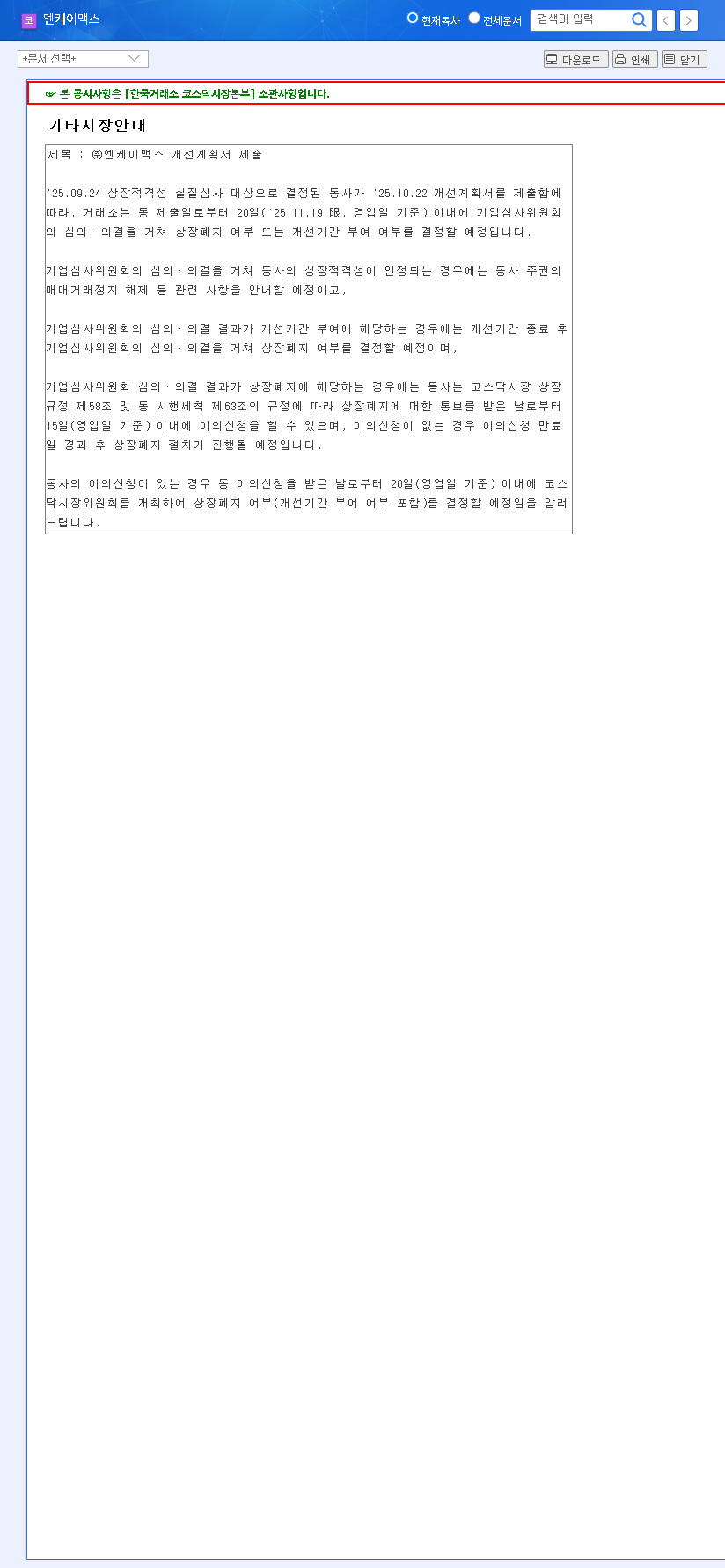
    The future of NKMAX Co., Ltd. (엔케이맥스) hangs in the balance. Following its designation for a substantive eligibility review, the KOSDAQ-listed biotech company has submitted a pivotal NKMAX improvement plan. This single document is now the focal point for investors, as it will heavily influence the company’s listing status, its corporate value, and the trajectory of the NKMAX stock price. For shareholders and potential investors, understanding the implications of this process is not just important—it’s critical.

    This comprehensive analysis will break down the situation, exploring the procedural timeline, the potential contents of the improvement plan, and the clear-cut scenarios that could unfold. We will delve into what this means for the company’s KOSDAQ listing and what every investor should be monitoring in the coming weeks.

    The Critical Crossroads: Why the NKMAX Improvement Plan Matters

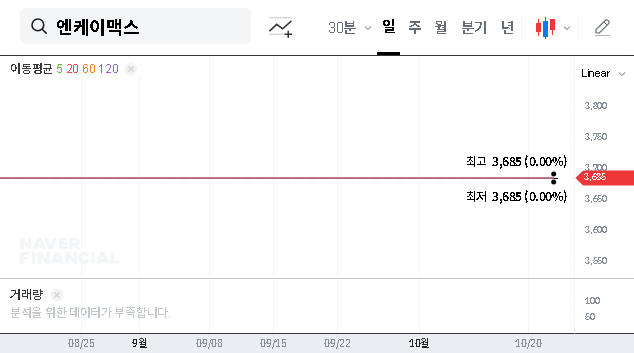
    On September 24, 2025, NKMAX was flagged for a substantive eligibility review by the Korea Exchange (KRX), a move that signals serious concerns about a company’s financial stability, management transparency, or overall business viability. In response, the company officially submitted its improvement plan on October 22, 2025. This isn’t merely a procedural formality; it is the company’s formal argument for why it deserves to remain a publicly-traded entity on the KOSDAQ market.

    The fate of NKMAX will be decided by the Corporate Review Committee within 20 business days of the plan’s submission, setting a critical deadline of November 19, 2025. This period is fraught with uncertainty and potential volatility for the stock.

    Understanding the Review and Timeline

    The process from here is structured and time-bound. Based on the official disclosure, the timeline and potential outcomes are clear. Investors can find the primary source document here: Official Disclosure (DART).

    • Plan Submitted: October 22, 2025.
    • Decision Deadline: The Corporate Review Committee must rule by November 19, 2025.
    • Possible Outcomes: The committee can (1) approve the plan and lift the review, (2) grant a formal improvement period, or (3) recommend a KOSDAQ delisting.

    Analyzing the Potential Impact on the NKMAX Stock Price

    The primary driver of the NKMAX stock price in the short term will be the market’s perception of the improvement plan’s feasibility and the ultimate decision from the KRX. The lack of detailed public information about the plan’s contents creates an information vacuum, which can lead to speculation and volatility. We can analyze the situation by considering two distinct scenarios.

    Positive Scenario: Improvement Period Granted or Listing Maintained

    If the committee finds the NKMAX improvement plan to be credible and viable, it may grant an official period for the company to execute its reforms. A best-case scenario would be an immediate recognition of listing eligibility. Either outcome would be a significant positive catalyst.

    • Uncertainty Reduction: A clear path forward would resolve the immediate delisting threat, likely causing a relief rally in the NKMAX stock price.
    • Resumption of Trading: If trading was suspended, its resumption could bring a surge of volume and renewed interest.
    • Focus on Fundamentals: Management could shift focus back to core business operations and restoring long-term growth. To learn more about how markets react to such news, investors can review analyses from authoritative sources like Bloomberg or Reuters.

    Negative Scenario: Delisting Decision

    Conversely, if the plan is deemed insufficient, a delisting decision becomes a real possibility. This is the worst-case scenario for current shareholders. Even with an appeals process, the initial decision would severely damage investor confidence and the stock’s value.

    • Share Value Collapse: A delisting decision would make shares illiquid and lead to catastrophic losses for investors.
    • Loss of Trust: The ability of the company to raise capital in the future would be severely compromised.
    • Appeals Process: While an appeal is possible within 15 business days, it is often a difficult and uncertain path. You can read more about understanding KOSDAQ listing rules on our blog for more context.

    Investor Checklist: What to Monitor Now

    Given the high stakes, investors should adopt a cautious and information-driven approach. Hasty decisions based on rumor or fear can be costly. Focus on verifying official information as it becomes available.

    • KRX Announcements: The most crucial piece of information will be the final decision from the Corporate Review Committee on or before November 19, 2025.
    • Company Disclosures: Watch for any further announcements from NKMAX that provide color on their financial status or the specifics of the improvement plan.
    • Market & Analyst Reports: Once details emerge, look for analyses from reputable financial institutions or brokerage firms that can offer third-party perspectives.

    Ultimately, the responsibility falls on NKMAX to prove its viability. The company must not only present a convincing plan but also demonstrate a genuine commitment to transparent communication and sustainable growth to regain the trust of the market and its investors.

    (182400) NKMAX Improvement Plan: A Deep Dive on Its KOSDAQ Listing & Stock Price Future 관련 이미지
  • (035890) Seohee Construction (035890) Delisting Risk: A 2025 Investor’s Survival Guide

    (035890) Seohee Construction (035890) Delisting Risk: A 2025 Investor’s Survival Guide

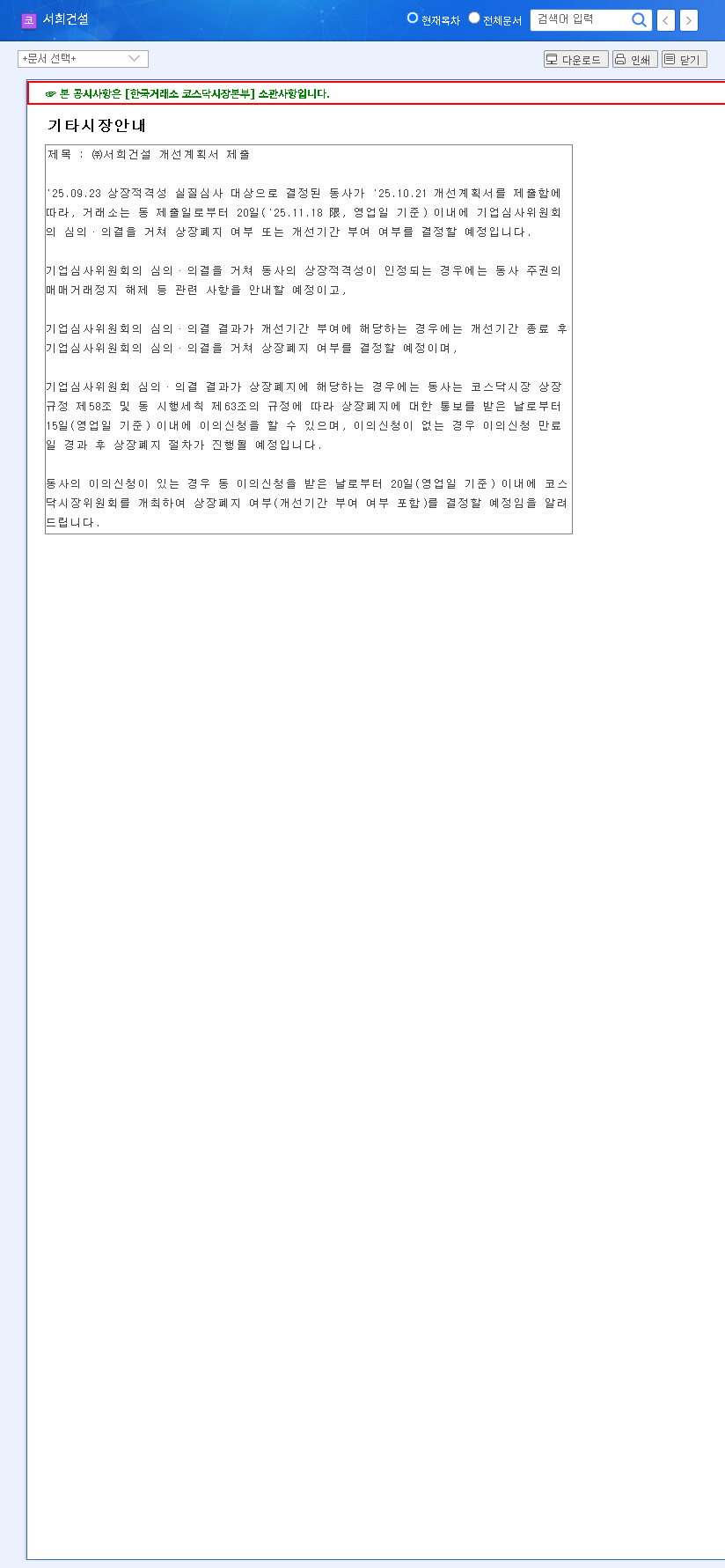
    The recent news surrounding Seohee Construction (035890) has sent waves of concern through the investment community. With a trading suspension in effect and a formal listing eligibility review underway, shareholders and potential investors are facing significant uncertainty. The core question is whether the company can navigate this crisis and avoid the severe consequences of a delisting. This comprehensive guide provides a detailed analysis of the situation, explores potential outcomes, and outlines a prudent investment strategy to manage the inherent delisting risk.

    Understanding the Seohee Construction Listing Review

    Timeline of Key Events

    To grasp the current predicament, it’s essential to understand the sequence of events. On September 23, 2025, the Korea Exchange (KRX) officially designated Seohee Construction for a substantive listing eligibility review. This is a serious measure taken when a company’s financial health, corporate governance, or operational stability is called into question. In response, the company submitted a formal improvement plan on October 21, 2025, outlining its intended corrective actions. The official filing can be reviewed here: Official Disclosure (DART). The market now awaits the final verdict from the Corporate Review Committee, expected by November 18, 2025.

    What Triggers a Listing Eligibility Review?

    A listing eligibility review is not a random audit; it’s triggered by specific red flags. While the exact reasons for Seohee Construction’s review haven’t been fully detailed publicly, common causes include:

    • Financial Distress: Consecutive large-scale operating losses, significant capital erosion, or a failure to meet minimum financial requirements.
    • Audit and Governance Issues: A disclaimer of opinion from an auditor, embezzlement, or major breaches of management transparency.
    • Operational Failures: Significant disruptions to core business operations that threaten the company’s going-concern status.

    The designation for a substantive review itself is a powerful signal of underlying problems, creating an environment of high uncertainty that demands extreme caution from investors.

    Potential Scenarios and Investor Impact

    The Corporate Review Committee’s decision will lead to one of three primary outcomes, each with drastically different implications for shareholders of Seohee Construction stock.

    Scenario 1: Listing Eligibility Acknowledged (Best Case)

    If the committee finds the improvement plan credible and the underlying issues resolved, it may acknowledge the company’s eligibility to remain listed. Trading would resume, likely leading to a significant short-term rebound in the stock price as relief rallies through the market. However, investor confidence may take time to fully recover.

    Scenario 2: Improvement Period Granted (Uncertain Middle Ground)

    The committee might grant an improvement period (typically 6-12 months), keeping the trading suspension in place. This gives Seohee Construction a final chance to execute its plan, which could involve drastic measures like asset sales or capital increases. This outcome prolongs the uncertainty, and the stock’s future hinges entirely on the successful implementation of the turnaround strategy.

    Scenario 3: Delisting Decision (Worst Case)

    If the committee deems the issues insurmountable or the plan unconvincing, it will decide to delist the company. This is the most severe outcome. Trading would briefly resume for a liquidation period, during which the stock price would likely plummet, potentially leading to a near-total loss of invested capital. Understanding the full ramifications of what delisting means for shareholders is crucial in this scenario.

    A Prudent Investment Strategy for Seohee Construction (035890)

    Given the high stakes, a reactive, emotional approach is dangerous. A clear-headed investment strategy is essential.

    For Existing Shareholders

    • Monitor Cautiously: The most critical action is to await the committee’s decision. Any action taken before this is pure speculation.
    • Assess Your Risk Tolerance: Objectively evaluate how much of your investment you can afford to lose. This is a high-risk situation, and capital preservation should be a priority.
    • Avoid Emotional Decisions: Do not sell in a panic or average down based on hope. Decisions should be based on the final, official outcome.

    For Potential New Investors

    • Remain on the Sidelines: The risk/reward profile is heavily skewed to the downside. New investments in Seohee Construction (035890) are extremely speculative and not recommended until there is absolute clarity on its listing status.
    • Look for Confirmation: If the company successfully maintains its listing, wait for a period of stabilization and review its post-crisis financial reports before considering an entry. For more information, read our guide on analyzing turnaround stocks.

    Frequently Asked Questions (FAQ)

    Why is Seohee Construction facing a delisting risk?

    Seohee Construction (035890) was designated for a listing eligibility review on Sept 23, 2025, due to concerns about its financial health or management transparency, which are required to maintain its public listing on the Korea Exchange.

    What are the key dates for investors to watch?

    The most important date is November 18, 2025, which is the deadline for the Corporate Review Committee to decide on the company’s fate—either delisting, granting an improvement period, or maintaining the listing.

    What should I do with my Seohee Construction stock right now?

    Currently, trading is suspended. The recommended investment strategy is to hold and monitor the situation until the official decision is released. Avoid making rash decisions based on rumors or speculation, and be prepared for high volatility if and when trading resumes.

    (035890) Seohee Construction (035890) Delisting Risk: A 2025 Investor's Survival Guide 관련 이미지
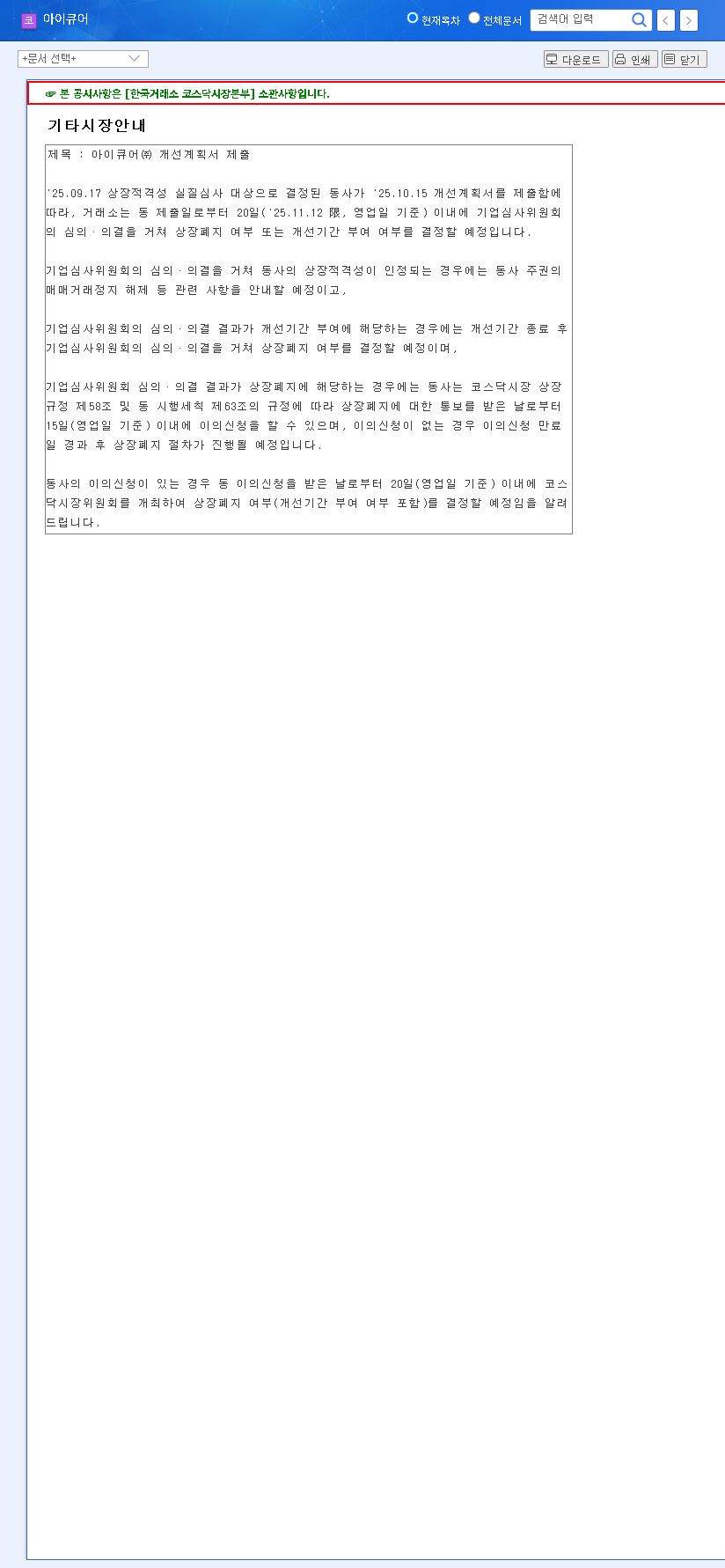
  • (175250) Icure Pharmaceutical (175250) Stock: Delisting Risk Analysis & Key Dates

    (175250) Icure Pharmaceutical (175250) Stock: Delisting Risk Analysis & Key Dates

    For investors holding or considering Icure Pharmaceutical stock (175250), the coming weeks represent a pivotal moment filled with significant uncertainty and potential volatility. The company is currently under a substantive listing eligibility review by the Korea Exchange after submitting an improvement plan. A final decision, expected by November 12, 2025, will determine the company’s future on the exchange and could drastically impact its valuation.

    This comprehensive analysis delves into the reasons behind the review, the critical timeline investors must watch, the three potential scenarios, and actionable strategies for navigating this high-stakes period. Understanding these factors is essential for making informed decisions regarding your investment in Icure Pharmaceutical.

    The Background: Why is Icure Under Review?

    On September 17, 2025, Icure Pharmaceutical was flagged for a substantive listing eligibility review. While the company’s official disclosure provides the direct context, such reviews by the Korea Exchange are typically triggered by significant events related to a company’s financial health, operational stability, or corporate governance. This can include issues like operating losses for consecutive fiscal years, a disclaimer of opinion from an auditor, or other events that may compromise shareholder value and market integrity.

    In response, Icure submitted a detailed improvement plan on October 15, 2025. This document outlines the company’s proposed actions to rectify the underlying issues and demonstrate its viability as a publicly-traded entity. The entire market is now awaiting the Corporate Review Committee’s verdict on whether this plan is sufficient. The official filing can be reviewed directly via the DART system: Official Disclosure.

    Three Potential Scenarios for Icure Pharmaceutical Stock

    The decision by the Korea Exchange’s committee will lead to one of three distinct outcomes, each with profound implications for shareholders.

    • Scenario 1: Listing Maintained (Best Case)
      If the committee deems the improvement plan satisfactory and believes the causes for review have been resolved, trading will resume. This positive outcome would likely trigger a significant relief rally in the Icure Pharmaceutical stock price as the immediate delisting risk is removed.
    • Scenario 2: Improvement Period Granted (Uncertainty Continues)
      The committee may find the plan promising but require more time for execution and validation. In this case, they will grant a formal improvement period (e.g., 6-12 months). While this avoids immediate delisting, the trading suspension would continue, and the company remains under scrutiny. The stock’s fate would then depend on meeting specific milestones during this period.
    • Scenario 3: Delisting Decision (Worst Case)
      If the committee rejects the improvement plan, it will move to delist the company. Icure would have a short window (typically 15 business days) to appeal to the KOSDAQ Market Committee. If the appeal fails, the stock will be delisted, leading to a catastrophic loss for investors and a move to a less liquid over-the-counter market. For more information, you can learn more about the delisting process and its impact on shareholders.

    The critical date for investors is November 12, 2025. This is the deadline for the Corporate Review Committee to deliberate, marking the next major inflection point for Icure’s future.

    Investment Strategy: Managing Extreme Uncertainty

    Given the binary nature of the upcoming decision, investing in Icure Pharmaceutical at this stage is speculative and carries exceptionally high risk. A prudent strategy should be centered on risk management and information gathering.

    Strategic Approaches for Icure Pharmaceutical Stock Investors

    • Acknowledge the Delisting Risk: Do not underestimate the possibility of a worst-case scenario. Ensure your position size reflects this risk and that a total loss would not severely impact your overall portfolio.
    • Monitor Official Channels: The most reliable information will come directly from the Korea Exchange or Icure’s official disclosures on DART. Avoid market rumors and focus on primary sources.
    • Avoid Averaging Down: Adding to a position in a company facing a potential delisting is an extremely high-risk strategy. It’s often better to wait for clarity before committing new capital.
    • Prepare for Volatility: Regardless of the outcome, expect extreme price swings. If trading resumes, the stock could gap up or down significantly based on the news. As top market analysts at Bloomberg often note, such events create a binary outcome that defies traditional technical analysis.

    Frequently Asked Questions (FAQ)

    What is the current status of Icure Pharmaceutical (175250)?

    Icure Pharmaceutical is under a listing eligibility review by the Korea Exchange and has submitted an improvement plan. The company and investors are awaiting a decision by the exchange’s committee.

    When is the decision on Icure’s listing status expected?

    The decision is expected on or before November 12, 2025, which is 20 business days after the improvement plan was submitted on October 15, 2025.

    What are the key risks for Icure Pharmaceutical stock?

    The primary risk is delisting, which would result in a substantial or total loss of invested capital. Other risks include prolonged trading suspension and extreme price volatility once trading resumes.

    (175250) Icure Pharmaceutical (175250) Stock: Delisting Risk Analysis & Key Dates 관련 이미지
  • (245620) EDGC Delisting Risk 2025: A Deep-Dive Analysis for Investors

    (245620) EDGC Delisting Risk 2025: A Deep-Dive Analysis for Investors

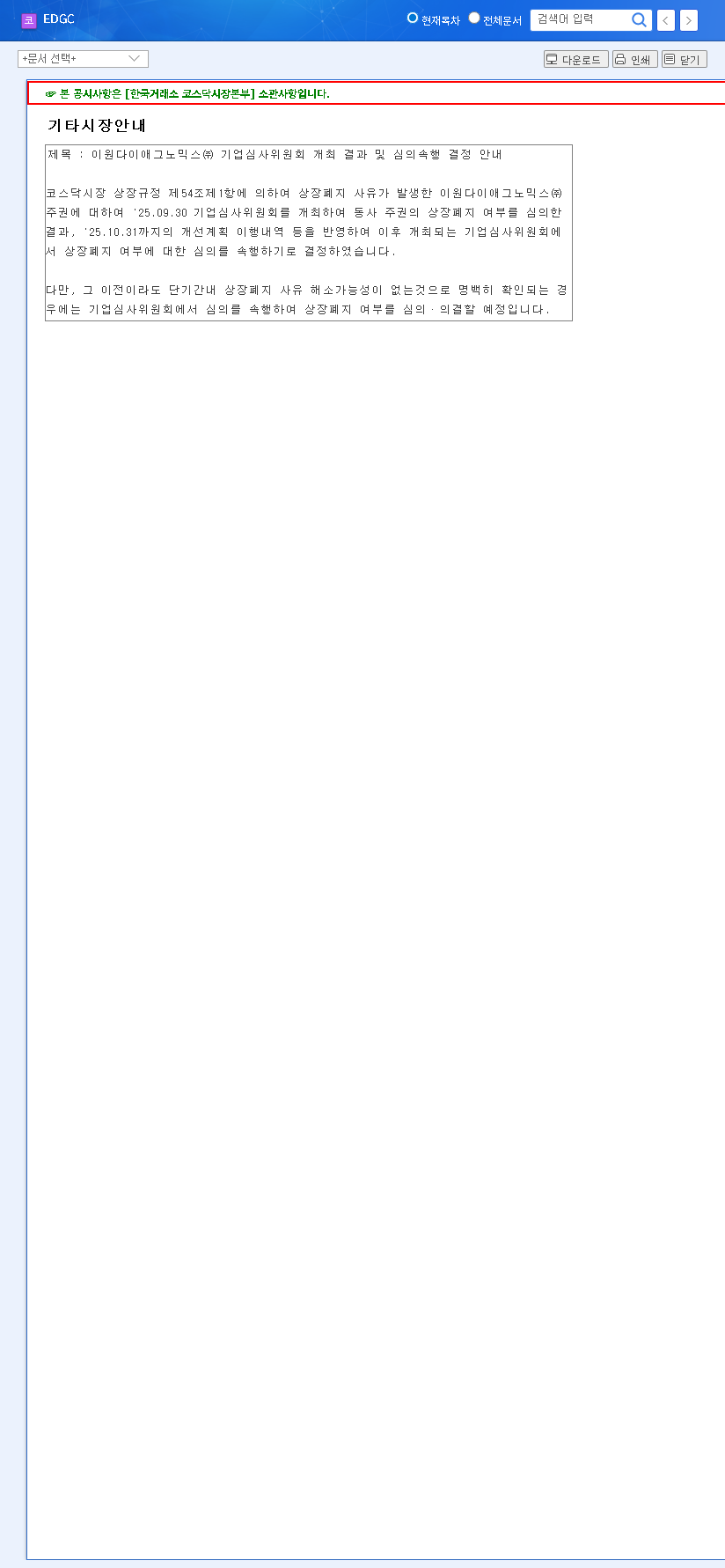
    The ongoing EDGC delisting saga has captured the attention of the investment community, leaving many shareholders on edge. On September 30, 2025, the Corporate Review Committee (CRC) announced it would ‘continue the review’ of EONE Diagnomics’ (EDGC) potential delisting, narrowly avoiding an immediate exit from the market. While this offers a temporary reprieve, it’s crucial to understand that this is more of a final ultimatum than a sign of recovery. The company’s future now hinges on its ability to present and implement a viable improvement plan by October 31, 2025.

    This comprehensive analysis will dissect the factors leading to the EDGC delisting crisis, evaluate the company’s precarious financial health, and outline the potential scenarios investors should prepare for. We aim to provide the critical information needed to make rational, informed decisions in this high-stakes environment.

    The Core of the Crisis: Why is EDGC Facing Delisting?

    The root cause of EDGC’s current predicament is a severe and rapid deterioration of its fundamental financial health, as starkly highlighted in its H1 2025 report. This isn’t a single issue but a confluence of critical failures that have raised significant doubts about its viability as a going concern.

    1. Alarming Financial Deterioration

    • Collapsing Revenue & Soaring Losses: Revenue has plummeted compared to the previous year, with some business segments grinding to a near halt. More concerningly, operating losses continue to expand, showcasing a fundamental inability to generate profit from its core operations.
    • Severe Capital Impairment: The company’s total liabilities now significantly overshadow its total capital. This state of severe capital impairment indicates an extremely fragile financial structure and was a direct trigger for the initiation of rehabilitation proceedings.
    • Auditor’s ‘Disclaimer of Opinion’: Receiving a disclaimer of opinion is a major red flag. It means the auditor could not obtain sufficient evidence to form an opinion on the financial statements, casting serious doubt on their reliability. This is often a precursor to major financial distress, as explained by authoritative sources like Investopedia.

    2. Promising Technology Hamstrung by Poor Finances

    While EDGC possesses promising technologies in the genome analysis market, such as liquid biopsy techniques, this potential is severely constrained. Technology alone cannot sustain a company drowning in financial trouble. Without capital to fund research, development, and marketing, even the most innovative products cannot reach commercial viability and generate the revenue needed for survival.

    The CRC’s decision is effectively an ultimatum: demonstrate a credible and actionable turnaround plan by October 31, or face the consequences. The company’s Official Disclosure confirms that a further review may occur even before the deadline if no possibility of resolution is seen.

    Investor Action Plan: Navigating the EDGC Delisting Risk

    Given the high degree of uncertainty, investors must adopt an extremely cautious and strategic approach. Hope is not a strategy; diligent monitoring and risk assessment are paramount.

    • Acknowledge the High Risk of Total Loss: This cannot be overstated. An investment in EDGC currently carries a significant risk of a total loss. If the improvement plan is rejected and the company is delisted, the stock could become effectively worthless.
    • Monitor the Improvement Plan Intensely: The single most important event will be the submission and review of the improvement plan by October 31. Investors must scrutinize any disclosures related to this plan. Key questions to ask are: Is the plan realistic? Does it address the core issue of profitability and capital impairment? Is there new funding involved? For more information, check our guide on how to analyze corporate turnaround plans.
    • Avoid Speculative Trading: The stock will likely be highly volatile. Attempting to trade on short-term news or rumors is extremely risky. Decisions should be based on a long-term assessment of the company’s survival prospects, not on daily price swings.

    In conclusion, the path forward for EONE Diagnomics is fraught with peril. The ‘review continued’ decision has bought precious time, but the fundamental problems that led to the EDGC delisting review remain unresolved. Investors must prioritize capital preservation and make decisions based on concrete evidence of financial recovery, not on technological promise alone.

    Frequently Asked Questions

    Q1: What does the ‘review continued’ decision for EDGC actually mean?

    It means the CRC has deferred a final decision on delisting until after it reviews the company’s improvement plan, due by October 31, 2025. It is a final chance for the company to prove it can resolve its financial issues, but the delisting risk remains very high.

    Q2: What is EDGC’s current financial status?

    Based on its H1 2025 report, EDGC is in a dire financial state with plummeting revenue, expanding losses, and severe capital impairment (liabilities exceed assets). The auditor’s ‘disclaimer of opinion’ further highlights extreme uncertainty about its ability to continue operations.

    Q3: What are the primary investment risks for EDGC stock?

    The primary risk is a total loss of investment if the company is delisted following the October review. Other risks include extreme stock price volatility, continued erosion of investor confidence, and the fundamental weakness of the company’s financial position.

    Q4: What is the most critical factor for EDGC investors to watch?

    The most critical factor is the content and feasibility of the improvement plan to be submitted by October 31, 2025. The CRC’s final judgment on this plan will be the ultimate determinant of whether the EDGC stock price recovers or the company faces delisting.

    (245620) EDGC Delisting Risk 2025: A Deep-Dive Analysis for Investors 관련 이미지
  • Winia Aid Submits Improvement Plan: Can it Escape Delisting?


    Winia Aid Submits Improvement Plan: Can it Escape Delisting? 대표 차트 이미지


    What Happened? Winia Aid Submits Improvement Plan

    On September 5, 2025, Winia Aid submitted an improvement plan to the Korea Exchange. Having faced a series of crises since 2024, including rehabilitation proceedings, delisting reviews, and formal delisting notices, this submission is a critical event that will determine Winia Aid’s continued listing status.

    Why is it Important? A Pivotal Moment for the Company’s Fate

    The submission of the improvement plan itself does not directly change the company’s fundamentals. However, as the Korea Exchange’s Corporate Review Committee will decide on the delisting based on this plan, it marks a crucial turning point for Winia Aid’s survival and shareholder value.

    What’s Next? Future Outlook and Investment Strategy

    The Korea Exchange will decide on delisting or granting an improvement period by October 10, 2025, after reviewing the plan. Continued listing would significantly increase the chances of rehabilitation, while delisting would likely lead to substantial losses for shareholders. The progress of M&A activities and the macroeconomic environment are also key variables that will impact Winia Aid’s future.

    What Should Investors Do? Calm Analysis and Prudent Judgment

    Investors should carefully consider the specifics of the improvement plan, its feasibility, the Corporate Review Committee’s decision, M&A progress, and macroeconomic changes to make informed investment decisions. It is crucial to manage investment risks through objective analysis and avoid being swayed by short-term stock price fluctuations.


    Frequently Asked Questions

    What is the significance of Winia Aid’s improvement plan submission?

    It’s a rehabilitation plan submitted to the Korea Exchange by Winia Aid, facing delisting, and is a critical step in determining whether it will remain listed.

    What is the process after the improvement plan is submitted?

    The Korea Exchange will decide on delisting or granting an improvement period by October 10, 2025, after a review by the Corporate Review Committee.

    What should investors pay attention to?

    Investors need to consider the review results, feasibility of the improvement plan, M&A progress, and the macroeconomic environment to make prudent investment decisions.


    Winia Aid Submits Improvement Plan: Can it Escape Delisting? 관련 이미지


  • CCS (066790) Improvement Plan Submission: Can it Escape Delisting?

    CCS (066790) Improvement Plan Submission: Can it Escape Delisting? 대표 차트 이미지

    1. What Happened to CCS?

    CCS was designated as a company subject to delisting review due to inaccurate disclosures and submitted an improvement plan on August 25th. The exchange will decide whether to delist or grant an improvement period by September 22nd.

    2. Why is CCS in this Situation?

    Business downturn: Decline in cable TV subscribers, unclear new business prospects
    Financial deterioration: Declining sales, continuous operating losses, increasing deficit
    Management instability: Frequent changes in major shareholders, management disputes, past embezzlement allegations

    3. Can the Improvement Plan Offer Hope?

    Positive factors: Possibility of maintaining listing and normalization, expectation of trading resumption
    Negative factors: Deteriorating fundamentals, ongoing management uncertainty, history of inaccurate disclosures

    4. What Should Investors Do?

    Investment Opinion: Sell / Hold (High Risk)
    CCS’s situation is highly risky, with a high probability of principal loss. Investors should closely monitor the improvement plan’s details and the exchange’s decision and make cautious investment choices.

    Can CCS avoid delisting after submitting the improvement plan?

    Submitting the improvement plan is a positive sign, but considering CCS’s severe fundamental deterioration and management uncertainty, the possibility of delisting cannot be ruled out. We need to wait for the exchange’s final decision.

    Is it a good time to invest in CCS stock now?

    Investing in CCS is currently very risky. Given the possibility of delisting, the risk of principal loss is very high. Investment decisions should be made cautiously.

    What is the future outlook for CCS?

    The future outlook for CCS will depend significantly on the content of the improvement plan and the exchange’s decision. Even with a positive outcome, fundamental improvement is essential.

    CCS (066790) Improvement Plan Submission: Can it Escape Delisting? 관련 이미지