Tag: Hydrogen Fuel Cell

  • (126340) VINA TECH Stock (126340) Analysis: Daishin Sale & Future Outlook

    (126340) VINA TECH Stock (126340) Analysis: Daishin Sale & Future Outlook

    The recent disclosure regarding VINA TECH CO.,LTD (126340) has sent ripples through the investment community, raising critical questions about the outlook for VINA TECH stock. On November 11, 2025, a significant change in shareholding by Daishin Securities was announced, stemming from the sale of Exchangeable Bonds (EB). This event forces investors to weigh the short-term market pressure against the company’s long-term potential in high-growth sectors like supercapacitors and hydrogen fuel cells.

    This comprehensive analysis dissects the Daishin Securities stake change, evaluates VINA TECH’s current financial health, and projects the potential impact on its stock price. We’ll explore both the risks and opportunities, providing actionable strategies to help you navigate the uncertainty surrounding your VINA TECH investment.

    The Daishin Securities Stake Change: A Closer Look

    The catalyst for the recent market attention was a formal report filed on November 11, 2025. According to the Official Disclosure filed with DART, entities related to Daishin Securities reduced their stake in VINA TECH CO.,LTD.

    The key details of the transaction are as follows:

    • Change in Ownership: The stake held by Daishin Securities decreased from 10.07% to 8.42%.
    • Reason for Change: The reduction was a result of the sale of VINA TECH’s Exchangeable Bonds (EB) and subsequent adjustments to conversion prices.
    • Volume Sold: This change corresponds to the sale of over 43,700 common shares.
    • Stated Purpose: Daishin Securities’ holding purpose was listed as ‘simple investment’, which often implies a shorter-term holding period compared to strategic investments.

    Evaluating VINA TECH’s Fundamentals: A Tale of Two Stories

    To understand the true impact of this sale on VINA TECH stock, we must look beyond the single transaction and analyze the company’s core financial and operational health. The 2025 semi-annual report paints a picture of a company with immense future potential clashing with present-day profitability challenges.

    The Growth Engine: Supercapacitors and Hydrogen Fuel Cells

    VINA TECH’s primary appeal lies in its strong position in two of the most promising green-tech industries. The VINA TECH supercapacitor technology offers rapid charging and discharging capabilities essential for modern electronics, electric vehicles, and grid storage. Simultaneously, its advancements in the hydrogen fuel cell market position it as a key player in the future of clean energy. The company continues to invest heavily in R&D, maintaining a ratio of 6.14% of sales, to solidify its technological lead. For more on this sector, you can read our guide to investing in green technology stocks.

    The Financial Headwinds: Profitability and External Risks

    Despite the exciting growth narrative, the financials reveal several concerns:

    • Profitability Squeeze: Both operating and net profits have turned to a deficit, pressured by rising raw material costs and increased investment expenses.
    • Revenue Slowdown: H1 2025 revenue of KRW 36.43 billion marked a year-over-year decrease, highlighting sensitivity to global economic shifts.
    • Macroeconomic Exposure: With an export ratio of nearly 85%, the company is highly vulnerable to exchange rate volatility. Furthermore, a high proportion of variable-rate debt poses a significant risk in a rising interest rate environment.

    VINA TECH is at a critical juncture: It possesses world-class technology in high-demand sectors, but must urgently address its profitability to fund that future growth sustainably.

    Stock Price Impact: Short-Term Pain vs. Long-Term Gain?

    Short-Term Outlook: Expect Volatility

    The sale by Daishin Securities is likely to create immediate headwinds. The introduction of over 43,700 shares into the market creates direct selling pressure. Moreover, the market may interpret the sale by a major institutional investor as a negative signal, weakening overall investor sentiment and potentially triggering further sell-offs. The uncertainty around future EB conversions could also keep buyers on the sidelines.

    Mid-to-Long-Term Outlook: Tied to Fundamentals

    Over the long run, the influence of this single sale will fade, and the performance of VINA TECH stock will realign with its fundamental performance. If the company can demonstrate a clear path back to profitability and show tangible progress in its hydrogen fuel cell commercialization, this short-term dip could represent a compelling buying opportunity. However, a failure to address the current financial issues, exacerbated by unfavorable currency and interest rate movements, could lead to prolonged stock price suppression. The company’s holding of 192,461 treasury shares may act as a stabilizing factor, signaling management’s confidence.

    Investment Strategy: Navigating the VINA TECH Stock Landscape

    Given the complex situation, a differentiated strategy for short-term and long-term investors is crucial.

    For Short-Term Traders

    A cautious, observant stance is recommended. Avoid making hasty decisions and instead monitor key indicators:

    • Market Reaction: Watch for signs of price stabilization or continued selling pressure over the next few trading sessions.
    • Macro Trends: Keep a close eye on currency markets (USD/KRW) and central bank interest rate announcements.

    For Long-Term Investors

    Focus on the fundamental recovery and growth story. Your investment thesis should be based on these milestones:

    • Profitability Turnaround: Scrutinize the upcoming 2025 annual earnings report for evidence of improved margins, cost controls, and production efficiency.
    • Hydrogen Business Milestones: Look for announcements of new contracts, technological breakthroughs, or partnerships in the hydrogen fuel cell division. Success here could be a powerful catalyst, as confirmed by leading industry analysts.
    • Institutional Flow: Monitor filings to see if other institutional investors are buying into the dip or following Daishin Securities out the door.

    Conclusion: Cautious Optimism Required

    The sale of VINA TECH stock by Daishin Securities introduces a layer of short-term risk to a company already navigating financial challenges. However, it does not erase the significant long-term growth potential embedded in its leading-edge supercapacitor and hydrogen fuel cell technologies. Prudent investors should resist being swayed by immediate market noise and instead base their decisions on a thorough analysis of VINA TECH’s ability to execute its turnaround and capitalize on its promising future.
    (126340) VINA TECH Stock (126340) Analysis: Daishin Sale & Future Outlook 관련 이미지
  • (013030) HY-LOK CORPORATION Stock (013030): Analysis of Baring’s Stake Change & Investment Outlook

    (013030) HY-LOK CORPORATION Stock (013030): Analysis of Baring’s Stake Change & Investment Outlook

    Recent movements in HY-LOK CORPORATION stock (013030) have captured the market’s attention, particularly the public disclosure on November 7, 2025, concerning a change in shareholding by major shareholder Baring Asset Management. This news has understandably raised questions for current and potential investors: Is this a warning sign? How does this impact the company’s long-term value? This comprehensive analysis will dissect the Baring stake change, evaluate HY-LOK CORPORATION’s robust fundamentals, and provide a clear, actionable outlook to guide your investment strategy.

    Instead of reacting to short-term market noise, we will focus on the intrinsic value and future growth potential that define this industry leader. Let’s explore why HY-LOK CORPORATION remains a compelling company, even amidst shareholder adjustments.

    Decoding Baring Asset Management’s Stake Change

    The catalyst for recent discussion was a regulatory filing confirming that Baring Asset Management reduced its stake in HY-LOK CORPORATION from 8.64% to 7.96%—a modest decrease of 0.68%. The official reason cited was ‘simple investment,’ which typically points towards routine portfolio management rather than a fundamental issue with the underlying company. You can view the Official Disclosure here.

    What Does ‘Simple Investment’ Adjustment Mean?

    For a large institutional investor like Baring, stake adjustments are common and can be driven by several factors unrelated to company performance:

    • Portfolio Rebalancing: Asset managers regularly adjust holdings to maintain a desired asset allocation. A successful stock that has grown in value might be trimmed to bring its portfolio weight back in line.
    • Profit Taking: The sale could simply be a strategic move to realize gains after a period of positive performance.
    • Fund-Level Strategy: The decision might be dictated by the specific mandate of the fund holding the shares or by capital redemptions from the fund’s own investors.

    Crucially, Baring still retains a significant 7.96% stake, signaling continued confidence. This reduction is more likely a tactical adjustment than a strategic retreat from their HY-LOK investment analysis.

    Beyond the Headlines: A Deep Dive into HY-LOK CORPORATION Fundamentals

    An investor’s focus should remain on the company’s intrinsic health. Here, HY-LOK CORPORATION’s fundamentals are exceptionally strong, painting a picture of stability and long-term potential.

    Rock-Solid Financial Health

    Based on the June 2025 half-year report, the company’s balance sheet is a fortress. With total assets of KRW 467.2 billion against a mere KRW 38.1 billion in total liabilities, the company operates with minimal debt and extremely low financial risk. Furthermore, holding KRW 179.7 billion in cash and cash equivalents provides immense operational flexibility for R&D, strategic acquisitions, or weathering economic downturns. For more on how to interpret these figures, see our guide on analyzing a company’s balance sheet.

    Unrivaled Business Competitiveness

    HY-LOK operates in a sector with high barriers to entry. The company manufactures mission-critical instrumentation fittings and valves for essential industries like petrochemicals, shipbuilding, power generation, and semiconductors. The cost of failure for these components is immense, meaning clients prioritize reliability, quality, and long-term supplier relationships over price. This has allowed HY-LOK to build a deep competitive moat based on decades of technical expertise and trust. The strong 21% year-over-year growth in exports underscores its global competitiveness.

    The key takeaway is that the stake change is a shareholder-level event, not a company-level problem. The underlying strength of the HY-LOK CORPORATION stock remains anchored in its formidable market position and pristine financials.

    Navigating Market Factors & Future Growth

    While the fundamentals are strong, a comprehensive HY-LOK investment analysis must consider external factors. The company’s profitability is influenced by global economic trends, as reported by sources like Bloomberg. Key variables include currency fluctuations (KRW/USD vs. KRW/EUR), raw material costs, and freight indexes. The recent dip in net profit (-20.5% YoY) was attributed to temporary increases in financial costs, but the core operational profitability remains high.

    Looking ahead, HY-LOK is not standing still. The company is actively expanding into high-growth sectors like aerospace and hydrogen fuel cells. These industries demand the same high-precision, ultra-reliable components that are HY-LOK’s specialty, opening up significant new revenue streams for the future.

    Investor Action Plan & Strategic Outlook

    The reduction in Baring’s stake may create short-term volatility, potentially offering a buying opportunity for long-term investors who understand the company’s core strengths. The share buyback trust agreement signed in February 2025 further signals management’s commitment to enhancing shareholder value.

    Key Monitoring Points for Investors:

    • Profitability Trends: Watch for the recovery of operating and net profit margins in upcoming quarterly reports as temporary cost pressures subside.
    • New Business Traction: Look for concrete announcements and revenue contributions from the aerospace and hydrogen initiatives.
    • Macro Environment: Keep an eye on exchange rates and commodity prices that could impact cost of goods sold and export revenue.

    In conclusion, the intelligent investor will look past the noise of a minor stake reduction and focus on the enduring value of HY-LOK CORPORATION stock. The company’s financial resilience, market leadership, and forward-looking growth strategy provide a solid foundation for long-term value creation.

    (013030) HY-LOK CORPORATION Stock (013030): Analysis of Baring's Stake Change & Investment Outlook 관련 이미지
  • (126340) VINA TECH Treasury Stock Disposal: A Deep-Dive Analysis for Investors

    (126340) VINA TECH Treasury Stock Disposal: A Deep-Dive Analysis for Investors

    Understanding the VINA TECH Treasury Stock Disposal

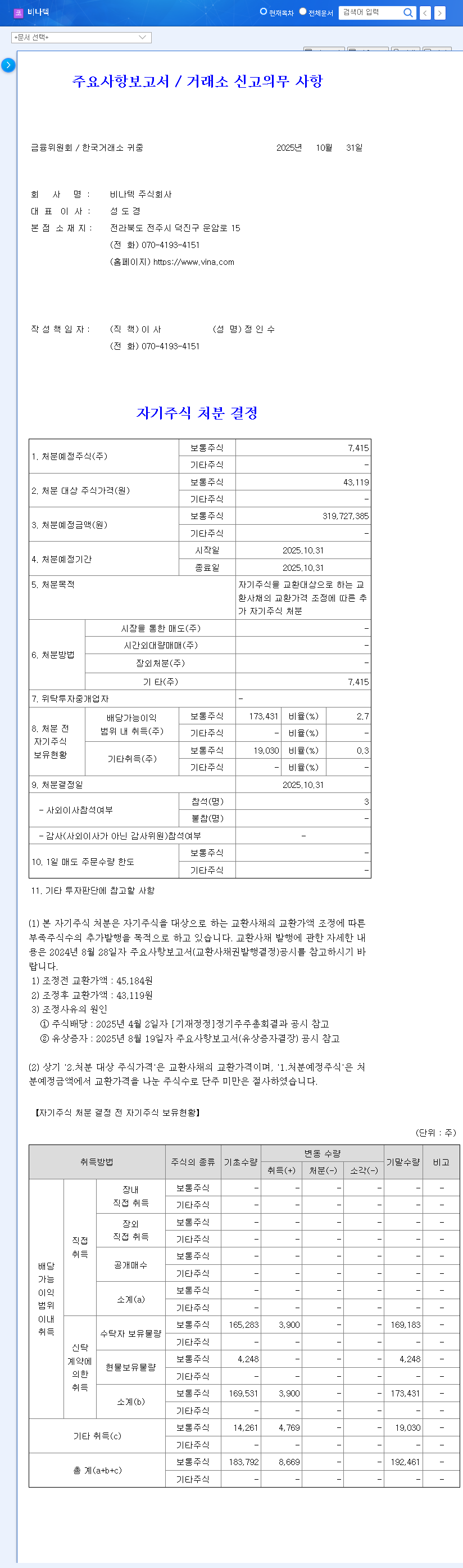
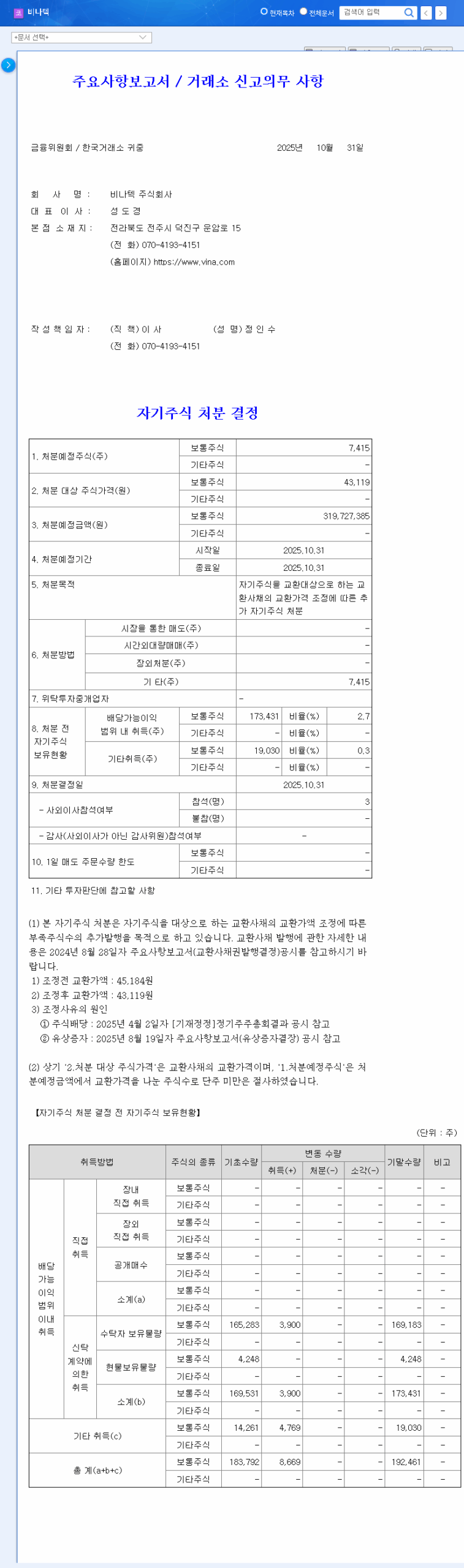
    The recent announcement of a VINA TECH treasury stock disposal has caught the attention of investors. On the surface, the disposal of 7,415 common shares, valued at approximately 300 million KRW, might seem minor. However, savvy investors know that any corporate action involving treasury shares warrants a closer look. This comprehensive analysis will break down the specifics of this event, evaluate the potential impact on VINA TECH’s stock, and provide a clear, strategic action plan to help you navigate your investment decisions effectively.

    While the immediate stock price impact is expected to be minimal, this event provides a crucial window into VINA TECH’s long-term financial strategy and its handling of complex financial instruments like exchangeable bonds.

    The Official Announcement: What Exactly Happened?

    According to the Official Disclosure filed with DART on October 31, 2025, VINA TECH CO.,LTD (비나텍) decided to dispose of 7,415 common shares from its treasury. This represents a very small portion—approximately 0.12%—of the total issued shares. The stated reason for the disposal is to fulfill obligations related to an adjustment in the conversion price of previously issued exchangeable bonds (EBs).

    Why is VINA TECH Disposing of Treasury Shares?

    The core reason is a technical adjustment for its exchangeable bonds. In simple terms, exchangeable bonds are debt instruments that can be exchanged for shares of a company’s stock—in this case, treasury stock held by VINA TECH. When the terms of these bonds change (like a conversion price adjustment), the company may need to allocate more shares to cover its potential obligation. This is less a strategic sale for profit and more of a contractual fulfillment, a key distinction for investors analyzing the motive.

    VINA TECH’s Current Financial Health: A Balanced View

    To understand the impact of the VINA TECH treasury stock disposal, we must assess the company’s underlying fundamentals. Based on recent financial reports, VINA TECH presents a picture of long-term potential facing short-term headwinds.

    ✅ Positive Fundamentals (The Growth Story)

    • Market Leadership: Strong position in the growing global supercapacitor market, providing a stable revenue base.
    • Future-Facing Tech: Significant investment and proprietary technology in the high-potential hydrogen fuel cell sector.
    • Strategic Expansion: Actively pursuing M&A and business portfolio diversification since its IPO.

    ❌ Negative Factors (The Headwinds)

    • Performance Dip: Faced a short-term revenue decrease and an operating loss in the first half of 2025.
    • Financial Strain: Rising interest burdens due to variable-rate debt raise concerns about its financial structure.
    • Macroeconomic Risks: High dependency on exports makes the company vulnerable to global economic slowdowns and currency fluctuations.

    Stock Price Impact Analysis

    The key question for investors is how this disposal will affect VINA TECH’s stock price.

    Short-Term Impact: Expected to be Limited

    The direct, short-term impact on the stock price is likely to be negligible. The number of shares is minuscule (0.12% of total) and the action is a procedural necessity, not a signal of management selling off shares. The market typically absorbs such small, technical disposals without significant volatility.

    Mid-to-Long-Term Impact: Focus on the Bonds

    The long-term implications are tied to the performance of the exchangeable bonds themselves. If the capital raised from these bonds is used effectively to fund R&D or improve financial health, it’s a net positive. However, if the bonds lead to significant interest payments or eventual share dilution (an increase in the number of shares, which can decrease earnings per share) without corresponding growth, it could pressure the company’s financials and stock value. This is the critical area for investors to monitor.

    Strategic Action Plan for VINA TECH Investors

    Rather than reacting to the headline, a measured, long-term approach is best. Here are key checkpoints for your investment strategy:

    • Monitor EB Terms: Scrutinize the terms of the exchangeable bonds, including conversion prices and maturity dates. Track how they impact VINA TECH’s balance sheet over time.
    • Track Core Business Performance: The ultimate driver of stock value is performance. Keep a close eye on revenue and profitability from the supercapacitor and hydrogen fuel cell businesses.
    • Assess Risk Management: Given the exposure to currency and interest rate risks, evaluate how effectively management is hedging or mitigating these external pressures in their quarterly reports.
    • Analyze Market Sentiment: Pay attention to analyst ratings and overall market sentiment regarding the tech and renewable energy sectors, as this will influence VINA TECH’s valuation.

    For more details on their core technology, you can read our deep dive into VINA TECH’s hydrogen fuel cell innovations.

    Frequently Asked Questions

    Q1: What is VINA TECH’s decision regarding treasury stock?

    A1: VINA TECH decided to dispose of 7,415 treasury shares (approx. 300 million KRW) to meet obligations from a conversion price adjustment on its exchangeable bonds (EBs).

    Q2: Will this treasury stock disposal crash VINA TECH’s stock price?

    A2: No, a significant short-term impact is highly unlikely. The volume of shares is too small (0.12% of total) and the reason is technical, not a strategic sale by management.

    Q3: What should long-term VINA TECH investors focus on now?

    A3: Long-term investors should focus on the performance of the underlying exchangeable bonds, the growth trajectory of the core supercapacitor and hydrogen fuel cell businesses, and the company’s ability to manage financial risks like currency and interest rate changes.

    Conclusion: Look Beyond the Headline

    In conclusion, the VINA TECH treasury stock disposal is more of a footnote than a headline event. Its direct impact is minimal. The real story for investors lies in the company’s ability to execute its long-term growth strategy in promising sectors while navigating short-term financial and macroeconomic challenges. Continuous monitoring of fundamental performance, not minor corporate actions, will be the key to successful investment in VINA TECH.

    (126340) VINA TECH Treasury Stock Disposal: A Deep-Dive Analysis for Investors 관련 이미지
  • (126340) VINA TECH Exchange Right Exercise: A Deep-Dive Stock Analysis for 2025

    (126340) VINA TECH Exchange Right Exercise: A Deep-Dive Stock Analysis for 2025

    The recent news of the VINA TECH CO.,LTD (126340) exchange right exercise has sent ripples through the investment community. As a key player in high-growth industries, any corporate action from VINA TECH warrants a closer look. This comprehensive VINA TECH stock analysis will dissect this event, explore its impact on shareholder value, and provide a clear investment strategy based on the company’s fundamentals and the broader macroeconomic landscape. We’ll examine everything from supercapacitor market dynamics to financial health, giving you the insights needed to make an informed decision.

    Event Breakdown: The VINA TECH Exchange Right Exercise

    In late 2025, VINA TECH announced the exercise of exchange rights tied to its bonds. But what does this mean? In simple terms, it’s a mechanism that allows bondholders to convert their debt into company stock at a predetermined price. This is often a precursor to raising capital for expansion, research, or other strategic initiatives. According to the Official Disclosure on DART, the key details are as follows:

    • Company: VINA TECH (Market Cap: ~KRW 398.3 billion)
    • Total Shares Claimed: 110,668 shares (approximately 1.72% of market cap)
    • Conversion Prices: Ranged from KRW 43,119 to KRW 45,184.
    • Implication: This move signals the company’s intent to potentially increase its equity base to fund future growth, a common strategy for technology-focused firms.

    Fundamental Deep-Dive: Beyond the Headlines

    To understand the true impact of the exchange right exercise, we must look at the core business. VINA TECH is not just another manufacturer; it’s a technology leader in two critical future-facing markets: supercapacitors and hydrogen fuel cell components.

    Dominance in Key Growth Markets

    VINA TECH’s strength lies in its technological prowess. The global demand for efficient energy storage and clean energy solutions provides a powerful tailwind for its main business lines.

    • Supercapacitors: As a global leader in production capacity, VINA TECH benefits from the rising adoption in electric vehicles, grid stabilization, and consumer electronics. These devices offer rapid charging and high power density, which you can learn more about in our guide to energy storage technologies.
    • Hydrogen Fuel Cells: The company has a significant competitive edge through its integrated value chain for core components like catalysts and membrane electrode assemblies (MEAs). The global push towards a hydrogen economy positions VINA TECH favorably for long-term growth.

    Financial Health Check (Based on 2025 Data)

    The 2025 semi-annual report paints a picture of a company in a strategic investment phase. While revenue saw a year-on-year increase, operating and net profits dipped into a deficit. This is primarily due to aggressive spending on R&D and new facility investments—a necessary cost for securing future dominance. While profitability is a short-term challenge, the company maintains a stable equity base and is proactively managing its financial structure.

    The key takeaway is that VINA TECH is sacrificing short-term profits for long-term market leadership. The success of this strategy hinges on its ability to convert its technological lead into sustainable profitability as its new investments mature.

    Stock Impact and Strategic Implications

    The most pressing question for investors is how the VINA TECH exchange right exercise will affect the stock price. The impact can be viewed from two angles:

    • Short-Term (Potential Headwind): The prospect of new shares entering the market can cause concern about share dilution. An increased supply of shares could put temporary downward pressure on the price. However, the number of shares involved (1.72% of market cap) is relatively small, suggesting the market impact will be limited. Furthermore, with the stock price (~KRW 62,100) trading significantly above the conversion prices, the risk of immediate, large-scale selling by bondholders is low.
    • Long-Term (Potential Tailwind): This move should be seen as a vote of confidence in the company’s future. Securing a pathway to funding allows VINA TECH to accelerate its growth plans. For long-term investors, this strategic foresight is a positive signal that management is focused on capturing the massive opportunity in the global clean energy market.

    Actionable Investment Strategy for VINA TECH Stock

    Investing in VINA TECH requires balancing its immense growth potential against current financial headwinds and market risks. Here’s a strategic framework for approaching a potential investment.

    The Bull Case (Reasons to be Optimistic)

    • Market Leadership: Unparalleled position in the high-growth supercapacitor and hydrogen fuel cell sectors.
    • Technological Moat: Proprietary technology and an integrated value chain create high barriers to entry for competitors.
    • Strategic Vision: Proactive investments in R&D and new business lines demonstrate a clear path to future growth.

    The Bear Case (Points of Caution)

    • Profitability Concerns: The current deficit requires investors to have faith in future earnings. A turnaround must be demonstrated in upcoming quarters.
    • Macroeconomic Sensitivity: High export dependency makes the company vulnerable to exchange rate volatility. Rising interest rates could also impact funding costs.
    • Market Competition: While a leader, VINA TECH operates in a competitive space, requiring continuous innovation to maintain its edge.

    Final Recommendation: For investors with a medium to long-term horizon, VINA TECH represents a compelling growth story. The recent exchange right exercise should be viewed as a strategic enabler rather than a red flag. The key is to monitor the company’s progress towards profitability and its execution in the supercapacitor and hydrogen fuel cell markets. Focus on fundamental improvements in upcoming earnings reports over short-term market noise.

    Disclaimer: This analysis is for informational purposes only and does not constitute investment advice. All investors are responsible for their own investment decisions. Please consult with a financial professional.

    (126340) VINA TECH Exchange Right Exercise: A Deep-Dive Stock Analysis for 2025 관련 이미지
  • (382900) Bumhan Fuel Cell CB Issuance: A ₩20B Deep Dive for Investors

    (382900) Bumhan Fuel Cell CB Issuance: A ₩20B Deep Dive for Investors

    Investors in Bumhan Fuel Cell Co.,Ltd. are closely watching the company’s latest strategic financial maneuver: a decision to issue ₩20 billion in private convertible bonds (CBs). This significant capital raise marks a pivotal moment, presenting both a powerful catalyst for growth and potential risks for existing shareholders. The central question for every Bumhan Fuel Cell investment is whether this CB issuance will unlock new opportunities or introduce burdensome share dilution. This comprehensive analysis goes beyond the headlines to provide the in-depth insights you need to navigate this development.

    First, What Exactly is a Convertible Bond?

    Before diving into the specifics of the Bumhan Fuel Cell CB issuance, it’s essential to understand the instrument itself. A convertible bond is a hybrid security that starts as a corporate bond but includes an option for the investor to convert it into a predetermined number of the issuing company’s common shares at a later date. This offers the safety of a bond (regular interest payments and principal return) with the upside potential of a stock. For a deeper understanding, resources like Investopedia provide excellent explanations. For the company, it’s an attractive way to raise capital at a lower interest rate than traditional debt.

    Deconstructing the ₩20 Billion Issuance

    Bumhan Fuel Cell has outlined specific terms for this private placement, which are critical for a complete convertible bond analysis. The key details, based on the official disclosure, are as follows. For complete transparency, you can view the Official Disclosure (Source) on DART.

    • Issuance Size: ₩20 billion (approx. 7.23% of current market cap).
    • Subscription Date: October 28, 2025.
    • Conversion Period: October 28, 2026, to September 28, 2028.
    • Conversion Price: ₩29,302 (set slightly above the current market price).
    • Coupon Rate: 0% (no periodic interest payments).
    • Yield to Maturity (YTM): 3.0% (the return if held to maturity without conversion).
    • Investors: Private placement to venture capital funds, including ‘Suseong KOSDAQ Venture D1~D5’.

    Potential Upsides: Fueling Future Growth

    Securing Capital for Innovation and Expansion

    The most direct benefit of the Bumhan Fuel Cell CB issuance is the infusion of ₩20 billion in working capital. In the capital-intensive hydrogen fuel cell industry, this funding is critical for accelerating research and development (R&D), expanding production facilities, and scaling operations. This investment can strengthen the company’s competitive position and ability to capture market share, which you can learn more about in our article on hydrogen market trends.

    A Vote of Confidence from Venture Capital

    The participation of multiple venture investment funds is a significant endorsement. These sophisticated investors conduct rigorous due diligence, and their investment signals a strong belief in Bumhan Fuel Cell’s long-term growth trajectory and management. This can boost overall market confidence and attract further investment into the Bumhan Fuel Cell stock.

    A convertible bond issuance is a double-edged sword: it provides the fuel for ambitious growth but requires careful management to avoid diluting the value for those who built the foundation—the existing shareholders.

    Potential Risks: What Investors Must Watch

    The Inevitable Share Dilution Risk

    The primary concern for current shareholders is share dilution risk. When the bonds are converted, new shares are created, increasing the total number of outstanding shares. This means each existing share represents a smaller percentage of ownership in the company, which can dilute earnings per share (EPS) and potentially place downward pressure on the stock price.

    Navigating Future Selling Pressure

    Once the conversion period begins in late 2026, the venture funds may convert their bonds and sell the newly acquired shares to realize profits. This can create a significant selling pressure, or ‘overhang,’ on the market. Anticipation of this event could lead to increased stock price volatility as the conversion date approaches.

    An Investor’s Action Plan

    Given the mixed implications of the Bumhan Fuel Cell CB issuance, investors should adopt a strategic and well-researched approach. Rather than a knee-jerk reaction, consider the following actions:

    • Evaluate Long-Term Vision: If you believe in the company’s fundamental growth story and its position in the hydrogen fuel cell sector, the short-term risk of dilution may be an acceptable trade-off for long-term capital appreciation fueled by this investment.
    • Monitor Key Dates: Mark your calendar for the start of the conversion period (October 28, 2026). Monitor the stock’s performance and trading volume as this date approaches to gauge market sentiment regarding potential selling pressure.
    • Conduct Deep Due Diligence: It is imperative to research how Bumhan Fuel Cell plans to specifically utilize the funds. Look for detailed business plans, analyze the competitive landscape, and assess the company’s financial projections post-issuance.

    Conclusion: A Balanced Perspective is Key

    The ₩20 billion Bumhan Fuel Cell CB issuance is a significant corporate action with clear benefits and tangible risks. For the company, it’s a strategic move to secure growth capital. For investors, it introduces a complex dynamic of future potential versus immediate dilution concerns. The most prudent path forward is not to make a hasty judgment but to engage in thorough analysis, weigh the long-term vision against the short-term volatility, and make an investment decision that aligns with your personal risk tolerance and financial goals.

    (382900) Bumhan Fuel Cell CB Issuance: A ₩20B Deep Dive for Investors 관련 이미지
  • (126340) Vinatech Stock Analysis (2025): Is the NPS Investment a Major Buy Signal?

    (126340) Vinatech Stock Analysis (2025): Is the NPS Investment a Major Buy Signal?

    The Vinatech stock has captured significant market attention following the recent disclosure that South Korea’s National Pension Service (NPS) has increased its ownership stake. As one of the market’s most influential institutional investors, any move by the NPS is scrutinized as a key indicator of a company’s long-term potential and credibility. This analysis dives deep into what this development means for Vinatech’s future.

    We will dissect the implications of the NPS’s move, perform a thorough fundamental analysis of Vinatech’s core businesses, weigh the associated financial risks, and ultimately provide actionable investment strategies for both short-term and long-term investors considering an entry into Vinatech stock.

    The Catalyst: NPS Signals Confidence with Stake Increase

    On October 1, 2025, a pivotal disclosure was made regarding VINATech Co., Ltd., a company with a market capitalization of KRW 347.6 billion. The National Pension Service officially reported an increase in its shareholding from 5.22% to 6.37%, a notable rise of 1.15 percentage points. This information was made public via an Official Disclosure on the DART system.

    Crucially, the NPS categorized the purpose of this acquisition as a ‘simple investment’. In market terms, this is a powerful bullish signal. It implies that the NPS is not seeking to influence management but is instead betting on the pure upside potential of the Vinatech stock price, viewing it as undervalued with strong prospects for appreciation.

    Vinatech Stock Analysis: A Look Under the Hood

    To understand the conviction behind the NPS Vinatech investment, we must examine the company’s dual growth engines: supercapacitors and hydrogen fuel cells.

    Pillar 1: The Supercapacitor Powerhouse

    Vinatech has carved out a strong competitive position in the global medium-sized supercapacitor market. These devices, which store and discharge energy rapidly, are critical components in industries ranging from electric vehicles and grid energy storage to consumer electronics. The company’s strategic operation of a factory in Vietnam not only enhances cost competitiveness but also provides crucial supply chain diversification in a volatile global market. This positions the Vinatech supercapacitor business for sustained growth.

    Pillar 2: Powering the Future with Hydrogen Fuel Cells

    The Vinatech hydrogen fuel cell division represents a significant long-term growth opportunity. Bolstered by expanding government support for green energy, this segment is perfectly aligned with the global transition to sustainable power. Vinatech’s key advantage is its vertically integrated production system for core fuel cell components, including Membrane Electrode Assembly (MEA), catalysts, and supports. This integration ensures quality control and cost efficiency, which are vital for scaling in the competitive renewable energy sector. You can learn more about this trend from authoritative sources like Reuters Sustainable Business.

    Weighing the Risks: A Sober Look at Vinatech’s Financials

    Despite the promising technology and institutional backing, a prudent Vinatech stock analysis must acknowledge the significant financial headwinds the company currently faces.

    The H1 2025 financial report revealed several areas of concern that investors must monitor closely:

    • Performance Dip: The company recorded both a decline in revenue and an operating loss, raising questions about near-term profitability.
    • High Leverage: Its consolidated debt-to-equity ratio exceeds 100%, and an increase in short-term borrowings could constrain financial flexibility and growth initiatives.
    • Macroeconomic Exposure: With a high export ratio, profitability is sensitive to exchange rate volatility. Furthermore, a high proportion of floating-rate debt makes the company vulnerable to rising interest rates.

    Smart Investment Strategies for Vinatech Stock

    The NPS investment is a clear vote of confidence, but it doesn’t erase the underlying financial challenges. Therefore, a nuanced investment approach is required.

    For the Short-Term Trader

    The news of the NPS stake increase is likely to generate positive short-term momentum for the Vinatech stock. Traders can capitalize on this sentiment, but it is critical to implement a robust risk management strategy. Watch for increased trading volume as confirmation of the trend and be prepared to set strict stop-loss orders to protect against volatility stemming from the company’s weaker fundamentals.

    For the Long-Term Investor

    Long-term investors should view the NPS’s position as a validation of Vinatech’s growth thesis in green technology. However, an investment should be contingent on the company demonstrating tangible progress in improving its financial health. Before committing significant capital, carefully monitor quarterly earnings reports for evidence of revenue growth returning, margin improvement, and a reduction in the debt ratio. This thesis aligns with broader strategies for investing in emerging tech sectors.

    In conclusion, the NPS’s increased stake in Vinatech is a compelling, positive signal that highlights the company’s strong long-term potential in high-growth industries. However, this optimism must be balanced by a cautious evaluation of its current financial weaknesses. The ideal approach is one of ‘cautious optimism,’ where investors recognize the potential but demand evidence of fundamental improvement before making a long-term commitment.

    (126340) Vinatech Stock Analysis (2025): Is the NPS Investment a Major Buy Signal? 관련 이미지
  • Doosan Enerbility’s Overseas IR: A Potential Investment Opportunity? Key Analysis and Outlook


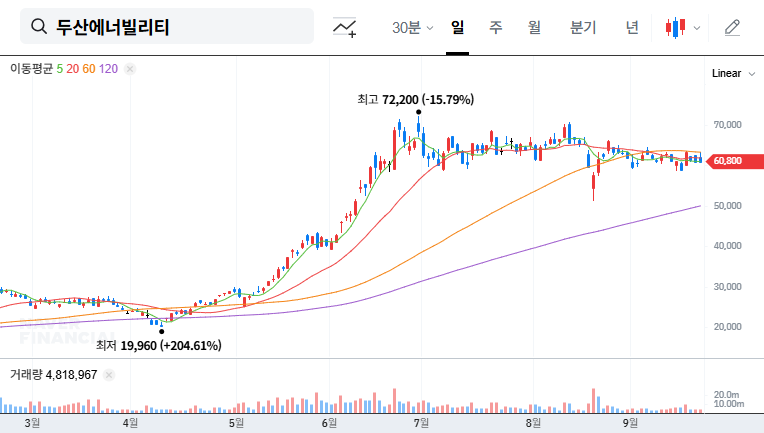
    Doosan Enerbility's Overseas IR: A Potential Investment Opportunity? Key Analysis and Outlook 대표 차트 이미지


    1. What’s Doosan Enerbility’s Overseas IR About?

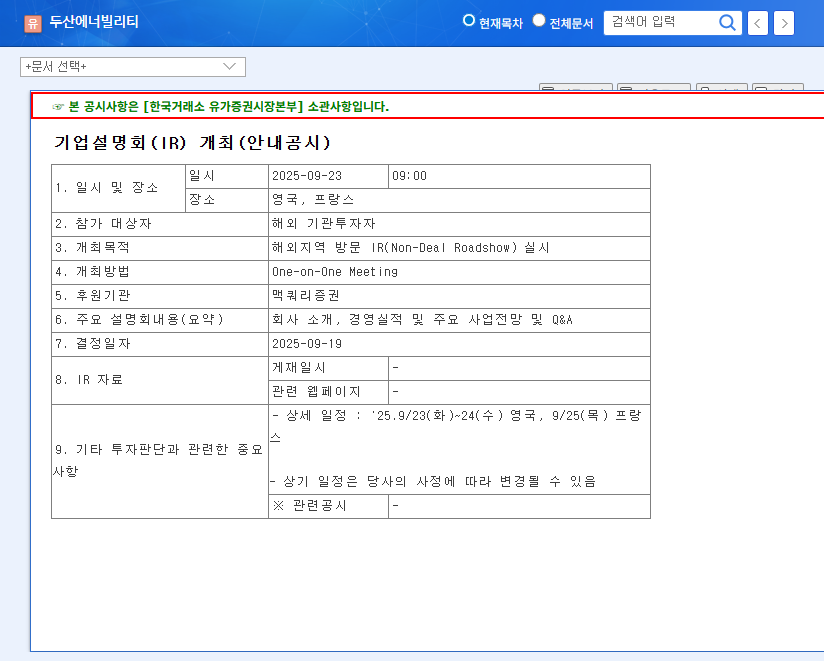
    Doosan Enerbility will hold an IR for overseas investors on September 23rd. The company will present its overview, business performance, future business strategies, and hold a Q&A session. This IR presents a crucial opportunity to showcase the company’s growth potential and build investor confidence.

    2. A Deep Dive into Corporate Fundamentals

    2.1 Core Business Segments: Doosan Enerbility balances stable growth in traditional businesses like nuclear power and gas turbines with investments in new businesses like hydrogen fuel cells. The recent nuclear power plant contract and successful commercial operation of gas turbines are positive signals. However, the decline in operating profit of the Doosan Bobcat segment warrants attention.

    2.2 Financial Health: While the debt ratio remains stable, the decline in consolidated net profit might raise concerns among investors. The planned investment of KRW 2.5 trillion over the next three years is interpreted as a strategic move to secure future growth engines.

    2.3 Market Expectations: The market expects a clear picture of the company’s growth strategy and future vision from this IR. Specifically, clarifying the decline in net profit and presenting concrete plans for new business investments will be crucial.

    3. What Impact Will the IR Have?

    3.1 Positive Impact: The IR allows Doosan Enerbility to actively communicate its vision and growth potential to overseas investors. Emphasizing its competitiveness in the eco-friendly energy sector could attract investment and boost corporate value.

    3.2 Negative Impact: If the IR results fall short of market expectations, it could lead to a decline in stock prices and investor sentiment. Fluctuations in exchange rates and raw material prices are also risk factors.

    4. Action Plan for Investors

    Doosan Enerbility’s overseas IR is considered a positive event from an investment perspective. However, given the recent decline in net profit and market uncertainties, it’s advisable to monitor the IR results and subsequent market reactions before making investment decisions. If the IR provides clear guidelines on the business outlook, active investment can be considered.


    FAQ

    What are Doosan Enerbility’s main businesses?

    Doosan Enerbility operates various businesses including power generation equipment, water treatment facilities, compact construction equipment, and hydrogen fuel cells.

    What are the key topics of this IR?

    Presentations and Q&A sessions will cover company overview, business performance, key business outlook, and investment plans.

    How can I participate in the IR?

    This IR is a private event for institutional investors.

    What should I be aware of when investing?

    It is important to make investment decisions considering the recent decline in consolidated net profit, and fluctuations in exchange rates and raw material prices.


    Doosan Enerbility's Overseas IR: A Potential Investment Opportunity? Key Analysis and Outlook 관련 이미지


  • Vinatech Stock Forecast: Mirae Asset’s Investment, A Growth Momentum?

    1. What Happened?

    Mirae Asset Management purchased an additional 330,000 shares of Vinatech, increasing its stake from 4.76% to 5.21%. Although stated as a simple investment, the market is paying attention to Mirae Asset’s move.

    2. Why Did Mirae Asset Invest in Vinatech?

    Vinatech has growth potential in the supercapacitor and hydrogen fuel cell sectors. The growth of the global supercapacitor market and the government’s policy to promote the hydrogen economy are creating a favorable environment for Vinatech. Mirae Asset’s investment decision appears to be based on this growth potential.

    3. How Are Vinatech’s Fundamentals?

    • Positive Factors: Competitive edge in the supercapacitor market, expected growth in the hydrogen fuel cell business
    • Negative Factors: High export dependency, increasing inventory, deteriorating operating cash flow, rising debt ratio

    Vinatech has growth potential but also faces financial risks. Investors need to consider these risk factors carefully.

    4. What Action Plan Should Investors Take?

    Mirae Asset’s investment can be interpreted as a positive signal for Vinatech, but there are things investors must check before making an investment decision.

    • Monitor Financial Indicators: Check for improvements in inventory management and operating cash flow.
    • Manage Exchange Rate Volatility: Review the company’s strategy for managing exchange rate fluctuations.
    • Maintain a Long-Term Perspective: Focus on the company’s long-term growth potential rather than short-term stock price fluctuations.

    Frequently Asked Questions

    How will Mirae Asset’s investment affect Vinatech’s stock price?

    It could provide short-term upward momentum, but the long-term impact depends on improvements in Vinatech’s fundamentals.

    What are the main risk factors for Vinatech?

    High export dependency, increasing inventory, worsening operating cash flow, and a rising debt ratio are the main risk factors.

    What should I consider before investing in Vinatech?

    Consider the company’s financial indicators, exchange rate volatility management strategy, and growth potential.

  • Vinatech Rights Offering: Opportunity or Risk? Key Analysis for Investors

    1. What is Vinatech’s Rights Offering?

    Vinatech has announced a rights offering of 41,230 common shares to its employee stock ownership plan. The offering price is set at ₩31,600 per share, with payment due on September 3rd and listing on September 22nd. This offering aims to boost employee morale and improve the company’s financial structure.

    2. Why the Rights Offering?

    Vinatech has recently faced challenges with declining sales and operating profits. Increasing inventory levels and fluctuating exchange rates and interest rates have added to the financial burden. The capital raised through the rights offering will be used for operating funds and to strengthen the company’s financial position.

    3. How Will This Impact My Investment?

    • Potential Positives: Increased employee morale and ownership, potential for long-term value growth.
    • Potential Negatives: Short-term share dilution, potential for negative investor sentiment if performance struggles continue.

    While a rights offering can put downward pressure on stock prices in the short term, it can also pave the way for long-term growth. Investors should carefully consider how the funds will be used and monitor the company’s performance.

    4. What Should Investors Do?

    Short-term investors should be aware of potential price volatility and review the offering details and planned use of funds. Long-term investors should focus on the growth potential of the supercapacitor market and Vinatech’s technological advantage, while closely monitoring the company’s performance and financial health.

    Vinatech Rights Offering FAQ

    Q: What is the purpose of Vinatech’s rights offering?

    A: The rights offering aims to boost employee morale, improve the financial structure, and secure operating funds.

    Q: What is the size of the rights offering?

    A: The offering is for 41,230 common shares at ₩31,600 per share, totaling approximately ₩1.3 billion.

    Q: How will the rights offering affect the stock price?

    A: Rights offerings can cause short-term share dilution, but can also lead to long-term growth through capital investment.

  • S Fuel Cell H1 2025 Earnings Report Analysis: A Significant Setback?

    1. What Happened? S Fuel Cell’s Earnings Shock

    S Fuel Cell reported disappointing results in its H1 2025 earnings report, with revenue of ₩4.6 billion, an operating loss of ₩1.4 billion, and a net loss of ₩3.3 billion. These figures fell far short of market expectations and represent a significant decline compared to the same period last year, with revenue plummeting by 59% and both operating and net income swinging into the red.

    2. Why These Results? Unpacking the Underperformance

    The primary driver of this revenue decline was the sluggish performance of building-use fuel cells. Intensifying market competition leading to pricing pressure, coupled with increased SG&A and R&D expenses, contributed to the deterioration in profitability. Furthermore, valuation losses related to convertible bonds and bonds with warrants exacerbated the net loss. The weakening Korean Won also poses a foreign exchange loss risk for S Fuel Cell, given its significant JPY payables.

    3. What’s Next? Navigating the Uncertain Future

    The growth potential of the hydrogen fuel cell market remains strong, and S Fuel Cell’s technological capabilities and efforts to expand into new businesses are positive factors. However, in the short term, the poor performance and financial instability are likely to weigh on the stock price. The company’s turnaround efforts, improvements in profitability, and financial restructuring will be crucial in determining the future direction of the stock.

    4. Investor Action Plan: Responding to the Earnings Shock

    • Short-term Investment: A conservative approach is recommended at this juncture. Careful investment decisions are necessary considering the earnings decline and financial risks.
    • Mid-to-Long-term Investment: Considering the growth potential of the hydrogen energy industry, investment can be considered from a mid-to-long-term perspective. However, it is essential to closely monitor the company’s turnaround potential. It is advisable to make investment decisions after confirming tangible signs of improvement, such as increased sales, cost reductions, and achievements in new businesses.
    What were S Fuel Cell’s H1 2025 earnings results?

    S Fuel Cell reported revenue of ₩4.6 billion, an operating loss of ₩1.4 billion, and a net loss of ₩3.3 billion for H1 2025. This represents a significant decline in revenue and a shift to operating losses compared to the same period last year.

    What are the main reasons for S Fuel Cell’s poor performance?

    The main reasons are attributed to sluggish sales of building-use fuel cells, intensifying market competition leading to pricing pressure, increased SG&A and R&D expenses, and valuation losses related to convertible bonds.

    Should I invest in S Fuel Cell?

    A conservative approach is recommended in the short term due to poor performance and financial risks. A mid-to-long-term investment can be considered given the growth potential of the hydrogen energy industry, but careful monitoring of the company’s turnaround efforts is essential.