Tag: HS HYOSUNG Corporation

  • (487570) HS HYOSUNG Corporation’s India Investment: A Deep Dive into the Tire Cord Market & Stock Analysis

    (487570) HS HYOSUNG Corporation’s India Investment: A Deep Dive into the Tire Cord Market & Stock Analysis

    In a strategic move signaling ambitious global expansion, HS HYOSUNG Corporation has made waves with a significant investment in India through its subsidiary, HS Hyosung Advanced Materials. This decision to pour capital into the burgeoning Indian market amidst global economic uncertainty raises a crucial question for investors: Is this a masterstroke for future growth? This comprehensive analysis delves into the core of the HS Hyosung India investment, its impact on the global tire cord market, and what it means for the company’s stock value.

    The Landmark Investment: A KRW 43.9 Billion Bet on India

    On November 12, 2025, HS Hyosung Advanced Materials, a key subsidiary of HS HYOSUNG Corporation, announced a landmark investment of KRW 43.9 billion (approximately $33 million USD). According to the Official Disclosure filed on DART, this capital will be used to establish a new entity, HS Hyosung India Private Limited. HS Hyosung Advanced Materials will command a dominant 99.99% stake, cementing this as a pivotal step in its international expansion and a clear commitment to capturing growth in one of the world’s fastest-growing economies.

    This strategic move is more than just building a new factory; it’s about building a resilient, diversified global supply chain and positioning HS HYOSUNG Corporation as the undisputed leader in the advanced industrial materials sector for decades to come.

    The ‘Why’ Behind the Move: Dominating the Global Tire Cord Market

    The rationale behind this investment is twofold, addressing both market opportunities and strategic risk management. By expanding its manufacturing footprint, HS HYOSUNG Corporation is proactively shaping its future in the competitive tire cord market.

    Meeting Surging Global Demand

    The global demand for polyester tire cords—a critical reinforcement material for vehicle tires—is on a steady upward trajectory. This is fueled by the growing automotive sector in emerging markets and the constant need for tire replacements worldwide. The new Indian facility will significantly boost the production capacity of HS Hyosung Advanced Materials, allowing the company to aggressively meet this demand and capture a larger market share. This isn’t just about keeping pace; it’s about setting the pace, a trend highlighted by leading automotive industry analysts.

    Building a Resilient, Diversified Supply Chain

    Geopolitical and logistical risks have taught global manufacturers the perils of over-concentration. By establishing a major production base in India, HS HYOSUNG Corporation is strategically diversifying its operations. This move mitigates risks associated with having production centered in a single region, ensuring a more robust and reliable global supply chain capable of withstanding unforeseen disruptions. India offers a stable, cost-effective manufacturing environment and a strategic location for serving both Asian and global markets.

    Financial Health: Is the Company Positioned for This Move?

    An investment of this scale requires strong financial footing. A look at HS HYOSUNG Corporation’s H1 2025 financials reveals a company well-prepared for this expansion. Despite a YoY decrease in revenue to KRW 807.5 billion, profitability saw a remarkable improvement, with operating profit climbing to KRW 21.6 billion. The investment of KRW 43.9 billion, funded with cash, represents just 3.79% of the company’s capital. Furthermore, with a very healthy debt-to-equity ratio of 51.9%, the company maintains a strong balance sheet, signaling to investors that this strategic expansion is both prudent and financially manageable. For more on financial metrics, you can read our guide on analyzing industrial sector stocks.

    Impact for Investors: A Balanced View

    This strategic investment presents both significant opportunities and manageable risks that every potential investor should consider.

    The Upside: Growth, Stability, and Market Leadership

    • Secured Growth Engine: The Indian plant is expected to directly boost revenue and market share for HS Hyosung Advanced Materials, positively impacting the parent company’s consolidated performance.
    • Enhanced Long-Term Potential: Establishing India as a strategic hub opens doors for further overseas expansion, securing long-term growth prospects beyond the current tire cord market.
    • Positive Market Sentiment: Proactive, forward-looking investment decisions are often viewed favorably by the market, potentially creating positive momentum for the stock price.

    Navigating the Potential Risks

    • Local Market Dynamics: Success hinges on navigating India’s local political, regulatory, and competitive landscape, which requires continuous monitoring.
    • Time to Profitability: New facilities require a ramp-up period. Investors should expect a lag time before the Indian subsidiary achieves stable profitability, with potential for initial volatility.
    • Currency Fluctuations: Volatility between the Indian Rupee (INR) and the Korean Won (KRW) could impact the financial returns of the investment.

    Final Verdict & Investor Action Plan: A Confident ‘Buy’

    The HS Hyosung India investment is a clear, strategic, and financially sound move to bolster its core business and secure future growth. The promising outlook for the polyester tire cord market, combined with India’s immense potential, points towards a positive long-term trajectory. Given the company’s robust financial health and well-defined growth strategy, we issue a ‘Buy’ rating for HS HYOSUNG Corporation. Investors should monitor the operational startup post-December 2026 and keep an eye on global macroeconomic trends. Overall, this investment is a powerful catalyst expected to drive long-term corporate value and shareholder returns.
    (487570) HS HYOSUNG Corporation's India Investment: A Deep Dive into the Tire Cord Market & Stock Analysis 관련 이미지
  • (487570) HS HYOSUNG Q3 2025 Earnings: In-Depth Financial Analysis & Stock Price Outlook

    (487570) HS HYOSUNG Q3 2025 Earnings: In-Depth Financial Analysis & Stock Price Outlook

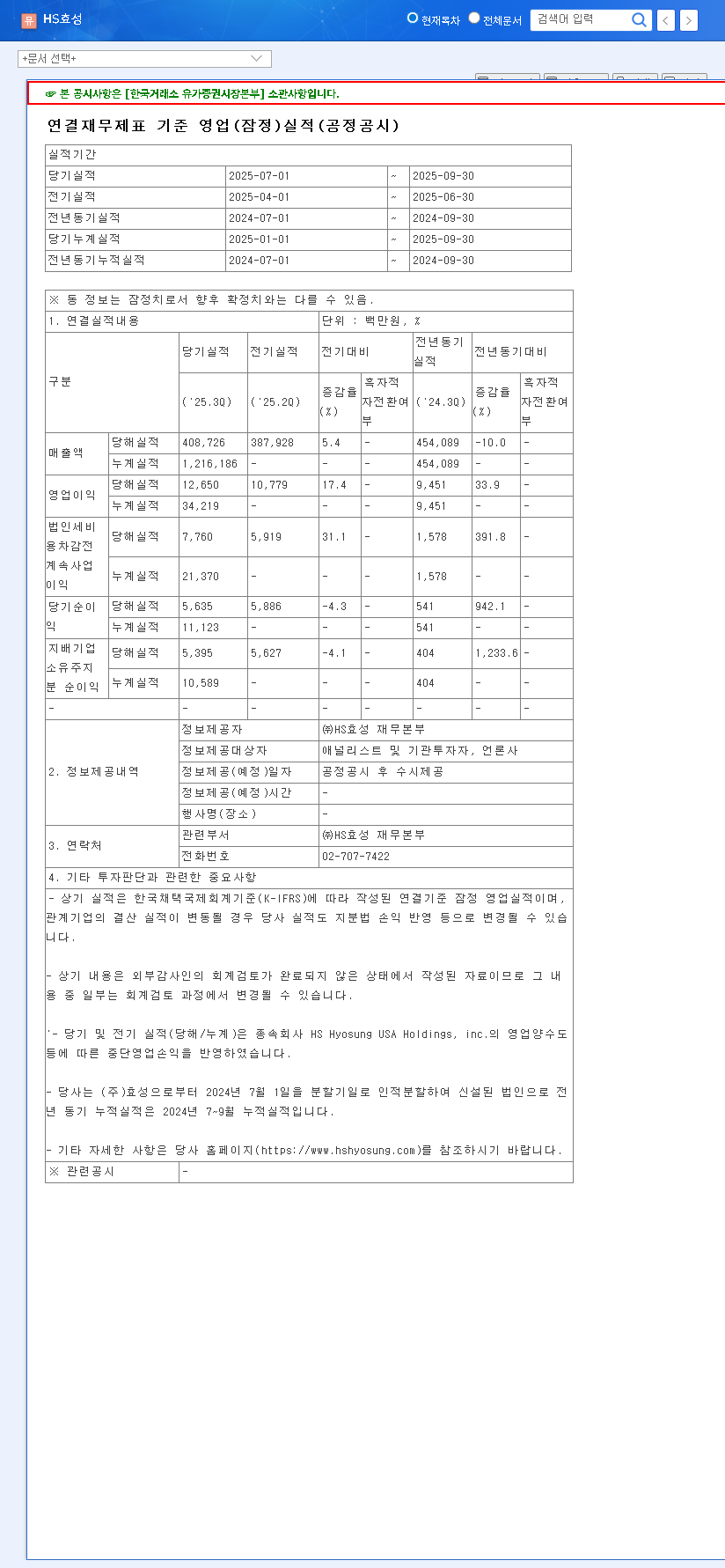
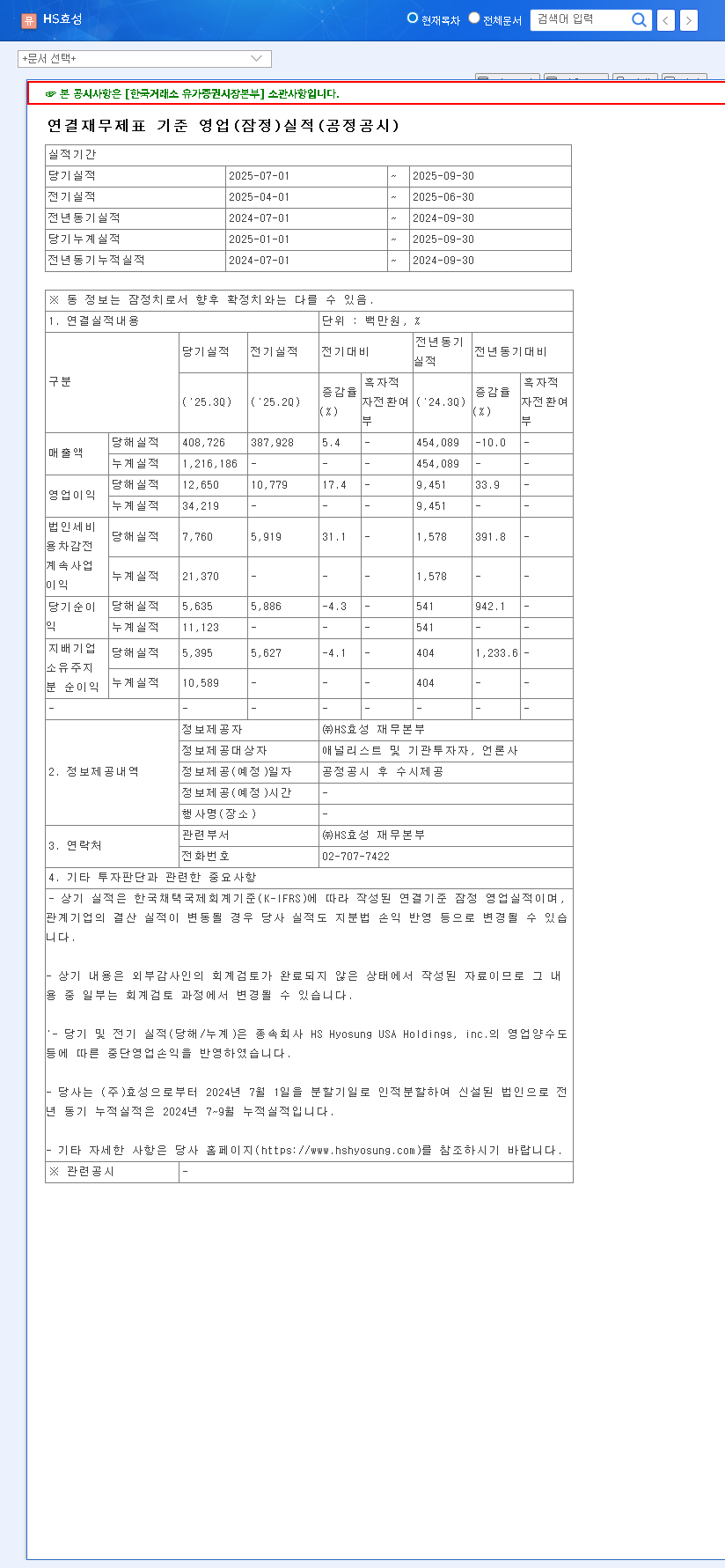
    The release of the HS HYOSUNG Q3 2025 earnings report provides a critical data point for investors navigating a complex market. On November 7, 2025, HS HYOSUNG Corporation unveiled preliminary results that paint a nuanced picture of its financial health. While the headline figures show promising growth in revenue and operating profit quarter-over-quarter, a dip in net income raises important questions. This detailed HS HYOSUNG financial analysis will dissect these figures, examine the underlying macroeconomic forces, and evaluate the potential impact on the HS HYOSUNG stock price and long-term corporate value.

    HS HYOSUNG Q3 2025 Earnings at a Glance

    According to the Official Disclosure filed with DART, the company’s preliminary performance for the third quarter of 2025 is as follows:

    • Revenue: KRW 408.7 billion (a 5.36% increase QoQ)
    • Operating Profit: KRW 12.6 billion (a 16.67% increase QoQ)
    • Net Income: KRW 5.4 billion (an 8.47% decrease QoQ)

    The positive trajectory in HS HYOSUNG revenue and operating profit suggests operational strength and effective cost management. However, the decline in net income points to pressures below the operating line, which requires a deeper investigation.

    HS HYOSUNG’s Q3 2025 results present a classic case of operational success meeting non-operating challenges. The core business is performing, but external financial factors are weighing on the bottom line.

    Why the Mixed Results? A Financial Analysis

    Understanding the divergence between operating profit and net income is key. This is where we must blend the company’s fundamentals with the broader macroeconomic environment.

    Stable Fundamentals and Growth Drivers

    HS HYOSUNG’s strength lies in its diversified business portfolio, spanning industrial materials, logistics, trading, and import car dealerships. The industrial materials division remains a consistent and robust revenue generator. Looking ahead, the company is banking on the expansion of its logistics business and the market potential of high-value new materials like carbon fiber to fuel future growth. Even with a revenue dip in the first half of 2025, the company managed to boost operating profit and improve its financial health by reducing total debt, signaling strong internal management.

    The Impact of Macroeconomic Factors

    No company operates in a vacuum. As detailed in global economic outlooks by sources like Reuters, several external factors are influencing HS HYOSUNG’s performance:

    • Currency Volatility: A weak Korean Won (KRW) against the USD and EUR is a double-edged sword, potentially hurting export-heavy divisions while reducing import costs.
    • Oil Prices: Declining international crude oil prices provide a welcome cost reprieve for the industrial materials sector, directly boosting profitability.
    • Freight Rates: A drop in shipping freight indices could squeeze margins in the transportation brokerage business, necessitating a greater focus on efficiency.
    • Interest Rates: A global trend towards lower policy rates is beneficial, reducing the company’s interest expense burden and making future investments more feasible.

    The decrease in net income, therefore, is largely attributed to these non-operating variables, including financial costs, foreign exchange losses, and equity method investment results.

    Market Reaction: HS HYOSUNG Stock Price & Investor Sentiment

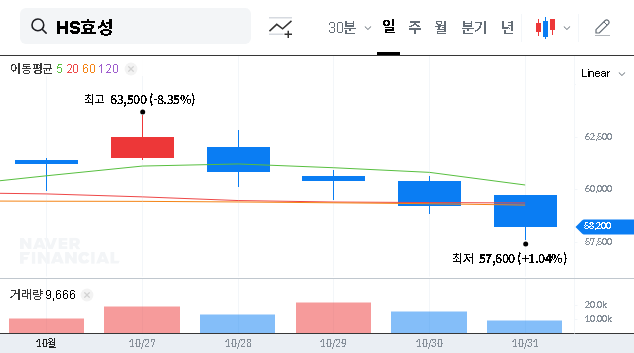
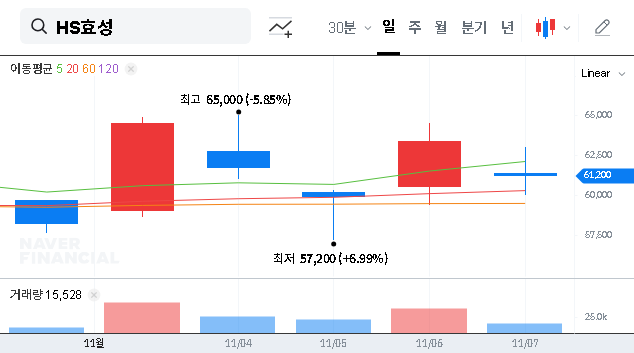
    The HS HYOSUNG Q3 2025 earnings announcement did not catalyze an immediate rally for the stock. On the day of the release, the stock price closed lower, continuing a downward trend since its IPO. This muted reaction suggests that the market is weighing the positive operational data against the net income dip and broader economic uncertainties. A reduction in foreign ownership further indicates cautious or bearish investor sentiment. For a deeper understanding of market reactions, you might read our guide on how to analyze a corporate earnings report.

    Investor Action Plan: What to Watch Next

    For current and prospective investors, the path forward requires diligent monitoring of several key areas:

    • Profitability Sustainability: Can the company maintain its operating profit growth in the coming quarters? Look for evidence of continued cost efficiency and margin improvements.
    • New Growth Engine Performance: The market needs to see tangible results and clear expansion plans from high-potential businesses like carbon fiber to regain confidence.
    • Macroeconomic Adaptation: How effectively is management hedging against currency risks and adapting to shifts in global freight and commodity markets?

    Frequently Asked Questions (FAQ)

    What were the key takeaways from HS HYOSUNG’s Q3 2025 earnings?

    The main story was growth in core operations (revenue up 5.36%, operating profit up 16.67% QoQ) overshadowed by a decline in the final net income (down 8.47% QoQ) due to non-operating financial factors.

    Why did net income fall if the core business did well?

    The decline is primarily linked to non-operating expenses and income. This can include factors like losses from foreign currency exchange rates, changes in the value of investments (equity method), or increased financial costs.

    How did the HS HYOSUNG stock price react to this corporate earnings report?

    The stock price fell on the day of the announcement. This suggests that investors were more focused on the net income decline and ongoing market uncertainties than the positive growth in revenue and operating profit.

    What should investors monitor for HS HYOSUNG’s future?

    Key areas to watch are the company’s ability to sustain its operating momentum, its strategy for mitigating macroeconomic risks like currency fluctuations, and the commercial success of its new growth ventures, such as carbon fiber.

    (487570) HS HYOSUNG Q3 2025 Earnings: In-Depth Financial Analysis & Stock Price Outlook 관련 이미지
  • (487570) HS HYOSUNG Secondary Battery Venture: A Deep Dive into the Umicore Partnership & Market Impact

    (487570) HS HYOSUNG Secondary Battery Venture: A Deep Dive into the Umicore Partnership & Market Impact

    In a landmark move signaling a significant strategic shift, HS HYOSUNG Corporation (487570) has officially entered the highly competitive HS HYOSUNG secondary battery materials market. This decision, executed through its subsidiary HS HYOSUNG Advanced Materials, involves a major partnership with global materials giant Umicore NV. The venture focuses on the next-generation silicon carbon composite anode material market, a critical component for the future of electric vehicles (EVs) and energy storage. This bold investment is poised to become a new growth engine for the conglomerate, but it also introduces considerable financial risks and competitive pressures. This comprehensive analysis will explore the strategic rationale, financial implications, and long-term outlook for investors monitoring this pivotal development.

    This strategic pivot into secondary battery materials is not just a diversification play; it’s a calculated move to secure a leadership position in the materials technology that will power the next generation of green energy solutions.

    The Strategic Alliance: HS HYOSUNG and Umicore Join Forces

    Details of the Landmark Investment

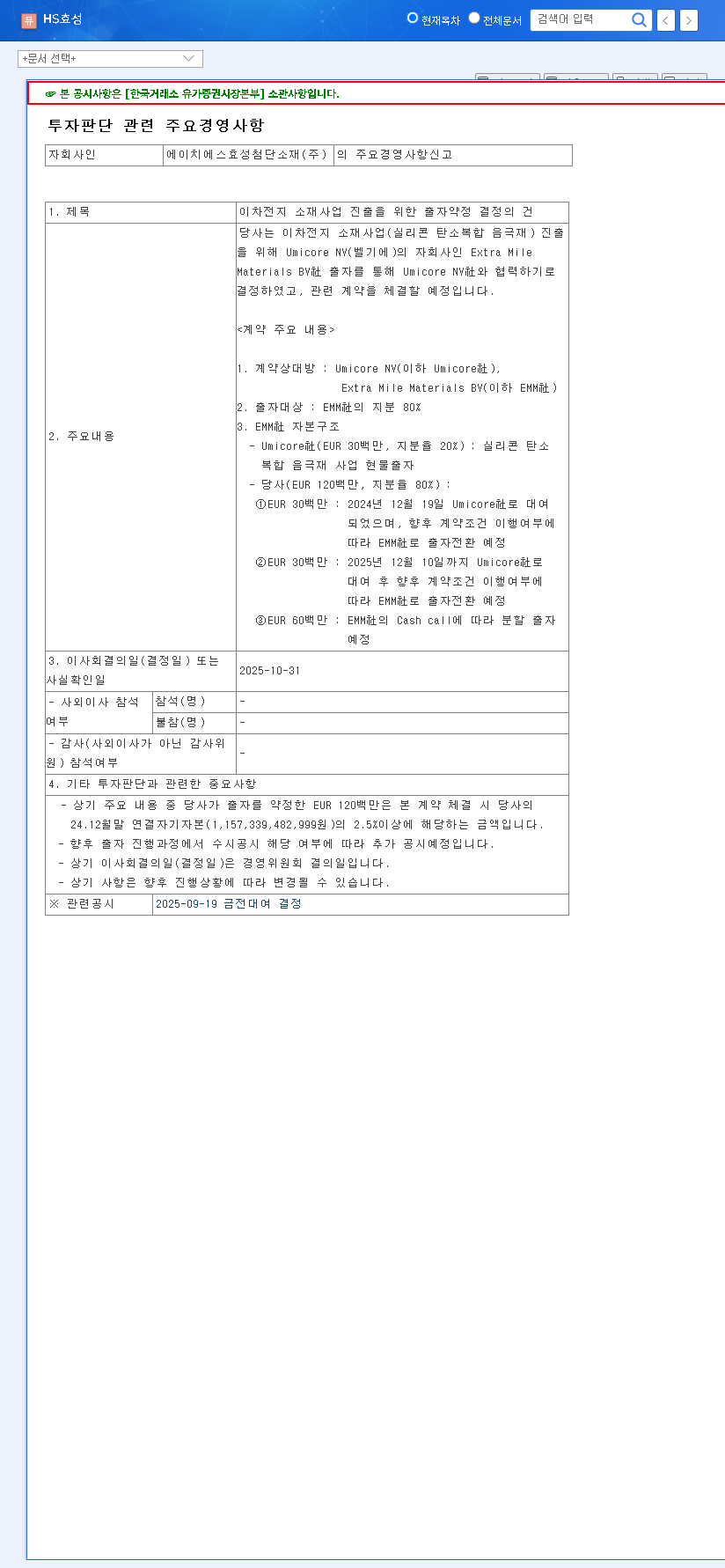
    The core of this new venture is the acquisition by HS HYOSUNG Advanced Materials Co., Ltd. of an 80% stake in Extra Mile Materials BV (EMM Co.), a subsidiary of Belgium-based Umicore NV. The transaction, valued at approximately KRW 177 billion, marks HS HYOSUNG‘s official entry into the silicon carbon composite anode material market. This is not a tentative first step but a decisive leap into a sector poised for exponential growth, driven by the global transition to electric mobility. For detailed financial specifics of the deal, investors can refer to the Official Disclosure (DART).

    Why Secondary Battery Materials are the Future

    The move into secondary battery materials is a direct response to global megatrends. The demand for high-performance rechargeable batteries is skyrocketing, fueled by the booming EV market and the need for large-scale energy storage systems. Silicon carbon composite anodes are a key next-generation technology because they can store significantly more energy than traditional graphite anodes, leading to longer-range EVs and faster charging times. By entering this market, HS HYOSUNG is positioning itself to capitalize on this multi-billion dollar industry, as detailed in reports from market analysis firms like BloombergNEF. This strategy diversifies its portfolio beyond its successful but mature businesses in tire cords and industrial yarns, securing a vital new engine for future growth.

    Investment Analysis: Balancing Opportunity and Risk

    A large-scale investment into a new, competitive field presents a dual-sided coin of immense opportunity and significant risk. Investors must carefully weigh the short-term financial burdens against the potential for long-term, high-margin growth.

    Financial Impact: Short-Term Strain for Long-Term Gain?

    • Capital Outlay: The KRW 177 billion investment is a substantial cash outflow that will immediately impact HS HYOSUNG Advanced Materials’ balance sheet, potentially increasing its debt ratio and straining short-term cash flow.
    • Growth Potential: If the HS HYOSUNG secondary battery venture succeeds, it could generate significant revenue and high profit margins, ultimately strengthening the company’s financial foundation and delivering substantial shareholder value.
    • Currency Risk: As a Euro-denominated investment, fluctuations in the EUR/KRW exchange rate present an ongoing financial risk that could affect both the initial cost and future profitability.

    Business & Market Dynamics

    • Technological Edge: The HS HYOSUNG Umicore partnership is critical. It provides immediate access to Umicore’s world-class R&D and established technology, mitigating the risks of starting from scratch and accelerating the path to market leadership.
    • Synergistic Potential: HS HYOSUNG can leverage its deep expertise in advanced materials, including its cutting-edge carbon fiber technology. Carbon fiber is a key component in battery enclosures and can potentially be integrated into anode structures, creating powerful synergies. Learn more about our analysis of the carbon fiber market here.
    • Intense Competition: The anode material market is fiercely competitive, with established players and new entrants vying for market share. Success will depend on rapid innovation, cost-effective scaling, and securing long-term contracts with battery manufacturers.

    Investor Outlook & Key Considerations

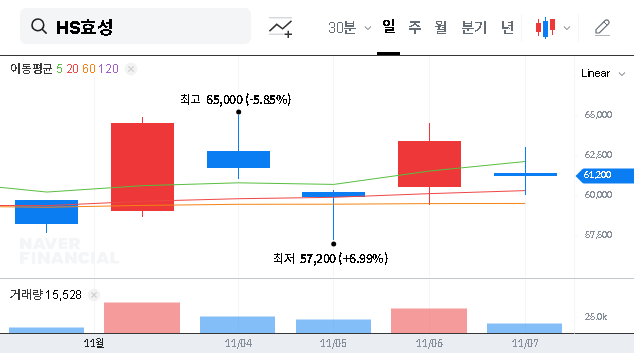
    For investors, this development transforms HS HYOSUNG into a company with a significantly higher growth ceiling, but also a higher risk profile. A cautious yet optimistic approach is warranted. While short-term stock price volatility is likely due to the financial uncertainties, the long-term sentiment could turn highly positive if the company demonstrates clear progress in its new venture.

    The key is to monitor milestones: successful technology integration with Umicore, progress on scaling production, and initial customer contracts. If these are achieved, the investment will prove to be a masterstroke. Given the high-growth nature of the secondary battery materials industry and the strong strategic partnership, the long-term investment opinion remains “Positive”, though vigilance is advised during the initial integration and ramp-up phases.

    (487570) HS HYOSUNG Secondary Battery Venture: A Deep Dive into the Umicore Partnership & Market Impact 관련 이미지