Tag: Household Goods

  • (051900) LG H&H Q3 2025 Earnings Analysis: Deep Dive into Stock Underperformance & Investment Strategy

    (051900) LG H&H Q3 2025 Earnings Analysis: Deep Dive into Stock Underperformance & Investment Strategy

    The recent LG H&H Q3 2025 earnings report sent a wave of concern through the investment community. As a cornerstone of the Korean consumer goods market, LG Household & Health Care’s significant miss on key financial metrics has triggered questions about its short-term stability and long-term growth trajectory. This comprehensive LG H&H stock analysis unpacks the disappointing results, explores the underlying causes of the underperformance, and outlines a clear LG H&H investment strategy for navigating the path ahead.

    For investors holding or considering a position in LG H&H, understanding the nuances of this performance dip is critical. We’ll delve into macroeconomic pressures, segment-specific challenges, and the crucial factors that will dictate the company’s recovery and future stock performance.

    The Q3 2025 Earnings Shock: By the Numbers

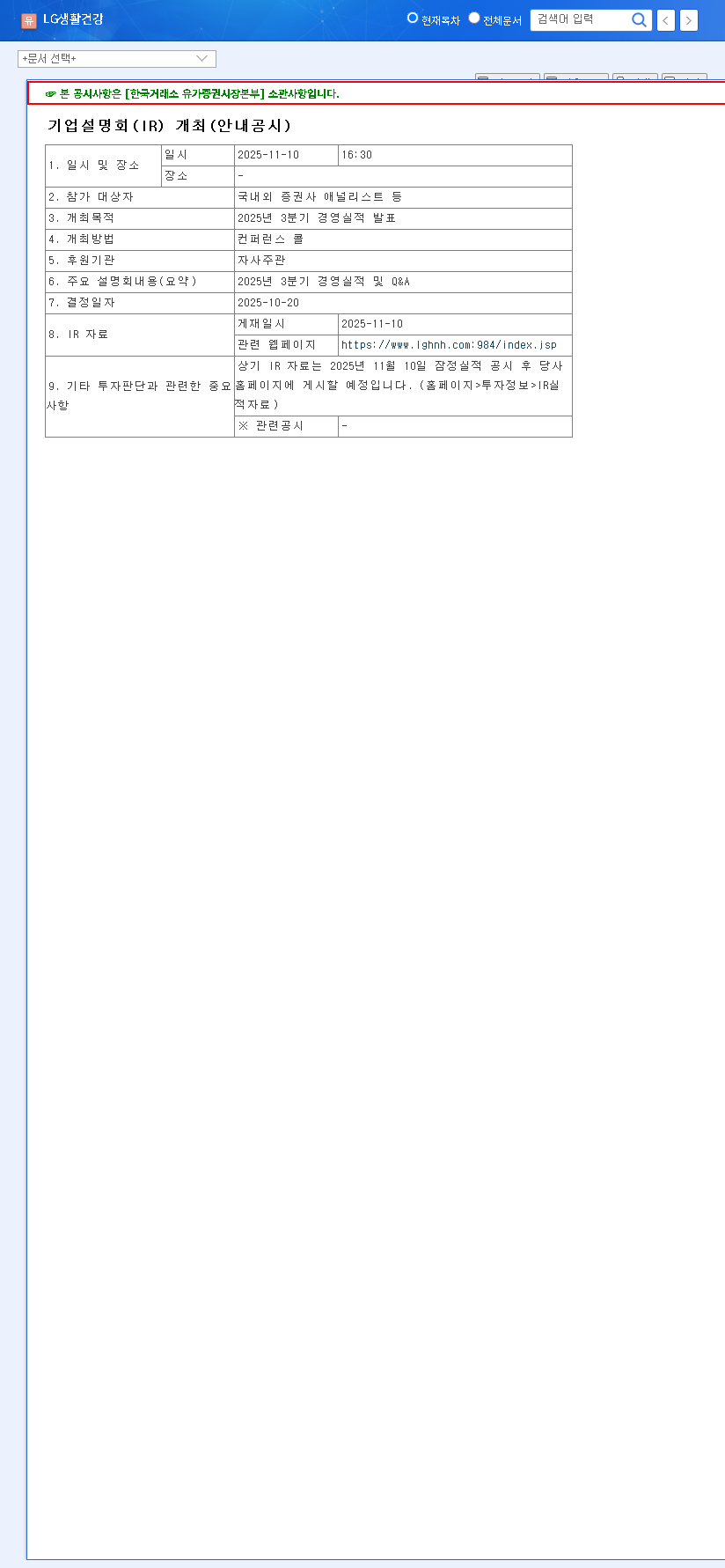
    On November 10, 2025, LG H&H released its preliminary Q3 earnings, which fell alarmingly short of market consensus estimates. The official figures, as detailed in their public filing (Source: DART), reveal a troubling trend:

    • Revenue: KRW 1.58 trillion, a 2.0% decrease from the KRW 1.615 trillion estimate.
    • Operating Profit: KRW 46.2 billion, a significant 15.1% miss compared to the KRW 54.4 billion estimate.
    • Net Profit: KRW 18.2 billion, a staggering 41.5% plunge below the KRW 31.1 billion estimate.

    While the revenue dip was a concern, the dramatic collapse in operating and net profit has understandably spooked investors. This points to severe margin compression, where the costs of doing business are rising much faster than sales, eroding the company’s core profitability.

    Dissecting the LG H&H Q3 2025 Earnings Underperformance

    This poor performance wasn’t caused by a single issue but rather a perfect storm of external pressures and internal challenges across all of the company’s business segments.

    Crippling Macroeconomic Headwinds

    The global economic environment created significant hurdles for LG H&H in Q3:

    • Weak Consumer Sentiment: Persistently high interest rates globally have tightened household budgets, leading to reduced discretionary spending on beauty and premium home products.
    • Adverse Exchange Rates: A strong US dollar against the Korean Won (KRW) inflated the cost of imported raw materials, directly squeezing profit margins.
    • Rising Input Costs: Surging oil prices increased costs for logistics, distribution, and petroleum-based packaging, particularly impacting the Refreshment (beverage) segment.

    Segment-Specific Weaknesses Exposed

    No division was immune to the downturn, with the crucial Beauty segment facing the most intense pressure.

    • Beauty (Cosmetics): The engine of LG H&H’s growth is sputtering. Despite strength in its luxury brands like ‘The History of Whoo’, the company is losing ground in the hyper-competitive Chinese market. A slow recovery in global travel retail and weaker-than-expected performance in new markets compounded the issue. For more context, see our complete analysis of the Korean cosmetics market.
    • HDB (Household & Daily Beauty): As a mature business, the HDB segment struggled to generate enough growth to compensate for the Beauty division’s woes. While it remains a market leader, its limited growth potential was evident in these results.
    • Refreshment (Beverages): The stable demand for its Coca-Cola brand couldn’t shield this segment from margin erosion. The aforementioned currency and raw material price volatility directly hit its bottom line, turning a stable revenue stream into a less profitable one.

    The Q3 earnings miss is a clear negative signal. Investors should brace for significant short-term downward pressure on LG H&H’s stock price as the market recalibrates its valuation based on these weakened fundamentals.

    Revised Investment Strategy & Future Outlook

    While LG H&H maintains a sound financial structure with a low debt-to-equity ratio, declining profitability is a major concern. The company’s future stock performance hinges on its ability to navigate current challenges and reignite growth. An effective LG H&H investment strategy must be cautious and observant.

    Key Catalysts for Recovery to Monitor

    • Q4 & 2026 Guidance: Watch closely for signs of a rebound in the next earnings report and management’s strategy for the upcoming year.
    • Geographic Diversification: Success in North American and Japanese markets is now paramount to reduce reliance on the volatile Chinese market.
    • Innovation Pipeline: The market reception of new products, particularly in high-margin areas like beauty devices (‘LG Pra.L’), will be a crucial indicator.

    Recommendation: Cautious Hold

    Given the short-term headwinds and stock price vulnerability, a ‘buy’ recommendation is premature. We advise a cautious ‘Hold’ for existing investors. New investors should wait for clear evidence of a turnaround, such as a stabilized Chinese market share and improved profit margins, before initiating a position. The risk of further decline is tangible until management presents a convincing recovery plan.

    Frequently Asked Questions (FAQ)

    Q1: What was the main reason for the LG H&H Q3 2025 earnings miss?

    A1: It was a combination of factors, primarily a slowdown in the high-profit Beauty segment due to intense competition in China, coupled with rising raw material and logistics costs that squeezed profitability across all divisions.

    Q2: How will this underperformance affect the LG H&H stock price?

    A2: The stock is expected to face significant downward pressure in the short term. The substantial miss in profit expectations signals deep-seated issues that will likely lead to weakened investor confidence and a lower valuation.

    Q3: Is LG H&H still a good long-term investment?

    A3: The company has strong brands and a solid financial foundation, but its long-term appeal now depends on its ability to adapt. A successful diversification away from China and innovation in new product categories are essential for a positive long-term outlook.
    (051900) LG H&H Q3 2025 Earnings Analysis: Deep Dive into Stock Underperformance & Investment Strategy 관련 이미지
  • (018250) Aekyung Industrial Management Control: A Deep Dive into the Taekwang Acquisition for Investors

    (018250) Aekyung Industrial Management Control: A Deep Dive into the Taekwang Acquisition for Investors

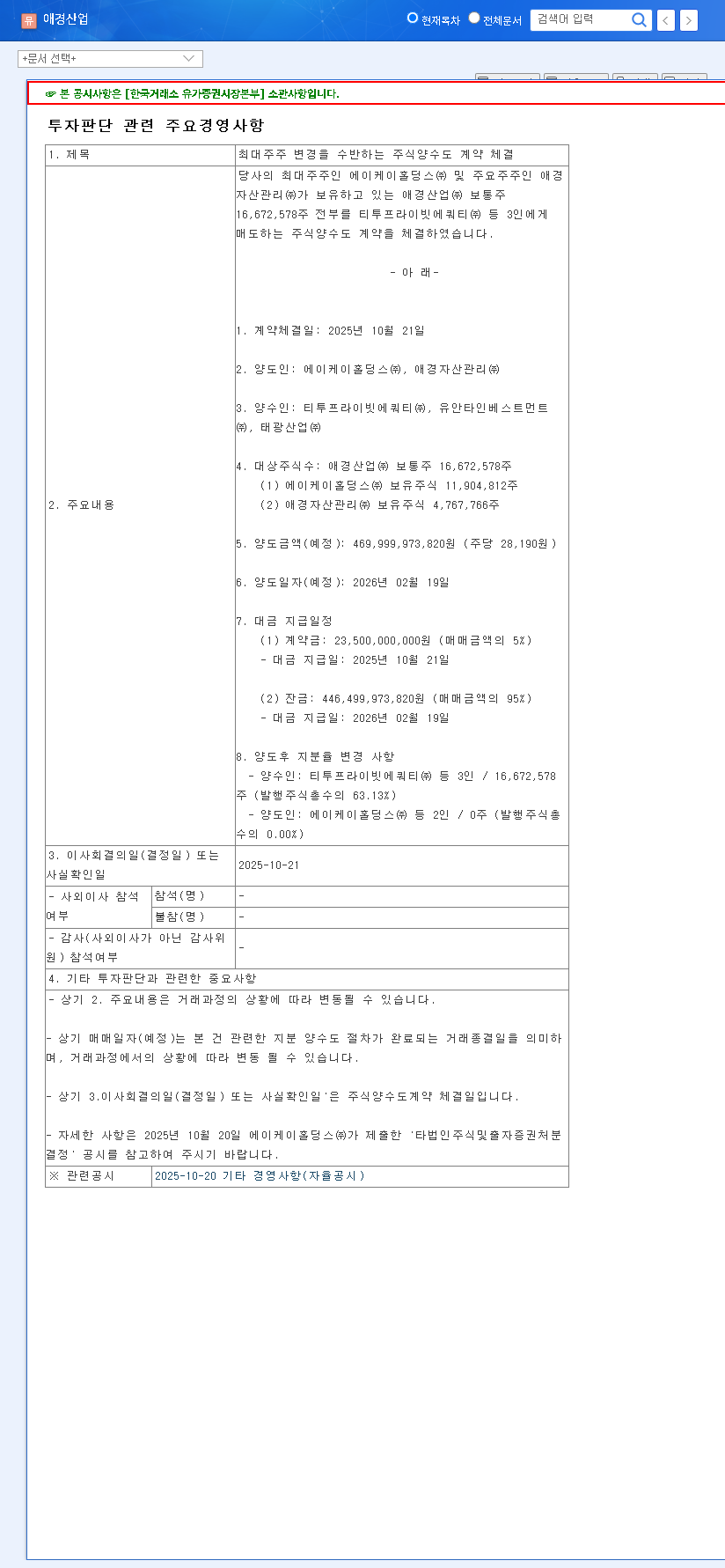
    A seismic shift has occurred in the corporate landscape with the transfer of Aekyung Industrial management control to the formidable Taekwang Industrial Group. This landmark deal, finalized on October 28, 2025, saw Taekwang and its partners acquire a commanding 63.13% stake, fundamentally altering the future of the household goods and cosmetics giant. For investors holding or watching Aekyung Industrial stock, this isn’t just news; it’s a critical inflection point demanding a thorough investor analysis.

    What does this acquisition signal for Aekyung’s beloved brands like AGE20’S and Kerasys? Can the synergy between a chemical conglomerate and a consumer goods company unlock new value, or do unforeseen risks lie ahead? This comprehensive analysis will explore the mechanics of the deal, dissect the potential impacts, and offer a strategic roadmap for navigating this new chapter.

    The Landmark Deal: Taekwang Assumes Aekyung Industrial Management Control

    The change was officially documented in a large shareholding report filed on October 28, 2025. The consortium, led by Taekwang Industrial and including Yuanta Investment and T2 Private Equity, executed an off-market transaction to acquire a 63.13% stake, explicitly for the purpose of influencing and directing management. This move effectively ends an era for Aekyung Industrial and begins a new one under the Taekwang Industrial Group’s strategic vision. The complete details can be reviewed in the Official Disclosure (DART).

    • Acquiring Parties: Taekwang Industrial Group (Taekwang Industrial, Yuanta Investment, T2 Private Equity)
    • Stake Acquired: 63.13% (from a previous holding of 0%)
    • Stated Purpose: To influence and exercise management control.
    • Implication: Full transfer of strategic and operational control.

    Analyzing the Impact on Aekyung Industrial Stock

    For investors, the central question is how this Aekyung Industrial acquisition will affect its valuation and stock performance. The outlook is a blend of significant opportunity and tangible risk.

    Potential Synergies and Upside (The Bull Case)

    The combination of Taekwang’s industrial might with Aekyung’s consumer-facing brands could create powerful synergies. As reported by financial analysts at authoritative sources like Bloomberg, such vertical integrations often unlock value.

    • Vertical Integration: Taekwang’s expertise in chemical materials could lead to cost savings and innovation in raw materials for Aekyung’s cosmetics and household goods.
    • Capital Injection: With the financial backing of a larger group, Aekyung can accelerate R&D, expand its marketing budget, and pursue more aggressive growth strategies, both domestically and internationally.
    • Operational Efficiency: New leadership often identifies and eliminates legacy inefficiencies, potentially improving margins and overall profitability.

    For investors, this acquisition transforms the narrative. The question is no longer just ‘What is Aekyung worth today?’ but rather ‘What can it become with Taekwang’s resources and strategic direction?’

    Navigating the Risks and Uncertainties (The Bear Case)

    Conversely, major corporate transitions are fraught with challenges. Investors must weigh these potential downsides before making any decisions regarding Aekyung Industrial stock.

    • Strategic Uncertainty: The new management’s vision has not been fully articulated. A drastic shift away from Aekyung’s core competencies could alienate its loyal customer base.
    • Corporate Culture Clash: Merging the cultures of an industrial manufacturer and a fast-moving consumer goods company can lead to internal friction, talent loss, and a period of instability.
    • The Humidifier Sterilizer Lawsuit: This significant legal overhang remains a major risk. It is unclear if Taekwang’s involvement will help resolve the issue or potentially expand the liability across the new parent group.

    A Prudent Investment Strategy Moving Forward

    Given the transfer of Aekyung Industrial management control, a passive ‘wait and see’ approach may not suffice. A proactive, informed strategy is essential. This new reality demands a re-evaluation of the company’s long-term prospects, similar to how one might approach a new IPO. For a deeper understanding of market dynamics, you can review our detailed analysis of the consumer goods market.

    Key Actions for Investors:

    • Monitor Communications: Pay close attention to official announcements from the new management team regarding their strategic vision, integration plans, and financial policies.
    • Analyze Financial Filings: Scrutinize upcoming quarterly reports for early signs of improved margins, cost savings, or changes in investment priorities.
    • Adopt a Long-Term View: Short-term stock volatility is almost certain. True value creation (or destruction) will unfold over several quarters. Base decisions on fundamental changes, not daily price swings.
    • Re-evaluate Valuation: The company’s old valuation models may no longer be relevant. It is crucial to build a new thesis based on the potential synergies and risks under the Taekwang Industrial Group.

    Disclaimer: This analysis is for informational purposes only and is based on publicly available data. It does not constitute financial advice. All investment decisions should be made with individual due diligence and consultation with a qualified financial advisor.

    (018250) Aekyung Industrial Management Control: A Deep Dive into the Taekwang Acquisition for Investors 관련 이미지
  • (051900) LG H&H Stock Analysis (051900): NPS Sale Impact & 2025 Outlook

    (051900) LG H&H Stock Analysis (051900): NPS Sale Impact & 2025 Outlook

    The recent news of South Korea’s National Pension Service (NPS) divesting a significant stake in LG H&H stock has stirred the market, leaving many investors questioning the future trajectory of the company’s share price. Is this a signal of underlying weakness, or simply a strategic portfolio adjustment by a major institutional player? This comprehensive LG H&H stock analysis will dissect the situation, providing clarity on the NPS’s actions, the company’s fundamental health, and what it all means for your investment strategy in 2025 and beyond.

    The NPS Share Sale: What Investors Need to Know

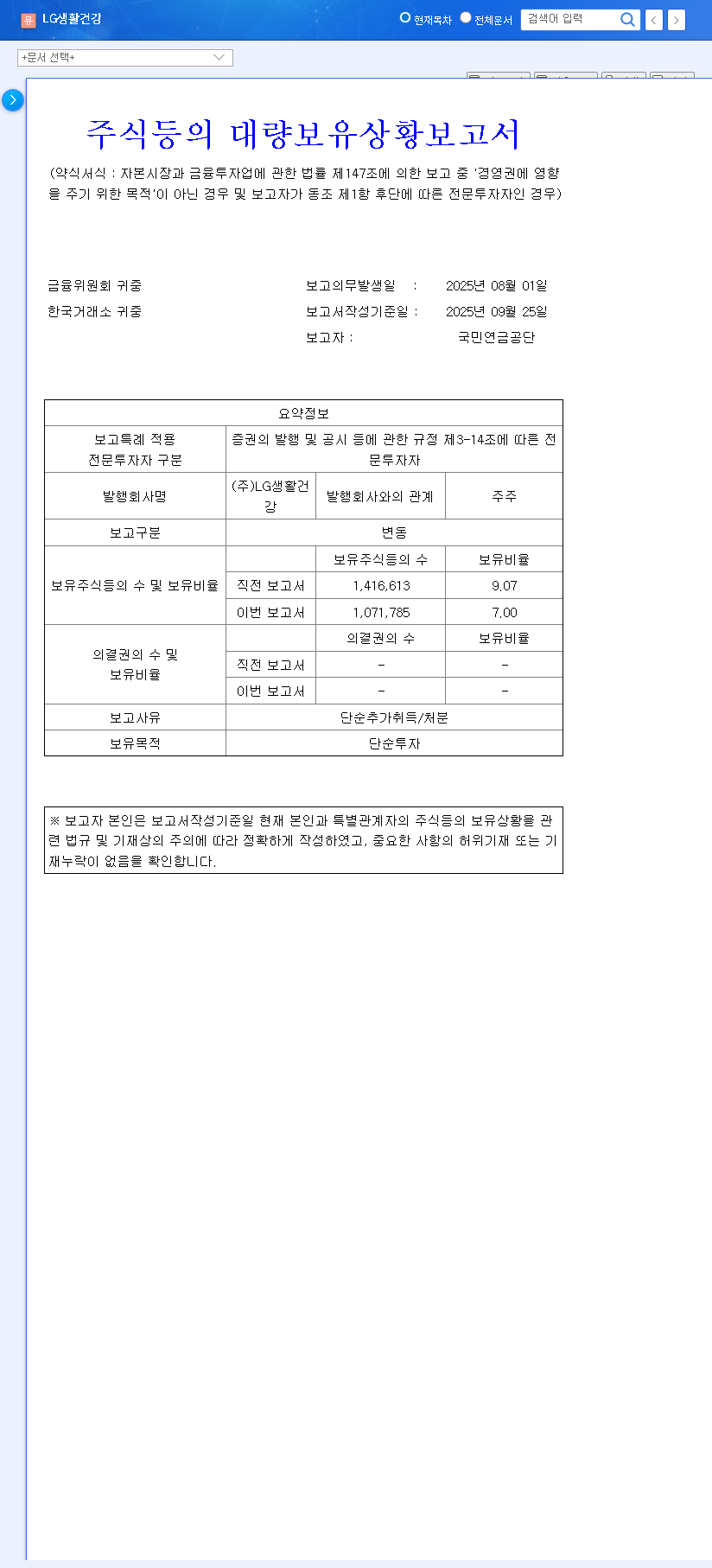
    On October 1, 2025, a public disclosure revealed that the National Pension Service, one of the world’s largest pension funds, had reduced its holdings in LG H&H (ticker: 051900). The fund’s stake decreased from 9.07% to 7.00%, a notable reduction of 2.07 percentage points. According to the Official Disclosure, the stated purpose for the holding was ‘Simple Investment’.

    This type of move by a major institution can often be interpreted in two ways. On one hand, it could be a strategic rebalancing of their portfolio, a common practice to manage risk or lock in profits after a period of growth. On the other hand, it could be perceived as a loss of confidence in the company’s future prospects. However, given the ‘Simple Investment’ classification, the former is the more probable scenario. The immediate impact is likely to be felt more in market sentiment and short-term volatility rather than as a reflection of a fundamental shift in the LG H&H stock value proposition.

    Deep Dive into LG H&H Stock Fundamentals (H1 2025)

    Beyond the headlines, a thorough LG H&H stock analysis requires a close look at the company’s core performance. The first half of 2025 painted a picture of resilience amidst challenges.

    Revenue and Segment Performance

    LG H&H reported total revenue of KRW 3.3 trillion, a marginal decrease year-over-year. The Beauty division, with KRW 1.3 trillion in revenue, felt the headwinds from a sluggish Chinese market, a key area of concern for investors. However, the HDB (Home Care & Daily Beauty) segment showed robust growth, reaching KRW 1.1 trillion, driven by the strong performance of its premium brands. The Refreshment segment remained a pillar of stability, maintaining its revenue at KRW 874.7 billion. This diversified portfolio demonstrates an ability to weather turbulence in specific markets.

    Profitability and Financial Health

    Operating profit saw a significant drop to KRW 197.2 billion, a 57% decrease year-over-year. This was primarily attributed to increased strategic investments aimed at revitalizing the Beauty segment and some one-off expenses. Despite this, the high-margin Refreshment business provided a crucial buffer, helping to defend overall profitability. Crucially, the company’s financial foundation remains rock-solid.

    With a low debt-to-equity ratio of just 20.8% and a healthy reserve of cash equivalents, LG H&H is well-positioned to navigate economic uncertainties and fund future growth initiatives without financial strain.

    Market Impact and Future Outlook

    Short-Term Volatility vs. Long-Term Value

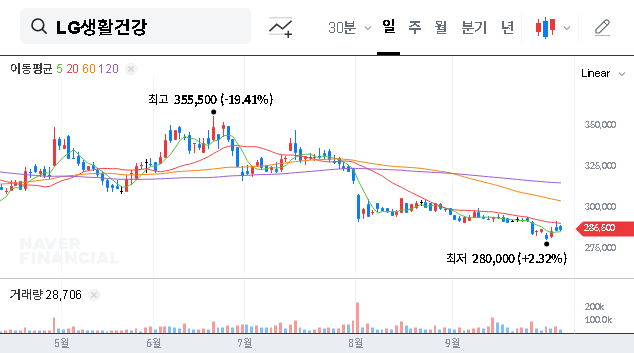
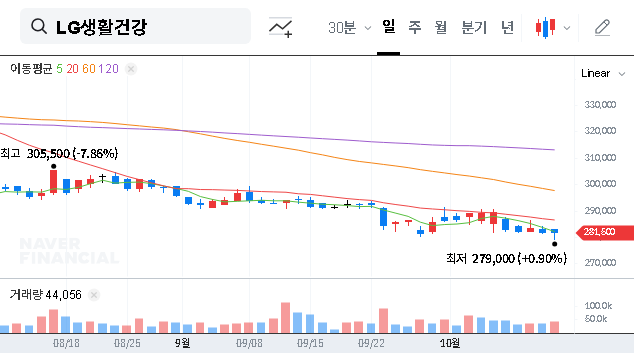
    The immediate aftermath of the NPS news could introduce downward pressure on the LG H&H share price and increase trading volatility. Negative sentiment often follows when a major institution trims its position, a phenomenon frequently covered by leading financial news outlets. However, for long-term investors, this could represent a buying opportunity. The market’s short-term reaction is unlikely to impact LG H&H’s fundamental business competitiveness, brand equity, or its strategic growth plans.

    Future Growth Catalysts

    Management’s focus in H1 2025 was clearly on securing future growth. Investors should pay close attention to these initiatives, which are far more indicative of long-term value than a single institutional trade. For more on market trends, review our analysis of the global beauty industry.

    • Strengthening Luxury Brands: Continued investment in high-margin luxury cosmetics like ‘The History of Whoo’ and ‘Su:m37’ is key to improving profitability.
    • Strategic Acquisitions: The acquisition of new color cosmetics brands diversifies the portfolio and captures new market segments.
    • Beauty Tech Investment: Venturing into the beauty device business opens up a new, high-growth revenue stream.
    • Shareholder Returns: Ongoing share buybacks and dividends signal confidence from management and a commitment to enhancing corporate value.

    Comprehensive Investment Strategy for LG H&H Stock

    In conclusion, while the NPS share sale is a notable event, it should be viewed within the broader context of LG H&H’s solid fundamentals and strategic initiatives. The prudent investor will look past the short-term noise and focus on the underlying health and long-term growth trajectory of the business.

    Investment Opinion: Neutral with Positive Long-Term Outlook

    The current recommendation is ‘Neutral’ due to short-term market headwinds and macroeconomic uncertainties. However, the long-term potential for the 051900 stock remains attractive for patient investors.

    • Positives: Diversified business portfolio, powerful brand equity, stable financial structure, and clear investment in future growth engines.
    • Risks: Over-reliance on the Chinese market, intense competition in the beauty sector, and macroeconomic factors like interest rates and currency fluctuations.

    Investors should monitor LG H&H’s H2 2025 earnings reports and management’s progress on their growth strategies. Decisions should be based on fundamental performance rather than a single institutional portfolio adjustment.

    Disclaimer: This article is for informational purposes only and does not constitute investment advice. All investment decisions should be made based on your own research and judgment.

    (051900) LG H&H Stock Analysis (051900): NPS Sale Impact & 2025 Outlook 관련 이미지
  • Taekwang Industry Bids for Aekyung: Diversification or Overreach?

    1. What’s Happening? Taekwang Bids for Aekyung

    Taekwang Industry’s consortium has submitted a final bid for the acquisition of Aekyung. The final decision is expected within the next three months.

    2. Why the Acquisition? Growth and Diversification

    Taekwang aims to reduce its reliance on the petrochemical industry and secure new growth engines. Acquiring Aekyung allows them to diversify into the beauty and household goods market, creating a more robust and stable revenue stream.

    3. What are the Potential Outcomes? Opportunities and Risks

    • Opportunities:
      • Stable revenue generation through diversification
      • New growth opportunities in the beauty and household goods market
    • Risks:
      • Financial burden of the approximately 1.5 trillion KRW investment
      • Uncertainties and potential difficulties in post-merger integration (PMI)
      • Increased market competition and potential legal issues

    4. What Should Investors Do? Careful Analysis and Prudent Investment

    Taekwang’s bid for Aekyung presents both opportunities and risks. Investors should carefully consider the following factors before making any investment decisions:

    • Taekwang’s financing plan and financial health
    • Post-merger integration (PMI) strategy and risk management plan
    • Outcome of legal disputes related to treasury stocks and the impact of macroeconomic factors

    Frequently Asked Questions

    Why is Taekwang Industry trying to acquire Aekyung?

    Taekwang is seeking to diversify its business portfolio and reduce its dependence on the petrochemical industry. The acquisition of Aekyung provides an entry point into the beauty and household goods market, offering new growth opportunities.

    What are the main risks associated with the Aekyung acquisition?

    The significant financial burden of the acquisition, uncertainties surrounding post-merger integration (PMI), and increased market competition are key risks.

    What should investors consider?

    Investors should carefully evaluate Taekwang’s financing plan, PMI strategy, legal disputes, and macroeconomic factors before making any investment decisions.

  • NEWON (123840) H1 2025 Earnings Analysis: Soaring Sales Mask Underlying Risks

    1. What Happened?: NEWON’s H1 2025 Performance Breakdown

    NEWON reported revenue of KRW 23.27 billion in H1 2025, a significant increase year-over-year. However, operating income swung to a loss of KRW -9.22 billion, with a net loss of KRW -10.16 billion. Despite strong sales growth in the health functional food and household goods segments, weak performance in the specialized machinery business and high selling, general, and administrative expenses (SG&A) eroded profitability.

    2. Why is this Happening?: Six Years of Losses and a Precarious Financial Position

    NEWON has recorded operating losses for six consecutive years and faces serious financial challenges, including excess current liabilities exceeding KRW 180 billion and accumulated losses of over KRW 130 billion. The high SG&A ratio (104.7%) further complicates profitability improvements. Concerns about the company’s ability to continue as a going concern are mounting.

    3. What to Do Now?: Action Plan for Investors

    In the short term, investors should exercise extreme caution with NEWON. Without improvements in the operating loss structure, financial difficulties are likely to persist. In the medium to long term, close monitoring of performance improvements in the machinery business, profitability in the health food/household goods segment, and normalization of the financial structure is crucial. Pay close attention to the Q3 earnings release and the execution of specific business plans. Currently, the investment risk is very high, requiring careful consideration before making any investment decisions.

    Frequently Asked Questions (FAQ)

    What are NEWON’s main businesses?

    NEWON operates in specialized machinery (vacuum deposition equipment), health functional foods, and household goods.

    How did NEWON perform in H1 2025?

    While revenue increased significantly year-over-year, operating income turned negative, and the financial situation deteriorated.

    Should I invest in NEWON?

    Currently, the investment risk is very high. Careful consideration is advised before making any investment decisions.

  • KleanNara (004540) Q2 Earnings Disappoint: Analysis and Outlook for Investors

    1. KleanNara’s Q2 Results: What Happened?

    KleanNara reported sales of KRW 123.5 billion, an operating loss of KRW 6.1 billion, and a net loss of KRW 11.3 billion in Q2 2025. While the decline in sales slowed compared to the previous quarter, the operating loss widened.

    2. Analyzing the Decline: Why the Poor Performance?

    • PS (Paper Solution) Division Struggles: A sluggish industrial paper market, intensified competition, and falling raw material prices combined with a larger decline in sales resulted in worsening profitability.
    • HL (Home & Life) Division Stagnation: Despite efforts to strengthen the premium product lineup and launch new products, sales in the household goods segment declined.
    • High Debt Ratio and Increased Financial Costs: The high debt ratio combined with a rising interest rate environment led to increased interest expenses, further impacting profitability.

    3. KleanNara’s Future: Outlook and Investment Strategies

    While the short-term outlook for KleanNara’s stock may be negative, long-term investors should pay attention to the growth potential of the HL division and the PS division’s efforts to improve profitability.

    • HL Division: The premium brand strategy and global market expansion could drive future growth.
    • PS Division: Improving profitability through the development of high-value-added products and cost reduction efforts will be crucial.
    • Financial Restructuring: Securing financial soundness by reducing debt and strengthening capital is urgent.

    4. Action Plan for Investors

    • Caution Regarding Short-Term Volatility: Be aware of potential increased stock price volatility following the earnings announcement.
    • Monitor Earnings Improvement Momentum: Closely observe whether earnings improve from Q3 onwards.
    • Track Financial Restructuring Efforts: Continuously monitor efforts to reduce the debt ratio and alleviate interest expense burdens.
    • Invest Cautiously: Instead of aggressive investment, observe and make investment decisions after confirming improvements in fundamentals.
    What are the main reasons for KleanNara’s poor Q2 performance?

    The main reasons are the sluggish market for the PS division, declining sales in the HL division, and the high debt ratio combined with increased financial costs.

    What is the outlook for KleanNara?

    The short-term outlook may be negative, but the long-term outlook depends on the growth potential of the HL division and the PS division’s ability to improve profitability.

    How should investors approach investing in KleanNara?

    Investors should be cautious of short-term volatility, closely monitor earnings improvement momentum and financial restructuring efforts, and make investment decisions prudently.

  • Monalisa (012690) H1 2025 Earnings Analysis: Hidden Opportunities Amidst Crisis?

    1. Monalisa’s Disappointing H1 2025 Performance

    Monalisa reported weak earnings in the first half of 2025, with revenue of KRW 61.4 billion and operating profit of KRW 500 million. Sales decreased by 4.6% year-on-year due to the economic downturn and weakened consumer sentiment, while operating profit plummeted by a staggering 97.9%.

    2. Analyzing the Causes of the Decline: Positive Signals Amidst the Headwinds?

    This poor performance is a result of a combination of factors, including a deteriorating domestic and international business environment, rising raw material prices, and low production efficiency. In particular, despite the drop in pulp prices, the rise in wastepaper prices has added to cost burdens. However, the fact that the preliminary earnings exceeded the expected ‘0’, and the solid financial structure without debt, act as positive factors. Also, the completion of facility investment in the Nonsan plant is expected to contribute to increased production efficiency in the future.

    3. Monalisa’s Future: Overcoming Strategies and Investment Points

    Monalisa is striving to enhance its competitiveness through strengthening ESG management, developing new products, and expanding e-commerce channels. Investors should pay close attention to future earnings recovery drivers, cost management capabilities, changes in the competitive landscape, and macroeconomic indicators. In particular, the effects of facility investment in the Nonsan plant, the launch of new products, and the success of online sales strategies are important investment points.

    4. Action Plan for Investors

    • Focus on long-term growth potential rather than short-term performance.
    • Check the company’s response strategies to raw material price and exchange rate fluctuations.
    • Analyze whether Monalisa has secured a differentiated competitive edge compared to its competitors.
    • Monitor macroeconomic indicators and trends in improving consumer sentiment.
    Q: How was Monalisa’s performance in the first half of 2025?

    A: Revenue was KRW 61.4 billion, a 4.6% decrease year-on-year, and operating profit was KRW 500 million, a significant drop of 97.9%. The economic downturn and weakened consumer sentiment are analyzed as the main causes.

    Q: What is the outlook for Monalisa?

    A: Despite the challenging business environment, Monalisa maintains a sound financial structure and continues efforts for future growth through facility investments and strengthening ESG management. However, short-term deterioration in profitability can act as an investment risk.

    Q: What should investors consider when investing in Monalisa?

    A: Investors should pay attention to drivers of earnings recovery, such as the effects of facility investments in the Nonsan plant, the launch of new products, and online sales strategies. They should also carefully analyze raw material price and exchange rate fluctuations, changes in the competitive landscape, and macroeconomic indicators before making investment decisions.

  • Samyang KCI (003580) H1 2025 Earnings Analysis: Declining Profits and Future Outlook

    1. What Happened? : Samyang KCI’s Earnings Decline

    Samyang KCI reported sales of KRW 60.3 billion and operating profit of KRW 7.7 billion in H1 2025, representing a decrease of 45% and 49% year-over-year, respectively. Net income also experienced a significant decline. Even in Q2 2025 alone, while sales slightly increased compared to Q2 2024, both operating and net income decreased substantially.

    2. Why Did This Happen? : Analysis of the Decline

    This decline is attributed to multiple factors, including the global economic slowdown, fluctuating raw material prices, and intensified competition. Increased selling, general and administrative expenses, particularly in shipping, commissions, and R&D, significantly impacted the decrease in operating profit. A sharp increase in corporate tax also exacerbated the decline in net income.

    3. What’s Next? : Future Stock Price Outlook

    In the short term, downward pressure on the stock price is expected due to the poor earnings. Investors are likely to adopt a wait-and-see approach, seeking further information on potential earnings recovery. However, the mid-to-long-term outlook hinges on the recovery of core businesses and the successful generation of profits from new businesses, including the recently acquired overseas subsidiary. The company’s ability to manage exchange rate volatility will also be a crucial factor. The stable growth outlook of the household goods market offers a positive sign.

    4. What Should Investors Do? : Investment Strategy

    Investors should closely monitor the company’s future earnings announcements, progress in diversifying its business portfolio, and changes in the external environment, such as exchange rates and raw material prices. It is crucial to develop an investment strategy based on the company’s mid-to-long-term growth potential, rather than reacting to short-term stock price fluctuations.

    Q: How were Samyang KCI’s H1 2025 earnings?

    A: Sales were KRW 60.3 billion and operating profit was KRW 7.7 billion, down 45% and 49% year-over-year, respectively.

    Q: What are the reasons for the decline in earnings?

    A: The decline is primarily due to a combination of global economic slowdown, fluctuating raw material prices, intensified competition, increased SG&A expenses, and higher corporate taxes.

    Q: What is the outlook for the stock price?

    A: While downward pressure is expected in the short term, the mid-to-long-term outlook will depend on the recovery of core businesses, the performance of new ventures, and the management of exchange rate volatility.

  • Aekyung Industry’s Q2 2025 Earnings: A Surprising Beat and Future Outlook

    1. Aekyung’s Q2 2025 Performance: Key Highlights

    Aekyung Industry announced its Q2 2025 earnings on August 13, 2025. While revenue reached 171.3 billion KRW, slightly below expectations, both operating and net income significantly beat forecasts at 11.1 billion KRW each, marking a positive earnings surprise.

    2. Drivers of Growth: Analyzing Key Business Segments

    The cosmetics division maintained solid growth, driven by the continued popularity of key brands like AGE 20’s and Luna, as well as the strengthening of online channels. The household goods division also recorded stable sales thanks to expansion in H&B stores and online channels. This balanced portfolio served as the primary driver of the company’s strong performance.

    3. Investment Considerations: Positive Factors and Risks

    • Positive Factors: Strong profitability, a stable business portfolio, robust financial health, positive impact of exchange rate fluctuations.
    • Risk Factors: Potential slowdown in revenue growth, ongoing humidifier disinfectant lawsuit.

    4. Future Outlook and Investment Strategy: Potential for Continued Growth

    Based on its solid fundamentals and better-than-expected profitability, Aekyung Industry is expected to continue its growth trajectory. Key growth drivers include the expansion of its cosmetics business in the global market, strengthening competitiveness in the household goods sector, and efficient cost management strategies. However, the uncertainty surrounding the humidifier disinfectant lawsuit remains a key risk factor that requires ongoing monitoring.

    Frequently Asked Questions

    What was Aekyung Industry’s revenue in Q2 2025?

    Aekyung Industry’s revenue in Q2 2025 was 171.3 billion KRW.

    What are Aekyung Industry’s main business segments?

    Aekyung Industry’s main business segments are cosmetics and household goods.

    What are the key risks to consider when investing in Aekyung Industry?

    A key risk to consider is the potential contingent liability related to the ongoing humidifier disinfectant lawsuit.

  • LG H&H Q2 2025 Earnings Shock: What Happened and What’s Next?

    1. LG H&H Q2 2025: The Numbers

    LG H&H reported Q2 2025 revenue of KRW 1.6049 trillion, operating profit of KRW 54.8 billion, and net profit of KRW 35.1 billion. These figures represent a 9%, 59%, and 60% miss, respectively, compared to market consensus. While revenue saw a slight decline from Q1, operating profit and net profit experienced a sharp drop.

    2. Why the Underperformance?

    The key factors contributing to this disappointing performance can be categorized into external and internal factors.

    • External Factors: The prolonged global economic slowdown, weakened demand in the Chinese market, a persistent upward trend in the KRW/USD exchange rate, and rising raw material prices all played a role. The beauty segment, heavily reliant on the Chinese market, was particularly hard hit.
    • Internal Factors: Increased competition in the cosmetics, household goods, and beverage markets, coupled with the uncertainty surrounding The Creme Shop arbitration, also contributed to the earnings decline.

    3. What’s the Outlook?

    With the ongoing global economic slowdown and uncertainty in the Chinese market, a short-term earnings recovery appears challenging. However, LG H&H maintains long-term growth potential thanks to its strong brand portfolio and ESG management efforts. The stabilization of raw material prices and exchange rates, as well as a potential recovery in the Chinese market, will be key factors influencing future performance.

    4. What Should Investors Do?

    A cautious approach is recommended for short-term investors. Closely monitoring macroeconomic indicators and the Chinese market situation is crucial, and investment strategies should be adjusted based on future earnings announcements and information disclosures. Long-term investors can consider a value-buying strategy, capitalizing on stock price volatility while focusing on LG H&H’s brand competitiveness and ESG initiatives.

    Frequently Asked Questions

    What was the main reason for LG H&H’s poor Q2 performance?

    The prolonged global economic slowdown and weakening demand in the Chinese market were the primary factors. The beauty segment, highly dependent on the Chinese market, was significantly impacted.

    What is the outlook for LG H&H’s stock price?

    While the short-term outlook remains uncertain, the company’s long-term growth potential is supported by its brand competitiveness and ESG management efforts. It’s important to monitor macroeconomic indicators and the situation in the Chinese market.

    How should investors react?

    Short-term investors should proceed with caution, while long-term investors might consider a value-buying strategy, taking advantage of stock price fluctuations.