Tag: Harim Holdings

  • (003380) Harim Holdings Stock Forecast (2025): Deep Dive Analysis After NH Stake Sale

    (003380) Harim Holdings Stock Forecast (2025): Deep Dive Analysis After NH Stake Sale

    Harim Holdings Stock Forecast: Opportunity or Warning Sign?

    The recent news of NH Investment & Securities significantly reducing its stake in Harim Holdings (121990) has sent ripples through the investment community. This move raises a critical question for anyone considering a Harim Holdings stock forecast: Is this a signal of underlying weakness, or merely short-term market noise creating a long-term buying opportunity? This article provides a deep-dive Harim Holdings analysis, dissecting the stake change, the company’s core fundamentals, macroeconomic factors, and a prudent investment strategy to help you navigate the path forward.

    The Catalyst: Unpacking the NH Investment & Securities Stake Change

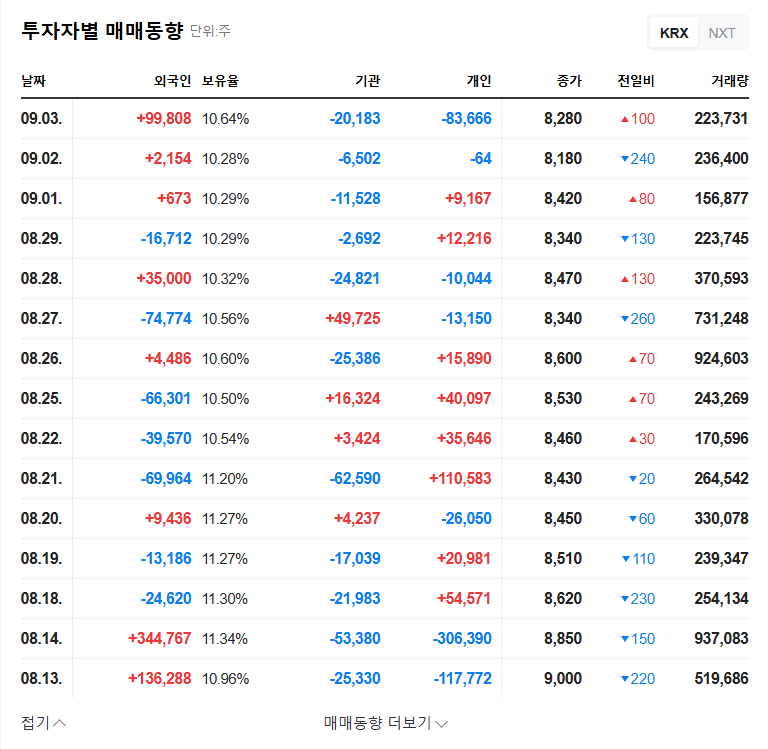
    On October 2, 2025, a report surfaced detailing a major shift in share ownership. NH Investment & Securities declared a reduction in its holdings of Harim Holdings stock from 13.70% down to 5.00%. The stated reasons for the change included on-market sales and, more interestingly, an Exchangeable Bond (EB) transfer. According to the Official Disclosure (Source: DART), this EB transfer resulted in Cube Special Co., Ltd. acquiring a significant position. An EB allows the holder to exchange the bond for shares of a different company held by the issuer (in this case, Harim Holdings shares held by NH). This is a crucial detail, as it suggests a strategic transfer rather than just a simple market sell-off.

    Core Fundamentals: A Look Under the Hood

    A sound Harim Holdings investment decision cannot be based on a single event. As of the first half of 2025, the company presents a mixed but compelling fundamental picture.

    Key Strengths & Growth Drivers

    • Pan Ocean’s Stellar Performance: The group’s marine transportation arm, Pan Ocean Co., Ltd., continues to be a powerhouse, bolstering financial stability. Its strategic expansion into LNG transport and investment in eco-friendly vessels are powerful long-term growth catalysts.
    • Dominant Market Positions: Harim maintains a firm grip on the domestic feed business and boasts immense brand power in the chicken industry. This ensures a stable revenue floor even during economic downturns.
    • ESG Management Focus: A growing commitment to Environmental, Social, and Governance (ESG) principles is enhancing the corporate image and can attract a wider base of institutional investors.

    Headwinds & Potential Risks to Monitor

    • Profitability Pressures: The core feed and livestock segments are vulnerable to volatile raw material prices and currency fluctuations. This remains a key challenge for margin stability.
    • High Debt-to-Equity Ratio: With a consolidated debt-to-equity ratio of 180.50%, financial health is a critical point to watch. This level of leverage can amplify risks in a rising interest rate environment.
    • Project Uncertainty: The large-scale Yangjae Urban Advanced Logistics Complex development project carries significant potential, but also uncertainty related to licensing and timelines, which could impact future cash flows.

    Navigating the Macroeconomic Landscape

    No company operates in a vacuum. The global macroeconomic environment presents both challenges and opportunities for Harim Holdings. Fluctuating interest rates, currency volatility (USD/KRW), and commodity prices directly impact borrowing costs and operational expenses. Furthermore, the shipping sector’s health is tied to global trade volumes, often reflected in indices like the Baltic Dry Index (BDI). Investors should monitor these external factors closely, as they can significantly influence the company’s performance. For more on this, read our internal guide to macroeconomic indicators.

    The optimal investment strategy involves looking past short-term stock price volatility. Focus instead on the sustained performance of core assets like Pan Ocean and the company’s progress in managing debt and improving profitability.

    Frequently Asked Questions (FAQ)

    How does NH’s stake change truly affect the Harim Holdings stock forecast?

    While the sale could create temporary selling pressure, the transfer of shares via an Exchangeable Bond to another entity (Cube Special Co., Ltd.) might be viewed as a strategic repositioning rather than a vote of no confidence. It should be seen as market noise unless accompanied by a deterioration in fundamentals.

    What are Harim Holdings’ strongest fundamental pillars right now?

    As of H1 2025, the robust performance of its subsidiary Pan Ocean is the primary driver of growth and stability. Additionally, the company’s strong brand recognition and market share in the domestic feed and chicken businesses provide a reliable revenue base.

    What is the biggest risk for a Harim Holdings investment?

    The most significant risk is the combination of a high debt-to-equity ratio (180.50%) and profitability pressures from volatile commodity prices. This makes the company sensitive to rising interest rates and global supply chain disruptions. Careful monitoring of its financial health is essential.

    What does Cube Special Co., Ltd.’s EB holding signify?

    Holding an Exchangeable Bond (EB) implies a potential for future conversion into common stock. This can be interpreted as a bullish long-term signal, as the holder anticipates future appreciation in the value of Harim Holdings’ shares.

    In conclusion, while the NH Investment & Securities stake sale warrants attention, a prudent investment approach requires a long-term perspective. The underlying strengths of Harim Holdings, particularly Pan Ocean, remain intact. Investors should treat any short-term price dips as potential opportunities, contingent on the company’s continued efforts to manage its debt and navigate a complex global economy.

    (003380) Harim Holdings Stock Forecast (2025): Deep Dive Analysis After NH Stake Sale 관련 이미지
  • Harim Holdings’ Treasury Stock Disposal: Investment Opportunity or Red Flag?


    Harim Holdings' Treasury Stock Disposal: Investment Opportunity or Red Flag? 대표 차트 이미지


    What’s Happening? Harim Holdings to Dispose of Treasury Stocks

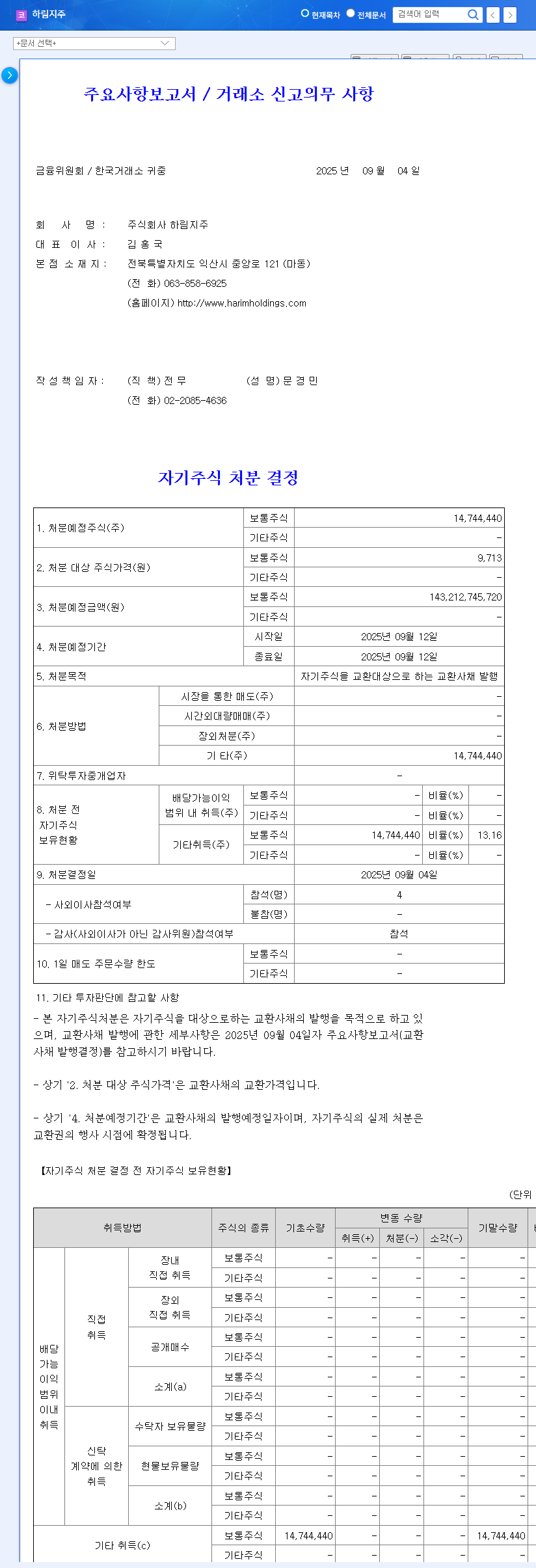
    On September 4, 2025, Harim Holdings announced the disposal of 14,744,440 treasury shares, equivalent to ₩143.2 billion. The purpose of this disposal is to raise funds for issuing exchangeable bonds.

    Why the Disposal?

    Harim Holdings aims to secure funds for investment and operations through the issuance of exchangeable bonds. This is interpreted as a strategy to improve financial structure and invest in new businesses to secure future growth engines.

    How Will This Impact the Stock Price?

    Positive Aspects:

    • • Improved financial structure and investment in new businesses through fundraising
    • • Potential for increased shareholder value upon conversion of exchangeable bonds (timing and conditions are yet to be determined)

    Negative Aspects:

    • • Concerns about stock dilution due to new share issuance upon conversion of exchangeable bonds
    • • Potential increase in interest expenses and financial risks due to changes in capital structure
    • • Possibility of short-term stock price decline following the announcement of treasury stock disposal

    What Should Investors Do? Key Checkpoints and Action Plan

    Key Considerations:

    • • Review the terms of exchangeable bond issuance (conversion price, maturity, interest rate, etc.)
    • • Check the company’s specific plans for the use of the raised funds
    • • Assess Harim Holdings’ efforts to improve profitability

    Investment Strategy:

    • • Make investment decisions after reviewing additional information such as the terms of exchangeable bond issuance and the use of funds
    • • Continuously monitor the performance of subsidiaries and changes in the market environment
    • • Respond cautiously to short-term stock price volatility

    In conclusion, before making investment decisions, it is crucial to carefully consider the terms of the exchangeable bond issuance, the company’s plans for using the funds, and Harim Holdings’ efforts to improve its fundamentals.


    FAQ

    Why can treasury stock disposal negatively affect stock prices?

    Treasury stock disposal increases the supply of shares in the market, which can put downward pressure on stock prices in the short term. Additionally, if the disposal is for issuing exchangeable bonds, the potential for stock dilution upon conversion can contribute to long-term price declines.

    What is Harim Holdings’ current financial status?

    Harim Holdings’ revenue has been increasing, however, operating profit and net income have been declining or recording losses, indicating a need for improved profitability. While the debt-to-equity ratio fluctuates, the current and quick ratios and the retained earnings ratio are relatively healthy.

    What are the most important factors to consider when investing?

    It’s crucial to comprehensively consider the terms of exchangeable bond issuance (conversion price, maturity, interest rate), the company’s specific plans for using the raised funds, and Harim Holdings’ efforts to improve profitability. It’s also important to make investment decisions based on a long-term perspective, rather than reacting to short-term stock price volatility.


    Harim Holdings' Treasury Stock Disposal: Investment Opportunity or Red Flag? 관련 이미지
    Harim Holdings' Treasury Stock Disposal: Investment Opportunity or Red Flag? 관련 이미지


  • Harim Holdings Announces ₩143.2B Exchangeable Bond Offering: Impact Analysis and Investment Strategy


    Harim Holdings Announces ₩143.2B Exchangeable Bond Offering: Impact Analysis and Investment Strategy 대표 차트 이미지


    Harim Holdings’ ₩143.2B Exchangeable Bond Offering: What’s Happening?

    Harim Holdings has decided to issue ₩143.2 billion in exchangeable bonds through a private placement, with a payment date of September 12, 2025. The bonds are exchangeable for Harim Holdings common stock at a conversion price of ₩9,713. The exchange period runs from September 15, 2025, to August 12, 2030. The coupon rate is 0.0%, and the yield to maturity is 1.0%.

    Why the Bond Offering?

    Harim Holdings plans to use the proceeds from this bond offering to fund the Yangjae advanced logistics complex development project, secure working capital, and improve its financial structure. The low coupon rate minimizes financing costs, and the exchangeable nature of the bonds makes issuance easier compared to conventional corporate bonds.

    How Will This Impact the Stock Price?

    Positive Aspects: The low coupon rate (0.0%) reduces financial burden, and the funds raised can facilitate business expansion and improve the financial structure. In the short term, there’s no immediate share dilution.

    Potential Negative Aspects: The current stock price (₩137,753) is significantly higher than the conversion price (₩9,713), making conversion less likely. This could lead to increased repayment burden if the stock price declines. The increased debt could also negatively impact financial ratios, and there’s a possibility of negative market interpretation.

    What Should Investors Do?

    • Monitor the Yangjae Logistics Complex Development: Keep a close eye on the project’s progress and viability.
    • Track Performance of Key Business Segments: Pay attention to PanOcean’s shipping market conditions and the food division’s strategy in the HMR market.
    • Manage Macroeconomic Indicators and Exchange Rate Volatility: Analyze macroeconomic indicators like exchange rates, interest rates, and commodity price fluctuations.
    • Consider Bond Maturity and Conversion Terms: Factor in the bond maturity (August 2030) and the conversion price (₩9,713) relative to the current stock price when making investment decisions.

    Overall View: We maintain a ‘Neutral’ rating on Harim Holdings. It’s prudent to observe how the company utilizes the funds from the bond offering and whether its business performance improves.


    FAQ

    What are exchangeable bonds?

    Exchangeable bonds are bonds that give the holder the right to exchange them for a predetermined number of shares in a different company than the issuer of the bond.

    Will this bond offering positively impact the stock price?

    While the short-term impact is expected to be minimal, the long-term effect could be positive or negative depending on how the company utilizes the funds.

    What should investors be cautious about?

    Investors should consider factors such as bond maturity, conversion price, the difference between the current stock price and the conversion price, changes in business performance, and macroeconomic indicators.


    Harim Holdings Announces ₩143.2B Exchangeable Bond Offering: Impact Analysis and Investment Strategy 관련 이미지
    Harim Holdings Announces ₩143.2B Exchangeable Bond Offering: Impact Analysis and Investment Strategy 관련 이미지


  • Harim Holdings Q2 2025 Earnings Analysis: Solid Growth, But Hidden Risks?

    1. Harim Holdings H1 2025 Performance: What Happened?

    Harim Holdings achieved consolidated revenue of KRW 6.5144 trillion and operating profit of KRW 458.8 billion in the first half of 2025, showing robust growth of 12.97% and 22.37% year-on-year, respectively. Net profit also significantly improved to KRW 370.2 billion.

    2. Drivers of Growth: Why the Strong Performance?

    • Shipping (Pan Ocean): Maintained stable performance through securing long-term and new contracts and increasing operational efficiency despite volatility in international shipping rates.
    • Food & Food Service: Drove revenue growth with a strong market presence in the chicken business, launching new HMR products, and strengthening online channels.
    • Yangjae Advanced Logistics Complex Development: The logistics complex development project, expected to be a future growth engine, is progressing smoothly.

    3. Hidden Risks: What are the Potential Dangers?

    • Exchange Rate Volatility: A rise in the KRW/USD exchange rate could lead to increased import costs and decreased overseas sales.
    • Feed & Livestock: Volatility in international grain prices and livestock disease risks could negatively impact profitability.
    • Financial Burden of Some Subsidiaries: Managing the financial soundness of subsidiaries with high debt ratios is necessary.
    • Intensifying Competition in Distribution: Responding to the slowdown in the home shopping market and intensifying online competition is crucial.

    4. Investor Action Plan: How Should You Invest?

    While Harim Holdings’ growth potential is evident, investors should keep an eye on external environmental changes and potential risks. Careful investment decisions should be made by thoroughly analyzing key variables such as exchange rates, raw material prices, and the competitive landscape, and evaluating the company’s risk management capabilities.

    Frequently Asked Questions

    What are Harim Holdings’ main businesses?

    Harim Holdings operates various business segments including shipping (Pan Ocean), feed & livestock, food & food service, and distribution.

    What were the main growth drivers for Harim Holdings’ Q2 earnings?

    The stable performance of the shipping division and the growth of the food division, particularly the chicken business and the launch of new HMR products, were the main growth drivers.

    What should investors be aware of when investing in Harim Holdings?

    Investors should consider factors such as exchange rate volatility, fluctuations in raw material prices, livestock disease risks, and the financial burden of some subsidiaries.