Tag: Harim

  • (136480) HARIM Co., Ltd. Earnings (Q3 2025): A Deep Dive Stock Analysis & Investment Outlook

    (136480) HARIM Co., Ltd. Earnings (Q3 2025): A Deep Dive Stock Analysis & Investment Outlook

    The latest HARIM Co., Ltd. earnings release for Q3 2025 has captured significant market attention. After a challenging end to 2024, the poultry giant has demonstrated a strong recovery, but with macroeconomic headwinds swirling, investors are right to ask: What comes next? This article provides a deep-dive analysis into the HARIM Q3 2025 report, exploring the fundamental drivers behind the numbers and offering a forward-looking investment outlook.

    We’ll move beyond the surface-level figures to provide a comprehensive HARIM stock analysis, equipping you with the insights needed to make informed decisions about the company’s future value.

    HARIM Q3 2025 Earnings: At a Glance

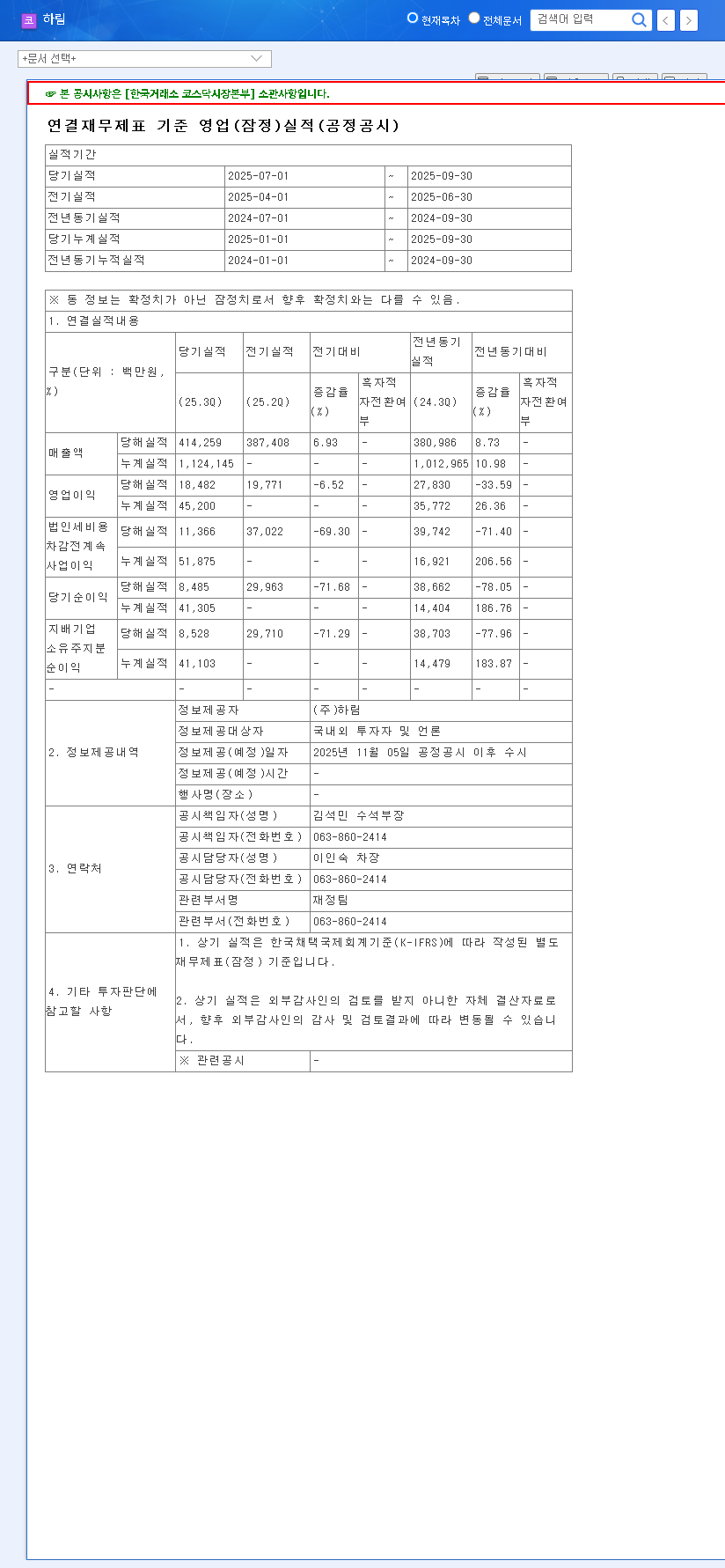
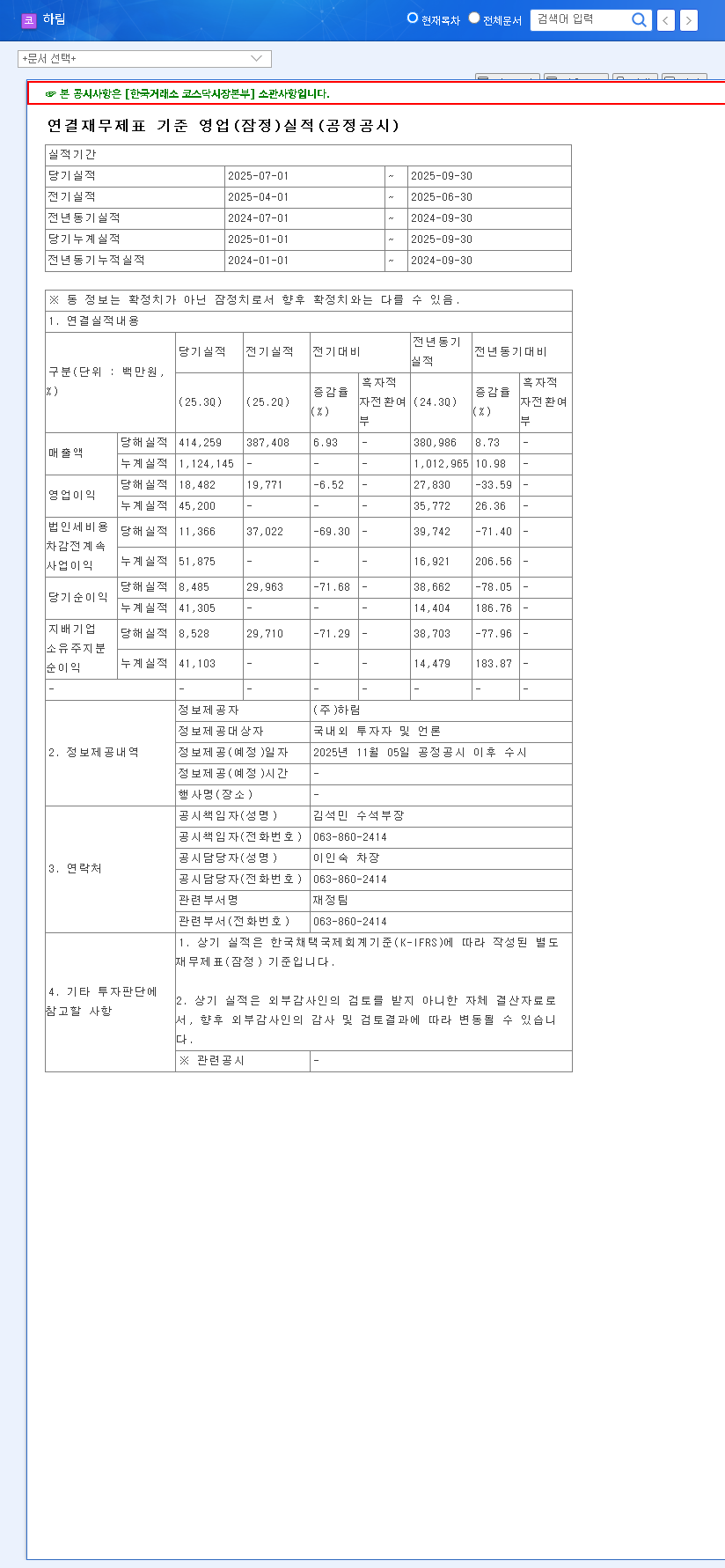
    On November 5, 2025, HARIM Co., Ltd. (하림) released its unaudited consolidated financial results, confirming a sustained profitability trend. The key performance indicators from the report signal a company that has successfully navigated recent turbulence. You can view the complete filing in the Official Disclosure on DART.

    • Revenue: KRW 414.3 billion
    • Operating Profit: KRW 18.5 billion
    • Net Income: KRW 8.5 billion

    While operating profit saw a minor dip compared to a strong Q2, the results are overwhelmingly positive. They cement HARIM’s successful turnaround from the Q4 2024 loss and indicate a stable operational footing. The consistent profitability since the start of 2025 is a testament to the company’s resilience.

    HARIM’s Q3 results confirm a robust recovery, but the investment thesis now hinges on its ability to navigate external pressures like currency fluctuations and raw material costs.

    Fundamental Deep Dive: A Comprehensive HARIM Stock Analysis

    To truly understand the HARIM investment outlook, we must look beyond a single quarter. The company’s performance is built on a foundation of distinct strengths, though it is not without significant risks.

    Core Strengths & Growth Drivers

    • Market Leadership: HARIM’s dominant position in the South Korean chicken market provides a stable revenue base and powerful brand recognition that is difficult for competitors to challenge.
    • Vertical Integration: By controlling the entire supply chain—from feed production to processing and distribution—HARIM can optimize costs, ensure quality control, and react swiftly to market changes. For more on this, see our guide on Understanding Vertical Integration in Agribusiness.
    • Operational Efficiency: The strategic adoption of smart factory technologies and modernization of facilities are actively driving down production costs and improving margins, contributing directly to the bottom line.
    • Product Innovation: HARIM is adept at adapting to consumer trends, expanding its portfolio of high-demand products like primal cuts and ready-to-eat meals while strengthening its lucrative online sales channels.

    Key Risks & Headwinds

    • Commodity Price Volatility: As a major importer of feed ingredients like corn and soybeans, HARIM’s profitability is directly exposed to global commodity markets. While prices have recently been favorable, a sudden spike could squeeze margins.
    • External Shocks: The business is vulnerable to unpredictable events such as outbreaks of Avian Influenza (AI), which can disrupt supply chains and depress consumer demand, and broader economic downturns that reduce spending.
    • Financial Leverage: With a consolidated adjusted debt ratio around 101.66%, the company’s balance sheet carries notable leverage. While this trend is improving, high debt levels can be a drag on financial flexibility and increase risk during economic tightening.
    • Currency Exposure: A significant portion of its debt is in foreign currency. A strong US dollar against the Korean Won (KRW) increases the cost of servicing this debt and paying for imported raw materials, directly impacting net income.

    Future Outlook & Investment Strategy

    The HARIM Co., Ltd. earnings report paints a picture of a company with solid fundamentals facing a complex external environment. The investment strategy should therefore be one of cautious optimism.

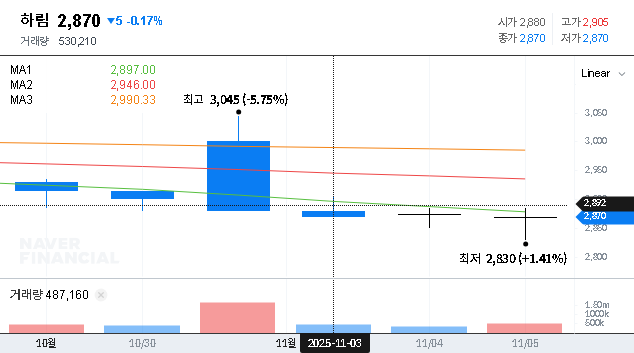
    In the short-term, market sentiment may be muted. While the Q3 results are strong, they were largely anticipated. The focus will now shift to Q4 guidance and the company’s strategy for mitigating macroeconomic risks like the high KRW/USD exchange rate. For context on global economic trends, investors often consult sources like Bloomberg’s market analysis.

    For a mid-to-long-term HARIM investment outlook, success will be determined by its ability to manage key variables: stabilizing raw material costs, effectively hedging against currency risk, and continuing to reduce its debt ratio. Any successful expansion into new high-value product lines or markets would serve as a powerful catalyst for growth.

    Recommendation: Observe and Approach Cautiously

    Given the balance of positive internal performance and negative external pressures, a ‘wait-and-see’ approach is prudent. Rushing into a position now may be premature. Instead, investors should closely monitor the stock’s reaction to the HARIM Q3 2025 report and look for entry points based on developments in the following areas:

    • Forward Guidance: Any updates to Q4 and 2026 earnings forecasts.
    • Macro Trends: Shifts in the KRW/USD exchange rate and international grain prices.
    • Industry Health: Monitoring the risk of AI outbreaks during the winter season.
    • Financial Discipline: Continued progress in improving the debt ratio and overall balance sheet health.

    In conclusion, HARIM is a fundamentally strong company proving its operational excellence. However, prudent investment requires a comprehensive consideration of the external risks that are currently clouding the short-term outlook.

    Disclaimer: This report is based on publicly available information and is for informational purposes only. It is not intended as investment advice. The ultimate responsibility for investment decisions rests with the individual investor.
    (136480) HARIM Co., Ltd. Earnings (Q3 2025): A Deep Dive Stock Analysis & Investment Outlook 관련 이미지
  • (136480) HARIM Q3 2025 Earnings Analysis: Deep Dive into Stock Performance (136480)

    (136480) HARIM Q3 2025 Earnings Analysis: Deep Dive into Stock Performance (136480)

    The HARIM Q3 2025 earnings report has sent ripples through the investment community, presenting a stark contrast to the company’s triumphant performance in the first half of the year. After celebrating a remarkable 12% revenue growth and an explosive 238% surge in operating profit, investors are now faced with preliminary Q3 figures that suggest a significant slowdown. This has sparked a critical question: Is this a temporary hiccup or the beginning of a new, more challenging chapter for HARIM Co., Ltd. (136480)?

    This comprehensive HARIM stock analysis will dissect the latest financial results, explore the underlying factors driving this shift, and evaluate the internal and external risks that could shape the company’s future. We will provide a clear outlook for investors, highlighting the key metrics to watch as HARIM navigates this pivotal moment.

    Deconstructing the HARIM Q3 2025 Earnings Report

    On November 5, 2025, HARIM released its preliminary operating results for the third quarter, revealing a noticeable deceleration. The official filing provides the granular details for investors. For a complete breakdown, investors can consult the company’s official filing on DART. Source: Official Disclosure. The key figures are:

    • Revenue: KRW 402.4 billion (a marginal increase from Q2).
    • Operating Profit: KRW 18.6 billion (a significant decrease from Q2).
    • Net Profit: KRW 9 billion (also a marked decrease from Q2).

    These numbers confirm that the powerful growth engine seen in H1 has throttled back, prompting a deeper investigation into the causes.

    From a ‘Sunny’ H1 to a ‘Cloudy’ Q3: What Changed?

    H1 2025: A Foundation of Solid Growth

    The first half of 2025 was a period of robust recovery for HARIM. The company successfully turned a profit, driven by key fundamental strengths. A major contributor was a significant improvement in the cost structure, achieved through stabilizing feed raw material prices, optimizing chicken slaughter yields, and minimizing packaging losses. This, combined with its unshakable No. 1 position in the domestic chicken market, created a powerful combination for profitability.

    Key Factors Behind the Q3 Earnings Slowdown

    The Q3 downturn appears to be a result of several converging headwinds:

    • Commodity Price Volatility: While H1 saw favorable feed prices, the market is inherently volatile. Any subsequent rise in core ingredients directly squeezes profit margins. According to a recent market report from Bloomberg, global grain markets remain sensitive to geopolitical and climate factors, posing an ongoing risk.
    • Intensified Market Competition: As the market leader, HARIM is a prime target for competitors. Aggressive pricing strategies from rivals can erode market share and put downward pressure on prices, impacting revenue and profitability.
    • Macroeconomic Pressures: External factors like currency fluctuations are critical. With the KRW/USD exchange rate hovering around 1,444.00, a weaker Won increases the cost of imported raw materials. Furthermore, persistent high interest rates amplify the burden of HARIM’s debt, which, despite improving to a 101.66% ratio, remains a significant financial consideration.
    • Operational Risks: The poultry industry is perpetually exposed to the risk of disease outbreaks like avian influenza (AI), which can devastate supply chains and lead to substantial financial losses.

    Market Impact and Investor Outlook

    The market had priced in continued momentum after a stellar H1. The Q3 results have introduced a dose of realism, shifting investor sentiment from bullish optimism to cautious observation. The next two quarters will be crucial in determining the stock’s trajectory.

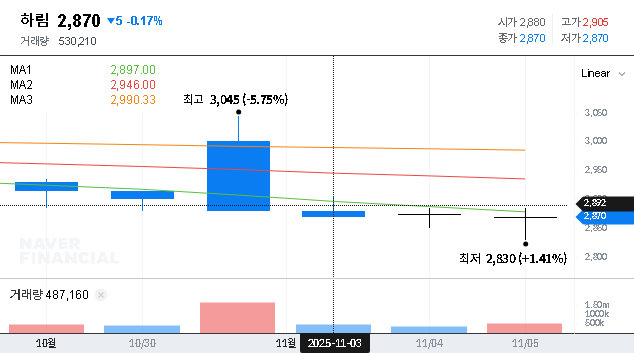
    The unexpected slowdown is likely to increase short-term stock price volatility as the market recalibrates its expectations for the 136480 stock analysis. Investors who rode the wave of H1’s success may look to secure profits, while new investors will be looking for clarity on the company’s strategy to counter these new challenges.

    Future Challenges and Strategic Imperatives

    Moving forward, investors should closely monitor HARIM’s strategic responses. Key areas to watch include:

    • Profitability of Core Divisions: Scrutinize management’s plans to address any losses or margin compression in the meat processing division.
    • Growth Initiatives: The success of expanding online sales channels and launching innovative new products will be vital to offsetting traditional market pressures. For more on industry trends, see our complete guide to the food processing sector.
    • Financial Discipline: Continued efforts to manage the high debt ratio and mitigate interest cost burdens are non-negotiable for long-term stability.
    • ESG and Governance: Addressing legal risks from Fair Trade Act violations and strengthening ESG management, such as animal welfare systems, are crucial for building long-term corporate value and maintaining investor trust.

    Conclusion: A Balanced View on HARIM’s Future

    While the HARIM Q3 2025 earnings signal a period of caution, it’s important to weigh this against the company’s fundamental strengths. HARIM’s dominant market position and vertically integrated cost structure provide a resilient foundation. However, the path forward will depend on its ability to navigate commodity volatility, fend off competition, and manage its financial liabilities effectively. For investors, this is a time for diligent monitoring rather than hasty decisions. The company’s long-term growth potential remains intact, but its short-term performance now hinges on strategic execution in a more demanding environment.

    Frequently Asked Questions

    Q1: What were the key takeaways from HARIM’s Q3 2025 earnings?

    A1: HARIM’s Q3 2025 earnings showed a significant growth slowdown. While revenue saw a slight increase to KRW 402.4 billion, both operating profit (KRW 18.6 billion) and net profit (KRW 9 billion) decreased considerably compared to the first half of the year.

    Q2: Why was HARIM’s performance so strong in H1 2025?

    A2: In H1 2025, HARIM’s revenue grew by 12.31% and operating profit surged by 238.09%. This was driven by effective cost reduction, stable raw material prices, and leveraging its #1 market share in South Korea.

    Q3: What caused the slowdown in HARIM’s Q3 performance?

    A3: The slowdown is attributed to a mix of factors, including rising raw material costs, increased competition in the domestic market, macroeconomic pressures like exchange rate volatility, and persistent operational risks like potential disease outbreaks.

    Q4: What should investors watch for regarding HARIM’s stock?

    A4: Investors should monitor the company’s strategy for improving margins, the performance of its new products and online channels, its progress in managing debt, and any updates on external factors like interest rates and commodity prices. This HARIM stock analysis suggests a period of heightened vigilance.

    (136480) HARIM Q3 2025 Earnings Analysis: Deep Dive into Stock Performance (136480) 관련 이미지
  • (003380) Harim Holdings Stock Forecast (2025): Deep Dive Analysis After NH Stake Sale

    (003380) Harim Holdings Stock Forecast (2025): Deep Dive Analysis After NH Stake Sale

    Harim Holdings Stock Forecast: Opportunity or Warning Sign?

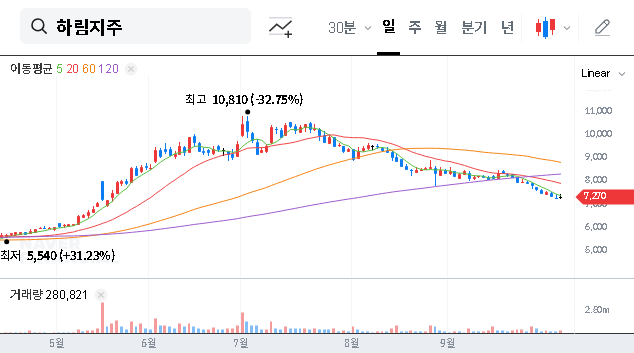
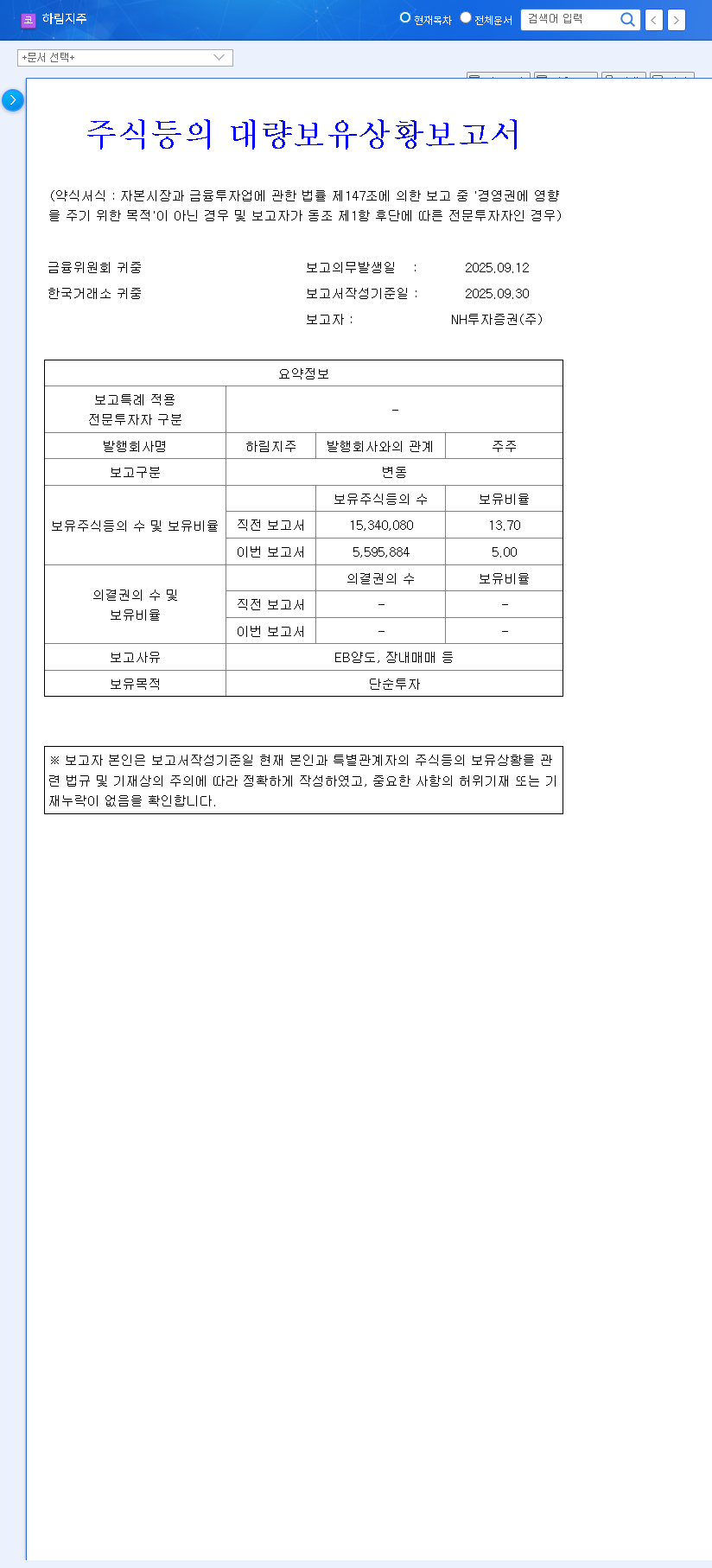
    The recent news of NH Investment & Securities significantly reducing its stake in Harim Holdings (121990) has sent ripples through the investment community. This move raises a critical question for anyone considering a Harim Holdings stock forecast: Is this a signal of underlying weakness, or merely short-term market noise creating a long-term buying opportunity? This article provides a deep-dive Harim Holdings analysis, dissecting the stake change, the company’s core fundamentals, macroeconomic factors, and a prudent investment strategy to help you navigate the path forward.

    The Catalyst: Unpacking the NH Investment & Securities Stake Change

    On October 2, 2025, a report surfaced detailing a major shift in share ownership. NH Investment & Securities declared a reduction in its holdings of Harim Holdings stock from 13.70% down to 5.00%. The stated reasons for the change included on-market sales and, more interestingly, an Exchangeable Bond (EB) transfer. According to the Official Disclosure (Source: DART), this EB transfer resulted in Cube Special Co., Ltd. acquiring a significant position. An EB allows the holder to exchange the bond for shares of a different company held by the issuer (in this case, Harim Holdings shares held by NH). This is a crucial detail, as it suggests a strategic transfer rather than just a simple market sell-off.

    Core Fundamentals: A Look Under the Hood

    A sound Harim Holdings investment decision cannot be based on a single event. As of the first half of 2025, the company presents a mixed but compelling fundamental picture.

    Key Strengths & Growth Drivers

    • Pan Ocean’s Stellar Performance: The group’s marine transportation arm, Pan Ocean Co., Ltd., continues to be a powerhouse, bolstering financial stability. Its strategic expansion into LNG transport and investment in eco-friendly vessels are powerful long-term growth catalysts.
    • Dominant Market Positions: Harim maintains a firm grip on the domestic feed business and boasts immense brand power in the chicken industry. This ensures a stable revenue floor even during economic downturns.
    • ESG Management Focus: A growing commitment to Environmental, Social, and Governance (ESG) principles is enhancing the corporate image and can attract a wider base of institutional investors.

    Headwinds & Potential Risks to Monitor

    • Profitability Pressures: The core feed and livestock segments are vulnerable to volatile raw material prices and currency fluctuations. This remains a key challenge for margin stability.
    • High Debt-to-Equity Ratio: With a consolidated debt-to-equity ratio of 180.50%, financial health is a critical point to watch. This level of leverage can amplify risks in a rising interest rate environment.
    • Project Uncertainty: The large-scale Yangjae Urban Advanced Logistics Complex development project carries significant potential, but also uncertainty related to licensing and timelines, which could impact future cash flows.

    Navigating the Macroeconomic Landscape

    No company operates in a vacuum. The global macroeconomic environment presents both challenges and opportunities for Harim Holdings. Fluctuating interest rates, currency volatility (USD/KRW), and commodity prices directly impact borrowing costs and operational expenses. Furthermore, the shipping sector’s health is tied to global trade volumes, often reflected in indices like the Baltic Dry Index (BDI). Investors should monitor these external factors closely, as they can significantly influence the company’s performance. For more on this, read our internal guide to macroeconomic indicators.

    The optimal investment strategy involves looking past short-term stock price volatility. Focus instead on the sustained performance of core assets like Pan Ocean and the company’s progress in managing debt and improving profitability.

    Frequently Asked Questions (FAQ)

    How does NH’s stake change truly affect the Harim Holdings stock forecast?

    While the sale could create temporary selling pressure, the transfer of shares via an Exchangeable Bond to another entity (Cube Special Co., Ltd.) might be viewed as a strategic repositioning rather than a vote of no confidence. It should be seen as market noise unless accompanied by a deterioration in fundamentals.

    What are Harim Holdings’ strongest fundamental pillars right now?

    As of H1 2025, the robust performance of its subsidiary Pan Ocean is the primary driver of growth and stability. Additionally, the company’s strong brand recognition and market share in the domestic feed and chicken businesses provide a reliable revenue base.

    What is the biggest risk for a Harim Holdings investment?

    The most significant risk is the combination of a high debt-to-equity ratio (180.50%) and profitability pressures from volatile commodity prices. This makes the company sensitive to rising interest rates and global supply chain disruptions. Careful monitoring of its financial health is essential.

    What does Cube Special Co., Ltd.’s EB holding signify?

    Holding an Exchangeable Bond (EB) implies a potential for future conversion into common stock. This can be interpreted as a bullish long-term signal, as the holder anticipates future appreciation in the value of Harim Holdings’ shares.

    In conclusion, while the NH Investment & Securities stake sale warrants attention, a prudent investment approach requires a long-term perspective. The underlying strengths of Harim Holdings, particularly Pan Ocean, remain intact. Investors should treat any short-term price dips as potential opportunities, contingent on the company’s continued efforts to manage its debt and navigate a complex global economy.

    (003380) Harim Holdings Stock Forecast (2025): Deep Dive Analysis After NH Stake Sale 관련 이미지
  • Harim’s H1 2025 Performance: Growth Amidst Profitability Challenges

    1. What Happened in H1 2025?

    Harim recorded revenue of KRW 709.886 billion (a 12.3% increase year-on-year) in H1 2025, driven by growth in the fresh meat segment and an increase in biological asset valuation. However, operating profit declined to KRW 26.719 billion (a 10.6% decrease year-on-year), impacting profitability. Net income turned positive at KRW 32.82 billion.

    2. Why the Fluctuation in Performance?

    Revenue Growth Drivers: Increased chicken prices, decreased imports, and recovering restaurant demand.

    • Operating Profit Decline Drivers: Rising live chicken prices, increased financial costs due to exchange rate fluctuations, and declining sales in the meat processing segment.

    Net Income Turning Positive: Improvement in financial income and expenses.

    3. What’s the Outlook for Harim?

    Positive Outlook:

    • Strong market dominance and stable domestic chicken demand.
    • Continuous efforts to improve financial structure.

    Negative Outlook and Risks:

    • Cost pressures and intensified competition in the meat processing segment.
    • Volatility in exchange rates and oil prices.
    • Potential outbreak of Avian Influenza (AI).

    4. What Should Investors Do?

    Short-term investments should be approached cautiously, considering the cost burden and potential slowdown in profitability. Long-term investment decisions should be based on a comprehensive evaluation of the growth potential of the chicken industry, Harim’s market dominance, and its efforts to improve profitability. Investors should pay close attention to changes in macroeconomic indicators such as exchange rates and international oil prices.

    FAQ

    What was Harim’s revenue in H1 2025?

    KRW 709.886 billion.

    Why did Harim’s operating profit decline?

    Due to rising live chicken prices, increased financial costs from exchange rate fluctuations, and declining sales in the meat processing segment.

    What are the main risk factors for Harim?

    Volatility in raw material prices, risk of disease outbreaks like Avian Influenza (AI), intensified competition, fluctuations in exchange rates and interest rates, and high debt ratio.

  • Harim (136480) Q2 2025 Earnings: A Surprising Turnaround!

    1. Harim’s Q2 2025 Earnings: Key Highlights

    Harim reported revenue of KRW 387.4 billion, operating profit of KRW 19.8 billion, and net income of KRW 29.7 billion for Q2 2025. This represents a year-over-year increase of 18.8% in revenue, a return to profitability in operating profit, and a similar positive swing for net income. Compared to Q1 2025, revenue increased by 20.1%, operating profit surged by 187%, and net income saw a remarkable 924% jump.

    2. Factors Driving the Turnaround

    What factors contributed to this positive performance? Let’s analyze the key drivers.

    • Robust Revenue Growth: Harim maintained its strong market share in the domestic poultry market at 20.8%, ensuring stable revenue growth.
    • Smart Factory Investments: The company’s smart factory in Iksan has enhanced productivity and reduced costs.
    • Favorable External Environment: Declining international oil and freight prices eased raw material cost pressures.

    3. Investor Action Plan

    While Harim’s Q2 results are positive, investors should consider the following factors before making investment decisions.

    • Sustainability of Growth: Evaluate the long-term growth potential beyond the short-term improvements.
    • Volatility of Exchange Rates and Raw Material Prices: Consider the potential impact of external factors on future performance.
    • New Business Growth and ESG Performance: Monitor the progress of new business ventures and ESG initiatives.

    Frequently Asked Questions

    Why did Harim perform well in Q2 2025?

    Key factors include smart factory investments, a favorable external environment, and robust revenue growth.

    What are the risks to consider when investing in Harim?

    Investors should consider volatility in exchange rates and raw material prices, intensifying competition, and uncertainties surrounding new business ventures.

    What is the outlook for Harim?

    While the outlook is positive, there are uncertainties related to external factors. Continuous monitoring is recommended.

  • Harim (136480) Q2 2025 Earnings Analysis: Back to Black? Investment Strategies

    1. Harim’s Q2 2025 Performance: What Happened?

    Harim reported revenue of KRW 376.7 billion, operating profit of KRW 20.3 billion, and net income of KRW 28.2 billion in Q2 2025, marking a return to profitability. While revenue slightly decreased year-over-year, both operating and net income showed significant improvement.

    2. Reasons for the Turnaround: Why the Improvement?

    The return to profitability is attributed to improved cost management efficiency through vertical integration and increased sales driven by recovering chicken consumption. Investments in facilities, such as smart factories, also contributed to enhanced productivity.

    3. Positive Factors and Risks: What to Consider

    • Positive Factors: Harim’s strengths include a robust vertical integration system, maintained market leadership, and commitment to ESG management.
    • Risk Factors: Investors should be mindful of risks such as high debt-to-equity ratio, exchange rate volatility, raw material price fluctuations, and the potential for avian influenza outbreaks.

    4. Action Plan for Investors

    If you’re considering investing in Harim, carefully assess the following:

    • Analyze the detailed business segment performance and changes in cost structure upon the release of the final earnings report.
    • Understand Harim’s hedging strategies against exchange rate and raw material price fluctuations.
    • Monitor the progress and performance of new business initiatives.
    • Analyze the impact of changes in macroeconomic indicators.

    Frequently Asked Questions

    Why are Harim’s Q2 2025 earnings important?

    These earnings signal Harim’s return to profitability and demonstrate the effectiveness of its management improvement efforts. They also serve as an indicator of potential future growth.

    Should I invest in Harim?

    While the improved performance is positive, consider the risk factors, such as the high debt-to-equity ratio. Conduct a thorough analysis using the provided action plan before making an investment decision.

    What is the outlook for Harim’s stock price?

    The improved earnings may positively influence the stock price, but it depends on various factors, including market conditions and competitive landscape. Consult expert analysis and investment information for careful evaluation.