Tag: Handbag Manufacturing

  • (194370) JS Corporation Q3 Earnings: Deep Dive Financial Analysis & Hidden Risks

    (194370) JS Corporation Q3 Earnings: Deep Dive Financial Analysis & Hidden Risks

    JS Corporation Q3 Earnings: A Deceptive Victory?

    The latest preliminary JS Corporation Q3 earnings report for 2025 has captured the market’s attention, presenting a complex picture for investors. With headline figures like revenue and operating profit impressively surpassing market consensus, a wave of initial optimism is understandable. However, a deeper dive into the numbers reveals potential pitfalls, most notably a sharp year-on-year decline in net income. This comprehensive JS Corporation financial analysis will dissect the results, explore the underlying fundamentals, and provide a clear-eyed view to help you make an informed investment decision.

    The headline numbers paint a picture of success, but the footnotes reveal a story of caution. Understanding the disconnect between operating profit and net income is the key to evaluating JS Corporation’s true health.

    The Q3 2025 Preliminary Earnings: By the Numbers

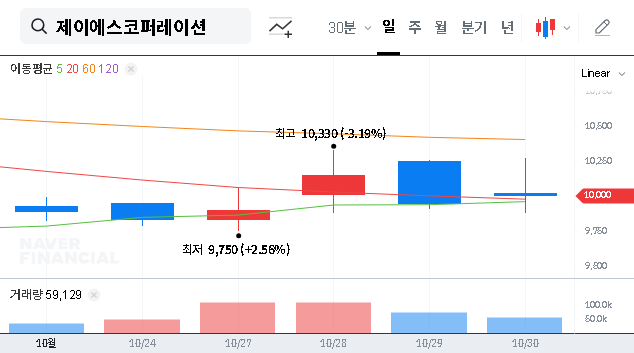
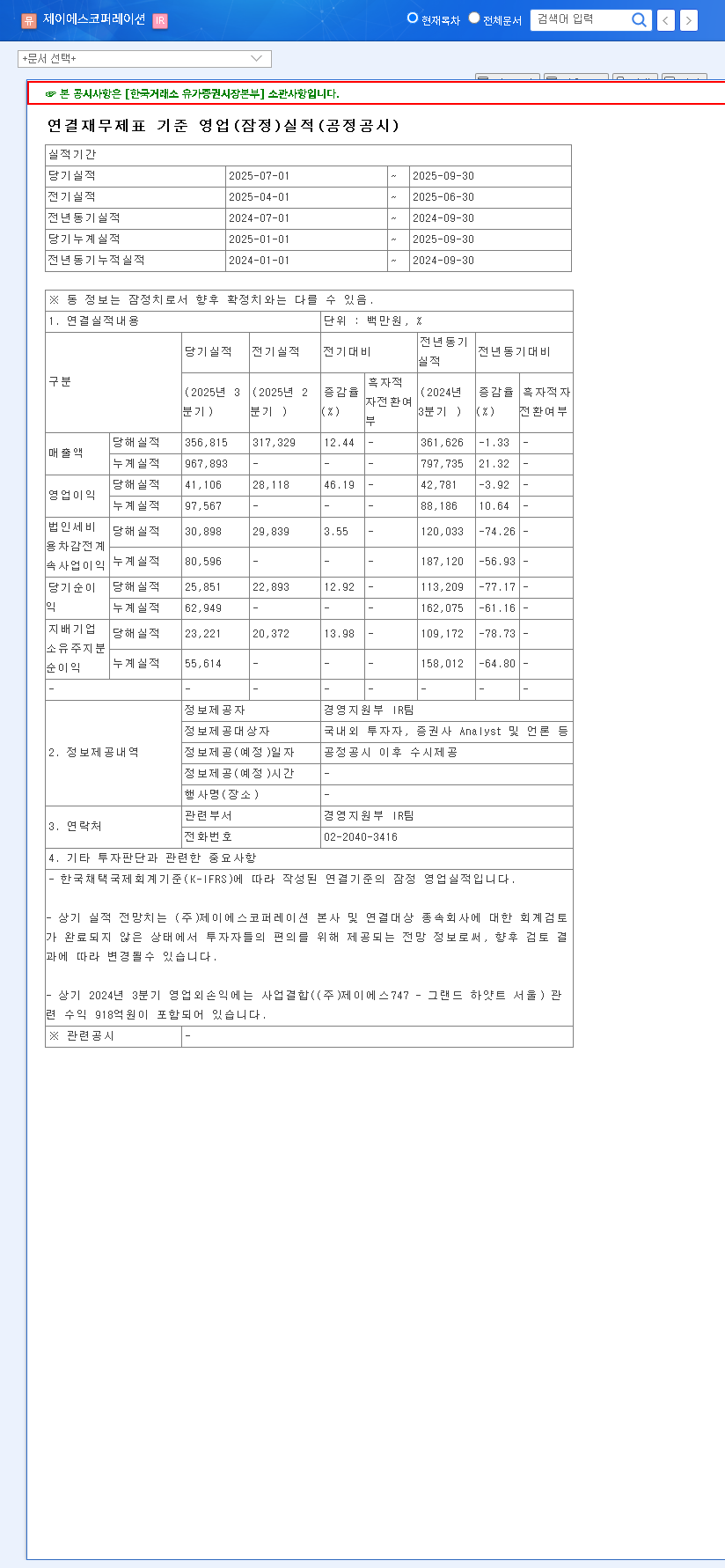
    On October 30, 2025, JS Corporation released its preliminary consolidated earnings, showcasing a beat on top-line metrics but raising questions on the bottom line. While these figures represent a sequential improvement from the previous quarter, they tell a different story when compared to the same period last year.

    • Revenue: KRW 356.8 billion, exceeding market forecasts.
    • Operating Profit: KRW 41.1 billion, a solid 12% above market estimates.
    • Net Income: KRW 23.2 billion, marking a significant and concerning decrease from Q3 2024’s KRW 113.2 billion.

    Fundamental & Financial Health Analysis

    To understand this divergence, we must analyze the performance of its core business segments and the company’s overall financial standing. The JS Corp stock analysis depends heavily on these underlying factors.

    Performance by Business Segment

    • Handbag & Apparel Manufacturing: The handbag division remains a pillar of strength, leveraging its order-based production model and strong ODM relationships with global brands. However, the apparel segment is facing headwinds, with sluggish sales attributed to reduced orders from key buyers, reflecting broader consumer spending trends.
    • Hotel Business: This segment is a bright spot, benefiting from the global tourism recovery. Increased occupancy and revenue are positive drivers, but this success is tempered by the looming risk of significant capital expenditure needed for renovating aging facilities.

    Key Financial Metrics and Risks

    The improved operating profit margin is a testament to either stronger pricing power or efficient cost management—a positive signal of operational resilience. However, the drastic drop in net income demands scrutiny. This could stem from one-time costs, higher interest expenses due to recent convertible bond issuances, or other non-operating factors. A major red flag is the high consolidated debt-to-equity ratio of 243%. Such high leverage increases financial risk, especially in a rising interest rate environment, and requires diligent monitoring. For a deeper understanding of such metrics, investors can review guides on how to analyze a company’s balance sheet.

    Forward Outlook: Positive Catalysts vs. Negative Headwinds

    Potential Positives

    The surprise beat in revenue and operating profit can generate positive short-term stock momentum. The recovery in the hotel business provides a solid growth engine, and the strong US dollar trend, as reported by sources like Bloomberg, could boost margins for the export-heavy manufacturing segments. This confirmed profitability resilience showcases management’s ability to navigate a challenging environment effectively.

    Significant Risks and Concerns

    The primary concern is the steep decline in net income, which questions the quality of the earnings and could erode investor confidence. The persistent investment risk assessment must highlight the high debt ratio as a long-term burden on corporate valuation. Furthermore, the slump in the apparel division and the potential for macroeconomic volatility (e.g., oil prices, freight costs) pose ongoing threats to the company’s stability and growth trajectory.

    Investor Action Plan & Recommendations

    Given the mixed signals from the JS Corporation Q3 earnings, a cautious ‘Neutral’ stance is advisable. Prudent investors should move beyond the headlines and focus on the following due diligence before making any decisions:

    • Analyze the Official Filing: The preliminary report is just a snapshot. A thorough review of the detailed financial statements is critical. You can access the Official Disclosure (DART report) to understand the precise causes of the net income decline.
    • Monitor Debt Management: Watch for concrete steps and strategic plans from management aimed at reducing the high debt ratio and strengthening the company’s financial structure.
    • Evaluate Core Business Strategy: Assess the outlook for the apparel segment’s recovery and look for evidence of new growth drivers beyond the current business lines to ensure long-term sustainability.
    • Listen to the Earnings Call: Pay close attention to management’s commentary during the investor conference call for qualitative insights, future guidance, and their tone regarding the challenges ahead.

    Ultimately, investing in JS Corporation requires a long-term perspective focused on fundamental improvements and risk mitigation, rather than being swayed by short-term market reactions to a deceptive earnings beat.
    (194370) JS Corporation Q3 Earnings: Deep Dive Financial Analysis & Hidden Risks 관련 이미지
  • (194370) JS Corporation Stock Analysis: Why the National Pension Service Invested

    (194370) JS Corporation Stock Analysis: Why the National Pension Service Invested

    The investment community is buzzing after a significant move involving JS Corporation. The National Pension Service (NPS) of Korea, one of the world’s largest and most influential pension funds, has officially increased its stake in the company to 5.06%. When an institutional giant like the NPS makes such a move, it’s more than just a transaction; it’s a signal that demands careful analysis. While the filing states the purpose is a ‘simple investment,’ savvy investors are asking the critical question: What does this mean for the future of JS Corporation stock?

    This comprehensive report dives deep into the implications of this major shareholding change. We will dissect the fundamentals of JS Corporation, evaluate its recent financial performance, and explore both the bullish and bearish interpretations of the NPS’s investment. Our goal is to provide you with the essential insights needed to navigate this development and make well-informed decisions.

    The Event: NPS Solidifies Its Position in JS Corporation

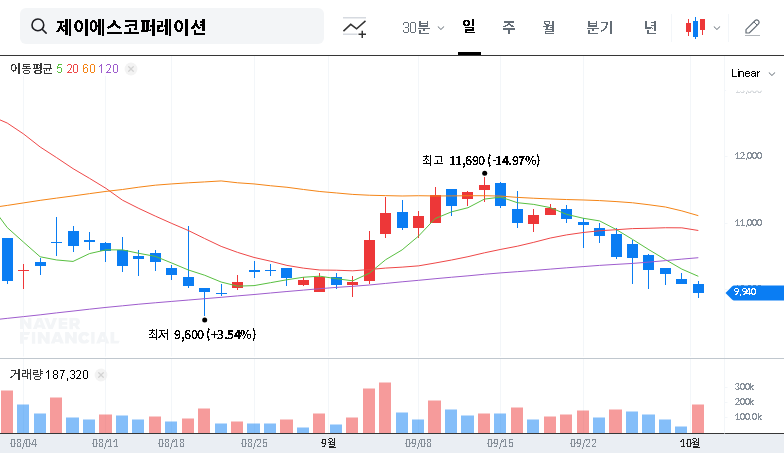
    On October 1, 2025, the National Pension Service formally disclosed its acquisition, bringing its total holding in JS Corporation to 5.06%. This move crosses the crucial 5% threshold, which requires public disclosure and signals a significant level of conviction from the investor. The transaction, officially filed for ‘simple investment’ purposes, indicates that the NPS sees value at the current price but does not intend to influence management directly—at least for now. The full details can be reviewed in the Official Disclosure from the regulatory body (Source: DART).

    An investment from a globally recognized institution like the NPS often serves as a powerful ‘stamp of approval,’ potentially attracting further retail and institutional interest and boosting market confidence in a company’s long-term strategy and valuation.

    A Fundamental Deep Dive into JS Corporation

    To understand the NPS’s rationale, we must look at the core business of JS Corporation. Established in 1987, the company has built a diversified and resilient business model spanning three key sectors.

    1. Handbag & Apparel Manufacturing (OEM/ODM)

    This is the historical backbone of the company. JS Corporation serves as a critical manufacturing partner for a roster of globally renowned brands, including GUESS, Michael Kors, GAP INC., and WALMART. This OEM/ODM model provides a stable revenue stream and benefits from high entry barriers due to the trust and quality standards required by these global giants. The handbag division, in particular, is well-positioned to capitalize on the growing demand for affordable luxury goods, a market projected to see robust growth.

    2. Premium Hotel Business

    The company owns and operates the prestigious 5-star ‘Grand Hyatt Seoul.’ This is more than just a hotel; it’s a trophy asset in a prime location. Benefiting from brand recognition and a resurgence in both tourism and business travel, this segment offers a hedge against manufacturing-sector volatility and provides consistent, high-margin cash flow.

    Financial Health & Performance (H1 2025)

    Recent financial data paints a picture of strong top-line growth but warrants a closer look at profitability:

    • Impressive Revenue Growth: Sales hit KRW 611 billion, a massive 73.6% increase year-over-year, largely driven by its apparel division.
    • Improved Profitability: Operating profit rose to KRW 56.5 billion, a 24.1% increase, showcasing operational efficiency.
    • Strengthened Balance Sheet: The company successfully reduced total liabilities while increasing equity, signaling improved financial soundness.
    • Area for Monitoring: Net income and EPS saw a decrease, primarily attributed to higher financial costs and significant cash outflows for strategic investments in subsidiaries. This is a key area for investors to watch in upcoming quarters.

    Impact Analysis: What the NPS Stake Means for Investors

    The NPS investment in JS Corporation can be viewed through two lenses:

    The Bull Case (Positive Implications)

    • Vote of Confidence: The investment validates the company’s fundamentals and growth trajectory, potentially attracting more investors.
    • Stock Price Catalyst: Significant institutional buying can create upward price pressure and improve liquidity.
    • Governance Expectations: The presence of a major institutional shareholder often leads to improved corporate governance and transparency.

    The Bear Case (Points of Caution)

    • ‘Simple Investment’ Ambiguity: The purpose can change. The NPS could decide to sell for a quick profit, creating downward pressure, or shift to a more activist role in the future.
    • Macroeconomic Headwinds: As an exporter, JS Corporation is exposed to risks from rising shipping costs, raw material inflation, and currency fluctuations. For context, you can review global market trends on authoritative sites like Bloomberg.
    • Focus on Fundamentals: An institutional investment does not guarantee success. The company must still address the factors that caused the recent dip in net income.

    Investor Takeaway and Action Plan

    The NPS’s increased stake in JS Corporation is a significant and broadly positive signal. However, it should be treated as one data point in a larger investment thesis, not the sole reason to buy.

    For a short-term perspective, the stock may experience positive momentum from the news. For a mid-to-long-term perspective, success hinges on the company’s ability to sustain growth in its core segments and, crucially, resolve the profitability issues that impacted its recent net income. Continuous monitoring of quarterly earnings reports and management commentary is essential. To learn more about evaluating company financials, review our guide on fundamental analysis.

    In conclusion, while the institutional vote of confidence is encouraging, prudent investors should pair this news with diligent research into the company’s underlying financial health and strategic direction before making any investment decisions related to JS Corporation stock.

    (194370) JS Corporation Stock Analysis: Why the National Pension Service Invested 관련 이미지